
Call Us
+86 136 6007 9809
Call Us
+86 136 6007 9809

Oct. 01, 2026
A second-source fastener supplier should reduce supply-chain risk, not introduce a new engineering risk.
For OEMs and industrial manufacturers, dual sourcing can improve supply continuity when an existing supplier faces capacity constraints, extended lead times,
commercial changes, quality instability or geographic disruption. It can also support supplier development programs and reduce dependence on a single manufacturing source.
However, qualifying an alternative supplier for a drawing-controlled fastener is fundamentally different from purchasing another catalog item with the same nominal size.
Two fasteners can look identical and still behave differently during installation or service.
A replacement rivet nut may have the same thread but a different grip range. A weld nut may share the same envelope dimensions while using different projection geometry.
A self-clinching nut may fit the nominal hole but be incompatible with the sheet thickness or hardness. A polymer fastener may reproduce the geometry while using a resin with different moisture, temperature or creep behavior.
For procurement teams, the objective is therefore not simply to find another company capable of quoting the part.
The objective is to establish a technically controlled second source that can reproduce the characteristics required by the approved assembly.
JUXIN Fasteners supports OEMs, procurement teams, supplier-development engineers and design teams with second-source evaluation for industrial fasteners, custom machined components and drawing-based fastening parts across automotive manufacturing, AI data center infrastructure, telecommunications equipment, semiconductor equipment, rail transit, energy equipment, electrical systems, medical equipment and other industrial sectors.
Single-source dependency can exist for both standard and custom components.
The risk becomes greater when a production line depends on a proprietary drawing, special material, custom tooling, unusual coating or supplier-specific manufacturing process.
Common reasons for developing a second source include:
Supply continuity planning
Capacity constraints at the incumbent supplier
Long or unstable lead times
Geographic supply-chain diversification
Supplier performance problems
Product localization programs
Cost benchmarking
Legacy supplier exit
Tooling or production transfer
New regional manufacturing programs
Increased annual demand
Business continuity requirements
These are valid procurement objectives, but they do not eliminate the engineering requirements of the original component.
The commercial sourcing strategy and the engineering qualification strategy must therefore operate together.
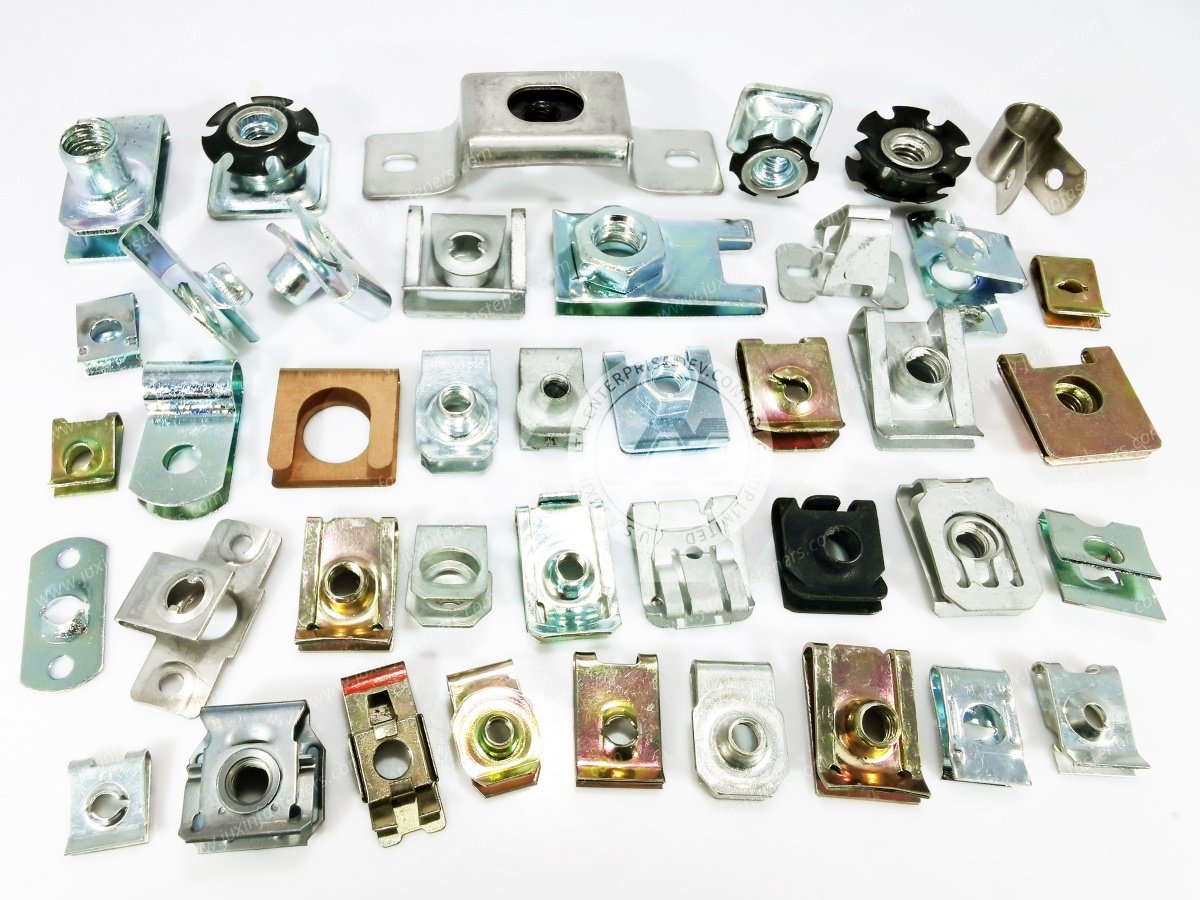
One of the most important principles in second-source qualification is simple:
A component that looks the same is not necessarily functionally equivalent.
Visual inspection can identify obvious differences, but many critical fastener characteristics cannot be confirmed visually.
Depending on the component, functional equivalence may depend on:
Thread diameter and pitch
Thread tolerance
Material grade
Mechanical properties
Heat treatment
Hardness
Grip range
Head or flange geometry
Shoulder dimensions
Weld projection geometry
Knurl geometry
Anti-rotation features
Surface treatment
Coating thickness
Friction characteristics where specified
Corrosion requirements
Polymer grade
Installation interface
Mating material
Required functional performance
The same nominal designation therefore does not automatically mean that two components can be exchanged without validation.
A common sourcing sequence is:
RFQ → Price Comparison → Samples → Trial
For drawing-controlled components, a safer sequence is:
Drawing Review → Equivalence Gate → RFQ → Sample → Functional Validation → Approval
The purpose of the Equivalence Gate is to identify differences before money and engineering time are spent testing a component that was never technically equivalent.
Before an alternative supplier proceeds to sample production, compare five requirement groups.
Confirm critical dimensions and interfaces.
Examples include:
Overall dimensions
Thread dimensions
Head geometry
Flange diameter
Grip range
Shoulder dimensions
Hole interface
Pilot features
Weld projections
Knurl geometry
Mating dimensions
Compare:
Material designation
Material condition
Required strength
Hardness where applicable
Heat treatment where applicable
Stainless steel grade
Polymer resin family and grade where specified
A proposed material substitution should be treated as a technical deviation unless the drawing or customer specification permits it.
Compare:
Coating or plating system
Passivation requirements
Corrosion test requirements
Coating thickness where critical
Appearance requirements
Lubrication or friction requirements where specified
Environmental restrictions required by the customer
A similar coating color does not establish equivalent corrosion performance.
Determine whether the alternative part interacts with the production process in the same way.
This can include:
Installation tooling
Hole preparation
Welding process
Press installation
Installation force
Heat insertion
Ultrasonic insertion
Automated feeding
Assembly torque
A fastener can satisfy dimensional inspection and still create production problems if its installation interface changes.
Determine what evidence is required to support qualification.
Depending on the program, this may include:
Material documentation
Dimensional inspection reports
Thread inspection
Surface-treatment records
Lot identification
Sample approval records
Customer-specific quality documentation
PPAP requirements where specifically requested and applicable
Only after these five gates have been reviewed should procurement treat the alternative component as a serious second-source candidate.
When a supplier transition begins, engineering and procurement should identify the characteristics that cannot change without approval.
JUXIN recommends creating a CTQ Freeze List.
CTQ means Critical to Quality, but in a supplier-change project it can be useful to think of these characteristics as frozen interfaces.
Examples include:
Thread specification
Grip range
Mating diameter
Weld projection geometry
Sheet-metal interface
Insert retention geometry
Material grade
Mechanical property requirement
Critical coating requirement
Critical assembly dimension
A supplier can then identify which requirements can be reproduced directly and which require clarification.
This prevents a dangerous situation in which small undocumented changes accumulate during supplier transfer.
Second-source qualification should begin with the correct technical baseline.
Before requesting quotations, confirm:
Current drawing number
Current drawing revision
Applicable customer specifications
Approved material
Approved coating
Critical dimensions
Inspection requirements
Current approved deviations
Any supplier-specific notes that are no longer applicable
Legacy components often accumulate changes over many years.
The physical component in inventory may not perfectly match an old drawing, while the purchasing system may reference another revision.
If different suppliers quote different technical baselines, their prices cannot be compared meaningfully.
Procurement should therefore establish the source of technical truth before commercial comparison begins.
An approved physical sample can be extremely useful during supplier transfer.
It can help clarify:
Surface appearance
Forming details
Features that are difficult to interpret from older drawings
Assembly fit
Packaging expectations
Visual acceptance criteria
However, a Golden Sample should not automatically become the only technical specification.
A physical part does not reveal every material property, tolerance limit, heat-treatment requirement or coating requirement.
The stronger qualification model is:
Approved Drawing + Applicable Specification + Approved Sample + Inspection Criteria
Together, these provide a more reliable technical baseline than any one source alone.
Not every fastener requires the same qualification effort.
A useful risk-based approach is to divide second-source projects into three levels.
Typical characteristics:
Recognized standard geometry
Common material
No unusual performance requirement
Non-critical assembly location
Easy dimensional verification
Qualification may focus on dimensional inspection, material confirmation, thread verification and assembly fit.
Typical characteristics:
Customer drawing
CTQ dimensions
Special coating
Specific installation interface
Repeated production requirement
Qualification should include detailed drawing comparison, material verification, sample inspection and assembly testing.
Typical characteristics may include:
Safety-related application
High mechanical loading
Critical welding interface
Special process requirement
Tight dimensional control
Industry-specific documentation
Customer-controlled approval process
These programs require qualification requirements to be defined directly by the customer and engineering team.
The supplier should not independently assume that a standard commercial inspection package is sufficient.
Weld nuts deserve particular attention because geometric similarity does not guarantee equivalent welding behavior.
Important characteristics can include:
Thread specification
Nut geometry
Projection number
Projection geometry
Projection height
Pilot or locating feature
Material
Surface condition
Mating sheet
Welding parameters
Required joint performance
For example, two hex weld nuts may have the same thread and external dimensions but use different projection geometry.
That difference can affect current concentration, collapse behavior and weld consistency.
A second-source weld nut should therefore be validated through both dimensional inspection and the customer's welding process where required.
Rivet nuts create a different set of equivalence questions.
Important characteristics include:
Thread size
Body style
Head style
Grip range
Body diameter
Hole-size requirement
Knurl or anti-rotation geometry
Material
Surface finish
Installed dimensions
Installation tooling compatibility
A rivet nut with the correct thread but an incorrect grip range may install improperly even though it can be threaded onto the mating bolt.
For blind-side fastening applications, grip range and installation interface should therefore be treated as CTQ characteristics.
Self-clinching nuts, studs and standoffs depend heavily on the relationship between the fastener and sheet material.
Qualification should consider:
Sheet thickness
Sheet material
Sheet hardness
Hole diameter
Hole preparation
Installation direction
Installation force
Fastener geometry
Required push-out or torque performance where specified
A component should not be considered equivalent simply because the thread and external dimensions appear similar.
The sheet-fastener interface is part of the fastening system.
Threaded inserts introduce another important interface: the polymer boss.
Relevant variables include:
Insert geometry
Insert material
Thread specification
Outside diameter
Insert length
Plastic material
Boss diameter
Hole dimensions
Installation process
Required pull-out resistance
Required torque resistance
Heat-staked and ultrasonically installed inserts should be evaluated with the actual polymer and boss design whenever functional performance is critical.
An insert that works well in one polymer or boss geometry may not behave identically in another.
Polymer components require more than dimensional matching.
Potential material differences can affect:
Moisture absorption
Creep
Stiffness
Impact behavior
Temperature resistance
Chemical resistance
UV resistance
Electrical properties
Flammability performance where specified
PA6, PA66, POM, PP, PC, PVDF and PEEK should not be treated as interchangeable materials simply because they can be molded into the same geometry.
For polymer fasteners, resin identification can be just as important as dimensional inspection.
Different manufacturing sectors place different emphasis on supplier qualification.
Automotive programs may require close control of:
Mechanical properties
Heat treatment
Coating
Thread characteristics
Weld performance
Vibration resistance
Lot traceability
Customer-specific quality documentation
PPAP requirements should be defined by the customer and project rather than assumed for every automotive component.
AI server, power and cooling infrastructure can use self-clinching fasteners, rivet nuts, inserts, polymer components and custom machined hardware.
Second-source reviews should consider:
Sheet thickness
Installation process
Serviceability
Electrical requirements
Cabinet space
Thermal environment
Production automation
A nominally equivalent component should not change cabinet assembly conditions without engineering approval.
Telecommunications hardware can require corrosion resistance, electrical isolation, thin-sheet fastening and long-term serviceability.
Supplier qualification should confirm both environmental requirements and assembly compatibility.
Semiconductor manufacturing equipment may have subsystem-specific requirements for precision, materials, cleanliness, vacuum compatibility or other controlled characteristics.
These requirements must be stated explicitly in the drawing, specification or RFQ.
A general material designation alone does not establish suitability for a cleanroom or semiconductor process environment.
Medical equipment projects may have customer-specific material, cleanliness, documentation, sterilization or regulatory requirements.
JUXIN can evaluate applicable metal and polymer fastening components against the supplied drawing and specification, but medical-grade,
biocompatibility or sterilization requirements should never be assumed from the industry name alone.
Rail projects can involve vibration, corrosion, fire-performance requirements and project-specific documentation.
Fastener qualification should therefore reference the actual application and applicable customer or international requirements rather than relying solely on a generic rail-industry designation.
Electrical enclosures, power conversion equipment, energy-storage systems and supporting structures may require combinations of:
Mechanical strength
Corrosion resistance
Electrical insulation
Thermal performance
Sheet-metal installation
Environmental durability
Metal and polymer components should be evaluated according to their specific function within the assembly.
Marine environments make corrosion and galvanic compatibility particularly important.
Second-source qualification should confirm that a proposed material or coating change does not create an unintended corrosion risk.
Food machinery can involve moisture, washdown and chemical exposure.
Where a component is used in a direct food-contact zone, applicable material and regulatory requirements must be specified by the customer rather than inferred from the machine type.
These industries frequently use sheet-metal fasteners, threaded inserts, plastic rivets, polymer hardware and custom components.
Second-source evaluation should focus on installation compatibility, environmental exposure, service requirements and production consistency.
Weight, vibration, corrosion, packaging space and appearance can all influence fastener selection.
Material changes intended to reduce cost should therefore be reviewed against both structural and environmental requirements.
Outdoor applications may require long-term corrosion resistance, tamper resistance and simplified maintenance.
Supplier comparisons should include coating or material performance rather than focusing only on nominal dimensions.
During second-source development, differences will sometimes be identified.
Not every difference requires rejection, but every meaningful difference should be visible.
A useful classification is:
The supplier can meet the drawing and specified requirements without deviation.
Examples may include:
Alternative material designation
Different coating system
Manufacturing-process change
Non-critical geometry change
Alternative tooling approach
These differences should be documented and approved before production release where required.
A difference affects a CTQ characteristic, assembly interface or required performance.
The component should not be released as an equivalent second source unless the customer completes the required engineering validation and formally accepts the change.
This classification prevents commercial urgency from silently turning a supplier change into an uncontrolled design change.
A prototype that is manufactured differently from future production can provide misleading qualification results.
Where practical, second-source samples should represent the intended production configuration in areas that influence performance.
Validation can include:
Dimensional inspection
Thread GO/NO-GO inspection
Material verification where required
Surface-finish verification
Visual inspection
Assembly trial
Installation test
Customer functional testing
Comparison with the approved component
The exact validation plan should reflect component risk.
A common sourcing mistake is treating supplier approval as a permanent event.
Second-source equivalence can be lost later if uncontrolled changes occur in:
Raw material
Tooling
Heat treatment
Coating supplier
Production process
Manufacturing location
Critical dimensions
Sub-supplier
Packaging where functionally relevant
For drawing-controlled or application-critical components, the purchasing and quality agreement should define which changes require customer notification or approval.
This turns second sourcing from a one-time sample exercise into a controlled supply process.
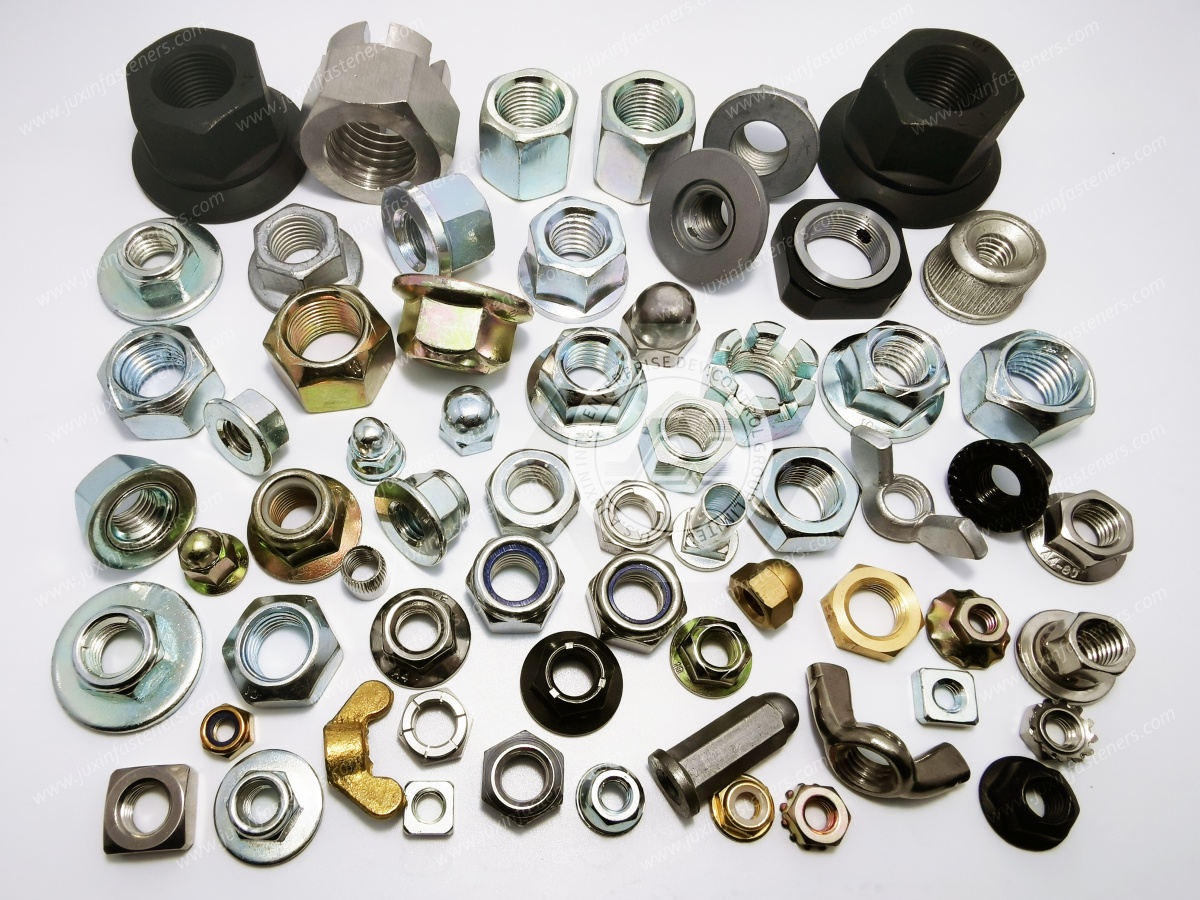
Price remains important, but an OEM supplier comparison should also evaluate:
Technical equivalence
Tooling requirements
MOQ
Sample lead time
Production lead time
Manufacturing capacity
Inspection capability
Material traceability
Documentation capability
Packaging
Delivery flexibility
Change-control process
Communication responsiveness
Long-term repeatability
A lower unit price can create higher total cost if the component causes line interruption, sorting, rework, field failures or repeated engineering investigation.
The commercial comparison should therefore consider the total sourcing risk, not only piece price.
JUXIN Fasteners supports second-source and drawing-based sourcing projects involving product families such as:
Weld nuts
Projection weld nuts
Weld studs
Rivet nuts
Blind rivets
Self-clinching nuts
Self-clinching studs
Self-clinching standoffs
Locking nuts
Custom machined fasteners
CNC machined components
Threaded inserts for plastics
Nylon screws and nuts
Polymer washers and spacers
Plastic rivets
Snap rivets
Custom metal components
Custom polymer components
Drawing-based specialty fasteners
For projects requiring a newly engineered component rather than an alternative supplier for an existing part, see our guide to custom industrial fasteners and drawing-based components.
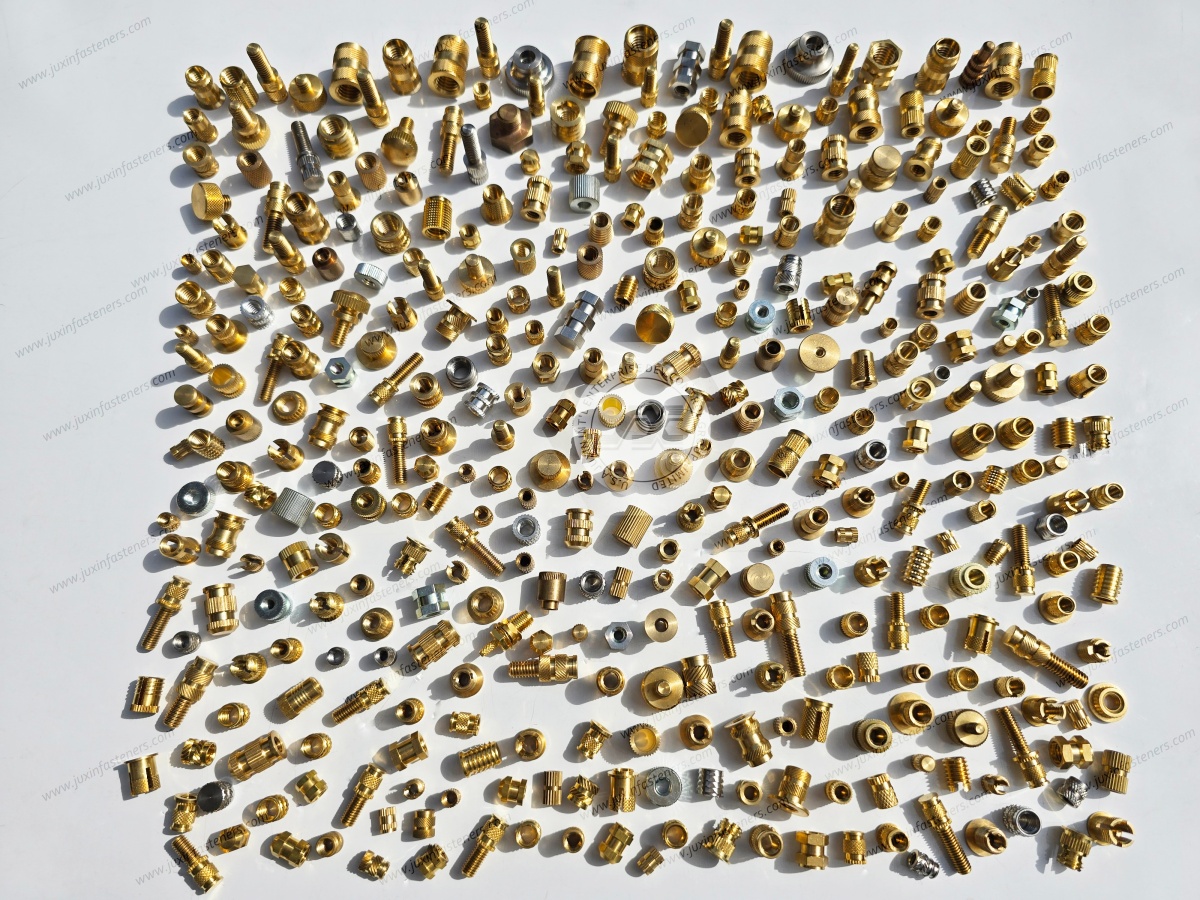
To evaluate an existing component for alternative production, send as much of the following information as possible:
Current 2D engineering drawing
3D CAD file when available
Drawing revision
Existing approved sample where appropriate
Material specification
Mechanical property requirements
Heat-treatment requirement where applicable
Surface finish or coating
Critical dimensions and tolerances
Thread specification
Installation method
Mating material
Application environment
Corrosion requirement
Temperature range
Vibration requirement
Required functional tests
Sample quantity
Production quantity
Estimated annual usage
Required inspection documentation
Material documentation requirements
PPAP or customer-specific documentation requirements where applicable
Packaging requirements
Target production schedule
If the current component has known quality or assembly problems, include that information as well.
Understanding why the incumbent component is being replaced can help prevent the same problem from being reproduced by the second source.
If your organization is developing an alternative source for an existing fastener, the most effective starting point is the approved engineering specification.
Send JUXIN Fasteners the current drawing, material requirement, surface finish, annual usage, application information and required qualification documentation.
Our team can review whether the component fits our manufacturing and supply capabilities, identify key technical questions,
evaluate applicable product or manufacturing routes, and support sample preparation for customer validation.
The objective is not simply to make a component that looks like the incumbent part.
The objective is to support a controlled transition from:
Existing Specification → Technical Equivalence Review → RFQ → Sample Validation → Customer Approval → Qualified Second Source
Email: info@juxinfasteners.com
Website: www.juxinfasteners.com
JUXIN FASTENERS — Drawing-Based Fastening Solutions and Second-Source Support for Global Industrial Manufacturing
 MORE NEWS
Oct. 01, 2026
Oct. 01, 2026
Contact Us
Tel.:
+86 020 8621 0320
+86 020 3121 6067
E-mail:
Technical Support:
Navigation
SEND INQUIREY