
Call Us
+86 136 6007 9809
Call Us
+86 136 6007 9809

Oct. 01, 2026
Modern industrial equipment rarely fails because a fastener looks different from the drawing. More often,
problems begin when a component looks correct but does not reproduce the interfaces that actually control assembly performance.
A thread may fit but have the wrong tolerance class. A rivet nut may share the same nominal thread size but have a different grip range.
A weld nut may match the overall dimensions but use a different projection geometry.
A threaded insert may fit the same hole while producing different pull-out or torque-out behavior in the selected polymer.
A polymer fastener may have the correct dimensions but respond differently to temperature, moisture, chemicals, or long-term loading.
For this reason, sourcing custom industrial fasteners is not simply a drawing-to-price exercise.
For design engineers, the challenge is converting functional requirements into manufacturable geometry, materials, tolerances and inspection criteria.
For procurement, strategic sourcing and supplier development teams, the challenge is determining whether a new supplier can reproduce the required component consistently
enough to become a qualified production or second source.
JUXIN Fasteners supports global B2B customers with drawing-based custom fasteners, custom machined components and engineered fastening solutions for automotive manufacturing,
electrical equipment, AI data center infrastructure, telecommunications equipment, semiconductor equipment, rail transit, energy systems, medical equipment,
HVAC, electronics and other industrial applications.
Our product scope includes custom machined fasteners, weld nuts, weld studs, rivet nuts, blind rivets, self-clinching hardware, threaded inserts for plastics,
nylon and polymer fasteners, plastic rivets, specialty metal components and other drawing-based fastening parts.
The objective is not to force every requirement into a catalog item. It is to determine whether an existing standard component,
a modified standard part or a fully drawing-specific component provides the most practical manufacturing solution.
Standard fasteners remain the preferred solution whenever they satisfy the mechanical, dimensional and environmental requirements of the assembly.
They simplify sourcing, reduce tooling requirements and generally provide broader second-source availability.
However, industrial assemblies frequently introduce constraints that standard hardware cannot resolve efficiently.
Typical reasons for specifying a custom fastener include:
Restricted installation space or unusual tooling access
Non-standard head diameter, height or profile
Special thread length or engagement requirements
Thin-sheet or blind-side installation
Specific grip-range requirements
Weld projection or locating geometry
Anti-rotation features
Special shoulder, flange or pilot dimensions
Material compatibility requirements
Electrical isolation requirements
Corrosion or environmental exposure
Weight-reduction objectives
Automated assembly requirements
Special polymer or metal interfaces
Existing legacy drawings that cannot be redesigned
Supplier localization or second-source qualification
The engineering question should therefore not be:
“Can you make this part?”
A better question is:
“Which dimensions, material properties and assembly interfaces must remain controlled for this part to perform correctly in our application?”
That distinction becomes especially important during supplier changes.
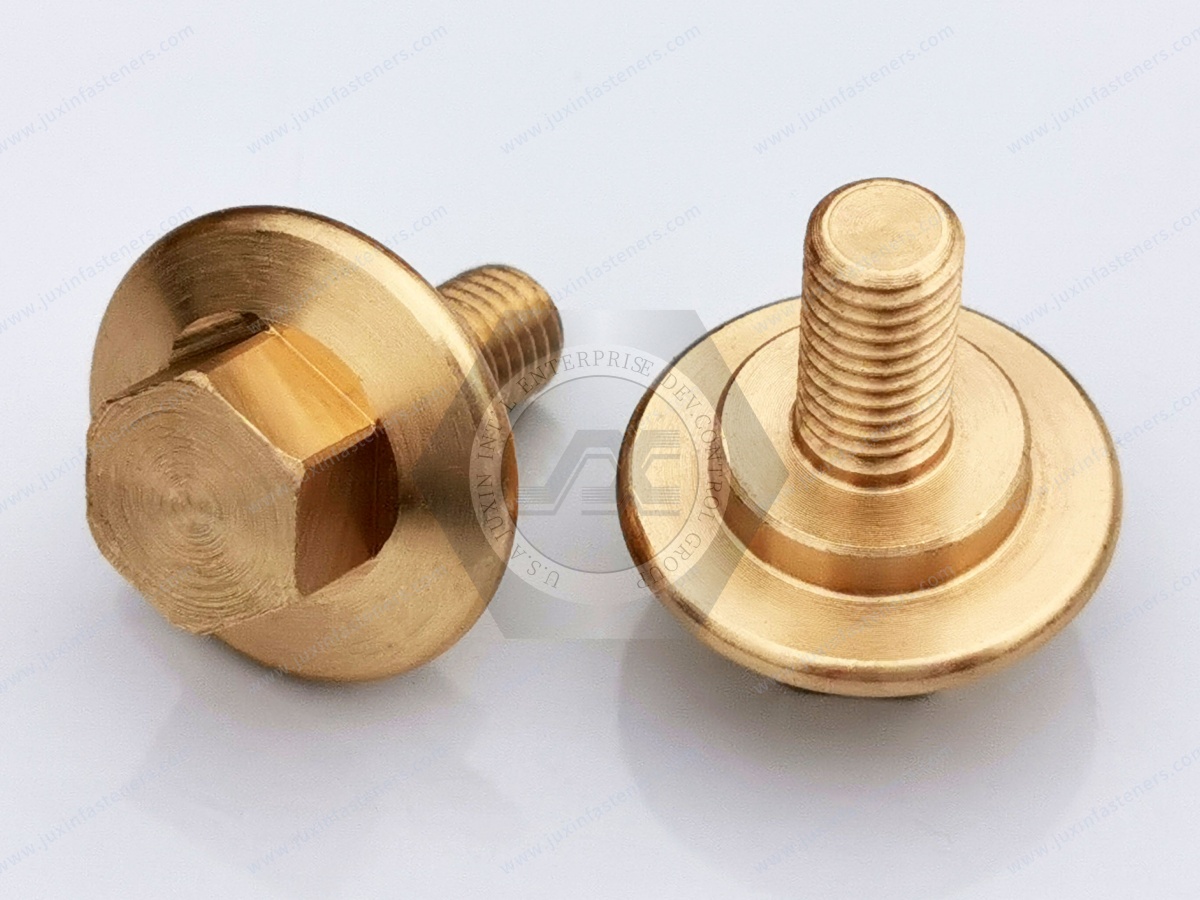
A reliable drawing-based sourcing process should separate functional requirements from dimensions that are simply descriptive.
At JUXIN Fasteners, a custom component review can be structured around the following workflow.
The engineering drawing establishes the nominal geometry, but the drawing alone may not explain how the component functions inside the assembly.
The review should therefore consider:
2D drawing
3D CAD model when available
Assembly location
Mating component
Installation method
Applied loads
Operating environment
Required service life
Existing failure mode, if applicable
For replacement or second-source projects, an approved sample may also help clarify features that are difficult to interpret from an older drawing.
Not every dimension carries equal functional risk.
Critical-to-quality, or CTQ, characteristics may include:
Thread diameter and pitch
Thread tolerance or fit requirement
Grip range
Hole size relationship
Head or flange diameter
Head height
Shoulder diameter
Shoulder length
Weld projection geometry
Locating pilot dimensions
Knurl or anti-rotation geometry
Insert outside diameter
Concentricity
Perpendicularity
Component length
Mating-surface dimensions
These characteristics should receive greater attention during sample inspection and production control because they directly influence installation or assembly performance.
One of the most useful steps in custom fastener sourcing is creating a simple CTQ map before sending the RFQ to multiple suppliers.
Instead of comparing suppliers only by unit price, divide drawing requirements into three groups.
These directly affect assembly.
Examples include thread fit, grip range, hole engagement, locating diameter, weld projection geometry and mating dimensions.
These characteristics should generally not be changed without engineering approval.
These affect durability or operating performance.
Examples include material grade, mechanical properties, hardness where applicable, corrosion protection and polymer performance requirements.
Any proposed alternative should be evaluated against the application rather than accepted because it appears commercially equivalent.
These may have greater flexibility depending on the drawing and assembly.
Examples can include certain non-interface radii, manufacturing marks or other non-critical features.
This classification helps engineering and procurement teams focus supplier discussions on characteristics that actually create assembly risk.
It also prevents unnecessary cost from applying extremely tight controls to every dimension regardless of function.
Material selection should follow the mechanical and environmental requirements of the application rather than a generic “stronger is better” rule.
Depending on the component and drawing, JUXIN Fasteners works with material families including:
Low-carbon steel
Alloy steel
Stainless steel
Aluminum alloys
Titanium alloys for selected drawing-based components
Brass and other specified metals for suitable components
PA6 and PA66
POM
PP
PC
PVDF
PEEK and other engineering polymers for appropriate applications
Material substitutions should never be treated as automatic equivalents.
For example, changing from one stainless grade to another may affect corrosion behavior, mechanical properties, cost and availability.
Likewise, replacing one engineering polymer with another can change moisture absorption, stiffness, creep behavior, chemical resistance and dimensional stability.
The correct material is the material that satisfies the actual assembly environment.
The drawing should not be separated from the manufacturing process.
Different geometries, quantities and material requirements may favor different production routes.
Depending on the component, possible processes include:
Cold forming
CNC machining
Stamping
Forming
Welding-related fastener production
Polymer molding
Secondary machining
Heat treatment where required
Surface finishing
A component that can technically be CNC machined may become unnecessarily expensive at high production volume.
Conversely, creating dedicated tooling for a low-volume development component may not be commercially practical.
For this reason, annual usage, prototype quantity and expected production volume should be communicated during the RFQ stage.
Not every unusual requirement requires a completely new fastener.
A useful engineering sourcing hierarchy is:
Use an existing ISO, DIN, EN, ASME/ANSI or other applicable internationally recognized component when its geometry and performance meet the assembly requirement.
This normally provides the lowest sourcing complexity.
A standard platform may sometimes be adapted through changes such as length, secondary machining, coating, material or another drawing-controlled feature.
This can reduce development complexity while preserving an established manufacturing basis.
A fully custom component becomes appropriate when the interface geometry, material,
installation method or assembly function cannot be achieved using an existing standard or modified standard design.
JUXIN Fasteners can evaluate all three paths based on the drawing and application rather than assuming that custom tooling is always necessary.
The same nominal fastener can face very different engineering requirements depending on where it is installed.
Automotive assemblies frequently combine thin sheet metal, vibration, repeated dynamic loading, automated installation and demanding corrosion requirements.
Relevant JUXIN product families can include:
Weld nuts
Projection weld nuts
Weld studs
Rivet nuts
Self-clinching fasteners
Locking nuts
Custom machined components
Drawing-based specialty fasteners
Potential applications include vehicle structures, brackets, enclosures, seating-related assemblies, electrical systems, thermal-management hardware and other drawing-specific assemblies.
For these projects, engineers should define the substrate thickness, joint configuration, installation process, corrosion requirement and required mechanical properties before selecting the fastener.
Motorcycle and bicycle assemblies often place greater emphasis on packaging space, weight, vibration, corrosion resistance and appearance.
Depending on the assembly, stainless steel, aluminum, alloy steel, titanium or polymer components may be evaluated.
Custom dimensions should be justified by the actual assembly interface rather than by appearance alone.
AI computing infrastructure is increasing the density of servers, power equipment, cooling systems and electrical distribution hardware inside racks and cabinets.
Relevant fastening solutions can include:
Self-clinching nuts
Self-clinching studs
Self-clinching standoffs
Rivet nuts
Threaded inserts
Nylon and polymer hardware
Custom machined components
Applications may include sheet-metal cabinets, server chassis, power-distribution enclosures, cooling equipment, electrical assemblies and supporting infrastructure.
For sheet-metal applications, panel thickness, hole preparation, installation direction,
available rear access and service requirements should be defined before selecting between self-clinching hardware and rivet nuts.

Telecommunications equipment often combines sheet-metal enclosures, electronics, cable-management structures and outdoor or semi-outdoor environments.
Fastener selection may require consideration of:
Corrosion resistance
Electrical isolation
Thin-sheet installation
Service access
Space limitations
Repeated maintenance
Polymer compatibility
Self-clinching fasteners, rivet nuts, polymer fasteners, threaded inserts and drawing-specific components can each solve different assembly problems.
Semiconductor manufacturing equipment can contain precision mechanical structures, electronics, thermal-management systems and automated mechanisms.
The fastener specification should therefore be based on the requirements of the particular subsystem.
JUXIN can evaluate drawing-based precision components, CNC-machined parts, stainless fasteners, polymer components and specialty
fastening hardware where the required material, dimensional and inspection requirements match available manufacturing capabilities.
Cleanroom, vacuum, outgassing, particle-generation or semiconductor-process-specific requirements should be explicitly stated in the
RFQ because these requirements cannot be assumed from material or dimensional specifications alone.
Medical equipment can range from external equipment housings and diagnostic systems to laboratory equipment and mechanical support structures.
Depending on the application, requirements may involve corrosion resistance, low weight, electrical isolation, dimensional consistency or material restrictions.
JUXIN can review suitable metal and polymer fastening components according to customer drawings and specified requirements.
Where an application requires medical-grade material certification, sterilization compatibility, biocompatibility or regulatory documentation,
those requirements should be identified separately during supplier qualification rather than inferred from the term “medical equipment.”
Food-processing and packaging equipment may expose hardware to moisture, cleaning chemicals, repeated washdown or temperature variation.
Stainless steel and suitable engineering polymers may be considered depending on the installation location.
However, food-contact requirements should not be assumed simply because a machine operates in the food industry. Direct food-contact
applications require the customer to specify the applicable material and regulatory requirements.
Electrical power systems, energy storage equipment, power-conversion equipment and industrial electrical enclosures can require combinations of mechanical strength,
corrosion resistance, electrical isolation and thermal stability.
Relevant products may include:
Weld fasteners
Rivet nuts
Self-clinching hardware
Nylon fasteners
Insulating components
Custom machined parts
Drawing-specific metal and polymer components
Material selection should account for the electrical and environmental function of the assembly rather than relying solely on mechanical strength.
Rail vehicles contain fastening applications across interior equipment, exterior assemblies, electrical systems, lighting, brackets, panels and equipment enclosures.
Potential solutions can include stainless fasteners, weld fasteners, rivet nuts, locking hardware, polymer components and custom drawing-based parts.
Rail applications can involve project-specific fire behavior, vibration, corrosion and documentation requirements.
These requirements should therefore be defined at the project level rather than assuming that a general industrial fastener automatically satisfies railway requirements.
Marine environments increase the importance of corrosion resistance and material compatibility.
Stainless steel grades, polymer components and selected corrosion-protected metal fasteners may be appropriate depending on exposure.
Engineers should also consider galvanic interaction when dissimilar metals are assembled in conductive environments.
Electronics and appliances frequently require small fasteners, inserts, spacers, plastic hardware and sheet-metal fastening systems.
JUXIN product options include:
Nylon screws
Nylon nuts
Polymer washers
Spacers
Plastic rivets
Snap rivets
Threaded inserts for plastics
Self-clinching hardware
Custom small metal components
Material selection for polymer hardware should consider temperature, moisture, electrical requirements and long-term loading.
HVAC assemblies commonly combine sheet metal, vibration, moisture, temperature cycling and service access.
Rivet nuts, self-clinching hardware, weld fasteners, stainless components and polymer parts can support different enclosure, bracket and equipment assemblies.
The best solution depends on panel thickness, installation access and whether the joint must be removable during maintenance.
Outdoor products can require corrosion resistance, tamper resistance, long service life and simplified installation.
Material and coating selection should reflect the actual outdoor environment.
For custom components, designers should also consider whether an unusual geometry creates unnecessary replacement or sourcing difficulty later in the product life cycle.
One of the most common engineering decisions in sheet-metal design is choosing how to create a durable reusable thread.
The correct solution depends primarily on access, sheet thickness, production process and service requirements.
Welding is already part of the manufacturing process
High-volume production justifies the process
The design provides suitable weld access
Projection geometry and location can be controlled
Only one side of the assembly is accessible
Welding is undesirable
A reusable internal thread is needed in thin material
Field installation or post-fabrication installation is required
Thin sheet metal requires permanent captive threads
Installation can be performed before final enclosure assembly
Hole dimensions and sheet properties are compatible with the selected hardware
A compact and repeatable installation is required
These product families should not be treated as interchangeable solely because they provide the same thread size.
Their installation mechanics and substrate requirements are fundamentally different.
Plastic assemblies create another set of design challenges.
Repeatedly driving a screw directly into a polymer boss may not provide the serviceability or thread durability required for some products.
Threaded inserts can provide a reusable metal thread within the plastic component.
Depending on the insert design, installation methods can include heat insertion, ultrasonic installation or other appropriate insertion processes.
Important design variables include:
Polymer type
Boss diameter
Wall thickness
Insert geometry
Installation temperature or energy
Hole preparation
Required pull-out resistance
Required torque resistance
Expected number of assembly cycles
The insert should be selected together with the plastic boss design. Treating the insert and molded component as independent parts can lead to cracking, weak retention or inconsistent installation.
Plastic and nylon fasteners should not automatically be treated as inexpensive replacements for metal hardware.
Engineering polymers can provide useful properties such as:
Electrical insulation
Low weight
Corrosion resistance
Reduced risk of scratching sensitive surfaces
Chemical resistance with appropriate resin selection
Non-metallic assembly interfaces
However, polymer behavior differs fundamentally from metal.
Design engineers should evaluate:
Continuous operating temperature
Short-term peak temperature
Moisture absorption
Creep under sustained load
Chemical exposure
UV exposure for outdoor applications
Flammability requirements where applicable
Dimensional stability
Required mechanical load
PA6, PA66, POM, PP, PC, PVDF and PEEK do not provide interchangeable performance.
The material should be selected according to the actual environment and mechanical requirement.
A coating specification should communicate more than appearance.
Depending on the fastener and application, the drawing or RFQ may need to define:
Coating type
Corrosion-resistance requirement
Appearance
Coating thickness where critical
Thread fit after coating
Friction requirements where applicable
Restrictions related to hydrogen embrittlement
Environmental or substance restrictions required by the customer
JUXIN can evaluate finishes such as zinc-based coatings, zinc-nickel systems, passivation for applicable stainless components, and other customer-specified finishes according to the product and project.
When corrosion performance is important, the required test method and acceptance criteria should be stated rather than relying on terms such as “high corrosion resistance.”
During cost reduction or second-source qualification, procurement teams frequently encounter a component that appears dimensionally similar to the incumbent part.
That does not necessarily make it equivalent.
A useful rule is:
Do not substitute a fastener until the interfaces that control installation and performance have been compared.
For a threaded component, that may include thread class, engagement length and mechanical properties.
For a rivet nut, it may include body style, grip range, hole requirement and installed performance.
For a weld nut, it may include projection geometry, pilot features and welding process compatibility.
For a self-clinching component, it may include sheet hardness, sheet thickness, hole diameter and installation force.
For a polymer component, it may include resin grade, moisture behavior, temperature resistance and creep.
This approach helps prevent a common sourcing mistake: qualifying a supplier based on appearance and nominal dimensions while overlooking the characteristics that actually determine assembly performance.
A second-source supplier should not simply reproduce the incumbent supplier’s quotation.
A more reliable comparison uses an equivalence matrix covering:
Drawing revision
Critical dimensions
Thread specification
Material grade
Mechanical property requirements
Heat treatment where applicable
Surface finish
Installation interface
Functional requirements
Inspection method
Required documentation
Packaging and traceability requirements
Any difference should be classified as either acceptable, requiring engineering approval, or unacceptable.
This creates a much stronger qualification record than a simple statement that the sample “looks the same.”
For custom or drawing-controlled components, physical samples can help verify manufacturability before volume production.
The validation process may include:
Dimensional inspection
Thread GO/NO-GO gauge inspection
Material verification as required
Visual inspection
Coating verification where specified
Assembly trial
Customer functional testing
Comparison against an approved reference sample
Documentation review
The exact inspection plan should be determined by the component risk and customer requirements.
Once the sample and documentation are approved, the approved configuration can become the reference for subsequent production control.
Large OEMs and industrial procurement teams often require more than a commercial quotation.
Depending on the project, sourcing documentation may include:
Engineering drawing revision control
Material certificates or material reports when required
Dimensional inspection records
Thread inspection records
Coating or surface-treatment documentation where applicable
Sample approval records
Lot identification and traceability requirements
Customer-specific quality documentation
Automotive PPAP, railway documentation, medical-sector documentation or other industry-specific quality packages should be defined during
RFQ and supplier qualification because documentation requirements vary significantly by customer and program.
JUXIN Fasteners evaluates these requirements on a project-by-project basis rather than assuming one documentation package is appropriate for every industry.
A technically complete RFQ reduces quotation uncertainty and shortens the drawing-review process.
For custom industrial fasteners, custom machined components or drawing-based fastening parts, provide as much of the following information as possible:
2D engineering drawing
3D CAD file when available
Drawing revision
Material specification
Required mechanical properties
Heat treatment where applicable
Surface finish or coating
Critical dimensions and tolerances
Thread specification
Application description
Mating material
Operating temperature
Corrosion or chemical exposure
Vibration requirements
Electrical insulation requirements where applicable
Prototype or sample quantity
Production order quantity
Estimated annual usage
Required inspection documentation
Required material documentation
Packaging requirements
Target delivery schedule
If the component is being qualified as a second source, also provide the existing approved drawing and identify any characteristics that cannot be changed without engineering approval.
A design engineer searching for a custom fastener supplier may ask:
“Can this geometry be manufactured reliably?”
A procurement manager may ask:
“Can this supplier reproduce it consistently and support our production requirements?”
Both questions matter.
A technically manufacturable component is not automatically a commercially sustainable supply solution.
Likewise, an attractive quotation does not prove engineering equivalence.
The strongest sourcing process connects drawing review, manufacturing feasibility, sample validation, quality control and commercial supply planning before production release.
Custom does not always have to mean expensive.
Cost often increases when the supplier receives a finalized drawing containing unnecessary complexity.
Early technical review can identify opportunities such as:
Using an existing standard platform
Modifying a standard component instead of creating a completely new design
Avoiding unnecessarily tight tolerances on non-critical dimensions
Selecting a manufacturing process appropriate for annual volume
Reducing unnecessary secondary operations
Selecting a material appropriate to the actual environment
Simplifying features that do not contribute to assembly performance
The goal is not to redesign the customer’s component without approval.
The goal is to identify manufacturing questions early enough for engineering teams to make informed decisions before tooling and production are committed.
JUXIN Fasteners supports OEMs, equipment manufacturers, engineering teams,
procurement organizations and supplier-development teams seeking standard, modified-standard and drawing-based fastening components.
Our product and sourcing scope includes:
Custom machined fasteners
CNC machined components
Weld nuts and specialty weld fasteners
Weld studs
Rivet nuts
Blind rivets
Self-clinching nuts
Self-clinching studs
Self-clinching standoffs
Threaded inserts for plastics
Nylon and polymer screws
Nylon and polymer nuts
Polymer washers and spacers
Plastic rivets and snap rivets
Custom metal fastening components
Custom polymer components
Drawing-based specialty parts
Applications span automotive, motorcycle, bicycle, racing vehicle, medical equipment, food machinery, electrical power equipment,
AI data center cabinets, telecommunications equipment, rail transit, semiconductor equipment, energy systems, marine equipment,
electronics, electrical appliances, HVAC equipment, leisure equipment and outdoor structures.
Product feasibility, manufacturing method, material selection, tolerances, documentation and MOQ depend on the individual drawing and project requirements.
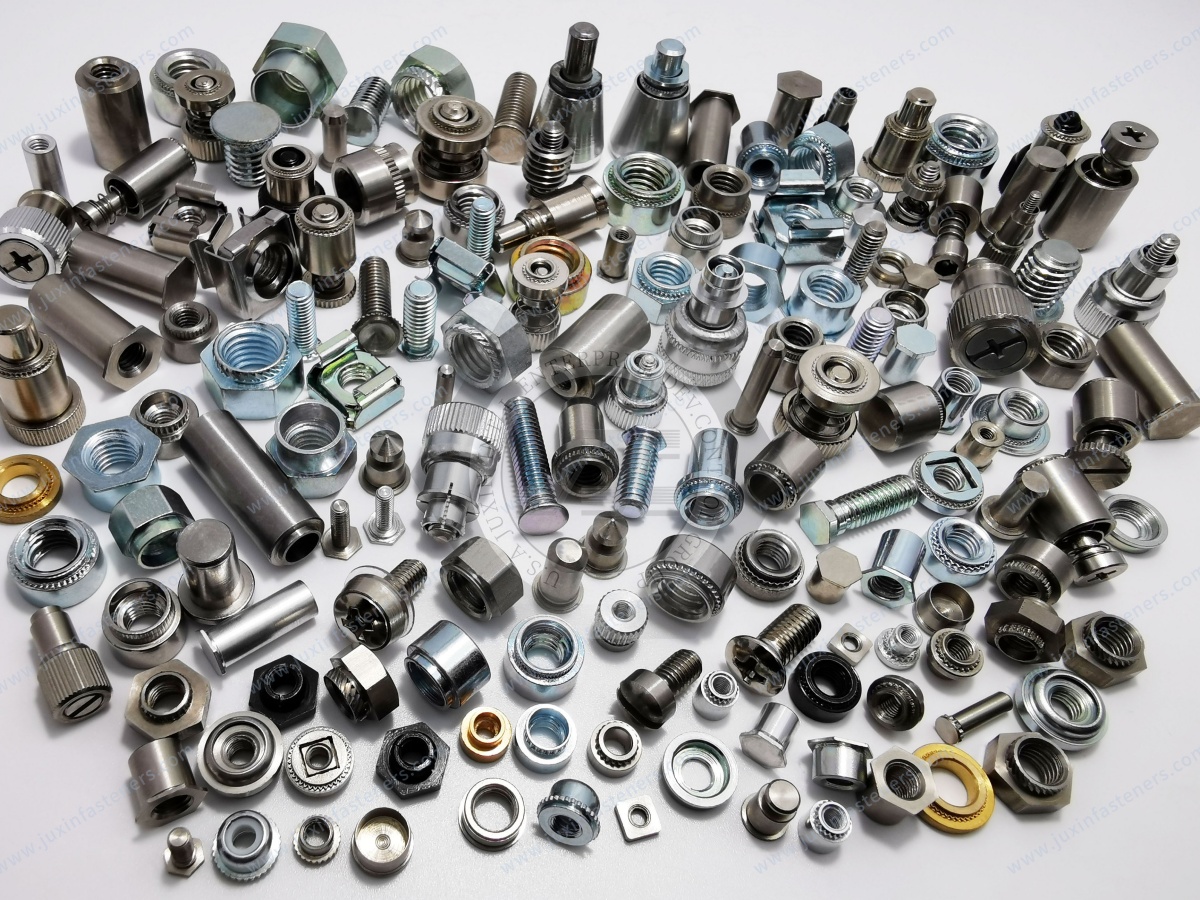
If you are developing a new fastening component, replacing an existing supplier or establishing a qualified second source, send JUXIN Fasteners your drawing and technical requirements.
Our team can review the component from both manufacturing and sourcing perspectives and determine whether the requirement is best addressed through a standard component,
modified standard fastener or fully drawing-based solution.
For the fastest technical review, include your 2D drawing, material, surface finish, critical tolerances, application environment, expected annual usage, sample quantity and required quality documentation.
Email: info@juxinfasteners.com
Website: www.juxinfasteners.com
JUXIN FASTENERS — Drawing-Based Fastening Solutions for Global Industrial Manufacturing
 MORE NEWS
Oct. 01, 2026
Oct. 01, 2026
Contact Us
Tel.:
+86 020 8621 0320
+86 020 3121 6067
E-mail:
Technical Support:
Navigation
SEND INQUIREY