Call Us
+86 136 6007 9809
Call Us
+86 136 6007 9809

Nov. 19, 2026
316 Stainless Steel Fasteners for Commercial Kitchen and Foodservice Equipment
Commercial kitchens and industrial foodservice facilities subject equipment to a relentless combination of steam, thermal cycling, acidic food residues, animal fats, salt, caustic degreasers, and chlorinated sanitizing agents. Whether fabricating commercial combi-ovens, stainless steel prep tables, exhaust hoods, under-counter refrigeration cabinets, high-temperature dishwashers, or food-processing machinery, OEM engineers must select fastening hardware that preserves both structural integrity and cleanability over years of heavy commercial operation.
As an OEM stainless fastener manufacturer serving commercial kitchen and foodservice equipment builders worldwide, Juxin Fasteners produces 316 stainless steel fasteners for these applications—alongside 304 (A2) stainless steel machine screws, flange bolts, lock nuts, closed-end rivet nuts, weld studs, and custom CNC-machined hardware for industrial batch production.
Critical Compliance Distinction: Structural Equipment Fasteners vs. Direct Food-Contact Suitability
Before specifying stainless steel hardware for restaurant or food-processing equipment, design engineers and procurement managers must establish a clear regulatory boundary: specifying 304 (A2) or 316 (A4) stainless steel material alone does not establish food-grade, NSF, FDA, or EHEDG compliance.
The design and food-contact compliance requirements for stainless equipment fasteners depend on the installation zone:
Non-Food / Structural Equipment Zones: Cabinet frames, leg mounts, rear motor covers, electrical control boxes, exhaust duct brackets, and insulated refrigeration walls require corrosion-resistant mechanical fastening that withstands heat, steam, and cleaning spray without rust staining.
Splash Zones: Exterior doors, grease-filter housings, control bezels, and dishwasher door frames require smooth, low-crevice head geometries (such as button heads, truss heads, or blind-mounted weld studs) that resist grease accumulation and allow rapid wipe-downs.
Direct Food-Contact Zones: Any component contacting unpackaged food directly requires specialized hygienic design—including defined surface roughness (Ra), crevice-free exposed threads, food-contact-compliant elastomer seals (such as application-approved EPDM or FKM where specified), and applicable finished-equipment evaluation and certification where required. Juxin Fasteners supplies precision industrial stainless hardware manufactured to OEM drawings; finished-equipment hygienic and food-contact qualification must be established by the equipment manufacturer and relevant supply chain.
304 (A2) vs. 316 (A4) Stainless Steel Fasteners in Foodservice Equipment
Selecting between 304 and 316 stainless steel fasteners for foodservice equipment is a trade-off between material cost and localized chloride-corrosion resistance. Both grades are austenitic stainless steels (designated A2 and A4 under ISO 3506), but 316 / A4 incorporates 2% to 3% molybdenum—substantially raising resistance to chloride-induced pitting and crevice corrosion.
| Commercial Kitchen Equipment Zone | Primary Environmental Stressors | Recommended Stainless Grade | Preferred Fastener Architectures | Key Engineering & Assembly Risks |
|---|---|---|---|---|
| Dry Structural Frames & Prep Tables | Ambient heat, occasional damp wipe-down, static load | 304 (A2-70) | Stainless machine screws, hex flange bolts, DIN 985 lock nuts | Thread galling during fast pneumatic assembly |
| Commercial Dishwashers & Washdown Zones | Hot alkaline detergents, chlorinated sanitizers, high-pressure steam | 316 / 316L (A4-70 / A4-80) | Stainless steel flange bolts, closed-end stainless rivet nuts, sealing screws | Chloride pitting under stagnant water; crevice corrosion under washer heads |
| Commercial Ovens & Exhaust Hoods | High cyclic temperatures (150 °C to 300 °C+), grease vapor, blower vibration | 316 (A4-80) or 304 (A2-70) | Stainless steel weld studs, A4-80 all-metal lock nuts (DIN 980), captive screws | Nylon lock-nut meltdown; thermal cycling preload loss |
| Commercial Refrigeration & Walk-In Coolers | Continuous condensation, freeze-thaw cycles, brine/food acids | 316 (A4-70) | Closed-end stainless rivet nuts, stainless self-clinching nuts, captive fasteners | Water ingress into foam insulation; condensation-driven crevice rust |
Sheet-Metal Fastening in Stainless Cabinets, Ovens, and Refrigeration
Commercial kitchen cabinets and refrigeration housings are fabricated primarily from thin brushed 304 or 430 stainless steel sheet (commonly 0.8 mm to 2.0 mm). Securing internal brackets, compressor mounts, and removable service panels without distorting thin exterior skins or leaving grease-catching screw holes requires dedicated sheet-metal hardware.
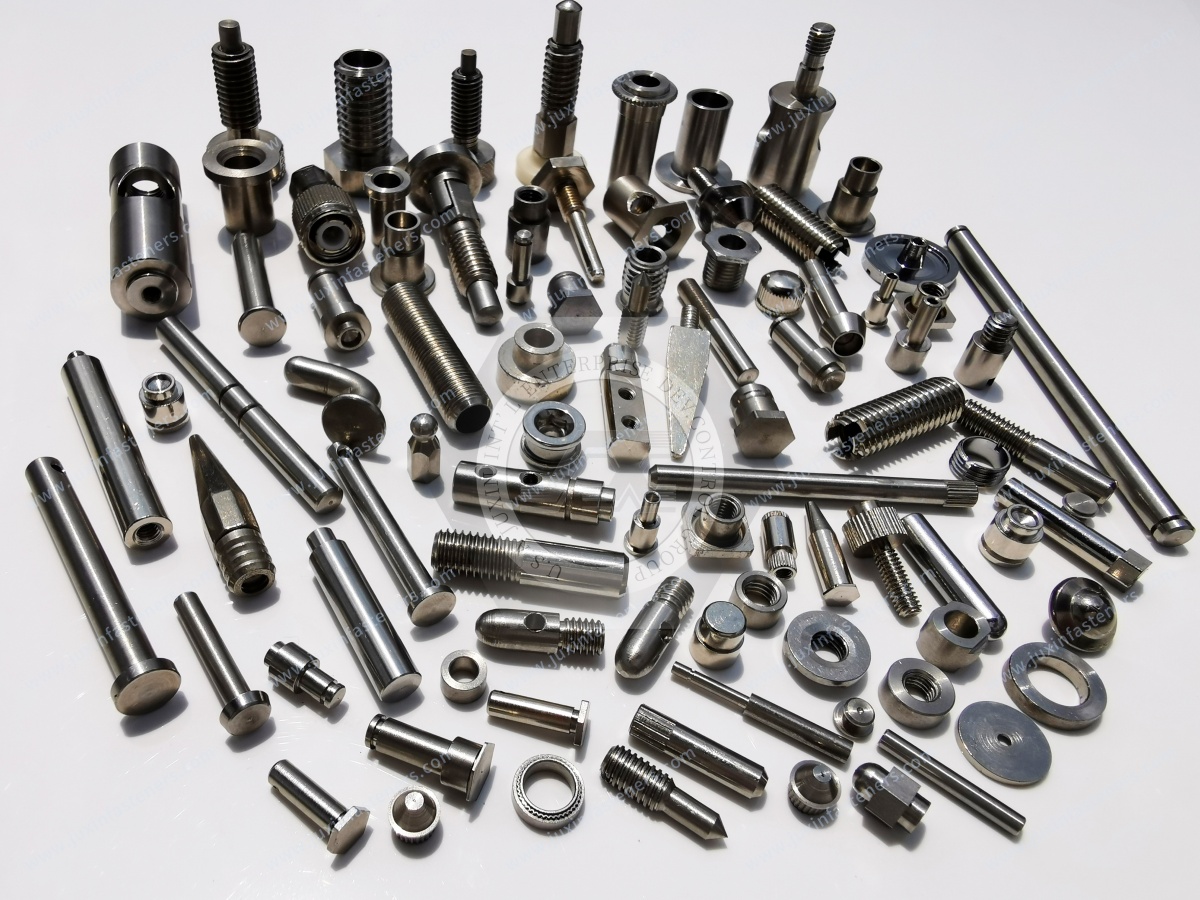
Closed-End Stainless Steel Rivet Nuts for Commercial Kitchens
Standard open-end blind rivet nuts leave a hollow passage through the panel wall, allowing washdown water, grease, and sanitizer foam to seep behind cabinet liners or soak into polyurethane refrigerator insulation. Closed-end stainless steel rivet nuts for commercial kitchen assemblies feature a sealed bottom cup that closes the barrel-end ingress path but does not independently seal the flange-to-panel interface. Available in 304 and 316 stainless steel with hexagonal or knurled bodies for anti-rotation stability, closed-end rivet nuts install cleanly from one side after sheet fabrication and polishing—ideal for tubular stainless frames and sealed commercial refrigeration panels.
Stainless Steel Weld Studs for Commercial Ovens and Seamless Surfaces
Where exterior kitchen equipment doors or oven fronts must present a smooth, continuous exterior without through-fastener holes or visible fastener heads, capacitor-discharge (CD) stainless steel weld studs for commercial ovens (ISO 13918) offer a proven manufacturing solution. Welded directly to the interior face of thin stainless panels in milliseconds, CD weld studs eliminate through-holes entirely while anchoring internal insulation retainers, door handles, and control-board brackets with minimal reverse-side heat discoloration.
Stainless Steel Self-Clinching Nuts in Kitchen Cabinets
For internal stainless sub-panels and control housings, stainless steel self-clinching nuts for kitchen cabinets provide flush, permanent threads without welding heat. However, engineering teams must observe a critical sheet-hardness constraint: standard 300-series stainless steel clinch nuts cannot reliably clinch into 304 stainless steel sheet because both materials share similar hardness. Stainless-into-stainless clinching requires specialized hardened stainless steel fasteners (such as 400-series or precipitation-hardened grades evaluated for corrosion suitability); otherwise, blind rivet nuts or weld studs should be specified to prevent poor push-out retention.
High-Heat Vibration, Washdown Bolting, and Serviceability
Beyond thin-sheet cabinets, heavy foodservice machinery—such as commercial mixers, dishwashers, convection ovens, and refrigeration compressors—requires vibration-resistant and serviceable threaded joints.
A4-80 Stainless Lock Nuts for Commercial Oven Vibration
Convection blowers, exhaust fans, and door latch linkages inside commercial ovens generate continuous vibration under elevated temperatures. Standard nylon-insert lock nuts lose locking tension rapidly when service temperatures exceed the insert manufacturer’s qualified limits. For vibration-prone commercial oven assemblies, A4-80 stainless lock nuts—specifically all-metal distorted-thread prevailing-torque nuts (DIN 980 / ISO 7042) in ISO 3506 Class 80—may provide corrosion resistance and metallic prevailing torque where the actual temperature, load, reuse limits and specified nut grade have been validated.
Stainless Steel Flange Bolts for Commercial Dishwashers and Catering Equipment
In high-spray environments, stainless steel flange bolts for commercial dishwashers and A4 stainless steel flange bolts for catering equipment consolidate bolt and washer into a single smooth-flange component. Removing the separate loose washer reduces the number of crevices where food particles and chlorinated detergents can collect and initiate crevice corrosion, while speeding up assembly line kitting and reducing part count.
Stainless Steel Captive Screws for Foodservice Access Panels
Grease-baffle covers, lint traps, condenser air filters, and electrical service doors are opened frequently by kitchen staff and maintenance technicians. Installing stainless steel captive screws on foodservice access panels helps keep the fasteners in the removable cover, reducing the risk of screws disappearing into kitchen drains, falling into food-prep areas, or being replaced in the field with rust-prone carbon steel hardware.
Preventing Thread Galling in Stainless Steel Foodservice Machinery
Thread galling (cold welding) is a common and costly production-line and maintenance failure in stainless steel equipment assembly. Under pressure and sliding speed, the microscopic passive chromium-oxide layer on mating austenitic stainless threads breaks down, allowing bare metal asperities to shear and weld together instantaneously—seizing the nut mid-shaft and often snapping the bolt.
Preventing thread galling in stainless steel fasteners for foodservice machinery requires disciplined process controls across both fastener design and OEM assembly:
Control Assembly Driver Speed: High-RPM pneumatic impact guns generate rapid frictional heat that triggers galling. Switching to lower-RPM, torque-controlled electric drivers dramatically reduces seizure rates.
Evaluate Alloy Pairing and Class Selection: Where corrosion conditions permit, pairing slightly different stainless compositions or strength classes (such as A2-70 with A4-80) reduces cold-welding affinity compared to identical soft-grade mating threads.
Clean, Smooth Thread Surface Finish: Rolled threads with smooth flank finishes (free of burrs or torn metal crests) experience significantly lower galling friction than rough cut threads.
Approved Anti-Galling Coatings or Lubricants: For non-food structural and maintenance zones, an appropriate anti-galling lubricant or dry-film wax/PTFE-style coating can help reduce seizure risk during factory assembly and field servicing. In splash-adjacent areas, the OEM should verify suitability and confirm the appropriate incidental food-contact classification for any lubricant where required.
Multi-Process Stainless Manufacturing and OEM Quality Verification
Commercial kitchen and foodservice OEMs typically manage diverse fastener bills of materials across ovens, prep lines, dishwashers, and fastened stainless steel sheet-metal assemblies in commercial refrigeration cabinets. Juxin Fasteners integrates multiple manufacturing pathways based on each drawing's geometry, stainless alloy, and production volume:
Cold Heading and Cold Forming: Economical for high-volume industrial batch production of 304 and 316 stainless steel machine screws, flange bolts, lock nuts, weld studs, and blind rivet nuts, with thread finish and galling performance verified for the specific manufacturing route.
CNC Machining: Applied to custom captive panel screw sleeves, hygienic-profile stepped spacers, non-standard leveling studs, low-crevice custom knobs, and tight-tolerance shaft components for food-processing machinery.
Secondary Operations and Surface Conditioning: Depending on customer drawings, stainless steel components can incorporate passivation (to reduce surface free iron and support corrosion performance, without guaranteeing immunity to chloride attack), precision secondary turning, and controlled thread-gauge inspection.
Before approving mass production, foodservice equipment OEMs should validate First Article Inspection (FAI) samples for dimensional tolerances, clean burr-free head contours, assembly galling resistance at production driver RPMs, and corrosion performance under their specific sanitizer and thermal-cycle test protocols.
Start Your Commercial Kitchen & Foodservice OEM RFQ
Juxin Fasteners is an industrial fastener manufacturer supporting global commercial kitchen, catering, refrigeration, and foodservice equipment OEMs with standard and made-to-drawing stainless steel fastening solutions. To request an engineering feasibility review and batch quotation, email info@juxinfasteners.com with:
2D engineering drawings (PDF) and 3D CAD models (STEP/IGES)
Required stainless alloy grade (304 / A2-70, 316 / A4-70, 316L, A4-80) and surface finish (e.g., passivation)
Equipment zone and environmental exposure (dry structural, high-heat oven, chlorinated washdown, or refrigeration)
Host sheet metal thickness and assembly method (blind rivet nut, CD weld stud, self-clinching, or bolted joint)
Required documentation, sample quantity, and Estimated Annual Usage (EAU)
Contact Us
Tel.:
+86 020 8621 0320
+86 020 3121 6067
E-mail:
Technical Support:
Navigation
SEND INQUIREY