
Call Us
+86 136 6007 9809
Call Us
+86 136 6007 9809

Oct. 12, 2026
Medical imaging equipment, clinical diagnostic instruments, laboratory analyzers and mobile healthcare equipment require fastening components that support reliable mechanical assembly,
controlled maintenance and compatibility with their operating environments.
Unlike general-purpose machinery, many medical equipment assemblies must accommodate frequent cleaning, sensitive electronics, compact mechanical structures and carefully controlled material specifications.
In certain applications, fasteners must also satisfy requirements related to magnetic behavior, surface cleanliness or chemical exposure.
Stainless steel machine screws, lock nuts, washers, threaded standoffs and custom precision hardware are widely considered for these assemblies because of their mechanical properties and corrosion resistance.
However, selecting stainless steel alone does not establish suitability for every medical environment.
JUXIN FASTENERS supplies industrial stainless steel fastening components and drawing-based custom fasteners for OEM equipment applications.
Material grades, surface treatments, dimensions and inspection requirements can be reviewed against the customer's technical specifications.
This guide explains how to select stainless steel fasteners for medical imaging systems, diagnostic equipment, laboratory automation and healthcare equipment enclosures,
with particular attention to corrosion resistance, assembly reliability, material compatibility and supplier qualification.
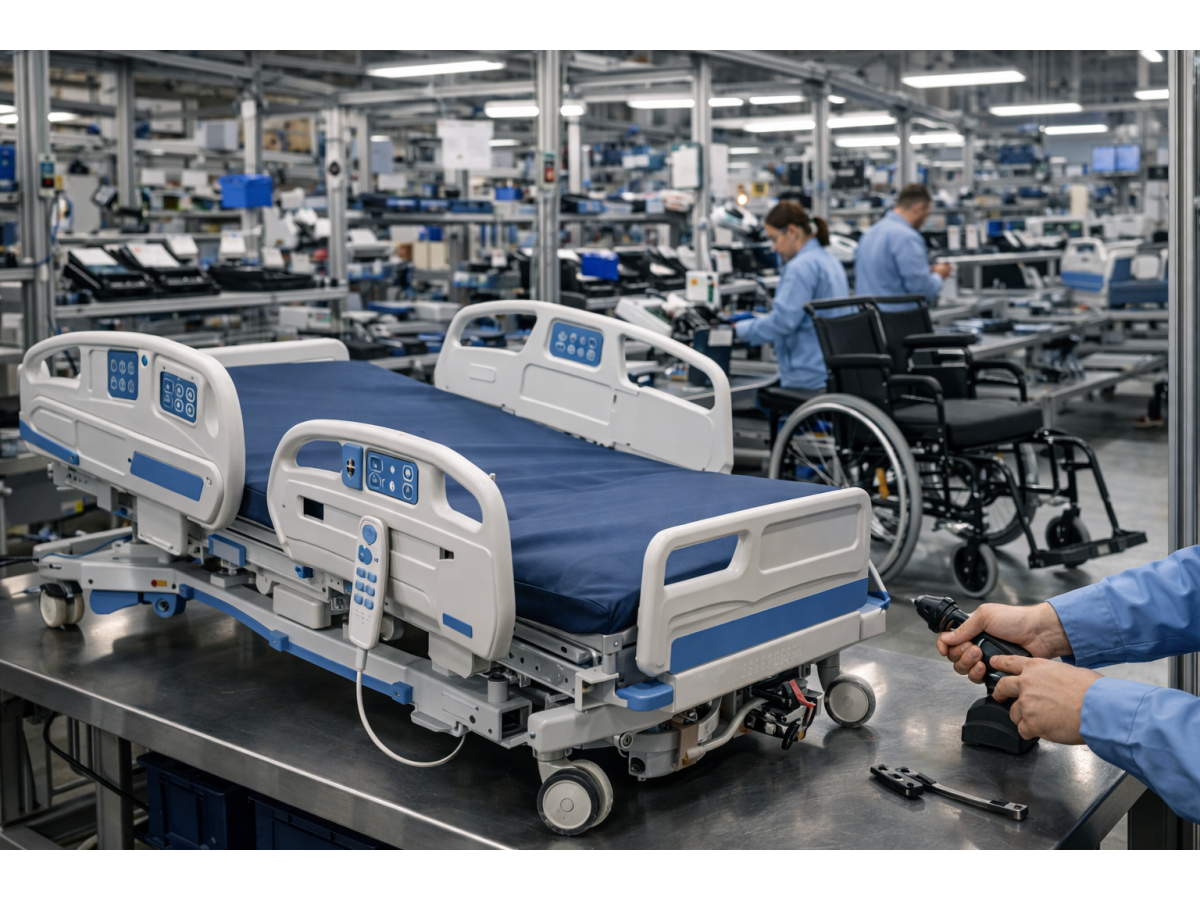
Medical equipment contains many different mechanical assemblies, each with its own fastening requirements.
| Equipment Application | Typical Fastening Components | Main Engineering Consideration |
|---|---|---|
| Diagnostic analyzer housings | Stainless steel machine screws, nuts and washers | Corrosion resistance and service access |
| Medical imaging equipment panels | Screws, threaded standoffs and selected retained hardware | Mechanical stability and equipment-specific material restrictions |
| Laboratory automation systems | Precision screws, studs and custom machined components | Alignment, dimensional consistency and maintenance |
| Mobile hospital carts | Lock nuts, bolts, washers and mounting hardware | Vibration, cleaning exposure and repeated movement |
| Patient monitoring equipment | Small machine screws and enclosure fasteners | Compact assembly and electrical equipment compatibility |
| Clinical equipment frames | Stainless steel bolts, nuts and threaded components | Structural loading and corrosion environment |
| Serviceable equipment access panels | Drawing-specified captive or retained fasteners | Hardware retention and repeated servicing |
The appropriate fastener depends on its function within the equipment.
A stainless steel screw suitable for a diagnostic analyzer cover may not be appropriate for a high-load support bracket or a component located inside an MRI-controlled environment.
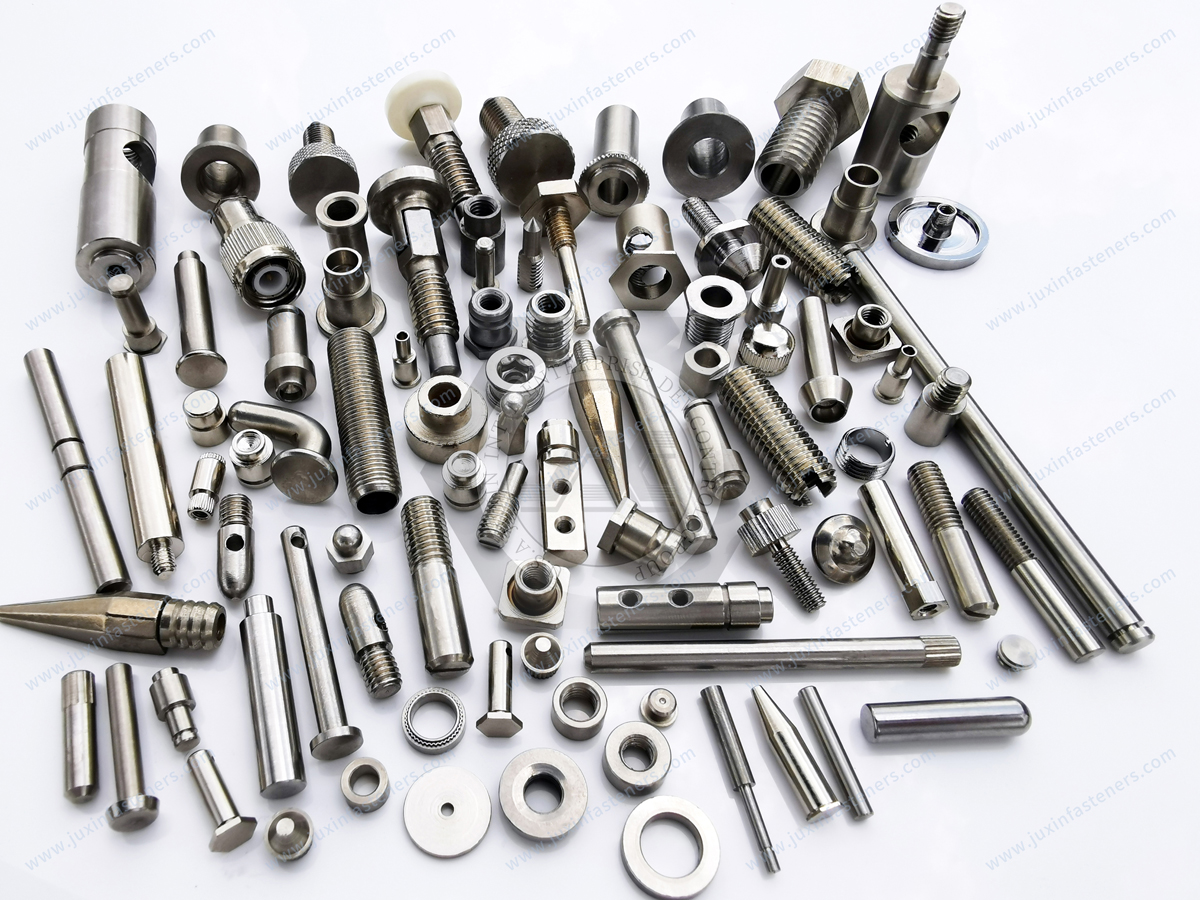
Two commonly specified stainless steel fastener groups are A2 and A4 under applicable parts of ISO 3506.
These designations are frequently associated with 304-type and 316-type stainless steel compositions, respectively, although the exact grade and mechanical property class must be confirmed.
A2 stainless steel fasteners are often considered for general equipment enclosures, mounting brackets and laboratory instrument assemblies where the corrosion environment is moderate.
Potential applications include:
Diagnostic instrument covers
Indoor laboratory equipment
Electronic control housings
Medical equipment support panels
General-purpose stainless steel mounting hardware
A2 stainless steel should not automatically be considered resistant to every cleaning chemical.
Actual compatibility depends on the chemical formulation, concentration, temperature, exposure duration and surface condition.
A4 stainless steel contains molybdenum-bearing alloy compositions that generally provide improved resistance to certain chloride-related corrosion conditions compared with common A2 grades.
It may be considered for equipment exposed to more demanding moisture or cleaning environments.
However, A4 is not universally resistant to all disinfectants, chlorides or aggressive laboratory reagents.
For applications involving repeated exposure to specific cleaning solutions, the equipment manufacturer should evaluate the actual material and cleaning protocol.
The designation A2-70 or A4-70 identifies a stainless steel fastener group and mechanical property class under the applicable ISO 3506 requirements.
It should not be treated as a general material certificate for every stainless steel component.
For example, a custom CNC-machined standoff may require a separate material grade and product-form specification.
The correct mechanical properties must be established from the applicable product specification and customer drawing.
Healthcare equipment may be exposed to repeated cleaning and disinfection.
Potential cleaning agents include alcohol-based products, quaternary ammonium compounds, chlorine-containing disinfectants and other manufacturer-approved formulations.
Their effects on stainless steel depend on several factors:
Chemical composition and concentration
Exposure duration
Surface finish
Temperature
Residual moisture
Crevices and trapped cleaning solutions
Contact with other metals
Stainless steel relies on a passive surface film for corrosion resistance.
Chloride-containing environments can promote localized corrosion under certain conditions.
Fastener heads, washers, overlapping panels and recessed joints may create locations where liquid is retained.
Engineering insight: A corrosion-resistant fastener can still contribute to a corrosion problem if the joint geometry traps cleaning chemicals.
Equipment designers should evaluate drainage, surface accessibility and cleaning procedures alongside material selection.
A change from A2 to A4 stainless steel may improve resistance in some conditions, but it does not eliminate every crevice-related corrosion risk.
Medical equipment frames may combine stainless steel fasteners with anodized aluminum, carbon steel, coated panels or other metals.
Galvanic corrosion may occur when dissimilar metals are electrically connected in the presence of an electrolyte.
The risk depends on the material combination, exposed surface areas and environmental conditions.
Possible mitigation measures include suitable coatings, insulating elements and joint designs that limit moisture retention.
These measures require evaluation for the actual assembly.
Passivation is an important surface treatment consideration for certain stainless steel components.
Machining, forming and handling can introduce surface contamination, including free iron from manufacturing equipment.
Appropriate cleaning and passivation processes may help remove contamination and support the formation or maintenance of the protective passive surface.
ASTM A967/A967M provides requirements for chemical passivation treatments for stainless steel parts.
However, passivation is not automatically required for every stainless steel fastener, and not every supplied stainless steel component has been passivated.
The OEM should specify whether passivation is required and identify the applicable treatment and acceptance criteria.
These processes are often confused.
Passivation primarily addresses surface contamination and passive film condition.
Electropolishing removes a controlled amount of surface material through an electrochemical process and can alter surface topography.
Neither process automatically guarantees compatibility with a particular medical cleaning chemical or cleanroom environment.
Passivation may be considered when:
Surface contamination is a concern
Stainless steel parts have undergone machining or other operations
The customer requires a defined surface treatment
Corrosion performance depends on surface condition
A validated cleaning or inspection process is required
Procurement teams should distinguish between a supplier's standard finish and a customer-specified passivation requirement.
If ASTM A967 compliance or related inspection documentation is required, this should be stated in the RFQ and confirmed before ordering.
MRI-related applications require particularly careful material selection.
Austenitic stainless steel grades such as 304 and 316 are often described as nonmagnetic in their annealed condition.
However, cold working, machining and forming can change their magnetic response.
Consequently, an A2 or A4 designation alone does not establish that a fastener is safe for use near an MRI scanner.
Engineering insight: Corrosion resistance and magnetic suitability are separate material properties.
A fastener may have excellent corrosion resistance but still be unsuitable for a particular MRI environment.
MRI equipment components may be subject to requirements involving:
Static magnetic field interactions
Magnetically induced force and torque
Radiofrequency heating
Image artifacts
Electrical and electromagnetic interactions
Equipment location relative to the scanner
The relevant assessment depends on the specific component, assembly and MRI environment.
ASTM F2503 addresses marking of items for safety in the magnetic resonance environment. It does not establish that a material grade is inherently MR Safe.
Where applicable, testing and evaluation may involve relevant ASTM methods for magnetically induced displacement force, torque, heating or image artifacts.
The responsible MRI equipment manufacturer must determine the required evaluation and labeling.
JUXIN FASTENERS does not represent ordinary stainless steel hardware as MRI-safe solely on the basis of its alloy designation.
For MRI-related projects, customers should provide the specific magnetic and equipment qualification requirements for technical review.
Thread galling can occur when stainless steel threaded surfaces experience adhesive wear during tightening.
This is particularly relevant to stainless-on-stainless connections.
Factors that can increase galling risk include:
High assembly speed
Excessive contact pressure
Poor thread alignment
Surface roughness
Inadequate lubrication
Repeated installation
Material pairing
Galling may damage threads, increase installation torque or prevent proper disassembly.
Potential mitigation strategies include:
Selecting suitable mating materials
Using appropriate thread finishes
Controlling installation speed
Applying compatible lubrication where permitted
Preventing cross-threading
Validating the tightening procedure
Lubricants and coatings must be assessed for compatibility with the equipment's cleaning, contamination and operating requirements.
Engineering insight: A fastener intended for repeated servicing should be evaluated as part of the complete threaded joint.
Specifying stainless steel alone does not guarantee that a screw can be removed and reinstalled indefinitely without thread damage.
For serviceable medical equipment, the OEM should define expected maintenance cycles and acceptable installation performance.
Medical equipment often requires access to internal electronics, sensors, control systems and mechanical assemblies.
Service access creates several fastening challenges.
A conventional screw may be suitable for a panel that is rarely removed.
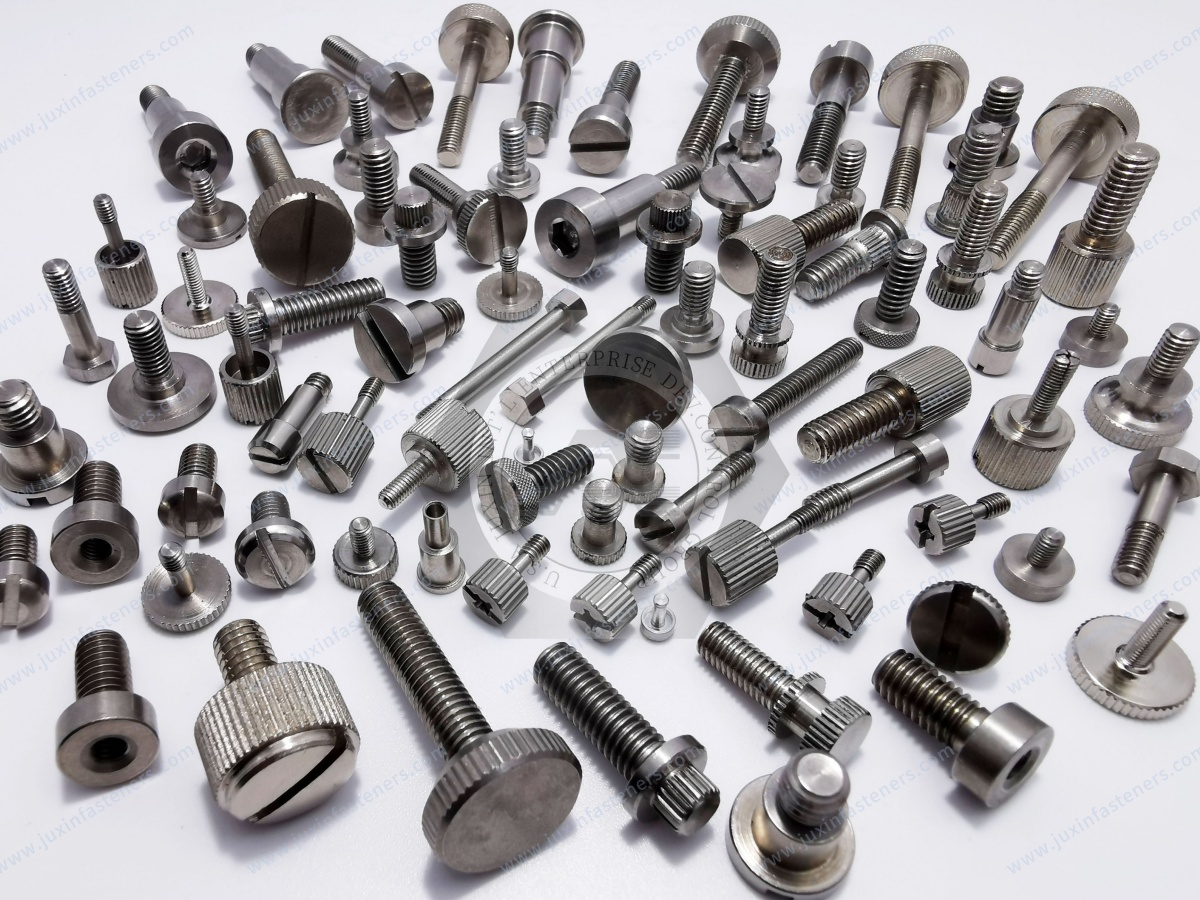
For frequently accessed panels, a retained or captive fastening arrangement may reduce the risk of loose hardware during maintenance.
However, captive panel screws and spring-loaded retained hardware should be reviewed as specific drawing-based components where availability has not been confirmed.
Panel thickness
Available installation space
Required thread engagement
Service frequency
Retention method
Operator access
Cleaning requirements
Assembly torque
A retained fastener does not automatically improve every aspect of joint reliability.
The panel retention function and the mechanical clamping function should be evaluated separately.
Mobile diagnostic carts, laboratory equipment frames and hospital support equipment may experience vibration, repeated movement and mechanical loading.
Depending on the joint design, stainless steel lock nuts may be considered.
Potential options include:
Stainless steel nylon-insert lock nuts
Stainless steel all-metal prevailing-torque lock nuts
Other drawing-specified locking arrangements
The correct selection depends on operating temperature, vibration, maintenance and joint requirements.
Nylon-insert lock nuts and all-metal lock nuts are not functionally identical.
A nylon-insert design may be suitable for many moderate-temperature equipment applications, while all-metal designs may be considered where a polymer locking element is unsuitable.
Neither design eliminates the need for correct preload and joint validation.
For medical equipment that undergoes cleaning or disinfection, the compatibility of any polymer locking element should also be evaluated.
Diagnostic instruments and laboratory automation equipment frequently require accurate spacing between panels, circuit boards, sensors and mechanical subassemblies.
Threaded standoffs, spacers, studs and custom machined hardware can support these requirements.
Important dimensional characteristics may include:
Overall length
Thread size and depth
Outside diameter
Across-flats dimension
Concentricity
Perpendicularity
Surface finish
Burr control
A small dimensional difference in an individual standoff may become significant when multiple components are assembled in a constrained housing.
For example, the combined effects of standoff length, panel flatness and bracket tolerance can influence alignment.
Engineering insight: The tightest possible individual tolerance is not always the most economical solution.
Engineers should identify which dimensions directly affect equipment function and assign appropriate tolerances accordingly.
For procurement teams, distinguishing critical characteristics from noncritical dimensions can improve the efficiency of drawing review and supplier qualification.
Custom stainless steel hardware should be evaluated against the actual drawing and manufacturing feasibility.
Some medical and laboratory equipment is assembled or operated in contamination-controlled environments.
However, ordinary stainless steel fasteners are not automatically cleanroom-qualified.
Potential concerns include:
Particulate contamination
Residual machining oil
Cleaning-agent residues
Packaging materials
Burrs and loose debris
Surface condition
Handling procedures
Requirements may vary significantly between a general laboratory instrument and equipment intended for a controlled cleanroom process.
Where contamination control is critical, the OEM should define:
Required cleanliness level
Cleaning method
Surface finish specification
Packaging method
Inspection or verification procedure
Handling and storage conditions
These requirements should be reviewed before quotation.
Cleanroom-compatible packaging, specialized cleaning and validated contamination controls must not be assumed to be standard supply conditions.
Medical equipment manufacturers need fasteners that are technically suitable and practical for repeatable production.
Production managers and manufacturing engineers should consider:
Thread quality, drive geometry and dimensional consistency can influence automated or manual screw assembly.
Compact diagnostic equipment may provide limited access for installation tools.
Fastener head geometry and available clearance should be evaluated during equipment design.
Repeated equipment servicing may influence the selection of drive styles, locking mechanisms and retained hardware.
Critical dimensions should be clearly identified on drawings to support appropriate inspection planning.
The lowest unit-price fastener may not be the lowest-cost choice if it increases assembly time, inspection effort or maintenance difficulty.
For high-volume equipment programs, these factors can influence the overall sourcing decision.
The applicable standard depends on the actual product and requirement.
| Requirement | Potentially Relevant Standard |
|---|---|
| Stainless steel fastener mechanical properties | Applicable parts of ISO 3506 |
| Hexagon socket head cap screws | ISO 4762 |
| Metric thread dimensions and tolerances | Applicable ISO metric thread standards |
| Inch-series threaded fasteners | Applicable ASME/ANSI standards |
| Chemical passivation of stainless steel parts | ASTM A967/A967M |
| Stainless steel material specifications | Applicable ASTM or EN material standards |
| Inspection documents | EN 10204 where specified |
| MRI environment labeling | ASTM F2503 where applicable |
These references are not interchangeable and do not collectively establish medical-device certification.
The applicable medical equipment manufacturer must determine the standards, tests and approvals required for the finished device.
RoHS, REACH and other substance-related requirements should be evaluated according to the actual product, destination market and customer specification.
Supplier development and procurement teams may need to evaluate new fastener sources for equipment production or replacement parts.
A practical qualification review includes:
| Evaluation Area | Information to Verify |
|---|---|
| Product geometry | Drawing revision, thread, dimensions and tolerances |
| Material | Grade, mechanical properties and specification |
| Surface treatment | Passivation or other required finish |
| Functional suitability | Corrosion, magnetic or mechanical requirements |
| Assembly process | Tooling, tightening and installation compatibility |
| Cleanliness | Cleaning, handling and packaging requirements |
| Documentation | Inspection reports and agreed material records |
| Commercial supply | MOQ, annual forecast, packaging and delivery schedule |
For regulated medical equipment, supplier qualification requirements may be more extensive than those for ordinary industrial hardware.
JUXIN FASTENERS should be evaluated for the specific component and agreed supply scope rather than assumed to hold a medical-device certification.
JUXIN FASTENERS supports OEM sourcing and technical review for stainless steel screws, nuts, washers, threaded components and drawing-based custom industrial hardware.
For medical imaging equipment, diagnostic instruments, laboratory automation or healthcare equipment assemblies, please provide:
2D technical drawing and available 3D model
Required fastener type and thread specification
Stainless steel grade and mechanical property requirements
Surface treatment or passivation requirements
Equipment application and cleaning environment
Magnetic restrictions where applicable
Critical dimensions and inspection requirements
Required material documentation
Prototype quantity, annual demand and packaging requirements
For MRI-related components, specialized cleaning requirements or other critical applications, the customer should identify the relevant qualification criteria before supplier approval.
Website: www.juxinfasteners.com
OEM Technical Review & RFQ: info@juxinfasteners.com
Send your component drawings and purchasing requirements to discuss suitable stainless steel fasteners and custom hardware options.
Fastening Solutions for Medical Device Housings & Laboratory Equipment — general mechanical fastening requirements for medical and laboratory equipment.
Nylon & Plastic Fasteners for Electronics, PCB Assemblies & Equipment Enclosures — nonmetallic fastening options for selected electrical and equipment applications.
Captive Panel Screws & Retained Fasteners for Serviceable Equipment Panels — hardware retention and service access considerations.
Custom Cold-Headed Fasteners & Special Formed Parts for Industrial OEMs — drawing-based custom metal component sourcing.
These related engineering solutions provide additional guidance on equipment assembly, material selection and OEM fastener procurement.
 MORE NEWS


Oct. 13, 2026
Contact Us
Tel.:
+86 020 8621 0320
+86 020 3121 6067
E-mail:
Technical Support:
Navigation
SEND INQUIREY