
Call Us
+86 136 6007 9809
Call Us
+86 136 6007 9809

Sep. 01, 2026
When an injection-molded thermoplastic component requires a durable threaded connection, ultrasonic threaded inserts can provide a fast and repeatable installation solution.
Unlike directly tapping threads into plastic, ultrasonic inserts create a reinforced metal thread inside the polymer component.
During installation, high-frequency mechanical vibration generates localized heat at the interface between the insert and thermoplastic.
The softened polymer flows around the external profile of the insert, and after the ultrasonic energy stops, the material cools and mechanically retains the insert.
This process is particularly attractive for high-volume OEM plastic production, where cycle time, positioning accuracy and process consistency are important.
Ultrasonic threaded inserts are used in applications including automotive electronics, electronic housings, telecom equipment, industrial controls, robotics, electrical assemblies and other engineered plastic components.
For design engineers and procurement teams, successful ultrasonic insert installation depends on the relationship between the insert geometry, plastic resin, ultrasonic equipment and component design.
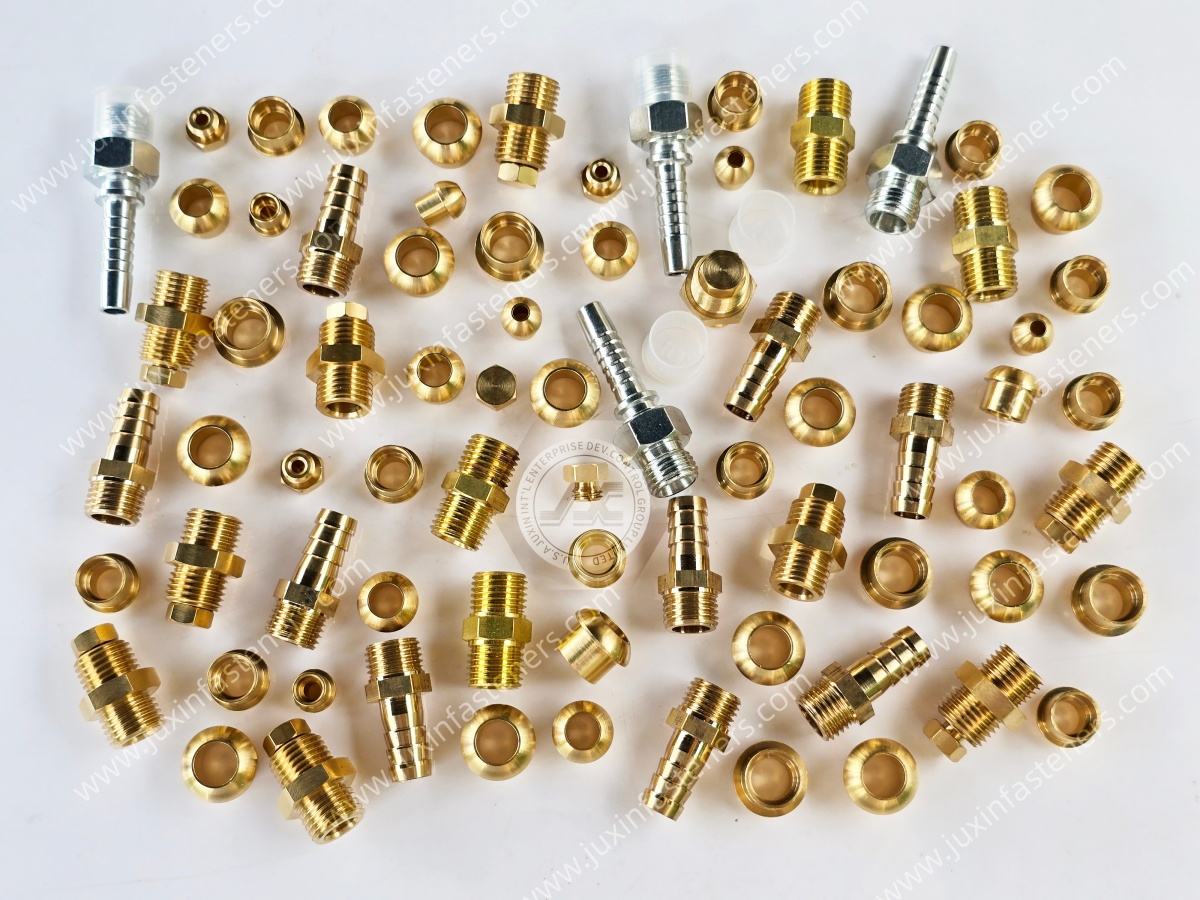
Ultrasonic threaded inserts are metal threaded inserts designed to be installed into thermoplastic components using ultrasonic energy.
The process uses high-frequency mechanical vibration rather than relying primarily on external heating of the complete component.
A typical installation sequence is:
Position insert → apply ultrasonic energy → generate localized heat → soften polymer → insert moves into boss → polymer flows around external profile → stop energy → cool and retain insert
This localized heating approach can minimize unnecessary thermal exposure to surrounding areas of the plastic component.
The result is a metal internal thread integrated into the thermoplastic component.
The ultrasonic installation process requires coordination between the insert, plastic component and assembly equipment.
The thermoplastic housing, bracket, cover or other component is manufactured through injection molding.
The insert location is normally designed as a boss or prepared hole.
The metal insert is placed at the specified location.
Accurate positioning is important for assemblies where the threaded insert must align with another component.
An ultrasonic horn or sonotrode applies high-frequency mechanical vibration to the insert.
The resulting energy is concentrated at the insert-to-polymer interface.
Localized heating softens the surrounding polymer.
The temperature and energy input must be controlled according to the actual resin and component design.
Pressure drives the insert into the softened plastic.
The polymer flows around the insert's external knurls, ribs or other retention features.
Once the insert reaches the required position and depth, ultrasonic energy is stopped.
The surrounding thermoplastic then cools and solidifies.
Production validation may include:
Insert height
Insert position
Thread condition
Torque-out resistance
Pull-out resistance
Visual inspection
Dimensional inspection
Process consistency
For high-volume production, these parameters should be incorporated into the manufacturing quality plan.
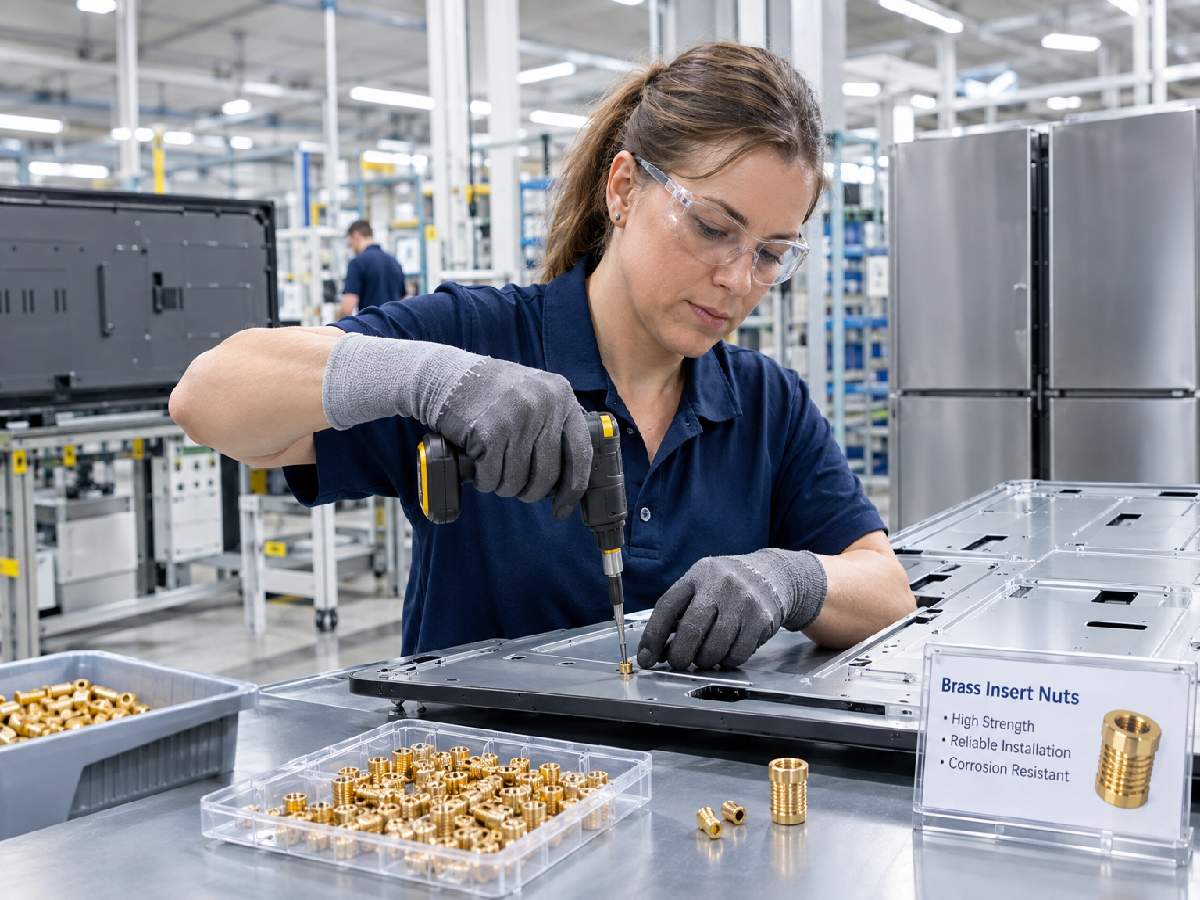
The main advantage of ultrasonic insert installation is the combination of localized energy input and rapid processing.
Ultrasonic installation can be completed rapidly, making the process attractive for high-volume plastic assembly.
Energy is concentrated around the insert rather than heating the entire component.
This can reduce unnecessary thermal exposure to surrounding plastic features.
When equipment parameters are properly established, insertion depth and positioning can be controlled consistently.
Ultrasonic insertion can be integrated into automated assembly lines and production equipment.
Because heating is localized, sensitive areas of a plastic component may experience less overall thermal exposure compared with some conventional heating approaches.
The insert provides a metal thread for the mating screw, helping reduce dependence on the strength and wear characteristics of a directly molded plastic thread.
The polymer is one of the most important variables in ultrasonic insert design.
Common thermoplastics considered for ultrasonic threaded insert applications include:
ABS
Polycarbonate (PC)
Polyamide (PA / Nylon)
PBT
PET
PEEK
Glass-filled thermoplastics
Other engineering thermoplastics
However, not every grade behaves the same way.
For example, glass-filled nylon can respond differently from unfilled nylon because the reinforcement changes the material's mechanical and thermal characteristics.
Similarly, high-performance polymers such as PEEK require process development appropriate to their material properties.
Therefore, ultrasonic parameters should be developed using the actual resin grade, not simply the generic material name.
The external geometry of the insert plays a major role in mechanical retention.
While the internal thread provides the connection to the mating screw, the external profile transfers forces between the metal insert and surrounding polymer.
Common retention features include:
Knurling can provide mechanical engagement with the surrounding thermoplastic and help resist rotation.
External ribs can increase the contact area between the insert and polymer.
Special external geometries can be developed to improve resistance to pull-out or rotational forces depending on the application.
The appropriate geometry depends on the resin, boss dimensions, insert diameter and required mechanical performance.
The internal thread can be manufactured according to the requirements of the mating screw.
Depending on the application and market, OEM customers may require:
Metric threads
Unified inch threads
Custom thread specifications
Different thread diameters
Different thread lengths
The insert should be specified together with the mating screw.
Thread selection should consider:
Screw diameter
Thread pitch
Required engagement
Tightening torque
Service load
Assembly frequency
A reliable installation starts with the plastic component design.
For structural engineers and mechanical design engineers, the following parameters should be evaluated.
The boss must provide sufficient surrounding polymer to support the insert.
An undersized boss can increase stress concentration and potentially cause cracking during installation or service.
Boss wall thickness affects plastic flow, mechanical retention and the ability of the component to withstand installation forces.
Thin-wall components require additional attention to insert diameter and installation parameters.
The insert outside diameter must be compatible with the boss and prepared hole.
It should provide sufficient engagement without creating excessive stress in the plastic.
Insert length determines available thread engagement and the surface area available for mechanical retention.
It should be matched to the available boss depth.
The final insert position must be controlled to maintain correct alignment with the mating component.
Excessive insertion depth can damage the bottom of the boss, while insufficient depth can reduce thread engagement or retention.
Energy input should be established according to the actual material and insert geometry.
Excessive energy can damage the polymer or create cosmetic defects.
Insufficient energy may prevent adequate plastic flow around the insert.
The force applied during ultrasonic insertion affects how the insert moves into the softened polymer.
Pressure should be controlled as part of the overall process window.
For production engineers, ultrasonic insertion is not simply a matter of switching on an ultrasonic machine.
The process may involve multiple parameters, including:
Ultrasonic frequency
Amplitude
Energy
Pressure
Insertion speed
Hold time
Insertion depth
Cycle time
The optimum combination depends on the insert, resin and component.
A process developed for one plastic component should not automatically be transferred to another component without validation.
For high-volume OEM production, process development should establish a repeatable operating window rather than relying on a single nominal setting.
Both ultrasonic and conventional heat-set installation can create metal threads in thermoplastic components, but their processing methods differ.
| Feature | Ultrasonic Inserts | Heat Staking Inserts |
|---|---|---|
| Energy source | Ultrasonic vibration | Heated installation tool |
| Heating | Localized | Controlled thermal heating |
| Installation | Post-molding | Post-molding |
| Cycle time | Often fast | Depends on insert and process |
| Automation | Highly suitable | Suitable |
| Thermal exposure | Relatively localized | Controlled heat transfer |
| High-volume production | Suitable | Suitable |
| Process parameters | Energy, amplitude, pressure, depth | Temperature, time, force, depth |
The correct process depends on the plastic material, component design, production equipment and required production cycle.
For some plastic components, threads can be molded directly into the polymer.
However, a threaded insert for plastic may be preferred when the assembly requires a more durable metal thread.
| Requirement | Direct Plastic Thread | Ultrasonic Metal Insert |
|---|---|---|
| Reinforced thread | No | Yes |
| Metal screw interface | No | Yes |
| Repeated assembly | Resin dependent | Suitable for many applications |
| Higher tightening torque | Application dependent | Often advantageous |
| Post-mold installation | Not applicable | Yes |
| Automated installation | Possible | Yes |
| Lightweight plastic component | Yes | Yes |
The decision should be based on the actual load, assembly cycles, resin and product requirements.
Modern vehicles contain large numbers of electronic modules and plastic housings.
Ultrasonic threaded inserts can provide mounting points for:
Electronic control units
Sensor housings
Plastic brackets
Covers
Electrical modules
Connector assemblies
The application should be evaluated for vibration, temperature cycling and long-term retention.
Electric vehicles use engineered thermoplastics in electrical and electronic systems.
Ultrasonic threaded inserts for EV components may be considered for selected:
Battery-related housings
Electrical modules
Sensor assemblies
Control systems
Plastic covers
Supporting components
Thermal, vibration and electrical requirements should be evaluated during design validation.
Electronics manufacturers often need reliable screw connections inside lightweight plastic housings.
Ultrasonic inserts can provide mounting points for:
PCBs
Internal brackets
Connectors
Covers
Shields
Electronic modules
Telecom equipment combines compact design with numerous internal mounting requirements.
Ultrasonic threaded inserts can be used in selected plastic housings, brackets and internal assemblies.
Industrial control equipment frequently uses injection-molded plastic housings.
Metal inserts can provide reinforced fastening points for covers, circuit boards and internal components.
Robotic systems benefit from lightweight components while still requiring reliable mechanical fastening.
Ultrasonic inserts can support:
Sensor housings
Controller enclosures
Protective covers
Plastic brackets
Small mechanical assemblies
Medical and laboratory equipment may use engineered thermoplastic housings and structural components.
Insert material and installation parameters should be selected according to cleaning conditions, chemicals, temperature and the requirements of the final assembly.
Electrical equipment may require secure mounting of internal components while maintaining lightweight polymer housings.
Ultrasonic threaded inserts can provide a practical metal fastening interface for selected applications.
For high-volume applications, the insert should be considered during the early product design stage.
Do not finalize the plastic boss first and attempt to fit an insert afterward.
The boss diameter, wall thickness and depth should be designed around the selected insert and installation process.
Thread alignment is critical when the insert must mate with another component.
Production trials should establish acceptable ranges for ultrasonic energy, pressure, insertion depth and cycle time.
Depending on the application, validation may include:
Pull-out testing
Torque-out testing
Screw installation testing
Repeated assembly testing
Environmental testing
Temperature cycling
The insert should be tested with the actual plastic component and mating screw.
Testing the insert alone does not reproduce the complete load path.
Standard inserts are suitable for many applications, but OEM components may require a customized solution.
A custom ultrasonic threaded insert can be developed around requirements such as:
Custom outside diameter
Custom length
Special knurling
Special external retention profile
Metric or inch threads
Special materials
Tight tolerances
Specific insertion depth
Customized surface treatment
High-volume automated assembly
For custom development, procurement and engineering teams should provide as much application information as possible.
A component drawing, insert drawing, plastic resin specification and mating screw specification can significantly improve the supplier's ability to evaluate the project.
For procurement managers and supply chain teams, selecting an ultrasonic insert supplier should involve more than comparing unit prices.
The supplier should understand the relationship between the insert and the plastic assembly.
A useful sourcing specification should include:
Plastic material and grade
Component drawing
Boss dimensions
Thread specification
Insert dimensions
Material requirement
External retention geometry
Installation method
Required torque
Pull-out requirement
Operating temperature
Environmental exposure
Annual quantity
Packaging requirements
Providing these details allows the supplier to quote the correct product instead of a generic threaded insert.
JUXIN Fasteners supports OEM and industrial customers sourcing ultrasonic threaded inserts for thermoplastics and other metal insert solutions for plastic components.
Our solutions can support applications across:
Automotive
EV
Automotive electronics
Electronics
Electrical equipment
Telecom
Industrial controls
Robotics
Medical equipment
HVAC
OEM plastic assemblies
For projects requiring custom ultrasonic threaded inserts, customers can provide engineering drawings, samples or application specifications for technical evaluation.
We focus on matching the insert to the complete application:
Plastic resin + component geometry + insert design + ultrasonic installation process + mechanical requirements.
This approach helps engineering and procurement teams move from a generic fastener specification toward a practical OEM fastening solution.
If you are sourcing ultrasonic threaded inserts, ultrasonic inserts for thermoplastics, brass threaded inserts, heat-set inserts or custom threaded inserts for plastic,
contact JUXIN Fasteners with your project requirements.
For technical evaluation, please provide:
Plastic resin and grade
Component drawing
Boss dimensions
Thread size and standard
Insert dimensions
Installation method
Required torque
Pull-out requirement
Material requirement
Surface treatment
Estimated annual quantity
JUXIN Fasteners can support OEM and industrial sourcing requirements from product specification through production supply.
JUXIN Fasteners
23+ Years of Fastener Industry Experience
OEM & Industrial Fastening Solutions
Email: info@juxinfasteners.com
Website: www.juxinfasteners.com
Frequently Asked Questions About Ultrasonic Threaded Inserts
Ultrasonic threaded inserts are metal inserts installed into thermoplastic components using ultrasonic mechanical vibration. Localized heating softens the polymer, allowing it to flow around the insert and retain it after cooling.
Both are post-molding installation methods. Ultrasonic insertion uses high-frequency mechanical vibration to generate localized heat,
while conventional heat-set installation uses a heated tool to transfer heat to the insert and surrounding polymer.
ABS, PC, PA/Nylon, PBT, PET, PEEK and various glass-filled thermoplastics may be considered. The actual resin grade and component design must be evaluated before production.
Brass is commonly used for metal threaded inserts because of its machinability and thermal characteristics. The final material selection should depend on the application,
plastic resin, mechanical requirements and environmental conditions.
Yes. Ultrasonic insertion can be integrated into automated assembly systems and is particularly attractive for high-volume OEM production where cycle time and repeatability are important.
Boss diameter, wall thickness, height and depth should be designed according to the insert's outside diameter, length, installation depth and required retention performance.
The design should also account for the specific thermoplastic resin.
Yes. Customization may include outside diameter, length, external knurling, retention profile, thread specification, material and other dimensions according to the OEM application.
The most useful information includes the plastic resin and grade, component drawing, boss dimensions, thread specification, insert dimensions, required torque,
pull-out requirement, installation method and estimated production volume.
 MORE NEWS
Sep. 22, 2026
Sep. 22, 2026
Sep. 22, 2026
Contact Us
Tel.:
+86 020 8621 0320
+86 020 3121 6067
E-mail:
Technical Support:
Navigation
SEND INQUIREY