
Call Us
+86 136 6007 9809
Call Us
+86 136 6007 9809

Aug. 11, 2026
Zinc Plating Color Variation Explained for Engineers
A Technical Guide for OEM Fasteners and Corrosion-Resistant Components
In global fastener procurement, one of the most frequent quality disputes is not related to strength, dimensions, or performance — but appearance.
Customers often ask:
“Why do zinc-plated fasteners from different suppliers look different even under the same specification?”
At Juxin Fasteners, we provide this engineering explanation to OEM customers to eliminate misunderstanding and improve technical alignment.
1. Zinc Plating Color Is NOT a Controlled Engineering Parameter
Unlike mechanical properties such as:
Tensile strength
Torque performance
Coating thickness
Corrosion resistance
Zinc plating color is a process-dependent visual outcome, not a controlled specification.
It cannot be standardized globally due to multiple influencing factors.
2. Key Factors That Affect Zinc Plating Appearance
The same zinc plating specification may still produce different colors due to:
2.1 Chemical Process Differences
Trivalent chromate (RoHS compliant systems)
Hexavalent chromate (legacy systems)
Different passivation formulations
2.2 Coating Thickness Variation
Thicker coatings appear darker or more matte
Thin coatings appear brighter or lighter
2.3 Substrate Material
Carbon steel composition differences
Heat treatment conditions
Surface roughness before plating
2.4 Production Environment
Bath aging conditions
Temperature control
Current density distribution
2.5 External Influences
Lighting conditions
Camera white balance
Display calibration
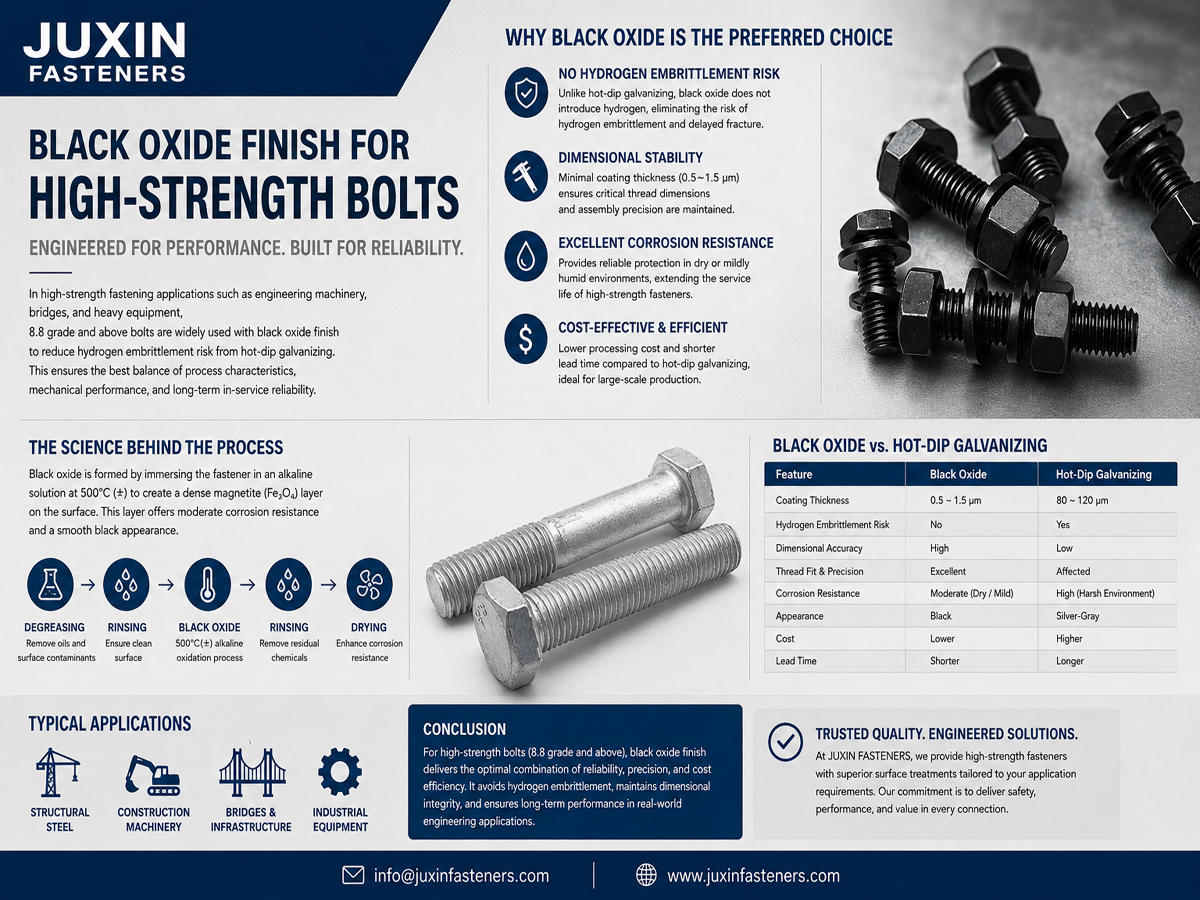
3. Zinc Plating Appearance Reference (Industry Typical Ranges)
Clear / Blue Zinc
Silver / light blue / slight rainbow reflection
Common in automotive and electronics
RoHS / REACH compliant
Yellow Zinc
Golden yellow/light yellow/iridescent tone
Strong variation depending on the chemistry system
Both trivalent and hexavalent systems exist
Black Zinc
Matte black/gloss black/dark gray
Used in automotive and industrial assemblies
Often enhanced with organic sealing
Zinc Nickel Coating
Silver gray/blue-gray appearance
High corrosion resistance (720h–1000h salt spray)
Widely used in EV and new energy vehicles
Mechanical / Hot Dip Galvanized
Matte gray/dark gray/rough texture
High thickness coating for structural applications
4. Critical Engineering Statement
The same plating specification does NOT guarantee identical visual color between different manufacturers or production batches.
This is one of the most important principles in sourcing electroplated fasteners.
5. Why RoHS-Compliant Zinc Plating Looks Different
Modern environmental regulations require the use of trivalent chromate systems, which significantly changed surface appearance.
Hexavalent Chromate (Legacy System)
Bright yellow
Strong rainbow effect
High visual saturation
Trivalent Chromate (Modern RoHS System)
Softer tones
Lighter yellow or blue appearance
More stable but less visually intense
Therefore, color matching with older non-RoHS coatings is technically unrealistic in most cases.
6. Engineering Acceptance Standard
Unless otherwise specified, acceptance of zinc-plated fasteners should be based on:
Coating thickness (micron level control)
Corrosion resistance (salt spray performance)
Mechanical function
RoHS / REACH compliance
NOT visual color consistency.
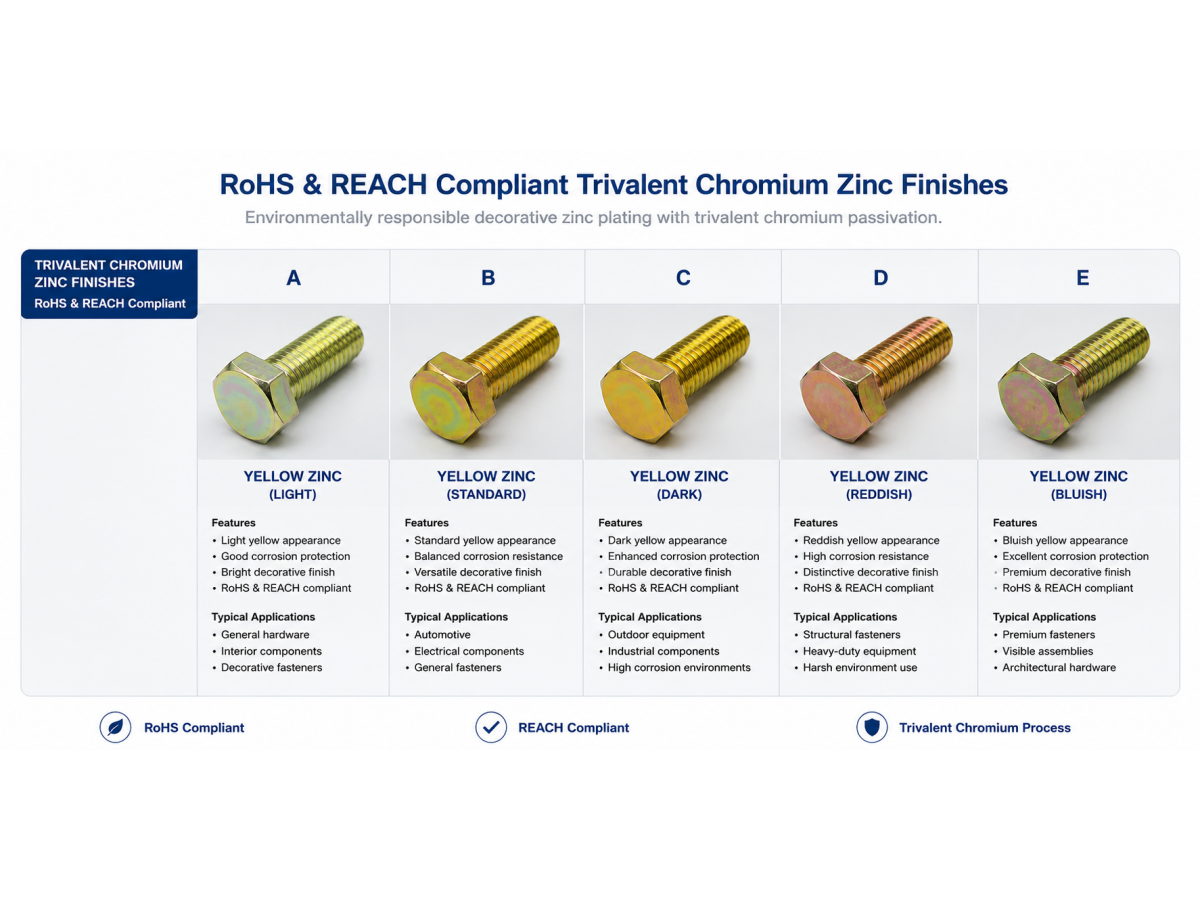
7. Application in OEM Fastener Systems
Zinc plating and zinc nickel coatings are widely used in:
Automotive fasteners
Electric vehicle systems
Industrial machinery
Electrical enclosures
Construction hardware
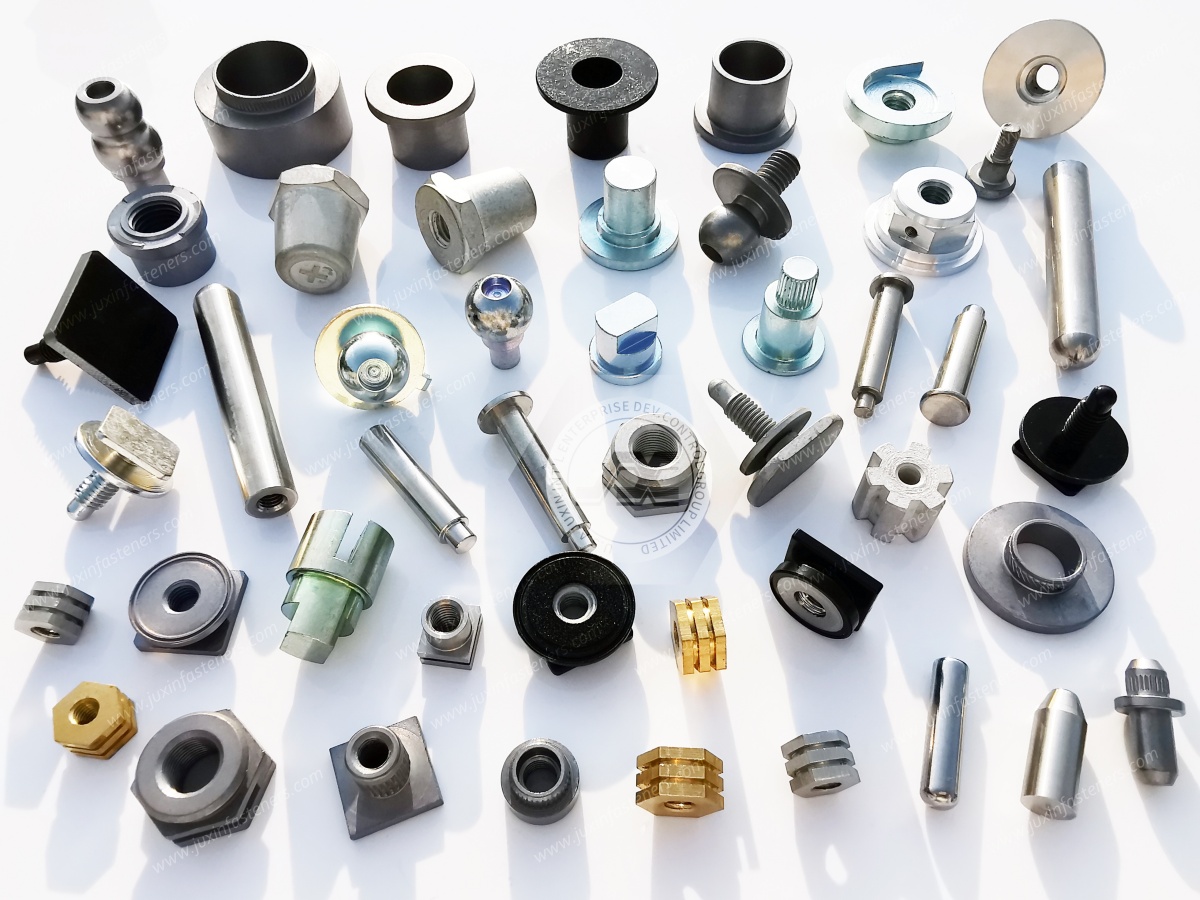
At Juxin Fasteners, we provide:
Zinc plated fasteners
Zinc nickel coated fasteners
Custom CNC machining parts
Non-standard OEM fastening solutions
8. Conclusion
Variations in zinc plating appearance are a natural and unavoidable result of electrochemical processes.
Understanding this helps OEM buyers and engineers avoid unnecessary disputes and focus on real engineering performance.
 MORE NEWS
Sep. 27, 2026
Sep. 27, 2026
Sep. 27, 2026
Contact Us
Tel.:
+86 020 8621 0320
+86 020 3121 6067
E-mail:
Technical Support:
Navigation
SEND INQUIREY