
Call Us
+86 136 6007 9809
Call Us
+86 136 6007 9809

Aug. 11, 2026
Why can two zinc-plated fasteners made to the same drawing look different?
One batch may appear bright silver-blue. Another may look slightly gray, yellow, iridescent, dark, or less reflective. Black zinc finishes can range from deep black to dark gray,
while passivated zinc surfaces may change appearance depending on viewing angle and lighting.
For OEM procurement teams, supplier-development engineers, quality engineers, and design engineers, these differences can create an immediate concern:
Is the coating defective, or is the appearance variation normal?
The answer depends on what the coating specification actually controls.
Color can be an important acceptance characteristic when appearance is explicitly specified. However, visual similarity alone does not prove equivalent corrosion protection,
coating thickness, friction behavior, passivation chemistry, or functional performance.
The most useful engineering principle is:
Coating color ≠ coating specification.
A robust OEM fastener specification should distinguish between functional coating requirements and cosmetic appearance requirements.
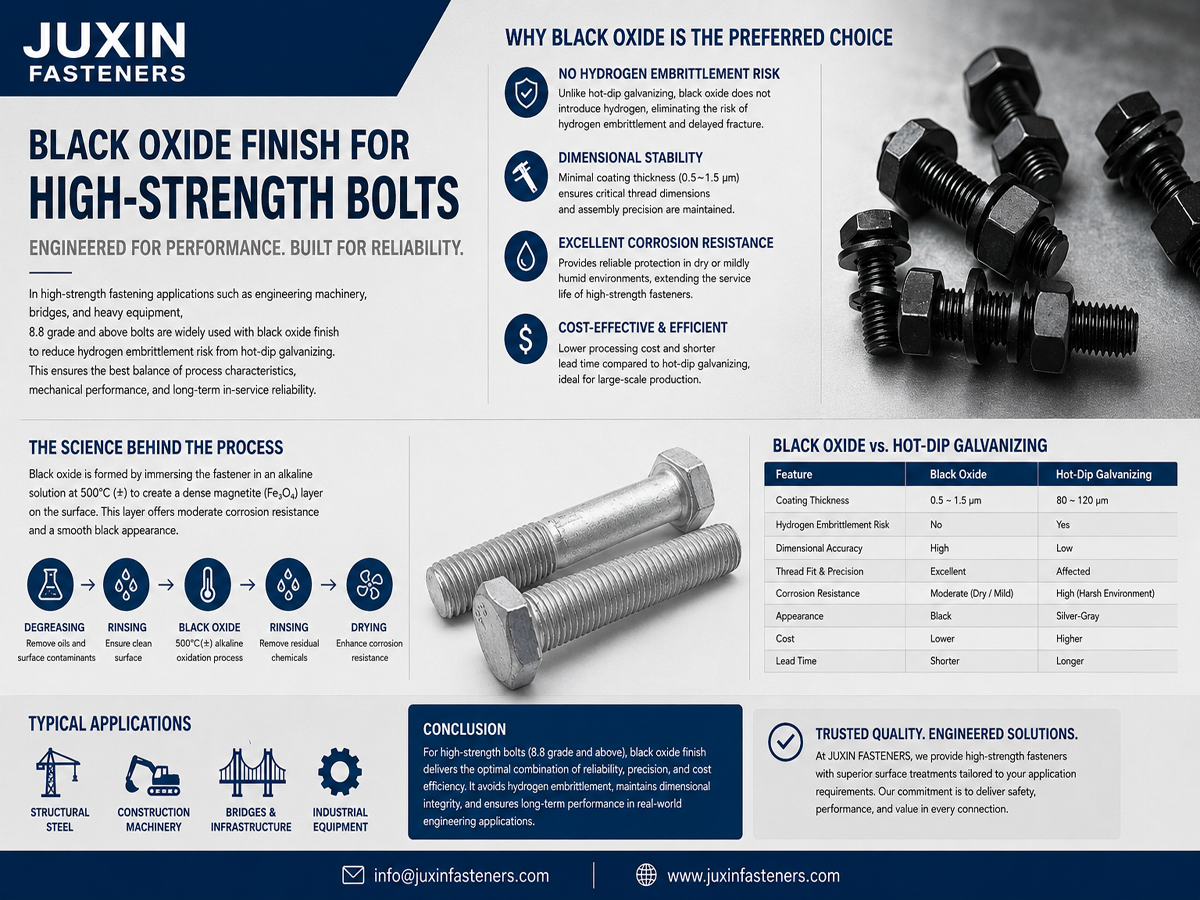
Zinc plating appearance can vary because the visible surface is influenced by multiple process and material variables, including:
Zinc deposit characteristics
Passivation or conversion coating chemistry
Sealer or topcoat
Coating thickness
Base material
Heat-treatment condition
Surface roughness
Pretreatment
Plating-bath condition
Current density
Part geometry
Rack or barrel processing
Drying and curing
Production lot
Storage condition
Lighting and viewing conditions
Therefore, two fasteners described broadly as "zinc plated" do not necessarily have identical appearance or performance.
But the opposite is equally important:
Similar appearance ≠ equivalent coating performance.
Two silver-colored fasteners may have very different coating systems.
It can be—but only when the specification makes it one.
This distinction is important.
It would be incorrect to state that zinc plating color can never be controlled. OEM drawings and appearance-sensitive products can specify:
Finish color
Approved visual standard
Master sample
Gloss range
Acceptable color variation
Surface defects
Appearance zones
However, if a drawing specifies only a zinc coating system and functional performance requirements without defining a cosmetic acceptance criterion,
buyers should not automatically assume that every production lot will have exactly the same shade.
This creates two separate specification paths.
Usually focuses on:
Coating type
Coating thickness
Passivation
Sealer or topcoat
Corrosion requirement
Friction requirement where applicable
Adhesion
Thread fit
Hydrogen embrittlement controls where applicable
Applicable ISO, ASTM, SAE, DIN, EN, or OEM specification
May additionally define:
Color
Shade
Gloss
Uniformity
Reference sample
Approved visual range
Viewing conditions
Cosmetic surface requirements
These requirements should not be confused.
A purchasing description such as:
M6 bolt, zinc plated
does not adequately define a coating for many OEM applications.
Important unanswered questions include:
What zinc coating process is required?
What coating thickness is required?
What conversion coating or passivation is required?
Is a sealer or topcoat required?
What corrosion performance is required?
Is friction controlled?
Is appearance controlled?
Are hexavalent chromium restrictions applicable?
Are there hydrogen embrittlement requirements?
What thread-fit condition is required after plating?
This is why coating disputes often begin as purchasing-language problems rather than manufacturing problems.
A technically complete specification reduces ambiguity before production starts.
Clear or blue-passivated zinc fasteners typically have a silver, silver-blue, or slightly iridescent appearance.
The exact visual result can depend on:
Passivation chemistry
Zinc deposit
Coating thickness
Sealer
Surface finish
Part geometry
Process conditions
Lighting
Even within an accepted process window, slight visual differences may occur.
This means a buyer requiring an exact silver-blue appearance should define that requirement independently from functional corrosion requirements.
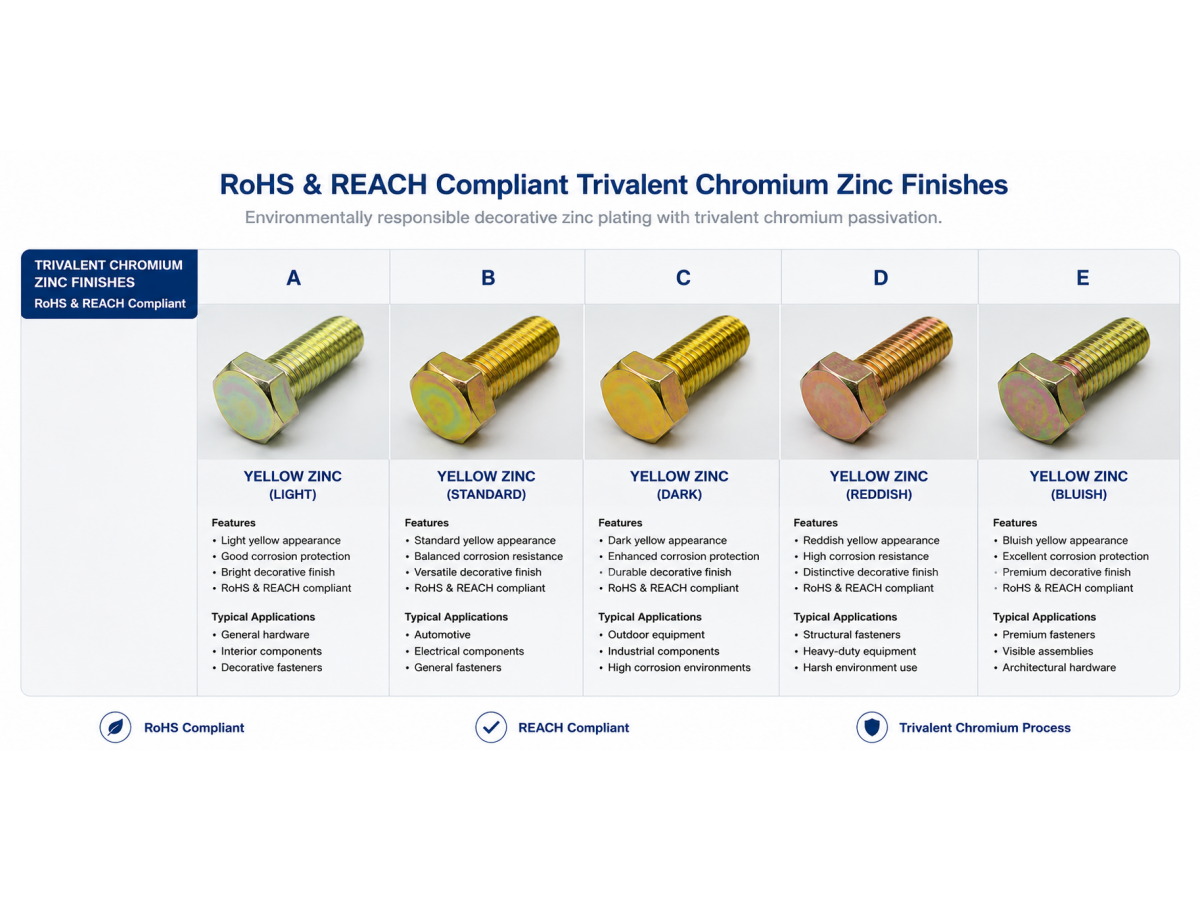
Yellow zinc finishes may appear:
Light yellow
Golden
Yellow-green
Iridescent
Rainbow-toned
Historically, some familiar yellow zinc appearances were associated with hexavalent chromate conversion coatings.
Modern restricted-substance requirements have driven the use of alternative systems, including trivalent passivation technologies.
However, buyers should avoid assuming that every yellow finish represents the same chemistry.
Yellow appearance ≠ specific passivation chemistry.
The actual process specification and supplier documentation should define the system.
Black zinc fasteners can appear:
Deep black
Semi-gloss black
Matte black
Dark gray
Blue-black
Black appearance can be influenced by:
Conversion coating
Sealer
Topcoat
Zinc deposit
Surface roughness
Coating thickness
Process conditions
Part geometry
This is particularly important when black fasteners are used in visible automotive, machinery, electronics, furniture, or equipment applications.
If appearance matters, "black zinc" alone may not provide sufficient cosmetic control.
This is especially important during second-source development.
A buyer may send a black fastener to a new supplier and request:
"Make the same black finish."
Visual matching alone is not enough.
A black component could involve different coating architectures, and two black finishes can differ significantly in:
Corrosion performance
Friction
Coating thickness
Adhesion
Chemical resistance
Installation behavior
Therefore:
Black appearance ≠ same surface treatment.
A second-source supplier should work from the controlled coating specification whenever possible, not reverse-engineer the process from color alone.
Coating thickness can influence the appearance of a zinc-plated fastener, but the relationship is not simple enough to state that thicker always means darker or thinner always means brighter.
Appearance also depends on passivation, deposit morphology, surface roughness, process chemistry, and post-treatment.
More importantly, coating thickness is a functional parameter.
It can affect:
Corrosion protection
Thread fit
Dimensional condition
Coating continuity
Installation behavior
For threaded fasteners, coating thickness must be considered together with thread tolerance.
More coating thickness ≠ automatically better fastener performance.
Excessive thickness can create assembly or gauge problems if dimensional allowances are not properly controlled.
The surface underneath the coating matters.
Possible influences include:
Carbon steel grade
Heat treatment
Cold-forming condition
Surface roughness
Machining marks
Scale
Pretreatment
Cleaning condition
A smooth cold-formed fastener and a rougher machined component may not look identical after nominally similar coating processes.
This is one reason appearance comparisons should use technically comparable components and defined viewing conditions.
Electroplating behavior is influenced by current distribution.
Complex geometry can create differences around:
Thread crests
Thread roots
Recesses
Under-head areas
Flanges
Sharp edges
Deep cavities
Weld projections
As a result, coating distribution and visible appearance may not be perfectly uniform over every surface.
This becomes especially relevant for:
Flange bolts
Recessed screws
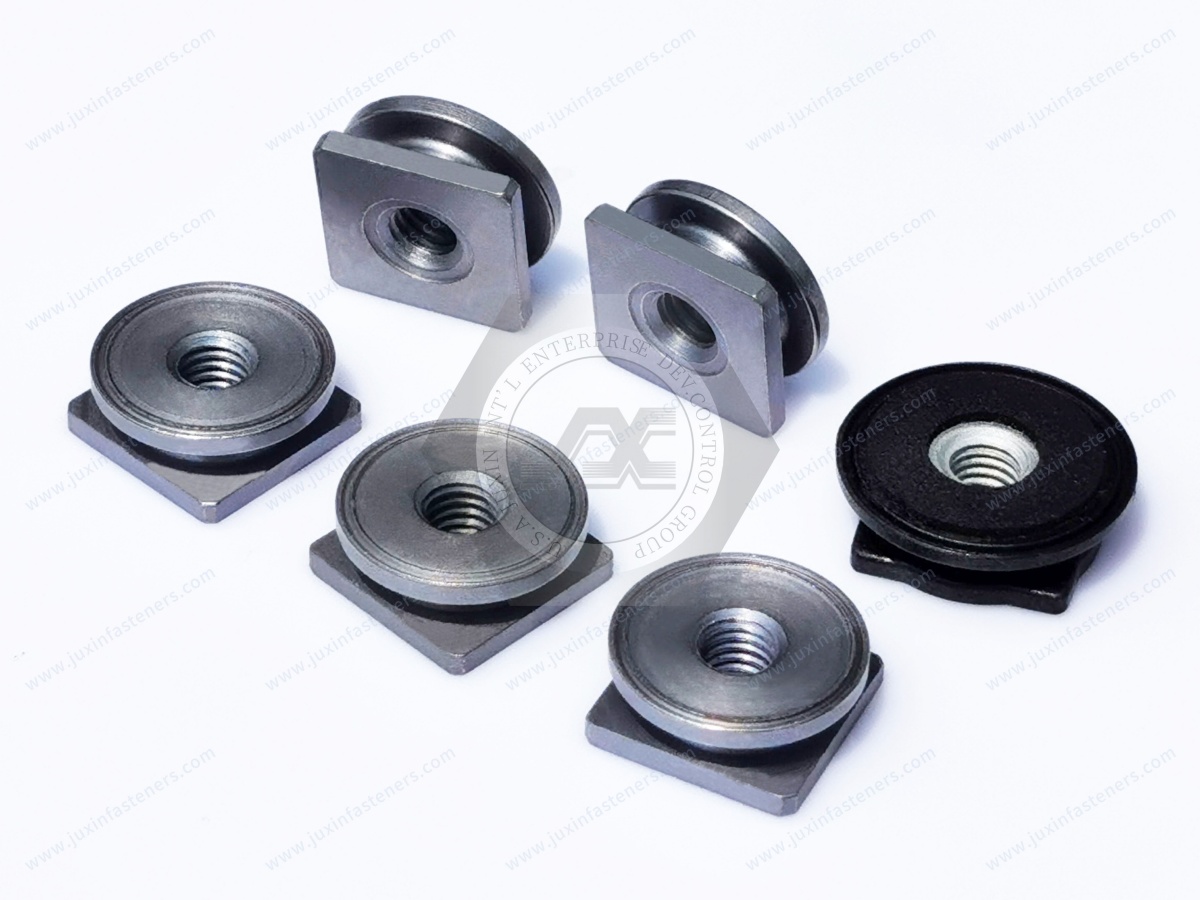
Weld nuts
Complex cold-formed components
CNC secondary-machined parts
Custom automotive fasteners
A visual inspection standard should distinguish between acceptable process variation and true coating defects.
One of the simplest causes of apparent coating mismatch is also one of the most overlooked: the inspection environment.
A zinc-plated fastener can look different under:
Daylight
Warm indoor lighting
Cool LED lighting
Fluorescent lighting
Camera flash
Photographs add additional variables:
White balance
Exposure
Smartphone processing
Camera sensor
Screen calibration
Image compression
For this reason, supplier qualification based only on emailed photographs can be unreliable when exact appearance matters.
If color is a critical characteristic, define controlled visual inspection conditions or use approved physical samples and measurable acceptance criteria where appropriate.
Environmental and restricted-substance requirements have changed the fastener-finishing industry significantly.
Hexavalent chromium-containing systems have historically been used in various conversion coatings,
while modern specifications increasingly use trivalent chromium or other compliant technologies where required.
However, several misconceptions should be avoided.
It does not.
Different commercial trivalent systems can produce different appearances.
It does not reliably do so.
It does not.
Restricted-substance compliance and functional coating performance are separate specification issues.
If RoHS, REACH, OEM restricted-substance requirements, or other chemical restrictions apply, the required declarations and coating chemistry should be documented.
A bright silver, yellow, or black finish cannot visually demonstrate regulatory compliance.
Compliance should be supported through appropriate material/process declarations or required documentation.
Therefore:
Color ≠ restricted-substance compliance.
This is particularly important for global OEM sourcing teams managing parts across multiple suppliers and production regions.
A darker or more visually substantial coating is not automatically more corrosion resistant.
Likewise, a bright finish is not automatically a lower-performance coating.
Corrosion performance depends on the complete system:
Substrate → Pretreatment → Zinc Deposit → Passivation → Sealer / Topcoat → Thickness → Process Control → Installation Damage → Service Environment
If corrosion resistance matters, specify a recognized test method and acceptance criteria.
Do not approve or reject corrosion performance by appearance alone.
Neutral salt spray testing is commonly used to compare and qualify metallic coatings under controlled laboratory conditions.
But:
Salt spray hours ≠ field service life.
A requirement such as a specified number of test hours does not mean the fastener will survive a corresponding number of months or years in actual service.
Field performance depends on factors such as:
Chloride concentration
Wet/dry cycles
Temperature
Humidity
Chemical contamination
Coating damage
Joint geometry
Galvanic interaction
UV exposure where relevant
Maintenance
Salt spray requirements should therefore be treated as laboratory acceptance criteria—not a direct service-life conversion.
Zinc-nickel is a distinct coating system that may be selected for demanding corrosion requirements, including certain automotive and industrial applications.
Its selection should be based on functional requirements rather than appearance.
Engineering variables can include:
Alloy composition
Coating thickness
Passivation
Sealer or topcoat
Corrosion requirement
Friction requirement
Thread fit
Application environment
The original article assigned a universal 720–1000 hour salt spray range to zinc-nickel. For OEM specifications, this should not be treated as an inherent property of every zinc-nickel fastener.
Actual acceptance depends on the complete coating system and specified test conditions.
Zinc-nickel name ≠ guaranteed salt spray result.
These treatments should not be selected by color.
| Surface Treatment | Typical Engineering Use | Key Selection Consideration |
|---|---|---|
| Electroplated zinc | General industrial corrosion protection | Thickness, passivation, corrosion requirement, friction |
| Zinc-nickel | Higher-demand corrosion applications | Alloy system, topcoat, friction, OEM specification |
| Zinc flake | Automotive and industrial corrosion protection, including selected high-strength applications | Coating system, thickness, friction and application |
| Hot-dip galvanizing | Heavy zinc coating for selected structural and outdoor applications | Thread allowance, coating thickness and dimensional fit |
| Mechanical zinc coating | Selected corrosion-protection applications | Process specification and required performance |
These processes are not interchangeable simply because several may produce silver or gray appearances.
This distinction is particularly important in technical content and RFQs.
Hot-dip galvanizing involves a fundamentally different coating process and generally produces a much heavier zinc layer than conventional electroplating.
This affects:
Surface texture
Appearance
Thread fit
Dimensional allowance
Coating thickness
Application
A buyer should therefore never specify only "galvanized" if the actual process matters.
Corrosion protection is not the only functional characteristic of a fastener coating.
Coating and topcoat can change thread and bearing friction.
That means a coating change can change the relationship between tightening torque and bolt preload.
Remember:
Torque ≠ Preload.
And:
Same torque + different friction ≠ same preload.
If an OEM changes from one zinc coating/passivation/topcoat system to another while retaining the same tightening torque, joint behavior may change.
For preload-sensitive applications, friction requirements may need to be specified and validated.
Procurement sometimes treats a coating-source change as a cosmetic purchasing decision.
That can be dangerous in engineered joints.
A coating change may alter:
Friction
Preload
Thickness
Thread fit
Corrosion behavior
Electrical contact behavior
Installation characteristics
Appearance
Therefore:
Coating substitution can be an engineering change.
Supplier-development teams should review the functional requirements before approving a new plating source or alternative coating system.
Electroplating high-strength steel fasteners requires additional engineering attention because some cleaning and plating processes can introduce hydrogen.
Under susceptible material and stress conditions, hydrogen can contribute to delayed brittle failure.
The risk depends on:
Fastener hardness and strength
Material
Heat treatment
Cleaning process
Pickling where applicable
Electroplating process
Post-treatment
Applied stress
Component geometry
For high-strength fasteners, surface-treatment selection must therefore consider more than corrosion and color.
Where applicable, specifications should define appropriate process controls and hydrogen-embrittlement requirements based on relevant standards and customer requirements.
Color variation may be acceptable when:
The coating system meets the drawing requirement
Required thickness is satisfied
Passivation/topcoat requirements are satisfied
Corrosion requirements are satisfied
Functional friction requirements are satisfied
No prohibited surface defects are present
Appearance is not defined as a critical characteristic
However, color variation is not automatically acceptable when the drawing, approved sample, cosmetic standard, or OEM specification explicitly controls appearance.
The correct rule is therefore:
Do not reject solely by color when color is not specified—but do not ignore color when it is specified.
Not every color difference should be dismissed as harmless.
Abnormal appearance can sometimes indicate issues such as:
Inconsistent passivation
Inadequate cleaning
Staining
Poor rinsing
Incomplete coverage
Burning
Contamination
Corrosion products
Uneven topcoat
Process drift
Quality engineers should therefore ask:
Is this merely an acceptable visual variation, or is it evidence of a process change that could affect function?
That question is much more useful than either automatically accepting or rejecting every color difference.
A practical OEM acceptance strategy can separate requirements into four groups.
| Requirement Group | Typical Characteristics |
|---|---|
| Mechanical | Material, property class, hardness where applicable, proof load, tensile requirements |
| Dimensional | Thread, critical dimensions, coating allowance, gauge acceptance |
| Surface Functional | Coating type, thickness, corrosion performance, friction, adhesion |
| Cosmetic | Color, gloss, uniformity, visible defects, approved appearance sample |
This prevents cosmetic inspection from replacing functional quality control.
| Observation | Possible Causes | Recommended Investigation |
|---|---|---|
| Batch is slightly darker | Passivation, topcoat, substrate or process variation | Compare specification and functional test results |
| Rainbow effect differs | Conversion coating chemistry or thickness | Verify specified passivation system |
| Black zinc appears gray | Blackening system, sealer, substrate or process conditions | Check coating specification and approved visual standard |
| Threads feel tight | Excessive coating thickness or dimensional interaction | Check thread gauges and coating thickness |
| Corrosion appears early | Coating damage, insufficient protection or process issue | Review coating system and corrosion testing |
| Torque behavior changes | Friction or topcoat changed | Conduct torque-tension/friction evaluation where required |
| Spots or stains appear | Cleaning, rinsing, drying or contamination | Investigate plating process |
| Color differs only in photographs | Lighting, camera or screen differences | Compare physical parts under controlled conditions |
This converts a subjective appearance complaint into a structured engineering investigation.
Color matching becomes especially risky during alternative-supplier development.
Suppose an existing fastener is silver-blue and a second supplier produces an almost identical silver-blue part.
That does not prove equivalence.
A robust second-source comparison should include:
Drawing + Revision + Base Material + Mechanical Properties + Heat Treatment + Thread + Geometry + Surface Preparation + Zinc Coating
+ Passivation + Sealer / Topcoat + Thickness + Friction + Corrosion Requirement + Functional Testing + Documentation + Change Control
For appearance-sensitive components, add:
Approved Color / Master Sample + Gloss + Visual Inspection Conditions
The central principle remains:
Same dimensions ≠ functional equivalence.
And:
Same color ≠ coating equivalence.
Instead of asking only:
"Can you make the same zinc color?"
A procurement or supplier-development team should ask:
Which zinc coating system is specified?
What passivation is required?
Is a sealer or topcoat required?
What coating thickness is specified?
What corrosion requirement applies?
Is friction controlled?
Are thread dimensions verified after coating?
Is color functionally or cosmetically controlled?
Is there an approved appearance sample?
Are restricted-substance requirements defined?
Are hydrogen-embrittlement controls required?
What documentation must accompany production?
This changes supplier discussions from subjective appearance matching to controlled technical sourcing.
Automotive fasteners may require combinations of:
Corrosion resistance
Controlled friction
Tight dimensional tolerances
High mechanical strength
Automated assembly
Cosmetic appearance
OEM restricted-substance compliance
Potential products include:
Automotive bolts
Automotive nuts
Weld nuts
Wheel-related fasteners
Structural fasteners
Chassis fasteners
Body fasteners
Custom cold-formed components
For preload-sensitive joints, the surface treatment should be evaluated as part of the fastening system rather than as decoration.
Zinc-plated fasteners are also common in:
Electrical enclosures
Equipment cabinets
Control systems
Telecom equipment
Industrial electronics
General equipment assemblies
However:
Metal fastener ≠ automatic electrical bond.
And:
Coated metal fastener ≠ qualified electrical connection.
Where grounding, bonding, conductivity, or contact resistance matters, the electrical interface must be separately designed and validated.
Industrial equipment may use zinc-plated bolts, screws, nuts, washers, pins, clips, and custom components for general corrosion protection and controlled assembly.
The required coating should reflect:
Indoor or outdoor service
Humidity
Chemical exposure
Maintenance cycle
Required appearance
Assembly torque
Expected service life
A cosmetic zinc finish suitable for indoor machinery may not be appropriate for outdoor or chemical-processing equipment.
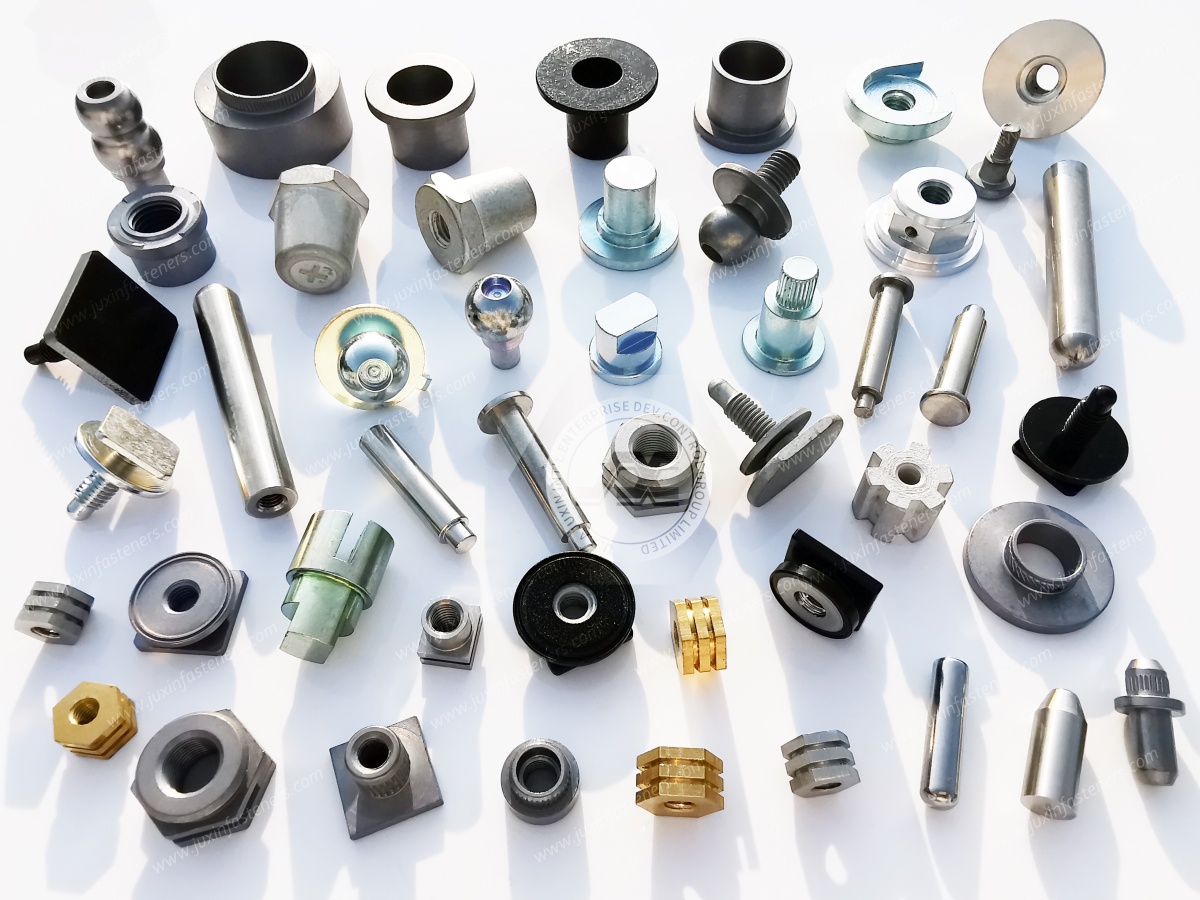
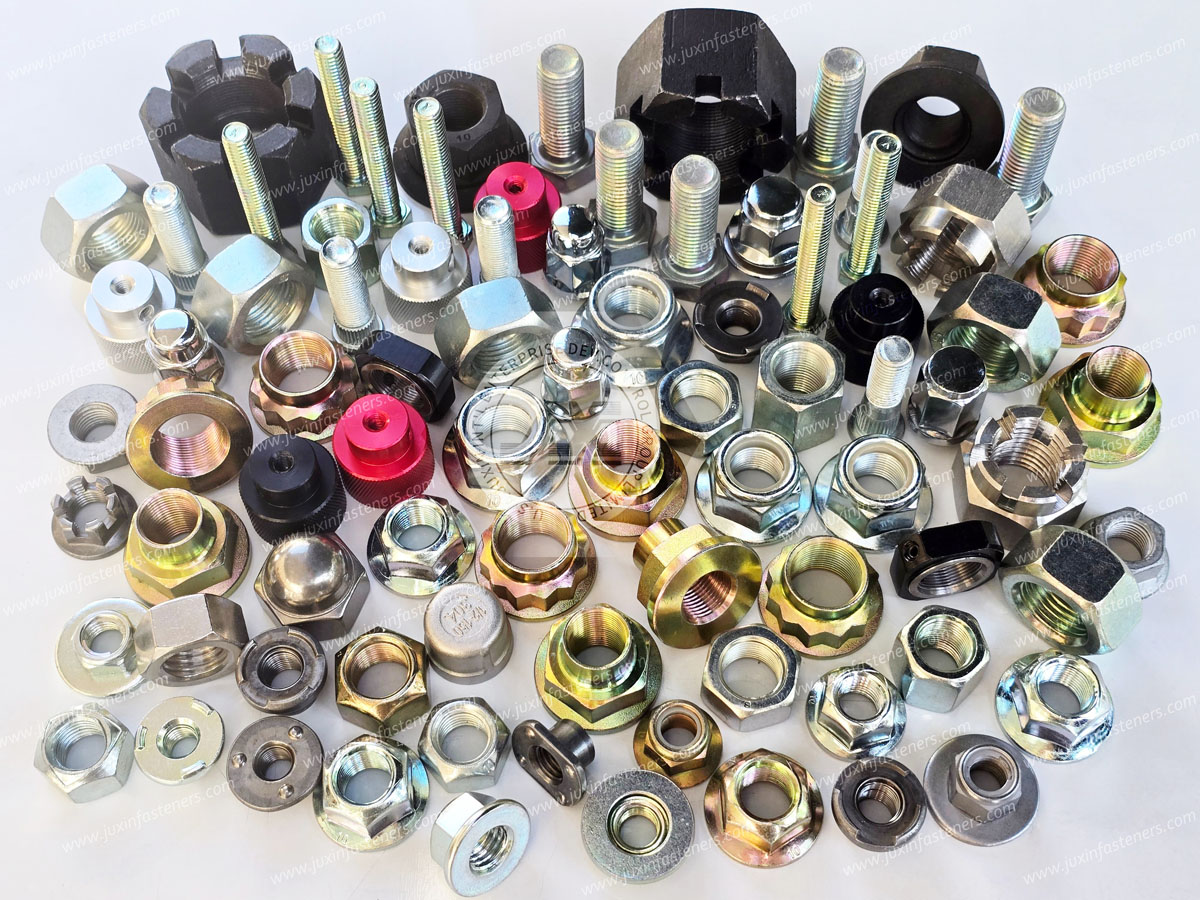
JUXIN FASTENERS supports standard and drawing-based fastening components with application-specific surface-treatment requirements, including:
Zinc plated bolts
Zinc plated screws
Zinc plated nuts
Zinc plated washers
Zinc plated weld nuts
Zinc-nickel coated fasteners
Zinc flake coated fasteners
Black finished fasteners
High-strength fasteners
Stainless steel fasteners
Automotive fasteners
Electrical-equipment fasteners
Custom cold-formed components
CNC secondary-machined components
Drawing-based OEM fasteners
Second-source fastener development
Surface-treatment requirements can be evaluated together with material, mechanical properties, thread, geometry,
corrosion requirements, friction requirements, appearance, and application conditions.
Poorly defined coating requirements can generate costs far beyond the price of the fastener.
These may include:
Incoming inspection holds
Supplier disputes
Sorting
Rework
Re-plating
Production delays
Line stoppage
Requalification
Emergency freight
Customer complaints
For sourcing teams:
Total Installed Cost = Part Price + Installation + Inspection + Sorting + Rework + Scrap + Downtime + Logistics + Warranty Risk + Supply Risk
A clear coating specification can therefore be a supply-chain cost-control tool, not merely an engineering document.
Passivation, sealer, coating thickness, substrate condition, process conditions, geometry, and lighting can all influence visible appearance.
Determine whether color is a controlled acceptance characteristic before deciding that the difference represents a defect.
Not necessarily. Appearance depends on several variables, so color should not be used as a reliable coating-thickness measurement.
No. Brightness does not directly establish corrosion resistance, thickness, adhesion, friction, or mechanical performance.
The visual color alone cannot determine compliance. The actual coating chemistry and required restricted-substance documentation must be reviewed.
No. Similar black appearance does not mean the coating systems are equivalent.
No. Corrosion performance depends on the complete coating system, thickness, passivation, sealer, substrate, damage condition, and specified test criteria.
Yes. Changes in coating or topcoat can change friction and therefore the torque-to-preload relationship.
Certain processes can introduce hydrogen, which is an important concern for susceptible high-strength steel fasteners.
The risk must be managed through appropriate material and process controls.
Not automatically. First determine whether the drawing or approved specification controls exact appearance.
Then verify the specified coating system and functional requirements.
Provide the coating standard or customer specification, coating type, passivation, topcoat if required, thickness, corrosion requirement,
friction requirement where applicable, color requirement if critical, restricted-substance requirements, and any special validation requirements.
A physical sample can support appearance comparison, but it should not replace the technical coating specification.
Visual similarity cannot identify all functional characteristics of the original coating.
Compare coating system, pretreatment, thickness, passivation, topcoat, friction, corrosion performance, thread fit,
restricted-substance requirements, appearance requirements, process documentation, and change control.
For efficient technical and commercial evaluation, provide:
2D drawing
3D model if available
Part number
Drawing revision
Application
Fastener type
Thread size and pitch
Base material
Mechanical property class
Heat-treatment requirement
Surface-treatment specification
Zinc coating type
Zinc-nickel requirement if applicable
Passivation requirement
Sealer or topcoat
Coating thickness
Color requirement
Approved appearance sample if applicable
Gloss requirement if applicable
Corrosion test method
Corrosion acceptance criteria
Friction requirement
Installation torque where relevant
Target preload where relevant
Thread-gauge requirement after coating
RoHS / REACH or customer restricted-substance requirements where applicable
Hydrogen-embrittlement requirements where applicable
Functional testing
PPAP or customer-specific documentation requirements where applicable
Annual volume
Existing sample for second-source development where available
If appearance is critical, state it explicitly in the RFQ.
Do not rely on a photograph and the words "same color."
This page should connect internally with existing JUXIN FASTENERS resources covering:
Fastener coatings and surface treatments
Zinc-nickel coated fasteners
Zinc flake coated fasteners
PTFE coated fasteners
Torque, friction and preload
Hydrogen embrittlement in high-strength fasteners
Corrosion-resistant fastener selection
Automotive fasteners
Weld nuts and projection weld fasteners
Custom OEM fasteners
Second-source fastener qualification
Use the existing indexed JUXIN FASTENERS URL when implementing each internal link.
The intended content path is:
Zinc Plating Appearance → Coating Specification → Corrosion & Friction → Engineering Acceptance → Supplier Qualification → Second Source → RFQ
The most important lesson in zinc-plated fastener sourcing is not that color "doesn't matter."
The correct lesson is:
Color matters when the engineering or cosmetic specification says it matters.
But color alone cannot demonstrate:
Coating thickness
Corrosion performance
Friction
Adhesion
Restricted-substance compliance
Hydrogen-embrittlement control
Functional equivalence
For engineers, this means separating visual acceptance from functional coating requirements.
For procurement and supplier-development teams, it means specifying the complete coating system
rather than purchasing by phrases such as "blue zinc," "yellow zinc," or "black zinc" alone.
The correct qualification chain is:
Base Fastener → Pretreatment → Coating → Passivation → Sealer / Topcoat → Thickness → Friction
→ Corrosion Performance → Appearance → Installation → Validation
JUXIN FASTENERS supports OEM, Tier-1, Tier-2, and industrial customers with zinc plated fasteners,
zinc-nickel coated fasteners, zinc flake coated fasteners, high-strength fasteners, weld nuts,
custom cold-formed components, CNC secondary-machined components, and drawing-based second-source development.
For a new project, coating-related quality issue, or alternative-source evaluation, send your drawing, revision,
surface-treatment specification, approved sample if applicable, functional requirements, and annual volume for technical review.
JUXIN FASTENERS
Email: info@juxinfasteners.com
Website: www.juxinfasteners.com
Contact Us
Tel.:
+86 020 8621 0320
+86 020 3121 6067
E-mail:
Technical Support:
Navigation
SEND INQUIREY



