
Call Us
+86 136 6007 9809
Call Us
+86 136 6007 9809

Aug. 11, 2026
Fastener surface finish is not simply a color or cosmetic requirement.
For an engineered bolted joint, the selected coating can influence corrosion protection, friction, tightening behavior, thread fit, electrical contact,
installation consistency, serviceability, and—in some high-strength steel fasteners—the manufacturing risks that must be controlled.
This creates an important sourcing principle for OEM engineers and procurement teams:
Coating name ≠ complete coating specification.
"Zinc plated," "black zinc," "zinc-nickel," "zinc flake," or "galvanized" may describe a broad finish family,
but these terms alone do not fully define the functional performance of a finished fastener.
A robust fastener surface-treatment specification should connect:
Application Environment → Base Material → Mechanical Properties → Coating System → Thickness
→ Passivation / Topcoat → Friction → Thread Fit → Installation → Validation
This guide helps design engineers, quality engineers, procurement managers, strategic sourcing teams,
and supplier-development professionals compare common fastener surface finishes and define the information required for OEM sourcing and second-source qualification.

The correct surface finish depends on what the fastener must do in the assembled product.
Start by defining:
Base fastener material
Mechanical property class
Indoor or outdoor service
Corrosion environment
Chemical exposure
Temperature
Required coating thickness
Thread tolerance
Required friction behavior
Tightening method
Target preload where applicable
Cosmetic requirements
Electrical requirements where applicable
Restricted-substance requirements
Service and maintenance conditions
Customer-specific specifications
Only then should the coating system be selected.
A finish that performs well on a general industrial screw may be inappropriate for a Class 10.9 automotive bolt, a stainless steel assembly,
a threaded component requiring electrical continuity, or a heavy structural fastener.

Corrosion protection is often the first reason engineers specify a surface treatment.
But coatings can affect much more than corrosion.
A fastener finish can influence:
Thread and bearing friction affect the relationship between installation torque and preload.
Coating thickness consumes thread and dimensional clearance.
Different coatings and topcoats can change installation consistency.
Some surface systems can help manage sliding behavior between mating threads.
A coating may alter conductivity or contact resistance.
Color and gloss may matter for visible components.
Certain surface-treatment routes require additional controls for susceptible high-strength steel fasteners.
This is why surface finish should be considered during fastener design—not added at the end of the purchasing process.
The following table provides a practical engineering comparison.
| Surface Finish | Typical Reason for Selection | Important Engineering Consideration |
|---|---|---|
| Electroplated Zinc | General industrial corrosion protection | Passivation, thickness, friction, high-strength steel process controls |
| Zinc-Nickel | Higher-demand corrosion protection | Alloy system, passivation, topcoat, friction, OEM specification |
| Zinc Flake | Automotive and industrial corrosion protection | Coating thickness, friction system, application and curing requirements |
| Hot-Dip Galvanizing | Heavy zinc protection for outdoor and structural applications | Thick coating, thread allowance, fit and dimensional compatibility |
| Mechanical Zinc | Selected corrosion-protection applications | Process specification, thickness and performance |
| Phosphate | Assembly aid, oil retention, pretreatment | Limited standalone corrosion protection |
| PTFE-Based Coating | Low friction, release, chemical resistance, selected corrosion protection | Friction, thickness, thread fit and complete coating chemistry |
| Passivated Stainless Steel | Surface cleanliness and corrosion-performance support for stainless components | Stainless grade and service environment still control suitability |
There is no universally "best" fastener coating.
The correct choice is the one that satisfies the actual joint and environmental requirements.
Electroplated zinc is widely used for:
Bolts
Screws
Nuts
Washers
Weld nuts
Pins
Clips
Custom cold-formed components
It is common in general industrial machinery, automotive components, electrical equipment, appliances, enclosures, and other OEM assemblies.
A complete zinc-plating specification may need to define:
Zinc deposit
Coating thickness
Conversion coating or passivation
Sealer
Topcoat
Corrosion requirement
Friction requirement
Appearance
Restricted-substance requirements
Hydrogen embrittlement controls where applicable
Simply writing "zinc plated" on an RFQ leaves many of these variables undefined.
Clear or blue-passivated zinc commonly produces a silver to silver-blue appearance, sometimes with slight iridescence.
It is frequently selected for general industrial and OEM fasteners where a clean metallic appearance is desired.
However, appearance alone does not identify:
Coating thickness
Corrosion resistance
Passivation chemistry
Friction
Regulatory compliance
Therefore:
Silver-blue appearance ≠ complete zinc-plating specification.
Yellow zinc can range visually from pale yellow to gold and iridescent tones.
Historically, some familiar yellow finishes were associated with hexavalent chromium-containing conversion coatings.
Alternative passivation technologies are also available where restricted-substance requirements apply.
Engineers and buyers should not identify coating chemistry solely by color.
Yellow color ≠ specific conversion-coating chemistry.
The required coating system and compliance requirements should be documented.
Black zinc is used where a dark appearance is required in applications such as:
Automotive assemblies
Industrial equipment
Electronics
Equipment hardware
Visible mechanical components
Black finishes can vary from dark gray to deep black and from matte to gloss.
If appearance matters, the drawing or purchasing specification should define an approved visual standard rather than relying only on the term "black zinc."
More importantly:
Black appearance ≠ same surface treatment.
Two visually similar black fasteners can have different corrosion, friction, thickness, and installation characteristics.
Zinc-nickel coating is used in many demanding corrosion-protection applications, including selected automotive, transportation, electrical, and industrial assemblies.
Its functional performance depends on the complete system, including:
Zinc-nickel deposit
Alloy composition
Coating thickness
Passivation
Sealer or topcoat
Friction control
Substrate
Application conditions
It should not be specified only as "zinc-nickel" without defining the required performance.
Likewise, a universal salt spray value should not be assigned to every zinc-nickel coated fastener.
Zinc-nickel name ≠ guaranteed corrosion-test result.
The applicable test method, duration, acceptance criteria, and definition of corrosion should be specified by the customer or applicable standard.
Zinc flake coating systems are widely used in automotive and industrial applications where corrosion resistance and controlled installation behavior are important.
Depending on the coating system, advantages can include:
Corrosion protection
Controlled friction through compatible topcoats
Application to various fastener geometries
Suitability for selected high-strength fastener applications
However, "zinc flake" is also a coating family rather than one universal specification.
Engineers should define:
Coating system
Thickness
Basecoat/topcoat architecture
Friction range
Corrosion requirement
Cure requirements
Dimensional constraints
OEM specification where applicable
A change from one zinc flake system to another should not automatically be treated as a like-for-like purchasing substitution.
For susceptible high-strength steel fasteners, manufacturing route becomes particularly important.
Electroplating processes can involve cleaning and processing steps that may introduce hydrogen.
Zinc flake systems are often considered in applications where avoiding electrolytic deposition can be advantageous.
However, this does not mean:
Zinc flake = zero hydrogen embrittlement risk under every manufacturing condition.
Hydrogen can potentially be introduced during other upstream processes as well.
The complete manufacturing route must therefore be controlled.
For high-strength bolts, the question should be:
What processes can introduce hydrogen, and how is that risk controlled?
rather than simply:
Which coating name is used?
Hot-dip galvanizing creates a comparatively thick zinc-based protective layer by immersing suitable steel components in molten zinc.
It is widely associated with:
Outdoor structures
Infrastructure
Heavy equipment
Construction
Structural bolting
Utility applications
The thicker coating can provide robust environmental protection, but it creates different dimensional considerations from electroplated zinc.
Threaded fasteners require attention to:
Coating thickness
Thread allowance
Nut compatibility
Final thread fit
Applicable dimensional requirements
Assembly behavior
A conventional nut intended for thin electroplating should not automatically be assumed compatible with a heavily galvanized external thread.
The term "galvanized fastener" can create ambiguity.
Depending on context, people may use it loosely to refer to different zinc-based treatments.
For engineering drawings and RFQs, specify the actual process:
Electroplated zinc
Hot-dip galvanized
Mechanical zinc
Zinc flake
Zinc-nickel
Other defined system
These processes are not interchangeable.
Mechanical zinc deposition uses a different process from electroplating.
It may be considered for selected fastener applications depending on:
Component material
Required thickness
Corrosion performance
Geometry
Mechanical properties
Applicable specification
As with every coating:
Process name alone does not define final component performance.
The drawing or purchase specification should state the applicable requirements.
Phosphate finishes are commonly used as:
Pretreatments
Oil-retaining surfaces
Assembly-related finishes
Bases for subsequent coatings or lubricants
Phosphate by itself should not automatically be treated as equivalent to a high-performance corrosion-protection coating.
Its suitability depends on the application and complete surface-treatment system.
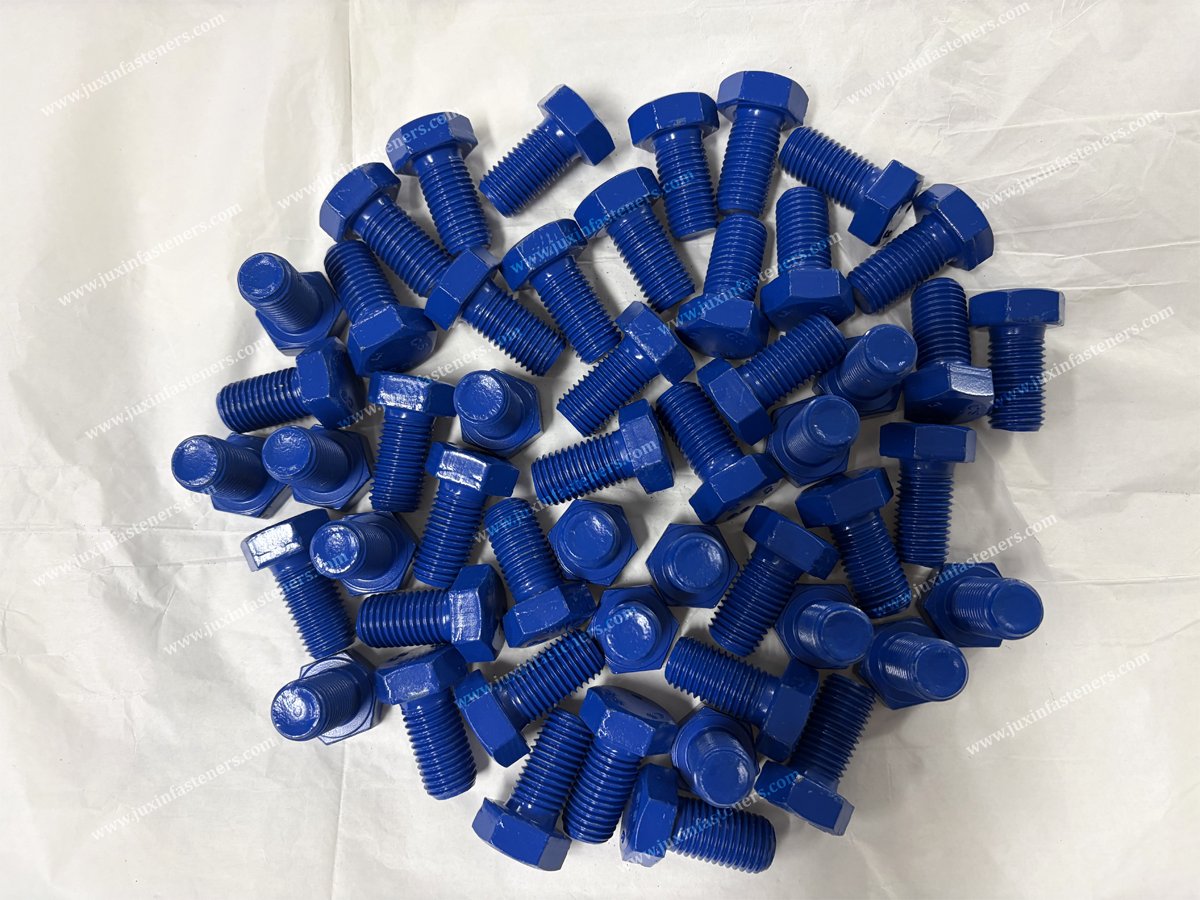
PTFE-based coating systems may be selected when low friction, release behavior, chemical resistance, galling reduction, or selected environmental protection is important.
Potential products include:
PTFE coated bolts
PTFE coated screws
PTFE coated nuts
PTFE coated studs
PTFE coated washers
However, the low-friction behavior requires engineering attention.
Changing from a conventional zinc finish to a PTFE-based system can substantially change the torque-to-preload relationship.
Therefore:
Coating substitution can be an engineering change.
One of the most important reasons to treat surface finish as an engineering parameter is friction.
A torque-controlled bolted joint does not convert all applied torque directly into useful bolt tension.
A large portion is consumed by friction at:
Threads
Nut or bolt bearing surface
Washer interface where applicable
Changing the coating or lubricant changes those friction conditions.
Therefore:
Torque ≠ Preload.
And:
Same torque + different friction ≠ same preload.
If a supplier changes the coating, passivation, sealer, or topcoat without considering friction, the same assembly torque may produce a different clamp load.
This can lead to:
Under-preload
Over-preload
Joint movement
Bolt yielding
Thread damage
Assembly variation
For preload-sensitive OEM joints, friction should be part of coating qualification.
Lower friction can reduce the torque required to reach a target preload.
But lower friction does not automatically make a fastener better.
If the assembly torque remains unchanged while friction decreases significantly, bolt preload may increase.
Therefore:
Lower friction ≠ automatically safer joint.
The correct objective is a controlled friction range compatible with the validated tightening strategy.
Surface-treatment thickness consumes dimensional space.
This is especially important on threaded components.
Potential issues include:
Tight thread engagement
Gauge failure
Increased installation torque
Coating damage during assembly
Nut incompatibility
Loss of required clearance
The relationship should be considered as:
Thread Geometry → Pre-Coating Dimensions → Coating Thickness → Final Thread Fit
This becomes particularly important for:
Small thread sizes
Thick coating systems
Hot-dip galvanized fasteners
Multi-layer coatings
Custom precision components
More coating is not automatically better.
Laboratory corrosion testing is useful for coating qualification and process comparison.
Commonly referenced international test methods may include neutral salt spray testing under standards such as ASTM B117 or ISO 9227 where applicable.
But the result must be interpreted correctly.
Salt spray hours ≠ field service life.
A fastener surviving a specified laboratory exposure cannot automatically be assigned a corresponding number of years in real service.
Actual corrosion depends on:
Wet/dry cycling
Temperature
Chlorides
Chemicals
Humidity
UV exposure where applicable
Coating damage
Joint crevices
Galvanic interaction
Maintenance
Specify laboratory test requirements as acceptance criteria—not as direct service-life predictions.
Fasteners do not operate alone.
An assembly may combine:
Carbon steel fastener
Aluminum structure
Stainless steel component
Coated sheet
Copper-containing electrical component
Dissimilar materials in the presence of an electrolyte can create galvanic effects.
The fastener coating may influence the interaction, but it cannot be evaluated separately from the complete assembly.
Therefore:
Corrosion-resistant fastener ≠ corrosion-resistant assembly.
Engineers should consider substrate compatibility, coating damage, area ratios, drainage, crevices, and environmental exposure.
Hydrogen embrittlement is a critical consideration for certain high-strength steel fasteners.
Susceptibility depends on variables including:
Material
Hardness
Strength level
Heat treatment
Residual stress
Applied stress
Manufacturing process
Surface preparation
Plating process
Processes involving acid cleaning, pickling, or electroplating may require particular attention.
Depending on the product and specification, process controls and post-plating treatments may be required.
However:
Baking ≠ guaranteed elimination of hydrogen embrittlement risk.
Hydrogen risk should be managed through the complete material and manufacturing route.
Stainless steel fasteners are often selected without metallic coating because corrosion resistance comes primarily from the alloy itself.
But stainless steel is not universally corrosion-proof.
Selection should consider:
304 vs. 316 or other grade
Chlorides
Chemicals
Temperature
Crevice conditions
Galling
Galvanic interaction
Surface contamination
Passivation may be specified for certain stainless steel components to improve surface cleanliness and support formation of the passive condition.
But:
Passivation ≠ a thick protective coating.
And:
Stainless steel ≠ universal corrosion solution.
Aluminum fasteners and components may use anodizing or other surface treatments depending on the application.
When aluminum is combined with steel or stainless steel fasteners, galvanic compatibility becomes an important consideration.
Engineers should evaluate:
Aluminum alloy
Temper
Coating or anodizing
Mating material
Environment
Preload
Electrical requirements
Service temperature
A stronger steel bolt does not automatically create a stronger or more durable aluminum joint.
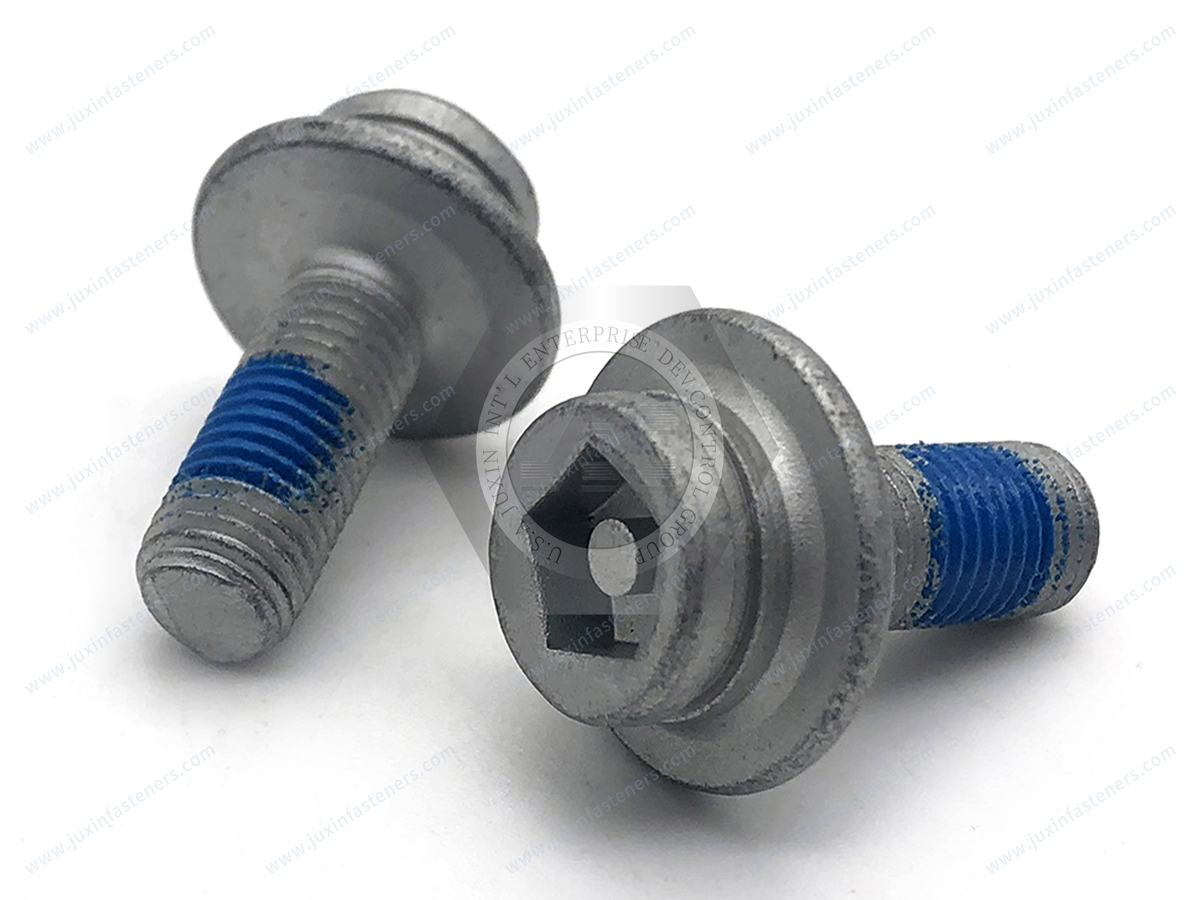
Electrical and telecom equipment may require fasteners for:
Enclosures
Cabinets
Busbar supports
Equipment mounting
PCB assemblies
Grounding-related hardware
But coating selection must distinguish mechanical fastening from electrical function.
Mechanical fastening ≠ electrical safety.
Metal-to-metal contact ≠ qualified electrical bond.
Coated metal fastener ≠ qualified grounding connection.
Where electrical conductivity, grounding, bonding, or contact resistance matters, the complete electrical interface must be validated separately.
Automotive fasteners can experience combinations of:
Humidity
Road salt
Thermal cycling
Vibration
Automated assembly
Controlled torque
Appearance requirements
Potential surface systems may include:
Zinc plating
Zinc-nickel
Zinc flake
Phosphate-based systems
Application-specific organic or hybrid coatings
However, OEM coating selection is typically tied to specific application requirements.
A coated bolt should not be described as automatically qualified for:
Chassis
Braking
Suspension
Battery systems
Safety-critical structures
simply because the coating has strong laboratory corrosion performance.
Standard compliance ≠ application qualification.
Railway equipment can range from non-structural interior equipment to safety-critical running gear.
Fasteners used in:
Interior panels
Lighting equipment
Electrical cabinets
HVAC equipment
Passenger-area equipment
may have very different coating and qualification requirements from fasteners used in:
Bogies
Braking systems
Crash structures
Primary load-bearing assemblies
For safety-critical rail applications, OEM and project-specific requirements and formal validation take priority.
A general corrosion-resistant fastener should never be presented as automatically railway safety-qualified.
A practical decision framework begins with the application rather than the coating catalog.
Identify:
Product type
Material
Mechanical property class
Heat treatment
Thread
Geometry
Identify:
Indoor or outdoor
Humidity
Salt
Chemical exposure
Temperature
UV exposure where relevant
Immersion or splash
Maintenance interval
Determine:
Required preload
Tightening method
Friction requirement
Electrical requirement
Repeated disassembly
Galling risk
Cosmetic requirement
Compare:
Corrosion performance
Thickness
Friction
Process route
Material compatibility
Application requirements
Cost
Depending on application, verification may include:
Coating thickness
Adhesion
Corrosion testing
Friction testing
Torque-tension testing
Thread gauging
Mechanical testing
Appearance inspection
Application-specific functional testing
This prevents the common mistake of selecting a coating based only on color or advertised salt spray hours.
| Observed Problem | Possible Engineering Cause |
|---|---|
| Fastener corrodes early | Incorrect coating system, damage, insufficient protection, environment beyond specification |
| Assembly torque changes | Friction or topcoat changed |
| Bolt preload becomes inconsistent | Friction variation, mating-surface variation, coating inconsistency |
| Nut becomes difficult to install | Coating thickness or thread-fit issue |
| Coating peels or flakes | Surface preparation, adhesion, curing or installation damage |
| High-strength bolt fails after installation | Investigate material, heat treatment, hydrogen, preload and service loading |
| Coating color differs | Passivation, topcoat, substrate, process or lighting variation |
| Aluminum mating part corrodes | Possible galvanic interaction or coating damage |
| Stainless threads seize | Galling, installation speed, preload, surface condition or lubrication issue |
A coating complaint should therefore be investigated as a system problem rather than immediately classified as "bad plating."
A second-source supplier cannot establish functional equivalence by matching color.
The qualification package should compare:
Drawing + Revision + Base Material + Mechanical Properties + Heat Treatment + Thread + Geometry + Surface Preparation
+ Coating System + Coating Thickness + Passivation + Topcoat + Friction + Corrosion Requirement + Installation Behavior + Functional Testing + Documentation + Change Control
This is particularly important for automotive and high-volume OEM assemblies.
Same dimensions ≠ functional equivalence.
Same coating color ≠ functional equivalence.
Same coating name ≠ functional equivalence.
Before approving a fastener coating supplier, procurement and supplier-development teams should ask:
What exact surface-treatment system is proposed?
Which international or customer specification applies?
What coating thickness is required?
What passivation or topcoat is required?
What corrosion acceptance criteria apply?
Is friction controlled?
Is torque-tension testing required?
Are threads gauged after coating?
Are restricted-substance requirements defined?
Is appearance controlled?
Are hydrogen embrittlement controls required?
What documentation is required?
How are coating-process changes controlled?
These questions reduce risk more effectively than simply asking whether a supplier can provide "zinc plated bolts."
The lowest-cost coating is not automatically the lowest-cost solution.
An inappropriate finish can create:
Premature corrosion
Assembly problems
Torque variation
Thread-fit failures
Sorting
Rework
Field maintenance
Component replacement
Warranty exposure
Production downtime
A useful sourcing model is:
Total Installed Cost = Part Price + Installation + Tooling + Inspection + Rework + Scrap + Downtime + Logistics + Maintenance + Warranty Risk + Supply Risk
The correct coating balances functional requirements, manufacturing stability, and commercial cost.
JUXIN FASTENERS supports standard and drawing-based industrial fasteners with application-specific surface-treatment requirements, including:
Zinc plated bolts
Zinc plated screws
Zinc plated nuts
Zinc plated washers
Zinc plated weld nuts
Zinc-nickel coated fasteners
Zinc flake coated fasteners
PTFE coated fasteners
Black finished fasteners
Stainless steel fasteners
High-strength bolts and nuts
Weld nuts
Weld studs
Rivet nuts
Self-clinching fasteners
Custom cold-formed fasteners
CNC secondary-machined components
Drawing-based OEM fasteners
Second-source fastener development
Coating selection can be evaluated together with base material, mechanical properties, heat treatment, thread requirements,
friction, corrosion environment, installation method, and customer-specific specifications.
There is no universal best coating. Selection depends on substrate, mechanical strength, environment, corrosion requirement,
friction, thread fit, installation process, electrical requirements, and cost.
No. Zinc-nickel may provide advantages for demanding corrosion requirements, but it may be unnecessary for less severe environments.
Application requirements should determine the coating.
Zinc flake systems are commonly considered for high-strength fasteners, including applications where an electrolytic coating route may be undesirable.
However, the complete manufacturing process and application specification still require evaluation.
Not automatically. Coating chemistry, continuity, adhesion, passivation, topcoat, substrate, and service conditions all matter.
Excessive thickness can also create thread-fit problems.
Do not assume so. A coating change can alter friction and therefore the torque-to-preload relationship.
Color alone does not determine corrosion performance. Compare the complete coating system and specified test requirements.
No. Salt spray testing is a laboratory comparison and qualification method. It should not be directly converted into years of field life.
Certain processing routes can introduce hydrogen, which is a concern for susceptible high-strength steel fasteners.
Risk depends on the material, strength, process, stress state, and required controls.
Provide the fastener drawing, material, property class, surface-treatment specification, thickness, passivation/topcoat, corrosion requirement,
friction requirement, appearance requirement, restricted-substance requirements, application, annual volume, and required documentation.
That may be adequate for some low-risk general-purpose applications, but it is insufficient for many OEM requirements. If corrosion,
friction, compliance, or appearance matters, define those requirements separately.
Compare the complete coating system, process route, thickness, passivation, topcoat, friction, corrosion performance, thread fit,
appearance requirements, functional testing, documentation, and change control.
JUXIN FASTENERS can evaluate surface-treatment requirements for standard and drawing-based fasteners based on the component material,
geometry, mechanical requirements, application environment, installation conditions, and customer specification.
For accurate technical and commercial evaluation, provide:
2D drawing
3D model if available
Part number
Drawing revision
Application
Fastener type
Thread size and pitch
Base material
Material grade
Mechanical property class
Heat treatment
Surface-treatment specification
Required coating type
Coating thickness
Passivation requirement
Sealer or topcoat
Color requirement
Approved visual sample if applicable
Corrosion test method
Corrosion acceptance criteria
Friction requirement
Installation torque
Target preload where applicable
Thread-gauge requirement after coating
Operating environment
Chemical exposure
Operating temperature
Electrical requirements where applicable
RoHS / REACH or customer restricted-substance requirements where applicable
Hydrogen embrittlement requirements where applicable
Functional testing
PPAP or customer-specific documentation requirements where applicable
Annual volume
Existing approved sample for second-source development where available
If the surface finish has not yet been selected, provide the actual application conditions and required performance.
This is more useful than asking for "the best coating."
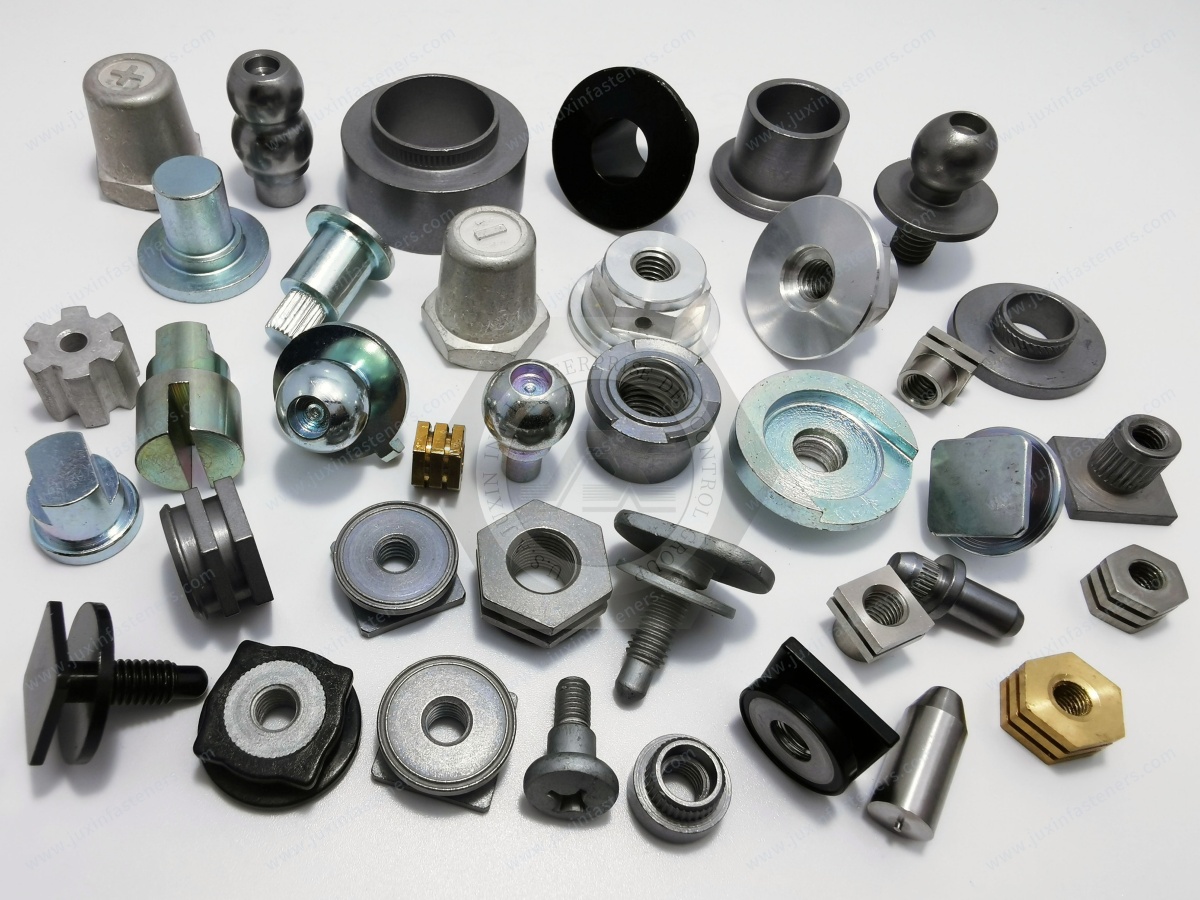
This page should connect internally with existing JUXIN FASTENERS resources covering:
Zinc plating color variation
PTFE coated fasteners
Zinc-nickel coated fasteners
Zinc flake coated fasteners
Corrosion-resistant fastener selection
Torque, friction and preload
Hydrogen embrittlement in high-strength fasteners
Stainless steel fastener selection
Automotive fasteners
Weld nuts and weld fasteners
Custom OEM fasteners
Second-source fastener qualification
Use the existing indexed JUXIN FASTENERS URL when implementing each internal link.
The intended content path is:
Fastener Surface Finish → Coating Comparison → Corrosion & Friction → Joint Engineering → Supplier Qualification → Second Source → RFQ
The most effective fastener coating specification does not begin with color.
It begins with the engineering function.
The decision path should be:
Application → Environment → Base Material → Mechanical Properties → Coating Process
→ Thickness → Corrosion → Friction → Thread Fit → Installation → Validation
For design engineers, this approach helps prevent coating changes from unintentionally changing joint performance.
For procurement and supplier-development teams, it provides a more reliable basis for comparing suppliers,
controlling second sources, and reducing coating-related quality disputes.
JUXIN FASTENERS supports OEM, Tier-1, Tier-2, and industrial manufacturers with zinc plated fasteners, zinc-nickel coated fasteners,
zinc flake coated fasteners, PTFE coated fasteners, stainless steel fasteners, high-strength fasteners, weld nuts, custom cold-formed components,
CNC secondary-machined parts, and drawing-based second-source development.
For a new project, coating conversion, corrosion problem, or alternative-source evaluation, send your drawing,
revision, material and mechanical requirements, surface-treatment specification, application environment, installation requirements, and annual volume for technical review.
JUXIN FASTENERS
Email: info@juxinfasteners.com
Website: www.juxinfasteners.com
Contact Us
Tel.:
+86 020 8621 0320
+86 020 3121 6067
E-mail:
Technical Support:
Navigation
SEND INQUIREY



