
Call Us
+86 136 6007 9809
Call Us
+86 136 6007 9809

Aug. 11, 2026
Zinc Plating vs Zinc Nickel Coating
Which Surface Treatment Is Right for Your Fasteners?
Selecting the correct surface treatment is one of the most important decisions in fastener engineering.
Two of the most widely used coatings are zinc plating and zinc nickel coating.
Although they may appear similar at first glance, they are designed for very different performance requirements.
Understanding these differences helps engineers choose the right coating while avoiding unnecessary cost or underperformance.
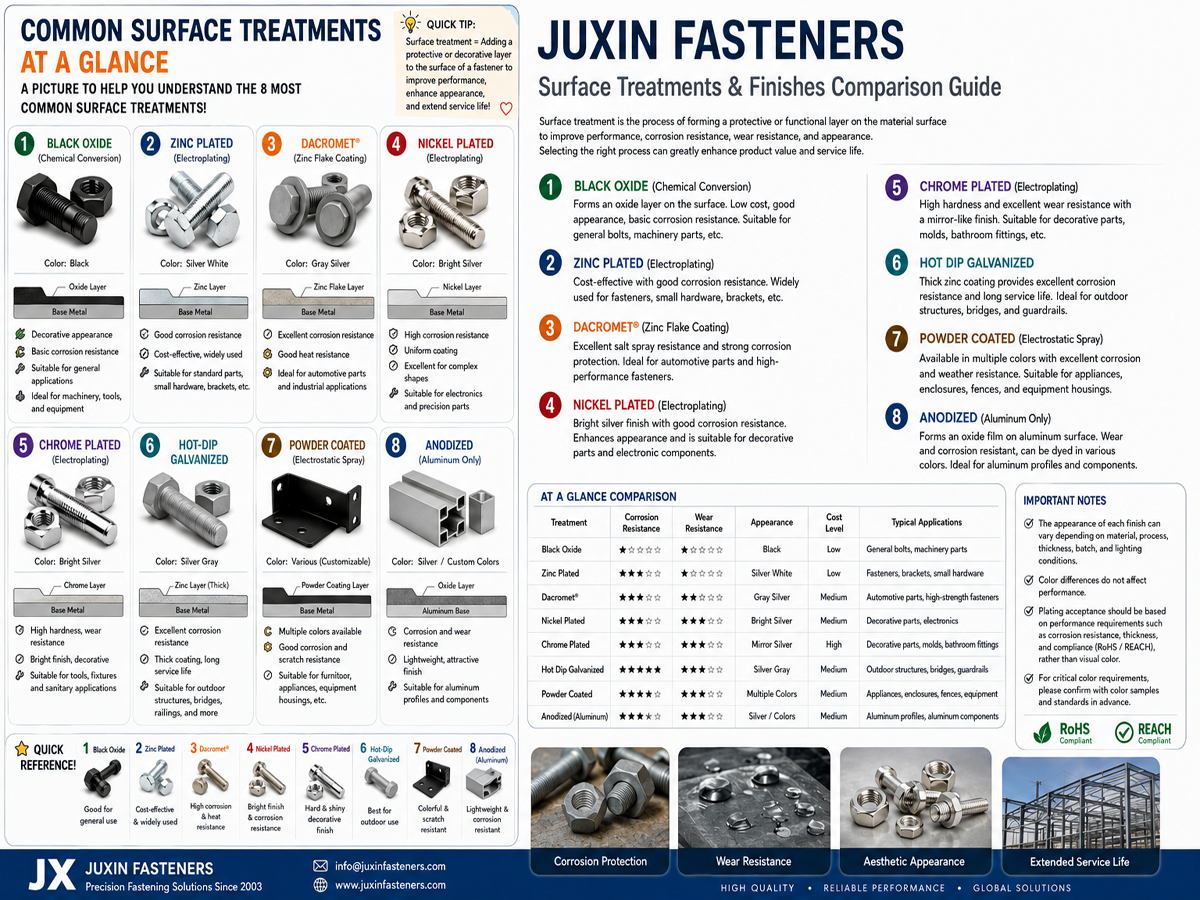
What Is Zinc Plating?
Zinc plating is an electroplated zinc coating applied to steel fasteners to provide basic corrosion protection.
It is widely used because it offers a practical balance between performance, appearance, and cost.
Typical applications include:
Industrial equipment
Electrical enclosures
Furniture hardware
Indoor assemblies
General-purpose fasteners
What Is Zinc Nickel Coating?
Zinc nickel coating is an alloy coating that contains zinc with approximately 12–15% nickel.
Compared with conventional zinc plating, zinc nickel offers significantly higher corrosion resistance and better durability in demanding environments.
It is widely specified for:
Automotive OEMs
Electric vehicles (EVs)
Battery systems
Chassis components
Heavy equipment
Outdoor applications
Key Differences
Feature | Zinc Plating | Zinc Nickel Coating |
Corrosion Resistance | Standard | Very High |
Typical Salt Spray Performance | 48–120 h | 720–1000+ h* |
Appearance | Silver, blue, yellow, black | Silver-gray to blue-gray |
Cost | Lower | Higher |
RoHS / REACH | Available | Available |
Typical Use | General industrial | Automotive & EV |
*Performance depends on coating system, thickness, passivation, topcoat, and applicable specification.
Which One Should You Choose?
Choose zinc plating when:
Cost efficiency is important.
The service environment is relatively mild.
Standard corrosion protection meets the application requirements.
Choose zinc nickel coating when:
Long-term corrosion resistance is critical.
Components are exposed to moisture, road salt, or chemicals.
The application follows automotive or EV specifications.
Extended service life is required.
Engineering Recommendation
Selecting a coating based only on appearance can lead to incorrect decisions.
Instead, define your requirements in terms of:
Required corrosion resistance
Environmental exposure
Applicable standards
Compliance requirements (RoHS / REACH)
Product life expectancy
This approach ensures the selected coating supports both performance and lifecycle expectations.
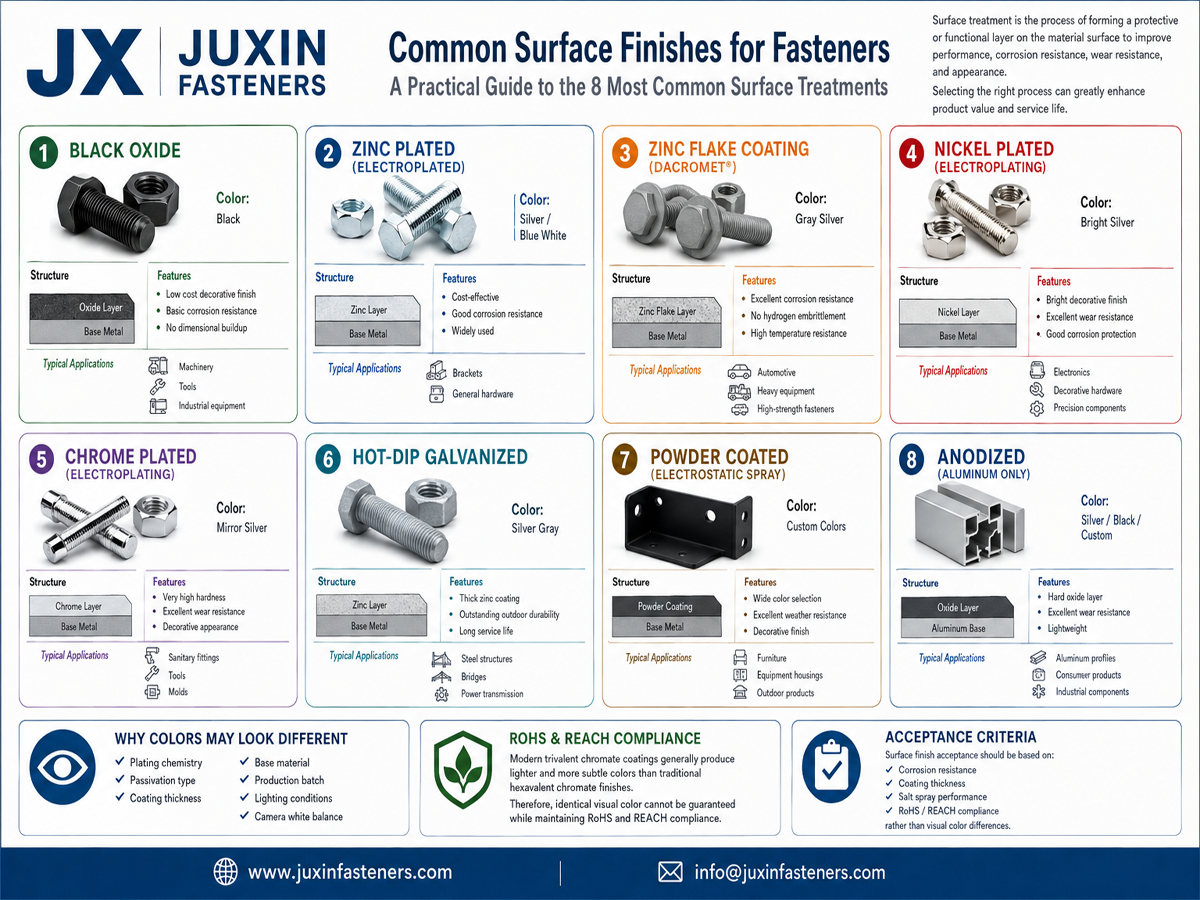
Conclusion
Zinc plating and zinc nickel coating are not interchangeable solutions.
While zinc plating is an excellent choice for many general industrial applications, zinc nickel coating is the preferred option for demanding environments
where corrosion resistance and long-term reliability are essential.
 MORE NEWS
Sep. 27, 2026
Sep. 27, 2026
Sep. 27, 2026
Contact Us
Tel.:
+86 020 8621 0320
+86 020 3121 6067
E-mail:
Technical Support:
Navigation
SEND INQUIREY