
Call Us
+86 136 6007 9809
Call Us
+86 136 6007 9809

Aug. 11, 2026
BSP vs NPT Pipe Threads: Understanding International Pipe Thread Standards for Industrial Applications
Complete Guide to BSP, BSPT, BSPP, NPT and NPTF Threads for OEM Engineers
In industrial piping systems, selecting the correct pipe thread standard is critical for ensuring reliable sealing performance,
pressure resistance, and long-term system safety.
Whether used in hydraulic systems, pneumatic equipment, oil & gas installations, industrial machinery,
automotive components, water treatment, HVAC systems, or fluid control equipment,
choosing the wrong pipe thread can lead to leakage, equipment failure, costly downtime, and maintenance issues.
At JUXIN FASTENERS, we manufacture precision-threaded components and industrial fasteners in accordance with international standards,
helping OEM manufacturers worldwide achieve reliable, leak-free pipe connections.
What Are Pipe Threads?
Pipe threads are specialized threads used to connect pipes, valves, fittings, hydraulic components, pneumatic systems, and fluid transfer equipment.
Unlike standard fastening threads that primarily provide mechanical clamping force, pipe threads are engineered to achieve both:
Secure mechanical connection
Reliable pressure sealing
This sealing capability makes pipe threads essential in applications involving liquids, gases, steam, hydraulic oil, compressed air, and chemical media.
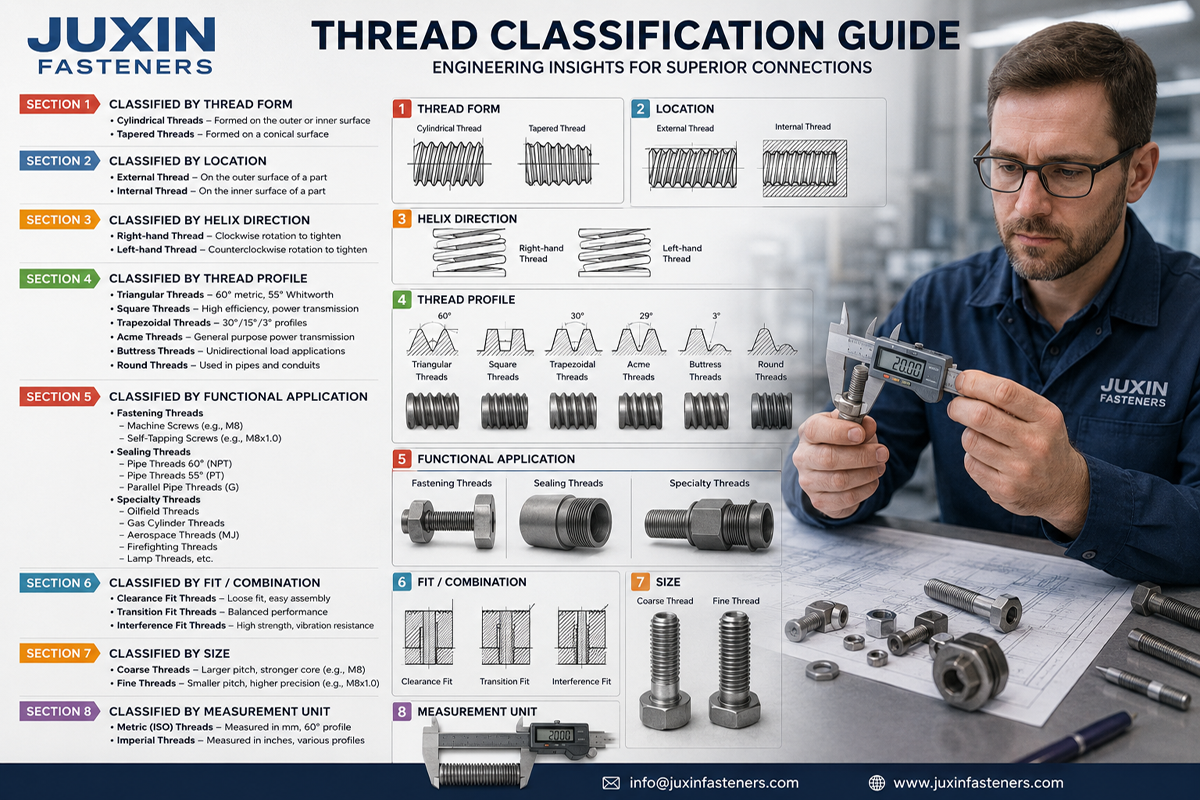
Major International Pipe Thread Standards
Several pipe thread systems are widely used throughout the world.
The most common include:
BSPP Threads
BSPT Threads
NPT Threads
NPTF Dryseal Threads
Metric Pipe Threads
Each standard has unique thread geometry, sealing methods, and application requirements.
1. BSP Pipe Threads (British Standard Pipe)
BSP threads are among the most widely used pipe threads across Europe, Asia, Australia, the Middle East, and many international industrial markets.
The BSP system follows international standards including:
ISO 7-1
ISO 228-1
EN 10226
DIN 2999
Two primary BSP thread types are commonly used.
BSPT (British Standard Pipe Taper)
Designation: R / Rc / Rp
Applicable Standards:
ISO 7-1
EN 10226
DIN 2999
Thread Angle:
55° Whitworth Profile
Sealing Method:
The tapered thread creates sealing through thread interference. Additional sealing materials such as PTFE tape or
thread sealant may also be applied depending on pressure requirements.
Typical thread combinations include:
Rp (Parallel Female) × R (Taper Male)
Rc (Taper Female) × R (Taper Male)
Typical Applications:
Hydraulic systems
Pneumatic systems
Industrial pipelines
Water treatment equipment
Compressed air systems
Oil & gas equipment
BSPP (British Standard Pipe Parallel)
Designation: G Thread
Applicable Standard:
ISO 228-1
DIN EN ISO 228-1
Unlike BSPT, BSPP threads are parallel threads.
The threads themselves do not create the seal.
Instead, sealing is achieved by:
O-rings
Bonded seals
Copper washers
Flat gaskets
Face sealing
BSPP threads are commonly used in hydraulic fittings requiring repeated assembly and disassembly.
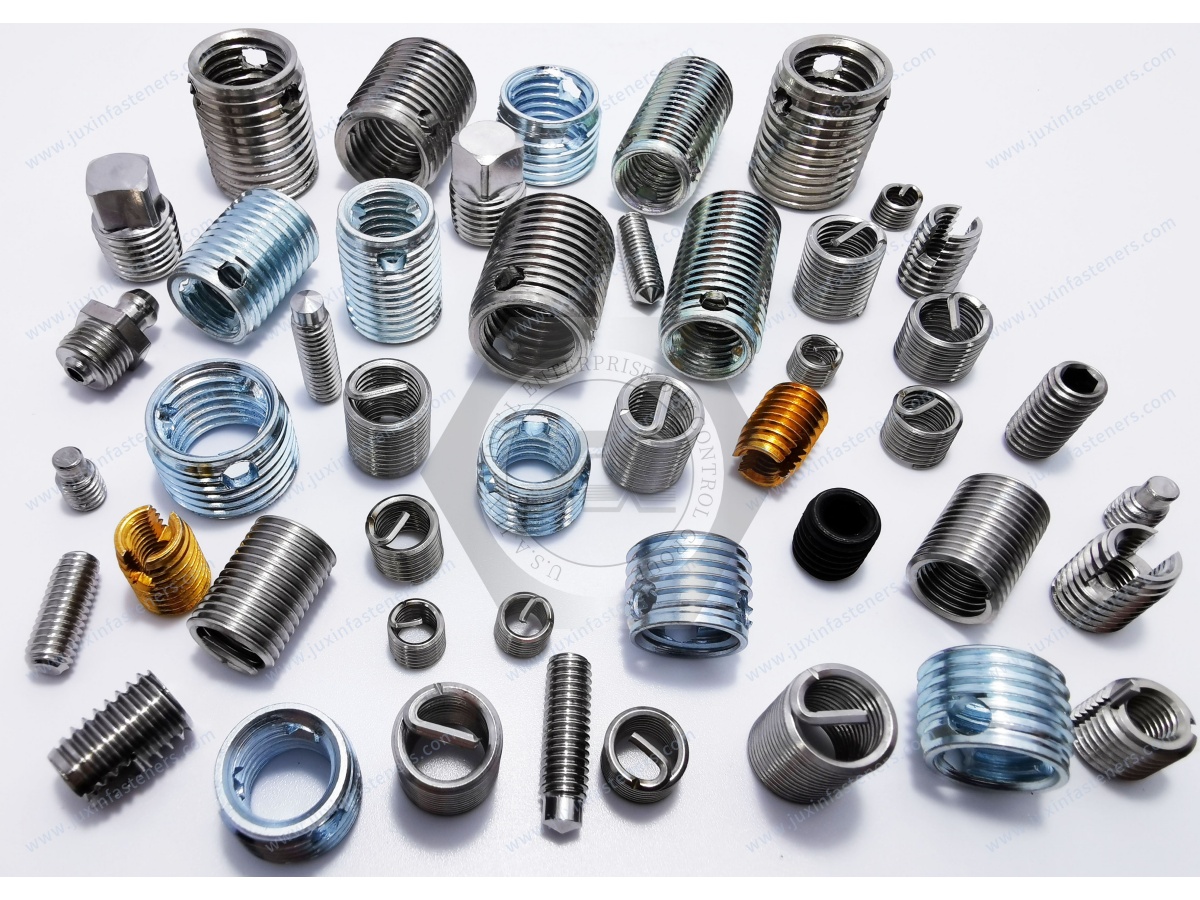
2. NPT Threads (National Pipe Taper)
NPT threads are the most common pipe thread standard used in:
United States
Canada
Mexico
North America
Applicable Standard:
ASME B1.20.1
Thread Angle:
60°
Like BSPT, NPT threads are tapered and create sealing through thread interference.
Most NPT connections also use:
PTFE tape
Pipe thread sealant
Anaerobic sealing compounds
Typical industries include:
Oil & Gas
Fire Protection
Industrial Pumps
Hydraulic Equipment
Construction Machinery
Chemical Processing
3. NPTF Dryseal Threads
Applicable Standard:
ASME B1.20.3
NPTF (National Pipe Taper Fuel) is commonly referred to as Dryseal Thread.
Unlike conventional NPT threads, NPTF is designed to achieve metal-to-metal sealing without the need for sealing tape
or thread compound, provided manufacturing tolerances are properly controlled.
Advantages include:
Improved sealing reliability
Higher pressure capability
Reduced leakage risk
Better vibration resistance
Typical applications include:
Hydraulic valves
Fuel systems
Aerospace
Heavy equipment
High-pressure hydraulic systems
4. Metric Pipe Threads
Metric pipe threads are used in selected industrial equipment that requires metric thread systems.
Relevant international standards include:
ISO 261
ISO 965
DIN 13
Metric threaded pipe connections generally rely on additional sealing methods such as:
O-rings
Bonded washers
Face seals
Metal sealing surfaces
Rather than thread interference alone.
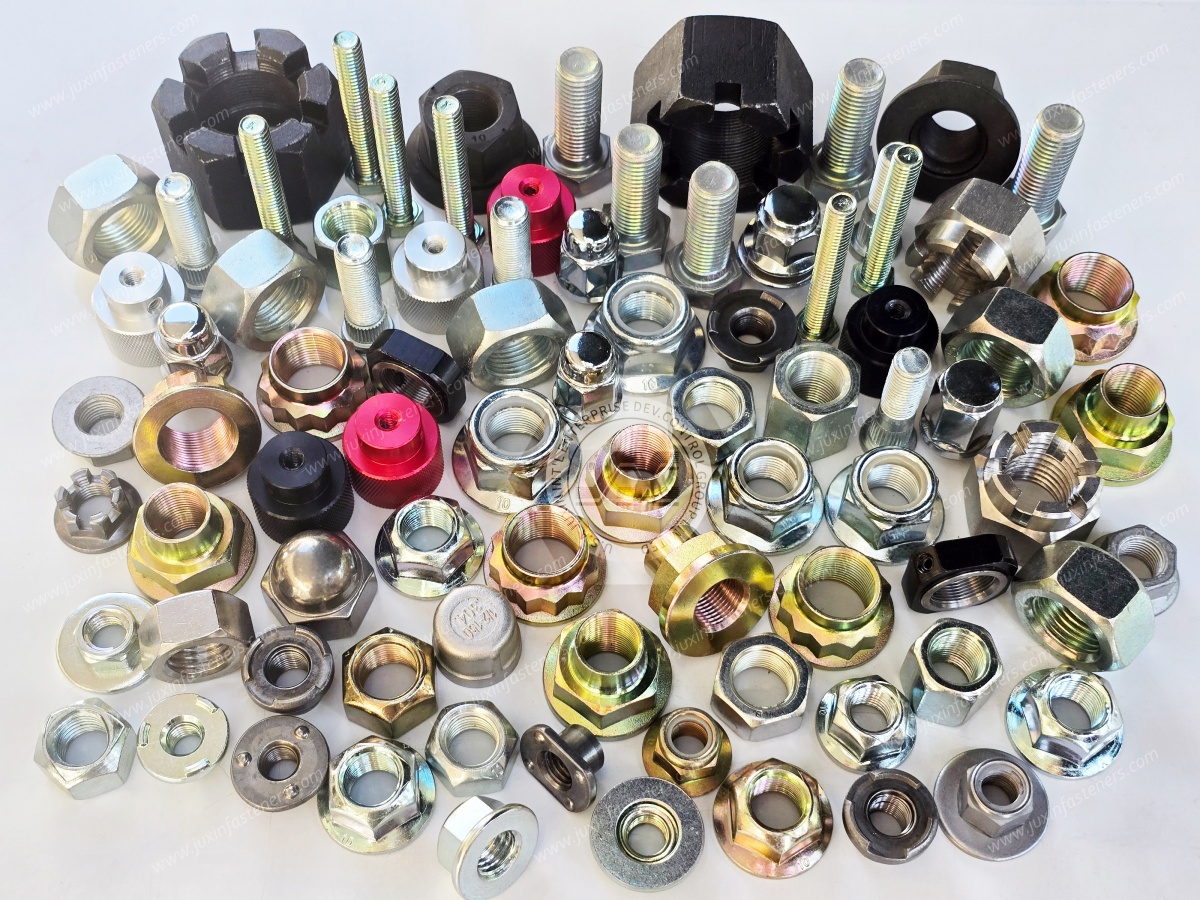
BSP vs NPT: What Is the Difference?
Feature | BSP | NPT |
Thread Angle | 55° | 60° |
Main Standards | ISO 7-1 / ISO 228-1 | ASME B1.20.1 |
Thread Profile | Whitworth | Unified |
Interchangeable | No | No |
Typical Markets | Europe, Asia, Australia | North America |
Sealing Method | Thread interference or gasket | Thread interference with sealant |
Because the thread angle, pitch, and profile differ, BSP and NPT threads are not interchangeable.
Attempting to assemble mismatched threads can result in poor sealing, thread damage, or system failure.
How to Select the Correct Pipe Thread
When specifying threaded pipe components, engineers should consider:
Operating pressure
Working temperature
Fluid type
Vibration conditions
International market requirements
Applicable industry standards
Sealing method
Maintenance requirements
Choosing the correct pipe thread standard during product design helps improve equipment reliability and reduces installation errors.
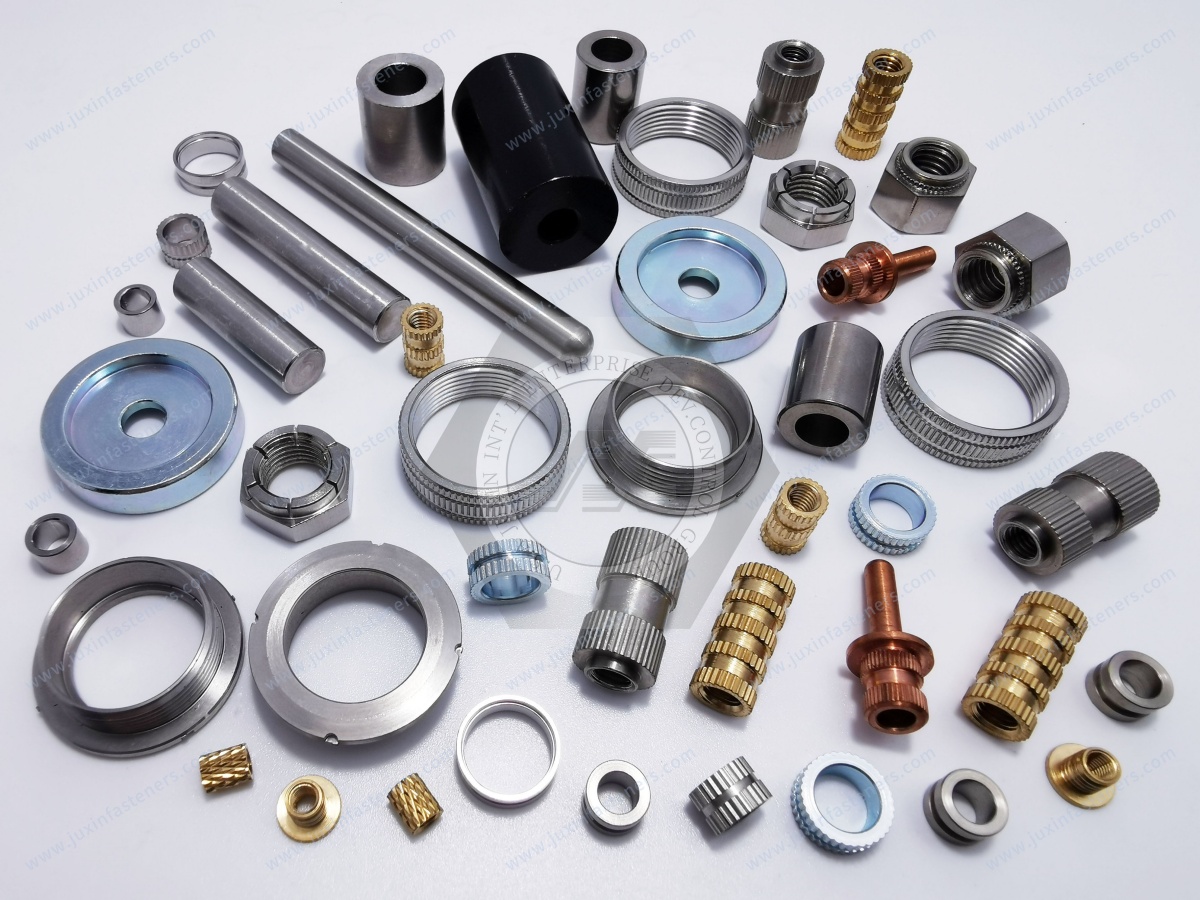
Precision Thread Manufacturing from JUXIN FASTENERS
At JUXIN FASTENERS, we manufacture precision-threaded fasteners and custom-machined components in accordance with
international standards for global OEM customers.
Our capabilities include:
BSP Threads (BSPP & BSPT)
NPT Threads
NPTF Dryseal Threads
Metric Threads
Custom Threaded Parts
Precision CNC Machining
Custom Fasteners
Hydraulic Fittings
Industrial Pipe Connectors
Special Thread Manufacturing
Every component is manufactured under strict quality control with precision thread inspection to ensure reliable fit,
sealing performance, and long service life.
Whether your project requires standard threaded components or fully customized OEM solutions,
our engineering team can support your application from prototype development to mass production.
 MORE NEWS
Sep. 27, 2026
Sep. 27, 2026
Sep. 27, 2026
Contact Us
Tel.:
+86 020 8621 0320
+86 020 3121 6067
E-mail:
Technical Support:
Navigation
SEND INQUIREY