Call Us
+86 136 6007 9809
Call Us
+86 136 6007 9809

Industrial automation equipment combines mechanical motion, electrical control, sensors, pneumatics, robotics, drives, communication networks,
and machine safety systems within increasingly compact architectures.
For machine builders and automation engineers, a small fastening or cable-management component can become a significant reliability issue when it is incorrectly selected.
Product Specification
Industrial automation equipment combines mechanical motion, electrical control, sensors, pneumatics, robotics, drives, communication networks, and machine safety systems within increasingly compact architectures.
For machine builders and automation engineers, a small fastening or cable-management component can become a significant reliability issue when it is incorrectly selected.
Common problems include:
wire harness abrasion;
cable movement near sharp sheet-metal edges;
loose cable clamps;
cracked snap features;
excessive compression of cable jackets;
electrical contact with grounded frames;
polymer creep under sustained load;
inaccessible service fasteners;
vibration-induced joint movement;
excessive assembly time;
inconsistent replacement components.
Plastic fasteners and molded cable-management hardware can solve many of these problems when the component geometry, material,
mounting interface, environmental conditions, and mechanical load are evaluated together.
Juxin Fasteners supplies standard and drawing-specific industrial automation plastic fasteners, nylon screws, plastic washers, spacers,
PCB supports, cable clamps, cable tie mounts, snap bushings, panel fasteners, and custom molded plastic components for machinery OEMs, system integrators, control-equipment manufacturers, and industrial supply chains.
The correct engineering process is not simply:
“Which plastic clip fits this machine?”
A more reliable selection path is:
Application Zone → Static or Dynamic Interface → Load → Vibration → Cable / Panel Geometry → Temperature → Material → Mounting Method → Validation
This distinction is particularly important in robotics and automated machinery, where a component suitable for a stationary control cabinet may not be suitable for a continuously moving robotic axis.
Plastic hardware can perform several functions inside automated equipment:
Fastening + Spacing + Electrical Isolation + Cable Retention + Edge Protection + Surface Protection + Assembly Simplification
Typical applications include:
PLC and controller enclosures;
robotic workcells;
machine guards;
sensor assemblies;
conveyor equipment;
electrical cabinets;
automated test equipment;
packaging machinery;
machine tools;
pick-and-place systems;
material handling systems;
AGVs and AMRs;
electronics manufacturing equipment;
automated assembly lines.
The required component should be selected according to the actual functional zone rather than using one material or clip family throughout the entire machine.
Control cabinets contain PLCs, I/O modules, relays, power supplies, drives, terminals, communication hardware, cooling components, and dense wiring systems.
Potential plastic hardware includes:
Nylon Machine Screws;
nylon nuts;
nylon flat washers;
insulating shoulder washers;
plastic spacers;
PCB standoffs;
snap-fit PCB supports;
cable tie mounts;
wire clips;
snap bushings.
These components may provide electrical isolation, cable organization, component spacing, and protection from conductive panel edges.
However, an important engineering distinction must be maintained:
Plastic fasteners can provide local electrical isolation, but they do not replace the grounding, bonding, protective-earth, creepage, clearance, or enclosure requirements of the electrical system.
Electrical safety must be evaluated at equipment level.
Robotic cells contain multiple wiring systems for:
servo motors;
encoders;
proximity sensors;
vision systems;
pneumatic valves;
grippers;
safety devices;
communication networks.
Cable-management hardware may include:
adjustable cable clamps;
nylon P-clips;
cable tie mounts;
wire saddles;
snap bushings;
custom molded routing components.
But robotic cable management requires an important distinction between static retention and dynamic cable guidance.
A standard nylon P-clip may be suitable for securing a cable at a stationary frame point.
It should not automatically be specified as the primary guiding component for a cable undergoing continuous multi-axis flexing.
Dynamic robotic cable systems may require dedicated:
high-flex cable routing;
energy chains;
controlled bend-radius systems;
strain-relief architecture;
moving cable carriers.
Plastic clips can support these systems at fixed transition points, but the complete dynamic motion must be reviewed.
This is one of the most important selection rules in industrial automation.
Examples include:
cabinet wiring;
fixed machine frames;
sensor cables;
stationary pneumatic tubing;
conveyor-side wiring.
Possible products include:
Heavy-Duty Nylon Cable Clamps & P-Clips;
adjustable cable clamps;
cable tie mounts;
wire saddles;
snap bushings.
Examples include:
hinged control panels;
service doors;
adjustable sensor assemblies;
low-cycle moving fixtures.
These applications require additional allowance for:
bend radius;
cable slack;
articulation;
repeated flexing.
Examples include:
robot axes;
gantry systems;
high-speed pick-and-place equipment;
reciprocating machinery.
These applications require a dedicated dynamic cable-management strategy.
The key point is:
A cable clip that securely holds a wire is not automatically a cable-motion component.
This distinction helps prevent premature conductor fatigue and cable-jacket damage.
Conveyors and automated material-handling equipment contain sensors, motors, safety switches, barcode readers, vision equipment,
network cables, and pneumatic systems distributed over long machine frames.
Plastic hardware may be used for:
sensor cable retention;
wire routing;
edge protection;
control-box assembly;
enclosure mounting;
low-load guarding interfaces;
spacer applications.
Potential components include:
nylon cable clips;
P-clips;
cable tie mounts;
snap bushings;
nylon screws;
plastic washers;
panel fasteners.
For long conveyor installations, procurement teams should pay particular attention to part standardization.
Reducing multiple similar cable clips to a controlled set of qualified sizes can simplify:
BOM management;
assembly training;
inventory;
maintenance;
spare parts;
supplier consolidation.
Automation systems increasingly rely on:
photoelectric sensors;
proximity sensors;
cameras;
machine vision lighting;
encoders;
measurement equipment.
Polymer hardware can be useful where the design requires:
electrical isolation;
non-marring contact;
low component mass;
surface protection;
controlled spacing.
Possible products include:
nylon screws;
plastic washers;
shoulder washers;
spacers;
standoffs;
custom molded components.
However, precision alignment applications require careful evaluation of polymer creep and thermal expansion.
Where optical or measurement alignment is highly sensitive, polymer components should not be selected solely for convenience.
Machine guards, inspection covers, control-panel doors, and service-access panels often require frequent assembly and removal.
Potential hardware includes:
nylon thumb screws;
plastic wing screws;
removable plastic rivets;
snap fasteners;
finishing washers;
panel clips.
Tool-free fasteners can reduce service time where frequent access is required.
For safety guarding, however, the fastener architecture must comply with the machine designer's safety requirements.
A general-purpose plastic fastener should not be assumed suitable for a safety-critical guard-retention function without engineering validation.
Sheet-metal electrical cabinets frequently contain punched or laser-cut cable-entry holes.
An unfinished panel edge can damage cable insulation through:
installation abrasion;
vibration;
repeated service movement;
sharp-edge contact.
Nylon Snap Bushings and suitable grommets can provide a smooth interface between the cable and panel.
Selection should consider:
panel-hole diameter;
panel thickness;
cable diameter;
bundle diameter;
required edge coverage;
temperature;
installation method.
Where axial cable loads must be transferred away from internal terminals, a dedicated strain-relief solution may also be required.
PA66 is widely used for molded industrial plastic components because it can provide a useful combination of:
mechanical strength;
toughness;
wear resistance;
electrical insulation;
molding capability;
snap-feature performance.
Potential applications include:
cable clips;
snap bushings;
panel fasteners;
machine screws;
washers;
PCB supports;
cable tie mounts.
However, material selection should not stop at the word “nylon.”
Specific requirements may include:
natural or black material;
heat stabilization;
UV stabilization;
impact modification;
flame-retardant grade;
customer-specified resin.
The exact requirement should be identified during drawing and RFQ review.
POM may be considered where dimensional stability, low friction, and low moisture absorption are important.
Potential applications include:
guides;
bushings;
adjustment components;
selected fasteners;
mechanical locating features.
PEEK may be considered for selected automation or semiconductor-equipment applications requiring combinations of:
elevated temperature;
chemical resistance;
mechanical performance;
electrical insulation.
PEEK should not be specified simply because it is a high-performance polymer.
The application must justify the material requirements and cost.
PA66 absorbs moisture from the surrounding environment.
This changes its mechanical and dimensional behavior.
Depending on conditioning state, nylon may exhibit changes in:
stiffness;
impact strength;
dimensions;
insertion force;
snap retention;
creep behavior.
This matters particularly for precision:
snap-fit components;
PCB supports;
bushings;
threaded parts;
panel clips.
Engineers should therefore consider whether the component will be evaluated in a dry-as-molded state, conditioned state, or actual service environment.
Automation hardware is often installed close to:
servo motors;
variable-frequency drives;
power supplies;
transformers;
braking resistors;
industrial computers.
The local component temperature may be substantially higher than the general factory ambient temperature.
Material selection should therefore use:
Local Component Temperature, not simply Room Temperature.
This is especially important for components under sustained mechanical load because temperature can accelerate polymer creep and stress relaxation.
Engineering polymers can provide useful damping characteristics compared with rigid metallic components.
However:
Vibration damping is not the same as vibration-proof fastening.
A plastic screw, clip, or clamp can still loosen, creep, fatigue, or fail if the joint is incorrectly designed.
Automation engineers should evaluate:
vibration frequency;
amplitude;
shock loading;
clamp load;
thread engagement;
component geometry;
operating temperature;
polymer creep;
cable mass.
Where vibration is critical, validation should be based on the actual equipment environment or applicable project test specification.
A common oversimplification is that the damping properties of plastic automatically prevent threaded fasteners from loosening.
They do not.
Threaded-joint retention depends on multiple factors:
Preload + Joint Stiffness + Transverse Movement + Friction + Temperature + Creep + Vibration
Polymer screws may actually lose preload through stress relaxation if excessive torque is applied or if the joint operates at elevated temperature.
For critical threaded assemblies, engineers should define an appropriate torque and retention strategy rather than relying on material damping alone.
A cable clamp should not be selected solely by nominal bundle diameter.
Engineers should evaluate:
cable outside diameter;
number of conductors;
cable jacket material;
bundle mass;
mounting orientation;
vibration;
bend radius;
temperature;
expected movement;
service access.
An undersized clamp can compress or damage cable insulation.
An oversized clamp can permit micro-motion, resulting in abrasion and noise.
For heavy vertical bundles, the clamp must also carry gravitational load without excessive creep.
Snap-fit automation hardware relies heavily on mounting-interface geometry.
Examples include:
snap bushings;
PCB supports;
push rivets;
cable tie mounts;
panel clips.
The performance of these components depends on:
Hole Diameter + Panel Thickness + Material Thickness Tolerance + Edge Condition + Component Geometry
A replacement component with the same general appearance may perform very differently if the locking geometry is designed for another hole or panel thickness.
This is why second-source qualification should compare functional dimensions, not only overall appearance.
| Application | Primary Engineering Requirement | Potential Product Family |
|---|---|---|
| PLC Cabinet Wiring | Cable Organization / Isolation | Cable Tie Mounts / Clips |
| Sheet-Metal Cable Entry | Edge Protection | Nylon Snap Bushings |
| Fixed Machine Harness | Cable Retention | Nylon P-Clips / Cable Clamps |
| PCB Mounting | Spacing / Isolation | PCB Supports / Standoffs |
| Sensor Mounting | Isolation / Surface Protection | Nylon Screws / Washers |
| Service Panel | Tool-Free Access | Nylon Thumb Screws / Removable Rivets |
| Electronics Assembly | Electrical Isolation | Nylon Machine Screws / Shoulder Washers |
| Custom Harness Routing | Geometry-Specific Retention | Custom Molded Plastic Fasteners |
This matrix is intended for initial selection only.
Final component approval should be based on actual geometry, load, temperature, environment, and validation requirements.
Potential causes:
incorrect clamp diameter;
insufficient cable support;
sharp panel edges;
excessive movement.
Potential causes:
incorrect mounting-hole size;
excessive insertion force;
unsuitable material condition;
low-temperature impact.
Potential causes:
oversized mounting hole;
incorrect panel thickness;
insufficient locking engagement.
Potential causes:
excessive installation torque;
insufficient thread engagement;
repeated assembly cycles.
Potential causes:
polymer creep;
elevated temperature;
excessive initial stress.
Potential causes:
static clip used as dynamic cable guide;
insufficient bend radius;
poor strain-relief design;
uncontrolled cable movement.
Understanding these failure modes provides more useful engineering information than simply comparing catalog dimensions.
Automation OEMs often require replacement or alternative sources for existing plastic hardware.
A proper second-source process should review:
existing OEM part number;
2D drawing;
physical sample;
mounting-hole size;
panel thickness;
cable or bundle diameter;
thread specification;
material;
temperature;
vibration;
dynamic or static application;
electrical-isolation requirement;
flammability requirement where applicable;
color;
inspection requirements;
annual usage.
A replacement part should not be approved simply because it looks similar.
For snap-fit hardware, small geometric differences can significantly change insertion and extraction forces.
Provide:
manufacturer part number;
2D drawing;
3D model;
physical sample;
current specification.
Define whether the component is used in:
control cabinet;
fixed machine frame;
robotic system;
conveyor;
moving assembly;
sensor system;
access panel.
Provide:
mounting-hole diameter;
panel thickness;
thread size;
cable OD;
bundle diameter;
standoff height;
critical tolerances.
Specify:
temperature;
humidity;
vibration;
shock;
chemicals;
oils;
cleaning agents;
UV exposure where applicable.
For cable-management components, specify whether the cable is:
stationary;
occasionally moved;
continuously flexing.
This single distinction can prevent incorrect component selection.
Potential materials may include:
PA66;
heat-stabilized PA66;
impact-modified PA66;
POM;
PEEK;
application-specific polymers.
Evaluate:
dimensional fit;
installation force;
retention;
thread fit;
cable clamping;
panel engagement;
serviceability.
Where required, validate:
vibration;
thermal cycling;
repeated assembly;
dynamic movement;
chemical exposure;
retention.
Define required:
material documentation;
inspection reports;
lot traceability;
RoHS;
REACH;
customer-specific documentation.
After engineering approval, procurement can define:
prototype quantity;
production quantity;
estimated annual usage;
packaging;
delivery schedule;
inspection requirements;
second-source status.
Automation machinery frequently contains hundreds or thousands of small components.
The unit price of a clip may be small, but assembly labor is not.
A useful sourcing analysis therefore considers:
Component Cost + Installation Time + Tooling Requirement + Rework Risk + Service Time
Snap-fit components may reduce:
screws;
nuts;
washers;
tools;
assembly operations.
However, this only creates value if the snap feature also meets retention, vibration, temperature, and service requirements.
The lowest piece price is therefore not always the lowest installed cost.
This is particularly relevant for high-volume:
control cabinets;
conveyor systems;
automation modules;
electrical assemblies;
machine-building programs.
Machine builders frequently develop multiple equipment models from a common architecture.
Procurement and engineering teams can reduce complexity by standardizing selected plastic hardware across platforms.
Potential standardization targets include:
cable tie mount sizes;
P-clip diameters;
snap bushing sizes;
nylon screw families;
spacer heights;
PCB support families.
Benefits may include:
fewer BOM items;
reduced inventory;
easier supplier qualification;
simpler assembly instructions;
lower spare-parts complexity;
greater annual purchasing volume per part.
For strategic sourcing teams, this can be more valuable than negotiating a small unit-price reduction across dozens of low-volume variants.
Standard catalog hardware does not cover every automation architecture.
Custom molded or drawing-specific components may be required for:
proprietary panel openings;
unusual cable bundles;
custom mounting interfaces;
combined clip-and-spacer functions;
special standoff heights;
legacy machine replacement parts;
equipment-specific harness routing.
Potential custom products include:
plastic fasteners;
spacers;
standoffs;
cable clamps;
wire clips;
bushings;
panel fasteners;
custom molded plastic components.
Juxin Fasteners can support drawing-based sourcing through:
2D drawing review;
3D CAD review;
physical sample comparison;
dimensional review;
material discussion;
DFM review;
prototype or sample evaluation;
production sourcing.
Availability of specific materials, flame ratings, testing, certifications, and customer-specific documentation should be confirmed for each project.
For faster engineering and procurement review, provide:
Application
machine type;
component location;
static or dynamic duty;
expected service life.
Part Information
existing OEM part number;
2D drawing;
3D CAD;
physical sample.
Dimensions
thread size;
length;
mounting-hole diameter;
panel thickness;
cable diameter;
standoff height;
critical tolerances.
Material
PA66;
POM;
PEEK;
specified polymer;
heat stabilization;
flame-retardant requirement where applicable.
Mechanical Requirements
tensile load;
clamp load;
insertion force;
extraction force;
vibration;
shock.
Environmental Requirements
operating temperature;
humidity;
oils;
coolants;
cleaning chemicals;
UV exposure where applicable.
Electrical Requirements
electrical isolation;
creepage or clearance constraints;
grounding restrictions where applicable.
Compliance and Documentation
applicable ISO / DIN / ASME requirements;
material documentation;
lot traceability;
RoHS / REACH where applicable;
customer-specific inspection or testing.
Procurement Information
sample quantity;
prototype quantity;
production quantity;
estimated annual usage;
required delivery schedule.
Related Juxin Fasteners engineering and product pages include:
Nylon Machine Screws for electrically isolated equipment assemblies;
Heavy-Duty Nylon Cable Clamps & P-Clips for fixed machine harness routing;
Adjustable Cable Clamps for different cable and bundle configurations;
Cable Tie Mounts for control-cabinet and machine-frame wire management;
Nylon Snap Bushings for protecting cables passing through sheet-metal panels;
Plastic Spacers and Standoffs for equipment and electronics spacing;
Snap-Fit PCB Supports for tool-free circuit-board mounting;
Insulating Shoulder Washers for screw and chassis isolation;
Custom Molded Plastic Fasteners for proprietary automation assemblies.
These pages should be internally linked from this industrial automation solution page to create a clear search and conversion path:
Industry Problem → Engineering Decision → Product Family → Drawing / Sample → RFQ
Juxin Fasteners supports industrial automation OEMs, machine builders, robotics manufacturers, conveyor manufacturers,
material-handling equipment companies, control-equipment manufacturers, electrical enclosure suppliers, system integrators, contract manufacturers,
procurement teams, and supplier-development engineers requiring standard or drawing-specific plastic fastening and cable-management components.
The recommended sourcing workflow is:
Existing Part / Drawing / Sample → Application Review → Static or Dynamic Duty → Mechanical Interface → Environment → Material Selection
→ Sample Evaluation → Equipment Validation → Documentation Review → Second-Source Qualification → Production RFQ
This process can support:
new machine development;
supplier consolidation;
second-source qualification;
wiring-system optimization;
cable-chafing reduction;
assembly-time reduction;
electrical-isolation requirements;
obsolete-part replacement;
machine-platform standardization;
custom component development.
Send us your existing part number, 2D drawing, 3D CAD model, physical sample, mounting-hole dimensions, panel thickness,
cable diameter, operating temperature, vibration conditions, static or dynamic application, material requirement,
compliance requirements, prototype quantity, production quantity, and estimated annual usage for engineering review and RFQ evaluation.
Email: info@juxinfasteners.com
Website: www.juxinfasteners.com
Product Packaging
Packaging Standard
At Juxin Fasteners, we apply standardized export packaging to ensure product protection, traceability, and compliance with international logistics requirements.
1. Standard Export Packaging
Unless otherwise specified, all products will be packed according to our factory standard export packaging, which includes:
Moisture-resistant inner protection
Poly bag or small box packing as required
Reinforced export cartons
Clear labeling with part number, specification, batch number, and quantity
Palletizing for sea or air shipment when necessary
Our standard packaging is designed to ensure safe transportation, efficient warehousing, and long-distance international shipping.
2. Customized Packaging Options
We also provide customized packaging solutions according to customer requirements, including but not limited to:
Private labeling
Customized barcodes
Specific carton dimensions
Retail packaging
Special pallet configuration
Customer-specific marking and identification
So that you know, customized packaging may involve additional costs and extended lead time depending on the complexity of the requirements.
3. Compliance & Quality Assurance
All packaging processes are controlled under our ISO 9001 quality management system to ensure consistency, traceability, and product integrity throughout the supply chain.
Product Pictures

Hot Products
Plastic Hardware for Electrical Cabinets & Enclosures: Engineering Selection & OEM Sourcing
Polymer Creep & Stress Relaxation in Plastic Fasteners | Engineering Guide
EV Battery Plastic Fasteners & Electrical Insulation Hardware
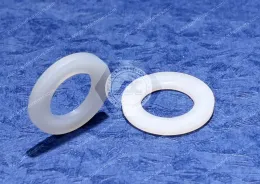
Plastic Washers, Nylon Spacers & PCB Standoffs: OEM Engineering & Sourcing Guide | JUXIN FASTENERS
Contact Us
Tel.:
+86 020 8621 0320
+86 020 3121 6067
E-mail:
Technical Support:
Navigation
SEND INQUIREY