Call Us
+86 136 6007 9809
Call Us
+86 136 6007 9809

Marine vessels, offshore equipment, coastal infrastructure, desalination systems, marine electronics, aquaculture equipment,
and water-treatment installations operate in environments where fastening hardware can be exposed simultaneously to moisture, chloride-containing saltwater,
ultraviolet radiation, thermal cycling, vibration, chemicals, and dissimilar-metal interfaces.
Product Specification
Marine vessels, offshore equipment, coastal infrastructure, desalination systems, marine electronics, aquaculture equipment,
and water-treatment installations operate in environments where fastening hardware can be exposed simultaneously to moisture, chloride-containing saltwater,
ultraviolet radiation, thermal cycling, vibration, chemicals, and dissimilar-metal interfaces.
These conditions create a very different fastener-selection problem from ordinary indoor industrial equipment.
Metallic fasteners remain essential for many high-load marine structures. However, in selected low- to moderate-load, electrically isolated, corrosion-sensitive,
cable-management, enclosure, instrumentation, composite-panel, and chemical-processing applications, engineering polymer fasteners can provide valuable functional advantages.
Potential solutions include:
nylon machine screws and nuts;
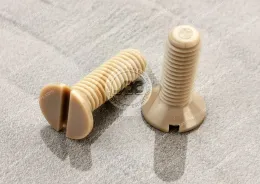
PEEK screws and threaded fasteners;
PVDF fasteners;
nylon washers;
insulating shoulder washers;
plastic spacers and standoffs;
nylon P-clips and cable clamps;
cable tie mounts;
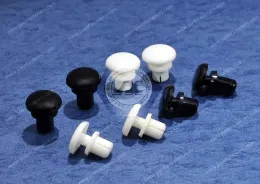
snap bushings and grommets;
removable plastic rivets;
finishing washers;
panel fasteners;
custom molded plastic components.
The correct engineering question is therefore not simply:
“Which plastic fastener is waterproof?”
A better selection process is:
Exposure Zone → Mechanical Load → Saltwater / Chemical Exposure → UV → Temperature → Electrical Requirement → Material → Geometry → Validation
Juxin Fasteners supports standard and drawing-specific plastic fastening components for marine equipment, shipbuilding, offshore equipment, marine electronics,
desalination, water treatment, port equipment, aquaculture, coastal infrastructure, and related industrial applications.
Where project-specific marine classification, material certification, flame performance, environmental testing, traceability,
or customer approval is required, those requirements should be defined during RFQ review and validated for the specific component and application.
The main engineering value of polymer hardware is not simply that plastic does not rust.
A correctly selected polymer component can combine several functions:
Fastening + Electrical Isolation + Corrosion Separation + Surface Protection + Weight Reduction
This can be particularly valuable around:
aluminum structures;
stainless steel hardware;
carbon-fiber composites;
fiberglass panels;
electronic enclosures;
sensor systems;
cable routing;
chemical-treatment equipment.
For example, an insulating shoulder washer can provide both a bearing surface and radial separation between a metallic screw and a conductive panel.
Similarly, a nylon P-clip can retain a cable while electrically isolating it from a metallic chassis.
The engineering value therefore comes from functional integration, not simply from replacing metal with plastic.
One of the most common specification mistakes is treating “marine environment” as a single exposure condition.
It is not.
A plastic fastener located inside a protected navigation console experiences a fundamentally different environment from one installed on an exposed deck,
inside a splash zone, in continuous immersion, or within a chemical dosing skid.
For engineering selection, marine applications can be divided into several practical exposure zones.
Typical applications:
bridge electronics;
navigation consoles;
communication equipment;
interior electrical cabinets;
instrumentation;
control systems.
Primary concerns may include:
electrical isolation;
vibration;
humidity;
condensation;
flame performance;
cable organization.
PA66 and other engineering polymers may be suitable depending on the mechanical and environmental requirements.
Typical applications:
external electrical cabinets;
deck instrumentation;
navigation hardware;
cable routing;
antenna equipment;
exposed control boxes.
Additional concerns include:
UV radiation;
salt-laden atmosphere;
rain;
temperature cycling;
wind-driven spray.
UV-stabilized polymer grades become more important in these applications.
Typical applications:
deck machinery;
pumping equipment;
coastal processing systems;
aquaculture equipment;
exposed cable-management systems.
Fasteners may experience repeated wet/dry cycling, salt deposition, cleaning chemicals, mechanical impact, and vibration.
Material selection should therefore consider both chemical compatibility and long-term mechanical retention.
Submerged applications introduce additional considerations including:
water absorption;
dimensional stability;
hydrolysis resistance;
chemical compatibility;
pressure;
temperature;
long-term creep.
A polymer suitable for atmospheric marine exposure is not automatically suitable for continuous underwater service.
Desalination plants, dosing systems, water-treatment equipment, and offshore process skids may expose components to chemicals far more aggressive than ordinary seawater.
Potential exposure may include:
acids;
alkalis;
oxidizing chemicals;
cleaning agents;
disinfectants;
process chemicals.
In these environments, material selection must be based on the exact chemical, concentration, temperature, exposure duration, and mechanical load.
Radar systems, GPS equipment, chartplotters, communication equipment, sonar electronics, monitoring systems,
and navigation consoles contain sensitive electronics requiring reliable mechanical mounting and electrical isolation.
Potential plastic hardware includes:
Nylon Machine Screws;
insulating washers;
Insulating Shoulder Washers;
plastic spacers;
PCB standoffs;
snap-fit PCB supports;
cable clips;
snap bushings.
These components can support PCB mounting, cable routing, enclosure assembly, and electrical separation.
However, electrical insulation should not be confused with EMI/EMC performance.
A polymer fastener is electrically non-conductive, but overall electromagnetic compatibility depends on grounding, shielding, bonding, enclosure design, cable routing, and connector architecture.
Offshore electrical cabinets and instrumentation enclosures may contain dense power, control, communication, and sensor wiring.
Potential cable-management products include:
Heavy-Duty Nylon Cable Clamps & P-Clips;
adjustable cable clamps;
cable tie mounts;
nylon cable clips;
snap bushings;
strain-relief components.
Selection should consider:
Cable OD → Bundle Weight → Clamp Diameter → Vibration → Temperature → UV → Chemical Exposure → Mounting Interface
An oversized clamp may permit cable movement and chafing.
An undersized clamp can over-compress the cable jacket.
The correct clamp therefore depends on the actual cable and environment rather than only the nominal bundle diameter.
Fiberglass, engineered composites, and coated marine panels require controlled bearing pressure.
Direct tightening of metallic fasteners can damage:
gelcoat;
painted surfaces;
composite laminates;
plastic housings;
decorative panels.
Potential solutions include:
nylon flat washers;
plastic finishing washers;
insulating shoulder washers;
removable plastic rivets;
selected polymer screws.
These components can distribute bearing loads, protect surfaces, and provide electrical separation.
However, polymer hardware should only be used where its mechanical capability is appropriate for the actual joint load.
Aluminum is widely used in marine vessels and equipment because of its favorable strength-to-weight ratio and corrosion behavior.
However, electrically connected dissimilar metals in the presence of seawater can create galvanic corrosion cells.
A non-conductive polymer washer, bushing, spacer, or fastener can help interrupt the electrical path at a particular interface.
This leads to an important design rule:
Polymer isolation can reduce galvanic coupling at a joint, but it does not automatically eliminate galvanic corrosion from the entire assembly.
Engineers must still evaluate:
all contacting metals;
conductive coatings;
exposed edges;
electrolyte paths;
fastener interfaces;
grounding requirements;
drainage;
crevices.
Desalination and industrial water-treatment systems can expose fastening components to saltwater, concentrated brines, cleaning agents, and process chemicals.
Depending on the environment, possible materials include:
PA66;
POM;
PVDF;
PEEK;
application-specific engineering polymers.
Potential applications include:
instrumentation mounting;
cable routing;
sensor supports;
dosing equipment;
enclosure hardware;
non-structural process-equipment components.
For aggressive chemical environments, material selection should always be reviewed against the actual process fluid.
PA66 provides a useful combination of mechanical strength, fatigue resistance, electrical insulation, and molding flexibility.
For outdoor marine applications, however, standard indoor-grade nylon should not automatically be assumed suitable.
UV-stabilized grades may incorporate stabilizer packages designed to improve resistance to long-term solar exposure.
Potential applications include:
outdoor cable clips;
P-clips;
cable tie mounts;
enclosure hardware;
selected panel fasteners.
But “UV stabilized” is not a universal performance level.
Engineers should define required exposure conditions and, where necessary, specify weathering validation.
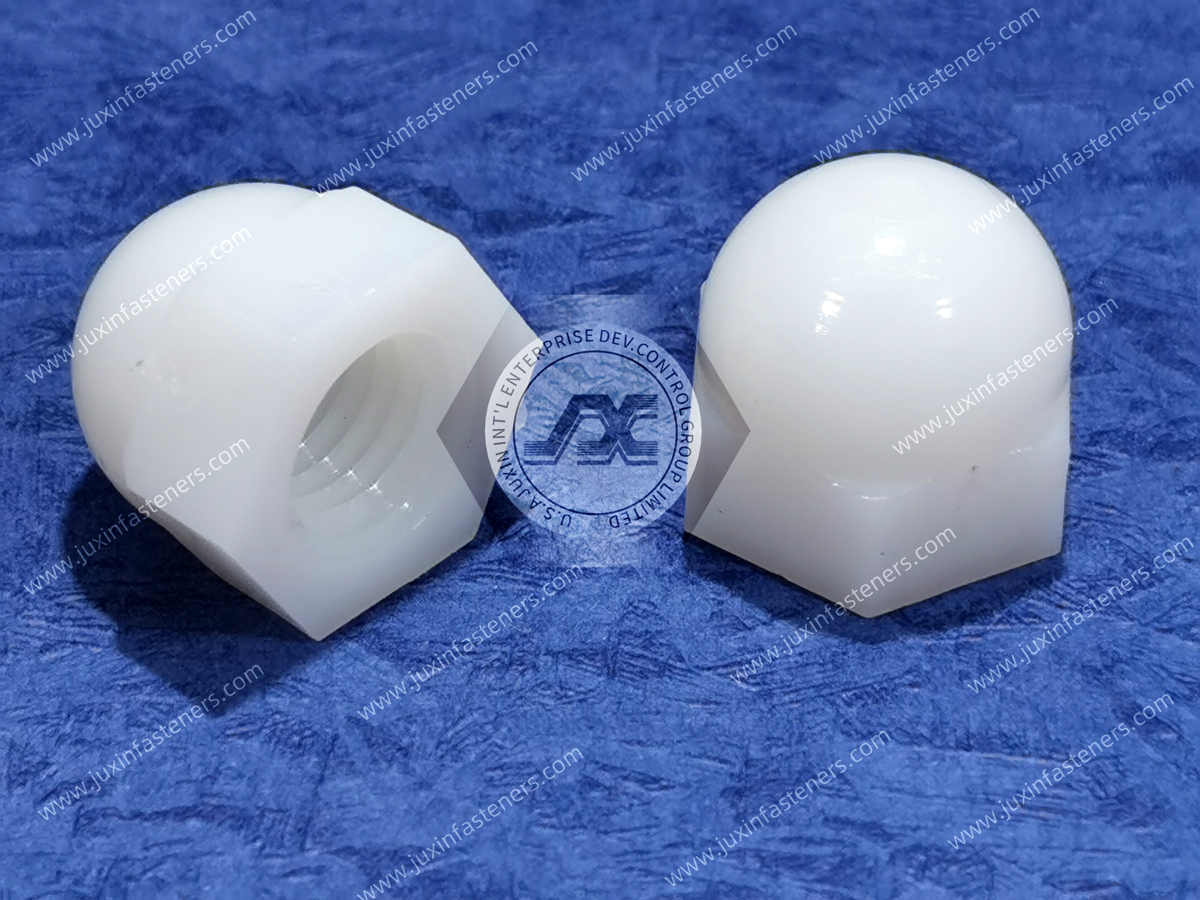
PEEK may be considered for demanding marine and offshore applications requiring combinations of:
elevated-temperature performance;
chemical resistance;
mechanical strength;
dimensional stability;
electrical insulation.
Potential components include:
PEEK screws;
PEEK nuts;
PEEK washers;
PEEK spacers;
custom PEEK fasteners.
However:
PEEK is a material family, not an automatic marine certification.
Exact resin grade, processing method, operating environment, load, temperature, chemical exposure, and documentation requirements should be reviewed.
PVDF can be useful in chemical-processing and water-treatment environments because of its chemical resistance and relatively low moisture uptake.
Potential applications include selected:
chemical dosing equipment;
desalination systems;
process instrumentation;
fluid-handling support hardware;
corrosion-sensitive enclosures.
Again, compatibility should be evaluated against the actual chemical system rather than relying on a generic “chemical resistant” description.
POM provides low moisture absorption, dimensional stability, low friction, and good wear behavior.
It may be useful for:
latching mechanisms;
adjustment components;
guides;
bushings;
precision mechanical hardware.
Its suitability still depends on chemical exposure, UV conditions, temperature, flammability requirements, and mechanical load.
Plastic hardware is often marketed simply as “corrosion resistant.”
For engineering applications, this description is incomplete.
Polymers do not undergo metallic red rust, but they can still experience:
moisture absorption;
dimensional change;
hydrolysis;
UV degradation;
environmental stress cracking;
chemical attack;
creep;
fatigue;
loss of stiffness.
Therefore the correct question is not:
“Will this fastener rust?”
It is:
“Will this polymer maintain the required dimensions and mechanical properties throughout the actual marine environment?”
That distinction is critical for long-life equipment.
Galvanic corrosion requires:
electrically connected dissimilar conductive materials;
an electrolyte;
sufficient electrochemical potential difference.
A polymer component can help break the electrical connection at a particular interface.
Potential solutions include:
insulating shoulder washers;
nylon flat washers;
plastic bushings;
polymer spacers;
polymer fasteners.
But the entire assembly must be considered.
For example, installing a plastic washer under a stainless steel bolt does not necessarily isolate the bolt shank from the aluminum panel.
In that case, an insulating shoulder washer or bushing may be required to provide both axial and radial separation.
This is an important difference between ordinary flat washers and true isolation hardware.
External marine hardware may receive intense UV exposure combined with heat, salt deposition, moisture, and repeated wet/dry cycles.
UV degradation can produce:
discoloration;
surface chalking;
embrittlement;
reduced elongation;
cracking;
loss of impact resistance.
For exterior components, engineers should consider:
polymer type;
UV stabilizer package;
pigment;
wall thickness;
expected exposure duration;
operating temperature;
mechanical stress.
Where long-term exterior performance is critical, accelerated weathering methods such as ISO 4892 or ASTM G154 may be considered when appropriate to the material and customer specification.
Test conditions and acceptance criteria should be defined for the specific project.
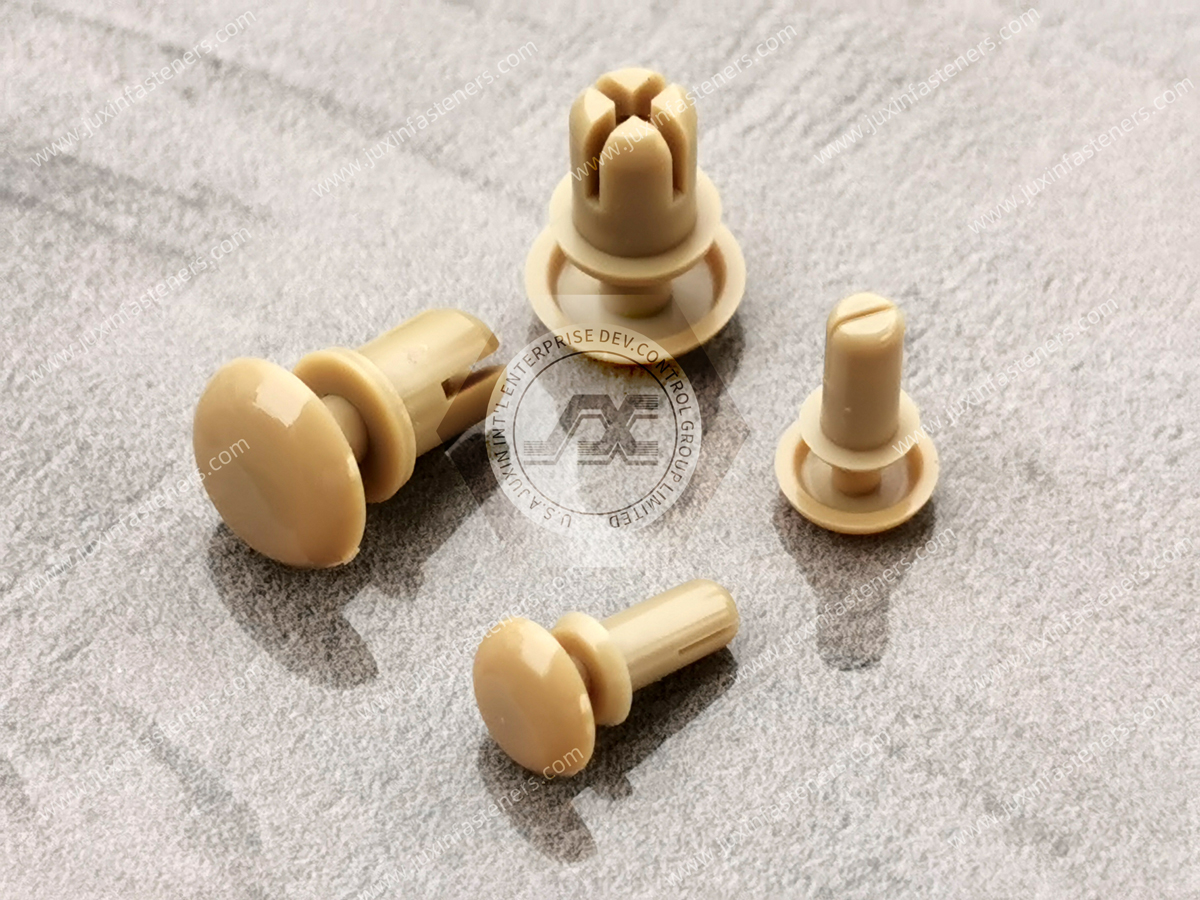
PA66 is hygroscopic.
It absorbs moisture from the environment, which can affect:
dimensions;
stiffness;
strength;
impact behavior;
creep;
installation force.
In humid or continuously wet marine environments, engineers should not base designs solely on dry-as-molded material properties.
Conditioned-state performance may be more representative of actual service.
This is especially important for:
snap features;
precision spacers;
threaded components;
tight-tolerance bushings;
load-bearing clips.
Marine equipment may experience significant temperature variation between daytime solar heating, nighttime cooling, engine-room conditions, seasonal climates, and process environments.
Polymer components generally have higher thermal expansion than metals.
A joint may combine:
polymer hardware;
aluminum;
stainless steel;
carbon steel;
fiberglass;
carbon-fiber composites.
Differential expansion can change:
clamp load;
clearances;
cable clamp pressure;
panel alignment;
thread engagement.
Thermal stack-up should therefore be evaluated at the assembly level.
Engineering polymers exhibit viscoelastic behavior.
Under sustained load, they may experience:
creep;
stress relaxation;
preload loss.
This is particularly relevant when polymer screws or washers are continuously compressed.
Potential engineering strategies include:
increasing bearing area;
controlling installation torque;
reducing sustained polymer stress;
selecting more creep-resistant materials;
incorporating suitable elastic elements;
validating the joint at operating temperature.
A polymer fastener should not be tightened using metal-fastener torque assumptions.
Marine vessels, offshore equipment, pumps, engines, compressors, deck machinery, and wave motion can expose components to continuous vibration and intermittent shock.
Polymers can provide useful vibration damping, but:
Vibration damping does not automatically guarantee fastener retention.
Engineers should evaluate:
vibration frequency;
amplitude;
shock load;
fastener preload;
thread engagement;
joint stiffness;
cable weight;
clamp geometry;
operating temperature.
Testing should be performed according to the actual equipment or customer specification where required.
ASTM B117 and ISO 9227 are widely recognized salt-spray test methods.
However, procurement teams should understand what these tests mean.
They provide controlled corrosive salt-fog environments for evaluating materials, coatings, components, or assemblies under defined test conditions.
They do not automatically predict real-world marine service life.
For polymer fasteners, salt spray may also be less informative than other performance evaluations depending on the application,
because polymers do not corrode through the same electrochemical mechanism as unprotected metals.
A marine qualification plan may therefore need to consider:
salt exposure;
UV weathering;
moisture conditioning;
chemical exposure;
thermal cycling;
mechanical loading;
vibration.
The test program should reflect the actual failure modes of the component.
Shipbuilding and offshore projects may involve requirements from organizations or classification societies such as:
ABS;
DNV;
Lloyd’s Register;
Bureau Veritas;
other project-specific authorities.
The presence of a plastic fastener in marine equipment does not automatically mean that the component requires individual classification approval.
Requirements depend on:
equipment type;
installation location;
safety function;
vessel class;
project specification;
customer requirements.
Juxin Fasteners should therefore receive the applicable specification during RFQ review rather than assuming a generic “marine-grade” requirement.
| Application | Primary Requirement | Potential Material Direction |
|---|---|---|
| Protected Marine Electronics | Isolation / Humidity Resistance | PA66 / POM / PEEK |
| Exterior Cable Management | UV / Salt Atmosphere | UV-Stabilized PA66 / Qualified Polymer |
| Composite Panel Hardware | Surface Protection / Isolation | PA66 / POM |
| Aluminum Structure Isolation | Galvanic Separation | PA66 / PEEK / Suitable Insulating Polymer |
| Desalination Equipment | Chemical Resistance | PVDF / PEEK / Application-Specific Polymer |
| Precision Marine Mechanisms | Dimensional Stability / Wear | POM / PEEK |
| Higher-Temperature Equipment | Thermal Performance | PEEK / Qualified High-Temperature Polymer |
| Continuous Immersion | Water / Chemical / Creep Resistance | Application-Specific Material Review |
This table is intended for initial engineering screening only.
Final selection should be based on actual load, temperature, exposure, required life, and qualification requirements.
Potential cause: unsuitable resin or insufficient UV stabilization.
Potential cause: moisture absorption and environmental conditioning.
Potential cause: polymer creep, elevated temperature, or excessive initial preload.
Potential cause: incorrect clamp diameter, insufficient retention, vibration, or misalignment.
Potential cause: incompatible cleaning or process chemicals combined with mechanical stress.
Potential cause: thermal cycling, vibration, creep, or inadequate thread engagement.
Potential cause: incomplete electrical isolation elsewhere in the assembly.
These failure modes demonstrate why material selection and joint architecture should be reviewed together.
Second-source qualification should evaluate more than dimensions.
A structured review should include:
existing OEM part number;
drawing revision;
critical dimensions;
thread specification;
material family;
exact resin grade where required;
UV stabilization;
mechanical load;
installation torque;
operating temperature;
immersion or splash exposure;
chemical exposure;
vibration;
electrical-isolation requirements;
flammability requirements;
environmental testing;
traceability;
packaging;
project-specific marine requirements.
A replacement component should not be approved solely because it physically fits.
Provide:
existing part number;
2D drawing;
3D CAD model;
specification;
physical sample.
Identify whether the component operates in:
protected interior;
exposed deck;
splash zone;
washdown area;
continuous immersion;
chemical-process area.
Provide:
tensile load;
shear load;
clamp load;
installation torque;
vibration;
shock;
expected service life.
Provide:
saltwater exposure;
UV exposure;
temperature range;
humidity;
immersion duration;
chemical exposure.
Specify:
electrical isolation;
galvanic separation;
dielectric requirements;
grounding restrictions.
Potential materials may include:
PA66;
UV-stabilized PA66;
POM;
PVDF;
PEEK;
other application-specific polymers.
Evaluate:
dimensional fit;
installation force;
thread fit;
torque;
retention;
panel compatibility;
cable fit.
Where required, evaluate relevant combinations of:
moisture;
salt exposure;
UV;
thermal cycling;
chemical exposure;
vibration;
mechanical load.
Confirm required:
material documentation;
inspection records;
lot traceability;
RoHS;
REACH;
test reports;
customer-specific documentation.
After engineering validation, procurement can establish:
production quantity;
annual usage;
delivery schedule;
packaging;
inspection requirements;
documentation requirements.
Standard catalog hardware does not cover every marine assembly.
Custom components may be required for:
unusual panel thicknesses;
proprietary cable diameters;
non-standard mounting holes;
special isolation geometry;
unique enclosure architecture;
high-temperature environments;
chemical exposure;
legacy equipment replacement.
Potential custom products include:
plastic screws;
PEEK threaded fasteners;
PVDF fasteners;
nylon washers;
insulating shoulder washers;
spacers;
standoffs;
cable clamps;
bushings;
panel fasteners;
custom molded plastic components.
Juxin Fasteners can support drawing-based sourcing through:
2D drawing review;
3D CAD review;
physical sample comparison;
dimensional review;
material discussion;
DFM review;
sample evaluation;
production sourcing.
Availability of specific materials, certifications, classification requirements, test documentation, and customer-specific qualification must be confirmed for each project.
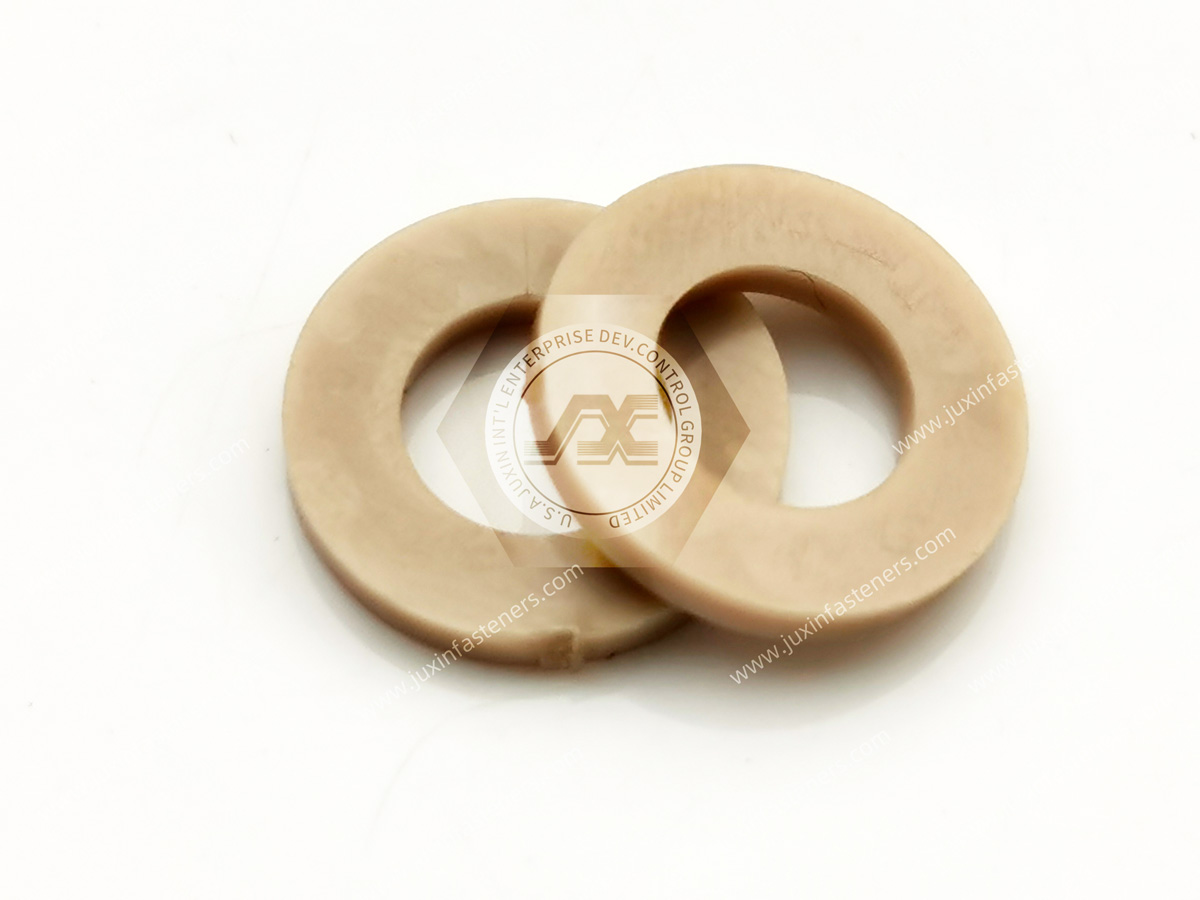
For efficient engineering and procurement review, provide:
Application
vessel or equipment type;
installation location;
exposure zone;
expected service life.
Part Information
OEM part number;
2D drawing;
3D CAD;
physical sample.
Dimensions
thread size;
length;
mounting-hole size;
panel thickness;
critical tolerances.
Material
PA66;
UV-stabilized PA66;
POM;
PVDF;
PEEK;
other specified polymer;
exact resin grade where required.
Mechanical Requirements
tensile load;
shear load;
clamp load;
installation torque;
vibration;
shock.
Environmental Requirements
saltwater exposure;
splash or immersion;
UV exposure;
operating temperature;
humidity;
chemical exposure.
Electrical Requirements
electrical isolation;
galvanic separation;
dielectric requirements.
Compliance Requirements
applicable ISO / ASTM / EN requirements;
classification-society requirements where applicable;
customer-specific environmental testing.
Documentation
material documentation;
lot traceability;
inspection reports;
RoHS / REACH where applicable;
project-specific test reports.
Procurement Information
sample quantity;
prototype quantity;
production quantity;
estimated annual usage;
delivery schedule.
Related Juxin Fasteners product and engineering solutions include:
Nylon Machine Screws for electrically isolated marine equipment assemblies;
Heavy-Duty Nylon Cable Clamps & P-Clips for marine cable and harness routing;
Nylon Snap Bushings for protecting cables through metal enclosure cutouts;
Insulating Shoulder Washers for axial and radial isolation around metallic fasteners;
Plastic Finishing Washers for coated, fiberglass, and composite panels;
Removable Plastic Rivets for service-access panels;
PEEK Screws and Fasteners for selected high-performance environments;
Custom Molded Plastic Fasteners for proprietary marine and offshore equipment.
These related product pages should be internally linked from this marine industry solution page so engineers can move naturally from application research → material selection → product evaluation → RFQ.
Juxin Fasteners supports marine equipment manufacturers, shipbuilding suppliers, offshore equipment manufacturers,
desalination and water-treatment equipment companies, marine electronics manufacturers, port-equipment OEMs,
aquaculture-equipment manufacturers, procurement teams, supplier-development engineers, and contract manufacturers requiring standard or drawing-specific polymer fastening components.
The recommended sourcing path is:
Existing Part / Drawing / Sample → Exposure-Zone Review → Mechanical Requirements → Environmental Requirements
→ Material Selection → Sample Evaluation → Environmental Validation → Documentation Review → Second-Source Qualification → Production RFQ
This workflow can support:
new marine equipment development;
corrosion-reduction projects;
galvanic-isolation requirements;
electrical-isolation applications;
cable-management systems;
metal-to-polymer conversion studies;
composite-panel protection;
supplier consolidation;
second-source qualification;
obsolete-part replacement;
custom component development.
For offshore, submerged, chemical-process, safety-critical, or classification-controlled projects, provide the exact customer specification,
operating environment, material requirements, testing requirements, documentation requirements, and applicable approval requirements during RFQ review.
A generic description such as “marine grade,” “waterproof,” or “corrosion resistant” is not sufficient for engineering qualification.
Send us your existing part number, 2D drawing, 3D CAD model, physical sample, installation location, exposure zone, load requirements,
material specification, operating temperature, saltwater exposure, UV exposure, chemical environment, electrical-isolation requirements,
applicable standards, documentation requirements, prototype quantity, production quantity, and estimated annual usage for engineering review and RFQ evaluation.
Email: info@juxinfasteners.com
Website: www.juxinfasteners.com
Product Packaging
Packaging Standard
At Juxin Fasteners, we apply standardized export packaging to ensure product protection, traceability, and compliance with international logistics requirements.
1. Standard Export Packaging
Unless otherwise specified, all products will be packed according to our factory standard export packaging, which includes:
Moisture-resistant inner protection
Poly bag or small box packing as required
Reinforced export cartons
Clear labeling with part number, specification, batch number, and quantity
Palletizing for sea or air shipment when necessary
Our standard packaging is designed to ensure safe transportation, efficient warehousing, and long-distance international shipping.
2. Customized Packaging Options
We also provide customized packaging solutions according to customer requirements, including but not limited to:
Private labeling
Customized barcodes
Specific carton dimensions
Retail packaging
Special pallet configuration
Customer-specific marking and identification
So that you know, customized packaging may involve additional costs and extended lead time depending on the complexity of the requirements.
3. Compliance & Quality Assurance
All packaging processes are controlled under our ISO 9001 quality management system to ensure consistency, traceability, and product integrity throughout the supply chain.
Product Pictures
Hot Products
Plastic Hardware for Sheet Metal Fabrication & Enclosures: Engineering Selection & OEM Sourcing
Plastic Hardware for Electrical Cabinets & Enclosures: Engineering Selection & OEM Sourcing
Plastic Hardware for Medical Equipment & Devices: Engineering Selection & OEM Sourcing
Plastic Hardware for Semiconductor Equipment & Cleanrooms: Engineering Selection & OEM Sourcing
Contact Us
Tel.:
+86 020 8621 0320
+86 020 3121 6067
E-mail:
Technical Support:
Navigation
SEND INQUIREY