Call Us
+86 136 6007 9809
Call Us
+86 136 6007 9809

Panel hole plugs, plastic blanking plugs, and closed cable grommets provide a practical method for closing unused cutouts,
pre-punched knockouts, redundant cable entry ports, and manufacturing access holes in sheet metal enclosures and equipment housings.
Product Specification
Panel hole plugs, plastic blanking plugs, and closed cable grommets provide a practical method for closing unused cutouts, pre-punched knockouts,
redundant cable entry ports, and manufacturing access holes in sheet metal enclosures and equipment housings.
They are widely used in electrical control cabinets, industrial automation equipment, switchgear, power distribution systems,
HVAC equipment, telecommunications hardware, appliances, automotive electronics, server infrastructure, and other assemblies where a panel opening may not be required in every product configuration.
Standardized enclosures are often manufactured with common hole patterns so the same sheet metal platform can support different equipment options.
When a cable entry, switch opening, connector position, or accessory mounting point is not used, the remaining panel cutout may need to be closed for appearance,
foreign-object exclusion, handling protection, or equipment configuration management.
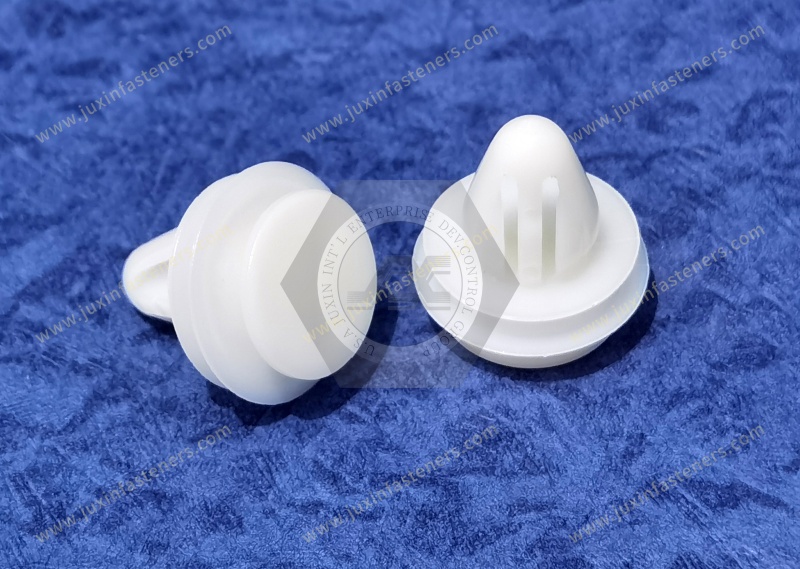
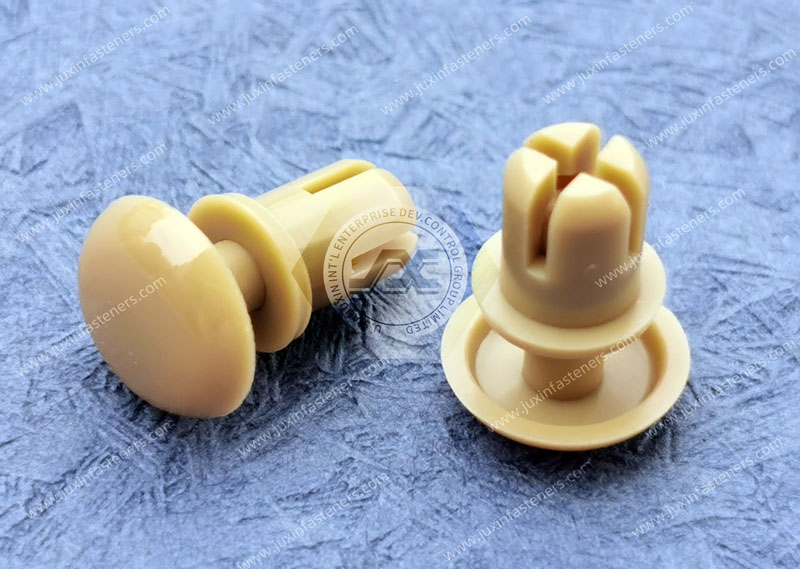
A snap-in panel hole plug can provide a simple tool-free solution.
However, selecting a plug by nominal hole diameter alone is not sufficient.
A panel hole plug is an interface component. Its functional performance depends on the relationship between the plug geometry,
actual panel cutout, panel thickness, edge condition, polymer behavior, installation direction, vibration environment, and required level of environmental protection.
Juxin Fasteners supplies standard and custom plastic and nylon fastening components for industrial OEM applications, including panel hole plugs,
closed grommets, nylon snap bushings, strain relief bushings, cable management hardware, plastic spacers and standoffs, nylon screws and nuts, plastic rivets, and drawing-based molded plastic components.
For OEM sourcing and second-source projects, engineering evaluation can begin from an existing part number, physical sample, 2D drawing, 3D CAD model, panel specification, or application requirements.
Although these products may look similar, their intended functions should be distinguished during design and sourcing.
A panel hole plug is primarily intended to close an unused panel opening.
Typical applications include:
unused electrical enclosure knockouts;
redundant cable entry holes;
optional connector positions;
unused switch or indicator openings;
manufacturing access holes;
sheet metal fabrication openings;
unused accessory mounting positions;
equipment configuration variants.
Depending on the design, the plug may use flexible locking legs, snap fingers, segmented retaining features, or another molded retention geometry to engage the panel.
Closed cable grommets typically combine the edge-covering concept of a grommet with a closed center.
They may be selected when a panel opening is currently unused but could potentially become a cable passage in another configuration or future assembly.
Some designs incorporate a center membrane or web that can be intentionally opened during installation.
However:
A closed center does not automatically make a grommet waterproof, liquid-tight, airtight, or IP-rated.
The environmental performance of the completed interface depends on the actual grommet design, panel fit, material,
geometry, sealing features, installation condition, and applicable validation or certification requirements.
If the enclosure requires a defined ingress protection level,
the closure system should be selected and validated as part of the enclosure design rather than assuming that any closed plastic plug provides the required protection.
Panel plugs and closed grommets are available in different geometries because enclosure interfaces and assembly requirements vary.
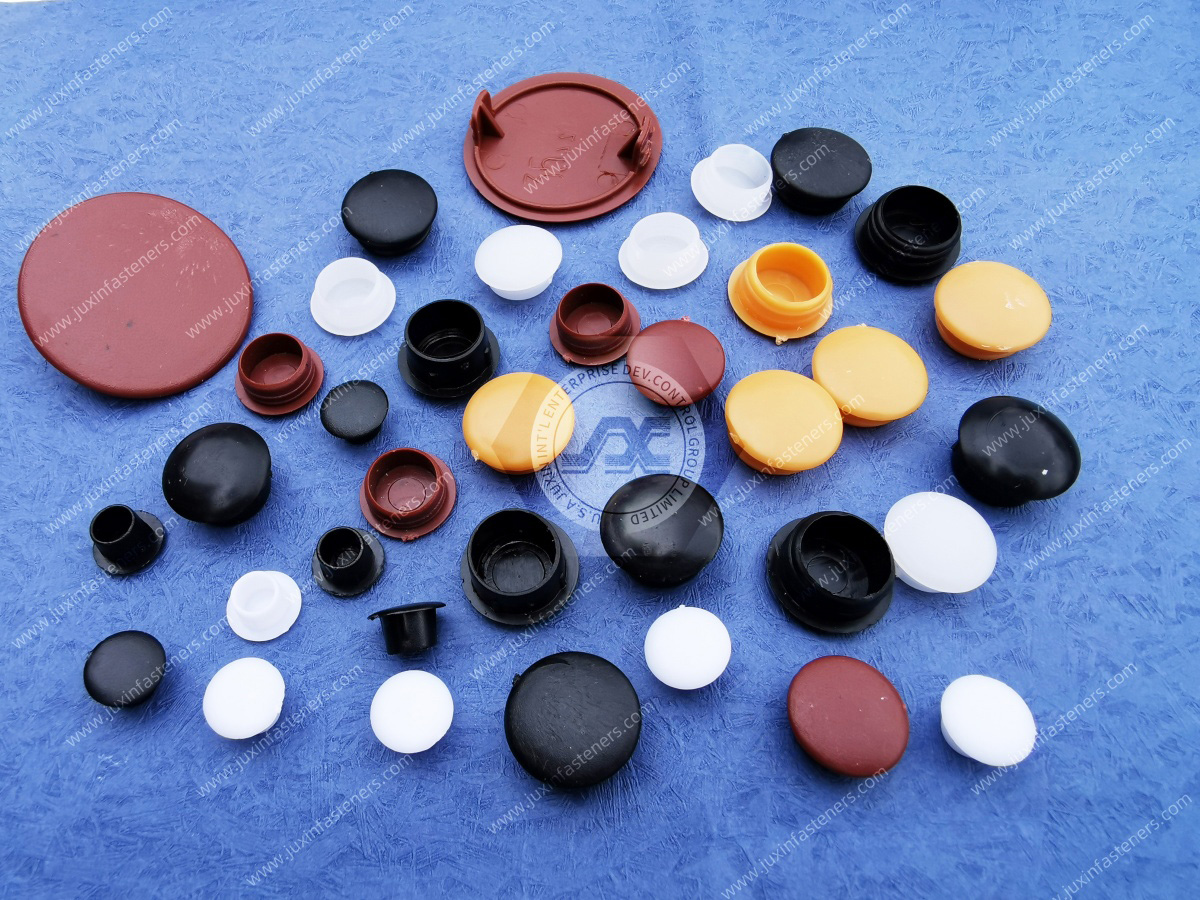
Flush or low-profile designs provide a clean external appearance and minimize projection from the enclosure surface.
They are often used on:
control cabinets;
electronic housings;
appliance panels;
automation equipment;
fabricated sheet metal assemblies.
Flexible retention features compress during insertion and recover after passing through the cutout, creating mechanical engagement with the panel.
Domed designs provide a visibly raised closure surface and may be useful where the geometry, styling, impact exposure, or required flange coverage favors a higher-profile head.
Some blanking plug designs use recessed, textured, or application-specific head geometries to meet equipment appearance or handling requirements.
A closed grommet may contain a molded center membrane that keeps the opening closed until a cable passage is required.
Whether that membrane is intended to be pierced, cut, removed, or left permanently closed depends on the specific component design.
Do not assume that every closed grommet is designed to be converted into an open cable grommet after installation.
The intended function should be confirmed from the drawing or product specification.
One of the most common sourcing mistakes is comparing panel plugs only by the nominal mounting hole size.
For example, two products may both be described as fitting the same nominal panel hole diameter but use different:
locking finger geometry;
flange diameter;
flange thickness;
panel engagement depth;
panel thickness range;
material;
molded tolerances;
retention mechanism;
installation force;
extraction behavior.
Therefore:
Nominal hole diameter match ≠ functional interchangeability.
For second-source qualification, engineers should evaluate the complete panel interface.
The actual cutout controls how the molded retention features interact with the enclosure.
Panel openings may be produced by:
punching;
laser cutting;
drilling;
machining;
stamping;
other sheet metal fabrication processes.
The manufacturing method can influence actual hole size, roundness, burr condition, taper, edge quality, and coating buildup.
An undersized cutout can:
increase insertion force;
prevent complete engagement;
overstress flexible locking fingers;
prevent the head flange from seating correctly;
damage the plug during assembly;
complicate manual or automated installation.
An oversized cutout can:
reduce retention;
create radial looseness;
allow axial movement;
increase vibration rattle;
reduce flange overlap;
increase the risk of accidental displacement.
A useful engineering principle is:
An oversized panel hole can reduce snap-in retention, while an undersized hole can increase installation force or prevent complete engagement.
This is why the actual panel cutout tolerance should be considered together with the molded component tolerance.
Panel thickness is another critical selection parameter.
Snap-in plugs are normally designed around a defined engagement geometry.
The retaining feature must pass through the panel and recover sufficiently behind the rear surface.
If the panel is too thick for the selected design:
the locking feature may not fully recover;
the plug may remain partially inserted;
the flange may not seat against the panel;
retention can become unpredictable.
If the panel is substantially thinner than the intended interface, some designs may exhibit:
axial movement;
insufficient clamping;
vibration rattle;
reduced positional stability.
The correct question is therefore not simply:
“What hole diameter does this plug fit?”
Engineering teams should ask:
“What cutout geometry and panel thickness range is this plug designed to engage?”
Sheet metal edge condition can materially affect snap-in assembly.
A heavy burr can interfere with the molded locking feature or prevent the plug flange from seating uniformly.
Sharp cut edges can also create local stress or abrasion on the plastic component during installation.
Where appropriate, engineers should evaluate:
burr height and direction;
cutout edge quality;
panel coating thickness;
paint or powder-coat buildup;
edge deformation;
local panel flatness.
The final coated hole—not only the nominal CAD cutout—should be considered when fit is sensitive.
For painted or powder-coated enclosures, coating accumulation around the cutout can change the effective installation interface.
Material selection should be based on the mechanical and environmental requirements of the application rather than selecting “nylon” as a generic material.
PA66 is commonly used for many molded fastening and panel-retention components because suitable resin grades can provide a useful combination of:
stiffness;
toughness;
wear resistance;
molded feature definition;
elastic behavior for snap features;
production suitability for complex molded geometry.
However, the properties of PA66 are not constant under all environmental conditions.
Polyamides are hygroscopic and absorb moisture from the surrounding environment.
Moisture conditioning can influence:
stiffness;
toughness;
dimensions;
flexibility;
snap-feature behavior;
retention characteristics.
Conditioned nylon can behave differently from dry-as-molded material.
This is particularly important when the design depends on thin flexible locking fingers or tight dimensional interfaces.
Moisture absorption should not be treated only as a benefit or only as a disadvantage.
It changes the mechanical state of the material and must be considered in the context of the actual application.
For tight-tolerance panel interfaces, environmental conditioning can therefore become part of design validation.
Heat-stabilized nylon grades may be considered for equipment exposed to elevated operating temperatures, such as:
power electronics;
electrical cabinets;
inverter assemblies;
power distribution equipment;
industrial machinery.
However:
Heat-stabilized nylon does not have a universal service-temperature limit.
Performance depends on the specific resin grade, duration of exposure, mechanical loading, geometry, environmental conditions, and aging requirements.
The required polymer specification should therefore be confirmed against the actual operating environment.
Electrical equipment, server infrastructure, telecommunications systems, power distribution products, and other applications may require specific flammability characteristics.
A critical sourcing distinction is:
A flame-retardant resin designation does not automatically mean the finished molded component carries a specific component certification or classification.
Where UL 94 or another flammability requirement applies, procurement and engineering teams should identify:
required classification;
applicable material grade;
relevant thickness;
color where relevant;
component documentation requirements;
customer or equipment certification requirements.
These requirements should be included in the RFQ rather than assuming that all nylon panel plugs have the same flame behavior.
Outdoor enclosures can expose polymer components to ultraviolet radiation, temperature cycling, moisture, and weathering.
A standard indoor nylon plug should not automatically be assumed suitable for long-term outdoor service.
Where outdoor exposure is expected, engineering teams should specify the environmental requirement so an appropriate material or resin grade can be evaluated.
Panel hole plugs are frequently described as “sealing plugs,” but this terminology can cause misunderstanding.
A standard snap-in plastic blanking plug may help:
close an open cutout;
reduce direct entry of debris;
improve appearance;
prevent accidental contact through an unused opening;
provide a physical barrier across the hole.
But this does not automatically establish:
waterproof performance;
liquid-tight sealing;
airtight sealing;
washdown suitability;
pressure sealing;
a specific IP rating.
Applications requiring controlled liquid or dust ingress performance may need a different closure architecture, such as:
gasketed plugs;
elastomeric sealing elements;
O-ring interfaces;
threaded sealing plugs;
dedicated enclosure closure systems.
The complete enclosure interface should then be validated according to the applicable equipment and enclosure requirements.
Closed-end ≠ waterproof.
That distinction is important for both engineering design and procurement specifications.
Snap-fit closure design involves a trade-off.
Higher spring interference can increase retention, but excessive interference may also:
increase assembly force;
damage locking features;
deform thin sheet metal;
complicate automated installation;
create operator fatigue in high-volume manual assembly.
Conversely, very low insertion force may indicate insufficient engagement in some designs.
The objective is not simply to maximize retention.
The correct objective is to achieve suitable installation and retention behavior for the specific panel interface and service environment.
Where these characteristics are important, they should be validated using the actual production panel or a representative test fixture.
Industrial machinery, HVAC equipment, automotive electronics, power systems, and transportation-related assemblies may expose panel hardware to vibration.
A poorly matched plug can move within the cutout and create:
buzzing;
rattling;
fretting at the panel interface;
gradual loss of retention;
cosmetic wear.
Vibration performance depends on more than material selection.
Important variables include:
radial interference;
locking geometry;
panel thickness;
cutout tolerance;
flange contact;
material condition;
equipment vibration profile.
For vibration-sensitive equipment, sample testing in the actual enclosure is preferable to relying only on nominal dimensions.
Understanding failure modes helps both design engineers and procurement teams avoid incorrect substitutions.
Possible causes include:
oversized panel cutout;
incorrect panel thickness;
insufficient locking engagement;
incompatible replacement geometry;
damaged retention features.
Possible causes include:
undersized hole;
excessive coating buildup;
panel too thick;
burr interference;
incompatible locking geometry.
Possible factors can include:
excessive interference;
inappropriate material condition;
unsuitable resin selection;
geometry mismatch;
installation conditions.
Potential causes include:
excessive clearance;
insufficient radial preload;
thin-panel mismatch;
dimensional variation;
vibration conditions not considered during selection.
A common cause is treating a standard snap-in blanking plug as an environmental sealing device without validating the complete interface.
This occurs when cross-reference selection is based only on appearance or nominal hole size.
Visual similarity ≠ functional interchangeability.
| Design Requirement | Recommended Evaluation |
|---|---|
| Permanently close an unused panel opening | Panel hole plug / blanking plug |
| Close an unused cable opening with future cable-entry potential | Evaluate a suitable closed grommet design |
| Protect a cable from a sharp panel edge | Nylon snap bushing or open grommet |
| Provide cable pull or twist protection | Strain relief bushing |
| Secure cable or wire bundle to equipment | Nylon P-clip, adjustable cable clamp, or cable tie mount |
| Require controlled environmental sealing | Evaluate a dedicated gasketed or sealing closure |
| Non-standard cutout or head geometry | Custom molded plastic fastener |
| Existing competitor component requires second source | Drawing/sample-based cross-reference evaluation |
This selection logic prevents one plastic component from being incorrectly specified for several different functions.
These two products solve different problems.
A panel hole plug closes an opening.
A nylon snap bushing normally leaves an opening through which a cable or wire passes while helping protect it from the panel edge.
Choose a panel hole plug when the opening is not required.
Choose a nylon snap bushing when a cable passes through the panel and edge protection is required.
For related cable-entry applications, see our Nylon Snap Bushings solutions.
A standard panel plug closes an opening.
A strain relief bushing is intended to manage cable entry while providing mechanical retention or strain-management functions appropriate to its design.
If the engineering problem is cable pull, twist, or movement at the enclosure entry, simply replacing the opening with a generic grommet does not solve the same mechanical requirement.
See our Strain Relief Bushings solutions for cable-entry retention applications.
Control cabinets often use standardized sheet metal platforms across several equipment configurations.
Unused openings for push buttons, cable entries, sensors, connectors, and optional accessories can be closed with snap-in panel plugs when appropriate.
For automation equipment exposed to vibration, plug-to-panel fit should be evaluated to prevent rattle or loosening.
Power distribution assemblies may contain configurable cable routes, control wiring entries, accessory openings, and service access points.
Panel plugs can close unused openings, while material, flammability, thermal, and enclosure requirements should be evaluated according to the equipment design.
HVAC cabinets and control housings may use panel plugs to close manufacturing openings, optional wiring routes, or unused service cutouts.
Vibration from fans, compressors, and other rotating equipment makes retention and rattle behavior relevant.
Telecommunications hardware frequently uses modular enclosure architectures.
Panel closures may be required where optional cable routing, connector positions, or accessories are omitted.
Material selection should consider the actual equipment environment and applicable flammability requirements.
AI server and data center infrastructure can involve dense power distribution, control hardware, rack equipment, cooling systems, and electrical enclosures.
Panel plugs and related plastic hardware may be used for unused openings and configuration management.
Where components are located near heat-generating power equipment or subject to equipment-specific flammability requirements, resin selection and documentation should be specified rather than assumed.
Battery energy storage systems, inverter equipment, power conversion systems, and electrical control enclosures may use standardized sheet metal housings containing optional cable or accessory openings.
Selection should consider:
temperature exposure;
electrical equipment requirements;
vibration;
environmental conditions;
material documentation;
panel geometry.
A plastic plug should not be treated as a complete electrical insulation or environmental protection system without application-specific evaluation.
Electronic modules, control equipment, interior electrical systems, and related housings may require plastic blanking components for unused openings.
Vehicle vibration and thermal cycling make interface validation particularly important when selecting an alternative supplier.
Procurement teams frequently search for replacements using an existing manufacturer part number.
That is a practical starting point, but qualification should go beyond visual comparison.
A second-source review should compare, where applicable:
mounting hole diameter and tolerance;
panel thickness range;
flange diameter;
flange profile;
overall height;
insertion geometry;
retention feature geometry;
material;
resin grade requirements;
color;
environmental requirements;
flammability requirements;
actual fit and retention behavior.
Two plugs can appear almost identical in a photograph while behaving differently in the same panel.
Therefore:
Cross-reference means functional comparison, not simply finding a visually similar molded part.
For OEM and industrial sourcing programs, a structured qualification process can reduce substitution risk.
Provide:
current supplier part number;
OEM internal part number;
product photograph;
physical sample;
existing drawing, if available.
Confirm:
nominal cutout diameter or geometry;
cutout tolerance;
panel thickness;
panel material;
coating or surface finish;
installation direction.
Identify whether the component is expected to provide:
blanking only;
debris protection;
vibration resistance;
cable-entry conversion;
outdoor exposure capability;
specific material properties;
specified flammability characteristics;
other application-specific requirements.
Evaluate dimensional and functional compatibility rather than relying on catalog terminology alone.
Install samples in the actual production panel or a representative fixture.
Check:
insertion behavior;
complete seating;
flange coverage;
retention;
rattle;
removal behavior, if relevant;
appearance.
After engineering approval, procurement teams can proceed with documentation review, commercial evaluation, and production RFQ.
Standard panel plugs cover many common enclosure designs, but custom molded components may be appropriate when the application requires:
non-standard panel cutouts;
unusual flange dimensions;
specific head profiles;
special retention geometry;
unique colors;
application-specific resin requirements;
integrated molded features;
replacement of an obsolete component.
Juxin Fasteners can support drawing-based custom plastic fastener sourcing through:
2D drawing review;
3D CAD review;
dimensional and interface evaluation;
DFM discussion;
resin selection according to project requirements;
tooling evaluation;
prototype or sample validation;
production sourcing.
For related projects, see our Custom Molded Plastic Fasteners solutions.
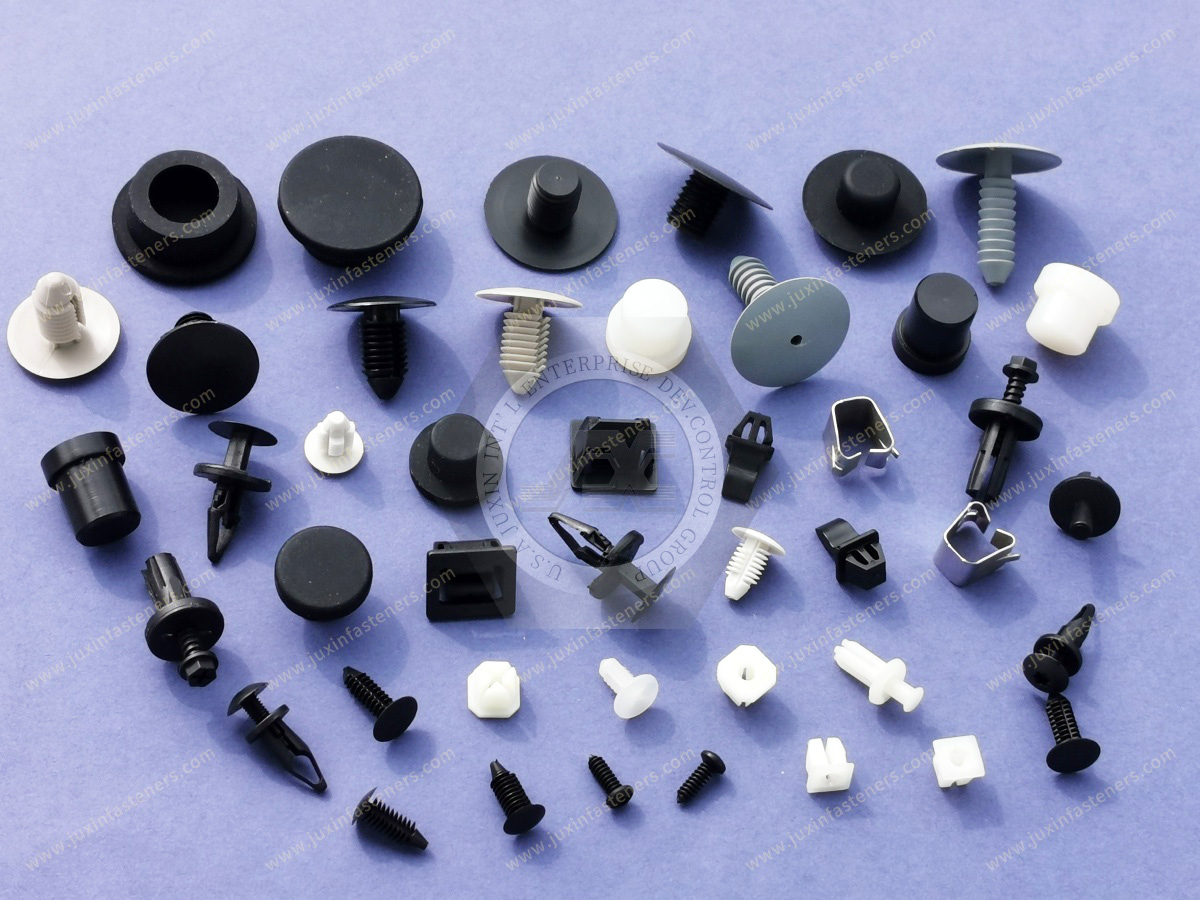
A detailed RFQ reduces unnecessary sampling cycles and helps suppliers evaluate the actual panel interface.
Please provide as many of the following as available:
Panel Interface
mounting hole diameter or cutout geometry;
cutout tolerance;
panel thickness or thickness range;
panel material;
panel coating or surface finish;
burr or edge condition if relevant.
Plug Geometry
required head diameter;
head style;
maximum allowable projection;
preferred retention style;
existing dimensions or drawing.
Material
required polymer, if specified;
color;
flame-retardant requirement, if applicable;
UV or outdoor exposure requirement;
temperature/environmental requirements;
chemical exposure, if relevant.
Functional Requirement
blanking only;
dust/debris exclusion;
vibration resistance;
future cable-entry requirement;
removal/reuse requirement;
environmental sealing requirement, if applicable.
Sourcing Information
existing manufacturer part number;
OEM part number;
physical sample;
2D drawing;
3D CAD;
prototype quantity;
estimated annual volume;
target production schedule;
required documentation.
Industrial buyers may also need project-specific documentation for supplier qualification.
Requirements can include, where applicable:
material documentation;
lot traceability;
dimensional inspection requirements;
RoHS declaration;
REACH declaration;
customer-specific documentation;
packaging and labeling requirements.
These requirements should be identified during RFQ review so the commercial quotation and technical evaluation reflect the actual program needs.
Panel hole plugs are only one part of the enclosure and cable-management system.
Depending on the assembly, engineering teams may also evaluate:
Nylon Snap Bushings for cable edge protection;
Strain Relief Bushings for cable entry retention;
Nylon P-Clips for fixed wire and cable routing;
Cable Tie Mounts for tie-based harness management;
Plastic Spacers and Standoffs for PCB and component spacing;
Nylon Machine Screws where non-metallic threaded fastening is required;
Custom Molded Plastic Fasteners for non-standard geometry or application-specific interfaces.
Selecting the correct component by function helps avoid using a visually similar plastic part for a mechanically different requirement.
Juxin Fasteners supports industrial OEMs, enclosure manufacturers, equipment builders, engineering teams, procurement departments,
and supplier-development programs requiring standard or custom plastic fastening components.
For panel hole plug and closed cable grommet projects, customers can follow a structured sourcing path:
Existing Part Number / Sample / Drawing → Panel Interface Review → Candidate Component → Sample Validation → Second-Source Qualification → Production RFQ
This approach is particularly useful when:
qualifying an alternative supplier;
replacing an obsolete component;
consolidating enclosure hardware;
developing a new sheet metal enclosure;
sourcing a custom molded closure;
validating a replacement against an existing production part.
Send us your existing part number, physical sample, panel cutout dimensions, panel thickness, drawing,
CAD model, material requirement, application environment, and expected annual volume for technical review.
Email: info@juxinfasteners.com
Website: www.juxinfasteners.com
Product Packaging
Packaging Standard
At Juxin Fasteners, we apply standardized export packaging to ensure product protection, traceability, and compliance with international logistics requirements.
1. Standard Export Packaging
Unless otherwise specified, all products will be packed according to our factory standard export packaging, which includes:
Moisture-resistant inner protection
Poly bag or small box packing as required
Reinforced export cartons
Clear labeling with part number, specification, batch number, and quantity
Palletizing for sea or air shipment when necessary
Our standard packaging is designed to ensure safe transportation, efficient warehousing, and long-distance international shipping.
2. Customized Packaging Options
We also provide customized packaging solutions according to customer requirements, including but not limited to:
Private labeling
Customized barcodes
Specific carton dimensions
Retail packaging
Special pallet configuration
Customer-specific marking and identification
So that you know, customized packaging may involve additional costs and extended lead time depending on the complexity of the requirements.
3. Compliance & Quality Assurance
All packaging processes are controlled under our ISO 9001 quality management system to ensure consistency, traceability, and product integrity throughout the supply chain.
Product Pictures
Contact Us
Tel.:
+86 020 8621 0320
+86 020 3121 6067
E-mail:
Technical Support:
Navigation
SEND INQUIREY