Call Us
+86 136 6007 9809
Call Us
+86 136 6007 9809

Medical equipment, diagnostic instrumentation, laboratory automation systems, patient monitoring equipment,
analytical instruments, and healthcare electronics place specialized demands on fastening and enclosure hardware.
Product Specification
Medical equipment, diagnostic instrumentation, laboratory automation systems, patient monitoring equipment, analytical instruments,
and healthcare electronics place specialized demands on fastening and enclosure hardware.
Depending on the application, engineers may need to manage electrical isolation, corrosion resistance, repeated cleaning, chemical exposure,
low component weight, sensitive electronic assemblies, surface protection, dimensional stability, and non-metallic fastening requirements within the same equipment platform.
Plastic fasteners can provide important advantages in these environments,
but medical-equipment applications require a more disciplined material-selection process than simply replacing a metal screw with a nylon equivalent.
A polymer that performs well inside a protected electronic enclosure may not be suitable for repeated disinfectant exposure.
A material capable of operating at an elevated temperature may still be unsuitable for a specific sterilization process.
Likewise, describing a polymer as non-conductive or non-metallic does not by itself establish medical-device compliance, biocompatibility, or compatibility with an MRI environment.
The correct engineering approach is:
Application → Environment → Material → Geometry → Validation → Documentation
Juxin Fasteners supplies standard and drawing-based plastic fasteners, nylon screws, plastic nuts and washers, insulating shoulder washers, spacers,
standoffs, PCB supports, cable-management components, enclosure clips, bushings, and custom molded plastic hardware for industrial OEM applications,
including selected medical equipment, diagnostic systems, and laboratory equipment projects.
Engineering and sourcing review can begin from an existing manufacturer part number, OEM part number, 2D drawing,
3D CAD model, physical sample, material specification, or complete application requirements.
Plastic fastening hardware can perform different functions depending on its location within the equipment.
Typical application zones include:
electronic enclosure assemblies;
PCB and control-board mounting;
sensor module mounting;
display and user-interface assemblies;
diagnostic instrumentation;
laboratory automation equipment;
cable and wire routing;
internal insulating barriers;
low-load equipment covers;
analytical instrument assemblies;
fluid-handling equipment where the selected polymer is chemically compatible;
service-access panels;
non-metallic spacing and isolation systems.
The fastener should therefore be selected according to the actual functional zone rather than simply according to the equipment category.
One of the most important sourcing distinctions is that “medical equipment” describes an industry, not a single operating environment.
Consider the difference between:
Fastener inside a sealed diagnostic instrument
and
Fastener repeatedly exposed to disinfectant wipes
and
Fastener used inside laboratory fluid-handling equipment
and
Fastener subjected to a validated sterilization process
These applications can require completely different polymers and validation procedures.
For engineering selection, the actual exposure conditions matter more than the industry label.
Diagnostic analyzers, laboratory instruments, optical systems, and measurement equipment contain sensitive electronics and precision mechanical assemblies.
Plastic fastening components may be used for:
PCB mounting;
sensor supports;
internal electronic modules;
insulating covers;
lightweight equipment panels;
cable routing.
Potential components include:
Nylon Machine Screws;
nylon nuts;
nylon washers;
Plastic Spacers and Standoffs;
Snap-Fit Circuit Board Supports;
insulating shoulder washers.
Electrical isolation and dimensional stability can be more important here than high structural clamp load.
Patient monitors and related electronic healthcare equipment contain displays, power supplies, control boards, sensors, communication modules, and enclosure assemblies.
Plastic hardware can provide:
electrical isolation;
corrosion resistance;
lightweight fastening;
protection of coated surfaces;
organized internal cable routing.
Where the hardware is located inside an enclosure and does not contact the patient, its qualification requirements may differ substantially from components intended for direct or indirect patient contact.
That distinction should be established during the design phase.
Laboratory automation equipment can combine:
robotics;
fluid handling;
reagent dispensing;
electronics;
motion systems;
sample transport;
optical sensing.
Plastic fasteners may be useful where electrical isolation, corrosion resistance, chemical compatibility, or low friction is required.
However, laboratory reagents and cleaning chemicals vary widely.
Material compatibility should therefore be evaluated against the actual chemical exposure rather than assuming that a polymer described as “chemical resistant” is universally suitable.
Equipment housings may require plastic hardware for:
panel fastening;
access covers;
display bezels;
internal mounting;
cable-entry protection;
wire routing.
Components can include:
nylon screws;
finishing washers;
snap bushings;
hole plugs;
cable clamps;
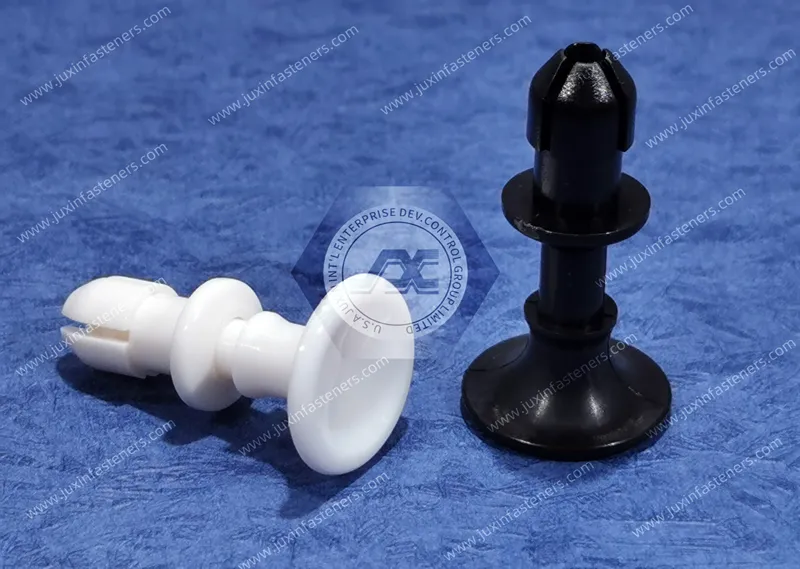
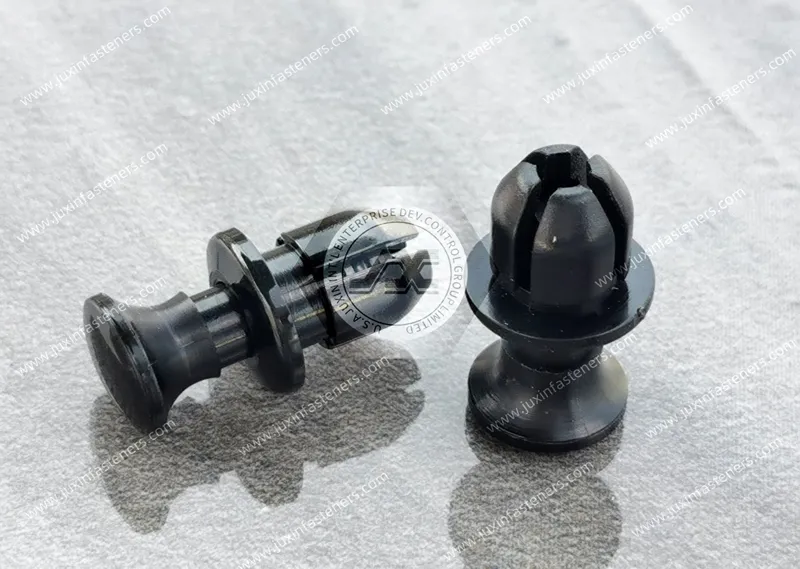
push rivets;
enclosure clips.
For visible external components, appearance, color, surface finish, cleaning exposure, and serviceability may become additional selection criteria.
Electrical isolation is one of the most important reasons engineers evaluate polymer fastening components.
Plastic hardware may help electrically separate:
PCBs from metal chassis;
electronic modules from enclosure panels;
mounting screws from conductive surfaces;
sensors from grounded structures.
For example, an Insulating Shoulder Washer can provide both under-head isolation and radial isolation around the screw shank where a metal fastener passes through a conductive panel.
A Plastic Spacer or Standoff can maintain controlled separation between a PCB and chassis.
A Nylon Machine Screw can eliminate a direct metallic fastening path in suitable low-load applications.
However:
Non-Conductive Fastener ≠ Complete Electrical Safety System
Medical equipment designers must still evaluate the complete electrical architecture, including applicable insulation, creepage,
clearance, grounding, voltage, contamination, temperature, and equipment-specific regulatory requirements.
PA66 is commonly used for industrial plastic fastening hardware because it provides a useful combination of:
mechanical strength;
toughness;
electrical insulation;
fatigue resistance;
wear resistance;
moldability.
Potential medical-equipment applications include protected internal electronic assemblies, equipment enclosures,
PCB hardware, cable management, and other non-patient-contact components where the specified grade is compatible with the operating environment.
PA66 is hygroscopic and absorbs moisture.
Therefore engineers should consider the effect of moisture on:
dimensions;
stiffness;
toughness;
thread fit;
clamp-load retention.
POM can be considered for applications requiring:
dimensional stability;
low moisture absorption;
low friction;
repeated mechanical movement;
precision component geometry.
Potential applications can include adjustment mechanisms, precision supports, clips, and selected fastening components.
Chemical and sterilization compatibility must still be verified for the actual resin grade and process.
PEEK may be considered for specialized projects requiring elevated-temperature performance, chemical resistance, dimensional stability, or demanding engineering properties.
Potential applications can include selected:
analytical instruments;
laboratory equipment;
specialized medical equipment;
high-performance electronic assemblies.
However:
PEEK Material ≠ Automatically Medical Grade
A specific resin grade, supplier documentation, regulatory status, processing history, and end-use requirements must be evaluated separately.
PEEK projects should therefore be treated as drawing- and application-specific engineering programs.
PVDF may be considered in specialized equipment where chemical resistance and electrical properties are important.
Potential applications can include selected fluid-handling, laboratory, chemical-processing, or analytical equipment.
As with PEEK, suitability depends on the specific resin grade and actual operating environment.
Other polymers may be evaluated when the customer drawing or operating environment requires them.
Material selection should be driven by:
temperature;
mechanical load;
chemical exposure;
cleaning process;
sterilization method;
electrical requirement;
dimensional tolerance;
regulatory requirement.
This distinction is critical for engineering and procurement teams.
Specifying:
PA66
POM
PVDF
or
PEEK
defines a polymer family.
It does not automatically establish:
biocompatibility;
sterilization compatibility;
patient-contact suitability;
cytotoxicity performance;
medical-device approval;
MRI compatibility;
pharmaceutical suitability.
Therefore:
Material Family ≠ Resin Grade ≠ Compliance Status ≠ Approved End Use
The exact resin grade and required supporting documentation must be established during project qualification.
Not every fastener inside medical equipment is a patient-contact component.
This distinction can significantly affect material and documentation requirements.
Examples can include:
PCB standoffs;
internal nylon screws;
cable clips;
insulating washers;
internal enclosure fasteners.
These components may primarily require mechanical, electrical, environmental, and equipment-specific validation.
If a plastic component directly or indirectly contacts:
patients;
biological fluids;
drug pathways;
laboratory samples;
medical gases;
sterile fluid paths,
additional material and regulatory evaluation may be required.
The equipment manufacturer should define the applicable biological evaluation and regulatory requirements.
Where biocompatibility is relevant, evaluation may involve the applicable framework of ISO 10993, depending on the nature and duration of contact.
Juxin Fasteners does not treat a generic polymer designation as proof of biocompatibility.
“Sterilization resistant” is too broad to be an engineering specification.
Different sterilization processes affect polymers differently.
Potential processes can include:
steam sterilization / autoclave;
ethylene oxide (EtO);
hydrogen peroxide-based processes;
gamma irradiation;
electron-beam irradiation;
chemical disinfection.
The polymer response may involve changes in:
tensile properties;
elongation;
color;
dimensions;
brittleness;
surface condition;
long-term life.
Therefore the sourcing question should not simply be:
“Is this plastic medical grade?”
A more useful engineering question is:
“Which resin grade is being used, and has the finished component been validated for the actual sterilization or cleaning process required by the equipment?”
A practical initial qualification matrix should include:
| Requirement | Information Needed |
|---|---|
| Steam / Autoclave | Temperature, pressure, cycle duration, number of cycles |
| EtO | Gas concentration, temperature, exposure time |
| Hydrogen Peroxide | Process type, concentration, cycle conditions |
| Gamma / E-Beam | Total radiation dose |
| Chemical Wipe-Down | Chemical name, concentration, contact time |
| Repeated Cleaning | Expected number of cleaning cycles |
| Fluid Exposure | Chemical or biological fluid identity |
| Temperature | Minimum and maximum service temperature |
This information allows material screening to begin from actual service conditions rather than generic material descriptions.
Medical and laboratory equipment can be repeatedly exposed to disinfectants and cleaning agents.
Depending on the facility and equipment, these may include:
alcohol-based cleaners;
oxidizing agents;
chlorine-containing cleaners;
quaternary ammonium disinfectants;
peroxide-based cleaners;
other specialized chemicals.
A polymer may retain its appearance after short exposure while gradually losing mechanical properties after repeated cycles.
Possible degradation mechanisms include:
environmental stress cracking;
swelling;
embrittlement;
discoloration;
surface crazing;
loss of mechanical strength.
Therefore chemical compatibility should be evaluated under representative mechanical stress as well as chemical exposure.
Polymer fasteners are inherently attractive for equipment where metallic content must be minimized because many common engineering polymers do not contain ferromagnetic metal.
However:
Plastic Fastener ≠ Automatically MRI Safe or MRI Conditional
MRI compatibility applies to the complete component and equipment configuration.
Evaluation may need to consider:
inserts;
pigments;
fillers;
embedded metallic components;
manufacturing contamination;
complete assembly design.
Where MRI compatibility is a formal requirement, the customer should specify the applicable qualification criteria and documentation.
Polymer construction can support a non-metallic design strategy, but final MRI suitability must be established at the device or system level.
Plastic screws have substantially different torque behavior from metal screws.
Excessive tightening can cause:
thread stripping;
head deformation;
drive damage;
screw fracture;
plastic housing cracking;
PCB damage.
Installation torque should therefore be validated using the actual:
screw material;
thread size;
mating material;
housing geometry;
washer configuration;
operating temperature.
A generic torque chart should not replace assembly validation.
For detailed threaded-joint engineering, see our Nylon Machine Screws & Plastic Threaded Fasteners guide.
Plastic fasteners are viscoelastic materials.
Under sustained mechanical loading, they can experience:
creep;
stress relaxation;
clamp-load reduction.
This is particularly important in equipment expected to remain assembled for many years.
Long-term joint performance depends on:
polymer;
temperature;
moisture;
initial preload;
bearing area;
joint stiffness.
Where long-term preload is critical, the design should be validated rather than simply increasing installation torque.
Medical diagnostic and laboratory equipment may experience thermal changes caused by:
electronics;
power supplies;
motors;
internal heaters;
cooling systems;
ambient environmental changes.
Because polymers and metals have different thermal expansion characteristics, temperature cycling can change:
thread fit;
clamp load;
alignment;
bearing pressure.
This is particularly important in precision instrumentation.
Medical equipment can require periodic:
calibration;
cleaning;
preventive maintenance;
module replacement;
inspection.
Fasteners used on service-access assemblies should therefore be evaluated for repeated installation cycles.
Possible solutions include:
nylon thumb screws;
removable plastic rivets;
reusable panel clips;
captive fastening arrangements;
machine screws with controlled thread engagement.
The best solution depends on service frequency and required retention.
Medical and laboratory equipment can contain dense wiring for:
sensors;
displays;
motors;
communication modules;
power supplies;
control electronics.
Plastic cable-management components can include:
nylon cable clamps;
P-clips;
cable tie mounts;
snap bushings;
strain-relief components.
These components can help maintain separation from sharp sheet-metal edges and organize wiring within compact equipment architectures.
Plastic PCB hardware can provide controlled board spacing while maintaining electrical isolation.
Options include:
Plastic Spacers and Standoffs;
Snap-Fit Circuit Board Supports;
nylon machine screws;
nylon nuts;
insulating shoulder washers.
Selection depends on:
PCB hole diameter;
chassis hole diameter;
board thickness;
standoff height;
serviceability;
vibration;
electrical clearance.
Possible causes:
incompatible cleaning chemical;
environmental stress cracking;
residual molding stress;
unsuitable resin.
Possible causes:
creep;
stress relaxation;
thermal cycling;
insufficient joint stiffness.
Possible causes:
excessive insertion force;
low-temperature brittleness;
chemical aging;
geometry mismatch.
Possible causes:
moisture absorption;
chemical exposure;
incompatible material;
temperature.
Possible causes:
sterilization exposure;
UV exposure;
cleaning chemicals;
polymer aging.
The failure should be analyzed as a combination of:
Material + Geometry + Load + Chemical Exposure + Temperature + Time
Medical-equipment sourcing requires more than matching dimensions.
An alternative part should be evaluated against the original functional requirements.
A practical second-source review should compare:
Part geometry
Critical dimensions
Thread or mounting interface
Polymer family
Exact material requirement
Mechanical function
Operating temperature
Cleaning and chemical exposure
Sterilization exposure where applicable
Electrical requirements
Documentation requirements
Lot traceability requirements
This reduces the risk of approving a dimensionally interchangeable component that is environmentally incompatible.
Provide:
OEM part number;
manufacturer part number;
drawing;
CAD model;
physical sample;
photographs.
Identify whether the component is used in:
internal electronics;
enclosure;
PCB mounting;
fluid handling;
cable management;
service-access hardware;
another equipment zone.
Specify:
polymer family;
exact resin grade where mandatory;
color;
fillers;
flame-retardant requirement where applicable.
Provide:
operating temperature;
humidity;
cleaning chemicals;
sterilization process;
radiation exposure where applicable;
fluid exposure.
Provide:
clamp load;
installation torque;
pull-out force;
vibration;
repeated assembly cycles.
Provide:
isolation requirement;
operating voltage;
creepage and clearance constraints;
non-metallic requirements.
Specify any required:
material documentation;
RoHS;
REACH;
lot traceability;
resin certifications;
project-specific biological evaluation data;
customer-specific quality documentation.
Evaluate:
dimensions;
assembly fit;
installation behavior;
mating-component compatibility.
Where required, test under representative:
temperature;
chemical exposure;
cleaning cycles;
sterilization cycles;
mechanical load;
vibration.
After engineering approval, procurement can proceed with:
production quantity;
annual demand;
quality requirements;
packaging;
traceability;
delivery schedule.
Standard plastic hardware can satisfy many equipment requirements.
However, medical and laboratory OEMs may require:
proprietary mounting geometry;
special head profiles;
custom spacers;
specialized snap features;
dedicated cable-management components;
special polymer materials;
equipment-specific colors;
non-standard dimensions.
Juxin Fasteners can support drawing-based projects through:
2D drawing review;
3D CAD review;
sample comparison;
material discussion;
dimensional review;
DFM evaluation;
sample qualification;
production sourcing.
For drawing-specific components, see our Custom Molded Plastic Fasteners solutions.
For faster technical review, provide as much of the following information as possible.
OEM part number;
existing manufacturer part number;
2D drawing;
3D CAD model;
physical sample;
photographs.
thread or mounting-hole size;
critical dimensions;
overall length;
head or flange dimensions;
required tolerances.
PA66;
POM;
PVDF;
PEEK;
other polymer;
exact resin grade where required;
color;
filler requirement.
minimum temperature;
maximum temperature;
humidity;
chemical exposure;
cleaning chemicals;
sterilization process;
number of sterilization or cleaning cycles.
installation torque;
clamp load;
pull-out requirement;
vibration;
repeated assembly cycles.
insulation requirement;
voltage;
creepage / clearance constraints;
non-metallic requirements.
RoHS;
REACH;
material documentation;
lot traceability;
biological evaluation requirements where applicable;
customer-specific quality documentation.
sample quantity;
production quantity;
estimated annual usage;
delivery schedule;
packaging requirements.
The more complete the application information, the more accurately the fastener can be evaluated.
Related Juxin Fasteners solutions include:
Nylon Machine Screws for electrically isolated threaded assemblies;
Insulating Shoulder Washers for radial and axial isolation around screws;
Plastic Spacers and Standoffs for controlled board and component separation;
Snap-Fit Circuit Board Supports for tool-free PCB mounting;
Nylon Snap Bushings for wire protection through metal enclosure cutouts;
Nylon Cable Clamps and P-Clips for internal wire routing;
Removable Plastic Rivets for service-access panels;
Custom Molded Plastic Fasteners for proprietary OEM components.
These products should be evaluated as part of the complete equipment architecture rather than selected only by catalog dimensions.
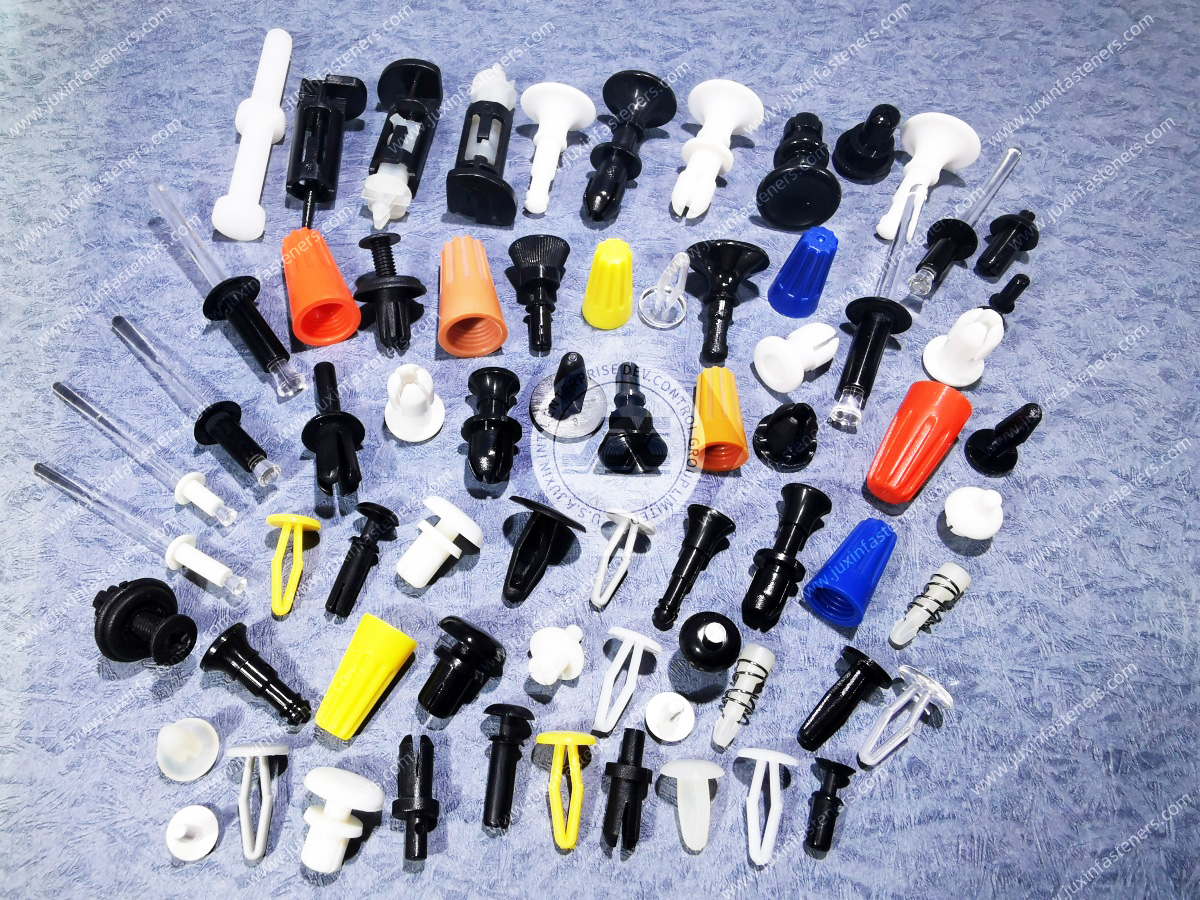
Juxin Fasteners supports medical-equipment manufacturers, diagnostic-instrument OEMs, laboratory-automation manufacturers,
healthcare-electronics companies, analytical-instrument manufacturers, pharmaceutical-equipment suppliers, dental-equipment manufacturers,
electronics contract manufacturers, procurement teams, and supplier-development organizations requiring standard or custom plastic fastening components.
For medical-equipment plastic hardware projects, the sourcing pathway can begin with:
Existing Part / Drawing / Sample → Application Review → Material & Environment Review → Cleaning / Sterilization Review
→ Candidate Component → Physical Sample → Assembly & Environmental Validation → Documentation Review → Second-Source Qualification → Production RFQ
This process can support:
new product development;
electrical-isolation projects;
metal-to-plastic conversion;
corrosion reduction;
equipment weight reduction;
existing component replacement;
second-source qualification;
supplier consolidation;
obsolete-component replacement;
custom plastic component development.
For applications involving sterilization, chemical exposure, patient contact, biological evaluation, or specialized medical regulatory requirements,
provide the exact project specification during RFQ review.
Material suitability and supporting documentation should be confirmed for the specific application rather than inferred from the polymer family alone.
Send us your existing manufacturer part number, OEM part number, 2D drawing, 3D CAD model, physical sample, material specification,
operating temperature, cleaning chemicals, sterilization method, electrical requirements, required documentation, sample quantity, and estimated annual usage for technical review.
Email: info@juxinfasteners.com
Website: www.juxinfasteners.com
Product Packaging
Packaging Standard
At Juxin Fasteners, we apply standardized export packaging to ensure product protection, traceability, and compliance with international logistics requirements.
1. Standard Export Packaging
Unless otherwise specified, all products will be packed according to our factory standard export packaging, which includes:
Moisture-resistant inner protection
Poly bag or small box packing as required
Reinforced export cartons
Clear labeling with part number, specification, batch number, and quantity
Palletizing for sea or air shipment when necessary
Our standard packaging is designed to ensure safe transportation, efficient warehousing, and long-distance international shipping.
2. Customized Packaging Options
We also provide customized packaging solutions according to customer requirements, including but not limited to:
Private labeling
Customized barcodes
Specific carton dimensions
Retail packaging
Special pallet configuration
Customer-specific marking and identification
So that you know, customized packaging may involve additional costs and extended lead time depending on the complexity of the requirements.
3. Compliance & Quality Assurance
All packaging processes are controlled under our ISO 9001 quality management system to ensure consistency, traceability, and product integrity throughout the supply chain.
Product Pictures
Contact Us
Tel.:
+86 020 8621 0320
+86 020 3121 6067
E-mail:
Technical Support:
Navigation
SEND INQUIREY