
Call Us
+86 136 6007 9809
Call Us
+86 136 6007 9809

Apr. 12, 2026
Automotive Clamping Rings & Buckle Fasteners: High-Reliability Solutions for Hose, Duct, and Wiring Management
In modern automotive engineering, automotive clamping rings, buckle fasteners, and clip fasteners play a critical role in ensuring secure routing, sealing, and vibration resistance across multiple vehicle systems. From engine compartments to HVAC assemblies, these fastening solutions are designed to deliver long-term durability, structural stability, and noise reduction, meeting the stringent requirements of OEMs and Tier 1 suppliers.
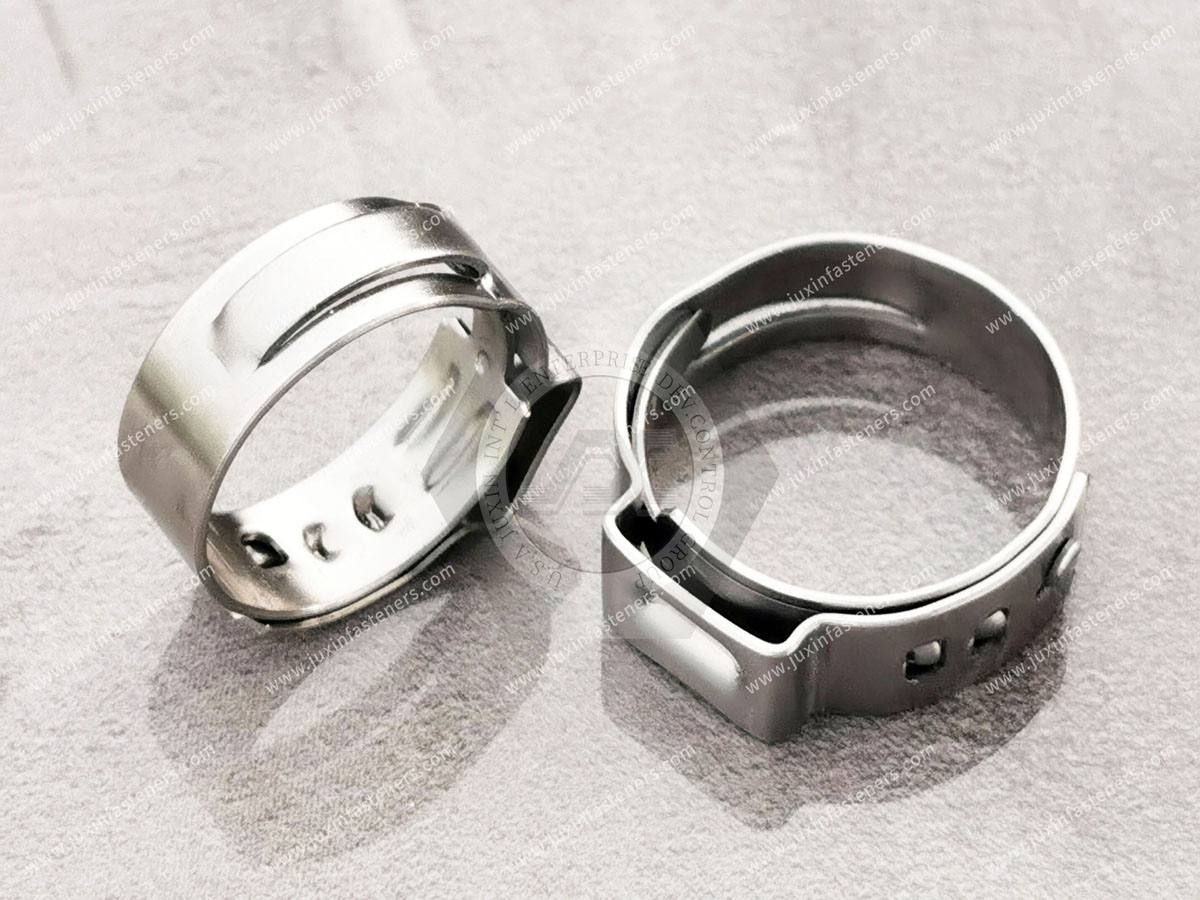
Why Clamping Rings and Buckle Fasteners Matter
Automotive systems are exposed to continuous vibration, temperature fluctuations, and mechanical stress. Improper fastening can lead to:
Hose detachment or leakage
Wiring harness damage
Air duct inefficiency and noise issues
Reduced system lifespan
High-quality clamping rings and buckle fasteners ensure:
Secure fastening under dynamic loads
Effective vibration damping
Protection of hoses, pipes, and cables
Long-term sealing performance
Core Applications in Automotive Systems
1. Engine Bay Hose & Fluid Line Management
Automotive clamping rings are widely used to secure:
Coolant hoses
Fuel lines
Small-diameter fluid pipes
These components must withstand high temperatures and pressure variations while maintaining tight sealing and positional stability.
Key Benefits:
Prevent fluid leakage
Reduce movement-induced wear
Ensure consistent system pressure
2. HVAC Systems (Heating, Ventilation, Air Conditioning)
Automotive clip fasteners and buckle fasteners are essential for HVAC performance:
Air Duct Connection and Sealing
Ensure airtight connections between ventilation ducts
Prevent air leakage and energy loss
Improve cabin comfort and reduce noise levels
Air Vent Fixing Mechanisms
Secure vent covers with reliable clip structures
Maintain proper airflow direction and aesthetic integrity
Refrigerant Tubing Systems
Clamping rings stabilize tubing connections
Ensure long-term sealing and operational reliability
3. Electrical Wiring Harness Routing
Efficient cable management is critical in modern vehicles with complex electrical systems.
Buckle fasteners and clip fasteners are used to:
Bundle and secure wiring harnesses
Prevent abrasion and insulation damage
Maintain organized routing in tight spaces
4. Structural Sealing and Vibration Damping
Advanced clamping ring solutions are also applied in:
Shaft sealing systems
External radial sealing connections
Flexible vibration-damping clamp designs
Elastic clamp structures absorb vibration energy, reducing fatigue failure and extending service life.
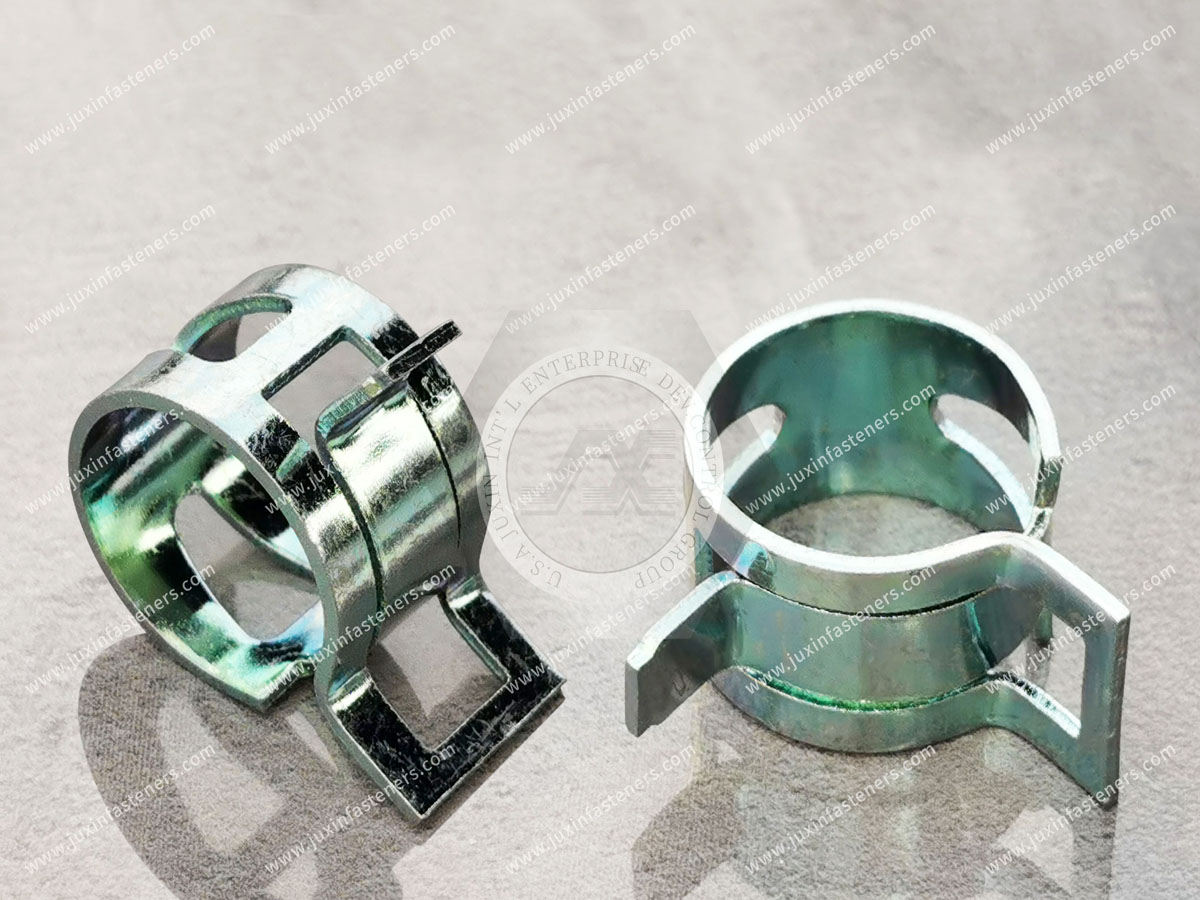
Engineering Insights: Optimizing Clamp Performance
Choosing the right automotive clamping ring or buckle fastener directly impacts system reliability.
Material Selection
Metal clamps (stainless steel, carbon steel):
Ideal for high-temperature, high-load environments
Plastic or composite fasteners:
Suitable for lightweight applications with corrosion resistance
Metal-plastic hybrid designs:
Combine strength with flexibility for enhanced sealing and durability
Structural Design Considerations
Locking mechanisms must prevent unintended loosening
Smooth inner surfaces avoid hose or wire damage
Elasticity is critical for vibration absorption
Precise dimensional tolerance ensures consistent clamping force
Industry Trends in Automotive Fastening Solutions
1. Advanced Material Innovation
Modern automotive clamping rings and clip fasteners increasingly use:
High-performance polymers
Reinforced composite materials
Hybrid metal-insert structures
These improve strength, sealing, and fatigue resistance.
2. Modular & Adaptive Fastening Systems
OEMs are adopting modular fastening solutions that:
Fit multiple pipe or connector sizes
Reduce inventory complexity
Improve assembly line efficiency
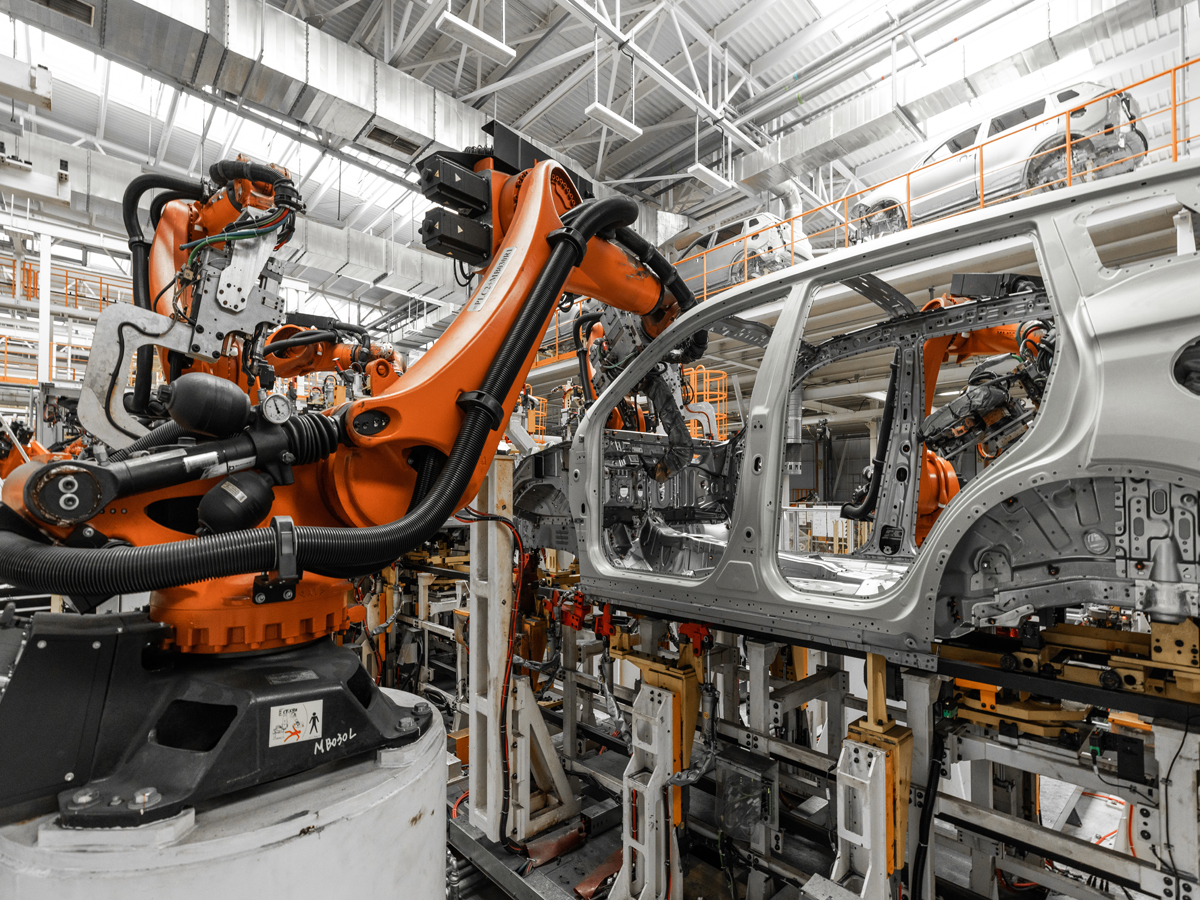
3. High-Precision Automated Assembly
With the trend toward miniaturization:
Automated systems use force control sensors
Vision-guided assembly ensures micron-level accuracy
Consistent clamping force improves yield rates
Selection Guidelines for Engineers and Buyers
When selecting automotive clamping rings, buckle fasteners, or clip fasteners, consider:
Application Environment
Temperature range
Exposure to chemicals or fluids
Vibration intensity
Load and Performance Requirements
Clamping force
Flexibility vs. rigidity
Sealing performance
Production Volume
Standardized solutions for high-volume production
Custom designs for complex assemblies
Maintenance and Troubleshooting
Common issues such as loose connections or sealing failure can often be traced to fastening components.
Inspection Checklist:
Check for material aging or corrosion
Inspect for deformation or breakage
Verify correct installation
Recommended Actions:
Replace damaged clamping rings or clips
Reinstall with proper torque or positioning
For critical systems, consult professional service teams
Conclusion: Reliable Fastening for Modern Automotive Systems
Automotive clamping rings and buckle fasteners are foundational components in ensuring the performance, safety, and durability of vehicle systems. As automotive engineering evolves toward lightweight design, electrification, and intelligent manufacturing, fastening solutions must deliver:
Higher precision
Greater adaptability
Enhanced vibration resistance
By selecting the right clamping ring and fastening solution, engineers and procurement professionals can significantly improve system reliability, reduce maintenance costs, and extend product lifecycle.
 MORE NEWS
Jun. 02, 2026
Contact Us
Tel.:
+86 020 8621 0320
+86 020 3121 6067
E-mail:
Technical Support:
Navigation
SEND INQUIREY