
Call Us
+86 136 6007 9809
Call Us
+86 136 6007 9809

Jun. 02, 2026
Automotive Cooling Module Fastening Solutions for Engine Compartment Systems
Keywords: automotive cooling module fastening solutions, anti-loosening fasteners, weld studs, weld nuts, high-strength automotive bolts, vibration-damping mounts, integrated bracket fastening systems, engine compartment fastening design
Modern automotive cooling modules—comprising radiators, condensers, and low-temperature heat exchangers—require highly reliable fastening systems that ensure structural stability, vibration resistance, and long-term sealing performance. In engine compartment environments characterized by continuous vibration, thermal cycling, and airflow load variations, the fastening solution must go beyond simple mechanical fixation and become a fully engineered system.
At JUXIN FASTENERS, we provide a complete range of automotive fastening components, including weld studs, weld nuts, high-strength bolts, and anti-loosening fastener systems designed specifically for cooling module integration.
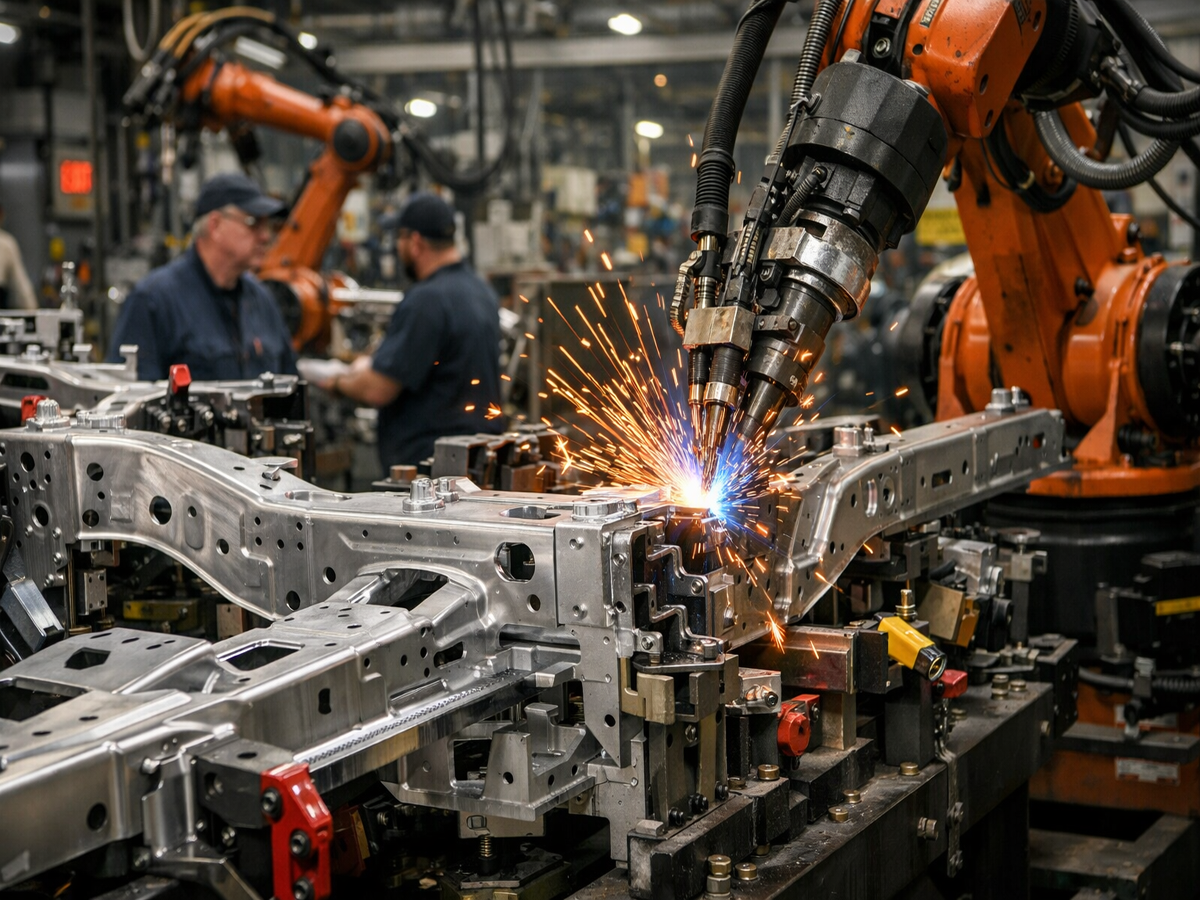
1. Integrated Bracket Mounting Fastener Systems
The foundation of an automotive cooling module assembly is the integrated bracket structure, which consolidates multiple heat exchange components into a single rigid module.
To ensure high structural integrity, manufacturers typically rely on:
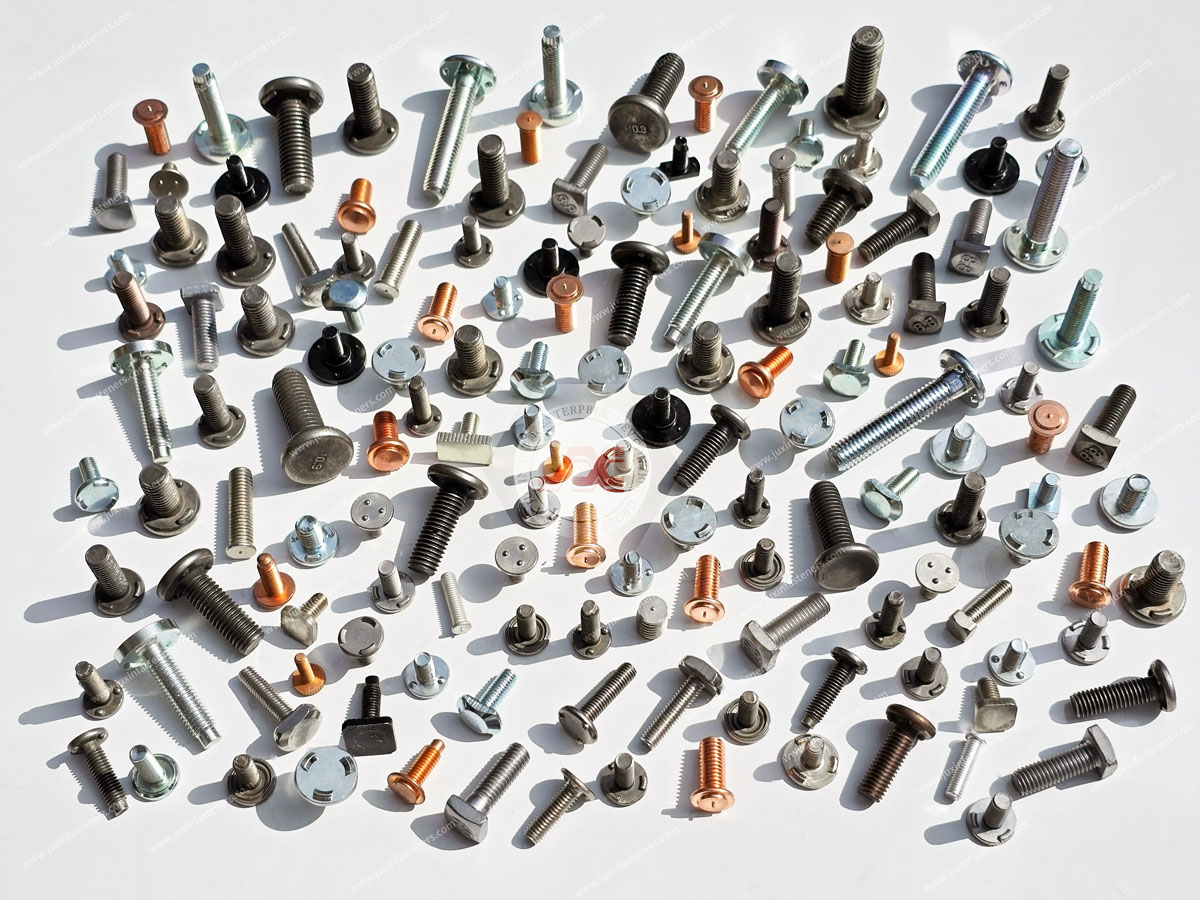
Weld studs (M6, M8, M10, M12) for permanent frame attachment
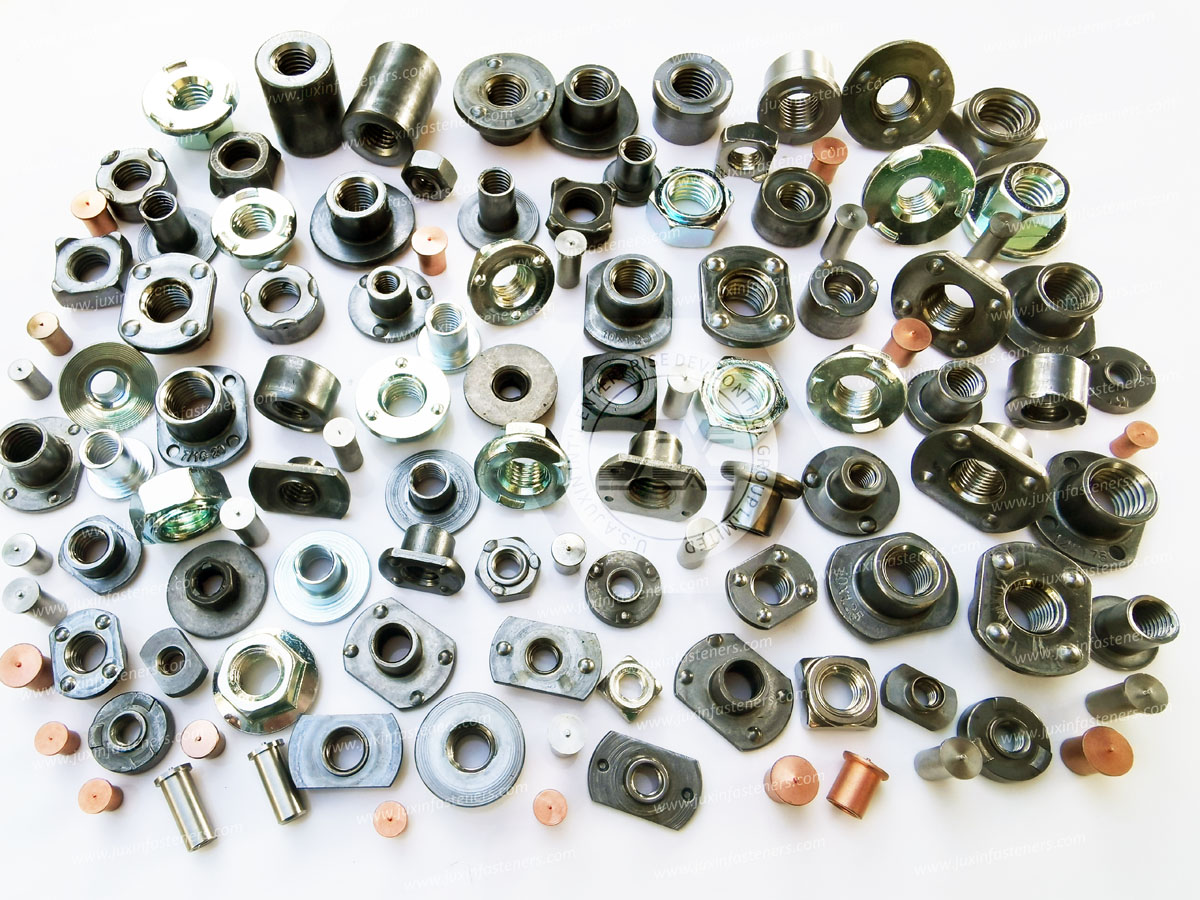
Weld nuts (hex or flange type) embedded into bracket structures for repeatable assembly
High-strength automotive bolts for crossbeam and front-end module fixation
Reinforced fastening points (typically 4–6 per module)
These integrated bracket fastening systems securely mount the cooling module to the vehicle’s front longitudinal beams while maintaining stiffness and load distribution throughout the assembly.
2. Vibration-Damping Mount Fastening Solutions
Engine compartments generate continuous high-frequency vibration from powertrains, road conditions, and aerodynamic forces. Without proper isolation, this can lead to fatigue failure in cooling lines or structural loosening.
Key fastening technologies include:
Rubber-bushed bolts and vibration-isolation fasteners
Pre-tuned elastomer damping mounts integrated with fastening points
Hydraulic damping systems used in advanced OEM platforms
Anti-loosening fasteners with controlled preload retention
These solutions ensure that the fastening system not only holds the cooling module in place but also actively reduces vibration transmission into the bracket and fluid lines.
3. Positioning, Alignment, and Anti-Displacement Fasteners
Precise assembly positioning is critical for ensuring airflow efficiency and preventing interference between components.
Typical engineering solutions include:
Alignment pins combined with precision weld nut positioning points
Snap-fit or guide structures integrated into the bracket system
Self-centering fastening interfaces for rapid assembly
Controlled clearance design for hoses and electrical harnesses
In this stage, automotive weld nuts and positioning fasteners play a key role in ensuring repeatable assembly accuracy and eliminating lateral or vertical misalignment before torque tightening.
4. Fluid Line and Harness Retention Fastening Systems
Cooling modules are closely integrated with fluid hoses, electrical connectors, and quick-release coupling systems. Poor fastening design in this area can result in leakage, fatigue, or disconnection under vibration.
Recommended fastening solutions include:
Self-locking clamps and secondary retention fasteners
Anti-vibration hose brackets using weld studs or clip fasteners
Layered routing structures fixed by integrated weld nut points
Secure fastening of quick connectors using reinforced locking systems
These designs significantly reduce vibration-induced stress and ensure stable long-term operation of the cooling system.
5. Torque-Controlled Assembly with High-Strength Fasteners
Proper torque control is essential for ensuring the reliability of the entire cooling module fastening system.
Industry-standard requirements include:
Torque tightening using calibrated tools (typically 8–15 N·m depending on design)
Use of high-strength automotive bolts and anti-loosening fasteners
Cross-pattern tightening sequence to prevent structural deformation
Controlled preload management for weld nut and bracket interfaces
Over-tightening may deform the radiator or bracket structure, while under-tightening increases the risk of vibration loosening and abnormal noise.
6. Engineering Considerations for Lifecycle Performance
An automotive cooling module fastening system must be designed as part of a complete vehicle integration strategy, considering:
Front-end aerodynamic load distribution
Thermal expansion compensation
Serviceability and maintenance access
Long-term vibration fatigue resistance
During maintenance or modification, engineers should disconnect fluid and electrical interfaces before loosening fasteners in a diagonal sequence to avoid deformation.
For upgraded platforms such as electric drivetrains or high-power cooling systems, reinforced weld stud layouts and high-strength fastening reinforcements may be required to accommodate increased dynamic loads.
Conclusion
A reliable automotive cooling module fastening solution is not just a collection of bolts and brackets—it is a fully engineered system that combines integrated bracket fastening, vibration-damping mounts, precise alignment structures, and anti-loosening fastener technologies.
By using advanced components such as weld studs, weld nuts, and high-strength automotive fasteners, manufacturers can significantly improve system durability, reduce maintenance risks, and ensure stable thermal performance under extreme operating conditions.
 MORE NEWS
Sep. 27, 2026
Sep. 27, 2026
Sep. 27, 2026
Contact Us
Tel.:
+86 020 8621 0320
+86 020 3121 6067
E-mail:
Technical Support:
Navigation
SEND INQUIREY