
Call Us
+86 136 6007 9809
Call Us
+86 136 6007 9809

Mar. 29, 2026
The Ultimate Guide to Blind Rivet Nuts
Types, Materials, Installation & Industrial Applications
Blind rivet nuts, also known as threaded inserts or nutserts, are among the most versatile fastening solutions in modern manufacturing. They provide strong internal threads in thin-sheet materials where traditional tapping or welding is impractical.
These fasteners are widely used across industries such as automotive manufacturing, electric-vehicle battery systems, industrial machinery, electronic enclosures, and aerospace structures.
This comprehensive guide explains everything engineers and manufacturers need to know about blind rivet nuts, including types, materials, installation methods, and industry applications.
1. What Are Blind Rivet Nuts?
Blind rivet nuts are internally threaded fasteners designed to be installed into thin materials from one side of the workpiece.
Unlike traditional nuts and bolts that require access to both sides of a component, blind rivet nuts allow manufacturers to create durable threaded connections even in closed sections or hollow structures.
After installation, the rivet nut forms a strong mechanical lock by expanding on the backside of the material.
Key Characteristics
One-side installation
Internal machine threads
Suitable for thin sheet materials
Strong pull-out and torque resistance
Compatible with automated assembly systems
Because of these advantages, blind rivet nuts are commonly used when:
Materials are too thin to tap threads
Welding would damage coatings or heat-sensitive materials
Access to the backside of the component is limited
2. How Blind Rivet Nuts Work
The installation process of a blind rivet nut is relatively simple but highly effective.
A specialized rivet nut tool pulls the threaded mandrel of the rivet nut while pushing against the flange. This action causes the unthreaded portion of the rivet nut body to collapse and expand against the backside of the parent material.
The result is a permanent threaded insert firmly secured inside the panel.
Basic Installation Steps
Drill a hole in the base material
Insert the blind rivet nut into the hole
Use a rivet nut tool to collapse the shank
The body expands and clamps onto the material
Remove the tool, leaving a ready-to-use threaded connection
This process is fast and repeatable, making blind rivet nuts ideal for high-volume industrial production.
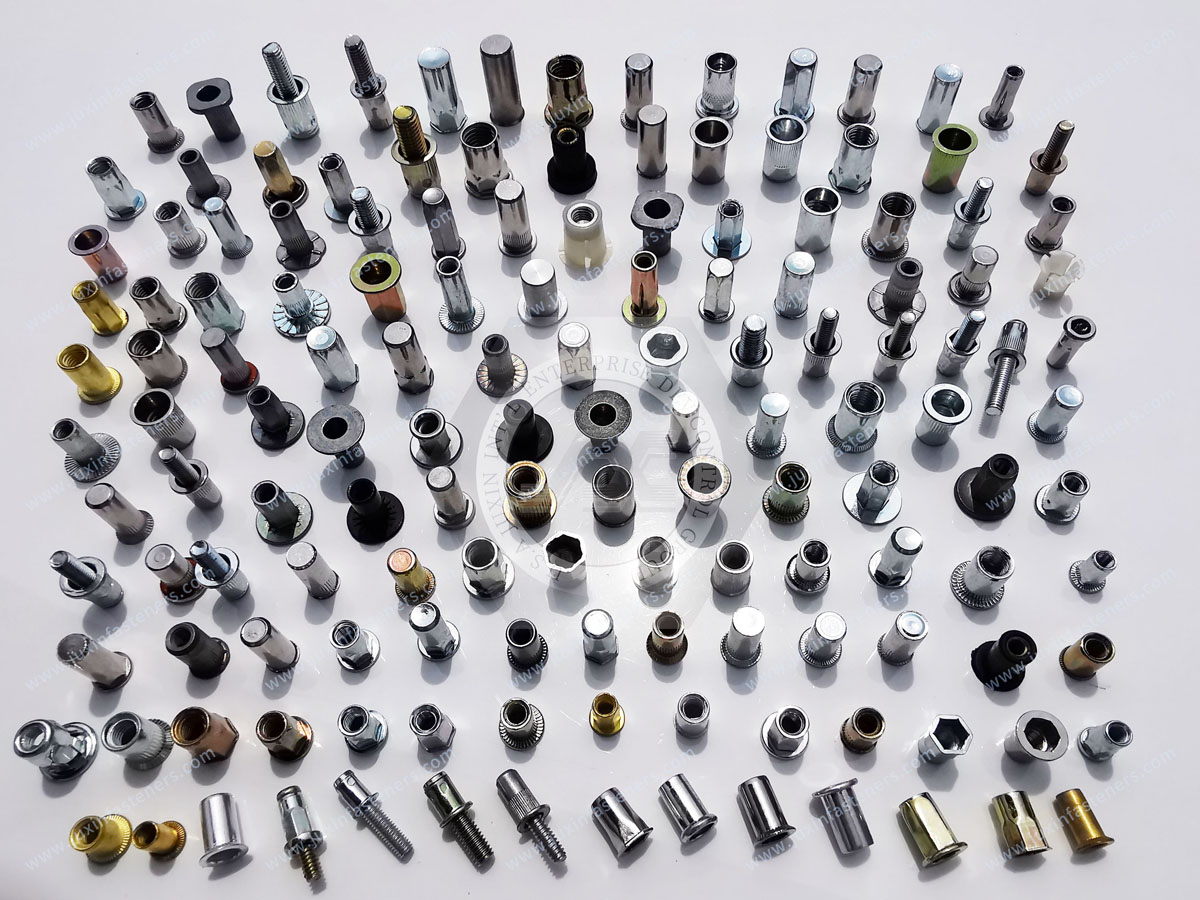
3. Common Types of Blind Rivet Nuts
Different applications require different rivet nut designs. The most commonly used types include:
Standard Round Body Rivet Nuts
Round body rivet nuts are the most widely used type. They are suitable for general-purpose applications in sheet metal assemblies.
They provide reliable threaded connections in materials such as:
Aluminum sheet
Mild steel
Stainless steel panels
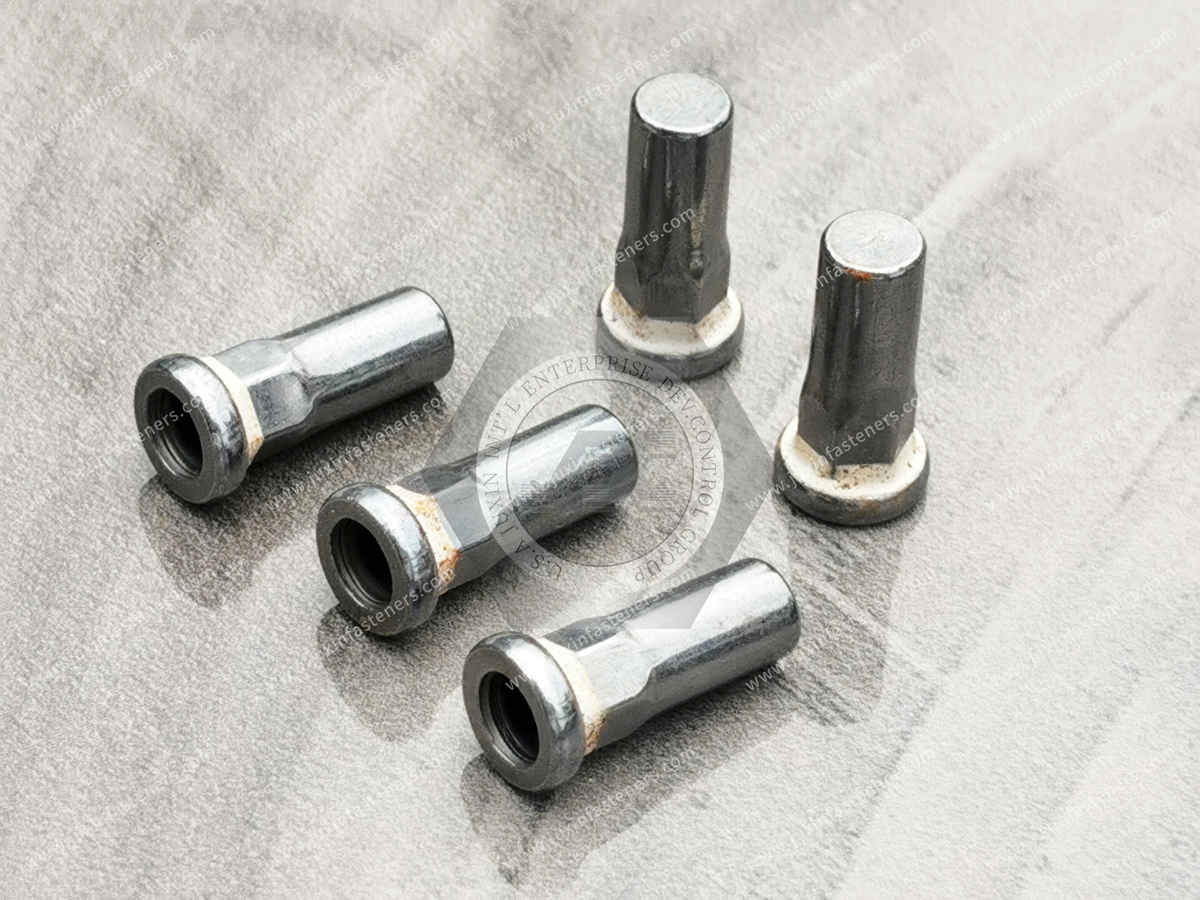
Hex Body Rivet Nuts
Hex body rivet nuts are designed to prevent rotation during installation and service.
They are commonly used in applications requiring high torque resistance, such as automotive structural assemblies.
Knurled Body Rivet Nuts
Knurled rivet nuts feature serrated or textured surfaces that improve grip in soft materials.
These are commonly used in:
Plastic housings
Composite materials
Lightweight structures
Slotted (Petal) Rivet Nuts
Slotted rivet nuts expand into multiple segments during installation, forming a large clamping area on the backside of the material.
These are ideal for:
Thin sheet metal
Plastic components
Hollow profiles
The expanded “petal” design significantly improves pull-out resistance.
Sealed Rivet Nuts
Sealed rivet nuts include a built-in sealing element that prevents fluids or air from passing through the fastening point.
These fasteners are commonly used in applications requiring environmental protection, such as:
Electric vehicle battery housings
Automotive electronics
Waterproof equipment enclosures
Sealed rivet nuts can help manufacturers achieve IP67 sealing performance in critical assemblies.
4. Rivet Nut Materials
Selecting the correct rivet nut material is essential for achieving optimal strength, durability, and corrosion resistance.
The most common materials include:
Carbon Steel Rivet Nuts
Carbon steel rivet nuts are widely used due to their high strength and cost efficiency.
They are typically finished with protective coatings such as:
Zinc plating
Zinc-nickel coating
Black oxide
These coatings improve corrosion resistance in industrial environments.
Aluminum Rivet Nuts
Aluminum rivet nuts are ideal for lightweight structures where minimizing weight is important.
Advantages include:
Low weight
Good corrosion resistance
Easy installation
They are commonly used in electronics, transportation equipment, and lightweight structures.
Stainless Steel Rivet Nuts
Stainless steel rivet nuts provide excellent corrosion resistance and durability in harsh environments.
Typical stainless grades include:
304 stainless steel
316 stainless steel
These are commonly used in industries such as:
Marine equipment
Food processing machinery
Automotive components
Outdoor equipment
5. Understanding Grip Range
Grip range refers to the thickness range of the base material that a rivet nut can securely clamp.
Selecting the correct grip range is critical to ensuring proper installation and long-term fastening performance.
Selection Guidelines
Measure the thickness of the parent material.
Select a rivet nut whose grip range covers that thickness.
If two options are available, the shorter grip version is often recommended for improved installation reliability.
Improper grip range selection can lead to:
Loose fasteners
Reduced pull-out strength
Installation defects
6. Installation Tools for Rivet Nuts
Blind rivet nuts can be installed using several types of tools depending on production volume.
Manual Rivet Nut Tools
Hand-operated tools are suitable for low-volume production and maintenance work.
Advantages include:
Low cost
Portable operation
Simple setup
Pneumatic Rivet Nut Tools
Pneumatic tools are commonly used in industrial production lines.
They offer:
Faster installation speed
Consistent installation force
Improved productivity
Battery-Powered Rivet Nut Tools
Modern cordless rivet nut tools provide the flexibility of portable operation with a strong installation force.
They are ideal for assembly lines and field installations.
7. Industrial Applications of Blind Rivet Nuts
Blind rivet nuts are used in a wide range of industries due to their flexibility and strength.
Automotive Industry
In automotive manufacturing, rivet nuts are used for:
Interior panels
Structural brackets
Body panels
Seat mounting systems
They provide reliable threaded connections in thin automotive sheet metal.
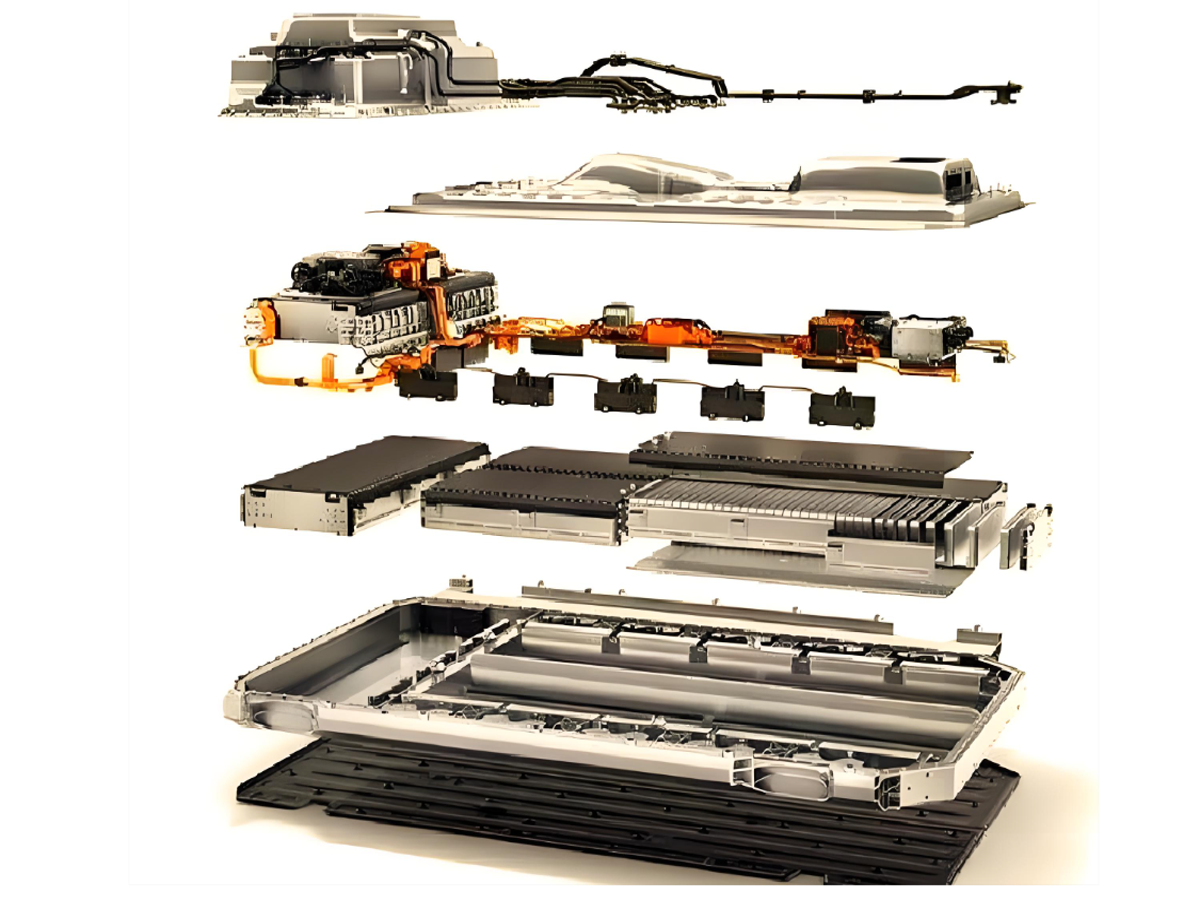
Electric Vehicle Battery Systems
In electric vehicles, rivet nuts are widely used in:
Battery pack housings
Battery module frames
Cooling plate assemblies
Structural mounting points
These components often use thin aluminum battery enclosures, making rivet nuts an ideal fastening solution.
Sealed rivet nuts are frequently used to help achieve high environmental protection levels required for battery safety.
Electrical Equipment Manufacturing
Electrical equipment manufacturers use rivet nuts to create durable threaded connections in:
Control cabinets
Electrical enclosures
Industrial panels
They allow for easy installation of components such as switches, brackets, and mounting plates.
Aerospace and Transportation
In aerospace and rail transportation systems, rivet nuts provide strong fastening points in lightweight structural materials.
Their ability to install from one side makes them ideal for closed structures and tubular assemblies.
8. Advantages of Using Blind Rivet Nuts
Blind rivet nuts offer several important advantages over traditional fastening methods.
Fast Installation
Installation is quick and requires minimal preparation.
One-Side Access
They can be installed when only one side of the workpiece is accessible.
Strong Threaded Connections
They provide reliable machine threads even in thin materials.
Compatibility with Automated Production
Rivet nuts can be installed using automated equipment in high-volume production environments.
9. Choosing the Right Rivet Nut for Your Application
When selecting a rivet nut, engineers should consider several factors:
Material of the base component
Required load strength
Corrosion resistance
Environmental exposure
Grip range compatibility
Installation method
Working with an experienced fastening supplier ensures the correct rivet nut design is selected for each application.
10. Reliable Rivet Nut Solutions from Juxin Fasteners
With over 20+ years of experience in industrial fastening technology, Juxin Fasteners provides high-quality solutions for global manufacturers.
Our product range includes:
Blind rivet nuts
Hex rivet nuts
Knurled rivet nuts
Sealed rivet nuts
Structural rivet nuts
These fastening solutions are widely used in industries such as automotive manufacturing, electric vehicles, electrical equipment, and industrial machinery.
By combining advanced manufacturing processes with strict quality control, we deliver fastening solutions that meet the demanding standards of modern engineering.
 MORE NEWS
Contact Us
Tel.:
+86 020 8621 0320
+86 020 3121 6067
E-mail:
Technical Support:
Navigation
SEND INQUIREY