
Call Us
+86 136 6007 9809
Call Us
+86 136 6007 9809

Mar. 29, 2026
Selecting the correct threaded fastening method is essential for achieving reliable assembly performance, production efficiency, and long-term product durability.
In modern manufacturing, engineers often need to choose between three common fastening technologies:
Blind Rivet Nuts (Threaded Inserts / Nutserts)
Weld Nuts
Thread Inserts
Although all three solutions provide internal threaded connections, their designs, installation methods, strength performance, and application advantages are different.
The correct choice depends on:
Base material type
Sheet thickness
Required load strength
Production process
Installation accessibility
Environmental requirements
This guide provides a complete comparison of blind rivet nuts vs weld nuts vs thread inserts to help engineers and purchasing teams select the most suitable fastening solution.
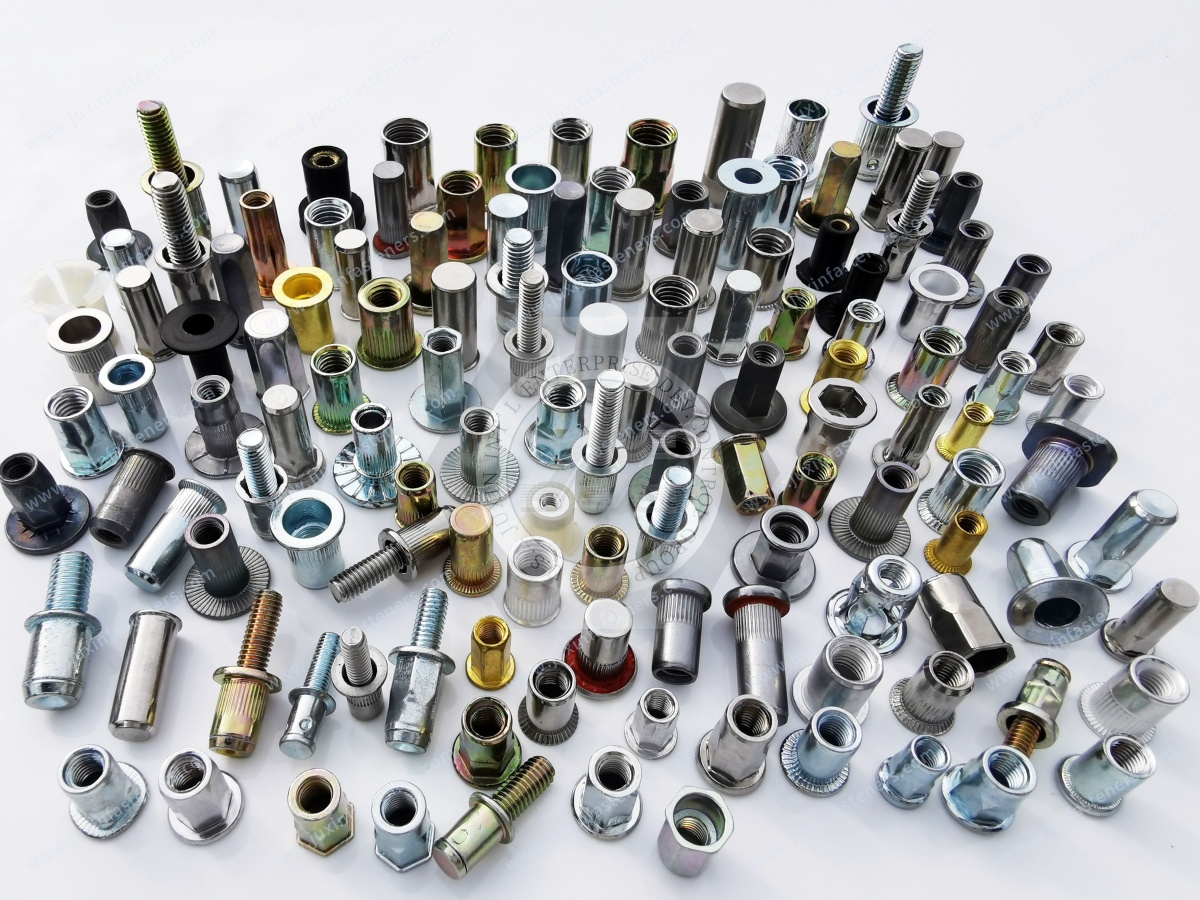
As an experienced OEM fastener manufacturer, Juxin Fasteners provides customized fastening solutions including blind rivet nuts, weld nuts, weld studs, thread insert nuts, and special fasteners for global industrial applications.
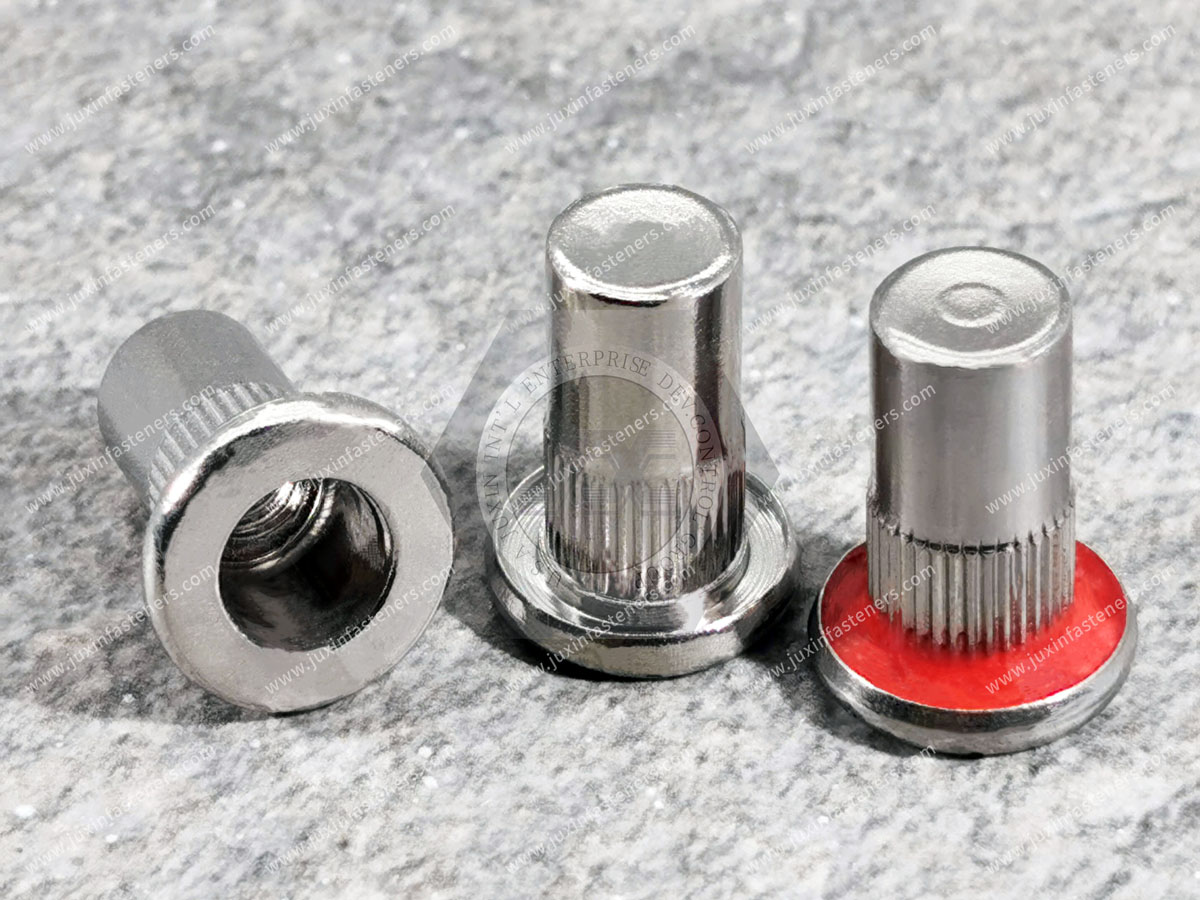
Blind rivet nuts, also known as threaded inserts, rivet nuts, or nutserts, are internally threaded fasteners designed to create strong screw threads in thin materials where traditional tapping or welding is not practical.
Unlike conventional nuts that require access to both sides of the component, blind rivet nuts can be installed from only one side.
During installation, the rivet nut body expands behind the panel, creating a strong mechanical locking connection.
Blind rivet nuts are ideal for applications where the backside of the assembly is inaccessible.
Examples:
Closed profiles
Tubular structures
Automotive body panels
Equipment enclosures
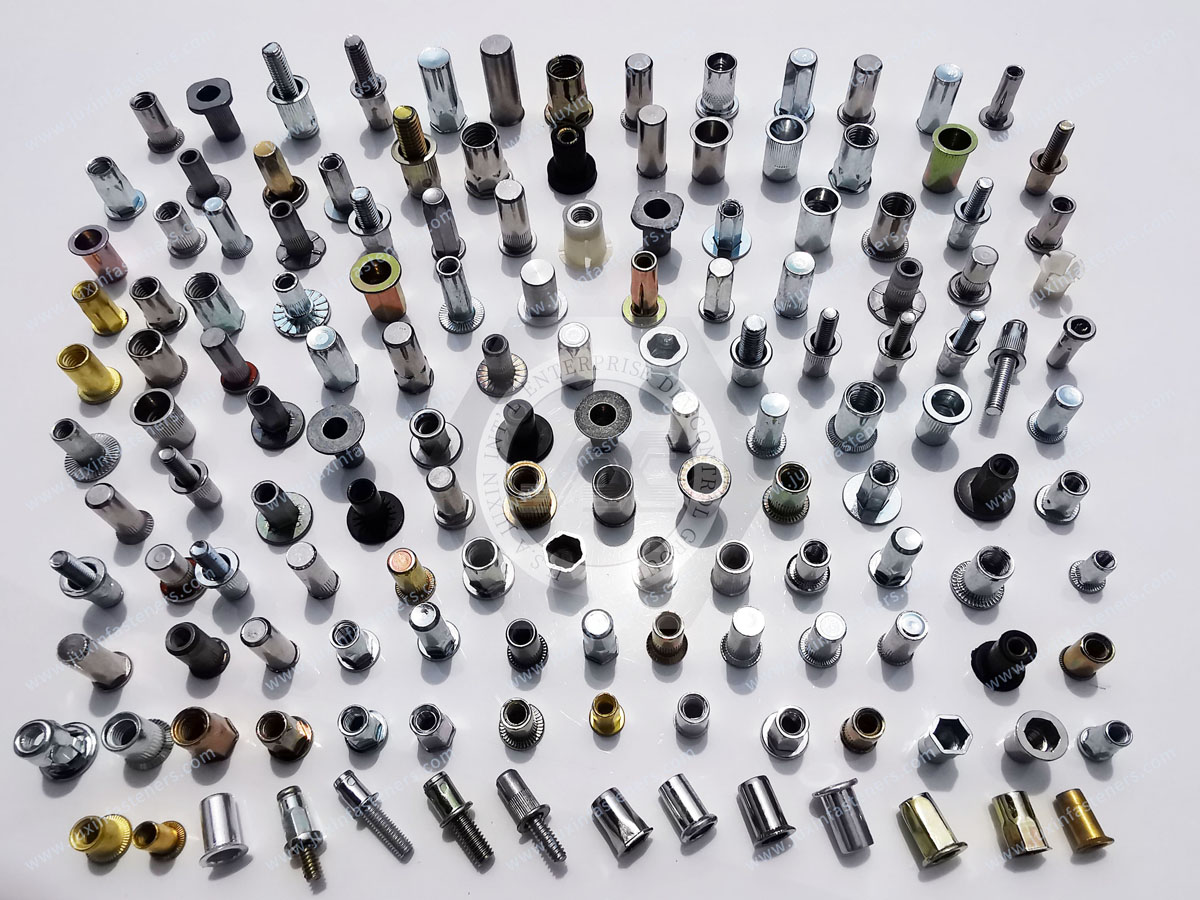
Blind rivet nuts allow manufacturers to create reliable internal threads in:
Aluminum sheets
Mild steel panels
Stainless steel structures
Composite materials
Advantages include:
No welding required
No heat distortion
Fast installation cycle
Suitable for production automation
Blind rivet nuts are widely used in:
Applications:
Body panels
Interior components
Structural brackets
Mounting systems
Applications:
Battery housings
Battery module frames
Cooling system assemblies
Electrical mounting points
Sealed blind rivet nuts are often selected for EV battery enclosures where moisture protection and environmental sealing are required.
Applications:
Control cabinets
Electrical enclosures
Industrial panels
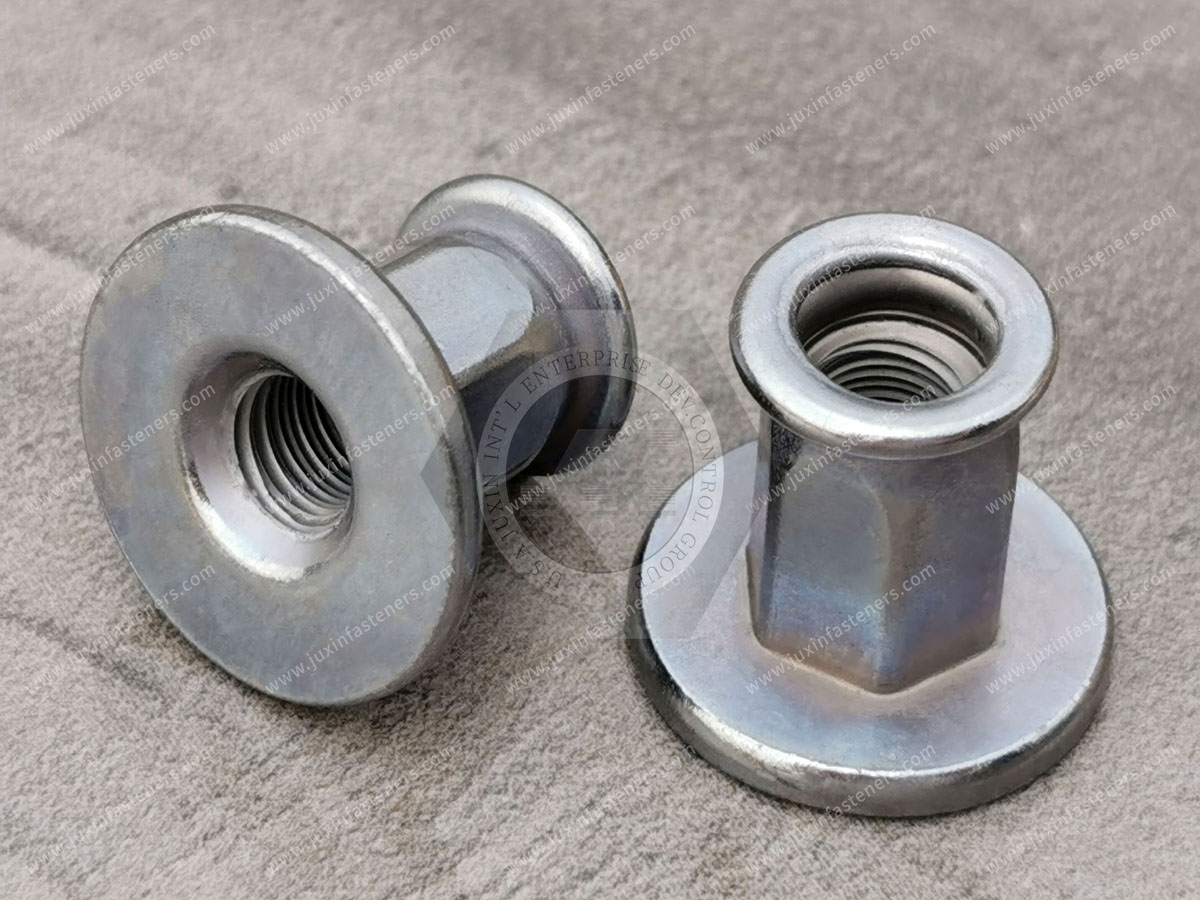
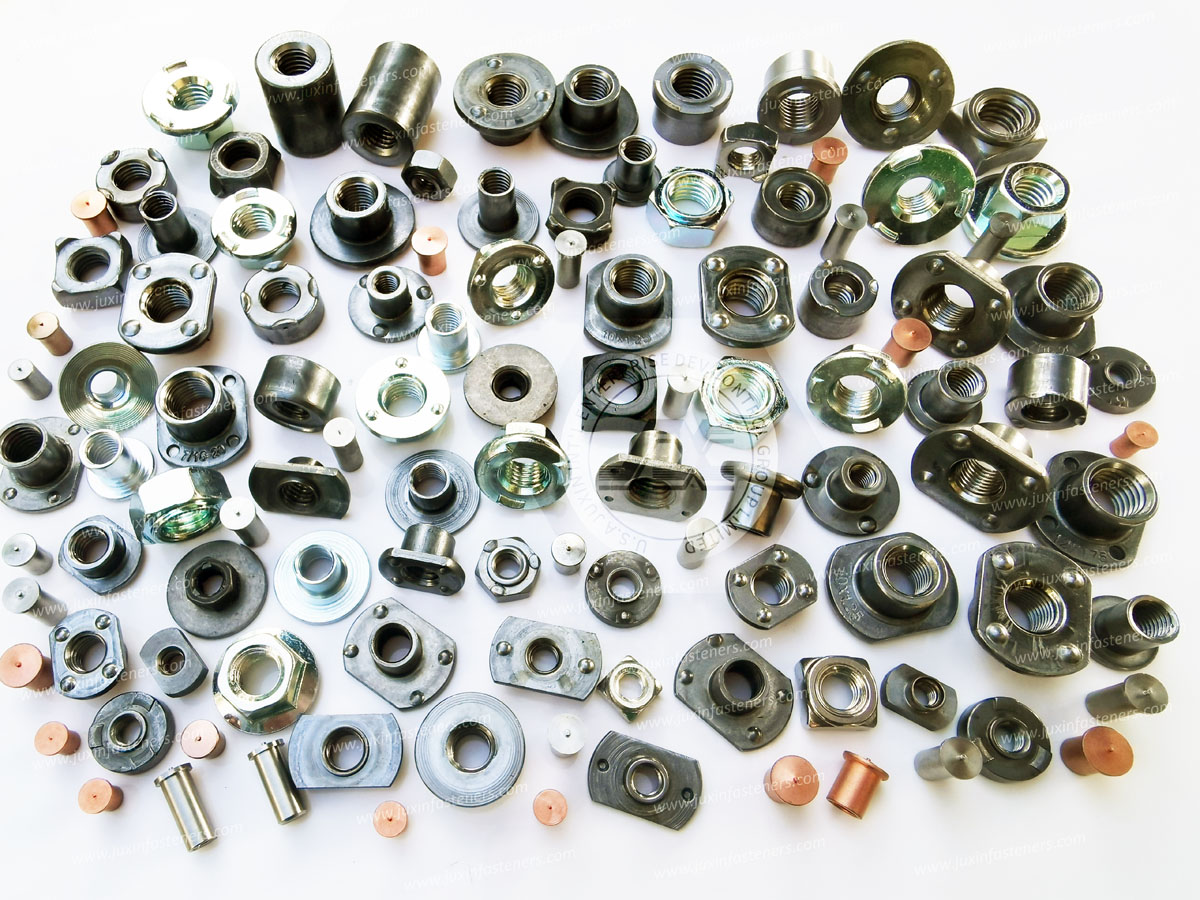
Weld nuts are threaded fasteners permanently attached to a metal surface through welding processes.
They are commonly used when maximum structural strength and high torque resistance are required.
Typical welding methods include:
Projection welding
Resistance welding
Because the weld nut becomes part of the base structure, it provides excellent:
Load capacity
Torque resistance
Structural reliability
Common applications include:
Automotive chassis structures
Heavy machinery frames
Structural assemblies
Metal fabrication equipment
Although weld nuts provide excellent strength, engineers should consider:
Welding requires:
Welding equipment
Skilled operators
Additional production processes
Welding may cause:
Heat distortion
Coating damage
Surface discoloration
For coated materials or lightweight aluminum structures, alternative fastening solutions may be preferred.
Thread inserts are designed to create stronger internal threads in materials that cannot withstand direct tapping.
They reinforce threaded holes and improve assembly durability.
Common installation methods include:
Press-fit installation
Screw-in installation
Heat installation for plastic components
Thread inserts are widely used in:
Plastics
Aluminum alloys
Magnesium alloys
Composite materials
Thread inserts prevent:
Thread stripping
Wear damage
Repeated assembly failures
They are ideal for products requiring frequent maintenance and replacement.
Thread inserts are commonly used in:
Electronics housings
Plastic components
Medical equipment
Aerospace assemblies
Lightweight mechanical products
Installation method is one of the most important differences between these fastening solutions.
Installation requires a rivet nut tool that pulls the threaded mandrel and expands the rivet nut body behind the material.
Advantages:
One-side installation
No welding required
Fast assembly
Suitable for automated production
Weld nuts are attached through welding operations.
Advantages:
Permanent attachment
High structural strength
However, welding introduces:
Additional processing steps
Heat impact
Equipment requirements
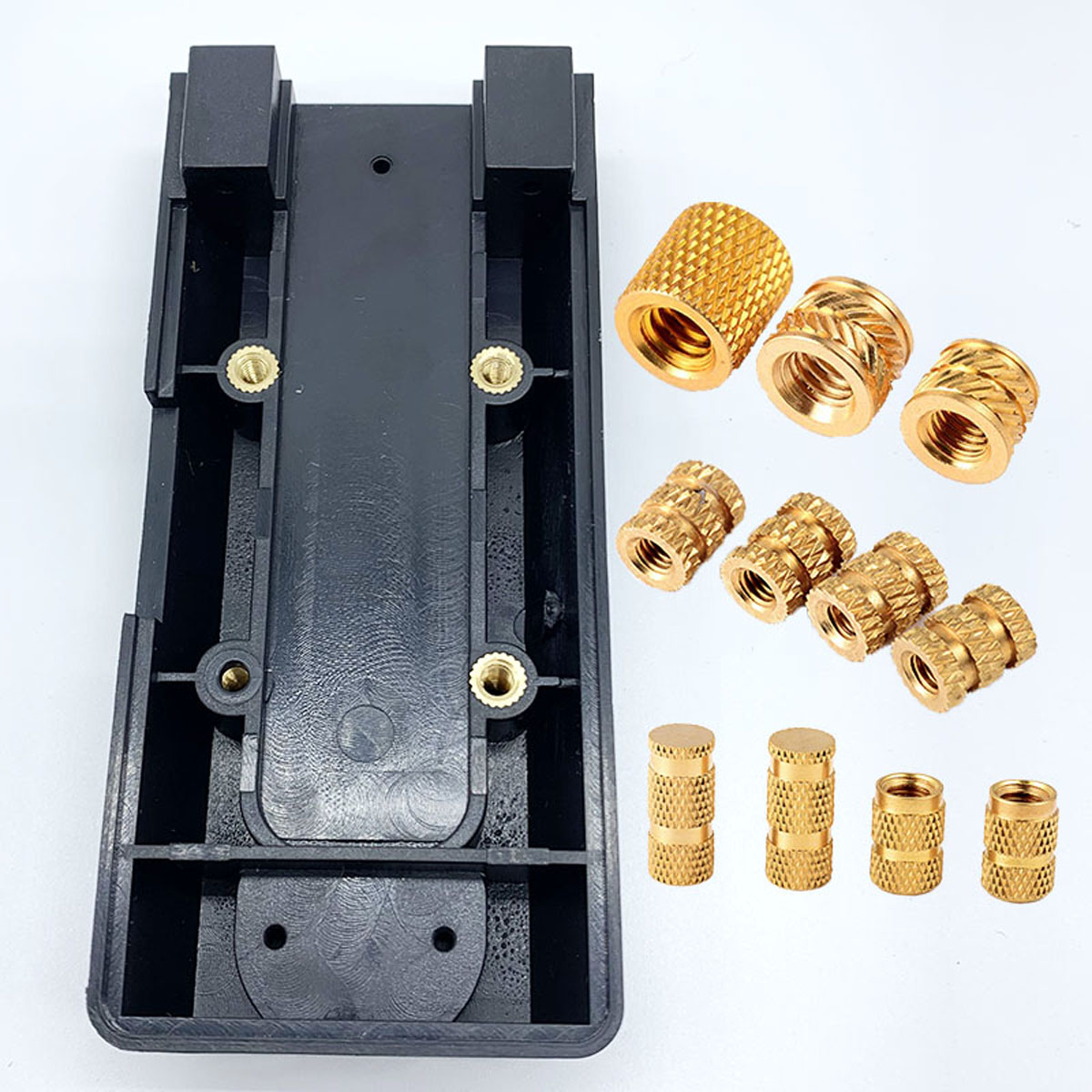
Thread inserts are installed according to the material and design:
Methods include:
Press fitting
Threading
Heat installation
The correct method depends on the application material.
Different fastening technologies provide different performance advantages.
| Fastener Type | Strength Performance | Main Advantage |
|---|---|---|
| Blind Rivet Nuts | Medium to High | Strong threads in thin materials |
| Weld Nuts | Very High | Maximum structural strength |
| Thread Inserts | Medium | Reinforced threads in soft materials |
Blind rivet nuts provide:
Reliable pull-out resistance
Good torque performance
Stable threaded connections
They are ideal for lightweight structures and sheet metal applications.
Weld nuts provide the highest strength because they are permanently bonded to the parent material.
They are preferred for:
Heavy loads
Structural assemblies
High-stress environments
Thread inserts focus on improving thread durability rather than structural attachment.
They are ideal when:
Base materials are soft
Threads require reinforcement
Components need repeated assembly
Production efficiency directly affects manufacturing cost.
Advantages:
Fast installation
No welding process
Lower equipment requirements
Suitable for high-volume assembly
Advantages:
Excellent strength
Challenges:
Additional welding process
Higher production complexity
Potential coating issues
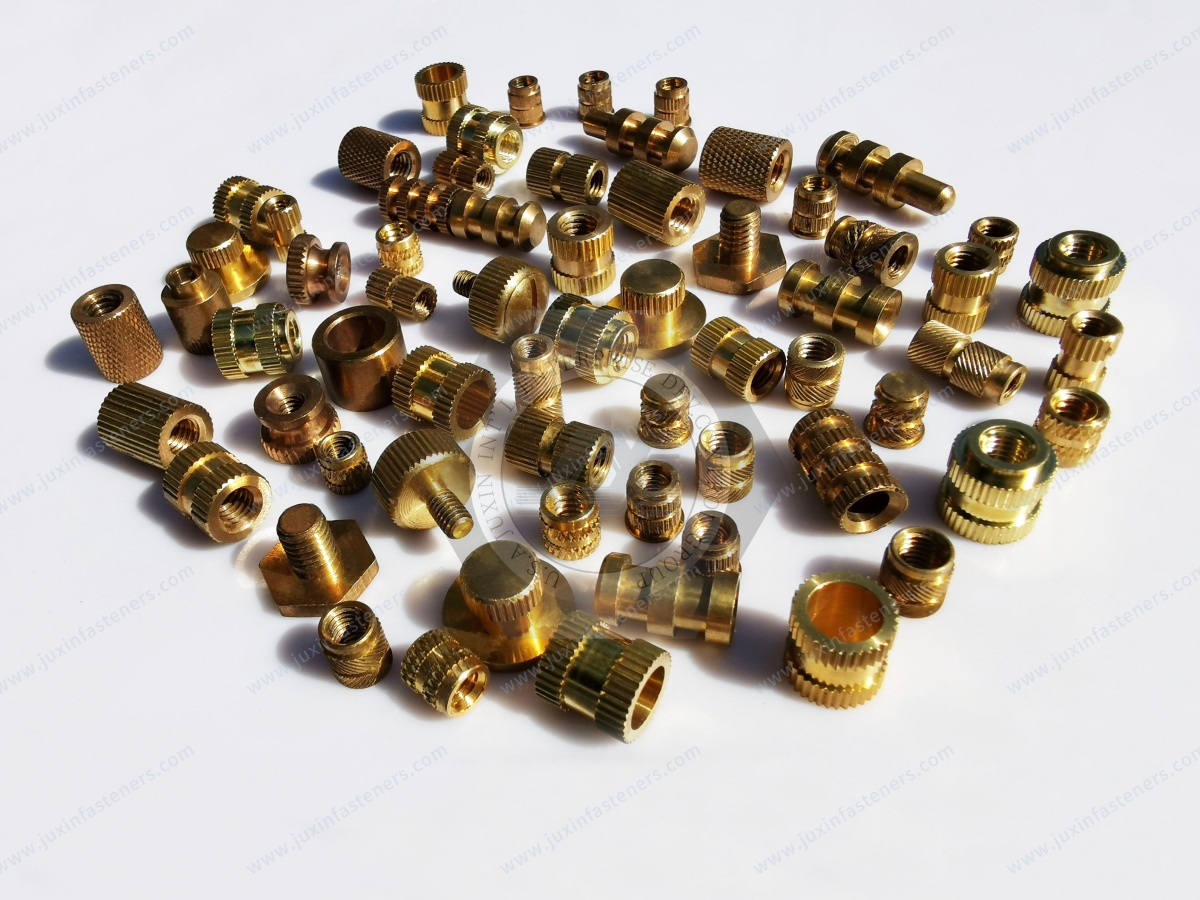
Advantages:
Excellent for precision assemblies
Suitable for lightweight materials
Applications:
Electronics
Plastic components
Precision equipment
Electric vehicle battery systems present unique fastening challenges.
Battery housings typically use:
Thin aluminum materials
Lightweight structures
Sealed environments
Traditional welding may create:
Heat distortion
Surface damage
Manufacturing limitations
Blind rivet nuts provide an ideal solution because they allow manufacturers to:
Create strong threaded connections
Avoid welding heat
Maintain lightweight designs
Support modular assembly
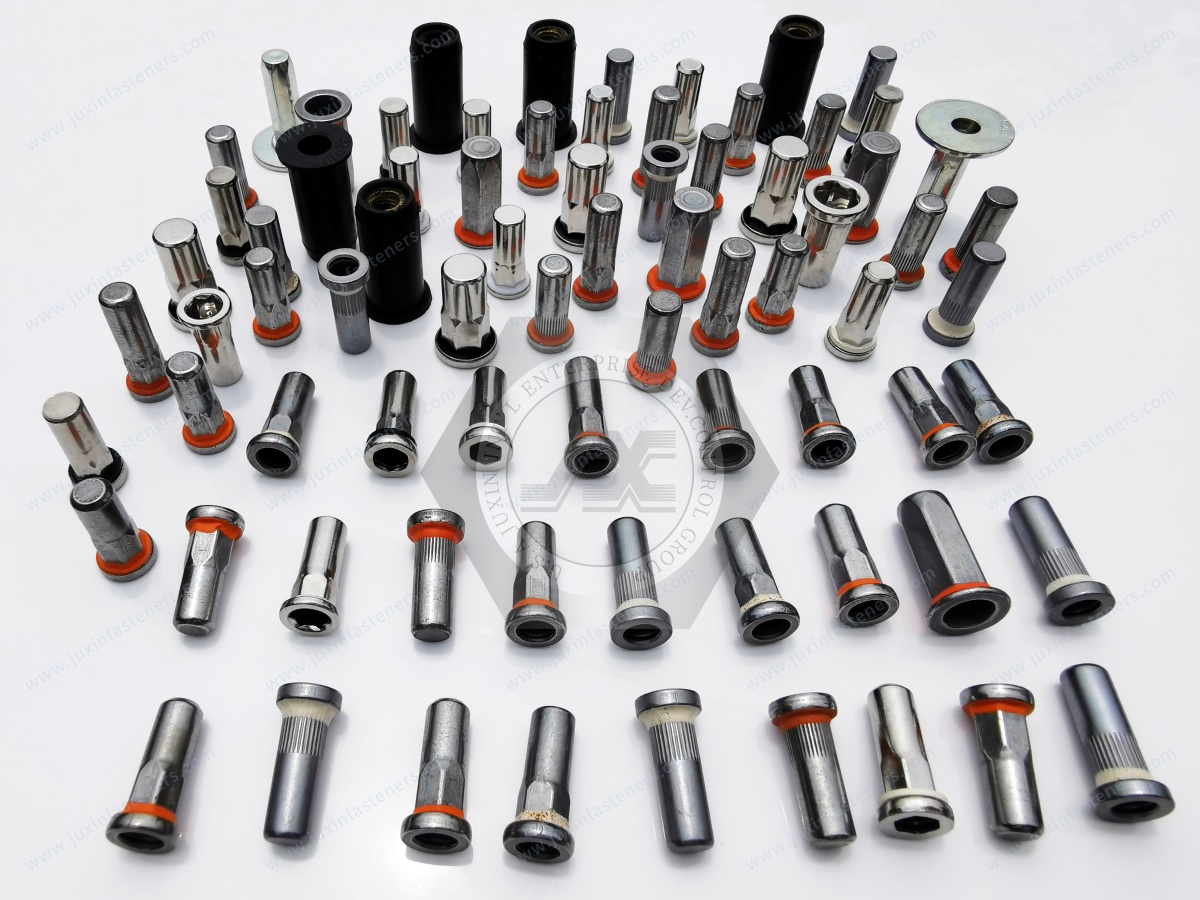
For EV battery pack applications, sealed rivet nuts help improve:
Moisture resistance
Environmental protection
Long-term reliability
They are widely used in:
Battery housings
Electrical systems
Cooling modules
| Feature | Blind Rivet Nuts | Weld Nuts | Thread Inserts |
|---|---|---|---|
| Installation | Mechanical expansion | Welding | Press/Screw/Heat |
| Access Requirement | One side | Usually two sides | Depends on design |
| Best Material | Thin sheet metal | Steel structures | Plastic & soft metals |
| Strength Level | Medium-High | Very High | Medium |
| Heat Impact | None | Possible | None |
| Production Speed | Fast | Medium | Fast |
| Best Applications | EV, sheet metal, cabinets | Automotive structures, machinery | Electronics, plastics |
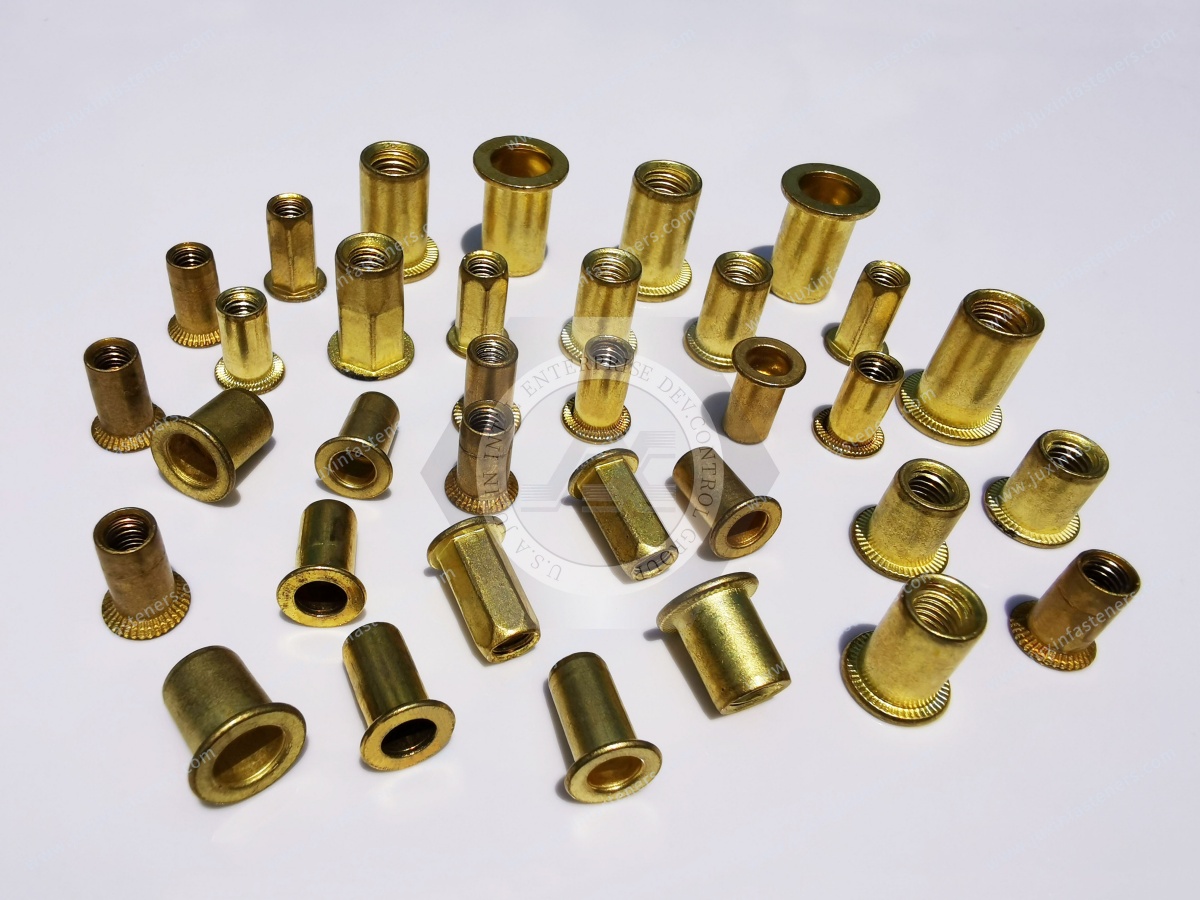
Engineers should evaluate the following factors:
Consider:
Steel
Aluminum
Stainless steel
Plastic
Composite materials
Evaluate:
Tensile strength
Torque requirements
Vibration resistance
Fatigue performance
Consider:
Welding availability
Assembly speed
Automation requirements
If only one side is accessible:
→ Blind rivet nuts are usually the preferred choice.
Consider:
Corrosion resistance
Moisture exposure
Temperature conditions
With extensive experience in industrial fastening technology, Juxin Fasteners provides reliable OEM fastening solutions for global manufacturers.
Our product range includes:
Blind rivet nuts
Hex rivet nuts
Sealed rivet nuts
Weld nuts
Weld studs
Thread insert nuts
Custom fastening components
Our manufacturing capabilities include:
Cold forming
CNC machining
Thread processing
Surface treatment
OEM customization
Quality inspection
Our fastening solutions are widely used in:
Automotive / EV / Battery Pack / Rail Transit / Aerospace / Electrical Cabinets / HVAC / Medical Equipment / Construction / Machinery / Robotics / Sheet Metal Fabrication
Whether your application requires lightweight sheet metal fastening, high-strength structural connections, or reinforced threaded solutions, Juxin Fasteners provides engineering support to optimize performance, cost, and reliability.
For technical consultation, drawings review, OEM quotation, or customized fastening solutions:
Email: info@juxinfasteners.com
Juxin Fasteners — Your Reliable OEM Partner for Industrial Fastening Solutions Worldwide
 MORE NEWS
Sep. 27, 2026
Sep. 27, 2026
Sep. 27, 2026
Contact Us
Tel.:
+86 020 8621 0320
+86 020 3121 6067
E-mail:
Technical Support:
Navigation
SEND INQUIREY