
Call Us
+86 136 6007 9809
Call Us
+86 136 6007 9809

Feb. 06, 2024
Riveting is one of the oldest and most reliable mechanical fastening technologies used in industrial manufacturing. It creates a permanent connection between two or more components by deforming a rivet body and forming a strong mechanical joint.
Today, riveting solutions are widely used in industries including aerospace, automotive, railway, shipbuilding, construction equipment, electrical cabinets, HVAC systems, containers, and sheet metal manufacturing.
Compared with welding and threaded fastening methods, riveting provides excellent advantages including high connection strength, vibration resistance, lightweight assembly, and suitability for thin metal materials.
At Juxin Fasteners, we provide professional OEM rivet solutions, blind rivets, and customized fastening components for global manufacturers requiring reliable and efficient joining technologies.
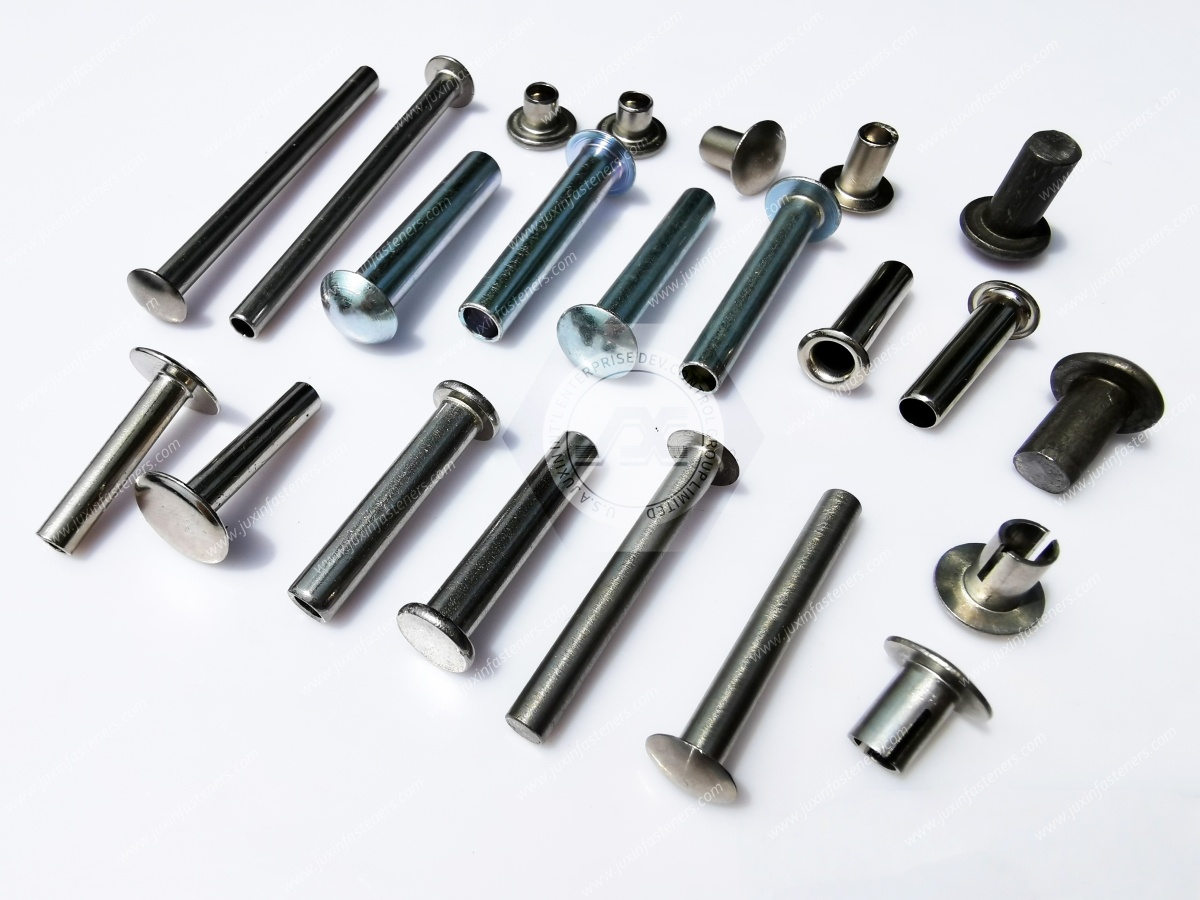
Riveting is a mechanical fastening process where a rivet is inserted through aligned holes of multiple components and then deformed to create a permanent connection.
A riveted joint normally consists of:
Rivet body
Connected materials
Rivet head or formed locking area
During the riveting process, the rivet expands and fills the installation hole, generating clamping force between connected parts.
Riveting is especially suitable for applications where:
Welding is difficult or unsuitable
Components require permanent assembly
Thin sheet materials need joining
High vibration resistance is required
Access is limited to one side of the assembly
Different industries require different riveting methods depending on strength, sealing, fatigue resistance, and manufacturing requirements.
Ordinary riveting is the most traditional and widely used riveting method.
Characteristics:
Simple manufacturing process
Stable connection performance
Reliable mechanical strength
Suitable for large-scale production
Common applications include:
Industrial machinery
Vehicle structures
Sheet metal assemblies
Equipment frames
General mechanical components
Common rivet types include:
Round head rivets
Flat head rivets
Countersunk rivets
Juxin Fasteners supplies various industrial rivets designed for reliable permanent fastening applications.
Sealed riveting is designed for applications requiring protection against leakage.
The main purpose is to eliminate gaps between connected components and prevent fluid or gas penetration.
Typical applications:
Fuel tanks
Pressure equipment
Waterproof structures
Sealed industrial assemblies
Benefits:
Improved sealing performance
Reduced leakage risk
Enhanced environmental protection
Special riveting methods are developed for applications requiring unique mechanical performance.
Features:
High connection strength
Adaptable to special structures
Designed for demanding environments
Applications include:
Aerospace components
Heavy equipment
Special machinery
Repair applications
Juxin Fasteners supports customized rivet designs according to customer drawings and engineering requirements.
Interference riveting improves fatigue resistance by creating controlled interference between the rivet and the installation hole.
Advantages:
Improved fatigue life
Enhanced structural strength
Better sealing performance
Common applications:
Aerospace structures
High-load components
Transportation equipment
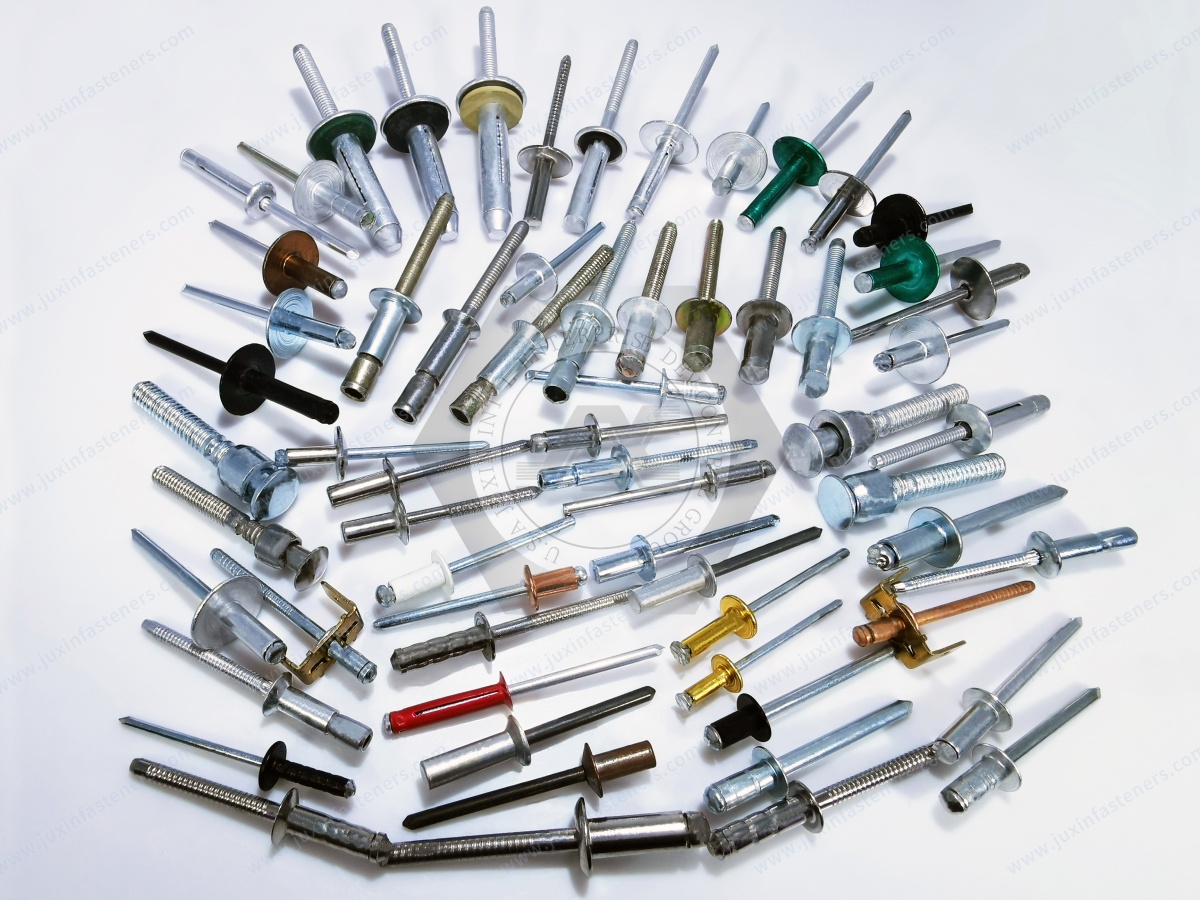
Blind riveting is one of the most widely used modern riveting methods.
Unlike traditional riveting, blind rivets can be installed from only one side of the assembly.
Advantages:
✔ Fast installation
✔ Easy operation
✔ Suitable for limited access areas
✔ High production efficiency
✔ Reduced assembly costs
Common blind rivet types include:
Open-end blind rivets
Closed-end blind rivets
Structural blind rivets
Multi-grip blind rivets
Double drum blind rivets
Pull mandrel rivets
Applications:
Automotive components
Electrical cabinets
HVAC equipment
Containers
Sheet metal products
Impact riveting uses impact force to deform the rivet and complete the connection.
Characteristics:
Suitable for complex structures
Flexible operation
Applicable for various rivet designs
Applications:
General industrial assemblies
Structural components
Repair operations
Positive riveting provides:
Better surface appearance
Reduced deformation
Improved external quality
Used for:
Visible panels
Countersunk rivet applications
Decorative structures
Reverse riveting provides:
Wide application range
Strong forming capability
Suitable for sealed structures
Commonly used in:
Coated structures
Closed assemblies
Industrial equipment
Pressure riveting is a highly efficient industrial riveting process.
Advantages:
Uniform rivet deformation
Stable quality
Excellent surface finish
High production efficiency
Applications:
Frames
Structural beams
Panels
Industrial equipment housings

Automatic riveting systems are commonly used in high-volume manufacturing.
Benefits:
High consistency
Excellent production efficiency
Improved working conditions
Reduced manual labor
Applications:
Aerospace manufacturing
Automotive production
Large industrial assemblies
Different environments require different rivet materials.
Juxin Fasteners provides:
Advantages:
Excellent corrosion resistance
High durability
Suitable for outdoor and marine environments
Common grades:
Stainless Steel 304
Stainless Steel 316
Advantages:
High strength
Good mechanical properties
Cost-effective solution
Applications:
Industrial equipment
Construction machinery
General manufacturing
Advantages:
Lightweight
Good corrosion resistance
Suitable for aluminum structures
Applications:
Automotive
Electrical equipment
Lightweight assemblies
Juxin Fasteners provides professional OEM fastening solutions for global industrial manufacturers.
Our capabilities include:
✔ OEM rivet manufacturing
✔ Custom blind rivets production
✔ Stainless steel rivet solutions
✔ Structural rivets for heavy-duty applications
✔ Custom dimensions according to drawings
✔ Engineering support for fastening design
We support industries including:
Automotive manufacturing
Aerospace equipment
Railway systems
Container production
Construction machinery
Sheet metal fabrication
Electrical and electronic equipment
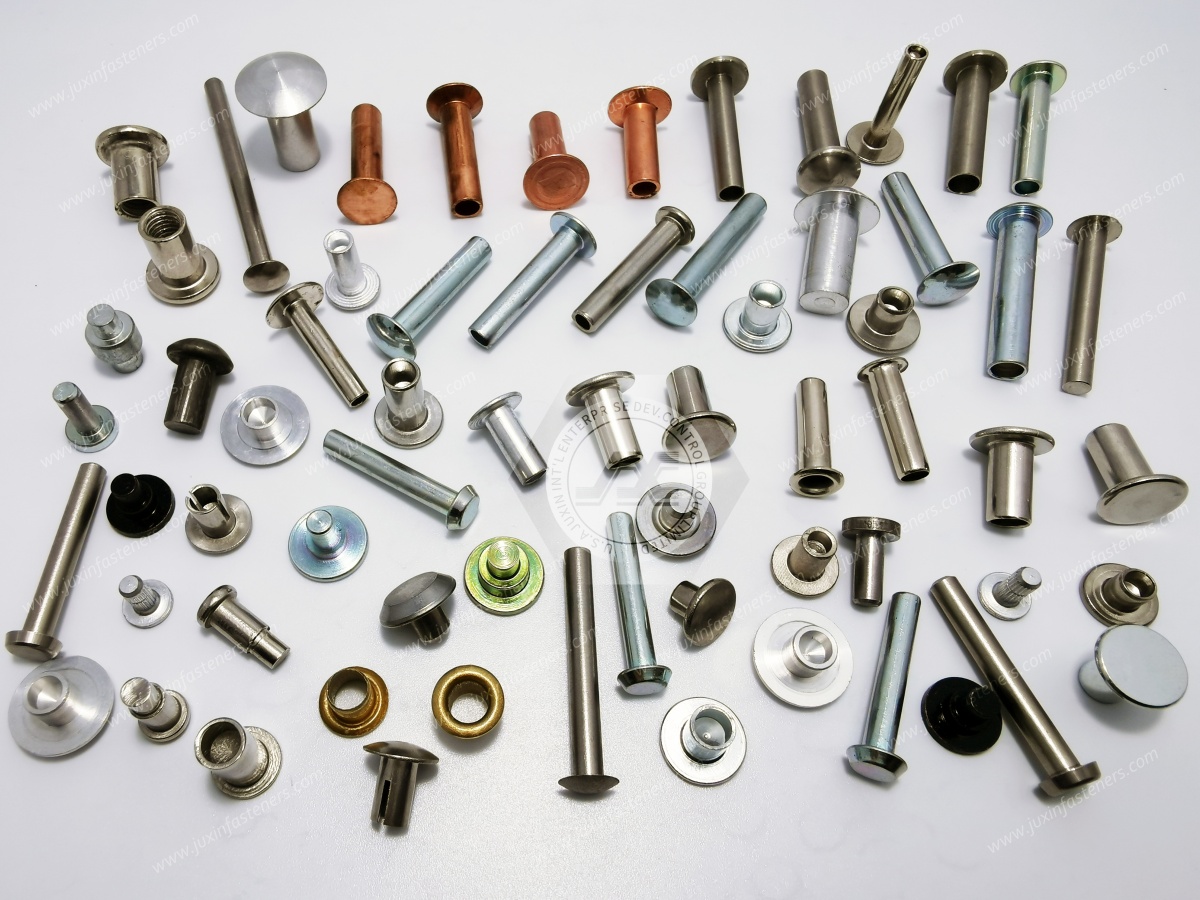
Selecting the correct riveting method is essential for improving product reliability, production efficiency, and long-term performance.
Whether you require stainless steel blind rivets, structural rivets, custom riveted joints, or industrial fastening solutions, Juxin Fasteners can provide professional OEM support.
Contact our engineering team for customized riveting solutions.
Email: info@juxinfasteners.com
Website: www.juxinfasteners.com
 MORE NEWS
Sep. 27, 2026
Sep. 27, 2026
Sep. 27, 2026
Contact Us
Tel.:
+86 020 8621 0320
+86 020 3121 6067
E-mail:
Technical Support:
Navigation
SEND INQUIREY