
Call Us
+86 136 6007 9809
Call Us
+86 136 6007 9809

May. 21, 2024
Fasteners are critical mechanical components used in almost every industrial application. The performance of bolts, screws, studs, and nuts depends not only on dimensional accuracy but also on thread quality, material properties, heat treatment, surface protection, and mechanical strength.
For industries such as automotive, EV battery systems, aerospace, rail transit, machinery, and construction, reliable fastener thread inspection and material control are essential to ensure safety, durability, and long-term performance.
JUXIN FASTENERS provides OEM fastening solutions including:
High strength bolts
Precision screws
Automotive fasteners
Threaded studs
Lock nuts
Weld fasteners
Custom machined fasteners
Our engineering team supports customers with drawing-based manufacturing, dimensional inspection, material control, and surface treatment solutions.
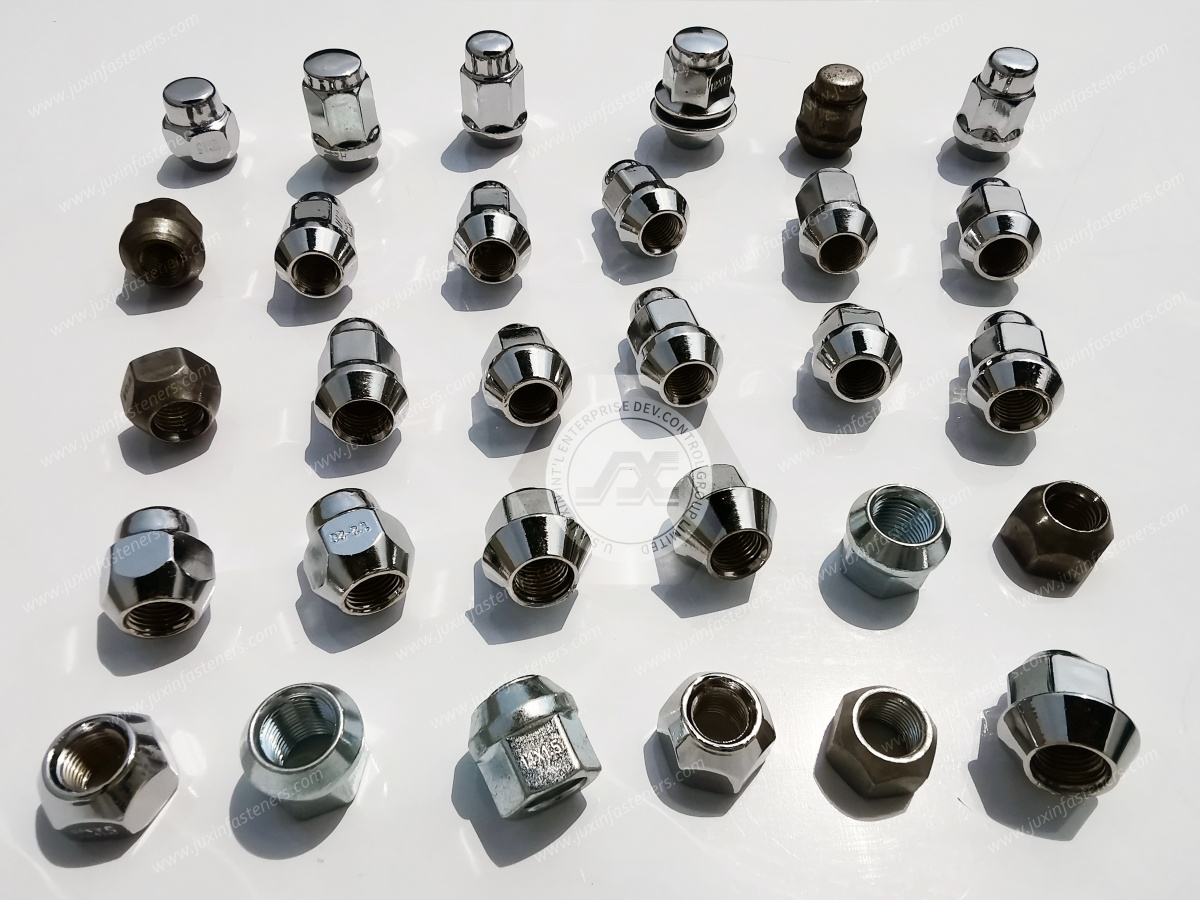
Threads determine the connection accuracy between bolts, screws, studs, and nuts.
A properly manufactured thread ensures:
Correct assembly fit
Stable preload force
Reliable load transmission
Resistance to loosening
Long service life
Incorrect thread dimensions may cause:
Assembly failure
Thread stripping
Insufficient tightening force
Component damage
Therefore, professional bolt thread inspection is an essential quality control process.
The most common method for checking standard fastener threads is using:
Thread ring gauges
Thread plug gauges
Because a thread contains multiple parameters, including:
Major diameter
Minor diameter
Pitch
Thread angle
Pitch diameter
Thread tolerance
It is difficult to measure every parameter individually during production.
Therefore, thread gauges provide an efficient and reliable method to determine whether a fastener thread meets assembly requirements.
This inspection method is widely used for:
Automotive fasteners
Aerospace screws
Industrial bolts
Precision machinery components
The pitch diameter is one of the most important thread parameters.
In threaded connections, the pitch diameter directly determines:
Thread engagement
Connection strength
Assembly performance
Common measurement methods include:
A thread micrometer directly measures the effective diameter of the thread.
Advantages:
High accuracy
Suitable for precision inspection
The three-wire method is widely used for accurate pitch diameter measurement.
It measures the thread geometry by placing precision wires between thread flanks.
Applications:
Precision bolts
Aerospace fasteners
High tolerance screws
Thread fit determines the looseness or tightness between internal and external threads.
Proper thread tolerance ensures:
Easy assembly
Sufficient engagement
Reliable fastening performance
For Unified Inch Threads:
External thread grades:
1A
2A
3A
Internal thread grades:
1B
2B
3B
Applications:
Loose tolerance fit.
Used for:
General applications
Fast assembly requirements
Most commonly used industrial fastener tolerance.
Applications:
Automotive fasteners
Machinery bolts
General OEM products
High precision thread fit.
Used for:
Aerospace applications
Safety-critical assemblies
Precision equipment
Common metric thread classes include:
External threads:
4h
6g
6h
Internal threads:
5H
6H
7H
Common industrial combination:
6g
6H
This combination provides a medium precision fit suitable for general mechanical fastening.
Metric threads are widely used globally.
Common sizes:
M3
M4
M5
M6
M8
M10
M12
M16
M20
Applications:
Automotive manufacturing
Machinery
Electrical equipment
Unified Coarse Thread:
Examples:
1/4-20 UNC
5/16-18 UNC
3/8-16 UNC
Applications:
North American automotive
Industrial equipment
Structural assemblies
Unified Fine Thread:
Examples:
1/4-28 UNF
5/16-24 UNF
Applications:
Aerospace
Automotive precision components
Hydraulic equipment
British standard threads used in:
Industrial machinery
Engineering equipment
Traditional mechanical systems
Self-tapping screws require accurate thread geometry.
Important parameters include:
The outside diameter measured at the thread crest.
The diameter measured at the thread root.
The distance between adjacent thread points.
Correct thread design ensures:
Strong material engagement
Stable fastening force
Reduced stripping risk
Applications:
Sheet metal fabrication
Electrical cabinets
Automotive body panels
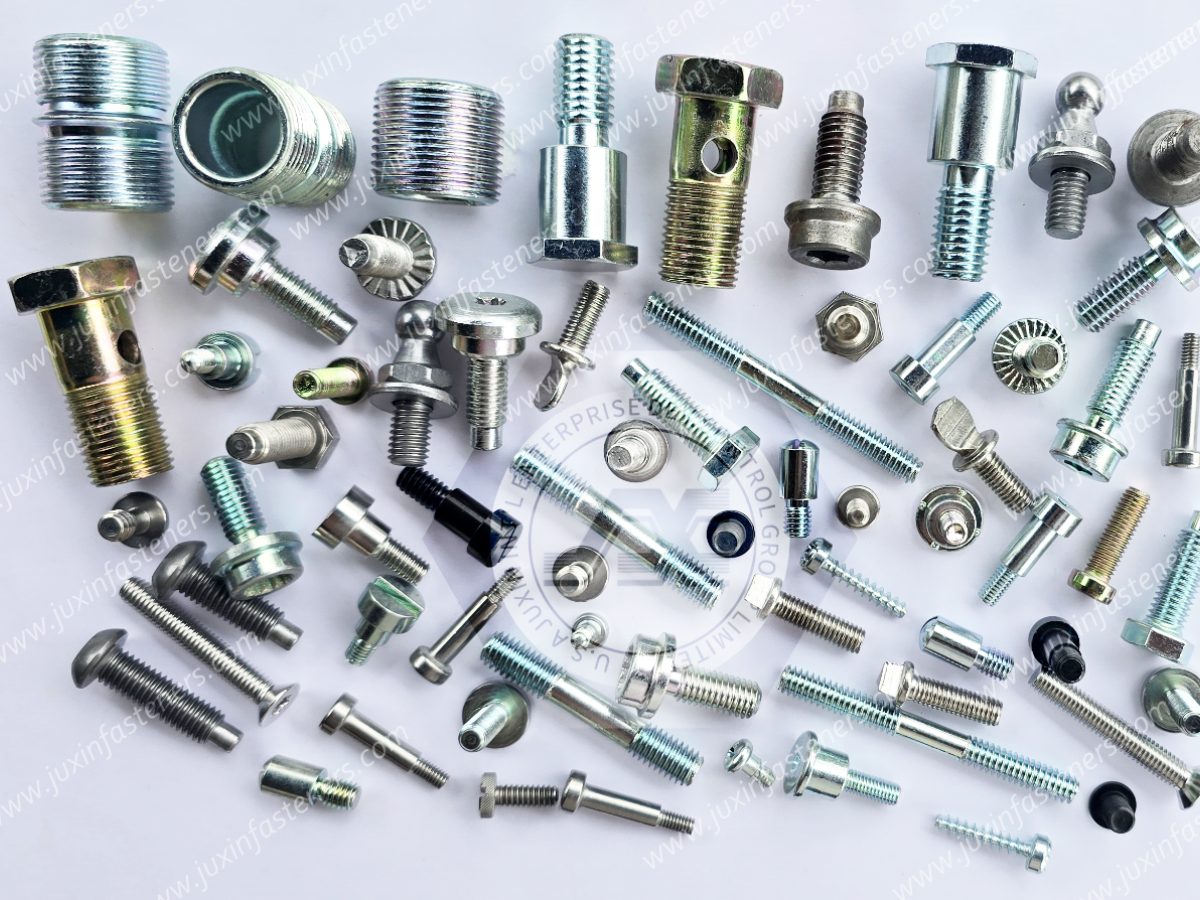
Material selection directly affects fastener performance.
Common fastener materials include:
Carbon steel
Alloy steel
Stainless steel
Special engineering materials
Carbon content:
<0.25%
Common materials:
1008
1015
1018
1022
Applications:
Low strength screws
Self-tapping screws
General fasteners
Carbon content:
0.25%–0.45%
Materials:
1035
1045
40Cr
Applications:
Grade 8 nuts
Grade 8.8 bolts
Automotive components
Common materials:
35CrMo
40CrMo
SCM435
Advantages:
High tensile strength
Excellent fatigue resistance
High load capacity
Applications:
Automotive chassis
Heavy machinery
Construction equipment
Common stainless steel grades:
Advantages:
Good corrosion resistance
Excellent formability
Applications:
HVAC
Medical equipment
Food machinery
Advantages:
Superior chemical resistance
Excellent corrosion protection
Applications:
Marine environments
Chemical equipment
Outdoor structures
Heat treatment improves:
Tensile strength
Hardness
Fatigue resistance
Load capability
Common processes:
Quenching
Tempering
Annealing
Induction hardening
High strength fasteners such as:
Grade 8.8
Class 10.9
Class 12.9
usually require controlled heat treatment.
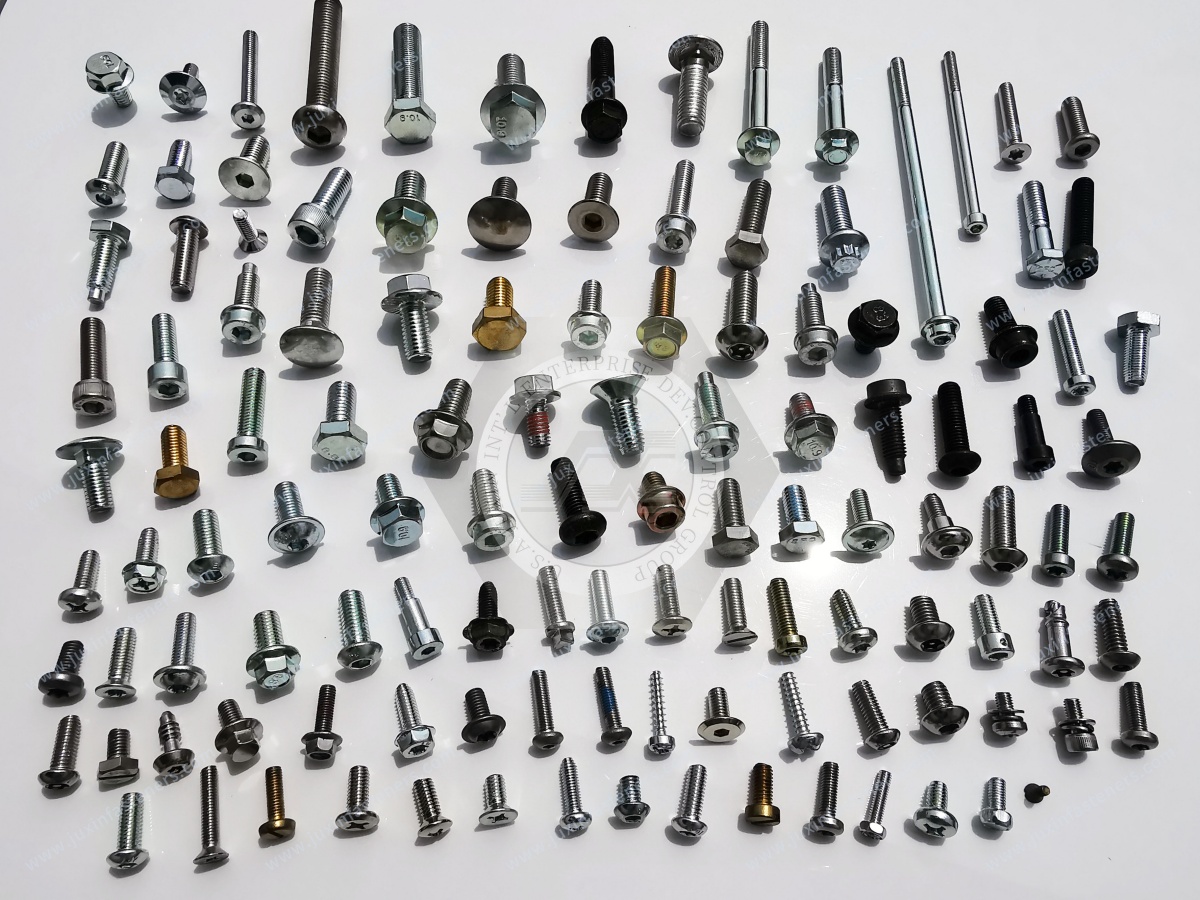
Fastener performance grades indicate mechanical capability.
Example:
Means:
Tensile strength:
800 MPa
Yield strength:
640 MPa
Means:
Tensile strength:
1000 MPa
Yield strength:
900 MPa
Used for:
High performance machinery
Precision equipment
Advantages:
Extremely high tensile strength
Excellent fatigue resistance
Professional fastener production includes:
↓
↓
↓
↓
↓
↓
Available coatings include:
Zinc Plating
Zinc Nickel Coating
Black Oxide
Phosphate Treatment
Dacromet / Geomet
PTFE Coating
Mechanical Zinc Plating
Benefits:
Corrosion resistance
Improved durability
Extended service life
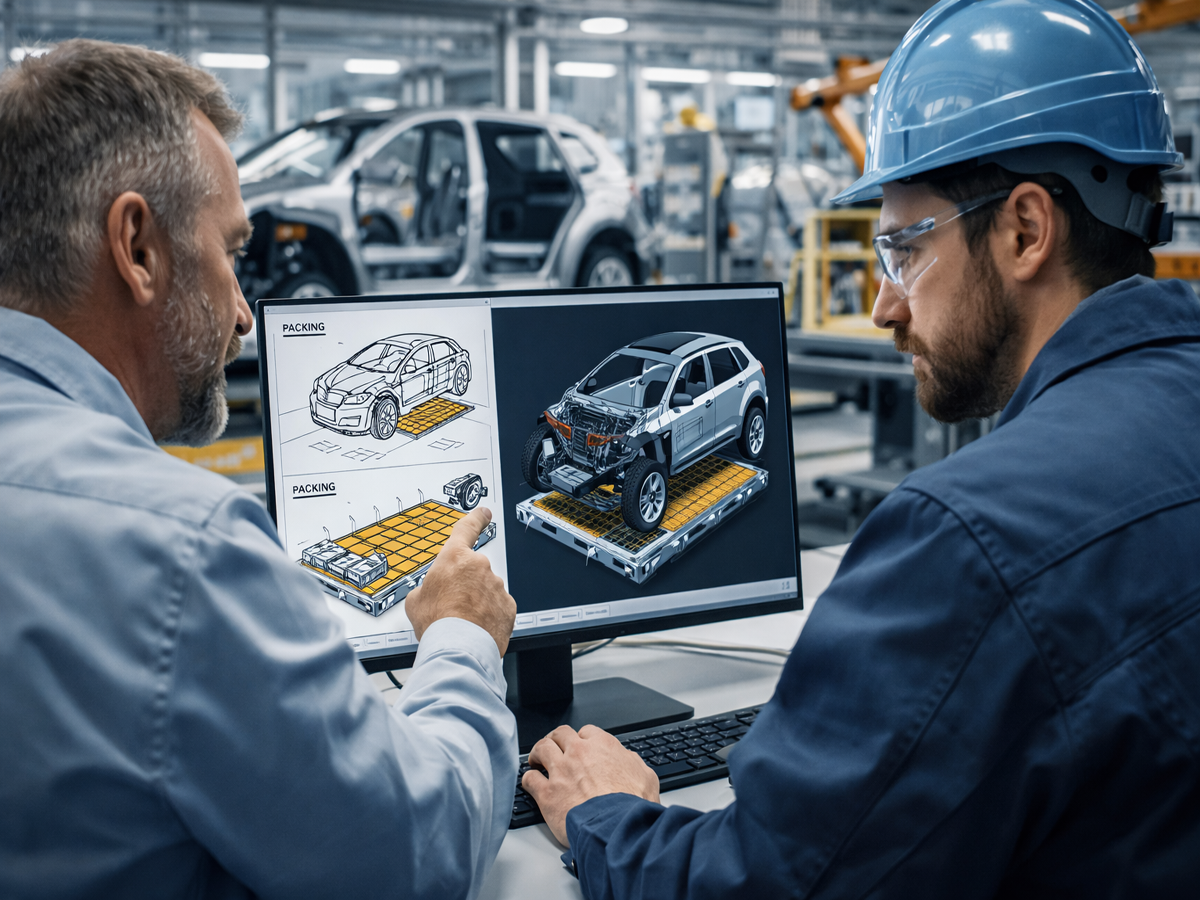
Applications:
Engine components
Chassis systems
Suspension parts
Body structures
Products:
High strength bolts
Lock nuts
Automotive screws
Requirements:
High strength
Corrosion resistance
Vibration resistance
Applications:
Battery trays
Battery modules
Structural connections
Applications:
Railway structures
Train equipment
Track systems
Requirements:
Fatigue resistance
Long service life
Applications:
Aircraft structures
Precision components
Requirements:
High strength-to-weight ratio
Corrosion resistance
Products:
Self-clinching fasteners
Rivet nuts
Thread inserts
Applications:
Control panels
Industrial enclosures
Applications:
Air conditioning equipment
Ventilation systems
Requirements:
Corrosion resistance
Stable fastening
Requirements:
Precision tolerance
Reliable assembly
Applications:
Steel structures
Heavy equipment
Products:
High strength bolts
Structural fasteners
Applications:
Robot systems
Automation equipment
Requirements:
Precision
Vibration resistance
Solutions:
Weld nuts
Self-clinching nuts
Blind rivet nuts
JUXIN FASTENERS provides complete OEM fastening solutions for global manufacturers.
Our capabilities include:
✔ Precision thread inspection
✔ Custom bolt and screw manufacturing
✔ Material certification
✔ Heat treatment control
✔ Surface coating solutions
✔ Automotive OEM experience
✔ Engineering support
We help customers achieve reliable fastening performance from design to mass production.
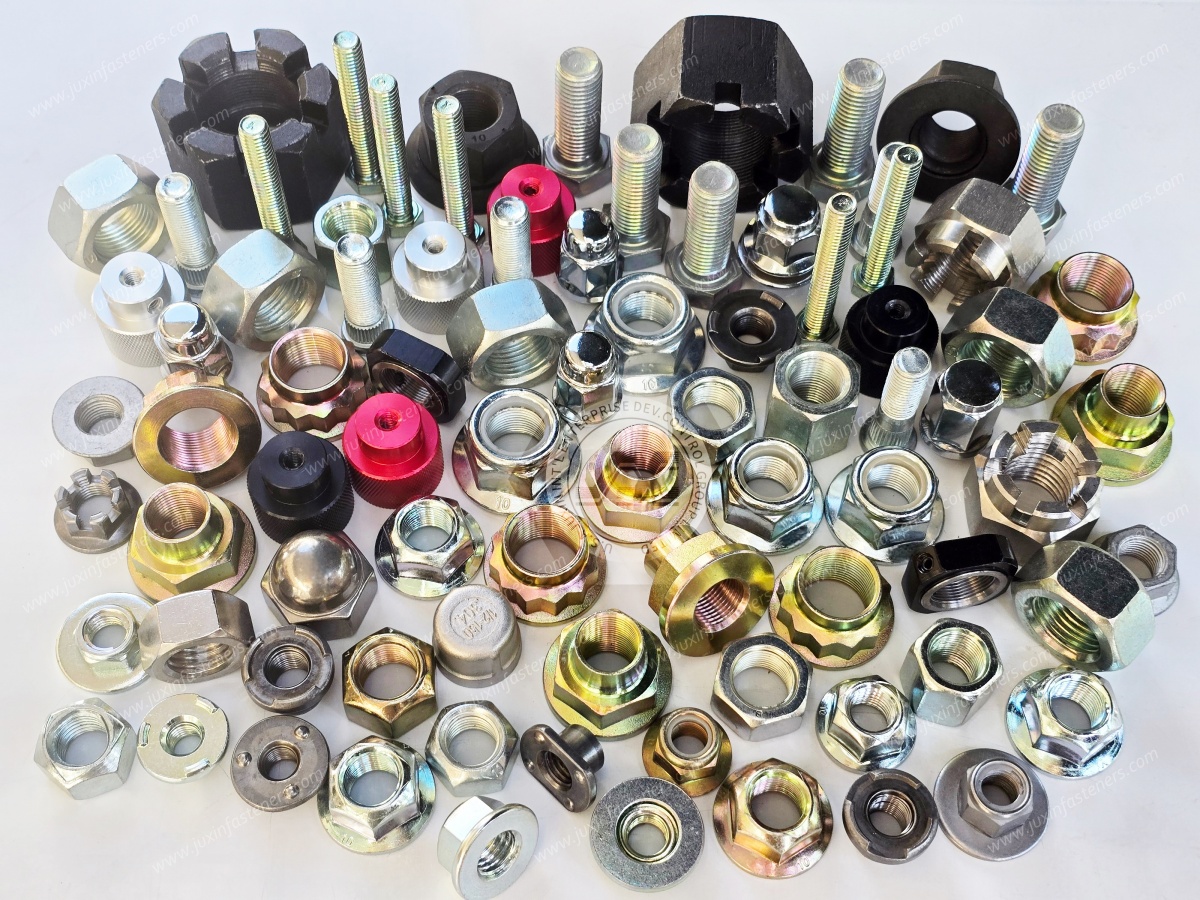
For professional high strength fasteners, precision screws, bolts, nuts, thread inspection solutions, and customized fastening components, please contact our engineering team.
Email: info@juxinfasteners.com
Website: www.juxinfasteners.com
JUXIN FASTENERS
Precision Fastening Solutions Since 2003
 MORE NEWS
Sep. 27, 2026
Sep. 27, 2026
Sep. 27, 2026
Contact Us
Tel.:
+86 020 8621 0320
+86 020 3121 6067
E-mail:
Technical Support:
Navigation
SEND INQUIREY