
Call Us
+86 136 6007 9809
Call Us
+86 136 6007 9809

Aug. 14, 2026
Heavy-Duty Mechanical Anchoring Solutions for Concrete, Construction and Industrial Applications
Engineering Guide to Wedge Anchors, Concrete Expansion Systems, Installation Reliability and OEM Procurement
Heavy-duty mechanical anchoring systems provide the connection between concrete structures and the steel components,
industrial equipment, building-services supports and safety-related fixtures attached to them.
A reliable anchoring connection must transfer the required loads into the supporting concrete while maintaining acceptable performance under the specified installation,
environmental and service conditions.
For structural engineers, mechanical designers, manufacturing engineers and industrial purchasing teams,
selecting a concrete anchor requires more than choosing a nominal diameter or comparing steel tensile strengths.
The complete fastening assembly includes:
The concrete substrate and its condition
The mechanical anchor and expansion mechanism
The connected steel fixture or base plate
Anchor diameter, length and effective embedment
Edge distance, spacing and concrete member thickness
Applied tension, shear and moment
Installation tooling and procedures
Material and corrosion protection
Product-specific qualification
Inspection, maintenance and procurement controls
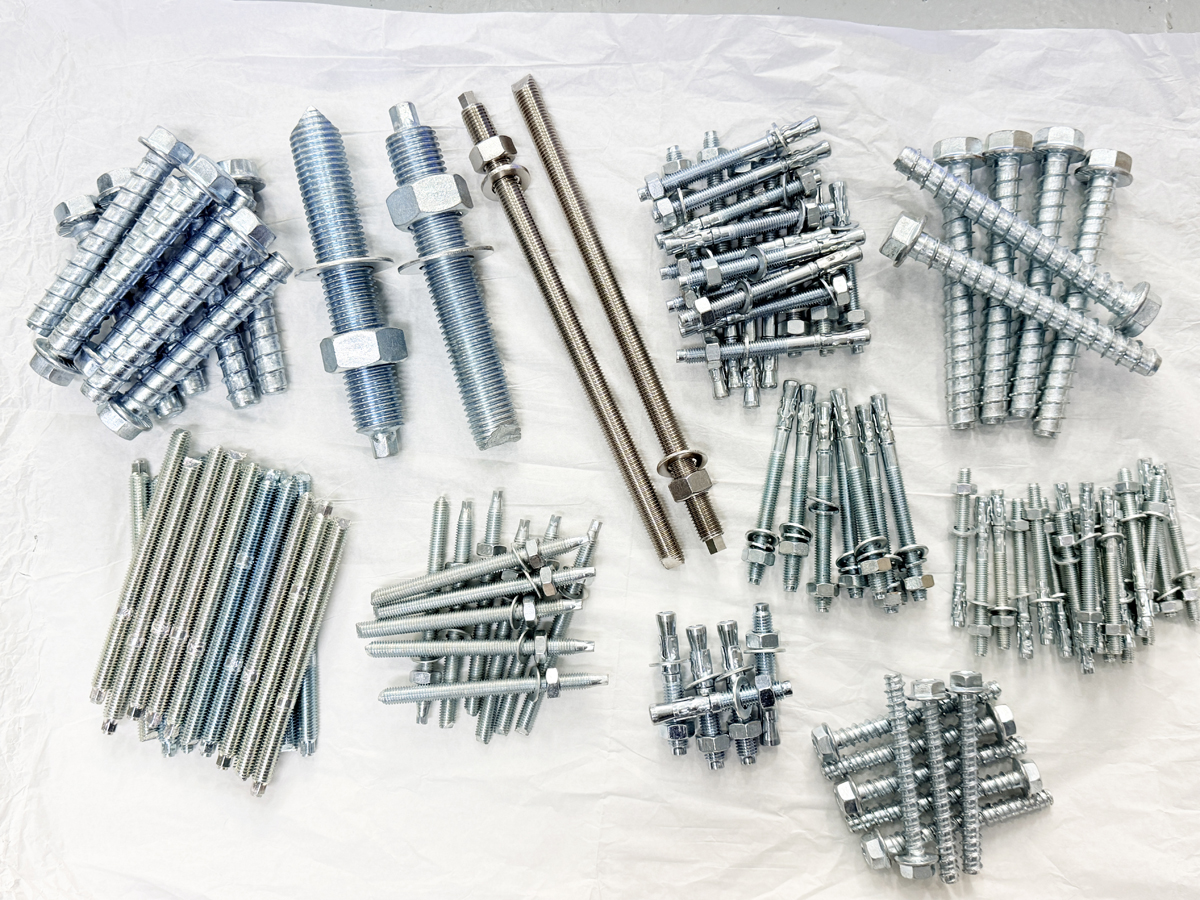
Juxin Fasteners supplies industrial fastening components, including wedge anchors for concrete and related fastening hardware, and supports drawing-based OEM and bulk procurement inquiries.
This guide focuses on wedge-type mechanical expansion anchors while explaining how to select, install and source reliable concrete fastening systems for construction and industrial applications.
What Is a Heavy-Duty Mechanical Anchor?
A mechanical anchor is a fastening component that transfers loads to a suitable base material through a mechanical engagement mechanism.
Post-installed mechanical anchors are installed into holes prepared in existing concrete.
Common types include:
Wedge expansion anchors
Sleeve expansion anchors
Drop-in expansion anchors
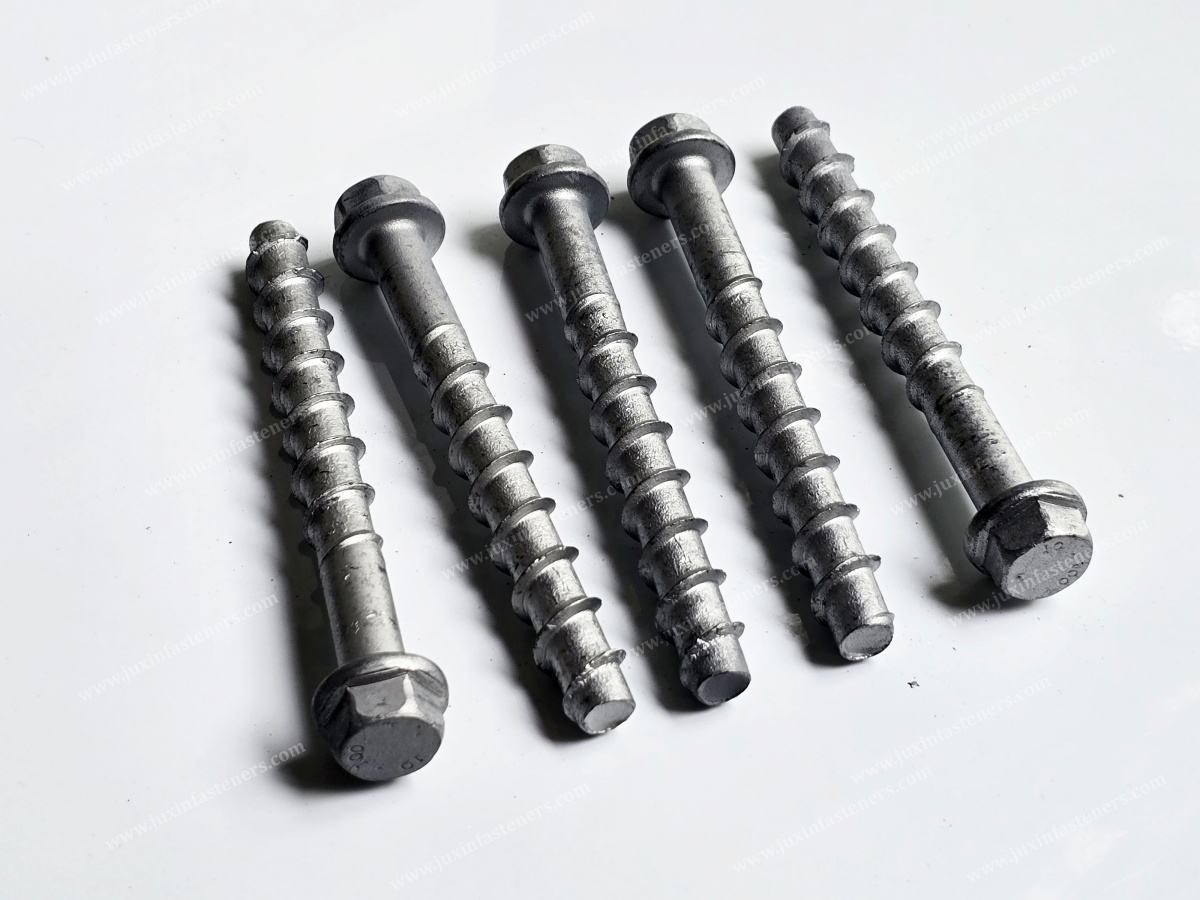
Concrete screw anchors
Undercut anchors
Although these products may all be described as concrete anchors, their load-transfer mechanisms, installation requirements and technical qualifications differ.
Bonded or chemical anchors are another important fastening technology, but they transfer loads primarily through an adhesive bonding system rather than mechanical expansion.
Wedge Anchors for Concrete
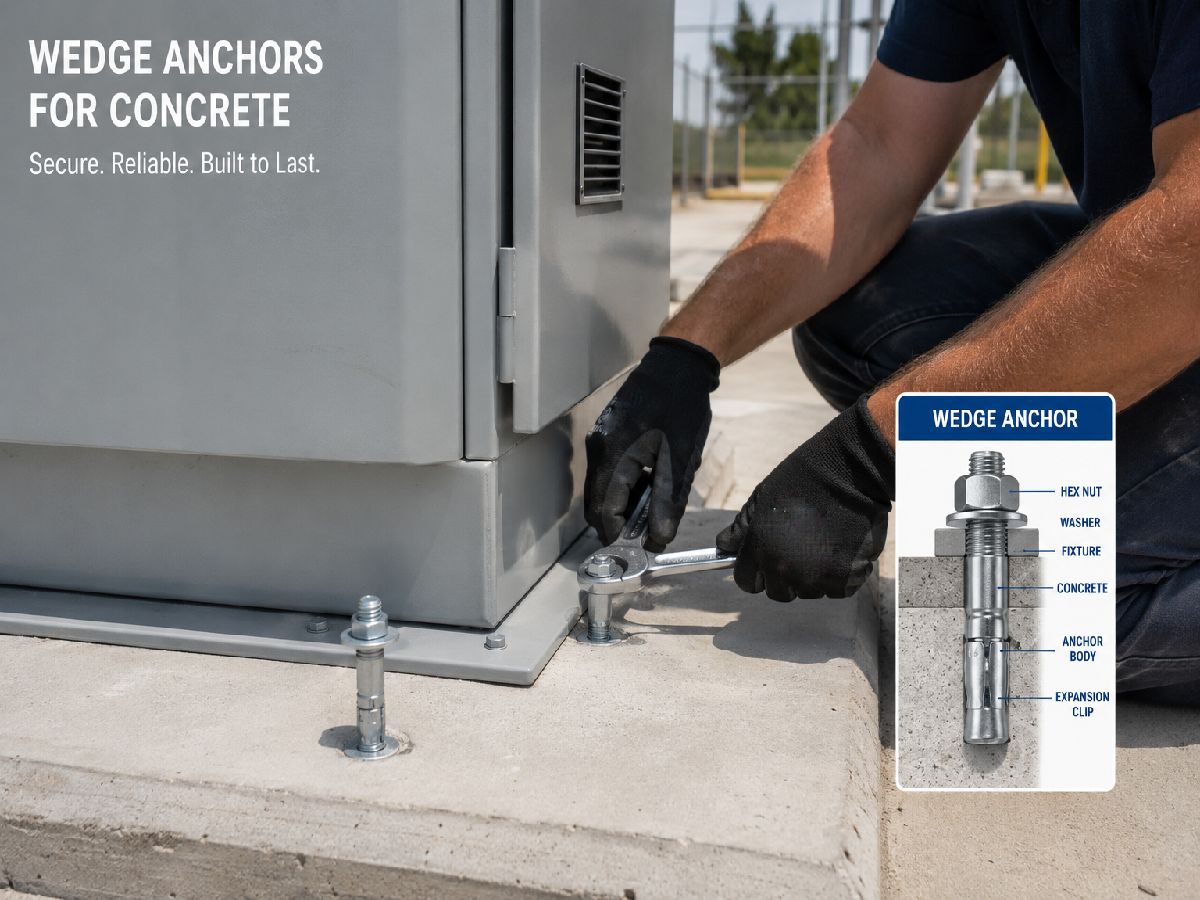
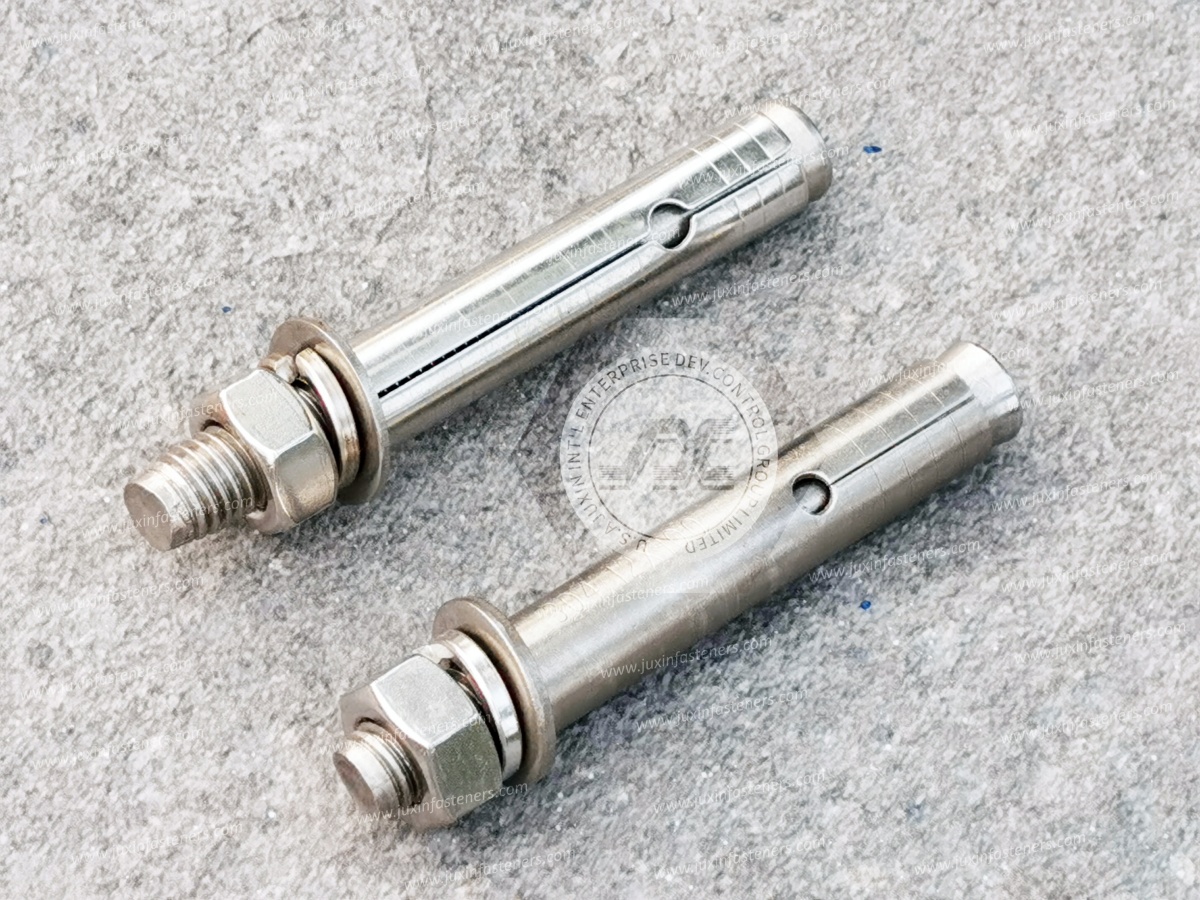
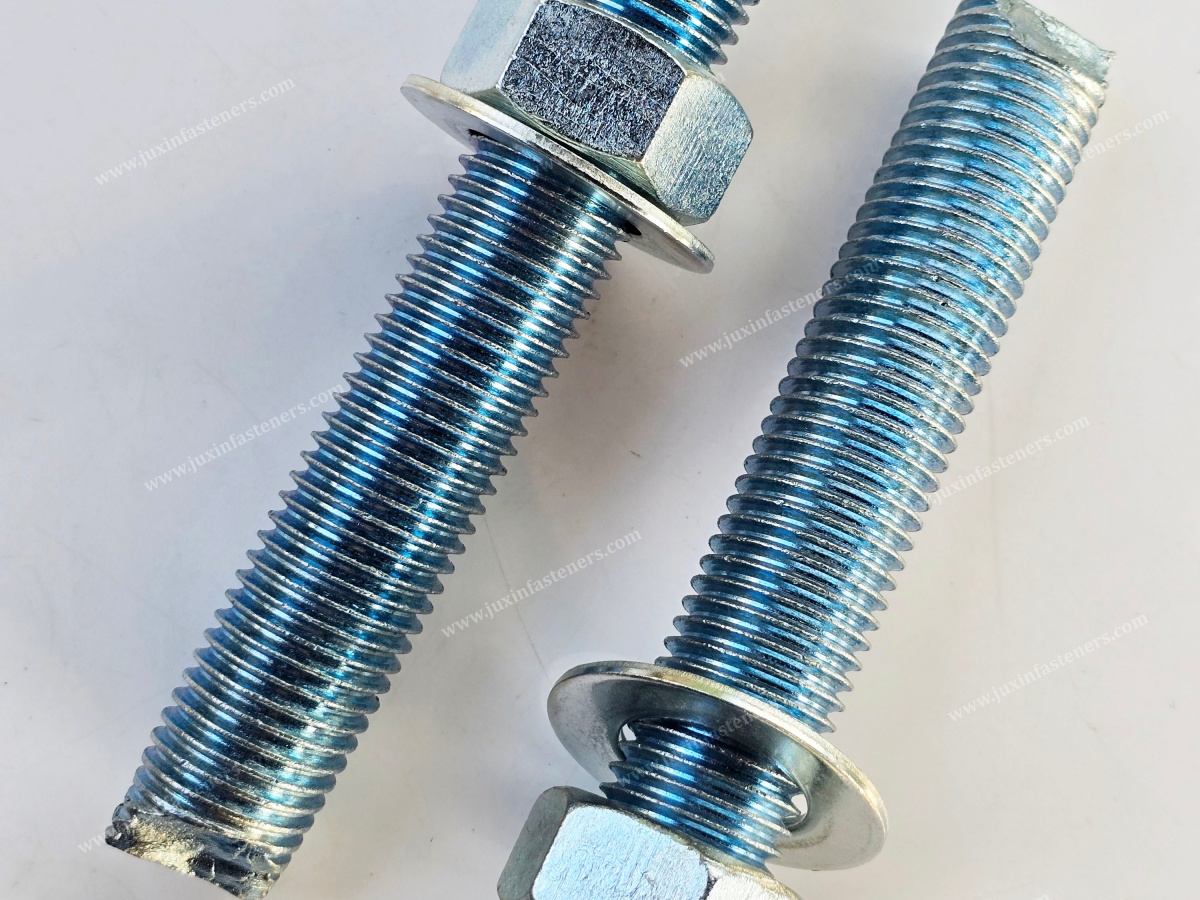
A wedge anchor is a mechanical expansion anchor typically consisting of:
Threaded steel stud
Expansion clip or wedge component
Nut
Washer
Engineered expansion section
During installation, the anchor is inserted into a correctly prepared concrete hole.
When the specified setting action is applied, the expansion mechanism develops contact pressure and mechanical engagement against the surrounding concrete.
The resulting connection can resist tensile and shear loading within its evaluated application conditions.
Common International Terminology
Industrial buyers may encounter the following names:
Wedge anchor
Concrete wedge anchor
Wedge anchor bolt
Heavy-duty concrete anchor
Concrete expansion anchor
Mechanical expansion anchor
Torque-controlled expansion anchor
Post-installed mechanical anchor
Expansion stud anchor
Through-bolt anchor
The term through-bolt is common in certain European markets, while wedge anchor is widely used in North American purchasing terminology.
The exact product configuration must be verified rather than relying on the commercial name alone.
How Wedge Anchors Transfer Loads into Concrete
A typical connection follows this load path:
Equipment or structural fixture → steel bracket or base plate → nut and washer → anchor stud → expansion mechanism → concrete substrate.
Under tensile loading, the anchor transfers force through the engaged expansion mechanism.
Under shear loading, resistance may involve the anchor steel, fixture geometry and surrounding concrete.
Mechanical Expansion
The expansion component develops contact with the hole wall when the anchor is set.
The specific expansion behavior depends on the anchor design.
Tension Resistance
Tension tends to pull the anchor out of the concrete.
The connection must be checked for applicable steel and concrete failure modes.
Shear Resistance
Shear acts across the anchor axis.
The connection may be limited by steel failure, concrete edge breakout, pryout or other applicable mechanisms.
Combined Loading
Industrial brackets and equipment base plates frequently experience simultaneous tension and shear.
The engineer must evaluate the interaction of these loads according to the applicable design method.
Engineering Information Gain: Anchor Steel Strength Is Not Connection Strength
A high-strength steel stud does not guarantee a high-capacity concrete connection.
If concrete breakout, splitting, insufficient embedment or an unfavorable anchor-group geometry governs the design, increasing steel strength alone may provide little benefit.
The anchoring system must be evaluated as a complete load path.
Selecting the Correct Concrete Substrate
The first engineering decision is to establish the actual base material.
Cast-in-Place Concrete
Mechanical wedge anchors are commonly considered for appropriate applications in cast-in-place concrete floors, walls, foundations and structural elements.
The required concrete strength, thickness, cracking condition and reinforcement arrangement must be evaluated.
Reinforced Concrete
Anchors may be installed in suitable reinforced concrete where the drilling location and design conditions are acceptable.
Reinforcement should not be cut or damaged without appropriate structural authorization.
Precast Concrete
Precast concrete may introduce constraints involving:
Limited member thickness
Reinforcement congestion
Restricted edge distances
Factory-defined fixing locations
Installation access
Transport and erection conditions
An anchor suitable for a thick cast-in-place foundation may not be suitable for a thin precast element.
Cracked Concrete
Some mechanical anchors are qualified for use in cracked concrete.
Other anchors are restricted to uncracked concrete.
Crack movement can affect mechanical expansion and anchoring resistance.
The exact product qualification must cover the required concrete condition.
Uncracked Concrete
Uncracked-concrete qualification must not automatically be extended to cracked-concrete applications.
Lightweight Concrete
Some mechanical anchors have specific evaluations for lightweight concrete.
The product's technical documentation must identify the applicable conditions.
Hollow Masonry and Brick
Wedge anchors designed for concrete should not automatically be installed in hollow masonry, soft brick or weak blockwork.
Expansion pressure can damage the surrounding material or fail to develop adequate resistance.
An appropriately qualified masonry anchor may be necessary.
Deteriorated Concrete
Concrete with significant deterioration, uncertain strength or existing damage requires engineering investigation before an anchoring system is specified.
Substrate Selection Matrix
| Base material | Main engineering concern | Required decision |
|---|---|---|
| Cast-in-place concrete | Strength and cracking | Verify product qualification |
| Reinforced concrete | Reinforcement and drilling access | Coordinate anchor location |
| Precast concrete | Thickness and edge geometry | Verify member and anchor design |
| Cracked concrete | Reduced or changing confinement | Select appropriately qualified anchor |
| Lightweight concrete | Different mechanical properties | Check assessed application |
| Hollow masonry | Insufficient expansion resistance | Consider qualified masonry alternative |
| Deteriorated concrete | Uncertain substrate capacity | Obtain engineering assessment |
How to Select a Wedge Anchor for a Concrete Connection
A reliable selection process starts with the application, not the anchor catalog.
Define the Applied Loads
Identify:
Permanent loads
Variable loads
Tensile forces
Shear forces
Combined loading
Overturning moments
Dynamic or cyclic loading
Seismic demands, where applicable
Identify the Concrete Conditions
Determine:
Concrete type
Concrete strength
Cracked or uncracked condition
Member thickness
Reinforcement restrictions
Edge geometry
Environmental exposure
Review the Fixture
Examine:
Base plate dimensions
Fixture thickness
Hole diameter
Anchor layout
Washer bearing area
Fixture stiffness
Installation access
Select an Evaluated Anchor System
Use a product whose technical qualification covers the intended conditions.
Check the Complete Connection
Evaluate the anchor group and all relevant failure mechanisms.
Confirm Installation Requirements
Verify drill size, hole depth, embedment, setting torque and inspection requirements.
Coordinate Procurement
Ensure the purchased part matches the engineered specification.
Anchor Diameter and Length
Nominal anchor diameter influences steel resistance and installation geometry.
Anchor length must accommodate the required fixture thickness and embedment configuration.
The largest available anchor is not necessarily the most appropriate choice.
Effective Embedment
Effective embedment is an important design parameter.
It must not be confused with overall anchor length or drilled-hole depth.
Concrete Member Thickness
The concrete element must be thick enough for the intended installation and anchoring behavior.
Edge Distance
Anchors close to a concrete edge may be limited by breakout or splitting.
Anchor Spacing
Multiple anchors can interact through overlapping concrete failure regions.
Installation Torque
For torque-controlled wedge anchors, the specified setting torque is part of the installation procedure.
It is not a substitute for the connection's engineering load calculation.
Concrete Anchor Design: Understanding the Failure Modes
A concrete anchoring connection may fail in several ways.
Steel Failure in Tension
The anchor steel may fracture or otherwise fail under excessive tensile loading.
Steel Failure in Shear
The anchor may fail under transverse loading.
Concrete Cone Breakout
A region of concrete may fracture around an anchor or anchor group subjected to tension.
Pullout
The anchor may lose its intended mechanical engagement.
Concrete Splitting
Concrete may split under certain installation, geometry or loading conditions.
Concrete Edge Breakout
Concrete near an edge may fail under shear.
Concrete Pryout
Shear loading may cause a concrete pryout failure mechanism.
Anchor Group Interaction
Closely spaced anchors may share or overlap potential concrete failure regions.
Fixture or Base Plate Failure
The connected steel component may deform or fail even if the anchor itself remains intact.
Information Gain: The Weakest Part of the Load Path Governs
An anchoring system is not improved simply by increasing one component's strength.
A stronger anchor may transfer greater forces into a base plate that is too flexible, a thin concrete member or an inadequate concrete edge.
Engineering design should identify the governing limit state before selecting a more expensive anchor.
Base Plate Design and Anchor Group Behavior
Industrial equipment and structural brackets are commonly attached through steel base plates.
The base plate influences how forces are distributed among the anchors.
Eccentric Loading
When a load acts away from the anchor group, it may generate overturning moments.
Some anchors may experience higher tension than others.
Base Plate Flexibility
A flexible base plate may alter load distribution and increase local deformation.
Anchor Hole Clearance
Clearance between anchor and fixture holes may affect shear transfer and installation tolerances.
Stand-Off Installations
An anchor supporting a fixture above the concrete surface may experience additional bending.
Only appropriately designed and evaluated configurations should be used.
Grout and Contact Conditions
Machine base plates may include leveling grout or other support arrangements.
The complete equipment foundation design must address how loads are transferred.
Design Review Checklist
| Connection parameter | Engineering question |
|---|---|
| Anchor group | How are forces distributed? |
| Base plate | Is stiffness sufficient? |
| Concrete edge | Is breakout resistance adequate? |
| Anchor spacing | Are group effects considered? |
| Effective embedment | Is the selected configuration permitted? |
| Member thickness | Is the concrete sufficiently thick? |
| Fixture clearance | Is shear transfer properly considered? |
| Installation access | Can the specified anchor be installed correctly? |
Wedge Anchors vs. Other Concrete Anchoring Systems
The correct technology depends on the substrate, connection geometry, loading and installation conditions.
| Anchor type | Load-transfer mechanism | Important selection factor |
|---|---|---|
| Wedge anchor | Mechanical expansion | Concrete qualification, setting and edge geometry |
| Sleeve anchor | Expansion sleeve engagement | Substrate and product-specific performance |
| Drop-in anchor | Internal expansion | Setting tool and installation configuration |
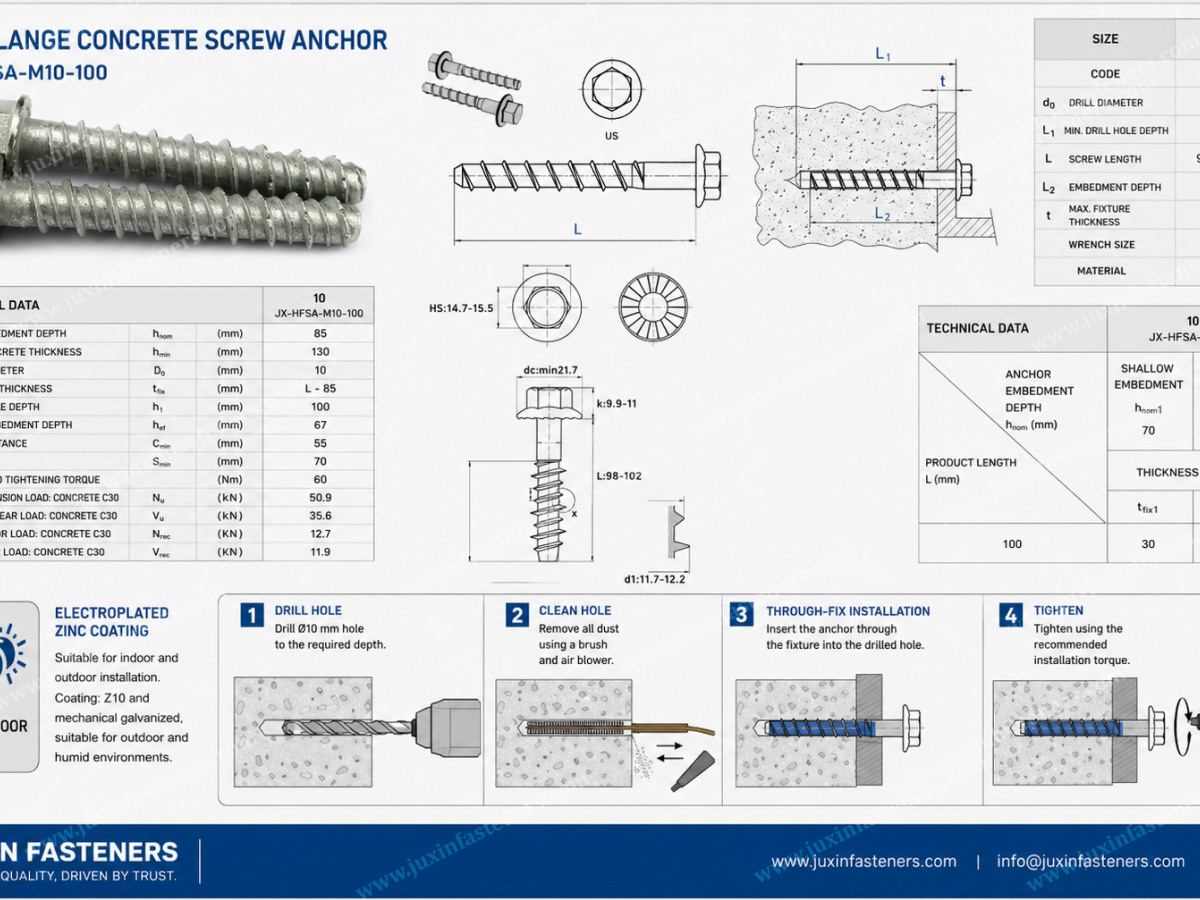
| Concrete screw anchor | Mechanical thread engagement | Pilot hole and thread geometry |
| Undercut anchor | Mechanical interlock at undercut | Specialized drilling or setting requirements |
| Bonded anchor | Adhesive bonding | Hole preparation, curing and qualified conditions |
Are Wedge Anchors Stronger Than Concrete Screws?
Neither product category is universally stronger.
Compare qualified products using equivalent substrate, embedment, loading and geometry.
Are Mechanical Anchors Faster Than Chemical Anchors?
Some mechanical anchors can be loaded after correct installation without waiting for adhesive curing.
However, drilling, cleaning, setting and inspection still require time.
Are Wedge Anchors Better Near Concrete Edges?
Not necessarily.
The required edge distance and achievable resistance depend on the actual product and design conditions.
Can Anchor Types Be Substituted?
Not without appropriate technical review.
Different anchor technologies may have different installation requirements, failure modes and qualification conditions.
Heavy-Duty Mechanical Anchoring in Construction and Industry
Structural Steel Attachments to Concrete
Wedge anchors may be considered for qualified connections involving:
Steel support brackets
Secondary structural frames
Equipment support assemblies
Base plates
Architectural steelwork
Approved structural accessories
A wedge anchor connecting steel to concrete is not the same as a structural bolt connecting steel components to one another.
Primary structural connections require appropriate engineering design.
Construction and Building Systems
Potential applications include:
Metal framing supports
Construction brackets
Handrail bases
Safety barriers
Architectural fixtures
Building equipment supports
Safety-related connections require a qualified anchor system and structural design.
HVAC and Mechanical Building Services
Mechanical anchors may be used in appropriately designed:
HVAC support frames
Pipe brackets
Mechanical equipment supports
Service platforms
Utility equipment mounting
Vibration, load direction, environmental conditions and installation access should be considered.
Electrical and Power Infrastructure
Potential applications include:
Electrical cabinets
Control panel supports
Cable tray support frames
Conduit brackets
Power equipment accessories
Industrial electrical service structures
The anchor system must be suitable for the equipment loads and concrete conditions.
Industrial Machinery and Production Equipment
Industrial facilities may require anchoring for:
Machine bases
Conveyor support structures
Equipment guarding
Manufacturing fixtures
Auxiliary production equipment
Maintenance platforms
Dynamic loading and vibration can be especially important.
A conventional wedge anchor should not be assumed suitable for significant fatigue loading without the relevant product qualification and engineering review.
Warehouse and Material Handling Facilities
Mechanical anchoring may be relevant to:
Equipment support frames
Protective barriers
Material-handling equipment accessories
Warehouse safety systems
Selected storage installations
Racking and safety-barrier anchorage should follow the applicable equipment and structural design requirements.
Precast Concrete Construction
Precast elements may require anchors for:
Equipment brackets
Utility supports
Architectural components
Service installations
Selected construction accessories
Precast design must account for member thickness, reinforcement and installation conditions.
Safety Railings and Guardrails
Railing and barrier systems may be exposed to substantial lateral loads.
The complete connection includes:
Railing or barrier
Base plate
Mechanical anchors
Concrete member
Applied design loads
The anchor cannot be evaluated independently of the complete safety system.
Infrastructure and Civil Engineering
Potential applications include:
Utility brackets
Public facility equipment
Service support structures
Infrastructure maintenance components
Selected roadside equipment
Outdoor corrosion, environmental exposure and project-specific approvals are important.
AI Data Centers and Industrial Electrification
Selected facility applications may involve:
Cooling equipment supports
Electrical distribution equipment
Mechanical plant accessories
UPS-related support structures
Cable management installations
Industrial service infrastructure
Not every server rack or electrical cabinet requires concrete anchoring. The equipment design determines the connection requirements.
Industry Application Matrix
| Industry | Typical connection | Main engineering consideration |
|---|---|---|
| Construction | Steel brackets and base plates | Concrete condition and load |
| Structural support | Steel-to-concrete connection | Anchor group and failure modes |
| HVAC | Mechanical support frame | Vibration and installation access |
| Electrical | Cabinet or cable support | Stability and load distribution |
| Manufacturing | Machinery accessories | Dynamic loading |
| Precast concrete | Service brackets | Member thickness |
| Warehouse | Protective equipment | Impact and safety requirements |
| Infrastructure | Utility fixtures | Corrosion and service life |
| Data centers | Cooling and electrical supports | Equipment-specific loading |
Material and Corrosion Protection
Mechanical anchors are available in different material and surface-finish systems.
The selected material must satisfy both mechanical and environmental requirements.
Zinc-Plated Carbon Steel
Zinc-plated carbon steel is commonly used in suitable indoor environments.
The exact coating specification and product qualification must be verified.
Zinc-Based Protective Coatings
Different zinc coating systems provide different corrosion performance.
Coating changes may also affect dimensions, installation behavior and component compatibility.
Hot-Dip Galvanized Steel
Hot-dip galvanized anchor products may be appropriate for certain outdoor applications where the complete anchor system is designed and qualified for that finish.
A conventional zinc-plated anchor should not simply be galvanized after manufacture and assumed equivalent.
Stainless Steel A2 / 304
Suitable stainless steel anchor systems may be considered where improved corrosion resistance is required.
The exact grade and product qualification matter.
Stainless Steel A4 / 316
Suitable 316 stainless steel anchor systems may be considered for more demanding environments.
However, 316 stainless steel is not immune to localized corrosion in chloride-containing environments.
Material Selection Matrix
| Environment | Preliminary consideration | Required verification |
|---|---|---|
| Dry indoor facility | Qualified coated carbon steel | Coating and product approval |
| Humid mechanical room | Enhanced corrosion protection | Condensation and exposure |
| Outdoor installation | Appropriate galvanized or stainless system | Complete anchor qualification |
| Coastal infrastructure | Suitable corrosion-resistant system | Chloride exposure |
| Chemical facility | Application-specific material | Chemical compatibility |
Material and Coating Standards
Depending on the specified product, relevant references may include:
ISO 3506 for applicable stainless steel fastener mechanical properties
ISO 898-1 for applicable carbon and alloy steel fastener mechanical properties
ISO 4042 for electroplated fastener coating systems
ISO 10684 for applicable hot-dip galvanized fasteners
ISO 9227 or ASTM B117 for laboratory salt spray testing
These standards do not independently establish the design resistance of a concrete anchor.
Hydrogen Embrittlement
Certain high-strength or hardened steel fasteners may be susceptible to hydrogen embrittlement under relevant manufacturing and service conditions.
Material properties, heat treatment and coating processes must be considered.
Corrosion Testing Limitations
Salt spray test hours are not a direct prediction of outdoor service life.
Actual durability depends on exposure, material, coating and connection details.
International Concrete Anchor Standards and Technical Evaluation
EN 1992-4 — Design of Fastenings for Use in Concrete
EN 1992-4 provides European design provisions for applicable concrete fastening systems.
It addresses relevant tension, shear and combined-loading design checks.
European Technical Assessment (ETA)
An ETA provides assessed characteristics for a specific construction product.
Depending on the product, it may identify:
Anchor models and sizes
Intended substrates
Cracked-concrete suitability
Embedment configurations
Characteristic resistance
Installation requirements
Seismic performance, where assessed
Environmental restrictions
EAD 330232-02-0601
This European Assessment Document addresses mechanical fasteners for use in concrete.
The applicable assessment basis and ETA must be verified for the actual product.
ACI 318 Chapter 17
ACI 318 Chapter 17 provides anchoring-to-concrete design provisions for applicable North American projects.
The adopted code edition and project requirements govern the design.
ACI 355.2
ACI 355.2 addresses qualification of post-installed mechanical anchors for concrete.
ICC-ES Evaluation Reports
ICC-ES reports provide product-specific evaluation information for stated applications.
The report must correspond to the exact manufacturer and product configuration.
Important Qualification Boundary
A manufacturer's ETA or ICC-ES report does not automatically apply to another supplier's similar-looking anchor.
Changes to the anchor geometry, expansion component, material, coating or manufacturing process may affect product performance and require appropriate evaluation.
Seismic and Dynamic Loading
Some qualified mechanical anchor systems have specific seismic or dynamic-loading evaluations.
However, these capabilities are not universal.
The exact anchor size, product configuration and qualification scope must be checked.
Metric and Inch-Based Anchor Specifications
Metric and inch-based anchors should be specified using their actual product dimensions and thread designations.
Metric, UNC, UNF, BSW and BSF threads are different systems and must not be treated as directly interchangeable.
Converted dimensions are reference values only.
Wedge Anchor Installation Procedure
The exact installation instructions depend on the anchor product.
A typical torque-controlled wedge anchor installation includes the following stages.
Confirm the Anchor Specification
Verify the model, diameter, length, material, finish and approved application.
Mark the Anchor Locations
Check the specified anchor spacing, edge distance and fixture geometry.
Drill the Hole
Use the required drill diameter, depth and drilling method.
Prepare the Hole
Follow the product-specific cleaning procedure.
Some qualified systems permit particular installation conditions without conventional hole cleaning.
Others require cleaning.
Insert the Anchor
Position the anchor through the fixture or according to the approved installation method.
Position the Nut and Washer
Confirm the correct components and assembly configuration.
Apply the Specified Setting Torque
Use the required installation method and suitable tooling.
Inspect the Installation
Check:
Anchor identification
Correct location
Proper fixture contact
Required embedment
Nut and washer condition
Specified setting procedure
Visible concrete condition
Setting Torque Is Not an Anchor Load Rating
The torque used to activate an expansion mechanism is not the same as the allowable or design load of the completed anchoring connection.
A torque reading alone cannot replace the required engineering evaluation.
Common Installation Problems and Corrective Actions
| Problem | Possible cause | Required response |
|---|---|---|
| Anchor does not fit | Incorrect hole diameter | Verify drilling specification |
| Anchor does not reach required depth | Insufficient hole depth or obstruction | Investigate installation |
| Nut cannot be tightened correctly | Damaged thread or wrong component | Inspect anchor assembly |
| Concrete cracks during setting | Inadequate edge geometry or substrate condition | Stop and obtain engineering review |
| Anchor slips or rotates | Incorrect hole or setting condition | Follow product-specific remediation |
| Fixture does not seat | Misalignment or interference | Check fixture and hole layout |
| Excessive installation resistance | Incorrect hole, tooling or product | Investigate before continuing |
| Inconsistent installation results | Uncontrolled drilling or setting | Standardize approved procedures |
Information Gain: Installation Failure Is a Process Problem Until Proven Otherwise
When multiple anchors fail to install consistently, replacing the anchor brand without investigating the drilling and setting process may not solve the problem.
A useful investigation compares:
Anchor lot identification
Drill bit condition
Actual hole dimensions
Drilling method
Concrete condition
Installation tool settings
Fixture geometry
Installer procedures
This helps distinguish a product issue from an installation-process issue.
Manufacturing and Production Management Considerations
For repeated industrial installations, the anchoring system should be evaluated for production consistency as well as engineering resistance.
Standardized Anchor Identification
Use a defined part number, product model or technical drawing.
Preassembled Components
Where appropriate, supplying the stud, nut and washer as a controlled assembly can reduce missing parts and installation handling.
Drilling Process Control
Standardize the specified drill bit, drilling method and hole depth.
Setting Tool Compatibility
Ensure installers have the required tools and access.
Fixture Tolerance Management
Coordinate the base plate and anchor-hole dimensions.
Inspection Planning
Define installation acceptance criteria before production begins.
Lot Traceability
Maintain the identification and records required by the project or purchasing specification.
Packaging for Assembly Efficiency
Packaging by equipment set or installation batch may help reduce sorting errors.
Rework Procedures
Define what to do when an anchor is incorrectly installed.
Do not assume a failed anchor can be removed and reused.
Total Installed Cost vs. Purchase Price
Industrial procurement should evaluate the total installed cost.
This may include:
Anchor purchase price
Drill bits and consumables
Installation labor
Tool setup
Hole preparation
Inspection
Rework
Replacement components
Equipment downtime
Packaging and logistics
A lower-priced anchor may create higher total costs if installation errors or product inconsistency increase rework.
OEM Mechanical Anchor Manufacturing and Quality Requirements
Industrial buyers may require standard wedge anchors or drawing-specific fastening components.
Potential technical requirements include:
Stud dimensions
Thread geometry
Expansion component geometry
Nut and washer configuration
Material specification
Mechanical properties
Heat treatment
Surface coating
Dimensional tolerances
Inspection criteria
Packaging and labeling
Critical Manufacturing Principle
For a qualified structural anchor, the complete product configuration matters.
Changes to the expansion clip, cone geometry, steel properties or coating must not be treated as ordinary cosmetic substitutions.
Quality Control Considerations
Depending on the product specification, inspection may include:
Dimensional verification
Thread inspection
Material identification
Hardness testing
Coating verification
Assembly inspection
Visual defect inspection
Packaging checks
Lot traceability
These inspections support manufacturing consistency but do not replace the product's required anchoring qualification.
Supplier Development and Procurement Qualification
When selecting a mechanical anchor supplier, procurement teams should confirm both commercial capability and technical suitability.
Exact Product Configuration
Identify the required anchor type, model, dimensions and components.
Application Compatibility
Confirm the concrete substrate and connection conditions.
Technical Documentation
Request the applicable product drawings, installation instructions and required evaluation reports.
Material and Coating
Specify the intended service environment and material requirements.
Quality Assurance
Define the relevant inspection and traceability requirements.
Change Control
Establish approval requirements before changing material, geometry, heat treatment or coating.
Commercial Conditions
Confirm:
Sample requirements
Minimum order quantity
Initial order volume
Annual forecast
Packaging
Required lead time
Delivery destination
Repeat-order requirements
Supplier Evaluation Matrix
| Procurement item | Why it matters |
|---|---|
| Exact anchor model | Prevents incorrect substitution |
| Technical drawing | Confirms dimensions and configuration |
| ETA or ICC-ES documentation, where required | Confirms evaluated application |
| Installation instructions | Supports reliable field installation |
| Material and coating | Supports durability |
| Expansion component design | Influences anchoring behavior |
| Dimensional inspection | Supports consistency |
| Lot identification | Supports traceability |
| Change control | Protects approved product configuration |
| MOQ and lead time | Supports supply planning |
| Packaging specification | Reduces handling and assembly errors |
Why Source Industrial Anchoring Hardware from Juxin Fasteners?
Juxin Fasteners has more than 20 years of experience supplying industrial fastening components to international customers.
We support technical and commercial inquiries for:
Wedge anchors for concrete
Heavy-duty mechanical expansion anchors
Concrete anchoring hardware
Industrial threaded fasteners
Steel mounting bolts and studs
Special nuts and washers
Custom CNC machined fastening components
Drawing-based OEM fastening hardware
Depending on the product and manufacturing feasibility, technical discussions may cover:
Dimensions and tolerances
Material selection
Thread configuration
Surface finish
Assembly requirements
Inspection criteria
Packaging
Order quantities
Delivery requirements
For structural or safety-related applications, the necessary product qualification and engineering design must be established for the exact anchoring system.
Juxin Fasteners does not represent another manufacturer's ETA, ICC-ES report or published load values as qualifications for its own products.
Frequently Asked Questions
What is a heavy-duty mechanical anchor?
A heavy-duty mechanical anchor is an engineered fastening component used to transfer loads from an attached fixture into a suitable substrate through mechanical engagement.
What is the difference between a wedge anchor and an expansion anchor?
A wedge anchor is one type of mechanical expansion anchor. Other expansion systems use different mechanisms.
Are wedge anchors suitable for concrete?
Yes, where the specific product is suitable for the concrete strength, cracking condition, geometry and applied loads.
Can wedge anchors be used in cracked concrete?
Some qualified wedge anchors can. The exact product evaluation must be checked.
Can wedge anchors be used in hollow brick or block?
A concrete wedge anchor should not automatically be used in hollow masonry. A product specifically evaluated for the substrate may be required.
What determines wedge anchor load capacity?
The complete connection, including anchor design, concrete strength, embedment, edge distance, spacing, loading and installation conditions.
Does a larger anchor always provide a stronger connection?
No. Concrete failure modes and connection geometry may govern.
What is effective embedment?
It is a design-related anchoring depth defined for the particular anchor system and its technical evaluation.
Why is edge distance important?
An anchor near a concrete edge may be limited by breakout or splitting.
What is the correct installation torque?
Use the value specified for the exact anchor model, size and installation configuration.
Do wedge anchors require hole cleaning?
Follow the actual product instructions. Cleaning requirements vary by evaluated system and installation method.
Can wedge anchors be removed?
The attached fixture can often be removed by loosening the nut, but the embedded wedge anchor is generally not intended for routine reuse.
Are wedge anchors suitable for seismic applications?
Certain qualified products are. Seismic suitability must be established for the specific anchor and design conditions.
Can wedge anchors be used for vibrating machinery?
Only where the anchor system and connection design are suitable for the actual dynamic or fatigue-loading conditions.
Are stainless steel wedge anchors better than carbon steel anchors?
Not universally. The correct selection depends on corrosion exposure, mechanical performance, qualification and cost.
Can a wedge anchor replace a concrete screw anchor?
Only after technical review confirms that the alternative satisfies the required design and installation conditions.
Do all wedge anchors have ETA or ICC-ES approval?
No. Qualification is product-specific and must be verified.
Can Juxin Fasteners support custom mechanical anchor requirements?
Juxin Fasteners can review drawing-based industrial fastening requirements, subject to manufacturing feasibility and any necessary product qualification.
OEM Mechanical Anchor RFQ Checklist
For an accurate technical review and quotation, provide the following information where available.
Product Details
Anchor type
Existing product reference
Technical drawing
Nominal diameter
Overall length
Thread designation
Nut and washer configuration
Material
Surface treatment
Concrete and Fixture Details
Concrete type and strength
Cracked or uncracked condition
Concrete member thickness
Fixture drawing
Fixture thickness
Edge distance
Anchor spacing
Installation access
Engineering Requirements
Tensile load
Shear load
Combined loading
Dynamic or cyclic loading
Seismic requirements, if applicable
Required effective embedment
Applicable design standard
Required ETA or ICC-ES documentation
Installation Requirements
Drilling method
Hole diameter
Hole depth
Hole preparation
Setting torque
Installation tooling
Inspection requirements
Quality and Commercial Requirements
Dimensional tolerances
Material documentation
Coating requirements
Inspection and traceability
Sample quantity
Initial order quantity
Annual forecast
MOQ expectations
Packaging
Required lead time
Delivery destination
Request a Heavy-Duty Mechanical Anchoring Solution
Juxin Fasteners welcomes inquiries from industrial OEMs, structural engineering companies, construction product distributors, equipment manufacturers,
production managers, manufacturing engineers, supplier development teams and international procurement professionals.
Whether your project involves standard wedge anchors, mechanical expansion fastening hardware or drawing-specific industrial mounting components,
accurate product selection begins with the actual application.
Send your technical drawings, required dimensions, material and surface treatment specifications, installation conditions, quantities and delivery requirements for review.
For structural, overhead, seismic or safety-related applications, include the required technical qualification and engineering documentation.
Company: Juxin Fasteners
Website: https://www.juxinfasteners.com/
Email: info@juxinfasteners.com
Reliable Mechanical Anchoring Depends on the Complete Connection: Concrete, Anchor, Fixture, Installation and Quality Control.
 MORE NEWS

Oct. 13, 2026
Contact Us
Tel.:
+86 020 8621 0320
+86 020 3121 6067
E-mail:
Technical Support:
Navigation
SEND INQUIREY