
Call Us
+86 136 6007 9809
Call Us
+86 136 6007 9809

Aug. 13, 2024
High-Tensile Automotive Engine Fasteners: OEM Bolts, Preload and Lightweight Engine Design
Modern internal combustion engines are designed to achieve high power density, efficient thermal management, compact packaging and reliable long-term operation.
These requirements place significant demands on the bolts, screws and threaded components used throughout the engine assembly.
High-tensile engine fasteners may be subjected to cyclic tensile loading, temperature fluctuations, vibration, joint relaxation and demanding installation conditions.
Their performance depends not only on material strength but also on joint geometry, preload, fatigue behavior, thread quality and compatibility with the surrounding components.
Automotive engine fastening applications range from accessory brackets and housings to highly specialized cylinder head, connecting rod, flywheel and crankshaft bearing connections.
Each application requires a different engineering approach.
Juxin Fasteners supplies industrial and automotive fastening components, including high-strength alloy steel screws, bolts, threaded inserts and drawing-specific OEM fasteners.
Specialized engine applications require technical review and customer qualification before any product can be considered suitable.
This guide examines the engineering principles, manufacturing considerations and sourcing requirements behind reliable automotive engine fastening systems
Why Modern Engines Require Carefully Engineered Fasteners
Engine fasteners operate within mechanical systems that experience changing temperatures, pressure-related loads, vibration and repeated stress cycles.
The most important requirements may include:
Sufficient bolt preload to maintain the intended joint condition
Resistance to cyclic loading and fatigue
Compatibility with thermal expansion of the clamped components
Appropriate material strength and temperature capability
Controlled thread engagement
Repeatable installation
Corrosion and environmental compatibility
Long-term dimensional and mechanical stability
The relative importance of these requirements varies by application.
For example, an engine accessory bracket bolt and a connecting rod bolt may both be manufactured from high-strength steel,
but their loading conditions, failure consequences and qualification requirements are substantially different.
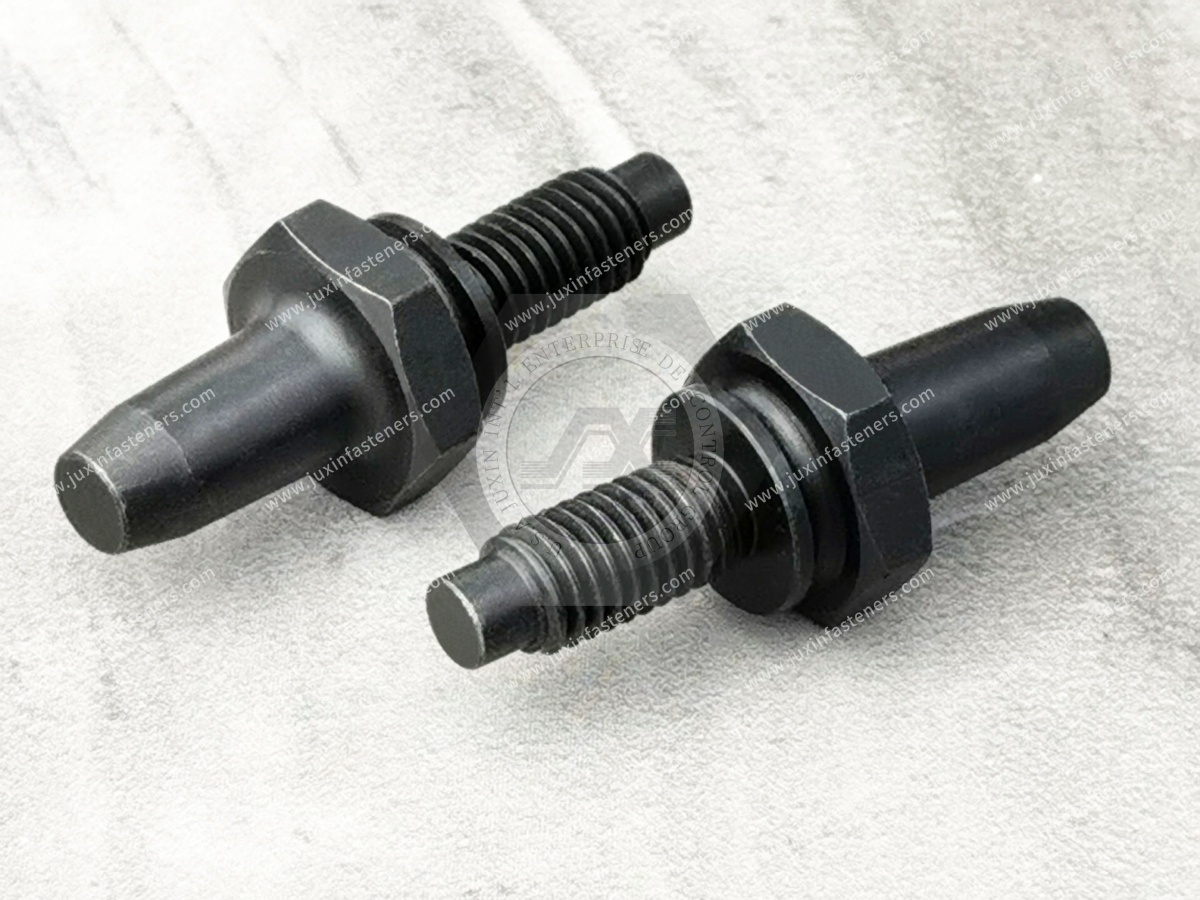
Engineering Principle: Fastener Strength Is Only One Part of Joint Reliability
A bolt with higher tensile strength does not automatically provide better fatigue life, sealing performance or preload retention.
The complete joint must be evaluated.
Automotive Engine Fastener Applications
Cylinder Head Bolts
Cylinder head bolts secure the cylinder head to the engine block and contribute to maintaining the required compression of the head gasket.
The joint must accommodate combustion-related loading, thermal expansion and changes in gasket and component behavior.
Important engineering considerations include:
Bolt preload and preload distribution
Cylinder head and engine block stiffness
Gasket compression requirements
Thermal expansion
Thread engagement in the engine block
Tightening sequence
Reuse restrictions
Some engine designs use torque-angle or torque-to-yield tightening strategies.
Critical Application Limitation
Cylinder head bolts are application-specific engine components. They must not be replaced by general-purpose high-strength bolts solely because the thread diameter and property class appear similar.
Connecting Rod Bolts
Connecting rod bolts retain the connecting rod cap under severe cyclic loading.
Their performance is influenced by bolt geometry, material, fatigue behavior, manufacturing condition and controlled installation.
Relevant considerations include:
Cyclic tensile loading
Stress concentration
Thread-root geometry
Bolt stretch
Bearing and seating conditions
Tightening consistency
Material and heat-treatment requirements
Connecting rod bolts require specialized engineering and OEM qualification.
Flywheel Bolts
Flywheel bolts secure the flywheel or related rotating assembly to the crankshaft.
The connection may experience rotational acceleration, deceleration, vibration and cyclic loading.
The design must address the intended torque-transfer mechanism, preload, bolt pattern and locking requirements.
Main Bearing Cap Bolts
Main bearing cap bolts secure crankshaft support structures within the engine block.
Joint stiffness, preload and component alignment are particularly important.
Changes to bolt strength, geometry or tightening conditions may affect the behavior of the complete bearing support assembly.
Engine Accessory and Housing Fasteners
A broader range of standard and drawing-specific screws may be used for:
Engine accessory brackets
Covers and housings
Pumps
Mounting structures
Auxiliary mechanical components
Selected transmission-related assemblies
These applications may use hex head bolts, flange screws, socket head screws, machine screws or other suitable fastening products.
Juxin Fasteners can review drawing-based inquiries for applicable industrial and automotive fastening components.
Availability and suitability must be confirmed for the individual application.
High-Tensile Engine Bolt Materials and Strength Classes
Carbon steel and alloy steel fasteners can achieve different mechanical properties through appropriate material selection and manufacturing processes.
For applicable metric bolts, screws and studs, ISO 898-1 defines mechanical-property requirements for specified property classes.
Common classes include:
| Metric property class | Nominal tensile strength designation | Engineering consideration |
|---|---|---|
| 8.8 | 800 MPa | Suitable only where the approved joint requirements permit |
| 10.9 | 1,000 MPa | Higher specified strength for appropriate mechanical joints |
| 12.9 | 1,200 MPa | Higher-strength applications requiring additional material and process consideration |
These values describe the nominal property-class designation, not a universal guarantee of joint performance.
Specialized engine bolts may use customer-specific material specifications, geometry and mechanical requirements that cannot be reduced to a standard property-class designation.
Can a Smaller High-Strength Bolt Replace a Larger Engine Bolt?
Reducing fastener diameter can appear attractive for lightweight engine design.
A smaller bolt may offer:
Reduced fastener mass
More installation space
Greater packaging flexibility
Potential material savings
However, the substitution must be evaluated as a complete joint redesign.
Consider an engineering proposal to replace an M12 bolt with an M10 bolt of higher strength.
Although the smaller bolt may have a higher specified material strength, it also has a smaller tensile stress area and potentially different stiffness,
fatigue behavior, bearing conditions and thread engagement.
The joint may be limited by the aluminum parent material, gasket compression, hole geometry or cyclic loading rather than bolt tensile strength.
Engineering Recommendation
Do not approve bolt downsizing based on property class alone.
Verify the required preload, bolt stress, fatigue performance, mating-thread strength, joint stiffness and application-specific safety factors.
Bolt Preload and Engine Joint Reliability
Preload is the tensile force developed in a bolt during installation.
This force produces compression in the connected components.
For many engine joints, sufficient preload is essential for maintaining joint contact, controlling relative movement and limiting undesirable changes in bolt loading.
However, excessive preload can cause bolt yielding, thread damage or deformation of the clamped components.
Insufficient preload can contribute to joint separation, leakage, movement and fatigue damage.
The required preload depends on the application and cannot be determined from bolt diameter alone.
Torque-Controlled Tightening
Torque-controlled tightening uses an applied torque to develop bolt preload.
The resulting preload depends on friction at the threads and bearing surfaces.
Consequently, the same torque can produce different clamp loads when lubrication or coating conditions change.
Torque-Angle Tightening
Torque-angle tightening combines a defined tightening sequence with controlled angular rotation.
It may improve installation control in suitable applications but still requires joint-specific validation.
Torque-to-Yield Fasteners
Certain engine joints use fasteners that are intentionally tightened into a specified plastic deformation range.
These are commonly described as torque-to-yield fasteners.
Such bolts may have specific replacement and reuse restrictions.
Critical Maintenance Requirement
Never assume that a torque-to-yield engine bolt can be reused. Follow the approved engine manufacturer's service and installation specification.
Thermal Expansion and Preload Retention
Engine assemblies may combine steel fasteners with aluminum or cast-iron components.
Different materials expand by different amounts as temperature changes.
This can alter bolt load and joint compression during operation.
For example, a steel bolt clamping aluminum components may experience a different thermal response from a similar bolt clamping steel components.
The actual effect depends on geometry, stiffness, temperature distribution and the complete material combination.
Engineering Recommendation
Evaluate preload over the relevant operating temperature range rather than relying exclusively on room-temperature installation conditions.
Engine Fastener Fatigue Resistance
Fatigue is a critical consideration for fasteners subjected to repeated loading.
Fatigue performance depends on:
Bolt geometry
Thread-root condition
Material properties
Heat treatment
Surface condition
Preload
Joint stiffness
Cyclic load amplitude
Corrosion exposure
A properly designed preloaded joint can reduce the variation in bolt tensile loading under certain conditions.
However, a higher tensile-strength class does not automatically deliver superior fatigue resistance.
Engineering Recommendation
Evaluate fatigue performance using the actual joint configuration and loading conditions,
particularly for connecting rod, flywheel and other critical engine connections.
Cold Heading and Precision Fastener Manufacturing
Cold heading is commonly used to manufacture suitable bolt and screw geometries efficiently.
Depending on the product design, potential benefits include:
Efficient material utilization
Repeatable head formation
Suitability for high-volume production
Reduced machining requirements for appropriate geometries
However, not every specialized engine fastener is best produced entirely by cold heading.
Complex geometries, close tolerances or specialized features may require additional machining or other manufacturing operations.
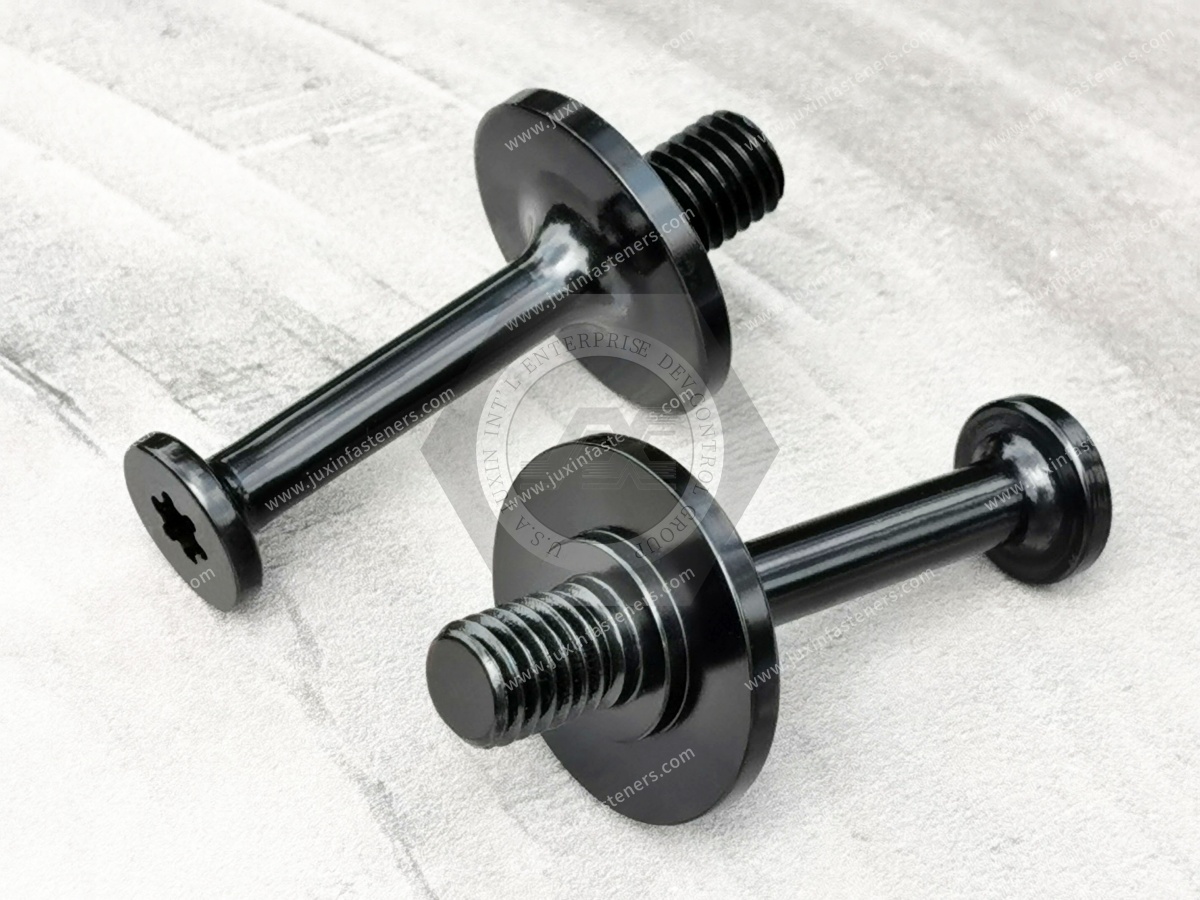
Manufacturing Recommendation
Select the production route according to fastener geometry, material, tolerance requirements and anticipated production quantity.
Thread Rolling Versus Machined Threads
Thread rolling forms external threads by plastic deformation rather than material removal.
For suitable materials and controlled processes, thread rolling may offer advantages in surface condition, material flow and fatigue-related performance.
However, actual fatigue behavior depends on when the threads are rolled relative to heat treatment, the resulting residual stresses, thread geometry and the final manufacturing condition.
Machined threads may be necessary for certain geometries or production requirements.
Engineering Recommendation
Specify the required thread quality and functional performance rather than assuming that every rolled thread is automatically superior to every machined thread.
Heat Treatment of High-Strength Engine Fasteners
Heat treatment is used to achieve specified mechanical properties in suitable carbon steel and alloy steel fasteners.
Depending on the material and product specification, relevant processes may include quenching and tempering.
Important verification characteristics can include:
Tensile strength
Yield or proof-related properties
Hardness
Microstructure
Surface condition
Decarburization or carburization characteristics
Heat-treatment requirements must be compatible with the selected steel and final fastener application.
Engineering Recommendation
Review the complete material and heat-treatment specification, especially when evaluating alternative suppliers for high-strength engine components.
Surface Treatments and Lubrication for Engine Fasteners
Engine fasteners may require corrosion protection, controlled friction or other application-specific surface properties.
The correct treatment depends on operating temperature, chemical exposure, material compatibility and installation requirements.
Zinc-Nickel Coatings
Zinc-nickel coatings may be specified for selected automotive fasteners requiring defined corrosion performance.
Their suitability for a particular engine location must be assessed against temperature and environmental exposure.
Molybdenum Disulfide Lubricating Coatings
Molybdenum disulfide-based coatings or lubricants may be used in certain mechanical fastening applications to influence friction and reduce the risk of galling.
Their suitability depends on the complete formulation, operating temperature, surface condition and application requirements.
A generic MoS₂ coating designation is not sufficient to establish a universal high-temperature rating.
Stainless Steel Passivation
Passivation is a surface treatment used for appropriate stainless steel components to improve the condition of their passive surface.
It is not a substitute for corrosion protection on conventional carbon steel or alloy steel bolts.
Stainless steel fasteners also must not be assumed to match the mechanical properties of high-strength alloy steel engine bolts.
Engineering Recommendation
Specify material, coating or lubricant, friction requirements and environmental conditions as a coordinated system.
Hydrogen Embrittlement and High-Strength Engine Bolts
Certain high-strength steel fasteners may be susceptible to hydrogen embrittlement.
Hydrogen may be introduced during particular manufacturing, cleaning or coating operations.
Under susceptible material and stress conditions, delayed cracking can occur.
The risk depends on factors including:
Material strength and hardness
Processing history
Surface-treatment method
Applied tensile stress
Service environment
Engineering Recommendation
Review the selected coating process and applicable hydrogen-embrittlement controls before approving susceptible high-strength engine fasteners.
Threaded Inserts for Aluminum Engine Components
Lightweight engine structures frequently use aluminum alloys.
Aluminum can offer weight and thermal-management advantages, but its thread strength and wear behavior differ from those of steel.
Threaded inserts may be considered where the design requires a reinforced internal thread or repair of a damaged threaded hole.
Potential applications include:
Aluminum engine housings
Transmission housings
Mechanical covers
Accessory mounting points
Selected powertrain components
The correct insert depends on the parent material, installation method, available wall thickness and loading conditions.
Stainless Steel Helical Thread Inserts
Helical wire thread inserts provide internal threads within a prepared tapped hole.
DIN 8140 covers relevant wire thread insert requirements within its scope.
These inserts may be used in selected aluminum or other suitable parent materials.
Potential benefits include:
Reinforced internal threads
Repair of certain damaged threads
Compatibility with defined screw sizes
Serviceable fastening points in suitable applications
Important Engineering Limitation
An insert does not automatically increase the load capacity of every joint.
Performance depends on the parent material, insert engagement, installation quality and surrounding geometry.
Screw-Locking Helical Inserts
Some helical inserts incorporate a locking feature designed to create prevailing torque with the mating screw.
Their locking behavior must be evaluated against the specified screw, installation requirements and reuse conditions.
Engineering Recommendation
Select the insert type according to the actual joint requirements rather than treating free-running and screw-locking inserts as interchangeable.
Thread Insert Installation and Parent-Material Design
Threaded insert performance depends on more than nominal thread size.
Important parameters include:
Parent-material strength
Available wall thickness
Prepared-hole dimensions
Installation depth
Insert length
Thread engagement
Pull-out resistance
Repeated assembly conditions
Engineering Recommendation
Validate the insert using representative parent material and the intended installation process.
Lightweight Engine Design and Fastener Optimization
Reducing fastener weight may contribute to an overall lightweight design strategy, but the benefits must be assessed realistically.
Fastener optimization can involve:
Appropriate bolt diameter
Suitable head geometry
Reduced unnecessary length
Improved installation access
Optimized joint arrangement
Material compatibility
Reduced assembly complexity
The potential mass savings from a single bolt may be small relative to the complete engine.
More significant engineering value may come from packaging improvements, fewer components or a simplified assembly process.
Important Limitation
A smaller bolt does not automatically improve engine cooling or fuel efficiency. Such benefits require evaluation at the engine or vehicle system level.
Production-Line Assembly and Tightening Consistency
Manufacturing engineers and production managers must ensure that engine fasteners can be installed consistently under real production conditions.
Important variables include:
Fastener feeding and identification
Tool accessibility
Drive engagement
Tightening sequence
Torque or torque-angle parameters
Coating friction
Mating-thread condition
Inspection
Rework procedures
Traceability
A fastener that satisfies its dimensional drawing may still create production problems if its installation behavior varies between batches.
Production Recommendation
Validate the fastener, mating component, coating and tightening method together.
Why Coating Consistency Matters in Engine Assembly
Coating friction affects the relationship between applied tightening torque and achieved preload.
A supplier change that alters friction behavior may affect assembly results even when the bolt dimensions and nominal strength remain unchanged.
For high-volume OEM production, this can influence:
Tightening consistency
Tool settings
Joint performance
Rework frequency
Production-line quality
Procurement Recommendation
Include coating and friction-related requirements in the approved fastener specification when they are important to the assembly process.
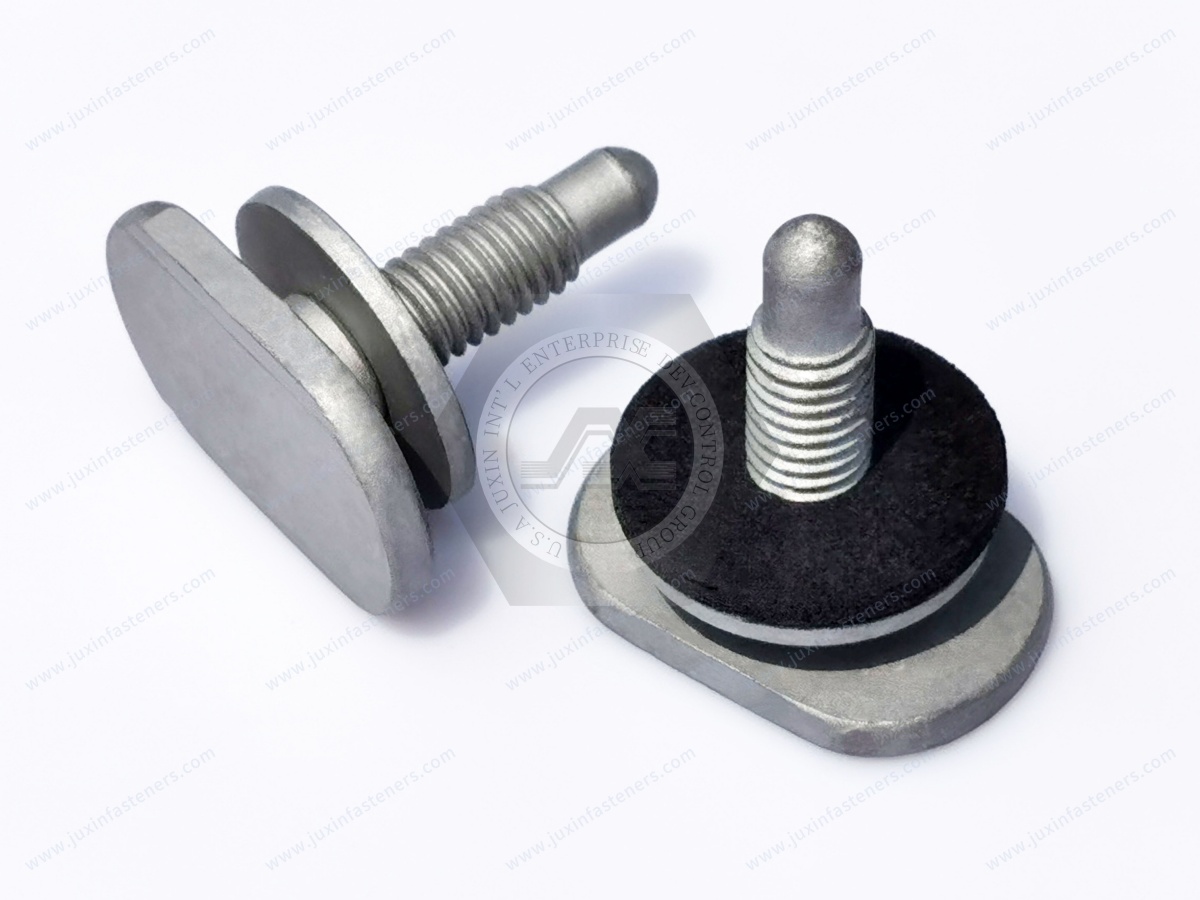
Quality Control for Automotive Engine Fasteners
Quality requirements should be defined according to the application, approved drawing and customer specification.
Potential inspection and verification activities include:
Dimensional inspection
Thread verification
Material verification
Mechanical-property testing
Hardness testing
Surface-condition inspection
Coating verification
Functional testing where required
Traceability and documentation review
Specialized engine bolts may require additional application-specific validation.
Important Qualification Requirement
General mechanical-property testing does not replace fatigue, durability or joint-level validation for critical engine applications.
Testing capabilities, documentation and production approval arrangements must be confirmed for each project.
Applicable International Standards
Standards should be selected according to the actual product and application.
ISO 898-1
Defines mechanical properties for applicable carbon steel and alloy steel bolts, screws and studs.
ISO 965 Series
Addresses tolerances for ISO general-purpose metric screw threads.
ISO 16047
Provides torque/clamp force testing methods for threaded fasteners within its scope.
ISO 4042
Addresses electroplated coating systems for fasteners within its scope.
ISO 10683
Addresses non-electrolytically applied zinc-flake coating systems for fasteners within its scope.
DIN 8140
Addresses applicable wire thread inserts.
Important Standards Distinction
General fastener standards do not replace customer-specific engine specifications.
For critical engine components, the approved OEM drawing, material specification, installation procedure and validation requirements govern suitability.
Metric and Inch-Series Thread Compatibility
Metric threads, UNC threads, UNF threads, BSW threads and BSF threads are different thread systems.
They are not directly interchangeable.
Approximate inch conversions are reference values only.
Engineering Recommendation
Confirm the complete thread designation and mating-component specification before approving any alternative.
Automotive Engine Fastener Supplier Qualification
Supplier development and procurement teams should evaluate technical conformity, production feasibility and long-term supply stability.
A complete supplier review may consider:
Technical Requirements
Approved drawing and revision
Material specification
Mechanical-property requirements
Thread geometry and tolerances
Heat-treatment requirements
Surface coating or lubrication
Functional requirements
Inspection criteria
Manufacturing Requirements
Proposed manufacturing process
Dimensional consistency
Sample evaluation
Production quantity
Packaging requirements
Change-control expectations
Commercial Requirements
MOQ
Pricing
Prototype requirements
Lead time
Annual demand
Delivery planning
Long-term supply arrangements
Important Sourcing Principle
Two bolts with the same nominal diameter and property class are not automatically interchangeable in an engine assembly.
Differences in geometry, material processing, surface condition and installation behavior may affect joint performance.
OEM Drawing-Based Fastener Development
Custom automotive fastener inquiries should include enough technical information for meaningful evaluation.
Recommended information includes:
Product drawing or applicable standard
Part number and revision
Fastener application
Thread designation
Dimensions and tolerances
Material and mechanical-property requirements
Heat treatment
Coating or lubrication
Installation method
Inspection and documentation requirements
Prototype quantity
Annual purchasing volume
Target delivery schedule
Manufacturing feasibility, tooling, samples, testing, MOQ and delivery schedules are subject to technical and commercial confirmation.
Frequently Asked Questions
What are high-tensile automotive engine fasteners?
They are fastening components designed for engine-related applications requiring specified mechanical strength and reliable joint performance.
Are Class 10.9 bolts suitable for every engine application?
No. Specialized engine joints may require customer-specific materials, geometry, installation methods and qualification.
Can a higher-strength M10 bolt replace an M12 engine bolt?
Not without complete joint redesign and validation. Bolt stress area, stiffness, fatigue and mating-thread strength must be evaluated.
What is a torque-to-yield engine bolt?
It is a fastener used in a tightening strategy that intentionally introduces specified plastic deformation. Reuse restrictions depend on the approved application.
Why is preload important for engine bolts?
Preload helps maintain the intended compression and contact conditions within the bolted joint.
Are rolled threads always stronger than machined threads?
No. Performance depends on the complete material, manufacturing process and final thread condition.
Can stainless steel helical inserts be used in aluminum engine blocks?
They may be suitable for certain designs, subject to parent-material geometry, loading and installation requirements.
Does zinc-nickel coating affect tightening torque?
The coating system can influence friction and therefore the torque-preload relationship.
Can Juxin Fasteners review custom engine bolt drawings?
Yes. Drawing-based inquiries for relevant high-strength screws, bolts, threaded inserts and custom fastening components can be submitted for technical and commercial evaluation.
Juxin Fasteners: Automotive Engine Fastener Supply and OEM Support
Juxin Fasteners supplies industrial and automotive fastening components for engineering and OEM manufacturing applications.
Relevant product categories include:
High-strength alloy steel bolts
Metric Class 8.8, 10.9 and 12.9 fasteners
Hex head screws
Flange bolts
Socket head screws
Machine screws
Threaded inserts
Custom drawing-specific fastening components
Specific product availability, materials, heat treatment, coatings, manufacturing processes, testing, documentation,
MOQ and delivery arrangements require project confirmation.
Critical cylinder head, connecting rod, flywheel and main bearing fasteners require application-specific
OEM approval and must not be replaced with general-purpose fasteners without validation.
Request a Custom Automotive Engine Fastener RFQ
Are you sourcing high-strength alloy steel screws, engine accessory bolts, threaded inserts or custom automotive fastening components for a new or existing OEM program?
Juxin Fasteners welcomes drawing-based inquiries from automotive OEMs,
Tier-1 and Tier-2 suppliers, mechanical engineers, manufacturing engineers, production managers and procurement teams.
For technical evaluation and quotation, please provide:
Approved drawing or standard + part number and revision + application + dimensions and thread designation + material specification
+ mechanical-property requirements + heat treatment + coating or lubrication + installation requirements + inspection criteria
+ prototype quantity + annual demand + batch size + packaging + target delivery schedule.
Company: Juxin Fasteners
Website: https://www.juxinfasteners.com/
Email: info@juxinfasteners.com
Send your automotive engine fastener drawings and OEM RFQ to Juxin Fasteners for specification review, technical confirmation and quotation.
Contact Us
Tel.:
+86 020 8621 0320
+86 020 3121 6067
E-mail:
Technical Support:
Navigation
SEND INQUIREY



