
Call Us
+86 136 6007 9809
Call Us
+86 136 6007 9809

Aug. 13, 2024
High-Strength Automotive Threaded Fasteners: OEM Screws, Locking Solutions and Assembly Engineering
Automotive manufacturing depends on threaded fastening systems that can maintain reliable mechanical connections under vibration,
dynamic loading, temperature variation and environmental exposure.
These connections are used throughout passenger vehicles, commercial vehicles and electric vehicle platforms,
from chassis brackets and mechanical assemblies to body panels, interior components and electronic housings.
However, not every automotive screw requires a high-strength steel property class. Structural bolts, small machine screws,
thread-locking screws and stainless steel panel fasteners perform different functions and must be selected according to the actual joint requirements.
For engineers, the primary challenge is achieving the required mechanical performance without creating unnecessary assembly complexity.
For manufacturing and procurement teams, fastener selection also affects installation repeatability, tooling, cost, supplier qualification and long-term production stability.
Juxin Fasteners supplies industrial and automotive fastening components, including high-strength steel screws, hex bolts, flange fasteners,
Torx drive screws, locking screws, stainless steel screws and drawing-specific OEM components.
Specific product configurations, materials, finishes and production arrangements are subject to confirmation.
This guide explains how automotive threaded fasteners can be selected, installed and sourced for reliable OEM manufacturing.
Why Automotive Threaded Fasteners Require Application-Specific Selection
Automotive threaded connections may experience several operating conditions simultaneously:
Static and dynamic mechanical loads
Road vibration and impact
Repeated thermal expansion
Moisture and salt exposure
Cyclic stress
Joint settlement
Assembly and maintenance loading
A fastener must provide the required performance within the complete joint.
For example, a high-strength chassis bolt may require carefully controlled preload and fatigue performance,
while a small Torx screw securing an electronic enclosure may be selected primarily for drive accessibility, dimensional consistency and installation efficiency.
Similarly, a stainless steel screw may offer corrosion resistance but may not have the mechanical strength required for a particular structural joint.
Engineering Principle
Select automotive fasteners according to the complete application rather than assuming that higher strength, finer threads or additional locking features are always beneficial.
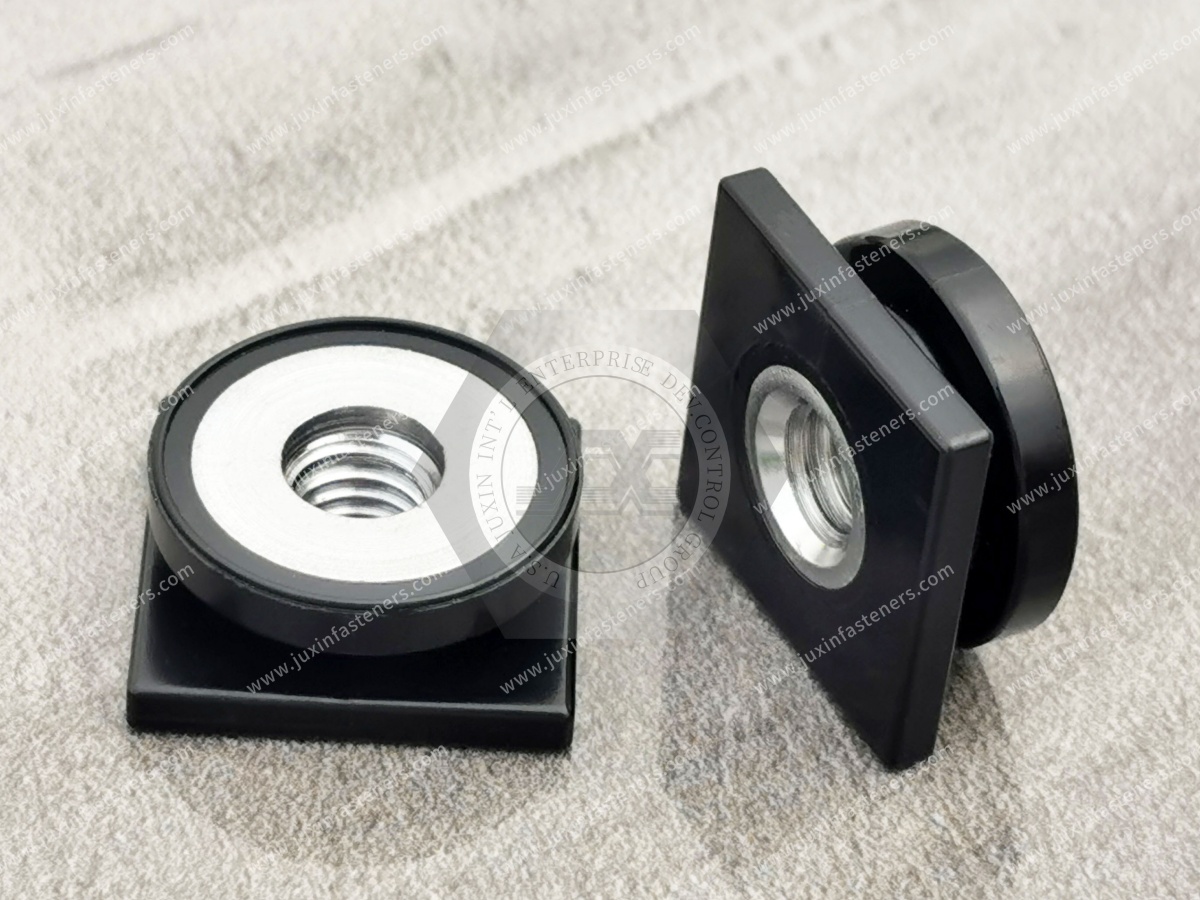
High-Strength Automotive Bolt Property Classes
Metric carbon steel and alloy steel bolts are commonly specified using property classes defined by ISO 898-1 within its applicable scope.
| Property class | Nominal tensile-strength designation | Typical selection consideration |
|---|---|---|
| 8.8 | 800 MPa | Suitable for selected mechanical connections |
| 10.9 | 1,000 MPa | Higher-strength applications requiring approved joint design |
| 12.9 | 1,200 MPa | Specialized higher-strength applications with additional process considerations |
These values identify nominal property-class strength levels. Actual acceptance requirements are governed by the applicable standard and product specification.
Higher property class does not automatically provide better fatigue resistance, corrosion performance or resistance to vibration loosening.
Where High-Strength Automotive Bolts Are Used
Depending on OEM design requirements, high-strength steel bolts may be considered for:
Selected chassis connections
Suspension-related mechanical assemblies
Frame brackets
Engine accessory structures
Mechanical mounting systems
Commercial vehicle equipment
Safety-critical components require application-specific validation and approved customer specifications.
Automotive Engine and Powertrain Fasteners
Engine and powertrain assemblies may require bolts capable of maintaining the intended joint condition under temperature variation and cyclic loading.
Applications can include:
Engine accessory brackets
Mechanical housings
Mounting structures
Selected transmission-related components
Specialized cylinder head, connecting rod, flywheel and main bearing bolts require substantially more demanding qualification.
They must not be replaced by general-purpose bolts solely because the thread diameter and property class match.
Engineering Recommendation
For critical engine connections, use the approved OEM drawing, material specification and installation procedure.
Chassis and Suspension Fasteners
Automotive chassis assemblies require careful consideration of mechanical loading, joint stiffness, preload and fatigue.
Relevant applications may include:
Structural brackets
Frame connections
Selected suspension assemblies
Commercial vehicle chassis equipment
The correct fastener depends on the intended load-transfer mechanism and the surrounding components.
Engineering Recommendation
Verify bolt geometry, grip length, mating material, coating and tightening requirements before approving a substitute chassis fastener.
Automotive Body and Interior Fasteners
Body and interior assemblies often prioritize efficient installation, positioning, appearance and serviceability.
Common fastening solutions include:
Button head screws
Torx drive screws
Flange screws
Low-profile truss head screws
Machine screws
Self-tapping screws
Locking screws
These products should not automatically be classified as high-strength structural fasteners.
Automotive Electronics and EV Fasteners
Electronic control units, sensors, electrical housings and selected EV components require fastening systems suited to their mechanical and environmental conditions.
Important factors may include:
Compact installation space
Drive accessibility
Vibration resistance
Corrosion protection
Electrical clearance
Mating-material compatibility
Repeatable automated assembly
Fasteners used near electrical systems must also be evaluated for any application-specific electrical insulation or conductivity requirements.
A conventional metal screw does not inherently provide electrical isolation.
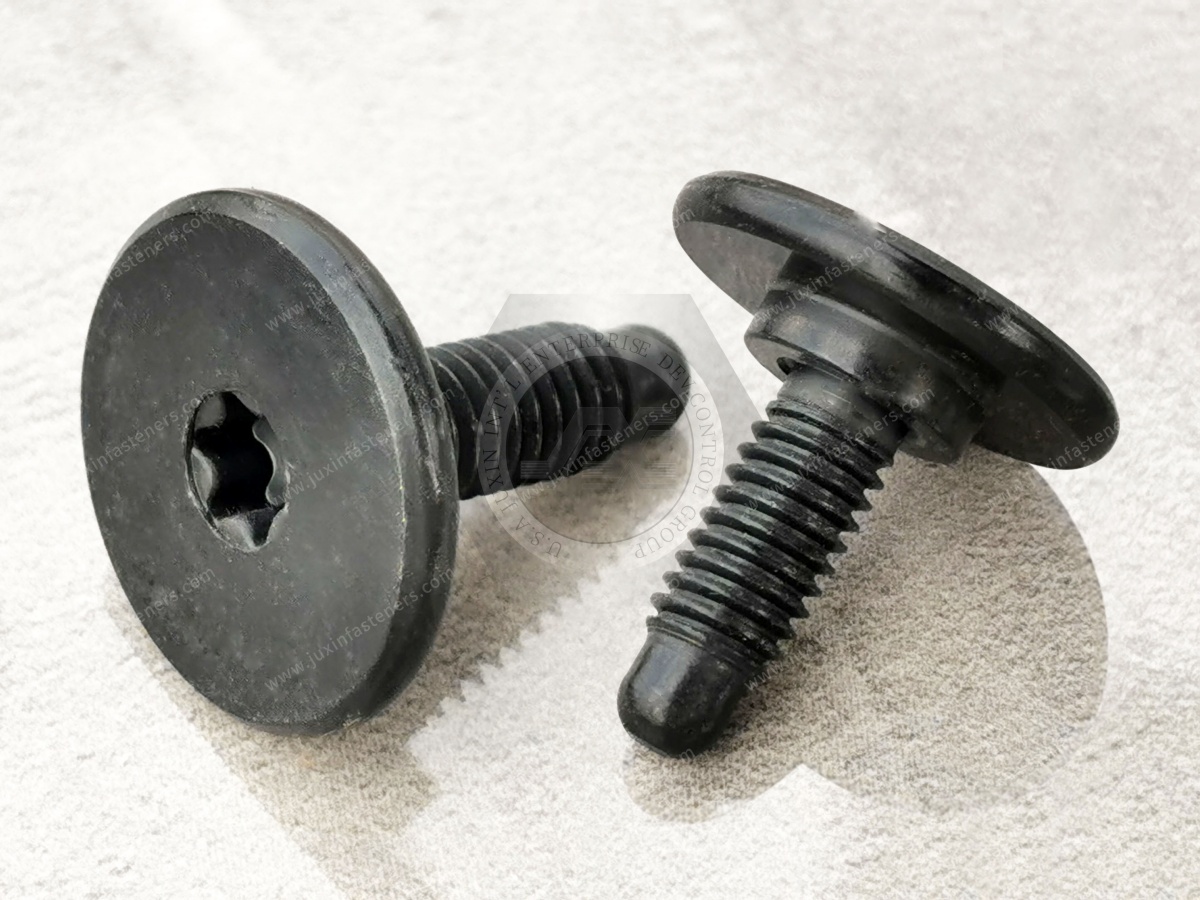
Metric Steel Button Head Torx Screws
Metric steel button head Torx screws combine a rounded, relatively low-profile head with an internal six-lobe drive.
They may be suitable for selected automotive interior, electronic housing and mechanical assembly applications.
Potential benefits include:
Positive tool engagement
Compatibility with suitable powered assembly tools
Compact head geometry
Reduced risk of certain drive-related installation problems
However, button head geometry generally provides a different drive depth and bearing configuration from a conventional socket head cap screw.
Engineering Considerations
Before selecting a button head Torx screw, confirm:
Nominal diameter and thread pitch
Head diameter and height
Drive size
Available tool clearance
Required tightening torque
Mating-thread strength
Surface treatment
Applicable dimensional specification
Important Limitation
A button head Torx screw should not automatically replace a high-strength hex head or socket head bolt in a structural joint.
The head geometry, drive capacity and joint loading must be reviewed.
Production-Line Advantage
For suitable applications, consistent Torx drive engagement can support repeatable automated tightening.
However, the screw and tool combination must be validated to avoid recess damage, incomplete engagement and installation defects.
Thread-Locking Automotive Screws
Thread-locking screws incorporate features intended to resist unwanted rotation or provide additional locking behavior.
Different technologies work through different mechanisms.
Common approaches include:
Pre-applied adhesive thread-locking compounds
Nylon patch locking features
Prevailing torque locking designs
Mechanical locking components
These systems are not interchangeable without engineering review.
Pre-Applied Adhesive Thread-Locking Screws
A pre-applied adhesive system may develop locking resistance after assembly under specified conditions.
Performance depends on the adhesive chemistry, mating materials, surface condition, temperature and installation process.
Some products may also provide sealing characteristics when specifically designed and qualified for that purpose.
Nylon Patch Screws
Nylon patch screws use a polymer feature on part of the external thread to create prevailing torque during installation.
Potential applications include:
Automotive electronic assemblies
Mechanical housings
Equipment brackets
Selected transportation components
Important Engineering Distinction
Prevailing torque is not the same as bolt preload.
A nylon patch can increase the torque required to turn a screw without necessarily increasing the clamp load achieved at a given total tightening torque.
Production Recommendation
When specifying nylon patch screws, distinguish between prevailing torque requirements and the torque or clamp load required for the joint.
Reuse and Temperature Considerations
Locking performance may change after repeated installation or exposure to certain temperatures.
Reuse limits and operating conditions must be established from the selected product specification.
Serrated Flange Screws and Locking Nuts
Serrated flange fasteners incorporate surface features intended to increase resistance to rotation in suitable assemblies.
Flange designs may also provide a wider bearing surface and reduce separate washer handling.
However, serrations can damage coatings or mating surfaces, and their locking effectiveness depends on the joint.
Nylon insert lock nuts and other prevailing torque nuts may be suitable for certain automotive applications,
but their temperature limits and installation characteristics must be considered.
Engineering Recommendation
Choose locking technology according to the actual vibration, temperature, surface and maintenance requirements.
Stainless Steel Automotive Screws
Stainless steel screws may be selected where corrosion resistance, appearance or environmental compatibility is important.
Potential applications include:
Selected exterior components
Automotive electronics
Interior equipment
Enclosures
Nonstructural brackets
Austenitic stainless steel fasteners such as A2 and A4 products are commonly specified according to relevant stainless steel fastener standards, including ISO 3506-1 within its scope.
Their mechanical-property designation differs from carbon steel property classes such as 8.8, 10.9 and 12.9.
Important Material Limitation
Stainless steel should not be assumed to provide the same tensile strength or fatigue performance as a high-strength alloy steel bolt.
The correct choice depends on mechanical requirements, corrosion exposure, mating materials and cost.
Galling and Thread Seizure
Stainless steel threaded connections may be susceptible to galling under certain installation conditions.
Risk factors can include:
High friction
Surface condition
Material pairing
Installation speed
Lubrication
Contact pressure
Engineering Recommendation
Review mating materials and installation procedures when specifying stainless steel screws for repeated assembly or high-contact-pressure applications.
Low-Profile Truss Head Screws for Automotive Panels
Truss head screws feature a relatively broad, low-profile head geometry.
They may be useful in selected panel, sheet-metal and interior assemblies.
Potential benefits include:
Wider bearing contact
Reduced protrusion compared with some conventional head styles
Suitable appearance for certain visible assemblies
Potential reduction in separate washer handling
However, a wider head does not automatically increase the tensile or shear capacity of the screw.
Engineering Considerations
Confirm:
Head diameter and height
Panel thickness
Hole size
Bearing pressure
Screw material
Thread engagement
Tool access
Surface finish
Production Recommendation
Evaluate the screw with the actual panel material to confirm that the head does not cause unacceptable deformation or surface damage during tightening.
Thread Design: Coarse Versus Fine Threads
Thread pitch affects assembly behavior, engagement and joint design.
Fine threads may be useful where a smaller thread lead or specific adjustment characteristics are required.
However, fine threads are not universally more resistant to vibration loosening.
The complete joint design, preload and locking method remain important.
Coarse Thread Considerations
Coarse metric threads may provide practical advantages in certain production environments, including easier thread starting and tolerance of some assembly conditions.
Fine Thread Considerations
Fine threads may offer design benefits in selected applications, but they can also require additional attention to cross-threading and mating-thread condition.
Engineering Recommendation
Use the approved thread specification and evaluate the mating material, installation process and service requirements before changing pitch.
Thread Engagement and Stripping Resistance
A strong bolt can still fail to provide a reliable connection if the internal thread lacks sufficient capacity.
Important factors include:
Bolt diameter
Thread pitch
Engagement length
Internal thread material
Thread tolerance
Installation load
Parent-material geometry
This is particularly relevant when high-strength steel screws are installed into aluminum, lower-strength metals or other materials with limited thread capacity.
Engineering Recommendation
Evaluate both external and internal threads rather than selecting a screw based only on its tensile-strength class.
Bolt Preload and Torque-Controlled Assembly
Preload is the tensile force developed in a bolt during tightening.
It produces compression in the clamped components.
Appropriate preload may help maintain joint contact and reduce undesirable movement.
However, tightening torque is not a direct measurement of clamp load.
The torque-preload relationship depends on friction at the threads and bearing surfaces.
Why Surface Finish Affects Tightening Results
Two screws with identical dimensions and property classes may develop different clamp loads at the same tightening torque if their coatings or lubrication differ.
This is particularly important when changing suppliers or substituting coatings.
Production Recommendation
Review torque-tension behavior whenever a relevant coating, lubricant or locking feature changes.
ISO 16047 provides a relevant testing framework for threaded fasteners within its scope.
Automotive Fastener Surface Treatments
Surface treatments should be selected according to the required corrosion protection, friction behavior, appearance and operating environment.
Zinc Plating
Zinc electroplating may be suitable for selected automotive and industrial screws where the specified corrosion requirements can be met.
Zinc-Nickel Coating
Zinc-nickel coatings may be specified for applications requiring defined corrosion performance.
Their selection should consider coating thickness, friction requirements and the intended environment.
Black Oxide
Black oxide may be selected for appearance or certain surface requirements.
It should not be assumed to provide the same corrosion resistance as a qualified zinc-based protective coating system.
Stainless Steel Passivation
Passivation is relevant to suitable stainless steel fasteners.
It is not an equivalent substitute for zinc plating or other protective coatings on conventional carbon steel.
High-Strength Steel Precaution
Susceptible high-strength steel fasteners may require additional controls relating to hydrogen embrittlement during certain manufacturing and coating processes.
Engineering Recommendation
Specify the complete coating system and acceptance criteria rather than requesting only a generic finish name.
Automotive Fastener Failure Modes and Prevention
Common joint-related problems include:
Insufficient Preload
May allow joint separation or unwanted movement.
Excessive Tightening
May cause bolt yielding, thread damage or local deformation.
Thread Stripping
May occur when the internal thread lacks sufficient strength or engagement.
Rotational Loosening
May occur when joint movement and locking conditions permit fastener rotation.
Fatigue Fracture
May develop under repeated loading when joint conditions create damaging cyclic stresses.
Corrosion Damage
May affect fastener condition, disassembly and long-term reliability.
Drive Recess Damage
May occur when the tool, screw drive or installation conditions are unsuitable.
Engineering Recommendation
Investigate the complete joint and assembly process before concluding that the fastener material or property class is the sole cause of failure.
Manufacturing Considerations for OEM Automotive Fasteners
Depending on the fastener geometry and material, manufacturing routes may include:
Cold heading
Thread rolling
CNC machining
Heat treatment
Surface coating
Application-specific locking feature processing
The correct manufacturing process depends on the approved product design.
For example, a high-strength hex bolt, a small Torx button head screw and a nylon patch locking screw may require different production and finishing operations.
Important Qualification Principle
A proposed manufacturing process does not by itself establish conformity with automotive OEM requirements.
The finished fastener must satisfy the approved drawing, relevant standards and specified verification criteria.
Automotive Fastener Quality Verification
Depending on the application, inspection and verification requirements may include:
Dimensional inspection
Thread verification
Material verification
Mechanical-property testing
Hardness testing
Surface-finish inspection
Coating verification
Torque-tension testing
Prevailing torque testing for applicable locking products
Traceability and documentation review
Not every test applies to every screw.
Specific inspection plans, test reports and documentation must be agreed for each OEM project.
Production-Line Assembly Efficiency
Production managers and manufacturing engineers evaluate fasteners not only by mechanical performance but also by how reliably they can be installed.
Important considerations include:
Automatic feeding compatibility
Screw head and drive geometry
Tool access
Thread-starting behavior
Tightening cycle time
Coating friction consistency
Fastener identification
Rework requirements
Assembly inspection
Practical Selection Example
A button head Torx screw may be attractive for a compact interior assembly because it offers suitable drive engagement and head geometry.
A nylon patch screw may be more appropriate where a validated prevailing torque feature is required.
A flange screw may reduce separate washer handling where the bearing geometry is acceptable.
These options solve different assembly problems and should not be treated as universal substitutes.
Engineering Recommendation
Select the fastener and installation method together, then validate the combination using representative production components.
OEM Automotive Fastener Supplier Qualification
Procurement teams should distinguish between standard product sourcing and custom drawing-specific supply.
For Standard Fasteners
Confirm:
Applicable standard
Dimensions
Material
Property class
Thread specification
Coating
Quantity
Packaging
For Custom OEM Fasteners
Additional requirements may include:
Approved drawing and revision
Special head or drive geometry
Custom thread features
Locking patch or coating requirements
Inspection criteria
Sample approval
Production quantity
Change control
Commercial Considerations
Supplier development and purchasing teams should also evaluate MOQ, pricing, lead time, batch consistency, packaging and long-term supply arrangements.
These requirements must be confirmed rather than assumed.
Avoiding Costly Fastener Substitutions
A lower unit price does not always reduce the total installed cost.
For example, an alternative screw may have the same thread size and nominal strength but a different drive geometry or coating friction.
This can require tooling changes, tightening-process adjustments or additional validation.
Procurement Recommendation
Compare approved alternatives based on total assembly cost, technical conformity and supply risk, not price alone.
Relevant International Fastener Standards
Standards should be selected according to the actual product.
ISO 898-1
Mechanical properties of applicable carbon steel and alloy steel bolts, screws and studs.
ISO 3506-1
Mechanical properties of applicable corrosion-resistant stainless steel bolts, screws and studs.
ISO 965 Series
Tolerances for ISO general-purpose metric screw threads.
ISO 16047
Torque/clamp force testing for threaded fasteners within its scope.
ISO 4042
Electroplated coating systems for fasteners within its scope.
ISO 10683
Non-electrolytically applied zinc-flake coating systems for fasteners within its scope.
Important Standards Distinction
A dimensional standard, mechanical-property standard and coating standard address different requirements.
Customer-specific OEM drawings may impose additional requirements.
Metric and Inch-Series Threads
Metric, UNC, UNF, BSW and BSF thread systems are different and must not be treated as directly interchangeable.
Approximate inch conversions are reference values only.
Engineering Recommendation
Confirm the full thread designation, pitch, tolerance and mating component before approving an alternative product.
Automotive Fastener Applications by Vehicle System
Passenger Vehicles
Relevant applications include body assemblies, interior components, engine accessory structures and selected chassis-related mechanical connections.
Commercial Vehicles
Applications may include heavy-duty equipment, mechanical brackets, structural assemblies and vehicle-related machinery.
Electric Vehicles
Relevant applications include battery-related housings, electrical equipment enclosures, motor-related structures and selected mechanical assemblies.
Automotive Tier Suppliers
Tier suppliers may require standard screws, locking fasteners, customized head geometries or drawing-specific fastening components for high-volume production.
Each application requires confirmation of mechanical, environmental and assembly requirements.
Frequently Asked Questions
What are high-strength automotive threaded fasteners?
They are threaded fastening components with specified mechanical properties used in appropriate automotive applications requiring higher-strength connections.
Are all automotive screws high-strength fasteners?
No. Many body, interior and electronic screws are selected primarily for geometry, installation, corrosion resistance or other application-specific requirements.
Are Class 10.9 bolts suitable for automotive chassis applications?
They may be suitable for selected approved designs, but the complete joint and OEM specification determine suitability.
Do fine threads prevent vibration loosening?
Not automatically. Preload, joint movement and the locking method remain important.
What is the difference between nylon patch screws and adhesive thread-locking screws?
Nylon patch screws generally provide a mechanical prevailing torque feature,
while adhesive systems develop locking behavior according to their chemistry and installation conditions.
Can stainless steel screws replace high-strength alloy steel bolts?
Not without verifying the mechanical properties and complete joint requirements.
Why are Torx screws used in automotive assemblies?
They can provide suitable tool engagement and support efficient installation in applications where their geometry and drive capacity meet the design requirements.
Can a truss head screw replace a flange bolt?
Only after confirming the head geometry, bearing requirements, strength and application suitability.
What should be included in an OEM automotive fastener RFQ?
Provide the approved drawing, thread specification, dimensions, material, mechanical properties, coating, locking requirements, quantities and inspection criteria.
Juxin Fasteners: OEM Automotive Threaded Fastener Supply
Juxin Fasteners supplies industrial and automotive fastening components for engineering and manufacturing applications.
Relevant product categories include:
High-strength steel bolts
Hex head screws
Flange screws
Metric button head Torx screws
Thread-locking screws
Nylon patch screws
Stainless steel screws
Low-profile truss head screws
Locking nuts
Custom drawing-specific OEM fasteners
Specific product availability, manufacturing methods, materials, coatings, locking features, inspection documentation, MOQ and lead times require technical and commercial confirmation.
Safety-critical automotive applications must be evaluated against approved OEM specifications and qualification requirements.
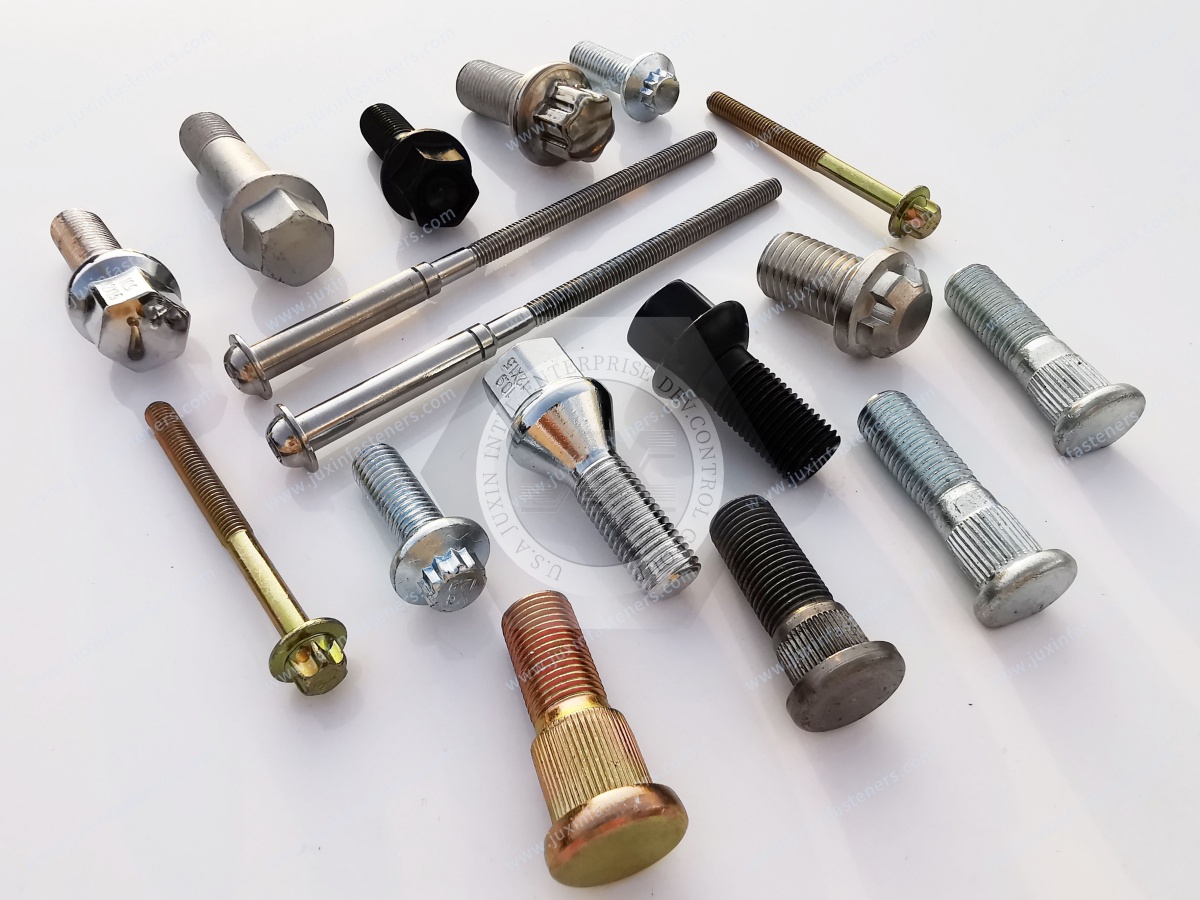
Request an OEM Automotive Fastener RFQ
Are you developing an automotive assembly, sourcing high-strength threaded fasteners or evaluating an alternative supplier for existing OEM screws?
Juxin Fasteners welcomes drawing-based inquiries from automotive OEMs, Tier-1 and Tier-2 suppliers, design engineers, mechanical engineers,
manufacturing engineers, production managers and procurement teams.
For technical evaluation and quotation, please provide:
Approved drawing or standard + part number and revision + application + thread designation + dimensions and tolerances + material
+ mechanical-property requirements + head and drive geometry + coating + locking feature + installation requirements + inspection criteria
+ prototype quantity + annual demand + batch size + packaging + target delivery schedule.
Company: Juxin Fasteners
Website: https://www.juxinfasteners.com/
Email: info@juxinfasteners.com
Send your automotive screw drawings and OEM fastener RFQ to Juxin Fasteners for specification review, technical confirmation and quotation.
Contact Us
Tel.:
+86 020 8621 0320
+86 020 3121 6067
E-mail:
Technical Support:
Navigation
SEND INQUIREY



