
Call Us
+86 136 6007 9809
Call Us
+86 136 6007 9809

May. 05, 2024
In mechanical engineering and industrial manufacturing, fastener nuts are one of the most essential components for creating reliable and secure mechanical connections.
Although nuts appear to be simple fastening components, professional engineers understand that different applications require different nut designs, materials, thread specifications, locking methods, and performance requirements.
From standard hex nuts used in general machinery to high-strength nuts used in automotive, heavy equipment, and structural applications, selecting the correct nut type directly affects:
Connection reliability
Vibration resistance
Load capacity
Service life
Equipment safety
As an experienced industrial fasteners manufacturer, Juxin Fasteners provides OEM fastening solutions including hex nuts, flange nuts, lock nuts, weld nuts, nylon nuts, coupling nuts, and customized industrial nuts for global manufacturing industries.
A nut is a mechanical fastener with internal threads designed to work together with externally threaded components such as bolts, screws, or studs.
The combination of nuts and bolts creates a strong mechanical connection through thread engagement and clamping force.
The main functions of nuts include:
Fixing mechanical components
Transmitting fastening force
Maintaining structural stability
Preventing component movement
Different thread systems determine compatibility between nuts and bolts.
Common thread standards include:
Metric thread (M system)
Unified thread (UNC / UNF)
British thread (BSW / BSF)
DIN standards
ISO standards
ANSI / ASME standards
For example:
An M8 nut must match an M8 bolt with the same pitch.
A 1/4-20 nut must match a 1/4-20 screw according to the Unified Thread Standard.
Correct thread selection is critical for ensuring fastening performance.
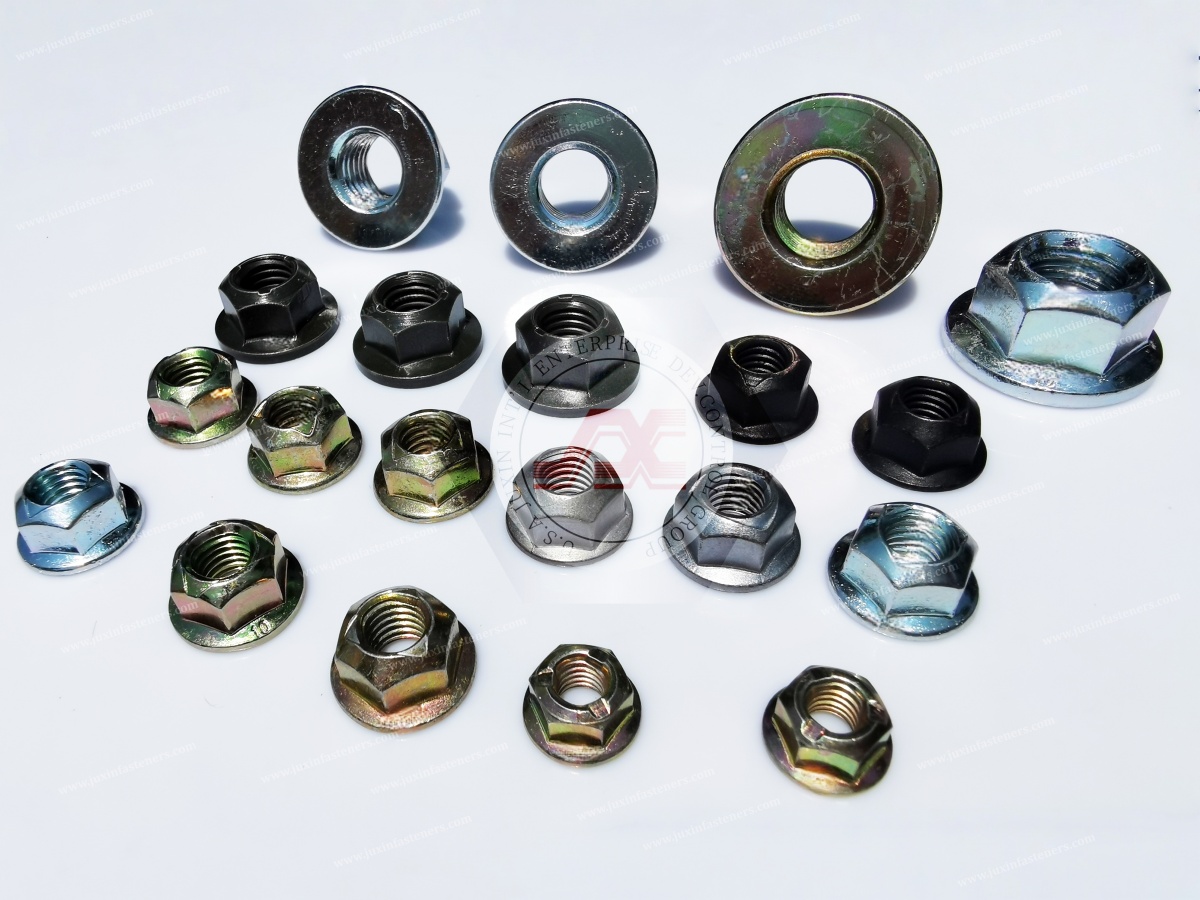
Industrial applications require different nut designs depending on assembly conditions, load requirements, and environmental factors.
The most commonly used industrial nuts include:
Hex nuts are the most widely used type of fastener nut.
Features:
Six-side external shape
Easy installation with standard tools
Reliable thread engagement
Cost-effective solution
Applications:
Machinery manufacturing
Industrial equipment
Construction
Automotive assembly
Common standards:
DIN934
ISO4032
ANSI/ASME B18.2.2
Hex flange nuts include a built-in flange that increases the bearing surface area.
Advantages:
Better load distribution
Reduces surface damage
Improves fastening stability
Eliminates separate washers
Applications:
Automotive manufacturing
Sheet metal assemblies
Electrical equipment
Industrial machinery
High-strength nuts are designed for applications requiring higher mechanical performance.
Features:
Higher tensile strength
Improved load resistance
Suitable for structural connections
Applications:
Heavy machinery
Railway equipment
Construction structures
Industrial equipment
Nylon lock nuts use a nylon insert to prevent loosening under vibration.
Advantages:
Excellent anti-loosening performance
Easy installation
Reusable in many applications
Applications:
Automotive systems
Electrical equipment
Machinery assemblies
Common standards:
DIN985
ISO10511
Unlike nylon lock nuts, all-metal lock nuts maintain performance in higher temperature environments.
Applications:
Engines
Industrial machinery
Exhaust systems
Heavy equipment
Standard:
DIN980
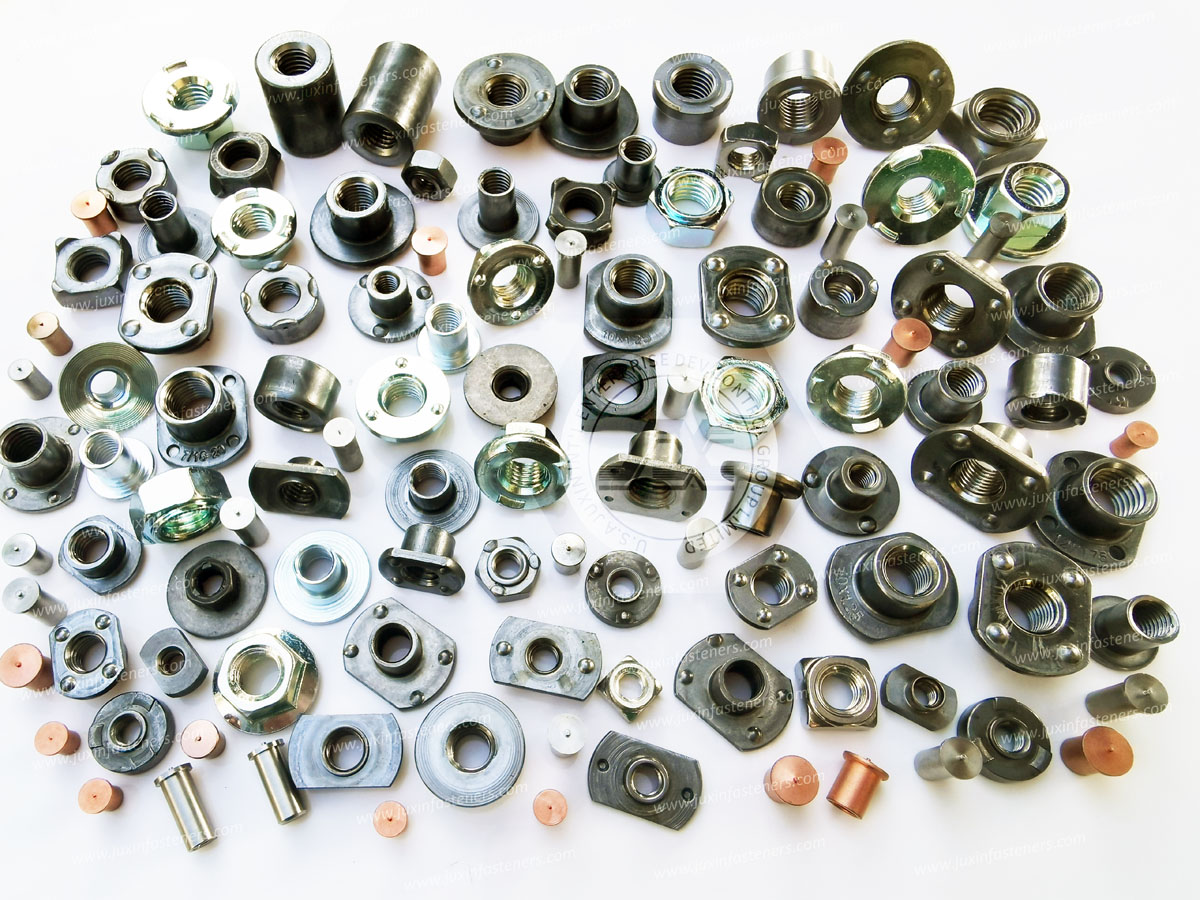
Weld nuts are designed to be permanently attached to metal components.
Advantages:
Strong connection
Efficient assembly
Suitable for automated manufacturing
Applications:
Automotive body structures
Cabinets
Industrial equipment
Common standards:
DIN929 Hex Weld Nuts
DIN928 Square Weld Nuts
Square nuts provide larger contact surfaces compared with hex nuts.
Advantages:
Better resistance against rotation
Stable positioning
Suitable for limited access areas
Applications:
Machinery
Furniture
Industrial frames
Cap nuts cover the exposed bolt end.
Benefits:
Improved appearance
Thread protection
Increased safety
Applications:
Decorative equipment
Furniture
Consumer products
Castle nuts are designed for applications requiring additional mechanical locking.
Features:
Used with cotter pins
Prevent accidental loosening
High safety performance
Applications:
Automotive systems
Steering components
Mechanical equipment
Choosing the correct nut material is critical for achieving the required performance.
304 stainless steel nuts are the most widely used stainless steel fastening products.
Advantages:
Excellent corrosion resistance
Good strength
Good temperature resistance
Applications:
Food processing equipment
Chemical machinery
Medical equipment
General industrial applications
316 stainless steel nuts provide superior corrosion resistance.
Advantages:
Excellent resistance to chloride corrosion
Suitable for marine environments
Long service life
Applications:
Offshore equipment
Marine engineering
Chemical plants
Coastal structures
Duplex stainless steel combines:
High strength
Excellent corrosion resistance
Superior toughness
Applications:
Marine engineering
Oil and gas equipment
Chemical industries
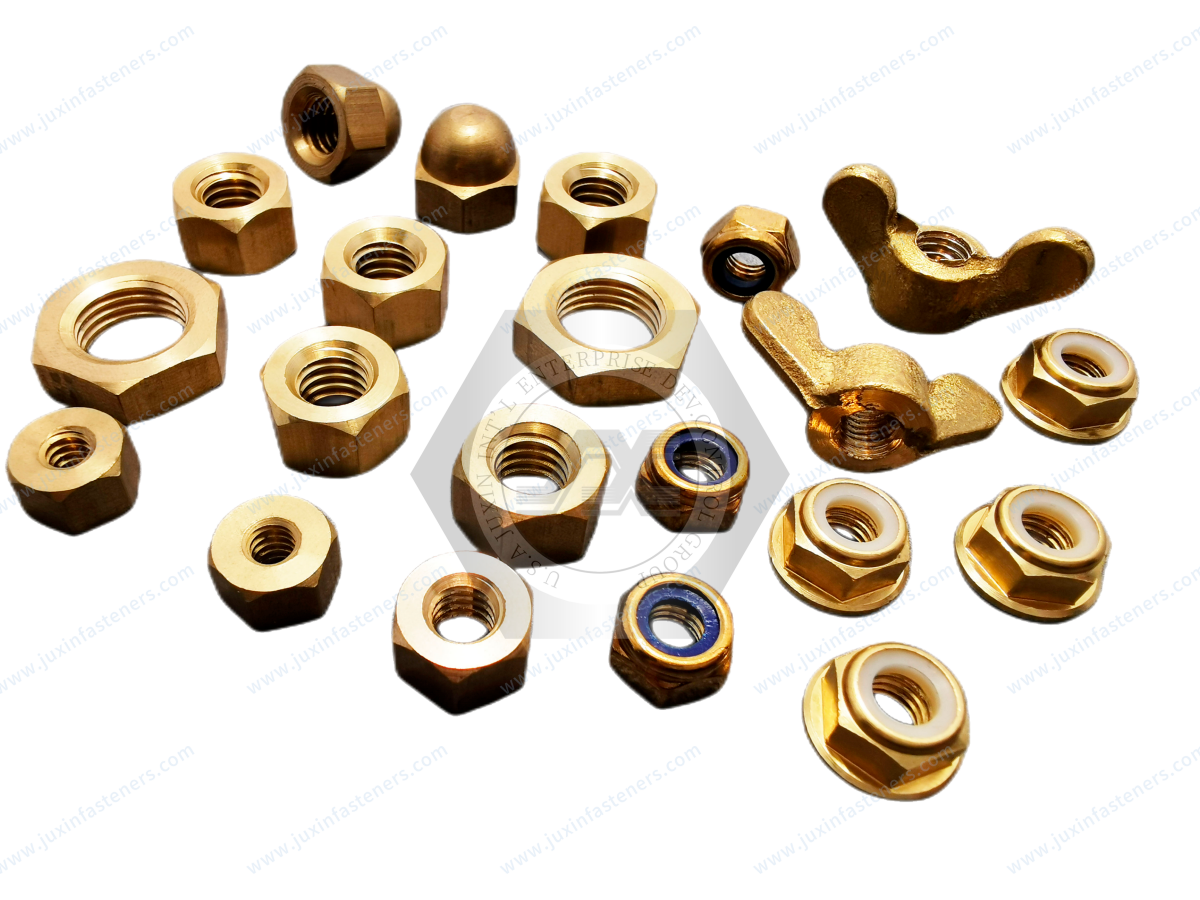
Copper nuts provide:
Excellent electrical conductivity
Excellent thermal conductivity
Applications:
Electrical equipment
Electronic systems
Heat transfer applications
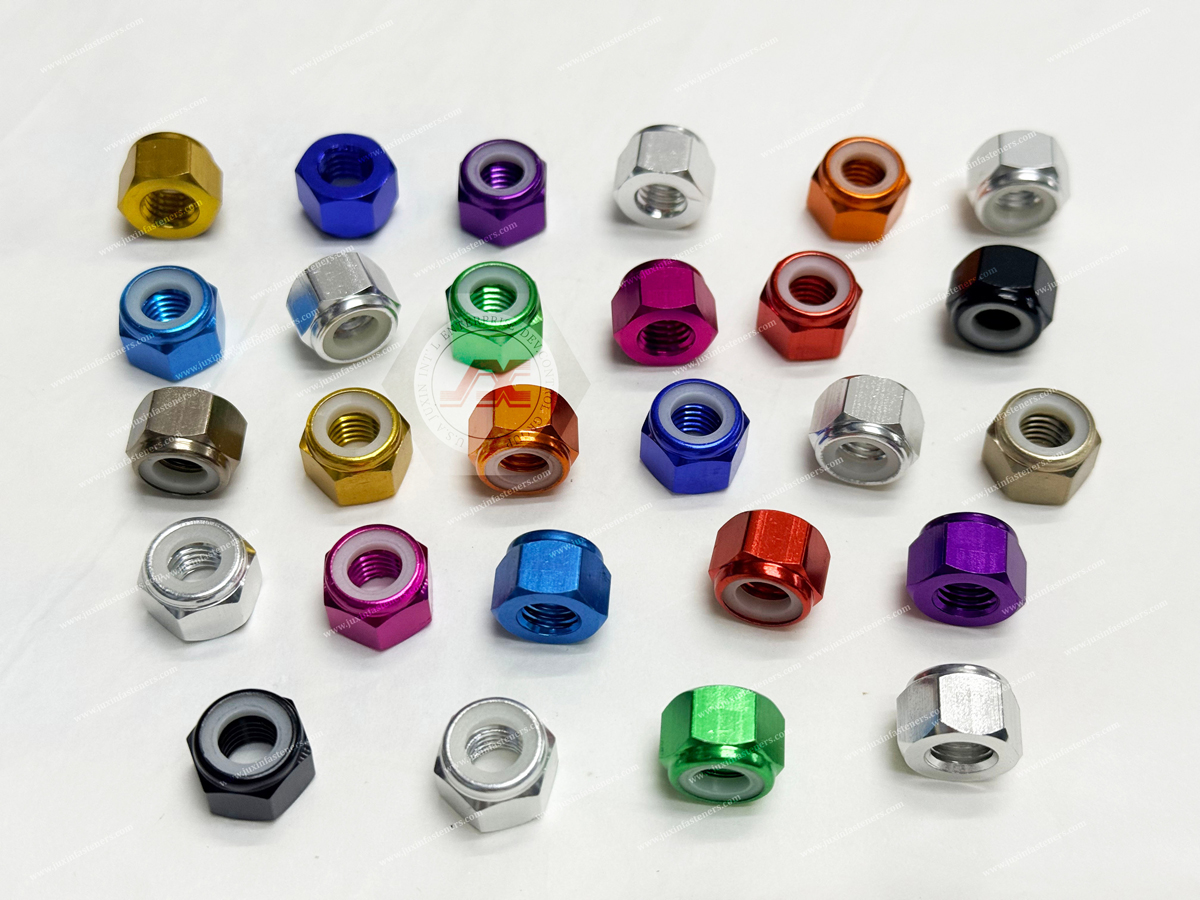
Aluminum nuts provide lightweight fastening solutions.
Advantages:
Low weight
Corrosion resistance
Applications:
Aerospace
Lightweight structures
Special equipment
Titanium nuts are premium lightweight fasteners.
Advantages:
Extremely high strength-to-weight ratio
Excellent corrosion resistance
Applications:
Aerospace equipment
Aircraft structures
High-performance engineering systems
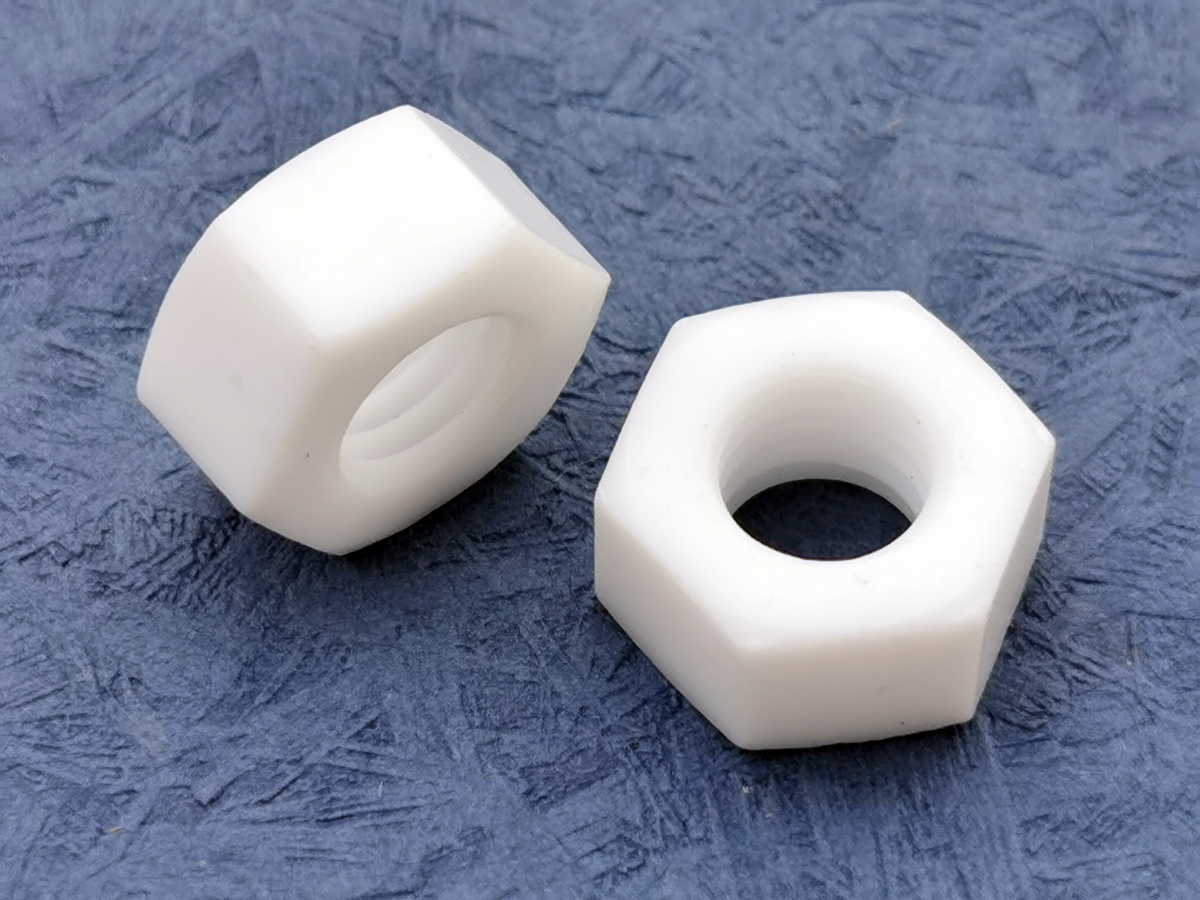
PTFE nuts provide excellent chemical resistance.
Advantages:
Low friction
Chemical resistance
Moisture resistance
Applications:
Chemical equipment
High humidity environments
Special industrial applications
Mechanical engineers should consider the following factors when selecting nuts:
Determine:
Tensile force
Shear load
Torque requirements
High-load applications require high-strength nuts.
Consider:
Corrosion exposure
Temperature range
Chemical contact
Outdoor conditions
For marine environments, 316 stainless steel nuts are often preferred.
For machinery exposed to vibration, engineers should consider:
Nylon lock nuts
All-metal lock nuts
Specialized locking solutions
Different production environments require different nut designs.
Examples:
Automated production → Weld nuts
Frequent maintenance → Wing nuts
Safety applications → Castle nuts
Limited space → Thin nuts
Fastener nuts are widely used across multiple industries:
Applications:
Vehicle chassis
Battery systems
Body structures
Interior components

Specialized nuts are used in:
Battery packs
Motor systems
Electrical assemblies
Requirements include:
Vibration resistance
Lightweight design
Corrosion protection
Applications:
Machine frames
Hydraulic equipment
Automation systems
Applications:
Control cabinets
Power equipment
Communication systems
Applications:
Steel structures
Bridges
Industrial buildings
Professional nut manufacturing requires strict quality control.
Juxin Fasteners performs inspection including:
Checking:
Thread accuracy
Nut size
Tolerance requirements
Including:
Tensile strength testing
Hardness testing
Torque testing
Including:
Chemical composition analysis
Material grade confirmation
These controls ensure reliable performance for OEM applications.
Juxin Fasteners specializes in manufacturing and supplying:
✔ Hexagon Nuts
✔ Hexagon Flange Nuts
✔ High Strength Nuts
✔ Nylon Lock Nuts
✔ Weld Nuts
✔ Square Nuts
✔ Cap Nuts
✔ Coupling Nuts
✔ Castle Nuts
✔ Customized OEM Nuts
Our fastening solutions support:
Automotive manufacturers
Industrial equipment companies
Electrical manufacturers
New energy industries
Machinery OEM customers worldwide
With professional manufacturing capability and engineering support, Juxin Fasteners delivers reliable industrial nut solutions for global OEM applications.
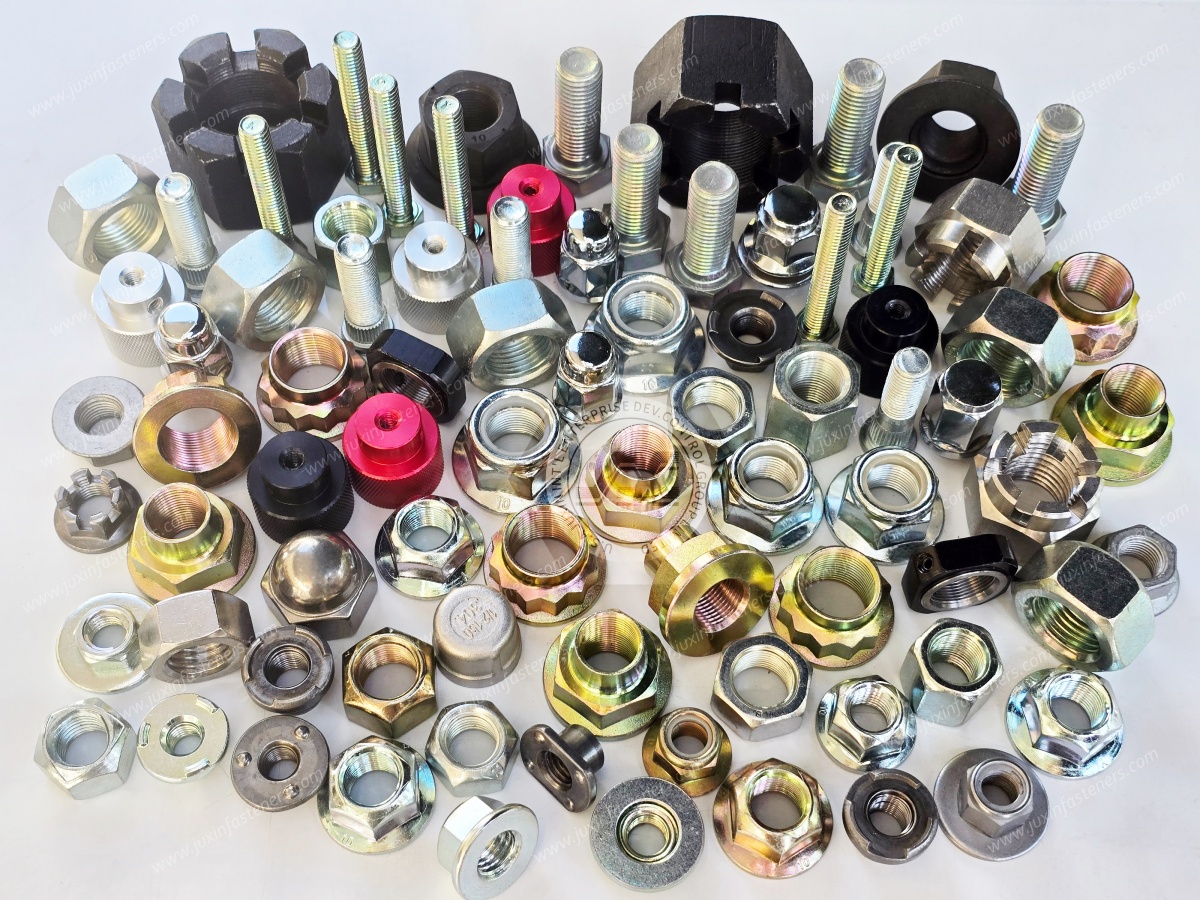
If you need OEM fastener nuts, stainless steel nuts, high-strength nuts, flange nuts, weld nuts, or customized industrial fastening solutions, our engineering team is ready to support your project.
Email: info@juxinfasteners.com
Website: www.juxinfasteners.com
 MORE NEWS
Sep. 27, 2026
Sep. 27, 2026
Sep. 27, 2026
Contact Us
Tel.:
+86 020 8621 0320
+86 020 3121 6067
E-mail:
Technical Support:
Navigation
SEND INQUIREY