
Call Us
+86 136 6007 9809
Call Us
+86 136 6007 9809

Jan. 13, 2024
Should an industrial assembly use a rivet, screw, bolt or rivet nut?
The answer depends on much more than fastener cost.
The correct fastening method is determined by the complete joint: access, parent material, material thickness,
required serviceability, load direction, vibration, installation process, production volume and maintenance strategy.
A blind rivet can be an efficient solution for a permanent sheet-metal joint with access from only one side.
A screw or bolt is generally more appropriate when the assembly must be removed.
A rivet nut can create a reusable threaded attachment in suitable thin material where a conventional nut may be difficult to access.
Selecting the wrong fastening architecture early in product development can create problems later in production, maintenance or supplier sourcing.
JUXIN FASTENERS supplies industrial OEM fastening components including:
Blind rivets
Closed-end blind rivets
Solid and semi-tubular rivets
Rivet nuts
Screws and bolts
Lock nuts
Self-clinching nuts and studs
Threaded inserts
Plastic and nylon fasteners
Drawing-based custom fasteners
CNC machined components
This engineering guide compares the major fastening approaches and explains when each should be considered.
| Engineering Requirement | Rivet | Screw / Bolt | Rivet Nut |
|---|---|---|---|
| Permanent joint | Strong candidate | Possible but removable | Used with removable screw |
| Routine disassembly | Generally unsuitable | Strong candidate | Strong candidate with screw |
| One-side installation | Blind rivet can be suitable | Depends on thread strategy | Can create thread from accessible side |
| Thin sheet | Often suitable | Thread engagement may be limited | Useful for reusable thread in suitable thin material |
| Backside nut access unavailable | Blind rivet | Requires alternative thread solution | Strong candidate |
| Maintenance panel | Usually not preferred | Strong candidate | Strong candidate |
| Fast repetitive assembly | Can be advantageous | Depends on automation and joint | Additional installation operation required |
| Rotational thread loosening | No threaded joint | Must be considered | Screw joint still requires evaluation |
| Permanent low-part-count joint | Strong candidate | Usually more components | More complex than a simple rivet |
| Reusable threaded attachment | No | Yes | Yes |
| Future component replacement | Rivet must normally be removed | Straightforward when designed correctly | Straightforward when designed correctly |
This comparison is a decision framework rather than a universal specification.
The correct choice depends on the actual joint.
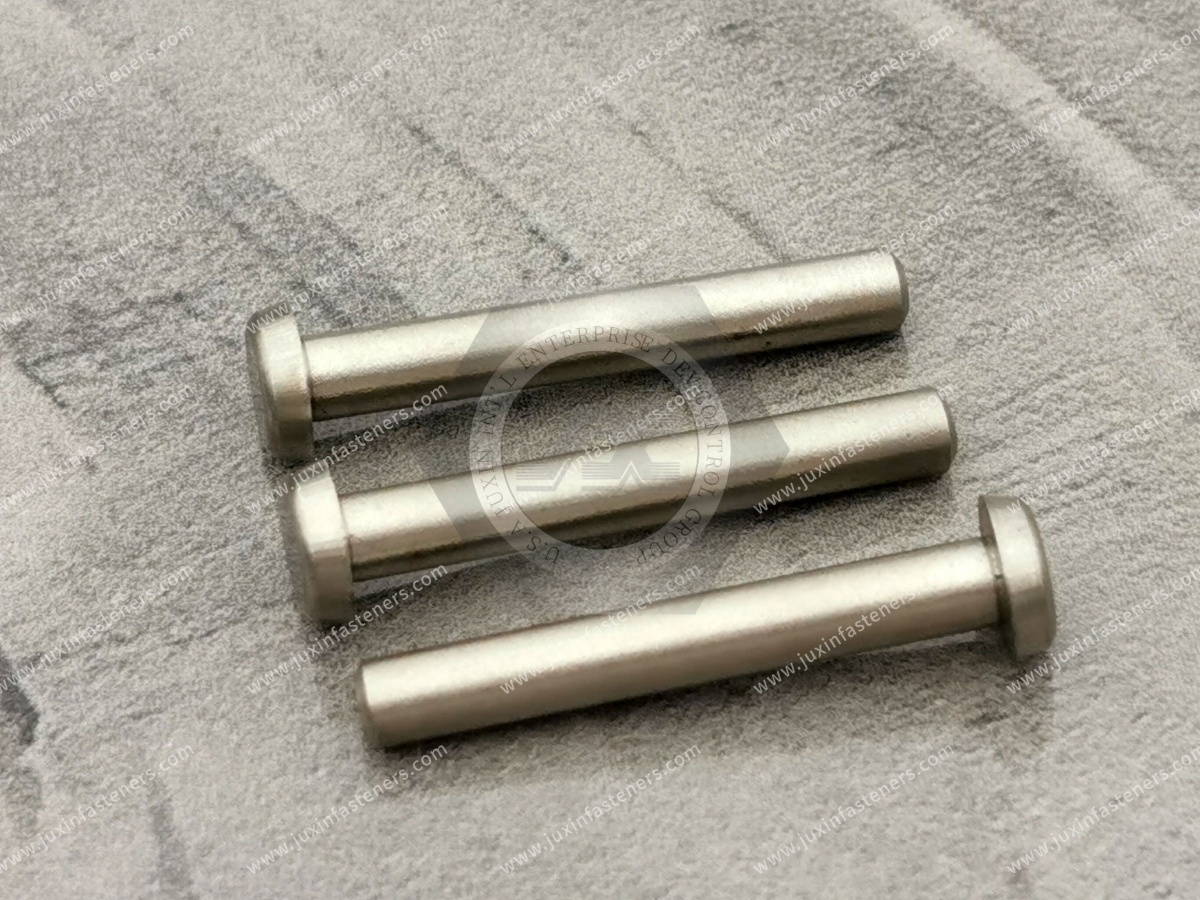
Rivets are particularly useful when the design requires a permanent mechanical connection.
A riveted joint can be attractive when:
The assembly does not require routine disassembly
Thin sheet materials are being joined
Backside access is restricted
Production speed is important
A low component count is preferred
A threaded joint is unnecessary
The assembly process is designed around riveting equipment
Typical applications include:
Sheet-metal enclosures
Electrical cabinets
Electronic chassis
HVAC equipment
Automotive components
Machinery covers
Internal brackets
Equipment panels
Industrial assemblies
The major question is not whether a rivet is “stronger” than a screw.
The real question is whether a permanent formed joint is appropriate for the product's entire life cycle.
Screws and bolts are generally more suitable when the assembly must be opened, adjusted, repaired or replaced.
Common applications include:
Service panels
Replaceable modules
Machine guards requiring maintenance access
Equipment covers
Adjustable assemblies
Components requiring periodic inspection
Parts that may need replacement during product life
Threaded fasteners also provide greater flexibility during development because components can be assembled and disassembled repeatedly.
However, engineers must consider:
Available thread engagement
Clamp load
Tightening method
Torque
Friction
Vibration
Thread locking strategy where required
Access for installation tools
Nut or threaded-hole access
Repeated assembly cycles
A removable joint introduces different engineering questions from a permanent riveted joint.
A rivet nut, also called a blind rivet nut, rivnut or threaded insert in various industrial contexts, can create an internal thread in suitable thin material.
It is particularly useful when:
The parent sheet is too thin for sufficient direct thread engagement
A reusable threaded attachment is required
Backside access for a conventional nut is unavailable
The assembly must be removable
A screw must be installed repeatedly during maintenance or final assembly
Typical applications include:
Electrical enclosures
Equipment cabinets
Automotive assemblies
HVAC equipment
Sheet-metal housings
Machinery
Control systems
Industrial equipment
A rivet nut should not be treated simply as a “removable rivet.”
Its function is fundamentally different: it creates a threaded attachment point.
One of the most important fastening decisions should be made before selecting diameter, material or finish:
Will this joint ever need to be opened?
If the answer is no, a permanent fastening method such as riveting may be efficient.
If the answer is yes, a screw, bolt, rivet nut, threaded insert or another serviceable fastening strategy may be more appropriate.
This sounds simple, but it has major downstream consequences.
A permanent fastener used on a maintenance-access panel may create:
Longer service time
Destructive fastener removal
Risk of panel damage
Debris from drilling out rivets
Replacement-fastener requirements
Increased maintenance complexity
Conversely, designing a removable threaded joint where permanent assembly is sufficient can add components and assembly operations that provide little functional value.
Assembly access often determines the fastening technology.
If both sides of the joint are accessible, engineers may consider:
Bolt and nut
Solid rivet
Semi-tubular rivet
Other two-sided fastening systems
If only one side is accessible, options can include:
Blind rivet
Rivet nut plus screw
Self-clinching or pre-installed threaded hardware where manufacturing sequence allows
Other application-specific blind fastening solutions
This is especially important in:
Closed enclosures
Box sections
Tubular structures
Equipment cabinets
Automotive body assemblies
HVAC housings
Access should therefore be defined early in the product design rather than after the fastener has already been selected.
Thin sheet creates a particular fastening challenge.
A screw requires adequate thread engagement somewhere in the joint.
If a screw is threaded directly into very thin sheet, the available thread engagement may be insufficient for the required load or repeated assembly.
Possible engineering solutions include:
Blind rivet for a permanent joint
Rivet nut for a reusable threaded joint
Self-clinching nut where the parent material and installation conditions are suitable
Thread-forming or application-specific screw where validated
Separate nut where backside access exists
The important point is that thin sheet does not automatically mean “use a rivet.”
The correct solution depends on whether the joint must be permanent or serviceable.
Rivets are often described as “vibration resistant,” but the engineering comparison requires more precision.
A riveted joint does not contain the same rotational threaded interface as a conventional screw-and-nut joint, so rotational thread loosening is not the same failure mechanism.
However, a riveted joint can still fail under vibration or cyclic loading due to factors such as:
Incorrect rivet selection
Hole enlargement
Parent-material deformation
Fatigue
Poor installation
Inadequate edge distance
Improper joint geometry
A threaded joint has different potential failure mechanisms, including loss of preload and rotational loosening under certain conditions.
Engineers should therefore avoid the simplified conclusion:
“Rivets do not loosen, so rivets are always better for vibration.”
The correct question is:
Which joint architecture maintains the required mechanical performance under the actual vibration and load spectrum?
Where vibration performance is critical, the completed assembly should be validated under representative conditions.
One important engineering distinction is how the joint develops and controls clamping.
A properly engineered bolted joint can use bolt preload to clamp components together.
That preload and the resulting joint behavior depend on variables including:
Tightening torque
Friction
Thread geometry
Bearing surfaces
Bolt stiffness
Joint stiffness
A riveted joint develops its connection through rivet deformation and interaction with the parent materials.
The two fastening methods therefore should not be treated as interchangeable solely because their nominal diameters are similar.
If an application depends on a defined preload or controlled clamp force, engineers must evaluate whether the selected fastening method can provide the required joint behavior.
Riveting can provide production advantages in suitable high-volume applications, but it is not universally faster than screw assembly.
Actual cycle time depends on:
Fastener feeding
Tooling
Automation
Operator access
Number of components
Installation orientation
Required inspection
Rework strategy
Assembly-line design
A blind rivet can reduce component handling because a separate nut may not be required.
However, modern automated screwdriving can also achieve high production rates.
Therefore, production engineers should compare complete installed cost and cycle time, not only the unit price of the fastener.
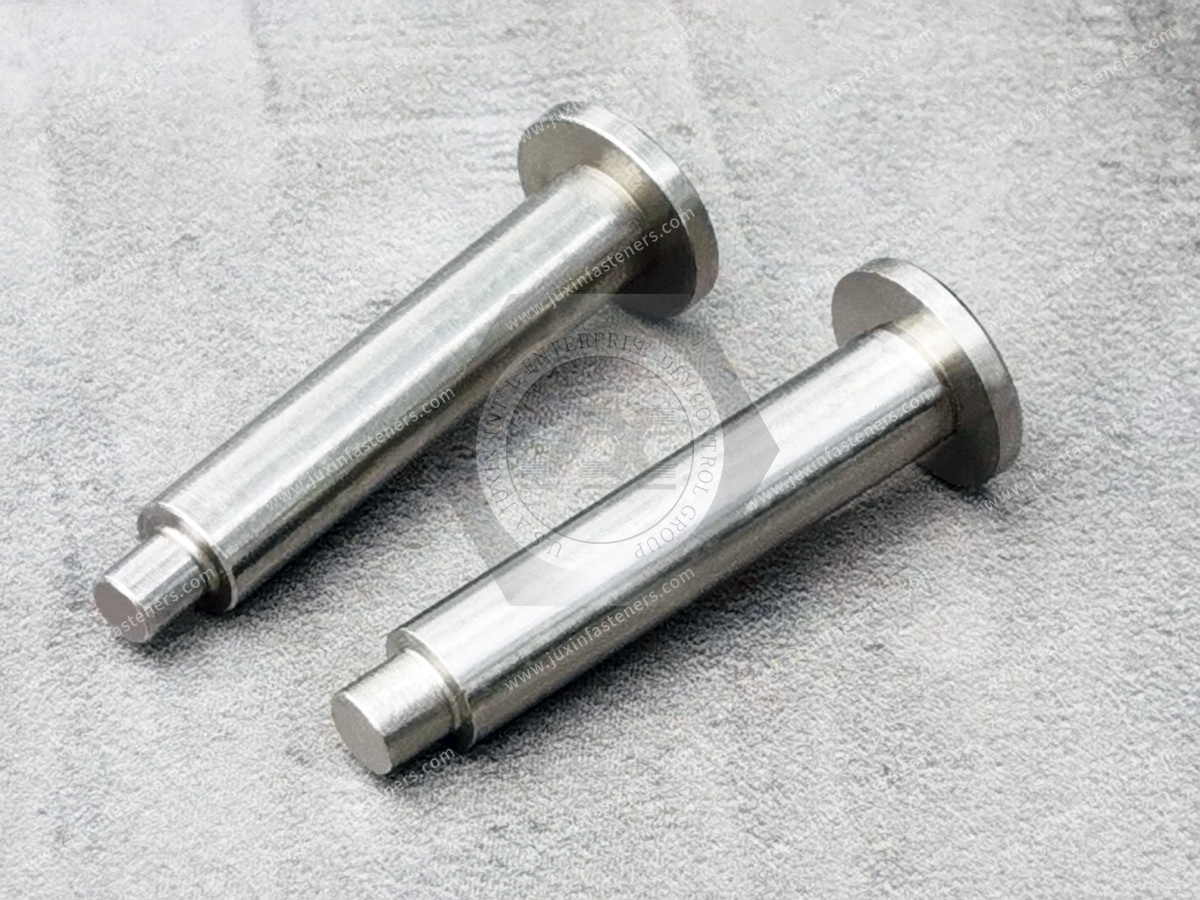
Procurement teams often compare fasteners by piece price.
That can produce the wrong decision.
A better commercial comparison is:
Installed Joint Cost = Fastener + Secondary Components + Installation Time + Tooling + Inspection + Rework + Maintenance Impact
For example, a lower-priced screw may still require:
A nut
A washer
Thread-locking component or process
Two-sided assembly access
Additional handling
A rivet may reduce some of those operations in a permanent joint.
Conversely, using a permanent rivet in a serviceable assembly may increase lifetime maintenance cost.
This is why engineering and procurement should evaluate fastening architecture together.
These two fasteners are often confused because both can be installed from one side.
But their functions are very different.
The joint is intended to remain permanent
Two or more components must be joined
Routine disassembly is unnecessary
One-side installation is required
A reusable internal thread is required
A screw or bolt will be installed afterward
The assembly needs future removal
Parent material is suitable for rivet-nut installation
Backside access is limited
For procurement, this distinction is critical.
A request for “a blind fastener for thin sheet” is not enough information to determine whether the project needs a blind rivet or a rivet nut.
Adding a rivet nut does not automatically solve every thin-sheet threading problem.
Two important performance considerations are spin-out resistance and pull-out resistance.
Spin-out can be influenced by:
Rivet nut body geometry
Knurling or anti-rotation features
Hole size
Parent material
Sheet thickness
Installation quality
Applied tightening torque
Pull-out behavior can be influenced by:
Parent material strength
Sheet thickness
Hole condition
Rivet nut geometry
Installation
Applied axial load
For this reason, the rivet nut should be validated in the actual parent material rather than selected only from thread size.
For blind rivets, the combined thickness of the materials being joined must be compatible with the specified grip range.
Selecting a rivet only by diameter and length can create installation problems.
An unsuitable grip condition can contribute to:
Poor blind-side formation
Insufficient clamping
Sheet distortion
Inconsistent installation
Reduced joint reliability
Procurement teams should therefore request the actual material stack from engineering before sourcing an alternative blind rivet.
Fastener performance depends on the interface with the parent material.
For riveted and inserted fastening systems, engineers should consider:
Hole diameter
Hole roundness
Burr condition
Hole alignment
Edge distance
Surface condition
Parent-material hardness
Sheet thickness
An oversized hole can affect blind-rivet formation or rivet-nut anti-rotation performance.
A poorly positioned hole can reduce remaining edge material and change how loads are transferred into the sheet.
The fastener cannot compensate for an uncontrolled joint interface.
Engineers should avoid specifying a fastener without identifying what it will be installed into.
Relevant parent-material variables include:
Carbon steel
Stainless steel
Aluminum
Engineering plastics
Composite or specialized materials where applicable
Material thickness
Hardness
Surface coating
The same fastener may behave differently in different parent materials.
For metallic assemblies, dissimilar-metal combinations may also require evaluation for galvanic corrosion under the expected environmental conditions.
Fastener material should be selected together with the joint environment.
Depending on the product and project requirements, JUXIN FASTENERS can support fastening components in materials including:
Carbon steel
Stainless steel
Aluminum
Brass
Copper
Engineering plastics for applicable non-metallic fastening components
Material selection should consider:
Required mechanical performance
Parent material
Corrosion environment
Electrical requirements
Temperature
Weight
Surface treatment
Installation process
“Stainless steel” alone is not a complete corrosion specification.
Likewise, a protective coating should not be selected independently from the parent material and service environment.
Potential fastening requirements include:
Sheet-metal brackets
Interior components
Equipment housings
Electrical and electronic modules
Lightweight structures
Battery-system supporting components
Depending on the joint, engineers may consider blind rivets, rivet nuts, weld nuts, screws, bolts, lock nuts or custom drawing-based fasteners.
Final selection should follow the customer drawing, material system, production process and validation requirements.
Typical applications include:
Electrical enclosures
Electronic chassis
Internal brackets
Control cabinets
Communication equipment
Power electronics housings
Permanent enclosure joints may use blind rivets, while removable covers may benefit from screws installed into rivet nuts, self-clinching hardware or another suitable threaded attachment.
HVAC assemblies often combine thin sheet, panels, brackets and service-access components.
A fastening strategy may therefore use different technologies within the same product:
Rivets for permanent sheet-metal joints
Rivet nuts for removable panels
Screws and bolts for serviceable components
Custom fasteners where geometry requires a drawing-based solution
Machinery often requires both permanent and serviceable joints.
Equipment covers, guards, internal brackets and structural components should be evaluated according to their maintenance function before the fastening method is selected.
Power-conversion, energy-storage and electrical equipment may combine:
Sheet-metal enclosures
Internal supports
Busbar-related structures
PCB assemblies
Cooling components
Serviceable modules
Mechanical fastening must be coordinated with electrical, thermal, environmental and maintenance requirements.
A self-clinching nut or stud can be another option for creating permanent captive threaded hardware in suitable sheet material.
It may be considered when:
A reusable thread is required
Installation can occur during sheet-metal manufacturing
The parent material and thickness are suitable
A captive fastener is beneficial for downstream assembly
This creates another important distinction:
Blind rivet: permanent joining
Rivet nut: reusable thread, often useful with one-side installation
Self-clinching nut: captive thread installed into suitable sheet
Screw/bolt: removable threaded fastening
There is no universal “best” choice. Each solves a different assembly problem.
Threaded inserts can be appropriate when the design requires reusable threads in materials or structures where direct threading is unsuitable.
Depending on the application, JUXIN FASTENERS supplies threaded inserts and inserts for plastic for OEM assemblies.
For plastic components, selection should consider factors such as:
Plastic material
Boss geometry
Installation method
Thread size
Pull-out requirement
Torque-out requirement
Temperature
Creep
Moisture behavior where relevant
A metal sheet rivet nut and an insert for an engineering plastic serve different parent-material systems and should not be treated as interchangeable products.
A practical engineering decision path can begin with five questions.
Yes: Consider screw, bolt, rivet nut, self-clinching hardware or threaded insert.
No: Continue evaluating permanent fastening methods such as rivets.
No: Blind rivets and suitable blind threaded fastening systems become particularly relevant.
Yes: A wider range of riveted and threaded fastening methods is available.
Yes: Evaluate grip range, thread engagement, pull-through, bearing behavior and whether a rivet nut or self-clinching solution is more appropriate.
Yes: A properly engineered threaded joint may be more appropriate than a conventional riveted connection.
Yes: Evaluate feeding, tooling, automation, cycle time, inspection and installed cost before finalizing the fastener.
This process helps prevent the common mistake of selecting a fastener first and designing the joint around it afterward.
Unit cost does not represent total installed cost.
Permanent fastening may increase future maintenance complexity.
The parent material may not provide sufficient reusable thread performance.
Parent material, hole size, sheet thickness, anti-rotation and pull-out requirements also matter.
The parent material or hole geometry may become the limiting factor.
A technically suitable fastener can still create production problems if tooling access, setting force or automation requirements are not considered.
Corrosion performance depends on the complete material and environmental system.
Prototype validation should reproduce the intended production joint as closely as practical.
Depending on the application, engineers may evaluate:
Actual parent material and thickness.
Production hole size and condition.
Installation tooling.
Fastener formation or seating.
Parent-material deformation.
Relevant tensile, shear, pull-out or torque-out behavior.
Tightening behavior for threaded joints.
Vibration or fatigue where required.
Environmental exposure where required.
Assembly repeatability.
Validation should be based on the requirements and risks of the specific application.
For a new OEM project or alternative-supplier qualification, provide as much engineering information as possible.
Useful RFQ data includes:
2D drawing
3D model for custom components where relevant
Application description
Fastener type if already selected
Parent material
Material thickness
Hole size
Thread size and pitch for threaded components
Grip range for blind rivets
Required material
Surface treatment
Relevant mechanical requirements
Pull-out or torque-out requirement where applicable
Corrosion or environmental requirements
Installation method
Annual volume
Sample or prototype quantity
Packaging requirements
Existing supplier or assembly problem
If the fastening method has not yet been finalized, providing the joint requirement can be more useful than specifying an arbitrary fastener.
A standard fastener should normally be considered first when it satisfies the functional requirements.
Customization becomes relevant when the assembly requires:
Non-standard dimensions
Special head geometry
Special body geometry
Drawing-controlled tolerances
Specific material
Specific surface treatment
Special installation interface
Application-specific mechanical requirements
Unnecessary customization can increase tooling, MOQ, qualification effort and supply-chain complexity.
Where a standard fastener cannot satisfy the joint, JUXIN FASTENERS can evaluate drawing-based manufacturing requirements.
There is no universal answer. Joint performance depends on fastener material, geometry, parent material, load direction, clamp behavior,
installation and the intended failure mode. The two fastening methods also create fundamentally different joint architectures.
A riveted joint does not experience rotational thread loosening in the same way as a conventional threaded joint, but rivets can still experience fatigue,
hole enlargement or parent-material failure. Critical assemblies should be validated under representative vibration conditions.
Use a rivet when the joint is intended to be permanent. Consider a rivet nut when the design requires a reusable threaded attachment in suitable thin material.
In some assemblies it may provide an alternative threaded attachment strategy, but the two fastening methods have different installation processes,
joint behavior and application constraints. The substitution should be evaluated against the actual parent material, loads, production process and customer requirements.
For a permanent joint, a blind rivet may be appropriate. For a removable threaded joint, a rivet nut or another suitable blind threaded fastening method may be considered.
No. Fastener piece price alone does not determine assembly cost. Tooling, installation time, secondary components, inspection, rework and maintenance should all be considered.
Yes. JUXIN FASTENERS supports drawing-based custom fastener projects according to customer dimensions, materials, surface requirements, application conditions and sourcing volumes.
The most effective fastening decision does not begin with a catalog.
It begins with the assembly.
A practical selection sequence is:
Serviceability → Access → Parent Material → Thickness → Load → Environment → Installation → Production → Validation
Once these conditions are defined, engineering and procurement teams can determine whether the application requires a blind rivet, rivet nut, screw,
bolt, lock nut, self-clinching fastener, threaded insert or custom component.
For new product development, supplier-development projects or alternative sourcing, send JUXIN FASTENERS your drawing and joint requirements.
Email: info@juxinfasteners.com
Website: www.juxinfasteners.com
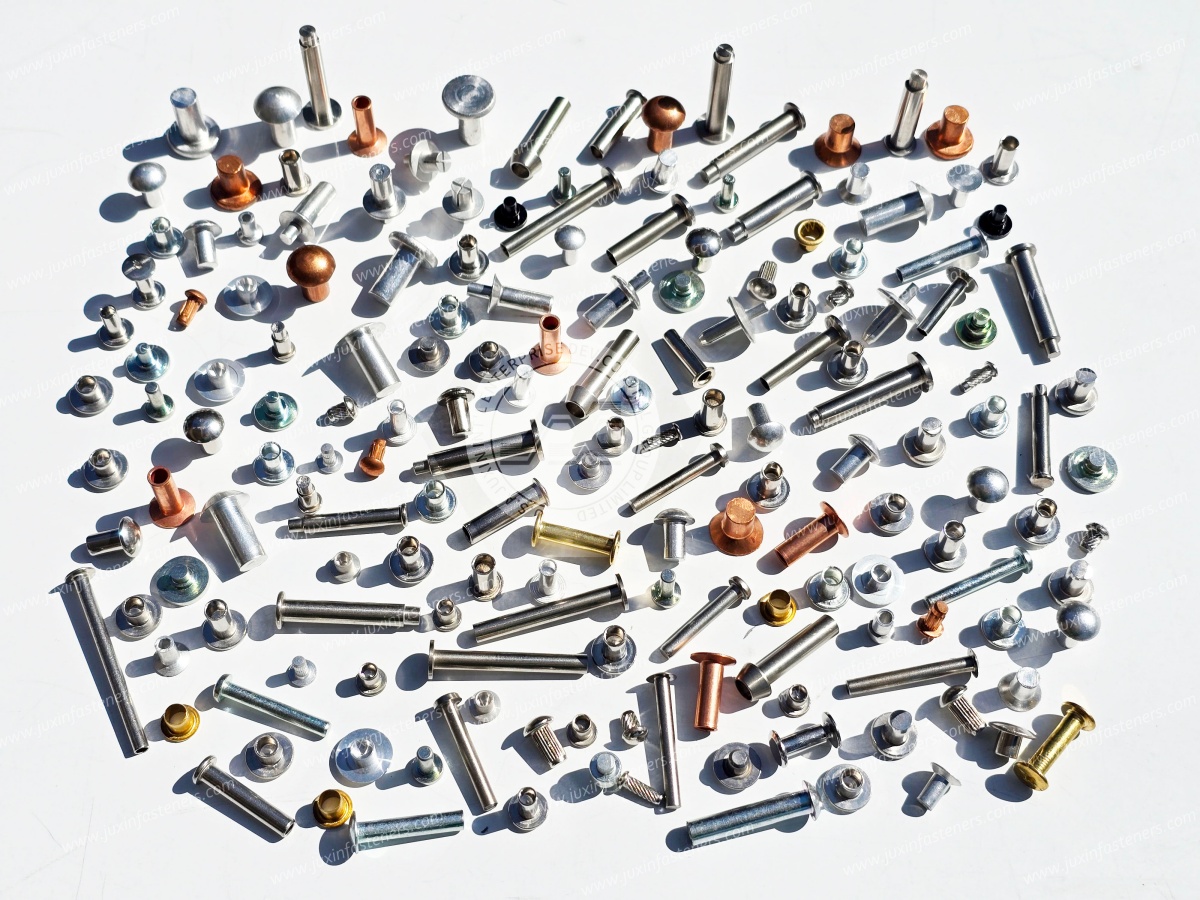
Use the existing indexed JUXIN FASTENERS URL when implementing these internal links:
Types of Rivets: Engineering Selection Guide for Industrial Applications
Electronic Equipment Rivets & PCB Fastening Solutions
Blind Rivet Selection and Installation
Closed-End Blind Rivets
Blind Rivet Nuts for Thin Sheet Assemblies
Self-Clinching Nuts and Studs
Threaded Inserts for Plastic
Plastic & Nylon Fasteners for Industrial Applications
Automotive Fastening Solutions
Industrial Automation Fastening Solutions
Custom Fasteners and Drawing-Based Components
 MORE NEWS


Oct. 13, 2026
Contact Us
Tel.:
+86 020 8621 0320
+86 020 3121 6067
E-mail:
Technical Support:
Navigation
SEND INQUIREY