
Call Us
+86 136 6007 9809
Call Us
+86 136 6007 9809

Oct. 23, 2023
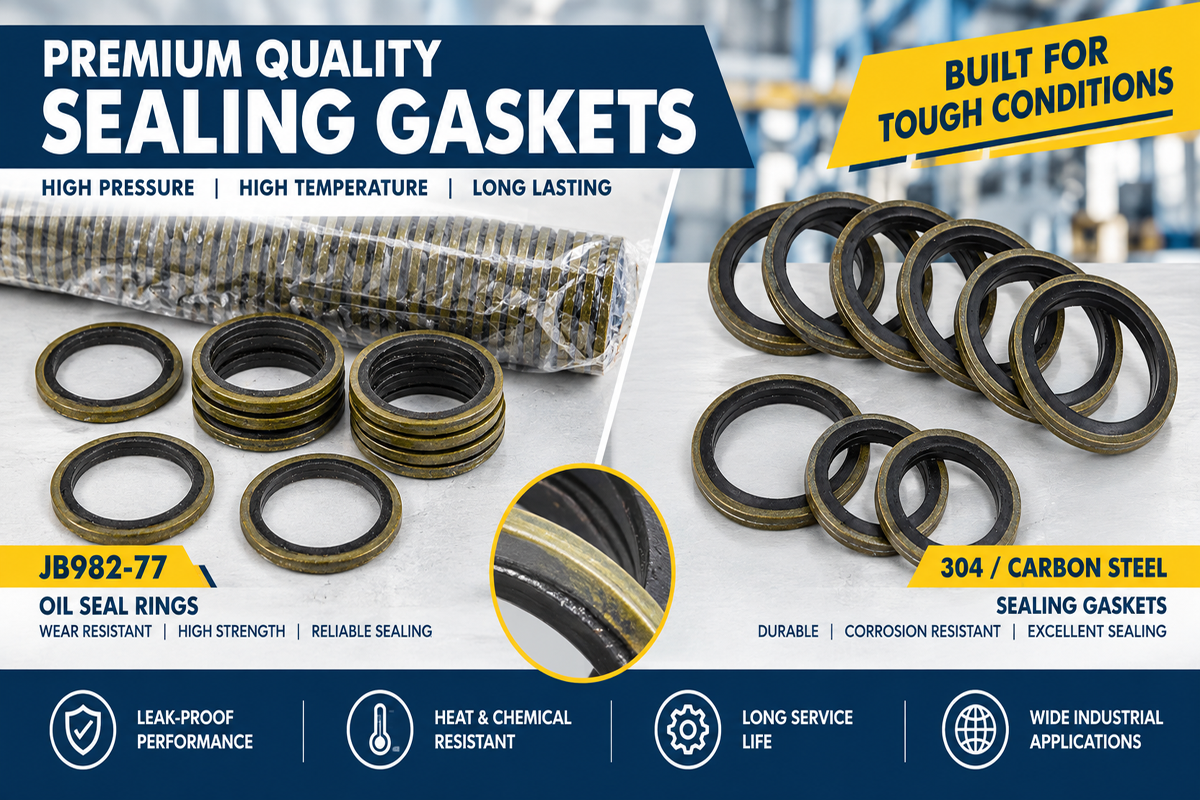
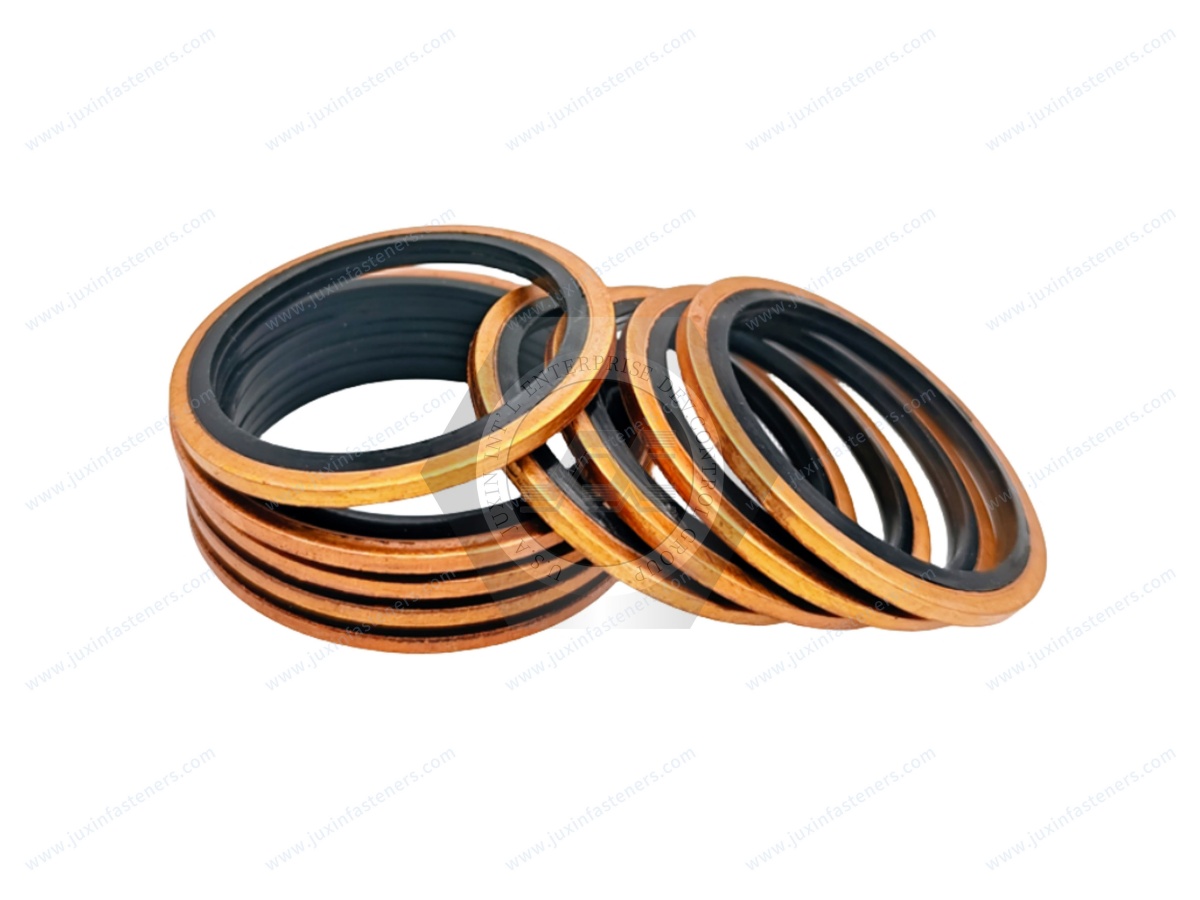
Metric bonded seals are metal-elastomer sealing washers designed primarily for static sealing around threaded fittings, plugs, ports, bolts and similar connection interfaces.
They combine a metal carrier with a bonded elastomeric sealing element. During installation, the elastomer is compressed against the mating surfaces while the metal portion provides mechanical support and helps control the sealing interface.
Although metric bonded seals may appear simple, selecting the correct component involves more than matching a nominal thread size.
Engineers and procurement teams should evaluate the complete combination of:
Dimensions + Metal + Elastomer + Fluid + Temperature + Pressure + Mating Interface + Installation
This is particularly important when sourcing replacement bonded seals or qualifying an alternative supplier for an existing OEM component.
A metric bonded seal is a bonded sealing washer dimensioned for use with an appropriate metric connection or assembly.
It typically consists of:
a metal outer carrier or washer
a bonded elastomeric sealing element
an inside diameter matched to the intended interface
an outside diameter providing the required support and contact area
a defined thickness and seal profile
Metric bonded seals are commonly associated with hydraulic and industrial fluid connections, but nominal thread size alone does not fully define the seal.
Two components described for the same nominal metric size may differ in geometry, elastomer, metal material, hardness, thickness or sealing profile.
For OEM sourcing, the approved drawing, specification or sample should therefore take priority over a generic size description.
A bonded seal primarily works through controlled compression of its elastomeric sealing element.
When the fitting, plug or fastener is tightened, axial load compresses the elastomer against the mating surfaces.
The two parts of the bonded seal perform different functions:
Metal carrier → structural support and control of the sealing interface
Elastomer → compliant sealing contact
The component should therefore be treated as an engineered metal-elastomer sealing system rather than as an ordinary washer with rubber attached to it.
Bonded sealing washers are primarily intended for static sealing interfaces.
Typical applications involve components that remain stationary relative to the sealing surfaces after assembly, such as:
threaded hydraulic fittings
plugs
ports
valve connections
manifold connections
pump connections
stationary bolted interfaces
They should not automatically be specified as dynamic seals for rotating shafts, reciprocating rods or other continuously moving sealing interfaces.
Dynamic sealing applications involve different requirements, including motion, friction, lubrication, wear and seal geometry, and normally require sealing technologies specifically designed for those conditions.
This distinction is important because a product that can tolerate equipment vibration is not automatically a dynamic seal.
A common sourcing mistake is to identify a bonded seal only by a description such as:
M8 bonded seal
M10 sealing washer
M12 bonded washer
M16 hydraulic seal
The nominal metric size is useful, but it does not completely define the component.
Correct identification may also require:
inside diameter
outside diameter
metal thickness
overall seal profile
elastomer geometry
metal material
elastomer material
hardness, where specified
surface finish or coating
applicable drawing or specification
For replacement parts, dimensional comparison should therefore go beyond checking whether the seal fits over the thread.
Several dimensions influence how the seal fits and behaves within the joint.
The inside diameter must be compatible with the fitting, bolt, plug or connection geometry.
An incorrect ID can affect:
assembly fit
seal positioning
available sealing contact
elastomer compression
relationship between the seal and thread or fitting
The outside diameter influences the available support and bearing area.
It must also fit within the surrounding assembly geometry.
A larger OD is not automatically better. The correct diameter depends on the mating interface and available sealing surface.
Metal thickness affects the structural behavior and installed geometry of the component.
For an existing OEM part, changing thickness should not be treated as a harmless substitution.
The shape and location of the elastomer determine where compression occurs.
Seemingly small differences in profile can change sealing behavior even when the basic ID and OD appear identical.
Catalog dimensions describe the component before installation.
Engineers should also consider how the seal interacts with the actual fitting and mating surface after tightening.
Elastomer selection should begin with the actual fluid and operating environment.
The material name alone does not guarantee application suitability.
NBR is commonly considered for many hydraulic oils, lubricants and petroleum-based fluid applications.
However, suitability depends on the specific fluid formulation, temperature and exposure conditions.
FKM may be considered where different temperature or chemical-resistance characteristics are required.
It should still be checked against the actual media and service environment.
EPDM may be appropriate for selected water-based media and environmental conditions.
It should not automatically replace NBR or FKM in oil or fuel-related applications.
Descriptions such as “hydraulic oil,” “coolant” or “chemical” may be too broad for material selection.
Where compatibility is critical, engineers should identify the actual media or provide the relevant customer material specification.
A useful selection relationship is:
Elastomer Suitability = Fluid + Temperature + Exposure + Pressure + Seal Geometry + Compression
Yes, where hardness is a controlled design parameter.
However, the simplified rule “softer seals better, harder lasts longer” is not a reliable engineering selection method.
Changing hardness can affect:
deformation under compression
sealing contact
extrusion behavior
assembly response
ability to conform to mating surfaces
Hardness should therefore be treated as part of the specified elastomer system rather than selected independently from the seal geometry and operating conditions.
For an existing OEM component, use the drawing or approved material specification where hardness is defined.
The metal carrier and elastomer perform different functions and should be specified separately.
Possible metal materials can include:
carbon steel
stainless steel
other application-specific metals or alloys
Selection considerations may include:
required mechanical support
corrosion environment
mating component material
surface treatment
dimensional requirements
operating temperature
customer specification
A change from coated carbon steel to stainless steel should not automatically be treated as an equivalent substitution simply because both components have the same dimensions.
Material substitutions should be reviewed against the complete application.
For carbon-steel carriers, surface treatment may be specified to address corrosion protection or other application requirements.
The required coating should be defined by the drawing, customer specification or environmental requirements.
Procurement teams should avoid approving an alternative finish based only on visual similarity.
When corrosion performance is important, specify the actual coating system and required validation rather than descriptions such as “silver finish” or “corrosion-resistant coating.”
Pressure and temperature are important, but they cannot be separated from the rest of the sealing system.
Pressure interacts with:
elastomer properties
seal geometry
compression
fitting geometry
mating surfaces
installation conditions
For this reason, a universal pressure rating should not be assigned to every bonded seal of a given nominal size.
Temperature can affect:
elastomer stiffness
elasticity
compression behavior
chemical compatibility
long-term material response
Temperature capability should therefore be evaluated together with the fluid and elastomer compound.
A material's published temperature range alone does not prove that a complete bonded seal is suitable for a particular assembly.
The sealing washer is only one part of the joint.
The mating interface can strongly influence whether the elastomer forms an effective sealing contact.
Engineers should consider:
available sealing width
surface flatness
surface condition
scratches or damage
contamination
coating
component alignment
surrounding geometry
A correctly manufactured bonded seal cannot necessarily compensate for an unsuitable or damaged mating surface.
Installation affects sealing compression, but there is no universal bonded-seal torque that applies to every assembly.
Required tightening conditions depend on the:
fastener or fitting
thread
joint design
mating materials
surface conditions
seal geometry
customer specification
Over-tightening can damage the elastomer or alter the intended sealing geometry.
Insufficient tightening may fail to establish the required sealing contact.
Torque requirements should therefore come from the validated joint design rather than from a generic washer value.
Both use elastomeric sealing, but they operate in different joint architectures.
An O-ring typically operates inside a specifically designed gland or groove that controls its deformation.
A bonded seal integrates the elastomer with a metal carrier and is commonly installed around suitable fittings, plugs or fastener interfaces.
When designing a new connection, the choice should consider:
available space
joint geometry
service requirements
assembly method
maintenance requirements
validation strategy
Neither should be selected solely because it is easier to purchase.
Copper and aluminum sealing washers rely on metallic deformation and contact behavior rather than the same metal-elastomer sealing mechanism used by bonded seals.
Metal sealing washers may be preferred in some assemblies because of their temperature, material or joint-design requirements.
Bonded seals may be preferred where controlled elastomeric sealing is appropriate.
The correct choice depends on:
Media + Temperature + Pressure + Joint Geometry + Mating Surface + Installation + Validation Requirements
These technologies should not be treated as automatically interchangeable.
Metric bonded sealing washers are especially relevant to industrial equipment containing threaded fluid connections.
Typical locations include:
hydraulic valves
pumps
manifolds
fittings
ports
plugs
fluid connectors
Applications may include:
lubrication systems
fluid-control assemblies
machine tools
industrial power units
processing equipment
equipment housings
Hydraulic and lubrication systems in mobile equipment can contain numerous threaded fluid connections where bonded seals may be specified.
Selected fluid and thermal-management assemblies may use bonded sealing components subject to the applicable OEM drawing and validation requirements.
Generic bonded seals should not automatically be specified for safety-critical automotive systems without the required engineering qualification.
Bonded seals may be considered for suitable stationary connections in:
pumps
valves
coolant circuits
fluid connectors
Compatibility with the actual coolant and operating temperature should be reviewed.
Several mistakes repeatedly create sourcing and field-performance problems.
Thread size is not a complete seal specification.
Different profiles, elastomers and metal thicknesses may look nearly identical.
Bonded washers are primarily static sealing components.
Fluid compatibility and the complete operating environment also matter.
Seal quality cannot compensate for every damaged or unsuitable interface.
Pressure capability belongs to the complete sealing system and validated application.
Metal, coating, elastomer and hardness substitutions can affect application behavior.
Replacement sourcing should follow a structured identification process.
Provide the supplier with the drawing, material requirements and applicable specifications.
Provide the complete manufacturer or customer part number together with any available technical documentation.
A sample can help identify:
dimensions
construction
metal carrier
elastomer profile
surface finish
However, a physical sample alone may not reveal the exact elastomer compound, hardness, original material specification or service requirements.
Application information should therefore accompany the sample.
Additional dimensional and application information should be collected before assuming a replacement is equivalent.
Standard metric bonded seals can be appropriate when an existing catalog configuration matches the assembly requirements.
Custom or made-to-drawing bonded seals may be required for:
non-standard ID or OD
special thickness
specific seal profile
special metal material
specified coating
application-specific elastomer
customer-controlled hardness
OEM tolerances
non-standard mating geometry
For OEM supply, the objective should be to reproduce the approved engineering specification—not simply find a washer that looks similar.
For accurate quotation and supplier evaluation, provide the information relevant to the project.
customer part number
existing supplier part number, if applicable
nominal metric size
applicable standard or specification
2D drawing
physical sample, if available
inside diameter
outside diameter
metal thickness
overall geometry
elastomer profile
dimensional tolerances where controlled
metal material
surface finish or coating
elastomer material
elastomer hardness, if specified
material documentation requirements
fluid or media
operating temperature
pressure requirements
mating component material
connection type
environmental exposure
sample quantity
production quantity
estimated annual usage
inspection requirements
packaging requirements
A complete RFQ allows engineering and procurement teams to compare suppliers on the same technical basis.
For OEM and application-specific bonded seals, sample approval should consider more than basic dimensional fit.
Depending on the project, validation may include:
dimensional inspection
material verification
coating verification
assembly fit
seal positioning
installation behavior
leakage testing under defined conditions
customer-specific functional testing
Production approval should follow the customer's defined acceptance criteria.
A practical decision path for metric bonded seals is:
Identify Connection
↓
Confirm ID / OD / Thickness / Seal Profile
↓
Identify Fluid and Temperature
↓
Select Elastomer
↓
Confirm Metal and Finish
↓
Review Pressure and Mating Interface
↓
Confirm Installation Requirements
↓
Prototype / Sample Evaluation
↓
Production RFQ
This process is more reliable than selecting a seal from nominal thread size alone.
JUXIN FASTENERS supplies standard and custom fastening and sealing components for industrial OEM and manufacturing applications.
For metric bonded seal projects, we can review existing drawings, specifications and physical samples to help establish the required:
dimensions
metal material
coating
elastomer
hardness requirements
application conditions
inspection requirements
production quantities
For a replacement component, send the existing drawing or sample together with the application information.
For a new project, provide:
Connection → Dimensions → Metal → Elastomer → Fluid → Temperature → Pressure → Mating Interface → Quantity → Validation Requirements
This gives engineering and sourcing teams a clearer basis for evaluating the component before sample and production approval.
For standard, custom or made-to-drawing metric bonded sealing washer requirements, contact JUXIN FASTENERS for technical and RFQ review.
Email: info@juxinfasteners.com
Website: www.juxinfasteners.com
Previous: Copper Bonded Seal Washers
 MORE NEWS
Sep. 27, 2026
Sep. 27, 2026
Sep. 27, 2026
Contact Us
Tel.:
+86 020 8621 0320
+86 020 3121 6067
E-mail:
Technical Support:
Navigation
SEND INQUIREY