Call Us
+86 136 6007 9809
Call Us
+86 136 6007 9809

Jul. 04, 2024
Phillips vs. Slotted Flat Head Screws: Drive Design, Assembly Efficiency and OEM Selection Guide
Phillips flat head screws and slotted flat head screws are two familiar types of countersunk machine screws used in industrial equipment and manufactured products.
Both designs can provide a flush external surface when installed in a correctly dimensioned countersink.
However, their drive geometries create important differences in tool engagement, assembly efficiency, torque transmission, maintenance and production quality.
For design engineers, the decision involves more than choosing a screwdriver recess.
For manufacturing engineers and production managers, drive selection can influence cycle time, operator consistency, bit replacement, screw feeding and rework.
For purchasing managers and supplier development teams, a proposed replacement must satisfy the original drawing, installation requirements and mechanical performance criteria.
This guide compares Phillips and slotted flat head screws from an industrial engineering and OEM procurement perspective.
JUXIN FASTENERS supplies industrial screws and related drawing-based fastening components for international manufacturers.
What Are Flat Head Screws?
Flat head screws, also called countersunk head screws in many industrial specifications, feature a conical underside designed to seat in a compatible countersunk hole.
When correctly installed, the screw head can sit flush with the surrounding surface.
This may be useful when an assembly requires:
Reduced head protrusion
Clearance for adjacent components
A smooth external profile
A specified appearance
Compatibility with an existing countersunk design
However, countersunk screws are not automatically suitable for every joint.
The head geometry, material support, thread engagement and installation method must match the application.
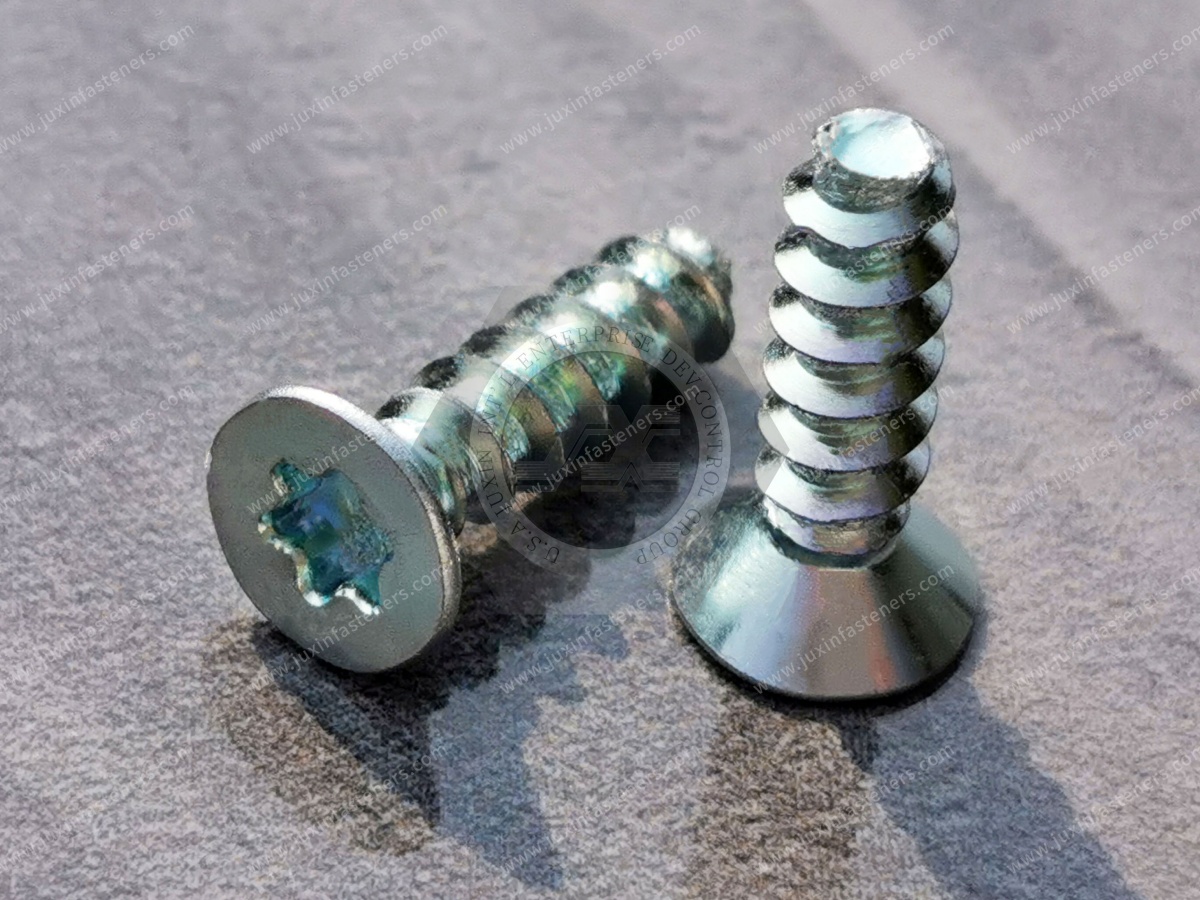
Common Countersink Angles
Common flat head screw designs include:
82° countersunk heads in certain inch-series specifications
90° countersunk heads in common metric specifications
Other angles, including 100°, in specific engineering applications
The exact head angle must be confirmed from the applicable standard or approved drawing.
Important Engineering Principle
An 82° screw and a 90° screw should not be treated as directly interchangeable.
The head angle must match the countersink geometry.
What Is a Phillips Flat Head Screw?
A Phillips flat head screw has a cross-shaped drive recess in its countersunk head.
The recess accepts a compatible Phillips driver bit.
The design is used in many industrial and commercial assemblies where cross-recessed screws are specified.
Typical Characteristics
Cross-shaped drive recess
Countersunk head
Compatibility with suitable manual and powered tools
Availability in different materials and dimensions
Potential suitability for production assembly
Engineering Advantages
A compatible cross-recessed driver may provide more convenient engagement than a straight-slot driver in certain assembly operations.
This can be beneficial for:
Repetitive assembly
Powered screwdriver use
Operator positioning
Selected automated processes
However, these advantages depend on the screw geometry, bit condition, equipment and process settings.
Phillips Drive Limitations
Phillips screws can experience:
Cam-out
Recess damage
Driver-bit wear
Poor engagement
Inconsistent installation
Tool-related surface damage
What Is Cam-Out?
Cam-out occurs when the driver tends to rise or disengage from the recess during torque transmission.
It can be influenced by:
Drive geometry
Applied torque
Axial force
Bit condition
Tool alignment
Recess dimensions
Important Limitation
Phillips drive geometry does not provide a universal torque-limiting function.
Cam-out should not be relied upon as a substitute for controlled tightening equipment.
Phillips Flat Head Screw Standards
Depending on the specified product, relevant references may include:
ISO 7046 series for applicable cross-recessed countersunk flat head screws
DIN 965 as a commonly recognized legacy designation
Applicable ASME specifications for certain inch-series products
The exact standard, recess type and dimensional requirements must be verified.
Phillips Is Not the Same as Every Cross Recess
Different cross-recess systems exist.
A Phillips driver should not automatically be assumed compatible with every cross-recessed screw.
Incorrect bit selection can damage the recess and compromise installation consistency.
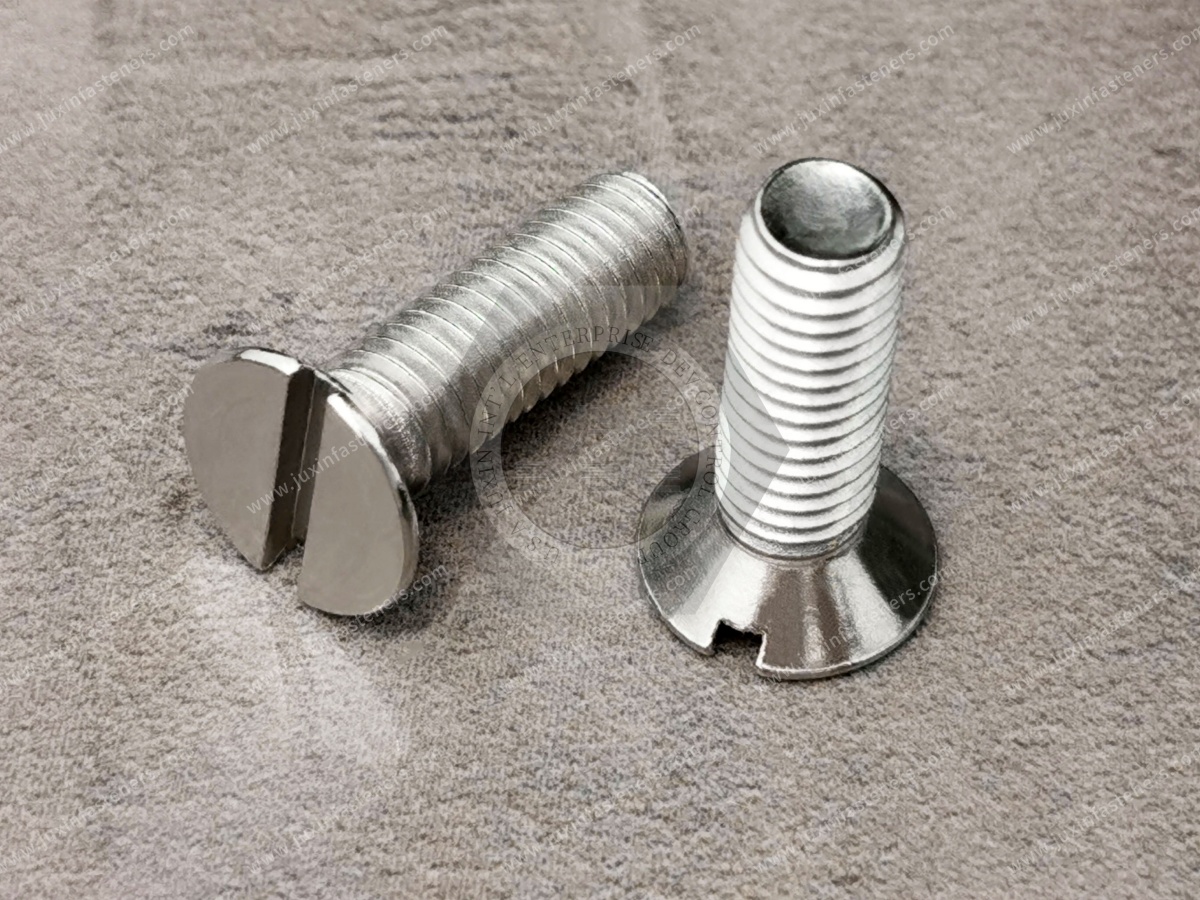
What Is a Slotted Flat Head Screw?
A slotted flat head screw has a single straight slot across its countersunk head.
The slot accepts a suitable flat-blade screwdriver or driver bit.
This drive design remains relevant in selected:
Industrial machinery
Instrumentation
Electrical equipment
Furniture hardware
Restoration projects
Legacy assemblies
Typical Characteristics
Straight-slot drive
Countersunk head
Simple tool interface
Compatibility with selected manual assembly operations
Availability in standard and custom designs
Engineering Advantages
Slotted screws may be appropriate when:
The existing design specifies a straight slot
Manual maintenance is expected
Traditional appearance is required
A particular service tool is specified
Slotted Drive Limitations
The driver must be aligned with the slot.
Potential problems include:
Blade slipping
Slot deformation
Surface scratching
Driver misalignment
Increased operator handling time
These factors can affect production efficiency.
Slotted Flat Head Screw Standards
Relevant metric product references include:
DIN 963
ISO 2009
Applicable inch-series products require their corresponding specifications.
DIN 963 and ISO 2009 should not automatically be treated as dimensionally identical without reviewing the applicable editions and drawings.
Phillips vs. Slotted Flat Head Screws: Engineering Comparison
| Selection factor | Phillips flat head screw | Slotted flat head screw |
|---|---|---|
| Drive geometry | Cross-shaped recess | Straight slot |
| Driver | Compatible Phillips bit | Correctly sized flat blade |
| Tool engagement | Multiple recess wings | Two primary slot faces |
| Driver alignment | Recess may assist positioning | Requires slot alignment |
| Powered assembly | Often practical with suitable equipment | Requires careful tool engagement |
| Automated feeding | Application-dependent | Orientation may complicate engagement |
| Drive damage | Cam-out and recess wear | Slipping and slot deformation |
| Manual maintenance | Suitable with correct bit | Suitable with correct blade |
| Countersink | Must match specified head geometry | Must match specified head geometry |
| Thread compatibility | Depends on specification | Depends on specification |
| Mechanical strength | Depends on material and design | Depends on material and design |
| Production cost | Depends on complete process | Depends on complete process |
Key Conclusion
Neither drive design is universally superior.
The appropriate selection depends on the application, installation process and required performance.
Torque Transmission: Which Screw Drive Is Better?
Torque transmission is one of the most important differences between screw drive systems.
However, torque capacity cannot be determined from the words “Phillips” or “slotted” alone.
It depends on:
Screw size
Drive dimensions
Material
Driver fit
Tool alignment
Bit condition
Applied axial force
Installation method
Phillips Drive
A properly matched Phillips driver can transmit torque through the cross-recessed geometry.
At higher loads or under unsuitable engagement conditions, the driver may cam out or damage the recess.
Slotted Drive
A slotted screw transmits torque through contact between the flat blade and slot walls.
If the blade does not fit correctly, contact may be concentrated and the slot may deform.
Engineering Recommendation
Use the required tightening procedure and verify the drive geometry for the intended assembly process.
Do not select a drive solely from a generalized torque ranking.
Countersink Geometry and Head Compatibility
Phillips and slotted flat head screws may share similar overall head concepts, but the exact dimensions depend on the standard.
Critical Dimensions
Head diameter
Head height
Head angle
Thread diameter
Thread pitch
Screw length
Drive dimensions
Why Head Angle Matters
An incorrect countersink angle may cause:
Uneven seating
Head protrusion
Localized bearing stress
Surface deformation
Assembly variation
Why Head Diameter Matters
A larger or smaller head may change:
Bearing contact
Edge clearance
Countersink depth
Appearance
Workpiece support
Important Substitution Rule
Changing from Phillips to slotted, or from slotted to Phillips, is not necessarily a drive-only change.
The complete screw specification must be reviewed.
Metric vs. Inch-Series Flat Head Screws
Metric and inch-series flat head screws may differ in both thread system and head geometry.
Metric Screws
Metric products use ISO metric thread designations.
Unified Inch Screws
UNC and UNF are different inch-series thread systems.
Important Compatibility Warning
Metric, UNC, UNF, BSW and BSF threads are not directly interchangeable.
A similar nominal diameter does not establish compatibility.
Production Engineering: Manual vs. Automated Screw Assembly
For production managers, screw drive selection influences the total assembly process.
Manual Assembly
Manual installation depends on:
Operator training
Tool selection
Driver alignment
Screw accessibility
Tightening procedure
Inspection
Both Phillips and slotted screws can be suitable when the process is properly designed.
Powered Screwdrivers
Powered installation requires attention to:
Bit engagement
Torque control
Speed
Axial force
Tool condition
Workpiece stability
Automated Assembly
Automation introduces additional requirements:
Screw feeding
Screw orientation
Driver engagement
Positioning
Cycle time
Fault detection
Rework handling
Phillips Drive in Automation
Phillips screws may be easier to engage in certain automated processes.
However, this does not eliminate the need for suitable feeding and tightening controls.
Slotted Drive in Automation
Slotted screws may require additional attention to slot orientation and driver engagement.
This can influence cycle time and equipment design.
Manufacturing Recommendation
Evaluate both screw types using representative assembly trials before selecting a design for high-volume production.
Assembly Efficiency and Total Installed Cost
The purchase price of a screw is only one part of the total cost.
Other factors include:
Assembly time
Tooling
Driver-bit replacement
Operator handling
Feeding equipment
Scrap
Rework
Inspection
Maintenance
Total Installed Cost Concept
Total installed cost includes the fastener purchase cost plus the costs associated with installation, inspection, defects and rework.
A screw with a lower unit price may result in higher assembly cost if it creates more handling or installation problems.
Production Decision Matrix
| Production requirement | Engineering consideration |
|---|---|
| Manual assembly | Tool access and operator consistency |
| Powered installation | Bit engagement and torque control |
| Automated feeding | Orientation and positioning |
| High-volume production | Cycle time and rework |
| Frequent maintenance | Tool availability and drive durability |
| Decorative appearance | Head finish and recess appearance |
| Thin sheet metal | Countersink support and deformation |
| Precision equipment | Dimensional consistency and controlled installation |
Common Screw Drive Failures and Prevention
Phillips Recess Damage
Possible causes:
Incorrect driver bit
Worn bit
Poor alignment
Excessive torque
Insufficient engagement
Prevention
Verify the bit specification and installation process.
Slotted Head Damage
Possible causes:
Incorrect blade width
Incorrect blade thickness
Tool slipping
Poor alignment
Excessive torque
Prevention
Use a properly fitted driver and maintain suitable alignment.
Head Protrusion
Possible causes:
Incorrect countersink depth
Wrong head angle
Incorrect head dimensions
Prevention
Verify screw geometry and countersink dimensions.
Thread Stripping
Possible causes:
Excessive tightening
Inadequate thread engagement
Weak mating material
Damaged threads
Prevention
Review the joint design and approved tightening procedure.
Joint Loosening
Possible causes:
Inadequate preload
Joint settlement
Vibration
Thermal effects
Incorrect fastening design
Prevention
Evaluate the complete joint rather than relying on drive type alone.
Material Selection for Phillips and Slotted Flat Head Screws
Both drive types may be specified in different materials.
Material selection should be based on actual mechanical and environmental requirements.
Carbon Steel
Carbon steel may be suitable for general industrial applications.
Relevant considerations include:
Mechanical strength
Corrosion protection
Cost
Surface treatment
Installation conditions
304 Stainless Steel
304 stainless steel may be suitable for selected indoor and moderately corrosive environments.
It is not universally resistant to chloride corrosion.
316 Stainless Steel
316 stainless steel may provide improved corrosion resistance in certain environments.
However, it can still experience pitting and crevice corrosion.
Brass
Brass may be considered for:
Decorative hardware
Electrical components
Instrumentation
Selected corrosion-related applications
Its mechanical properties differ from those of steel.
Titanium
Titanium alloys may be considered for specialized applications requiring a particular combination of mass, corrosion resistance and mechanical properties.
The actual alloy, strength, thread behavior and qualification requirements must be specified.
Titanium screws should not automatically be described as approved for aerospace structures or medical implants.
Surface Finish Selection
Surface treatments may influence:
Corrosion resistance
Appearance
Thread fit
Friction
Installation behavior
Cost
Zinc Plating
May be suitable for selected carbon steel screws.
Black Oxide
May be used for appearance and certain controlled environments.
It should not be treated as equivalent to a high-performance corrosion coating.
Nickel Plating
May be considered for specified appearance or surface requirements.
Stainless Steel Passivation
May be specified for suitable stainless steel components.
Special Coatings
Other coatings may be evaluated according to the drawing, material and process feasibility.
Important Engineering Principle
Coating thickness and friction characteristics can affect both thread fit and tightening behavior.
The same tightening setting should not automatically be assumed appropriate after changing surface treatment.
Industry Applications and Drive Selection
Electronics and Telecommunications
Potential applications include:
Equipment housings
Control modules
Instrument panels
Communication equipment
Engineering Priorities
Compact geometry
Flush mounting
Assembly repeatability
Service access
Home Appliances
Potential applications include:
Refrigerators
Washing machines
Air conditioners
Kitchen equipment
Engineering Priorities
Assembly efficiency
Production consistency
Corrosion protection
Cost control
Electrical Equipment and Power Distribution
Potential applications include:
Control cabinets
Instrument panels
Equipment enclosures
Mechanical mounting hardware
Engineering Priorities
Electrical clearance
Assembly access
Thread compatibility
Maintenance
Industrial Machinery
Potential applications include:
Machine covers
Equipment panels
Instrument housings
Mechanical fittings
Engineering Priorities
Mechanical loading
Serviceability
Tool access
Vibration
Medical and Laboratory Equipment
Potential applications include suitable:
Diagnostic equipment housings
Laboratory instruments
Noncritical mechanical assemblies
Engineering Priorities
Material compatibility
Cleaning requirements
Surface finish
Serviceability
Medical and patient-contact applications require project-specific evaluation.
Automotive and EV Equipment
Potential applications include selected:
Auxiliary mechanical components
Equipment housings
Interior fittings
Production fixtures
Engineering Priorities
Production efficiency
Vibration
Corrosion
Assembly reliability
Safety-critical applications require specific approval and qualification.
Marine Equipment
Potential applications include suitable:
Boat hardware
Instrument panels
Mechanical fittings
Equipment enclosures
Engineering Priorities
Chloride exposure
Material compatibility
Crevice corrosion
Maintenance
Furniture and Architectural Hardware
Potential applications include:
Decorative fittings
Cabinets
Furniture assemblies
Restoration projects
Engineering Priorities
Appearance
Flush seating
Tool compatibility
Material selection
Aerospace and Specialized Equipment
Certain specialized screw designs may be used in aerospace-related equipment.
However, general industrial Phillips or slotted flat head screws should not be assumed qualified for aircraft structures.
Engineering Priorities
Approved specifications
Traceability
Mechanical properties
Installation procedures
Qualification requirements
How to Select Phillips or Slotted Flat Head Screws
The correct choice depends on the application.
Choose a Phillips Design When:
The approved drawing specifies Phillips
The assembly process supports cross-recessed installation
Powered assembly is planned
The selected recess and bit provide suitable engagement
The head geometry meets the joint requirements
Choose a Slotted Design When:
The approved drawing specifies a straight slot
Existing equipment requires the drive style
Manual servicing is expected
Traditional appearance is required
The installation process can control blade engagement
Consider Another Drive Design When:
Installation torque is difficult to control
Drive damage is frequent
Automation performance is inadequate
Tool access is restricted
The application requires different drive characteristics
Engineering Recommendation
Do not redesign the drive system without checking head geometry, thread, material, strength and production requirements.
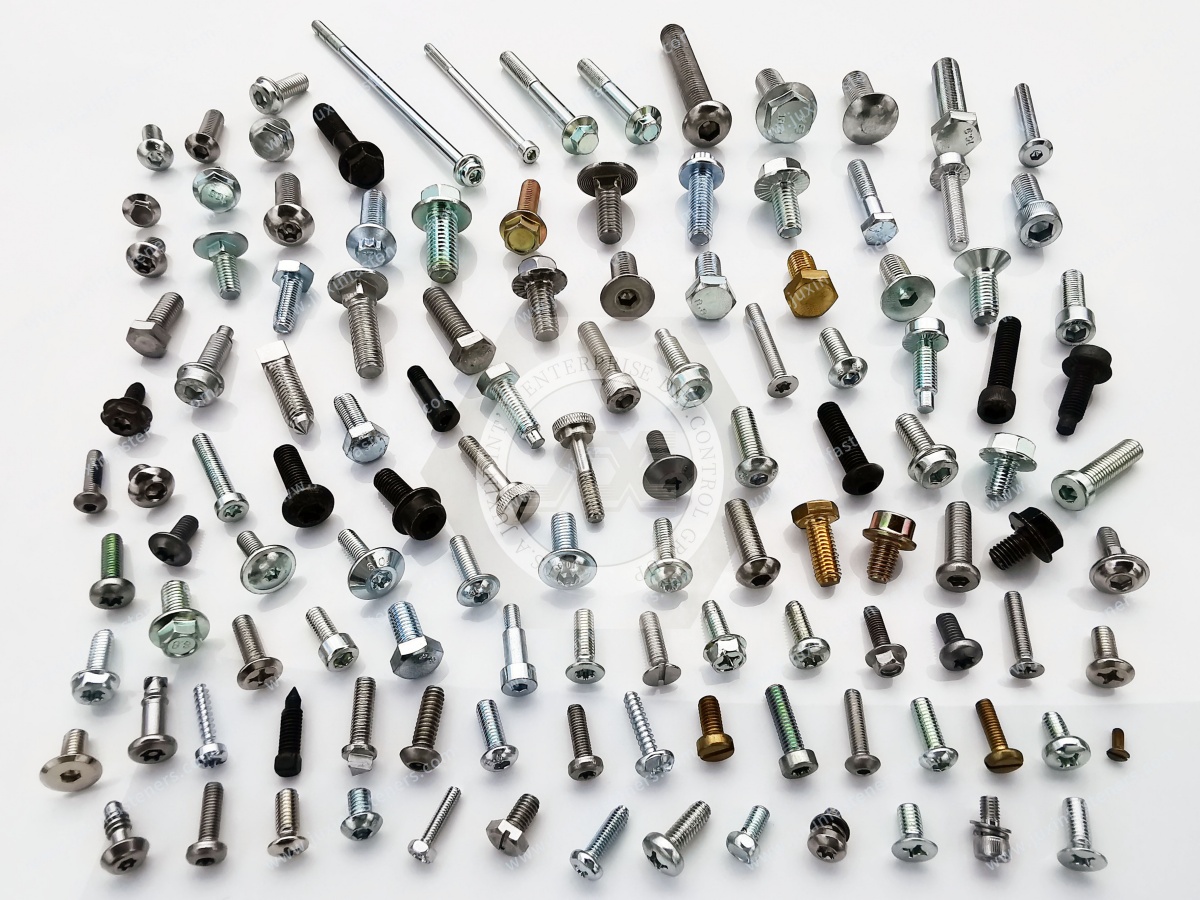
OEM Screw Substitution: Engineering Approval Checklist
A replacement screw should be reviewed against the original specification.
| Item | Verification requirement |
|---|---|
| Drive type | Phillips, slotted or approved alternative |
| Head angle | Match countersink |
| Head diameter | Match design requirements |
| Head height | Verify seating geometry |
| Thread system | Metric or specified inch-series |
| Thread pitch | Match mating thread |
| Screw length | Verify engagement and clearance |
| Material | Match mechanical requirements |
| Surface finish | Match corrosion and friction requirements |
| Installation | Confirm tool compatibility |
| Inspection | Confirm acceptance criteria |
| Approval | Obtain required engineering authorization |
Procurement Recommendation
A proposed replacement should not be accepted solely because it has the same nominal diameter and length.
Supplier Development and OEM Procurement
Purchasing teams should evaluate suppliers based on more than price.
Important considerations include:
Drawing interpretation
Dimensional consistency
Material requirements
Surface finish
Sample evaluation
Inspection requirements
Packaging
Production quantity
Delivery planning
RFQ Information Checklist
For an efficient quotation, provide:
Applicable standard or 2D drawing
Drive type
Head dimensions
Thread designation
Screw length
Material
Surface finish
Mechanical requirements
Inspection criteria
Sample quantity
Production quantity
Annual demand where available
Target delivery schedule
Frequently Asked Questions
What is the main difference between Phillips and slotted flat head screws?
The primary difference is the drive geometry. Phillips screws use a cross-shaped recess, while slotted screws use a straight slot.
Which is better for automated assembly?
Phillips screws may offer advantages in certain automated processes, but suitability depends on the equipment, screw geometry and production requirements.
Are Phillips screws stronger than slotted screws?
Not inherently. Mechanical strength depends on the material, dimensions and joint design.
Can a Phillips screw replace a slotted screw?
Only after verifying the complete screw specification and obtaining any required engineering approval.
Do both screw types provide flush mounting?
Yes, when the head geometry and countersink are compatible and the joint is correctly designed.
What causes Phillips screw cam-out?
Cam-out can result from drive geometry, torque, axial force, bit wear, alignment and other installation conditions.
Why do slotted screwdrivers slip?
Slipping can result from poor blade fit, misalignment, insufficient engagement or excessive torque.
Are metric and inch flat head screws interchangeable?
No. Thread compatibility and head geometry must be verified.
What material is suitable for outdoor applications?
The selection depends on corrosion exposure, mechanical requirements and the specified service environment.
Can JUXIN FASTENERS supply custom flat head screws?
JUXIN FASTENERS supports inquiries for standard and drawing-based industrial screws.
Specific dimensions, materials, finishes and production requirements are confirmed during project review.
JUXIN FASTENERS: Phillips, Slotted and Custom Industrial Screws
JUXIN FASTENERS supplies industrial fastening components for international OEM manufacturers.
Relevant product categories include:
Phillips flat head screws
Slotted flat head screws
Cross-recessed countersunk screws
Stainless steel machine screws
Carbon steel machine screws
Custom screws
Hex socket screws
Weld screws
Self-clinching fasteners
Threaded inserts
Custom CNC-machined components
Specific sizes, materials, finishes, MOQ, inspection requirements and delivery schedules are confirmed according to the project.
Request an OEM Screw Engineering Review and RFQ
Are you evaluating Phillips versus slotted flat head screws for a new design?
Do you need to replace an existing screw without changing the countersink, thread or assembly process?
Or are you sourcing custom industrial screws for OEM production?
JUXIN FASTENERS welcomes inquiries from design engineers, structural engineers, mechanical engineers, manufacturing engineers,
production managers, purchasing specialists, procurement managers, supplier development teams and supply chain managers.
For an efficient technical review and quotation, please provide:
2D drawing or applicable standard + drive type + head angle + head dimensions + thread designation + screw length + material
+ surface finish + assembly method + inspection requirements + sample quantity + production volume + target delivery schedule.
If you are evaluating a replacement, identify the original screw specification and any proposed changes.
Company: Juxin Fasteners
Website: https://www.juxinfasteners.com/
Email: info@juxinfasteners.com
Send your Phillips or slotted flat head screw drawings and OEM RFQ to JUXIN FASTENERS for technical review and quotation.
Contact Us
Tel.:
+86 020 8621 0320
+86 020 3121 6067
E-mail:
Technical Support:
Navigation
SEND INQUIREY