
Call Us
+86 136 6007 9809
Call Us
+86 136 6007 9809

Jul. 04, 2024
Slotted Flat Head Screws: DIN 963, ISO 2009, Materials, Countersink Design and OEM Guide
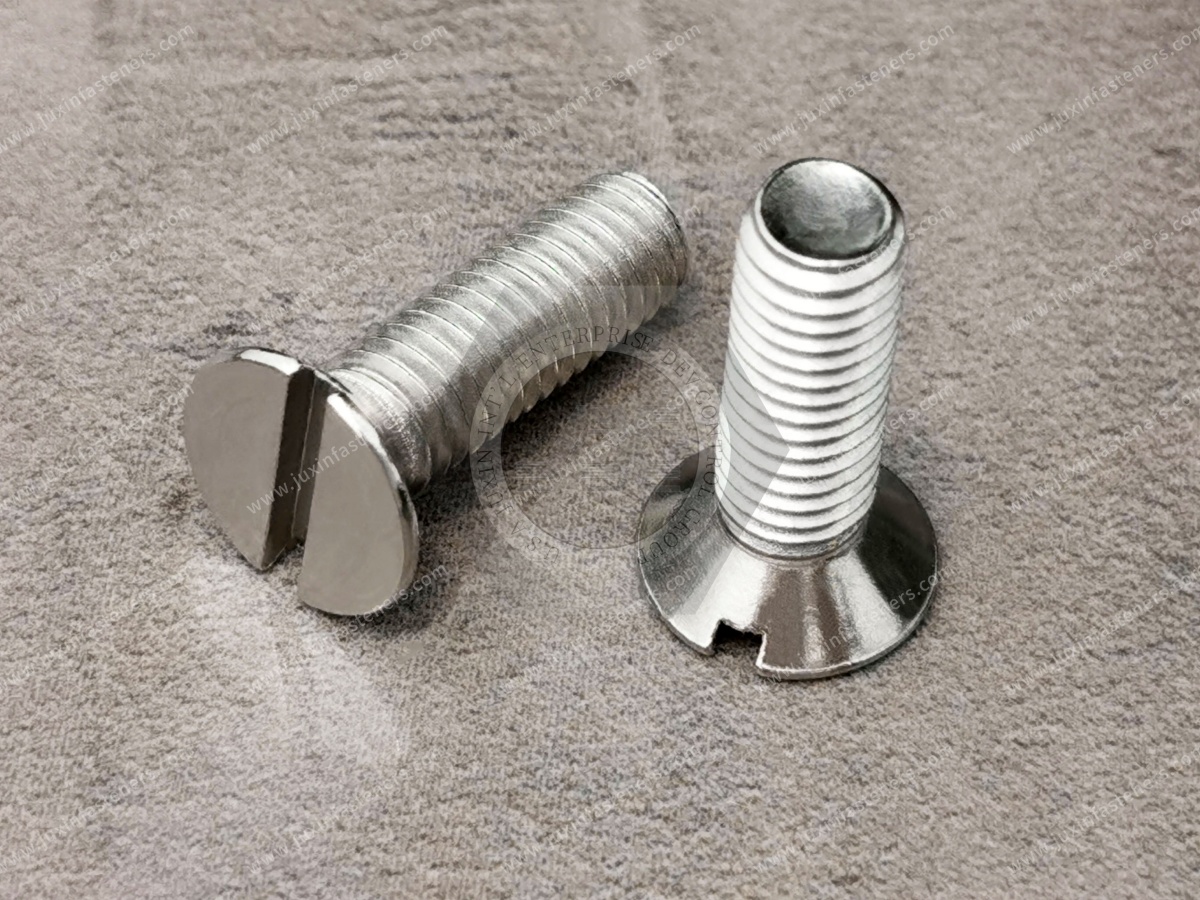
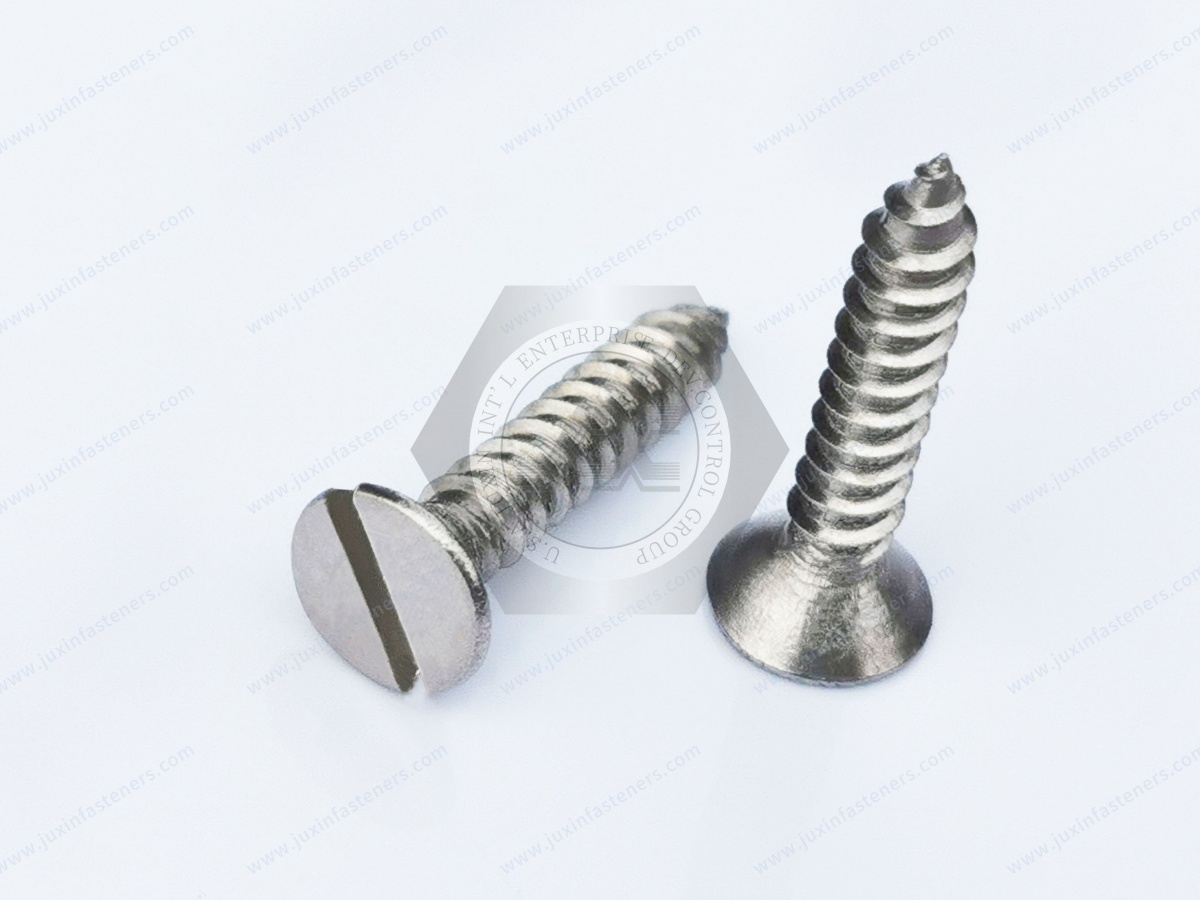
Slotted flat head screws are threaded fasteners featuring a single straight-slot drive and a conical countersunk head.
They are designed for installation into a correctly dimensioned countersunk hole, allowing the head to sit flush with, or at a specified position relative to, the surrounding surface.
Also known as slotted countersunk head screws, these fasteners are used in selected machinery, electrical equipment, instrumentation,
furniture hardware, marine fittings and industrial assemblies.
Although the geometry appears simple, reliable installation depends on several engineering factors:
Correct head angle
Countersink dimensions
Screw material and strength
Thread compatibility
Drive-slot dimensions
Screw length
Joint loading
Assembly method
Surface treatment
Inspection requirements
For OEM manufacturers, an incorrect countersink or incompatible replacement screw can cause head protrusion,
poor seating, drive damage, reduced joint reliability or assembly rework.
This guide explains how to select and specify slotted flat head screws, including DIN 963, ISO 2009 and applicable inch-series designs.
JUXIN FASTENERS supplies industrial fasteners and supports drawing-based inquiries for standard and custom screw requirements.
What Is a Slotted Flat Head Screw?
A slotted flat head screw has three defining features.
Single Straight-Slot Drive
A straight slot across the screw head receives a suitable flat-blade screwdriver or driver bit.
Countersunk Head
The conical underside of the head fits into a matching countersink.
External Thread
The threaded shank engages a compatible tapped hole, nut or other specified internally threaded component.
When correctly installed, the screw head can provide a relatively smooth external surface.
Why Use a Countersunk Head?
Countersunk screws may be selected when an assembly requires:
Flush mounting
Reduced head protrusion
Clearance for adjacent components
A specified external appearance
Compatibility with existing countersunk holes
However, a countersunk head is not automatically stronger or more reliable than a pan head, socket head or hex head.
The correct head design depends on the joint geometry, material and loading.
Slotted Flat Head Screws vs. Other Screw Head Designs
| Screw head type | Main characteristic | Design consideration |
|---|---|---|
| Slotted flat head | Flush mounting with straight-slot drive | Countersink and driver alignment |
| Cross-recessed flat head | Flush mounting with cross-recess drive | Recess type and bit compatibility |
| Hex socket countersunk head | Flush mounting with internal hex drive | Socket engagement and head strength |
| Pan head | Head remains above the surface | Bearing surface and clearance |
| Hex head | External wrenching feature | Tool access and head clearance |
Engineering Recommendation
Choose the screw head based on functional requirements rather than appearance alone.
DIN 963 and ISO 2009 Slotted Flat Head Screws
DIN 963 and ISO 2009 are important references for metric slotted countersunk head screws.
Both relate to slotted countersunk head screw designs, but the applicable standard edition and detailed dimensions must be reviewed before substitution.
DIN 963
DIN 963 is a commonly recognized designation for slotted countersunk head screws.
It continues to appear in drawings, product catalogs and procurement specifications.
ISO 2009
ISO 2009 specifies slotted countersunk flat head screws within its defined product scope.
Are DIN 963 and ISO 2009 Interchangeable?
Not automatically.
When evaluating a proposed replacement, verify:
Nominal thread diameter
Thread pitch
Head diameter
Head height
Countersink angle
Slot dimensions
Length
Thread length
Material and mechanical requirements
Applicable tolerances
Procurement Recommendation
If an OEM drawing specifies DIN 963, do not substitute ISO 2009 solely because the products appear similar.
Confirm the applicable dimensions and obtain approval where required.
82° vs. 90° Slotted Flat Head Screws
The countersunk head angle is one of the most important design characteristics.
82-Degree Flat Head Screws
An 82° countersunk head is commonly associated with certain North American inch-series flat head screw designs.
Typical applications include selected:
Industrial machinery
Electrical assemblies
Instrumentation
Furniture hardware
Sheet metal components
90-Degree Flat Head Screws
A 90° countersunk head is common in metric slotted countersunk screw designs associated with DIN and ISO specifications.
Typical applications include:
Machinery assemblies
Industrial equipment
Electrical enclosures
Precision instruments
Mechanical mounting components
Can an 82° Screw Be Installed in a 90° Countersink?
The head angles do not match.
A mismatched countersink may cause:
Incomplete seating
Localized contact
Head protrusion
Unintended deformation
Assembly inconsistency
Engineering Principle
The screw head angle and workpiece countersink must be compatible.
Do not treat 82° and 90° flat head screws as directly interchangeable.
What About 100° Countersunk Screws?
Other countersink angles, including 100°, exist in particular engineering applications and standards.
These should be specified only when the approved design requires them.
They are not universal replacements for 82° or 90° screws.
Countersink Design: More Than Matching the Angle
A correct countersink requires more than choosing the nominal angle.
Design engineers should evaluate:
Countersink diameter
Countersink depth
Hole concentricity
Workpiece thickness
Surface condition
Head diameter
Head seating position
Countersink Diameter
The countersink must accommodate the specified screw head geometry.
Countersink Depth
An incorrect depth may leave the head protruding or excessively recessed.
Workpiece Thickness
A deep countersink can reduce the remaining material beneath the head.
This is especially important in thin sheet metal.
Hole Alignment
Poor alignment between the countersink and threaded hole may cause uneven seating.
Engineering Decision Matrix
| Design condition | Potential risk | Recommended review |
|---|---|---|
| Countersink too shallow | Head protrusion | Depth and head geometry |
| Countersink too deep | Reduced material support | Remaining thickness |
| Incorrect head angle | Localized contact | Standard compatibility |
| Oversized countersink | Inadequate head support | Diameter and bearing area |
| Misaligned holes | Uneven seating | Hole position and concentricity |
| Soft workpiece material | Local deformation | Bearing stress and reinforcement |
Countersunk Head Loading and Joint Reliability
A countersunk head transfers load through an inclined bearing interface.
The resulting stress distribution depends on the head geometry, workpiece material and joint loading.
Potential Design Concerns
Local bearing stress
Workpiece deformation
Head bending
Reduced material around the hole
Loss of preload
Fatigue under cyclic loading
Important Engineering Principle
A countersunk head does not automatically distribute load more effectively than every other head type.
For thin or soft materials, the countersink geometry and remaining support material must be evaluated carefully.
Slotted Drive Design: Advantages and Limitations
The straight-slot drive is simple and widely recognized.
It can be useful where:
A traditional drive style is required
Manual servicing is expected
Existing equipment uses slotted screws
Decorative or restoration requirements favor the design
However, the slotted drive has important limitations.
Driver Alignment
A flat-blade driver must remain aligned with the slot.
Poor alignment can cause the blade to slip.
Slot Damage
Incorrect blade width or thickness may damage the slot.
Automated Assembly
Slotted drives may be less suitable for certain high-speed automated assembly processes because of their orientation and engagement characteristics.
Torque Transmission
The available drive torque depends on the slot geometry, screw material, driver fit and installation conditions.
Production Recommendation
Where assembly speed and repeatability are critical, evaluate whether another approved drive design would improve the process.
Any drive substitution must be reviewed against the drawing and assembly requirements.
Material Selection for Slotted Flat Head Screws
Material selection should consider:
Required mechanical properties
Corrosion environment
Operating temperature
Electrical requirements
Appearance
Cost
Mating materials
Carbon Steel Slotted Flat Head Screws
Carbon steel may be suitable for general industrial applications where the required mechanical properties and corrosion protection can be achieved.
Potential advantages include:
Broad material and manufacturing options
Economical solutions for suitable applications
Compatibility with selected protective finishes
Engineering Considerations
Carbon steel requires appropriate corrosion protection when exposed to moisture or aggressive environments.
Strength should be specified using the applicable material and mechanical requirements rather than assumed from the term “carbon steel.”
Stainless Steel Slotted Flat Head Screws
Stainless steel may be selected for applications requiring suitable corrosion resistance and appearance.
Commonly referenced materials include 304 and 316 stainless steel.
304 Stainless Steel
304 may be considered for many indoor and moderately corrosive environments.
Suitability depends on actual exposure conditions.
316 Stainless Steel
316 may provide improved resistance to certain chloride-containing environments compared with 304.
However, it is not immune to pitting, crevice corrosion or other corrosion mechanisms.
Important Engineering Limitation
Do not assume that stainless steel screws are automatically stronger than carbon steel screws.
Mechanical performance depends on the actual material grade, condition and applicable fastener specification.
Brass Slotted Flat Head Screws
Brass screws may be selected for:
Decorative hardware
Electrical equipment
Instrumentation
Furniture fittings
Certain corrosion-related requirements
Engineering Considerations
Brass generally has different strength and wear characteristics from steel.
It should not be substituted into a mechanically demanding joint without evaluation.
Material Selection Matrix
| Material | Potential advantages | Main considerations |
|---|---|---|
| Carbon steel | Economical industrial applications | Corrosion protection and strength specification |
| 304 stainless steel | Corrosion resistance in suitable environments | Chlorides, galling and mechanical requirements |
| 316 stainless steel | Improved resistance in selected aggressive environments | Crevice corrosion and cost |
| Brass | Appearance and electrical applications | Lower mechanical strength in many conditions |
| Alloy steel | Selected higher-strength requirements | Heat treatment and coating compatibility |
Surface Treatments and Corrosion Protection
The surface finish should be selected according to the material, dimensions and operating environment.
Zinc Plating
Zinc plating may provide sacrificial corrosion protection for suitable carbon steel screws.
Relevant considerations include:
Coating thickness
Thread fit
Appearance
Corrosion requirements
Hydrogen embrittlement risk for susceptible high-strength steels
Black Oxide
Black oxide may be selected for appearance and certain controlled applications.
It should not be treated as equivalent to a high-performance corrosion-protection coating.
Nickel Plating
Nickel plating may be considered where appearance, wear behavior or other specified surface properties are required.
Zinc-Nickel Plating
Zinc-nickel coatings may be considered for selected industrial corrosion requirements.
Compatibility with screw size, thread tolerance and mechanical properties must be reviewed.
Passivation
Passivation may be specified for suitable stainless steel components.
It is not a substitute for selecting an appropriate alloy for the service environment.
Other Surface Treatments
Special coatings or finishes may be considered according to customer drawings and process feasibility.
However, not every finish is suitable for small precision countersunk screws.
For example, coating thickness and process conditions can make certain heavy coatings unsuitable for fine threads or close-fitting head geometry.
Surface Finish Decision Matrix
| Requirement | Selection consideration |
|---|---|
| Indoor dry environment | Material and basic protection |
| Outdoor exposure | Corrosion mechanism and coating |
| Coastal environment | Chlorides and crevice corrosion |
| Decorative application | Appearance and finish consistency |
| Precision threads | Coating thickness and fit |
| Repeated assembly | Wear and friction behavior |
| High-strength steel | Coating process and embrittlement risk |
Thread Selection: Metric, UNC and UNF
Thread compatibility is essential.
Metric Screws
Metric slotted flat head screws are specified using nominal diameter and pitch.
For example, a metric thread designation identifies the nominal diameter and applicable pitch.
Unified Inch Screws
UNC and UNF are inch-series thread systems.
They use different thread designations from ISO metric threads.
Important Compatibility Warning
Metric, UNC, UNF, BSW and BSF threads are not directly interchangeable.
A similar diameter does not establish compatibility.
Procurement Recommendation
Always confirm the complete thread designation from the drawing or mating component.
How Is Slotted Flat Head Screw Length Measured?
For conventional flat head countersunk screws, nominal length is generally measured from the top of the head to the end of the screw.
This differs from many protruding-head screws, whose nominal length is commonly measured from beneath the head.
Important Design Considerations
The selected length must provide:
Suitable thread engagement
Clearance from blind-hole bottoms
Correct head seating
Compatibility with the joint thickness
Thread Engagement
The required engagement depends on:
Screw material
Mating thread material
Applied load
Joint design
Mechanical strength
Service requirements
A universal engagement ratio should not be applied to every material and joint.
Blind Holes
Ensure that the screw does not bottom out before the countersunk head seats correctly.
Slotted Flat Head Screw Installation Best Practices
Reliable installation begins with the workpiece design.
Confirm the Screw Specification
Verify:
Head angle
Head diameter
Thread designation
Length
Material
Surface finish
Prepare the Countersink
Ensure the countersink matches the screw head geometry.
Select the Correct Driver
The driver blade should fit the slot properly.
An undersized or unsuitable driver can damage the slot.
Control Alignment
Maintain appropriate alignment between the driver and screw axis.
Apply the Approved Tightening Procedure
Use the installation method and torque requirements established for the actual joint.
There is no universal tightening torque for all slotted flat head screws.
Inspect the Assembly
Check:
Head seating
Slot condition
Surface damage
Thread engagement
Assembly fit
Common Installation Failures
| Failure | Possible cause | Engineering response |
|---|---|---|
| Damaged drive slot | Incorrect driver fit | Review blade and slot geometry |
| Head protrusion | Incorrect countersink | Verify depth and angle |
| Head recessed too far | Excessive countersink depth | Review material support |
| Thread stripping | Excessive torque or insufficient engagement | Review joint design |
| Screw bottoming | Incorrect length or blind-hole depth | Verify clearance |
| Loose joint | Inadequate preload or service effects | Review joint loading |
| Corrosion | Unsuitable material or coating | Review operating environment |
Production-Line Considerations
For production managers and manufacturing engineers, screw selection influences assembly efficiency.
Important considerations include:
Driver access
Screw feeding
Orientation
Installation time
Torque consistency
Operator ergonomics
Rework frequency
Inspection requirements
Slotted Drive in Automated Assembly
The straight-slot drive may create orientation and engagement challenges in certain automated processes.
For high-volume production, engineers should compare the slotted design with other approved drive systems.
Important Principle
A lower screw unit price does not necessarily result in a lower total assembly cost.
Assembly time, rework and quality consistency must also be considered.
When Should an OEM Consider an Alternative Drive?
A slotted flat head screw may not be the best choice when the application requires:
High installation torque
High-speed automated assembly
Difficult driver access
Frequent servicing
Reduced drive slipping
Specialized security requirements
Potential alternatives include suitable cross-recessed, hex socket or other approved drive designs.
Engineering Recommendation
Any substitution must preserve the required head geometry, thread, material, strength and assembly function.

Industry Applications
Electrical Equipment and Power Distribution
Slotted flat head screws may be used in suitable:
Instrument panels
Electrical enclosures
Control equipment
Mounting hardware
Equipment covers
Engineering Priorities
Flush mounting
Electrical clearances
Material compatibility
Serviceability
Assembly consistency
Industrial Machinery
Potential applications include:
Machine covers
Instrument panels
Mechanical guards
Equipment fittings
Precision assemblies
Engineering Priorities
Clearance
Joint reliability
Maintenance
Corrosion protection
Telecommunications and Data Center Equipment
Potential applications include selected:
Rack-related hardware
Electronic equipment panels
Instrument enclosures
Mounting components
Engineering Priorities
Service access
Dimensional compatibility
Installation efficiency
Corrosion protection
Furniture and Architectural Hardware
Slotted flat head screws may be selected for:
Cabinet fittings
Decorative hardware
Furniture assemblies
Restoration projects
Interior fixtures
Engineering Priorities
Appearance
Flush seating
Material compatibility
Assembly method
Marine Equipment
Suitable stainless steel or other specified screws may be used in selected marine-related applications.
Engineering Priorities
Chloride exposure
Crevice corrosion
Material compatibility
Maintenance access
Important Limitation
316 stainless steel is not automatically suitable for every marine environment or critical marine joint.
Medical and Laboratory Equipment
Potential applications include suitable:
Instrument housings
Laboratory equipment
Mechanical covers
Noncritical mounting components
Engineering Priorities
Material compatibility
Cleaning requirements
Surface finish
Serviceability
Medical equipment applications may require additional project-specific qualification.
Automotive and Transportation Equipment
Slotted flat head screws may be used in selected auxiliary assemblies, legacy equipment or specialized hardware.
However, high-speed automotive assembly lines often require careful drive-system selection.
Engineering Priorities
Assembly efficiency
Vibration
Corrosion
Mechanical reliability
Safety-critical applications require appropriate engineering approval.
Renewable Energy and Industrial Electrical Equipment
Potential applications include selected:
Instrumentation
Control equipment
Equipment covers
Auxiliary mechanical assemblies
Engineering Priorities
Environmental exposure
Serviceability
Thread compatibility
Joint reliability
International Standards and Drawing Requirements
Applicable standards should be selected according to the actual product.
DIN 963
Commonly referenced for metric slotted countersunk head screws.
ISO 2009
International standard for slotted countersunk flat head screws within its specified scope.
Applicable ASME Standards
Certain inch-series flat head machine screw designs are covered by relevant ASME dimensional specifications.
The exact standard must be confirmed from the customer drawing.
Thread Standards
Metric threads and Unified inch-series threads must be specified using the applicable system.
Important Procurement Principle
A supplier should not substitute one standard for another without confirming dimensional and functional compatibility.
OEM Drawing Review Checklist
Before requesting a quotation, confirm the following.
Product Geometry
Head style
Head angle
Head diameter
Head height
Slot width
Slot depth
Overall length
Thread
Thread system
Nominal diameter
Pitch or threads per inch
Thread tolerance
Thread length
Material
Material grade
Mechanical requirements
Corrosion requirements
Surface Finish
Coating type
Coating thickness where required
Appearance
Functional requirements
Assembly
Workpiece material
Countersink geometry
Mating thread
Installation method
Tightening requirements
Commercial
Sample quantity
Production quantity
Annual demand
Packaging
Inspection documentation
Delivery schedule
Frequently Asked Questions
What is a slotted flat head screw?
A slotted flat head screw is a threaded fastener with a straight-slot drive and a countersunk head designed for installation into a compatible countersink.
What is the difference between DIN 963 and ISO 2009?
Both are associated with metric slotted countersunk screws. The applicable standard editions and dimensions must be checked before substitution.
What is the difference between an 82° and a 90° flat head screw?
The head angles differ. The screw must match the countersink geometry in the workpiece.
Can I replace a metric slotted screw with an inch-series screw?
Not automatically. Metric and inch-series thread systems are different and require compatibility verification.
How is the length of a flat head screw measured?
For conventional flat head countersunk screws, nominal length is generally measured from the top of the head to the screw end.
What material is best for outdoor applications?
Material selection depends on the actual environment. Stainless steel and coated carbon steel may be suitable for different conditions.
Is 316 stainless steel rust-proof?
No. It offers useful corrosion resistance in suitable environments but can still experience corrosion.
Are slotted flat head screws suitable for automated assembly?
They can be used in suitable processes, but the straight-slot drive may create alignment and engagement challenges.
Why does a slotted screw head become damaged during installation?
Possible causes include incorrect driver size, poor alignment, excessive torque or unsuitable drive geometry.
Can slotted flat head screws be customized?
Custom dimensions, materials, threads, head geometry and finishes may be evaluated according to customer drawings and manufacturing feasibility.
What should I provide for an OEM screw quotation?
Provide the drawing or applicable standard, thread designation, dimensions, material, finish, quantity and required delivery schedule.
OEM Procurement: Standard vs. Custom Slotted Flat Head Screws
Purchasing managers and supplier development teams should distinguish between standard products and drawing-based custom fasteners.
Standard Product Sourcing
Confirm:
Applicable standard
Thread size
Material
Finish
Quantity
Packaging
Custom Product Sourcing
Confirm:
Complete drawing
Special head geometry
Nonstandard length
Thread requirements
Material specification
Surface treatment
Inspection criteria
Supplier Substitution Review
A proposed alternative should be evaluated for:
Thread compatibility
Head geometry
Drive dimensions
Mechanical properties
Coating
Assembly requirements
A visually similar screw may not be functionally equivalent.
JUXIN FASTENERS: Industrial Screws and Custom OEM Fastening Solutions
JUXIN FASTENERS supplies industrial fastening components for international OEM customers.
Relevant product categories include:
Slotted flat head screws
DIN 963 slotted countersunk screws
ISO 2009 slotted countersunk screws
Stainless steel machine screws
Carbon steel machine screws
Custom threaded fasteners
Hex socket screws
Self-clinching fasteners
Threaded inserts
Custom CNC-machined components
Specific sizes, materials, mechanical requirements, finishes, MOQ and lead times are confirmed according to the project.
Request a Slotted Flat Head Screw Quotation
Are you sourcing DIN 963, ISO 2009 or custom slotted countersunk screws for industrial production?
JUXIN FASTENERS welcomes inquiries from design engineers, structural engineers, mechanical engineers, manufacturing engineers,
production managers, procurement specialists, purchasing managers, supplier development teams and supply chain managers.
For technical evaluation and quotation, please provide:
Applicable standard or 2D drawing + thread size and pitch + head angle + head dimensions + slot dimensions + screw length + material
+ surface finish + assembly requirements + sample quantity + production volume + target delivery schedule.
For replacement projects, provide the existing screw drawing or a representative sample and identify any approved deviations.
Company: Juxin Fasteners
Website: https://www.juxinfasteners.com/
Email: info@juxinfasteners.com
Send your slotted flat head screw drawings and OEM RFQ to JUXIN FASTENERS for technical review and quotation.
Contact Us
Tel.:
+86 020 8621 0320
+86 020 3121 6067
E-mail:
Technical Support:
Navigation
SEND INQUIREY



