
Call Us
+86 136 6007 9809
Call Us
+86 136 6007 9809

Jan. 13, 2024
Rail vehicles and railway equipment contain thousands of mechanical interfaces, but they do not all require the same type of fastener.
A permanent aluminum panel joint, removable electrical cabinet cover, interior equipment bracket, threaded mounting point and vibration-exposed bolted assembly represent different engineering problems.
The correct question is therefore not:
“What is the best railway fastener?”
It is:
“Which fastening method is appropriate for this joint, parent material, load, environment, maintenance strategy and railway project requirement?”
JUXIN FASTENERS supplies blind rivets, rivet nuts, lock nuts, screws, bolts, self-clinching fasteners, threaded inserts,
plastic and nylon fasteners and drawing-based custom components for railway equipment and other industrial OEM applications.
Typical rail-related applications can include:
Rail vehicle interior equipment
Electrical cabinets
Converter cabinets
Control equipment
Aluminum panels
Equipment housings
Secondary brackets
Access covers
Lighting assemblies
Cable-management components
Equipment modules
Other drawing-based rail equipment assemblies
This guide helps design engineers, procurement teams,
supplier-development engineers and supply-chain managers translate a railway assembly requirement into a technically meaningful fastener specification and RFQ.
“Railway fastener” is not a single engineering category.
A railway vehicle can contain:
Permanent joints
Removable joints
Thin-sheet joints
Blind-access joints
Threaded joints
Mixed-metal joints
Polymer components
Electrical equipment
Vibration-exposed assemblies
Maintenance-access interfaces
Each requires a different decision path.
Before choosing the fastener, define:
What does the joint do?
Is it structural, supporting or equipment attachment?
Must it be removable?
Can the installer access both sides?
What are the parent materials?
What are their thicknesses?
What loads act on the joint?
What environmental conditions apply?
How will the fastener be installed?
What validation is required?
This prevents one of the most common sourcing mistakes: selecting a fastener family before the assembly requirements are understood.
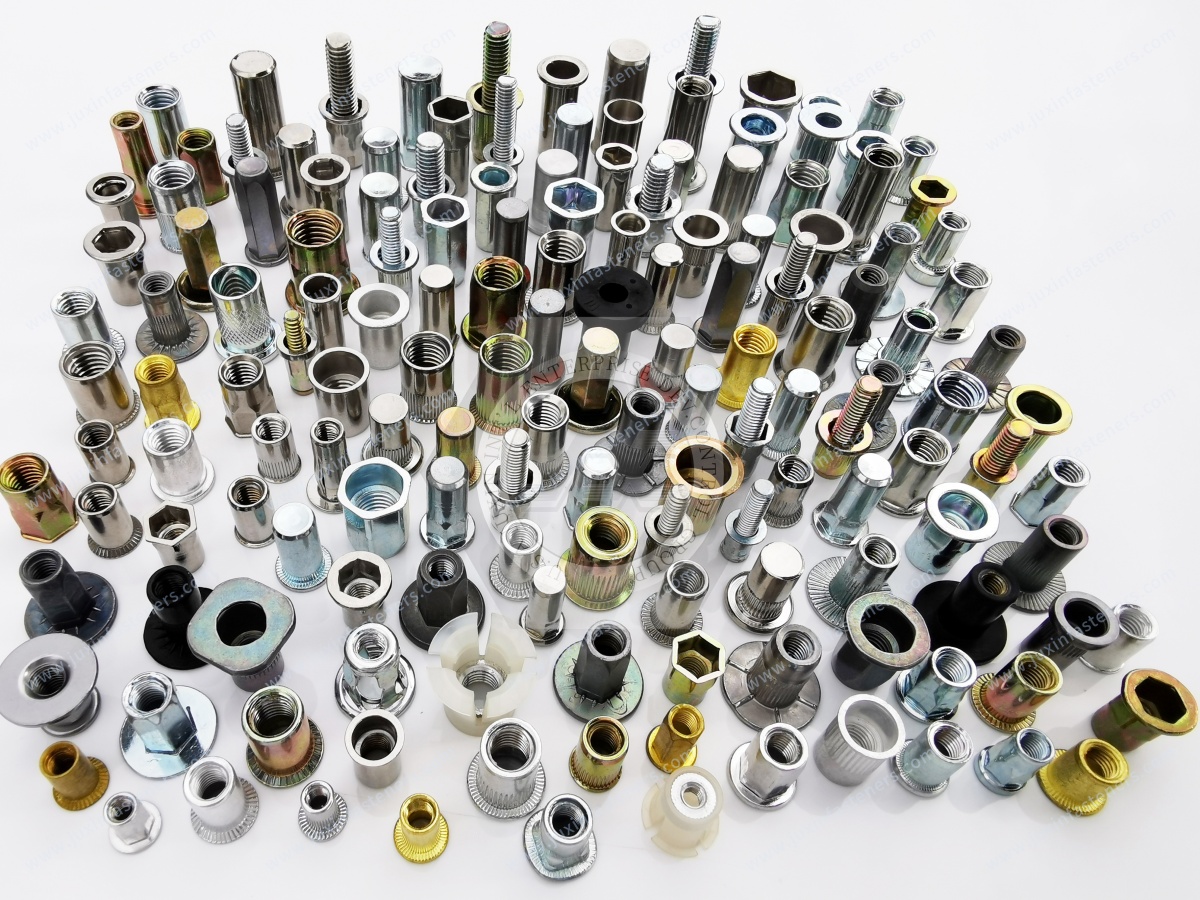
Not every fastener used on a train has the same consequence of failure.
A useful initial classification is:
Potential examples include certain:
Covers
Cable-management components
Equipment housings
Interior trim components
Selection may focus on:
Access
Serviceability
Installation
Environment
Equipment load
Potential examples include certain:
Equipment brackets
Panel supports
Mounting structures
Cabinet supports
Mechanical loading, vibration and fatigue requirements may become more important.
Primary load-bearing, running-gear, crash-critical, braking-related or other safety-critical railway joints require project-specific engineering authority,
technical specifications and formal validation.
A generic industrial fastener should never be assumed suitable for such an application simply because its dimensions or material appear appropriate.
For these projects, the governing customer drawing and technical requirements should define the sourcing process.
Rail vehicles are maintained over long service periods.
Fastener selection should therefore reflect the maintenance strategy.
Potential solutions include:
Blind rivets
Other engineered permanent fastening systems
Typical applications may include suitable:
Panels
Covers not intended for routine removal
Enclosure joints
Secondary sheet-metal assemblies
Potential solutions include:
Screws and bolts
Rivet nuts
Self-clinching nuts
Threaded inserts
Lock nuts
Other reusable threaded systems
Typical applications include:
Service covers
Replaceable equipment
Electrical modules
Inspection panels
Mounting brackets
A fastener that is efficient during vehicle production can become expensive during maintenance if the service strategy was ignored during design.
Access is one of the fastest ways to narrow the fastening options.
Where both sides are accessible, engineers may consider:
Bolt and nut
Screw and separate nut
Suitable permanent riveting systems
Other conventional mechanical fastening
Where only one side can be reached, potential solutions include:
Blind rivets
Blind rivet nuts
Preinstalled captive threaded hardware where the manufacturing sequence allows
This is why blind fastening technologies are useful in rail vehicle panels, enclosures and equipment modules.
| Joint Requirement | Fastening Solution to Consider | Main Engineering Question |
|---|---|---|
| Permanent joint with one-side access | Blind rivet | Is the grip range correct? |
| Thin sheet requiring reusable thread | Rivet nut | Are pull-out and spin-out requirements defined? |
| Serviceable bolted joint | Screw/bolt + suitable nut | How will preload and loosening be controlled? |
| Vibration-exposed threaded joint | Suitable locking strategy | What is the actual loosening mechanism? |
| Captive thread in suitable sheet | Self-clinching nut or stud | Is the sheet compatible with clinching? |
| Thread in suitable plastic component | Threaded insert | What are pull-out, torque-out, creep and temperature requirements? |
| Lightweight aluminum assembly | Compatible rivet or threaded fastener | What governs: weight, load or corrosion? |
| Mixed-metal joint | Compatible material/coating system | Has galvanic corrosion been evaluated? |
| Removable electrical equipment | Rivet nut or captive threaded system | How many maintenance cycles are expected? |
| Custom interface | Drawing-based fastener | What must be validated before production? |
This matrix is a decision framework rather than a substitute for project-specific engineering.
A blind rivet creates a permanent mechanical joint and can be installed where access is available from only one side.
Potential railway applications include suitable:
Interior panels
Equipment housings
Electrical enclosures
Covers
Secondary brackets
Lightweight sheet-metal assemblies
Important selection parameters include:
Rivet diameter
Grip range
Head style
Rivet body material
Mandrel material
Parent materials
Hole diameter
Individual sheet thicknesses
Total joint thickness
Blind-side clearance
Mechanical requirements
Environmental exposure
Installation tooling
The correct blind rivet cannot be selected from diameter alone.
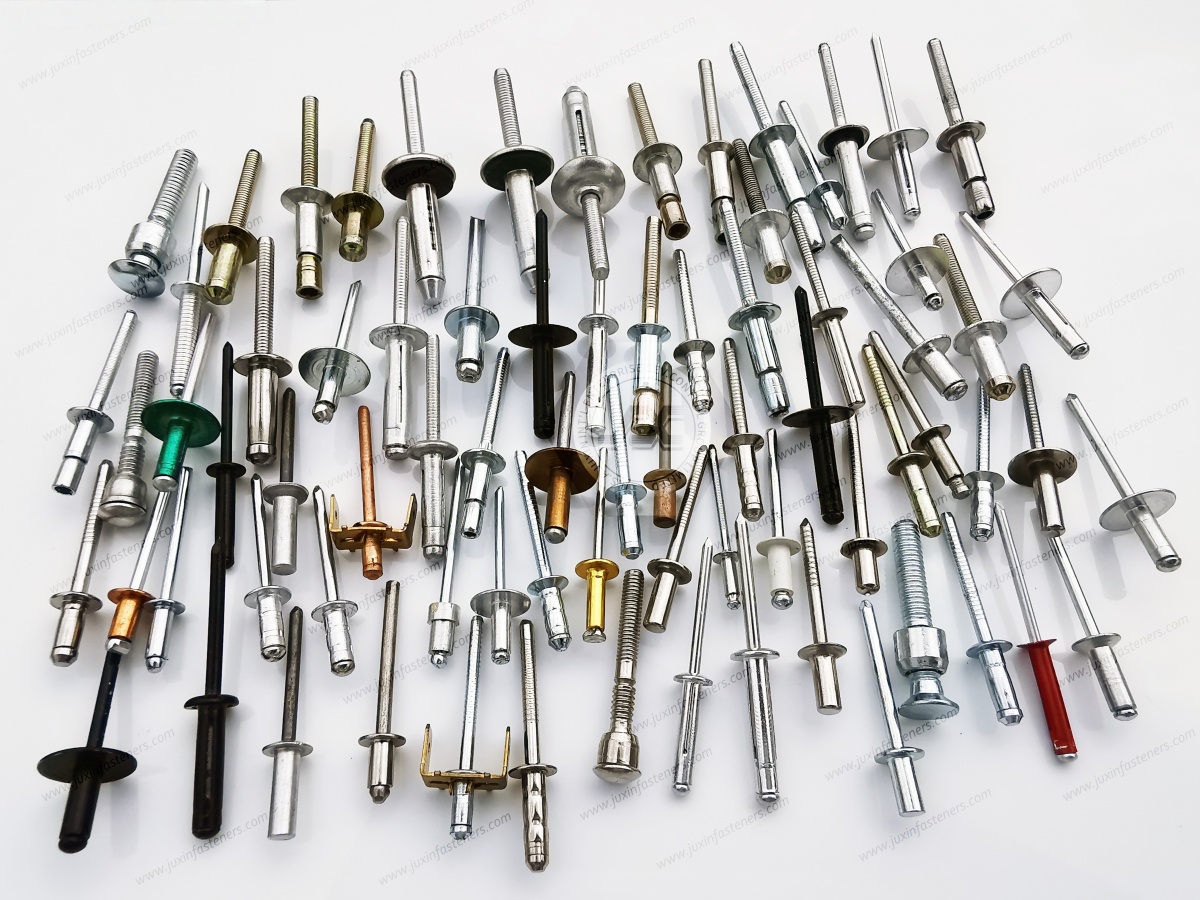
For blind rivets, the engineer must consider the complete material stack.
For example:
Aluminum panel + bracket + reinforcement = total grip condition
If the rivet is outside its intended grip range, the blind-side formation and joint condition may become inconsistent.
Potential consequences include:
Incomplete formation
Poor clamping
Parent-sheet deformation
Installation variation
Procurement should therefore include the complete material thickness stack in the RFQ.
A stronger rivet does not necessarily create a stronger thin-sheet joint.
In some assemblies, the parent material becomes the limiting component.
A rivet can potentially pull through or deform the surrounding sheet before the fastener itself reaches its nominal capability.
Relevant variables include:
Parent material
Sheet thickness
Hole diameter
Rivet diameter
Head diameter
Edge distance
Load direction
This is particularly important for lightweight aluminum assemblies.
A blind rivet nut creates a reusable internal thread in suitable sheet material.
It is particularly useful where:
The parent sheet is too thin for sufficient direct thread engagement
Backside access is restricted
A removable component is required
A loose nut is undesirable
Potential applications include:
Electrical cabinets
Equipment modules
Interior equipment brackets
Access panels
Mounting plates
Serviceable assemblies
JUXIN FASTENERS supplies rivet nuts in materials and configurations including:
Carbon steel
Stainless steel
Aluminum
Round body
Round knurled body
Hex body
Closed-end configurations
Various applicable head styles
Final selection should follow the actual joint requirements.
A request such as:
“Please quote M6 stainless steel rivet nuts.”
is incomplete for engineering review.
The supplier also needs information such as:
Parent material
Sheet thickness
Grip range
Hole geometry
Head style
Body style
Pull-out requirement
Spin-out or torque-out requirement
Mating screw torque
Environmental requirement
Two M6 rivet nuts can behave very differently in the same railway panel.
Spin-out occurs when the installed rivet nut rotates in the parent material during screw tightening or removal.
Factors can include:
Body geometry
Knurling
Hex geometry
Hole size
Parent material
Sheet thickness
Installation setting
Applied tightening torque
Where anti-rotation performance matters, it should be defined as an installed-joint requirement rather than inferred from product appearance.
Pull-out behavior depends on the interaction between the insert and parent material.
Relevant factors include:
Parent material strength
Sheet thickness
Hole condition
Rivet nut geometry
Installation quality
Axial loading
A higher-strength rivet nut cannot compensate indefinitely for a weak or very thin parent sheet.
Rail equipment can experience vibration, shock, thermal cycling and repeated service.
However, the phrase “vibration-resistant nut” does not define why a joint might loosen.
Threaded-joint behavior can depend on:
Initial preload
Joint stiffness
Transverse movement
Settlement
Friction
Tightening process
Thermal effects
Surface coatings
Potential locking solutions can include nylon insert lock nuts, suitable all-metal locking systems, serrated flange nuts or other application-specific locking methods.
The locking mechanism should match the joint requirements.
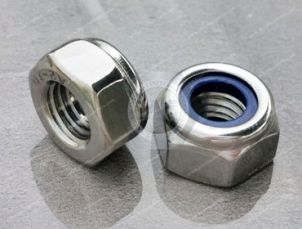
Nylon insert lock nuts use a polymer insert to create prevailing torque against the mating thread.
JUXIN FASTENERS supplies DIN 985-type nylon insert lock nuts and other applicable configurations according to project requirements.
An important engineering distinction is:
Prevailing torque is not the same as preload.
The nylon insert resists relative thread rotation.
The required joint clamp load still depends on the bolt, tightening process, friction and joint design.
Engineers should also consider:
Temperature
Chemical exposure
Reuse requirements
Thread condition
Required prevailing torque
Where a polymer locking element is unsuitable, an all-metal locking system may be evaluated according to the application.
Potential considerations include:
Temperature
Prevailing torque
Coating
Friction
Thread condition
Galling risk
Reuse requirements
The specific product should be selected from the customer drawing and technical requirement rather than assuming all all-metal lock nuts provide identical performance.
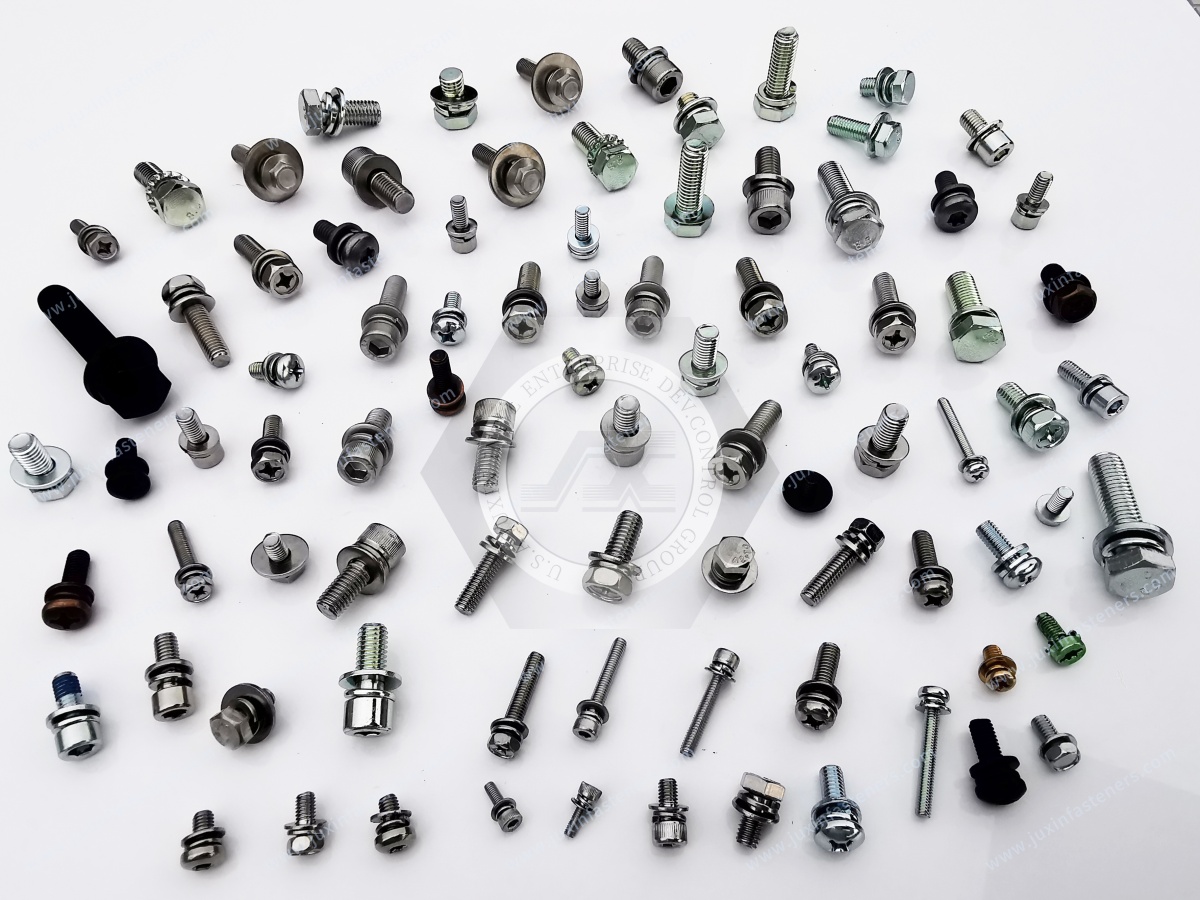
Stainless steel fasteners can be considered where corrosion resistance is required.
Depending on the application, materials may include A2 / 304-type or A4 / 316-type stainless steel.
Selection should consider:
Environmental exposure
Chlorides
Chemicals
Parent material
Temperature
Crevice conditions
Surface requirements
“Stainless steel” is not a complete corrosion specification.
Stainless steel threaded fasteners can experience galling under certain installation conditions.
Risk can be influenced by:
Material combination
Surface finish
Thread condition
Assembly speed
Lubrication
Tightening load
This should be considered when stainless steel nuts, bolts or threaded inserts are used in serviceable railway equipment.
Aluminum can be useful in lightweight rail vehicle assemblies, but aluminum parent material changes the joint behavior.
Engineers should consider:
Parent-alloy strength
Sheet thickness
Local bearing behavior
Pull-through
Rivet nut pull-out
Hole deformation
Galvanic compatibility
Thermal expansion
An aluminum vehicle panel should not automatically receive an aluminum fastener.
The fastener material should follow the complete mechanical and environmental requirement.
Threaded inserts can provide reusable threads where direct threading of the parent material is unsuitable for the required application.
Depending on the component design, threaded inserts can be relevant to:
Aluminum components
Engineering plastic components
Equipment housings
Repeated assembly interfaces
Maintenance-access components
The term threaded insert covers several different technologies.
Engineers should distinguish between:
Rivet nuts for suitable thin sheet
Inserts for plastic
Other engineered threaded inserts for applicable parent materials
These technologies should not be treated as interchangeable.
Where engineering plastics are used in equipment housings, electrical components or other suitable rail assemblies, insert selection can depend on:
Plastic material
Boss geometry
Wall thickness
Thread size
Installation method
Pull-out requirement
Torque-out requirement
Temperature
Creep
Moisture absorption
JUXIN FASTENERS supplies threaded inserts and plastic/nylon fastening components for drawing-based industrial applications.
Where railway fire or material-performance requirements apply, the relevant material specification must be separately defined and verified.
Self-clinching nuts and studs can provide captive threaded attachment points in suitable sheet metal.
Potential applications can include:
Electrical equipment
Mounting plates
Enclosure assemblies
Internal brackets
Suitability depends on:
Sheet material
Sheet thickness
Parent-material hardness
Hole preparation
Installation force
Fastener geometry
A self-clinching nut should not be treated as a direct substitute for a rivet nut without reviewing the manufacturing sequence and parent material.
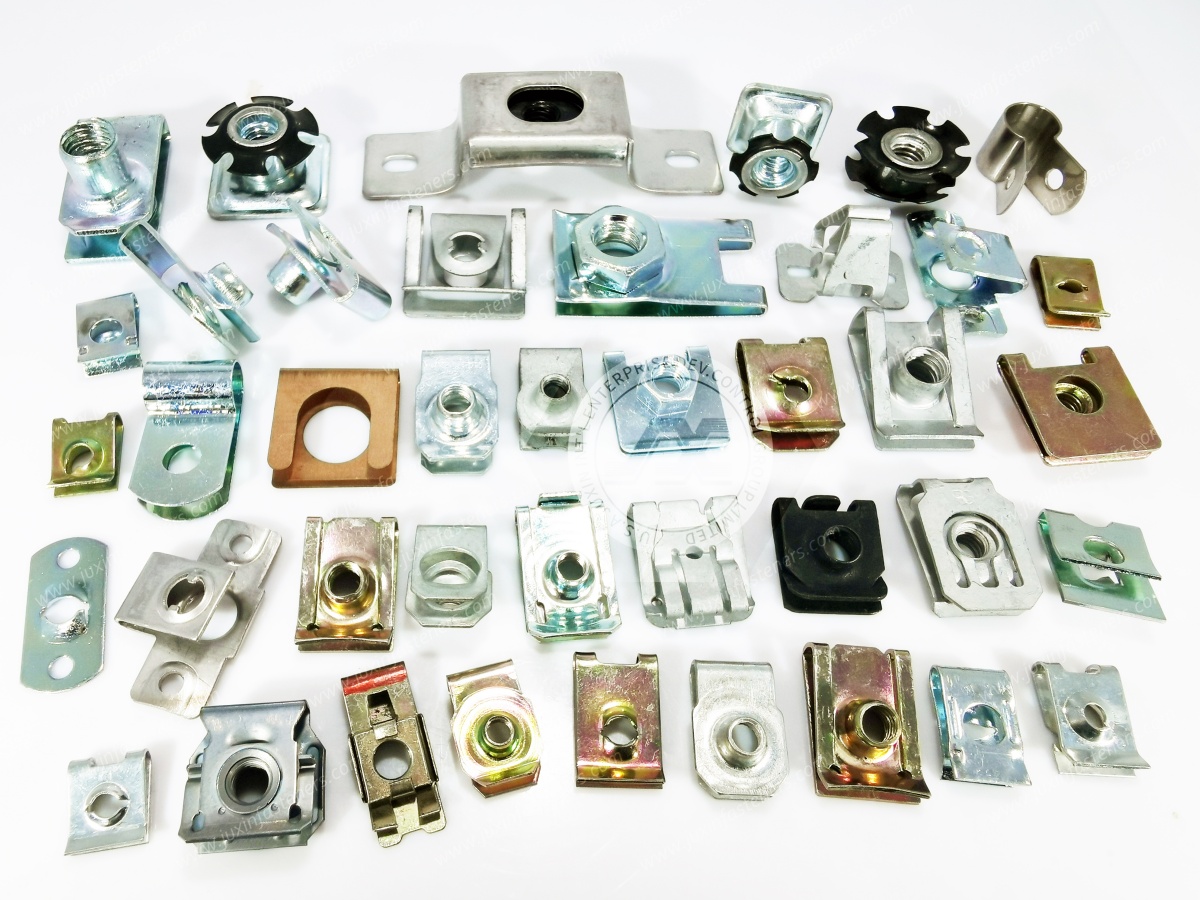
Cage nuts can be useful where the enclosure architecture is designed around compatible openings and replaceable threaded hardware.
Potential applications include:
Equipment racks
Electrical cabinets
Control systems
Electronic equipment
Potential advantages include:
Replaceability
Serviceability
Installation flexibility
Compatibility with suitable rack structures
A cage nut, rivet nut and self-clinching nut all create threaded mounting capability, but they solve different manufacturing problems.
| Requirement | Cage Nut | Rivet Nut | Self-Clinching Nut |
|---|---|---|---|
| Replaceable nut | Major advantage | Normally retained permanently | Normally retained permanently |
| Blind installation | Design dependent | Major advantage | Manufacturing-process dependent |
| Reusable thread | Yes | Yes | Yes |
| Thin sheet | Compatible enclosure geometry required | Suitable within grip range | Suitable sheet required |
| Hole/opening | Typically shaped opening | Round or shaped hole | Prepared hole |
| Installation process | Mechanical insertion | Setting tool | Pressing operation |
| Typical value | Serviceability | Blind threaded attachment | Captive production-installed thread |
Selection should follow enclosure architecture and maintenance requirements.
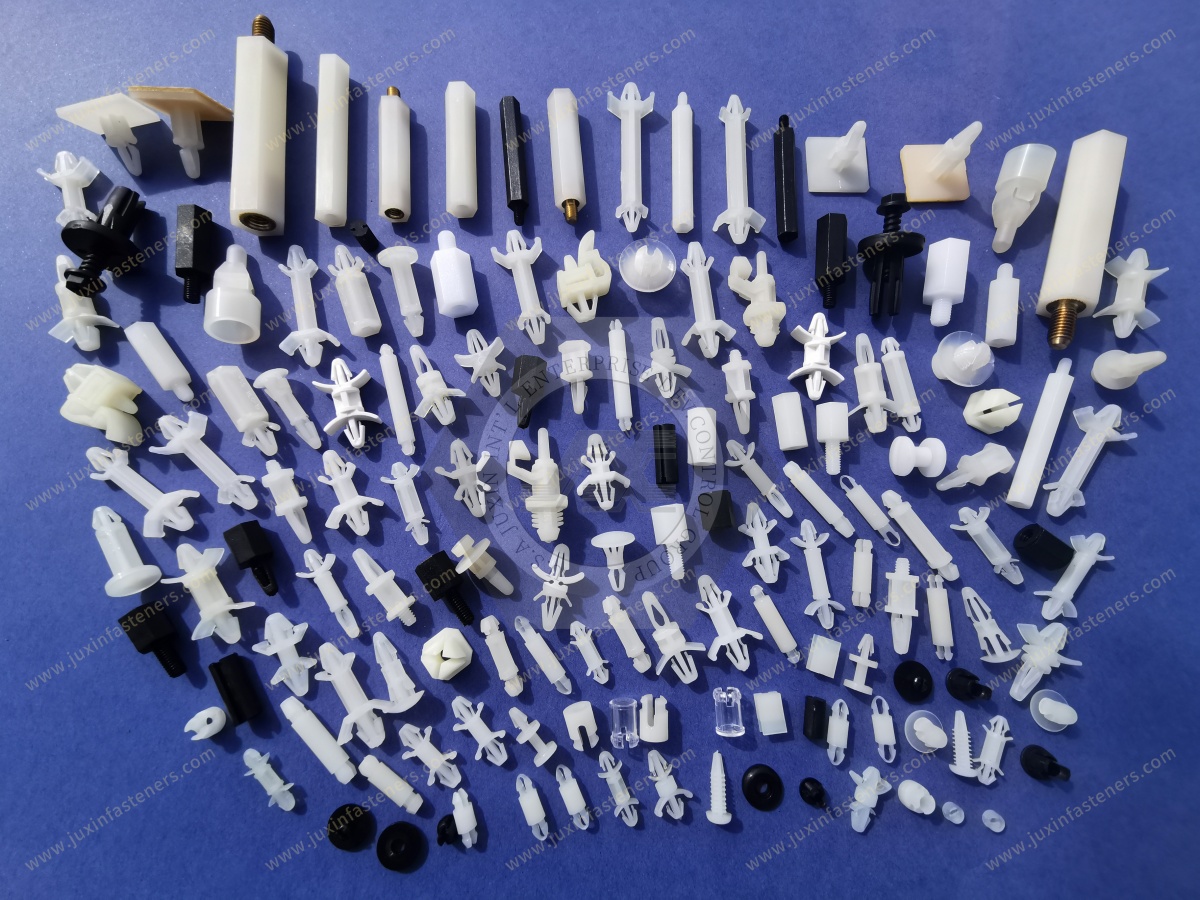
Plastic and nylon fasteners may be useful in selected rail equipment applications where requirements involve:
Electrical isolation
Low mass
Non-metallic attachment
Component positioning
Cable management
Potential products include:
Plastic screws
Nylon screws
Plastic nuts
Nylon nuts
Plastic rivets
PCB supports
Spacers
Standoffs
However, polymer material alone does not establish compliance with electrical, fire, smoke or railway safety requirements.
Where these properties are required, the exact material and applicable project requirements must be defined and verified.
Rail vehicle interiors can contain:
Lighting equipment
Passenger information systems
Equipment panels
Covers
Seat-related assemblies
Handrail-related components
Cable-management systems
Electronic equipment
Different interfaces can require different fasteners.
For example:
Permanent lightweight panel: blind rivet may be considered.
Removable equipment cover: screw with rivet nut or another reusable thread.
Equipment bracket: bolt-and-nut or captive threaded solution depending on access.
Plastic component: application-specific polymer fastener or insert.
The complete interior system should not be reduced to one “railway fastener.”
Railway converter cabinets, control cabinets and electrical enclosures create another distinct fastening environment.
Potential solutions include:
Blind rivets
Rivet nuts
Self-clinching nuts and studs
Lock nuts
Screws and bolts
Plastic and nylon fasteners where appropriate
Important design factors include:
Thin-sheet attachment
Service access
Vibration
Corrosion
Electrical bonding
Temperature
Installation sequence
Electrical requirements should be validated separately from mechanical fastening performance.
A metallic fastener does not automatically provide a compliant grounding or bonding path.
Electrical continuity can be affected by:
Paint
Powder coating
Anodizing
Oxide layers
Contact pressure
Contact area
Washers
Surface preparation
Corrosion
Where a fastener forms part of a protective bonding interface, the electrical requirement should be explicitly specified and validated.
Similarly, current-carrying connections such as busbar interfaces require dedicated electrical and thermal engineering beyond ordinary mechanical lock-nut selection.
Rail equipment can combine:
Aluminum
Carbon steel
Stainless steel
Copper alloys
Coated metals
When dissimilar metals are electrically connected in the presence of an electrolyte, galvanic corrosion may become a concern.
Risk depends on:
Material combination
Relative exposed areas
Moisture
Contaminants
Coatings
Joint geometry
Drainage
Service environment
A corrosion-resistant fastener material does not automatically create a corrosion-resistant joint.
The complete material system must be evaluated.
Surface treatment can influence more than appearance.
Depending on the fastener and project, finishes may be selected to address:
Corrosion protection
Friction
Installation behavior
Electrical requirements
Appearance
Applicable systems may include zinc-based coatings, zinc-nickel systems, stainless steel passivation or other customer-specified finishes where appropriate.
For threaded fasteners, coating can influence friction and therefore the relationship between tightening torque and achieved preload.
This is important when qualifying an alternative supplier.
Railway applications are frequently described as vibration environments.
But vibration does not make one fastener universally correct.
For threaded joints, engineers may need to evaluate:
Preload
Joint slip
Friction
Locking mechanism
Fatigue
Tightening process
For riveted joints:
Hole quality
Rivet formation
Parent-material fatigue
Pull-through
Joint stiffness
For rivet nuts:
Spin-out
Pull-out
Mating screw behavior
Installation quality
The relevant failure mode should be identified before the locking solution is selected.
Railway equipment can contain combinations of:
Aluminum
Steel
Stainless steel
Copper
Engineering plastics
These materials have different thermal-expansion characteristics.
Repeated temperature changes can affect:
Joint loading
Clamp condition
Hole interfaces
Panel alignment
Polymer creep
Electrical contacts
Thermal effects should therefore be considered where operating conditions make them relevant.
Instead of asking only for “higher-strength fasteners,” engineers should identify the actual failure mode.
Possible examples include:
Rivet fracture
Parent-sheet pull-through
Hole enlargement
Poor blind-side formation
Fatigue
Spin-out
Pull-out
Thread damage
Parent-sheet deformation
Incorrect installation
Loss of preload
Self-loosening
Thread stripping
Fatigue
Galling
Corrosion
Creep
Pull-out
Torque-out
Environmental degradation
Thermal effects
Different failure modes require different engineering responses.
A useful OEM validation process can include:
Classify joint criticality.
Confirm the joint function.
Confirm parent materials.
Confirm material thicknesses.
Confirm hole dimensions.
Confirm fastener geometry.
Confirm material and finish.
Install using production-representative tooling.
Inspect installed condition.
Evaluate parent-material deformation.
Test the relevant mechanical failure modes.
Evaluate vibration or fatigue where required.
Evaluate thermal cycling where required.
Evaluate corrosion and mixed-material compatibility.
Validate electrical performance separately where applicable.
Confirm production repeatability.
The validation depth should increase with the consequence of joint failure.
Railway fasteners can be governed by several layers of technical requirements.
These may include:
Customer drawings
Fastener dimensional standards
Mechanical-property standards
Material specifications
Coating requirements
Railway equipment requirements
Vibration requirements
Fire and smoke requirements where applicable
Electrical requirements
Corrosion requirements
Relevant ISO, DIN, EN, BS, ASTM, SAE or other internationally recognized specifications may apply depending on the fastener, equipment and project.
A fastener manufactured to an international dimensional standard is not automatically approved for every railway application.
The governing project specification should always take priority.
A high-quality RFQ allows the supplier to evaluate the actual joint rather than quote only a part number.
Provide:
2D drawing
3D model where relevant
Application description
Joint criticality
Fastener type
Applicable standard where required
Parent material
Material grade
Sheet thickness
Grip range where applicable
Hole dimensions
Thread size and pitch
Fastener material
Strength requirement where applicable
Surface treatment
Mechanical requirements
Pull-out requirement
Spin-out or torque-out requirement
Tightening requirement
Vibration or fatigue requirement
Temperature
Corrosion requirement
Electrical requirement where applicable
Installation method
Applicable railway/customer specifications
Annual purchasing volume
Sample quantity
Packaging requirements
If the project is an alternative-supplier qualification, also explain the current problem.
Examples include:
Excessive lead time
Rivet pull-through
Rivet nut spin-out
Thread damage
Fastener loosening
Galling
Corrosion
Coating inconsistency
Installation difficulty
Supply-chain risk
This creates a much stronger supplier-development process than sending only a photograph and quantity.
Standard fasteners should normally be evaluated first when they satisfy the engineering requirement.
A custom fastener may become appropriate when the project requires:
Non-standard dimensions
Special head geometry
Restricted installation envelope
Specific material
Special surface treatment
Modified anti-rotation feature
Application-specific interface
Drawing-controlled tolerances
However, unnecessary customization can increase:
Tooling
MOQ
Qualification work
Lead time
Supply-chain complexity
The commercial objective should therefore be:
Use a standard fastener where it works; customize where the joint genuinely requires it.
For railway OEM sourcing, the lowest fastener price does not necessarily create the lowest supply risk or installed cost.
Supplier-development teams should also consider:
Drawing interpretation
Material control
Dimensional consistency
Surface-treatment control
Installation repeatability
Sample validation
Packaging
Traceability requirements
Production capacity
Lead time
Change control
Technical communication
For drawing-based parts, the supplier should understand which dimensions and characteristics are functionally critical rather than treating every drawing dimension as an isolated inspection number.
JUXIN FASTENERS supports OEM manufacturers,
Tier suppliers, procurement teams and supplier-development engineers with fastening components for railway equipment and related industrial assemblies.
Relevant product capabilities include:
Blind rivets
Closed-end blind rivets
Aluminum rivets
Stainless steel rivets
Rivet nuts
Round knurled rivet nuts
Hex rivet nuts
Closed-end rivet nuts
Stainless steel rivet nuts
Aluminum rivet nuts
Nylon insert lock nuts
Flange nuts
Stainless steel nuts
Screws and bolts
Self-clinching nuts and studs
Threaded inserts
Plastic and nylon fasteners
PCB supports and standoffs
Drawing-based custom fasteners
CNC machined components
Fastener selection should be based on the customer drawing, joint function, parent materials, installation process and project-specific technical requirements.
Railway equipment can use blind rivets, rivet nuts, screws, bolts, lock nuts, self-clinching fasteners,
threaded inserts and polymer fasteners depending on the particular joint. There is no single universal railway fastener.
The answer depends on whether the joint is permanent or removable. A blind rivet may be considered for a suitable permanent joint,
while a rivet nut may be considered where a reusable thread is required. Parent-sheet strength, hole geometry, grip range and corrosion must also be evaluated.
Rivet nuts can create reusable internal threads in suitable thin sheet where direct thread engagement is insufficient or backside access is restricted.
Selection depends on the joint preload, movement, temperature, mating surface, serviceability and actual loosening mechanism. “Railway vibration” alone is not enough to select a lock nut.
No. Stainless steel can provide useful corrosion resistance, but mechanical requirements, galling, cost, parent material and galvanic corrosion should also be considered.
Yes, in appropriate applications where their mechanical and environmental performance satisfies the joint requirements. Weight reduction should not replace mechanical validation.
No. A dimensional standard can define the fastener geometry or other characteristics, but project-specific load, material, environment,
installation and railway requirements must also be considered.
JUXIN FASTENERS supports drawing-based custom fasteners according to customer dimensions, materials, surface treatments, performance requirements and purchasing volumes.
Send the 2D drawing, application, parent material, thickness, hole dimensions, mechanical requirements, surface treatment,
environmental requirements, applicable project specification and annual volume.
The most effective railway fastening specification follows a decision path:
Joint Criticality → Function → Permanent or Serviceable → Access → Parent Material → Thickness → Load → Environment → Fastener Technology → Installation → Validation
This framework helps:
Design engineers avoid selecting the wrong fastening technology
Procurement teams issue more complete RFQs
Supplier-development teams compare technically equivalent alternatives
Suppliers understand the actual joint rather than only the fastener dimensions
For rail vehicle interiors, electrical equipment, aluminum panels, equipment modules, cabinets, brackets or other suitable railway assemblies,
send JUXIN FASTENERS your 2D drawing, application requirements and expected annual purchasing volume.
Email: info@juxinfasteners.com
Website: www.juxinfasteners.com
Use the existing indexed JUXIN FASTENERS URL when implementing these internal links:
Aluminum Rail Vehicle Fastening Solutions: Blind Rivets & Rivet Nuts
Railway Converter Cabinet Fastening Solutions
Rivet Nuts for Electrical Cabinets, Switchgear & Control Panels
Types of Rivets: Engineering Selection Guide
Rivets vs Screws vs Rivet Nuts: Industrial Fastening Method Selection
Blind Rivet Selection and Installation
Blind Rivet Nut Selection Guide
Nylon Insert Lock Nuts Engineering Guide
Plastic & Nylon Fasteners for Industrial Applications
Threaded Inserts for Plastic
Custom Fasteners and Drawing-Based Components
 MORE NEWS


Oct. 13, 2026
Contact Us
Tel.:
+86 020 8621 0320
+86 020 3121 6067
E-mail:
Technical Support:
Navigation
SEND INQUIREY