
Call Us
+86 136 6007 9809
Call Us
+86 136 6007 9809

Jan. 13, 2024
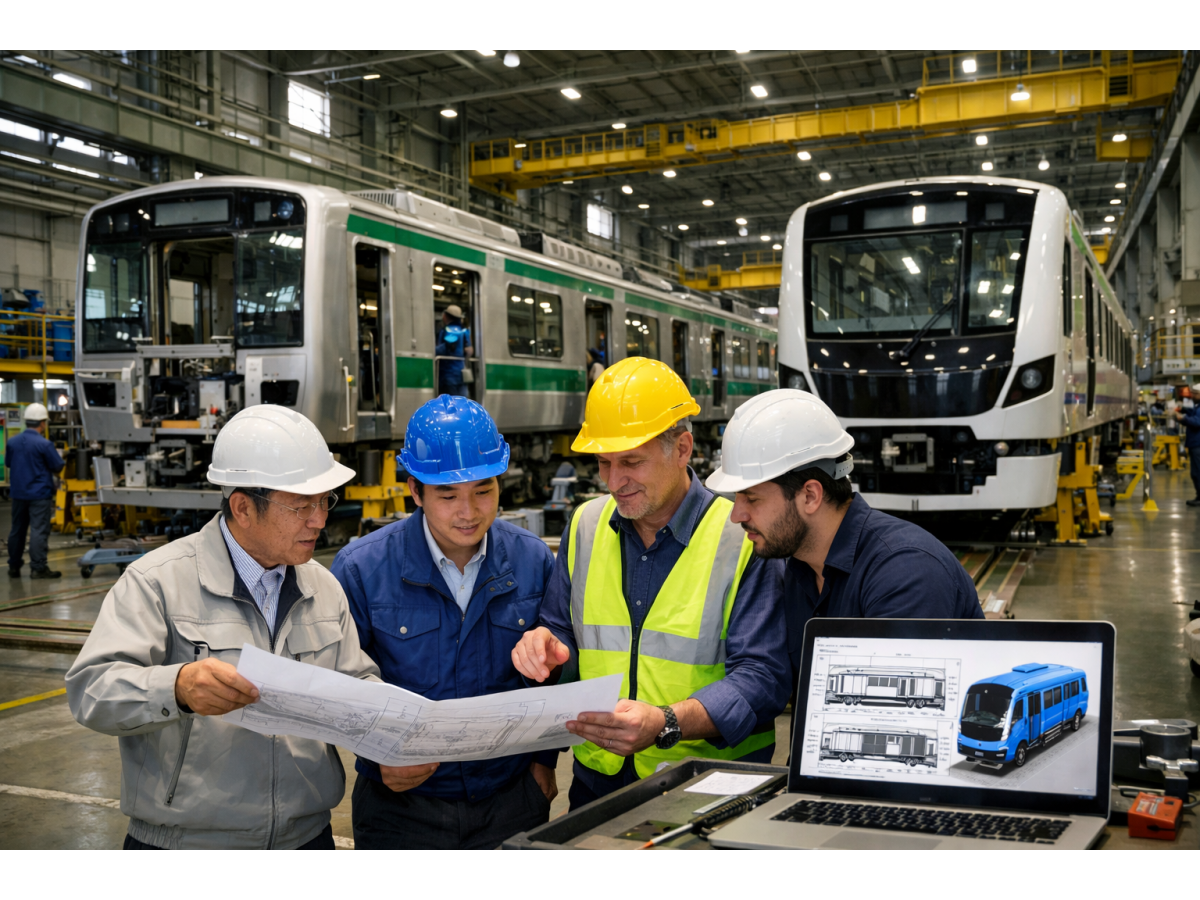
Aluminum is widely used across modern rail vehicle assemblies where reduced mass, corrosion behavior and manufacturability make it suitable for the application.
However, moving from steel to aluminum changes the fastening problem.
Engineers must consider not only the fastener material, but also:
Parent-alloy properties
Sheet and extrusion thickness
Joint access
Hole geometry
Local bearing behavior
Pull-through risk
Serviceability
Vibration and fatigue
Dissimilar-metal corrosion
Surface treatment
Installation tooling
Inspection requirements
For many rail vehicle panels, interior equipment, brackets, electrical equipment, equipment modules and secondary assemblies,
mechanical fastening can provide a practical alternative or complement to welded joining.
JUXIN FASTENERS supplies blind rivets, aluminum blind rivets, stainless steel blind rivets, rivet nuts, stainless steel rivet nuts,
aluminum rivet nuts, closed-end rivet nuts and drawing-based custom fasteners for railway equipment and industrial OEM applications.
This guide focuses on engineering selection and sourcing of fasteners for aluminum rail vehicle assemblies rather than claiming that one fastening method is appropriate for every railway structure.
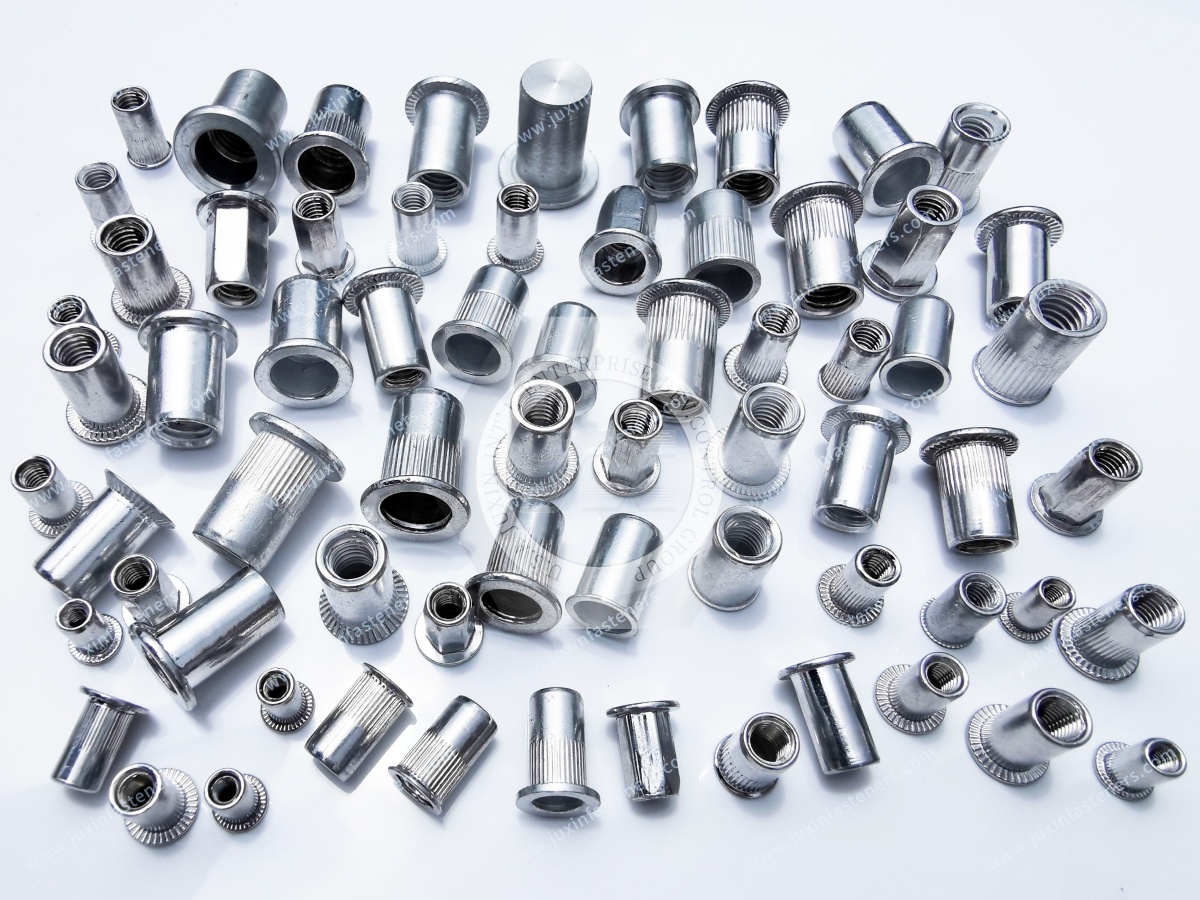
An aluminum rail vehicle contains many different types of mechanical interfaces.
Potential fastening applications can include:
Interior panels
Equipment mounting brackets
Electrical equipment
Converter and control cabinets
Equipment housings
Interior lighting assemblies
Seat-related supporting assemblies
Cable-management hardware
Access panels
Covers
Equipment modules
Secondary sheet-metal assemblies
These applications should be distinguished from primary safety-critical vehicle structures.
Fasteners used in primary load-bearing, crash-critical or otherwise safety-critical railway structures require project-specific engineering approval,
validation and compliance with the applicable vehicle manufacturer's requirements.
The correct fastener therefore begins with the function and criticality of the joint.
Aluminum has different mechanical and electrochemical behavior from carbon steel or stainless steel.
Changing the parent material can influence:
Bearing strength around the hole
Local deformation
Fastener pull-through behavior
Threaded insert retention
Surface damage
Galvanic corrosion
Thermal expansion
Required fastener spacing
Edge distance
Installation force
This means an existing steel assembly should not automatically be converted to aluminum by retaining the same fastener and simply changing the panel material.
The complete joint should be reassessed.
Mechanical fastening and welding are different joining strategies.
Mechanical fastening can be attractive where the design requires:
Joining without localized welding heat at the fastener location
One-side installation
Connection of certain dissimilar materials
Serviceable threaded attachments
Modular assembly
Controlled production installation
Welding may remain appropriate for other structural interfaces.
A better engineering question than “riveting or welding?” is:
Which joint interfaces benefit from mechanical fastening, and which should remain welded or use another joining technology?
Replacing a weld with a rivet is not a one-for-one fastener substitution.
A welded joint and a mechanically fastened joint transfer load differently.
When redesigning an interface for riveting, engineers may need to reconsider:
Overlap geometry
Hole position
Fastener diameter
Fastener quantity
Fastener spacing
Edge distance
Parent-material thickness
Local reinforcement
Load direction
Joint stiffness
Fatigue behavior
Corrosion protection
The joint should therefore be redesigned around the mechanical fastening method rather than simply drilling holes where the welds were previously located.
A blind rivet is useful when a permanent mechanical joint is required and installation access is available from only one side.
Potential rail vehicle applications include:
Interior panels
Covers
Equipment housings
Secondary brackets
Enclosure assemblies
Closed sections where appropriate
Interior equipment subassemblies
During installation, the mandrel is pulled through the rivet body, forming the blind side of the joint.
The key advantage is blind-side installation, not a universal claim of superior structural performance.
A blind rivet should not be specified only as:
“M5 aluminum rivet” or “5 mm stainless rivet.”
A useful specification includes:
Rivet diameter
Grip range
Body material
Mandrel material
Head style
Parent materials
Individual material thicknesses
Total joint thickness
Hole diameter
Blind-side clearance
Required mechanical performance
Environmental conditions
Surface requirements
Installation tooling
For alternative sourcing, the existing drawing should be supplied whenever possible.
The grip range of a blind rivet must correspond to the total thickness of the materials being joined.
For example, a joint may contain:
Aluminum outer panel
Internal bracket
Reinforcement
Coating layers
The engineer should evaluate the actual joint stack rather than selecting the rivet from the thickness of only one panel.
An unsuitable grip condition can contribute to:
Poor blind-side formation
Inadequate clamping
Local sheet deformation
Inconsistent installation
Reduced joint reliability
Grip range is therefore one of the most important RFQ inputs for blind rivets.
Aluminum blind rivets may be considered where low fastener mass, installation characteristics and material compatibility support their use.
Potential applications include:
Aluminum interior panels
Lightweight equipment covers
Secondary brackets
Equipment housings
However, an aluminum parent material does not automatically require an aluminum rivet.
The joint still needs to satisfy:
Shear requirements
Tensile requirements
Pull-through resistance
Fatigue requirements where applicable
Vibration requirements
Corrosion requirements
Installation requirements
Material selection should follow the joint requirements.
Stainless steel blind rivets can provide different mechanical and corrosion characteristics from aluminum rivets.
However, using stainless steel in aluminum creates an important engineering question:
What happens at the dissimilar-metal interface?
Potential considerations include:
Galvanic corrosion
Exposed surface-area ratio
Moisture
Chlorides and contaminants
Coatings
Sealants
Joint geometry
Service environment
The fact that stainless steel itself is corrosion resistant does not mean a stainless-steel-to-aluminum joint is automatically optimized for corrosion resistance.
The complete material system should be evaluated.
Increasing rivet diameter can increase the bearing area at the joint, but “larger” does not automatically mean “better.”
A larger rivet also requires a larger hole.
Engineers should evaluate:
Remaining parent material
Edge distance
Rivet spacing
Local deformation
Head geometry
Blind-side formation
Parent-sheet bearing
Pull-through behavior
Where thin aluminum is the limiting element, the parent material may fail before the rivet reaches its theoretical fastener strength.
This is why joint testing matters.
For thin aluminum panels, one important failure mode is pull-through.
Instead of the rivet itself breaking, the rivet head or formed blind side can pull through or deform the parent material.
Pull-through behavior can be influenced by:
Parent-alloy strength
Sheet thickness
Rivet diameter
Head diameter
Hole size
Edge distance
Load direction
Local reinforcement
A stronger rivet material does not necessarily solve a pull-through problem.
Sometimes the limiting component is the aluminum sheet.
This distinction is important when engineering teams request a “higher-strength rivet.”
Head geometry influences how load is introduced into the panel.
Depending on the application, engineers may consider:
Standard protruding heads
Larger bearing heads
Low-profile heads
Countersunk heads
A larger head can distribute load over a greater surface area, while a countersunk head can reduce protrusion.
However, countersinking thin aluminum removes parent material.
Engineers should therefore verify whether the panel thickness can support the required countersink geometry without unacceptable weakening or distortion.
Flush appearance should not be prioritized ahead of joint integrity.
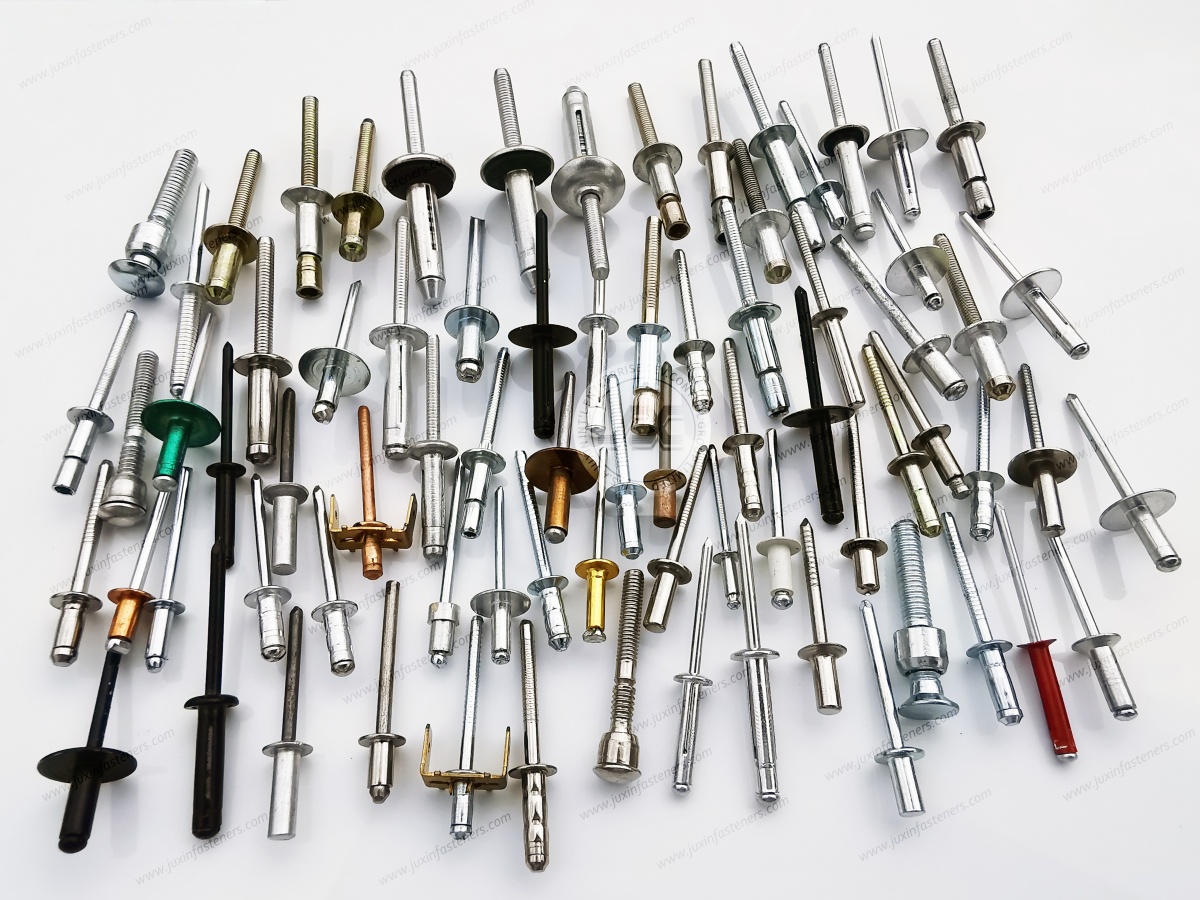
A rivet nut creates a reusable internal thread in suitable parent material.
It can be particularly useful when:
The aluminum sheet is too thin for sufficient direct thread engagement
A removable component must be installed
Backside access is restricted
A conventional loose nut is undesirable
Equipment must be removed during maintenance
Potential rail vehicle applications include:
Interior equipment brackets
Electrical cabinets
Equipment modules
Access covers
Mounting plates
Interior hardware
Serviceable components
Unlike a blind rivet, a rivet nut does not permanently join the removable component.
It creates a threaded mounting point.
Selecting a rivet nut for aluminum requires more information than thread size.
Engineers should define:
Thread diameter and pitch
Parent aluminum alloy where known
Sheet thickness
Grip range
Hole diameter
Body style
Head style
Rivet nut material
Pull-out requirement
Spin-out or torque-out requirement
Mating screw torque
Environmental conditions
Installation method
The installed joint should be evaluated in production-representative aluminum where performance is important.
Aluminum sheet can behave differently from harder parent materials during rivet nut installation and service.
Spin-out occurs when the installed rivet nut rotates in the hole instead of remaining fixed while the mating screw is tightened or removed.
Factors can include:
Hole size
Parent material
Sheet thickness
Rivet nut body geometry
Knurling
Hex geometry
Installation setting
Applied tightening torque
Where anti-rotation performance is important, engineers may evaluate round-knurled, hex-body or other suitable rivet nut designs according to the actual assembly.
Pull-out is another important consideration.
The installed rivet nut can only transfer load through the surrounding parent material.
Pull-out behavior therefore depends on:
Aluminum alloy
Sheet thickness
Hole condition
Rivet nut geometry
Head style
Installation quality
Applied axial load
A high-strength rivet nut does not automatically create a high-strength joint if the parent aluminum sheet is the limiting component.
Aluminum rivet nuts may be considered for lightweight assemblies where their mechanical characteristics satisfy the joint requirements.
Potential advantages can include lower fastener mass and compatibility with certain aluminum assemblies.
However, material selection should still consider:
Required thread strength
Pull-out
Torque-out
Installation behavior
Corrosion
Maintenance cycles
Weight should be treated as one selection factor rather than the only reason for choosing an aluminum rivet nut.
Stainless steel rivet nuts may be selected where their mechanical or corrosion properties are required.
However, engineers should again consider the stainless-steel-to-aluminum interface.
Relevant factors include:
Moisture exposure
Surface coatings
Galvanic interaction
Installation force
Parent-sheet deformation
Thread requirements
Stainless steel is not automatically the correct solution simply because the vehicle operates outdoors.
Closed-end rivet nuts provide a closed blind-side body and may be considered where the design seeks additional containment through the insert.
Potential applications can include:
Equipment enclosures
Exterior-facing mounting interfaces
Areas where contamination through the insert body is undesirable
However, a closed-end rivet nut should not automatically be described as waterproof.
Complete sealing depends on:
Head-to-panel interface
Hole condition
Surface finish
Mating screw
Sealing elements where used
Installation quality
Pressure differential
Environmental conditions
Where an enclosure requires a defined ingress-protection level, the completed assembly should be validated at the system level.
Rail vehicles require inspection and maintenance throughout their operating life.
This makes serviceability an important fastener-selection criterion.
A blind rivet may be considered when:
Routine disassembly is not required
One-side access is needed
Permanent joining is appropriate
A rivet nut, threaded insert, self-clinching fastener or another suitable threaded attachment may be considered when:
Components must be replaced
Covers require access
Equipment requires periodic inspection
A reusable thread is needed
Fastener selection should therefore reflect the maintenance strategy, not only initial assembly speed.
Rail vehicle interiors can contain:
Lighting equipment
Seats and associated hardware
Passenger information equipment
Panels
Covers
Handrail-related components
Equipment housings
Cable-management components
These assemblies may require combinations of:
Blind rivets
Rivet nuts
Screws and bolts
Lock nuts
Plastic and nylon fasteners
Drawing-based custom fasteners
Selection depends on the specific equipment, load, materials and railway project requirements.
Where fire behavior or other regulated material performance is relevant, the applicable component and material requirements must be separately specified and verified.
Rail vehicles also contain:
Converter cabinets
Control cabinets
Electrical enclosures
Power equipment
Communication equipment
Electronic modules
These systems can require both permanent and serviceable fastening.
For example:
Permanent enclosure seam → blind rivet may be considered
Removable service panel → screw with rivet nut may be considered
Internal mounting point → rivet nut or suitable captive threaded fastener
Bolted bracket → bolt and lock nut where appropriate
This joint-by-joint approach is more reliable than selecting one fastening technology for the complete equipment assembly.
Hole quality has a direct effect on installed fastener performance.
Engineers should control:
Hole diameter
Roundness
Position
Burr condition
Edge quality
Hole alignment
Surface coating around the hole
Poor hole preparation can contribute to:
Installation inconsistency
Reduced rivet nut anti-rotation performance
Local stress concentration
Panel damage
Poor rivet formation
Hole preparation should therefore be treated as part of the fastening process rather than as an unrelated sheet-metal operation.
Different hole-making processes can produce different:
Edge conditions
Burrs
Heat-affected surfaces
Tolerances
Local deformation
If prototypes are prepared using carefully drilled holes but production parts use another hole-making process, installed fastener behavior may differ.
For critical applications, validation should use production-representative holes whenever practical.
This is particularly important for rivet nuts where hole geometry contributes directly to anti-rotation and retention.
Fasteners should not be positioned solely according to appearance or packaging convenience.
Hole location affects how load transfers into the aluminum structure.
Relevant variables include:
Fastener diameter
Parent thickness
Parent alloy
Load direction
Joint geometry
Hole spacing
Distance from the material edge
If the fastener is positioned too close to an edge, the available parent material may become the limiting part of the joint.
There is no universal edge-distance value appropriate for every rail vehicle fastener.
The requirement should be based on the actual joint design and applicable engineering criteria.
Galvanic corrosion is an important consideration whenever dissimilar metals are combined in the presence of an electrolyte.
A rail vehicle may contain combinations of:
Aluminum
Carbon steel
Stainless steel
Copper alloys
Coated metals
Risk depends on more than the names of the two metals.
Engineers should consider:
Electrical contact
Moisture exposure
Electrolytes
Relative exposed areas
Coatings
Joint geometry
Drainage
Service environment
Potential mitigation strategies depend on the application and can include appropriate material selection, coatings, isolation strategies or sealing systems.
These should be validated for the actual joint.
Surface treatments may be specified for:
Corrosion protection
Appearance
Friction control
Electrical requirements
Depending on the fastener material and project requirements, applicable finishes can include zinc-based coatings, zinc-nickel systems, passivation or other customer-specified treatments.
However, coating selection should not be separated from the assembly.
The finish can affect:
Corrosion behavior
Installation friction
Dimensional fit
Electrical contact
Galvanic interaction
Supplier substitution should therefore include review of the surface-treatment system.
Aluminum, stainless steel, carbon steel and engineering plastics have different thermal-expansion behavior.
Temperature cycling can therefore influence mixed-material assemblies.
Potential effects include:
Changes in joint loading
Local stress
Hole-interface movement
Panel distortion
Clamp-condition changes
The significance depends on component dimensions, temperature range and joint architecture.
Thermal effects should be considered where the assembly experiences meaningful temperature variation.
Rail equipment can experience repeated dynamic loading.
It is not sufficient to specify a fastener simply as “vibration resistant.”
Engineers should consider:
Joint preload where threaded fastening is used
Relative movement
Hole condition
Parent-material fatigue
Fastener fatigue
Load direction
Installation consistency
Edge distance
Joint stiffness
For blind rivets, failure can occur through the fastener or through the parent material.
For rivet nuts, vibration performance also involves the mating screw and the complete threaded joint.
Critical applications should be validated under representative conditions.
| Assembly Requirement | Fastening Solution to Consider | Main Engineering Check |
|---|---|---|
| Permanent panel, one-side access | Blind rivet | Grip range and parent-sheet behavior |
| Lightweight aluminum panel | Aluminum blind rivet may be considered | Mechanical requirement |
| Higher mechanical requirement | Suitable engineered rivet | Parent sheet may still govern |
| Removable equipment | Rivet nut + screw | Pull-out and spin-out |
| Thin aluminum requiring thread | Rivet nut | Grip range and hole geometry |
| Restricted contamination path | Closed-end rivet nut may be considered | Complete sealing still requires validation |
| Corrosive mixed-metal assembly | Compatible fastener system | Galvanic corrosion |
| Interior lightweight hardware | Application-specific metal or polymer fastener | Load and material requirements |
| Custom interface | Drawing-based fastener | Validation and production volume |
Before selecting the fastener, classify the joint.
A useful engineering framework is:
Examples may include:
Covers
Cable supports
Equipment housings
Fastener selection focuses on serviceability, access, environment and equipment loads.
Examples may include certain:
Brackets
Panel supports
Equipment supports
Mechanical load and fatigue requirements become more significant.
These joints require project-specific engineering authority, railway manufacturer requirements and formal validation.
JUXIN FASTENERS should receive the governing drawing and technical specification before evaluating a fastener for such an application.
This classification helps procurement avoid treating every “railway fastener” as technically equivalent.
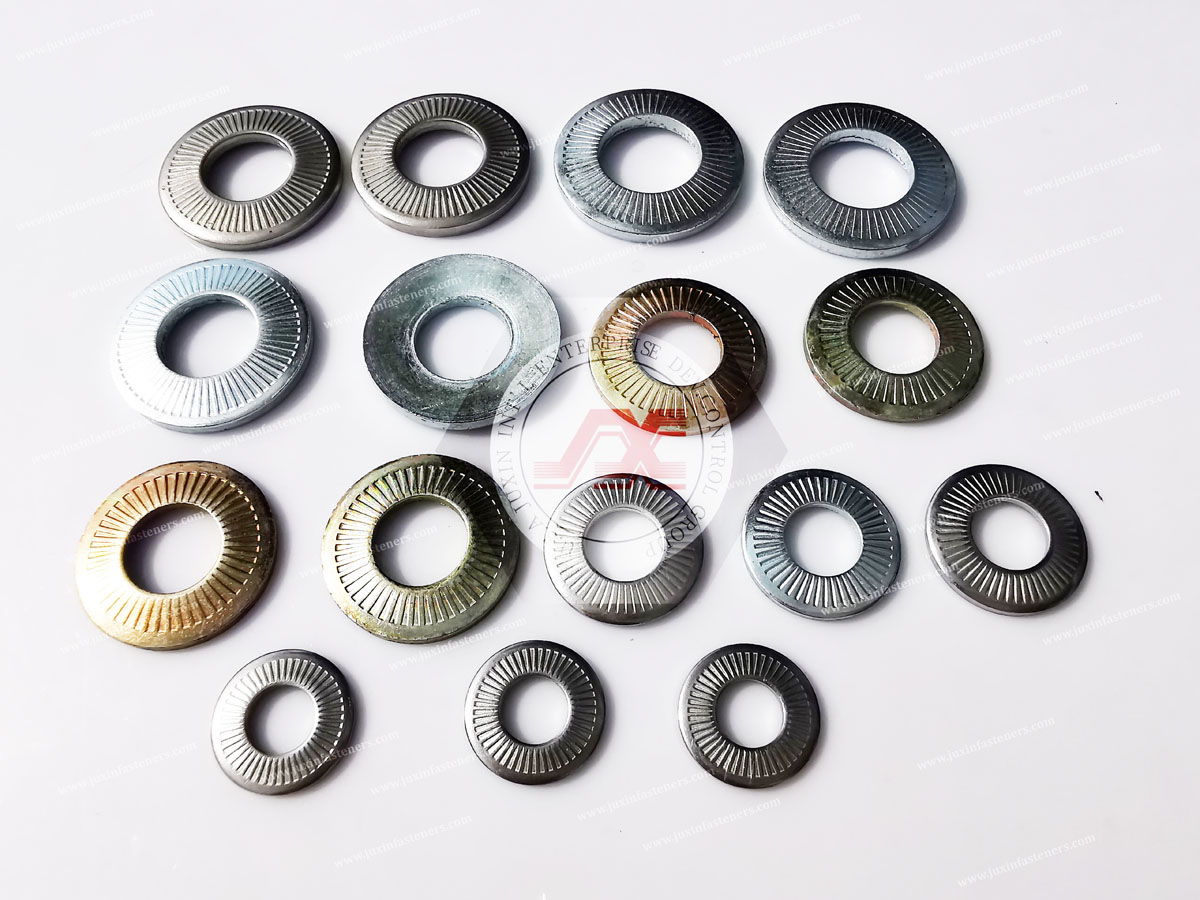
There is no single fastener standard that makes a component universally suitable for rail vehicles.
Rail projects can involve several layers of requirements:
Fastener dimensional standard
Fastener mechanical specification
Material requirements
Surface-treatment requirements
Vehicle-manufacturer drawing
Vibration requirements
Fire and smoke requirements where relevant
Electrical requirements where relevant
Corrosion requirements
Railway system requirements
Relevant ISO, DIN, EN, BS, ASTM, SAE or other internationally recognized specifications may apply depending on the fastener and project.
The applicable requirements should be identified from the customer's drawing and technical documentation.
A standard-compliant fastener does not by itself demonstrate compliance of the completed railway assembly.
A practical validation process can include:
Confirm joint function and criticality.
Confirm parent materials.
Confirm individual material thicknesses.
Confirm total grip thickness.
Verify production hole geometry.
Confirm fastener material and finish.
Install with representative tooling.
Inspect installed formation.
Check parent-material deformation.
Evaluate pull-through where relevant.
Evaluate pull-out and spin-out for rivet nuts where relevant.
Evaluate shear and tensile requirements.
Evaluate vibration or fatigue where required.
Evaluate galvanic corrosion.
Evaluate environmental exposure.
Confirm production repeatability.
Validation depth should reflect the risk and criticality of the application.
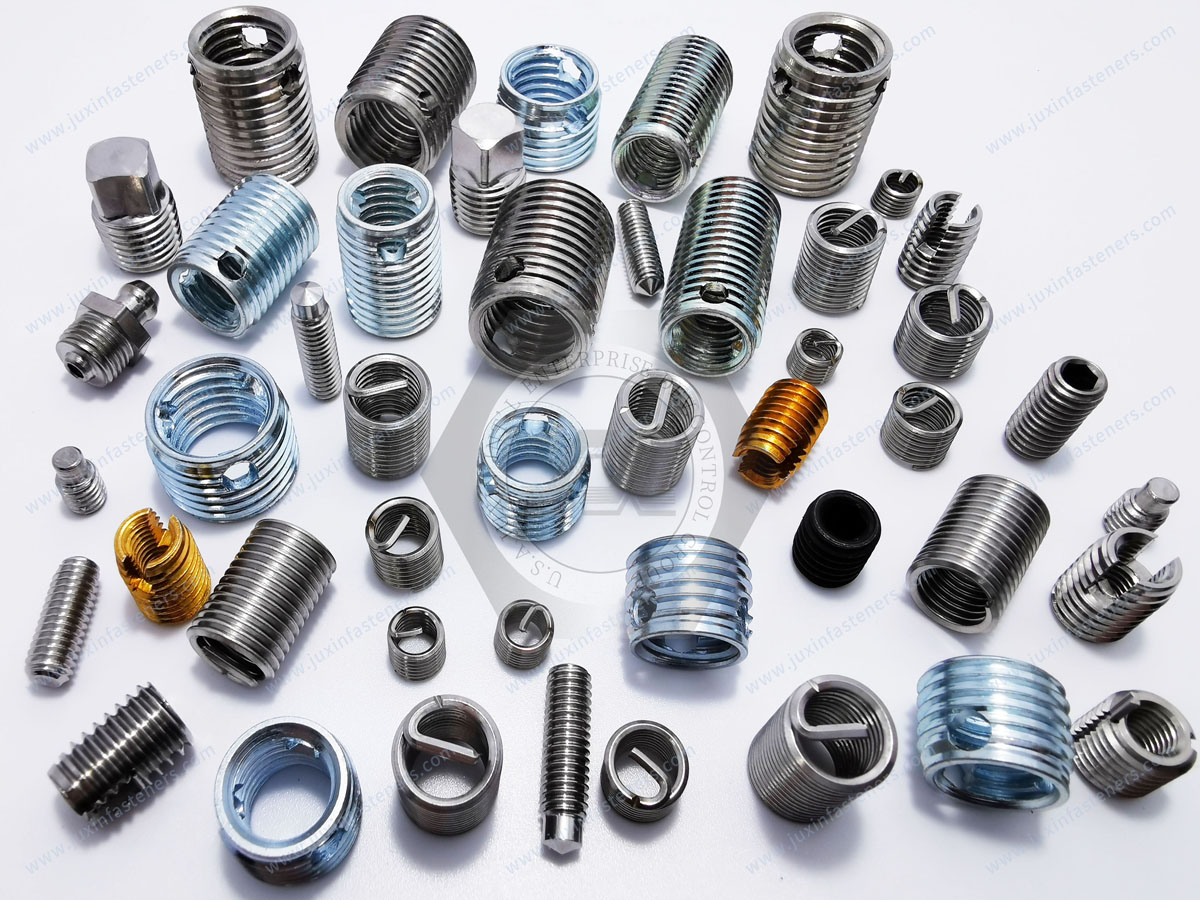
For an effective engineering review, provide:
2D drawing
3D model where relevant
Application description
Joint criticality
Parent materials
Material grades where available
Individual thicknesses
Total grip thickness
Hole dimensions
Fastener type
Thread size and pitch for rivet nuts
Head style
Fastener material
Surface treatment
Mechanical requirements
Pull-through requirement where applicable
Pull-out or spin-out requirement where applicable
Vibration or fatigue requirement where applicable
Corrosion requirement
Operating environment
Installation method
Applicable railway or customer specifications
Annual volume
Sample quantity
Packaging requirements
If developing an alternative supplier, also provide the current fastener drawing and describe any existing problem.
Examples include:
Rivet pull-through
Rivet nut spinning
Rivet nut pull-out
Corrosion
Panel deformation
Installation inconsistency
Fastener availability
Lead-time risk
A clearly defined failure mode allows the supplier to evaluate the actual engineering problem rather than simply quoting an identical-looking fastener.
JUXIN FASTENERS supports OEM manufacturers, Tier suppliers, procurement teams and supplier-development engineers with fastening components for rail equipment and associated industrial assemblies.
Relevant product capabilities include:
Blind rivets
Aluminum blind rivets
Stainless steel blind rivets
Closed-end blind rivets
Rivet nuts
Round knurled rivet nuts
Hex rivet nuts
Closed-end rivet nuts
Stainless steel rivet nuts
Aluminum rivet nuts
Screws and bolts
Lock nuts
Self-clinching fasteners
Plastic and nylon fasteners
Threaded inserts
Drawing-based custom fasteners
CNC machined components
Products are evaluated according to customer drawings, material requirements, installation conditions and application requirements.
Blind rivets allow permanent mechanical fastening where access is available from only one side.
They can be useful for suitable panels, brackets, enclosures and secondary assemblies when the correct grip range, material and joint design are specified.
No. Rivet material should be selected according to mechanical requirements, parent material, corrosion environment, weight and installation requirements.
They can be used in appropriately engineered joints, but dissimilar-metal corrosion, parent-sheet behavior and environmental exposure should be evaluated.
Possible contributors include insufficient parent-material strength, unsuitable head or rivet geometry, oversized holes,
inadequate edge distance or loads exceeding the capability of the sheet-fastener interface.
Use a blind rivet when a permanent joint is appropriate. Consider a rivet nut when a reusable threaded mounting point is required.
Possible causes include unsuitable hole dimensions, body geometry, sheet thickness, installation setting or tightening torque exceeding the installed joint's anti-rotation capability.
Not automatically. They close the blind end of the insert body, but complete sealing depends on the entire installed interface and must be validated where an ingress requirement applies.
Mechanical fastening can replace or complement welding at some interfaces when the joint is specifically designed and validated for mechanical fastening.
It should not be treated as a universal one-for-one replacement for welded rail vehicle structures.
JUXIN FASTENERS supplies fastening components for rail equipment applications according to customer drawings and technical requirements.
Application suitability and project-specific railway requirements should be reviewed for the particular joint.
Provide the drawing, application, parent material, thickness, hole dimensions, fastener material, surface treatment, mechanical requirements,
environmental requirements, applicable project specifications and expected annual volume.
A railway fastening project should not begin with:
“We need a railway rivet.”
A more useful engineering sequence is:
Joint Criticality → Function → Access → Parent Material → Thickness → Hole → Load → Serviceability → Environment → Installation → Validation
This separates a generic catalog fastener from a properly specified OEM fastening component.
For aluminum rail vehicle panels, interior equipment, brackets, electrical equipment, equipment modules or other suitable rail assemblies,
send JUXIN FASTENERS your 2D drawing, application, parent material, thickness, hole dimensions, mechanical requirements, applicable project specifications and annual demand.
Email: info@juxinfasteners.com
Website: www.juxinfasteners.com
Use the existing indexed JUXIN FASTENERS URL when implementing these internal links:
Railway Converter Cabinet Fastening Solutions
Rivet Nuts for Electrical Cabinets, Switchgear & Control Panels
Types of Rivets: Engineering Selection Guide
Rivets vs Screws vs Rivet Nuts: Industrial Fastening Method Selection
Blind Rivet Selection and Installation
Closed-End Blind Rivets
Blind Rivet Nut Selection Guide
Industrial Lock Nuts for Electrical Equipment
Automotive Lightweight Fastening Solutions
Custom Fasteners and Drawing-Based Components
 MORE NEWS


Oct. 13, 2026
Contact Us
Tel.:
+86 020 8621 0320
+86 020 3121 6067
E-mail:
Technical Support:
Navigation
SEND INQUIREY