
Call Us
+86 136 6007 9809
Call Us
+86 136 6007 9809

Jan. 14, 2024
Aluminum sheet is widely used in lightweight industrial assemblies, electric vehicle equipment, rail vehicle equipment, electrical enclosures, electronics and machinery.
But creating a reusable thread in thin aluminum can be difficult.
Direct tapping may provide insufficient thread engagement when the sheet is thin. A loose nut may require backside access. A weld nut requires a compatible welding process and parent material.
A blind rivet nut, also called a rivet nut or threaded insert for sheet metal, provides another option: a reusable internal thread that can be mechanically installed from one accessible side.
However, successful rivet nut installation depends on much more than selecting an M5, M6 or M8 thread.
Engineers must consider:
Aluminum alloy
Sheet thickness
Grip range
Hole diameter
Hole shape
Rivet nut body style
Head style
Insert material
Installation setting
Pull-out resistance
Spin-out or torque-out resistance
Mating screw torque
Corrosion
Serviceability
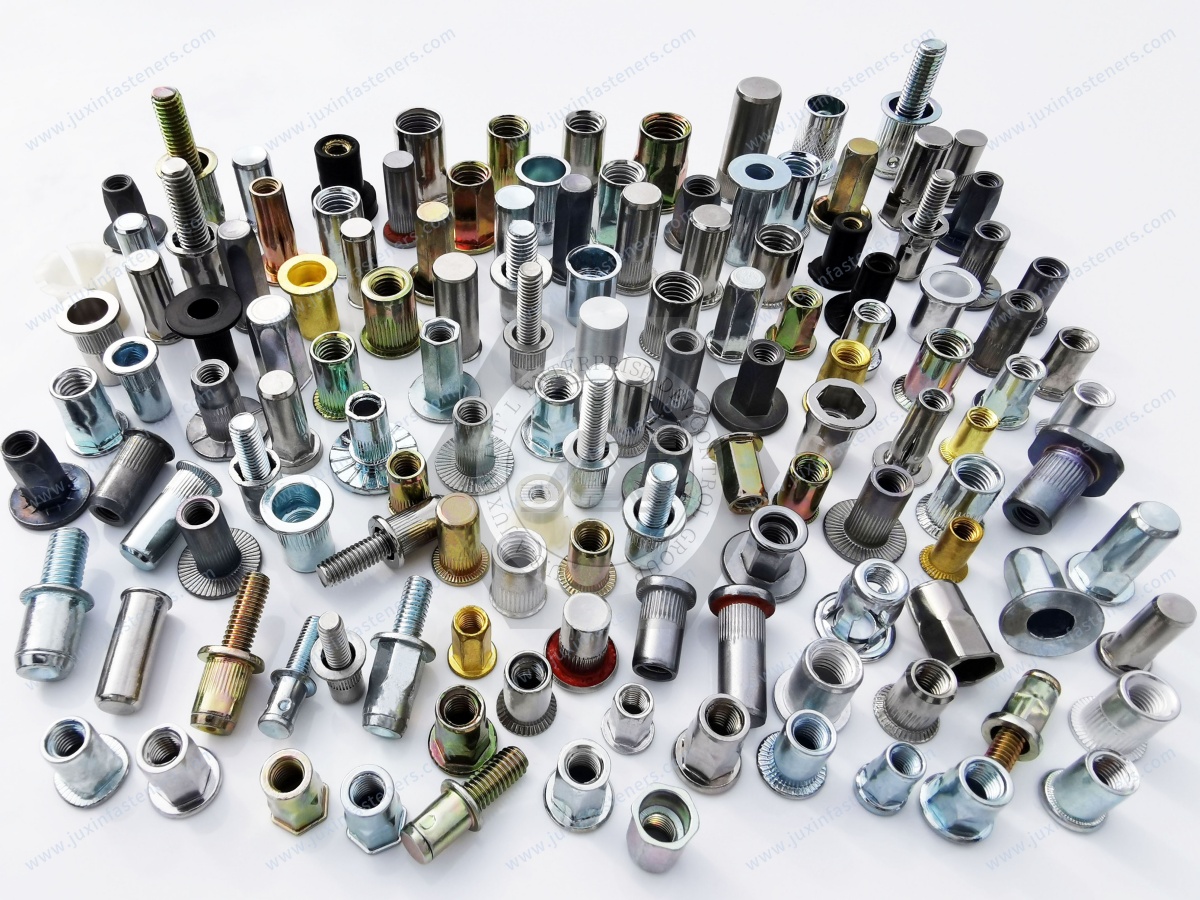
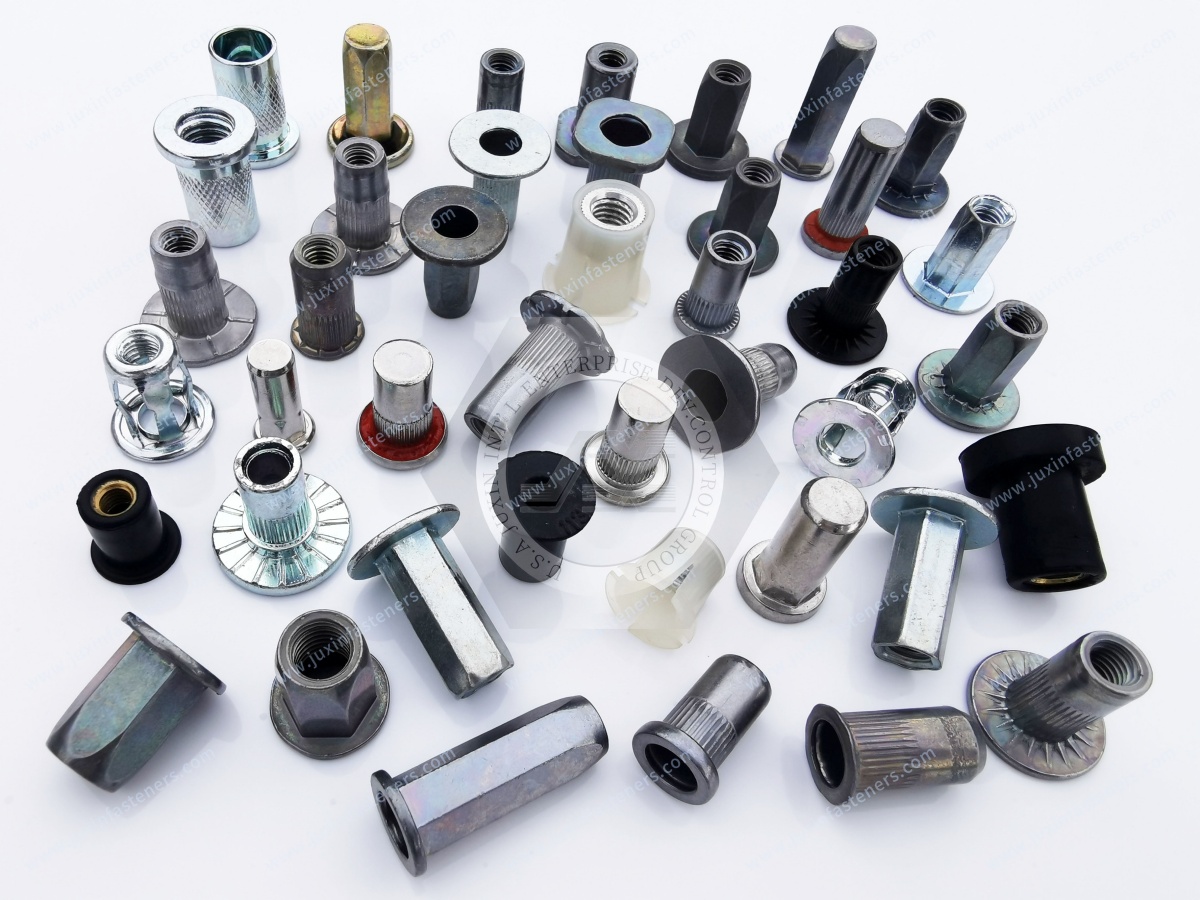
JUXIN FASTENERS supplies aluminum rivet nuts, carbon steel rivet nuts, stainless steel rivet nuts, round knurled rivet nuts, hex rivet nuts,
closed-end rivet nuts and drawing-based custom rivet nuts for industrial OEM applications.
This guide explains how the rivet nut, aluminum sheet, hole and installation process work together as an installed fastening system.
A reusable threaded joint needs enough parent material to support the thread or another method of retaining a threaded component.
Thin aluminum sheet may not provide sufficient direct thread engagement for the required assembly.
A rivet nut can create a reusable thread without requiring:
A loose backside nut
Direct tapping of the thin sheet
Welding at the attachment point
This makes rivet nuts useful for suitable:
Aluminum enclosures
Electrical cabinets
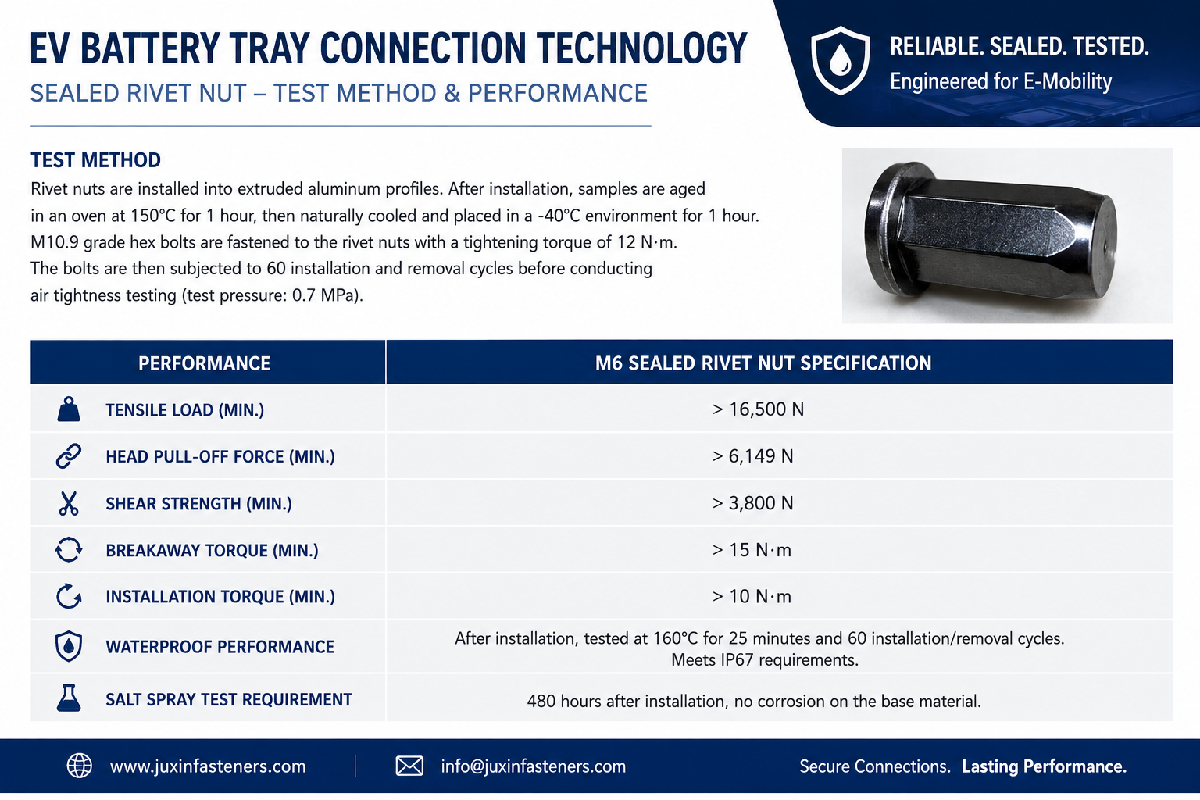
EV battery-related equipment
Power electronics
Rail equipment
Equipment housings
Access panels
Lightweight brackets
Industrial machinery
Serviceable sheet-metal assemblies
The key advantage is not simply “stronger threads.”
It is the ability to create a captive, reusable threaded attachment in suitable thin material with one-side installation.
A rivet nut contains an internal thread and a deformable installation section.
During installation:
The rivet nut is inserted into the prepared hole.
The installation tool engages the internal thread.
The tool applies the required setting action.
The designated deformation section of the rivet nut shortens and forms on the blind side of the parent material.
The parent sheet becomes clamped between the rivet nut head and the formed blind-side section.
The installation tool is removed.
The installed rivet nut provides a reusable internal thread.
This is different from describing the rivet nut simply as expanding radially against the hole wall.
Retention depends on the complete interaction between:
Head + Body Geometry + Blind-Side Formation + Parent Material + Hole + Installation Setting
Anti-rotation performance introduces additional variables.
A useful way to analyze a rivet nut joint is to divide it into five interfaces.
This influences:
Fit
Alignment
Anti-rotation
Installation consistency
This influences:
Pull-out
Local deformation
Bearing
Blind-side formation
This influences:
Thread engagement
Tightening
Thread stripping
Repeated service
This influences:
Seating
Bearing area
Installed profile
Surface condition
This influences:
Setting consistency
Deformation
Thread condition
Production repeatability
Many rivet nut problems occur because only the insert itself is specified while the other four interfaces are ignored.
| Engineering Requirement | Rivet Nut Feature to Evaluate | Main Risk |
|---|---|---|
| Thin aluminum sheet | Correct grip range | Incorrect formation |
| One-side access | Blind rivet nut | Installation access |
| High anti-rotation requirement | Knurled or shaped body where appropriate | Spin-out |
| Shaped production hole available | Hex body may be considered | Hole/process compatibility |
| Low protrusion requirement | Low-profile head | Reduced bearing area must be evaluated |
| Larger bearing requirement | Flange/head geometry | Packaging interference |
| Lightweight assembly | Aluminum rivet nut may be considered | Mechanical capability |
| Higher thread/mechanical requirement | Steel or stainless may be considered | Parent aluminum may still govern |
| Dissimilar metals | Material/coating review | Galvanic corrosion |
| Restricted contamination path | Closed-end design may be considered | Not automatically sealed |
| Repeated maintenance | Thread and anti-rotation performance | Spin-out/thread damage |
There is no universal “best rivet nut for aluminum.”
The correct solution depends on the joint.
One of the most important rivet nut specifications is grip range.
Grip range defines the parent-material thickness range over which the rivet nut is intended to install and form correctly.
For example, two M6 rivet nuts may have:
The same thread
Similar outside appearance
Different body lengths
Different grip ranges
They are not necessarily interchangeable.
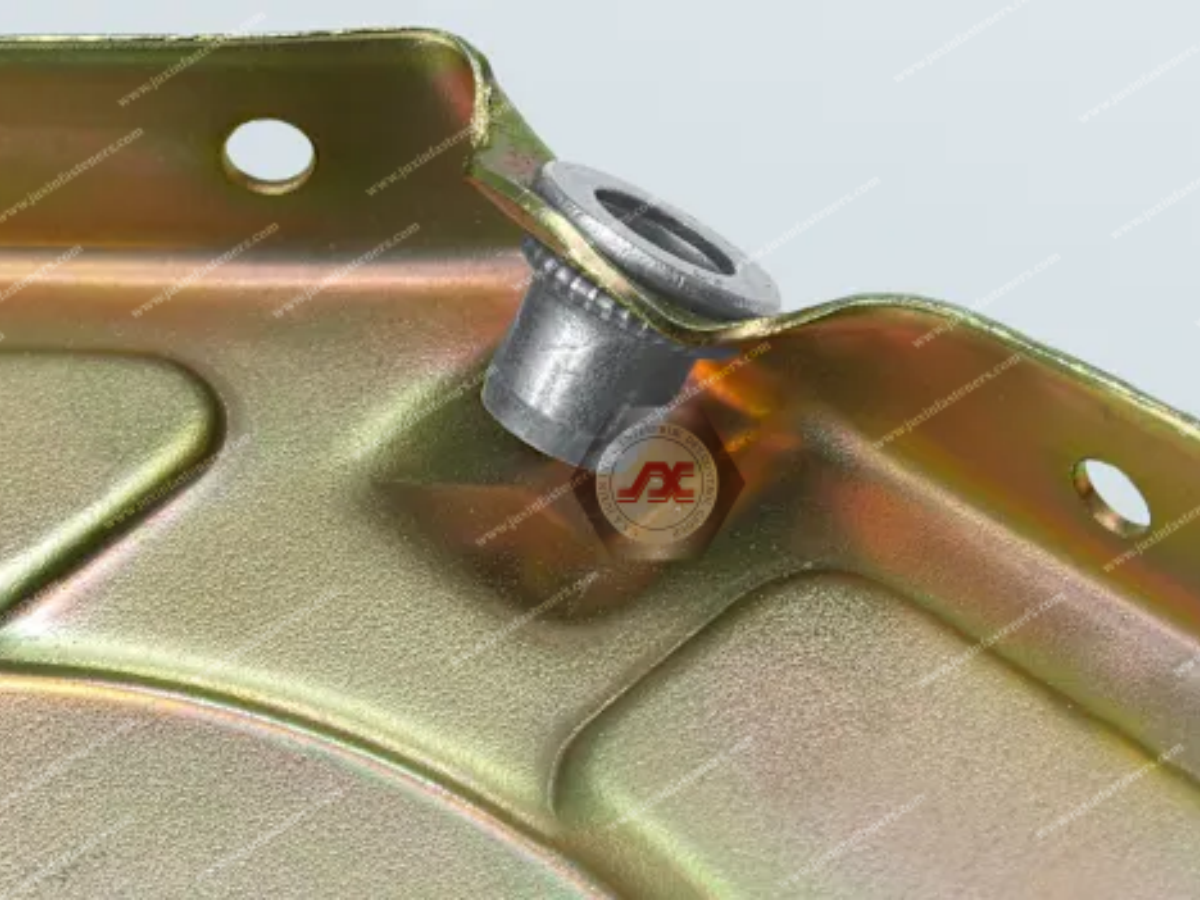
If the parent sheet falls outside the intended grip range, potential problems can include:
Incorrect blind-side formation
Incomplete clamping
Excessive deformation
Poor seating
Reduced retention
Installation inconsistency
Therefore, an RFQ that states only:
“M6 aluminum rivet nut”
is incomplete.
A more useful RFQ states:
Thread + Parent Material + Sheet Thickness + Hole + Body Style + Head Style + Performance Requirement
For rivet nut applications, sheet thickness is not simply background information.
It directly affects installation.
Procurement teams qualifying an alternative rivet nut supplier should therefore provide the actual parent thickness or thickness range.
If several panel thicknesses exist in production, engineers should determine whether:
One rivet nut can correctly cover the required range, or
Different grip ranges are needed.
Reducing SKU count can be useful commercially, but not if it pushes the insert outside an appropriate installation range.
The rivet nut is installed into a prepared hole.
Hole diameter affects:
Insertion
Alignment
Anti-rotation behavior
Parent-material support
Installation consistency
A hole that is too small can cause installation problems.
A hole that is too large can reduce the interaction between the rivet nut and parent material and may contribute to poor anti-rotation behavior.
The correct hole should follow the selected rivet nut design and supplier specification.
Do not assume all M6 rivet nuts require the same hole.
Rivet nuts are available with different body geometries.
Two important categories are:
Round-body rivet nuts
Hex-body rivet nuts
Round bodies are compatible with round holes and can simplify hole production.
Depending on the design, the body may be:
Smooth
Knurled
Otherwise engineered for the application
Hex-body rivet nuts can provide geometric anti-rotation interaction when installed into a compatible shaped hole.
However, they require the parent component and manufacturing process to support the required hole geometry.
This means a hex rivet nut is not automatically the best choice merely because higher anti-rotation performance is desired.
The complete manufacturing process must support it.
Knurling can increase mechanical interaction between the rivet nut body and suitable parent material.
However, the installed result still depends on:
Parent material
Sheet thickness
Hole size
Knurl geometry
Installation setting
Mating screw torque
A knurled body should therefore be treated as one part of the anti-rotation strategy rather than a guarantee against spin-out.
Spin-out occurs when the installed rivet nut rotates in the parent material instead of remaining fixed while the mating screw is tightened or removed.
This can create serious service problems.
If the insert spins, the technician may be unable to:
Tighten the component correctly
Remove the screw
Service the equipment
Replace the attached component
For maintenance-access panels, electrical equipment and vehicle assemblies, anti-rotation performance can therefore be as important as axial pull-out.
Potential causes include:
Oversized hole
Unsuitable body geometry
Insufficient interaction with the parent material
Incorrect installation setting
Thin or soft parent material
Excessive mating screw torque
Damaged threads
Installation variation
The correct corrective action depends on which mechanism is causing the rotation.
Simply switching to a harder rivet nut material may not solve the problem.
Depending on the application, engineers may evaluate:
Tighter control of hole dimensions
Knurled body geometry
Hex-body geometry
Different head or body design
Different grip range
Improved installation control
Revised tightening torque
Alternative parent-sheet geometry
The solution should be validated in production-representative material.
Pull-out describes axial failure in which the installed rivet nut is displaced from the parent material or the surrounding sheet fails under load.
Pull-out resistance is an installed-joint property.
It depends on more than the strength of the rivet nut itself.
Important variables include:
Parent material
Aluminum alloy
Sheet thickness
Hole diameter
Rivet nut body geometry
Head geometry
Blind-side formation
Installation setting
Load direction
In thin aluminum, the sheet can become the limiting component.
Therefore:
Higher-strength rivet nut material ≠ automatically higher installed pull-out capacity.
These are different failure modes.
Primarily an axial retention problem.
Primarily an anti-rotation problem.
A rivet nut can perform well in pull-out but poorly in spin-out, or vice versa.
Engineers should define which performance matters to the actual assembly.
For a component that is frequently serviced, spin-out may become particularly important.
For a heavily axially loaded bracket, pull-out may be more important.
Some applications require both.
Rivet nut specifications may use different terminology for rotational retention, including torque-out or spin-out resistance.
Whatever terminology is used, engineers should distinguish between:
The installed insert's resistance to rotation
The tightening torque applied to the mating screw
The torque required to achieve the desired bolted-joint condition
These are related but not identical values.
A mating screw should not be tightened beyond what the installed rivet nut and parent material can support.
Aluminum rivet nuts can be considered where their combination of mass, material compatibility and mechanical capability suits the application.
Potential applications include:
Lightweight aluminum enclosures
Interior equipment
Electronic housings
Rail equipment
EV equipment
Industrial assemblies
However, an aluminum parent sheet does not automatically require an aluminum rivet nut.
Material selection should follow the complete engineering requirement.
A steel rivet nut can provide different mechanical characteristics from an aluminum rivet nut, but the installed joint still depends on the parent aluminum.
When comparing the two, engineers should consider:
Required thread strength
Pull-out
Spin-out
Installation force
Fastener mass
Corrosion
Galvanic interaction
Production tooling
Cost
Selecting steel simply because it is stronger can be misleading if the aluminum panel governs the failure mode.
Stainless steel rivet nuts may be considered where their material characteristics are required.
However, stainless steel installed in aluminum creates a dissimilar-metal interface.
Engineers should evaluate:
Moisture exposure
Chlorides
Surface treatments
Relative exposed areas
Electrical contact
Joint geometry
Environmental conditions
Stainless steel itself may resist corrosion while the surrounding aluminum experiences unfavorable galvanic conditions.
Corrosion should therefore be evaluated as a system.
A low-profile head can reduce protrusion above the parent surface.
This can be useful where:
Packaging space is restricted
Surface height matters
Adjacent components require clearance
However, reducing head size also changes the bearing interface.
Engineers should consider:
Parent material
Sheet thickness
Surface condition
Pull-through or local deformation
Required bearing area
Low profile is a packaging feature, not automatically a mechanical advantage.
Countersunk rivet nuts can provide a more flush installed profile.
However, countersinking removes parent material.
In thin aluminum sheet, engineers should verify:
Remaining material thickness
Countersink geometry
Head seating
Local deformation
Installed strength
A flush appearance should not be achieved at the expense of the parent material's ability to support the joint.
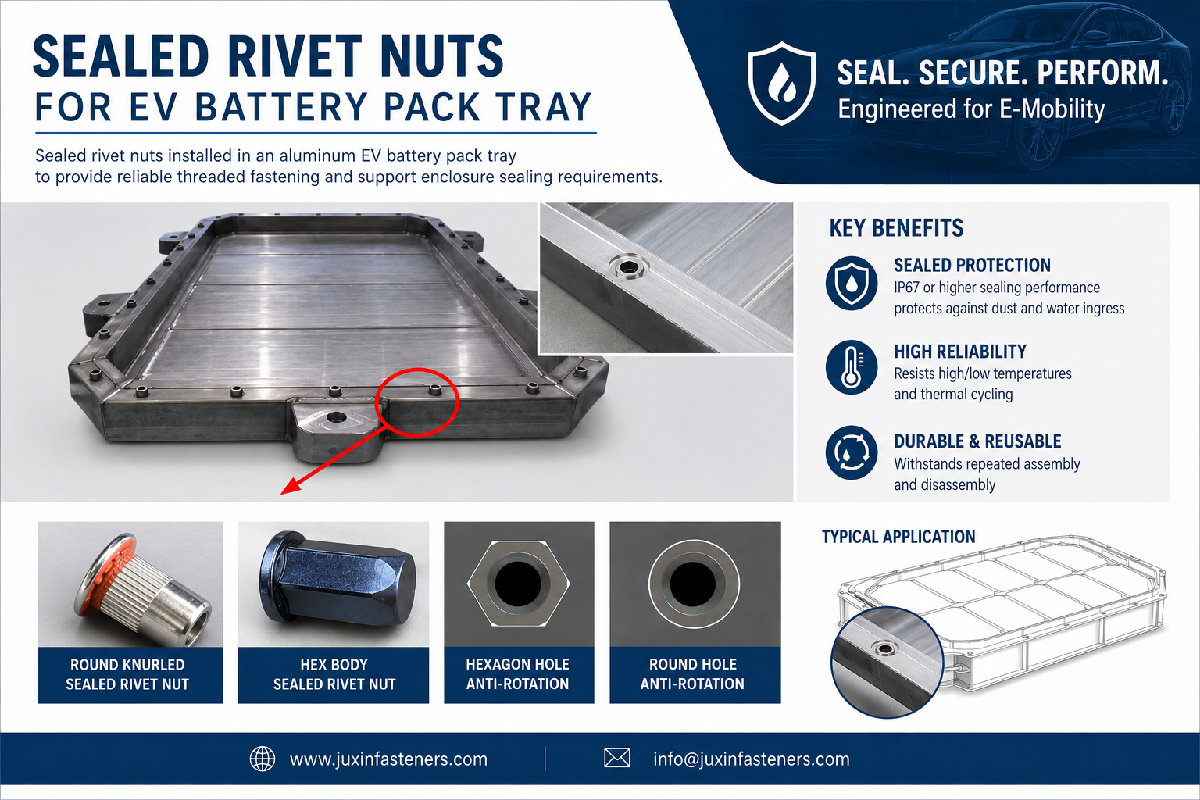
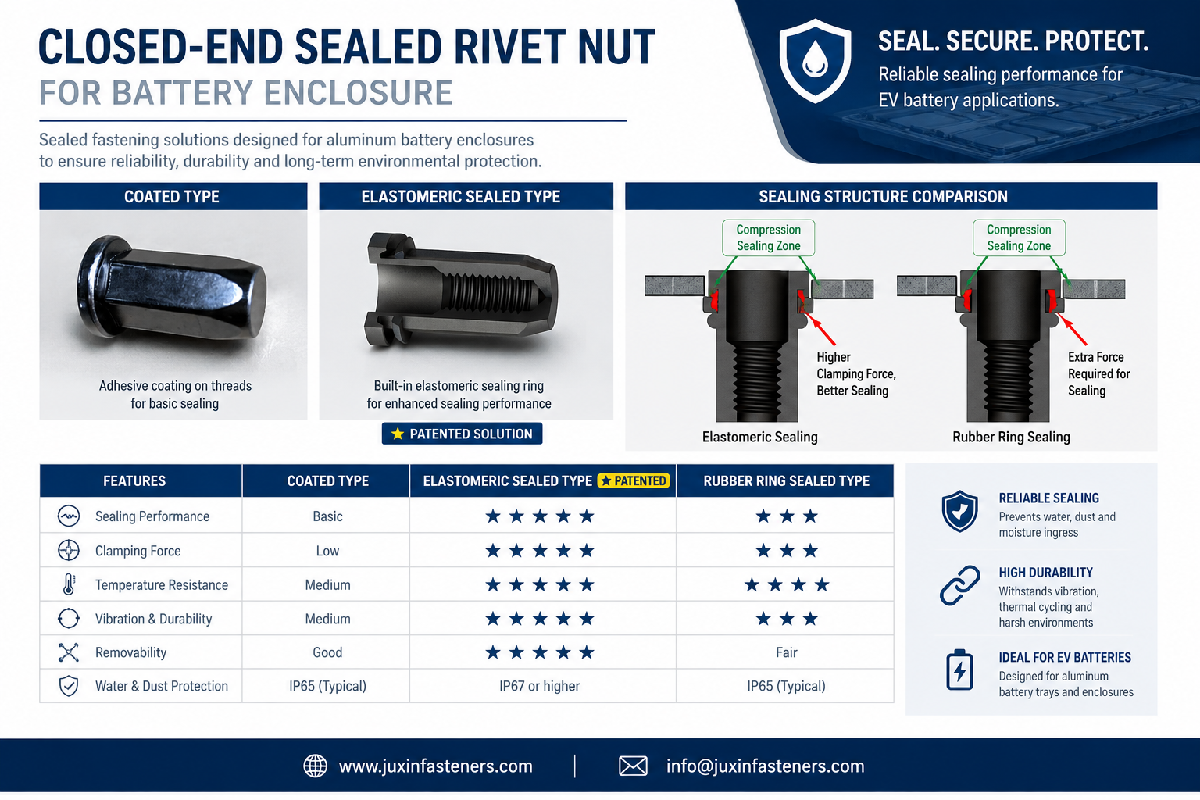
Closed-end rivet nuts contain a closed blind end and may be considered where the design seeks additional containment through the insert body.
Potential applications can include:
Equipment enclosures
Exterior-facing interfaces
Contamination-sensitive equipment
But:
Closed-end does not automatically mean waterproof.
Complete ingress performance depends on:
Head-to-panel interface
Hole condition
Mating screw
Sealing features where used
Surface finish
Installation quality
Where an enclosure has a defined IP or other ingress requirement, the completed assembly should be tested accordingly.
A correctly selected rivet nut can still perform poorly if it is incorrectly installed.
Installation setting influences the blind-side formation and clamping of the parent material.
Potential under-setting can contribute to:
Incomplete formation
Reduced retention
Poor seating
Potential excessive setting can contribute to:
Parent-sheet deformation
Insert damage
Thread damage
Installation inconsistency
The correct setting should follow the rivet nut design, parent material and tooling process.
Rivet nuts can be installed using suitable:
Manual tools
Pneumatic tools
Hydraulic-pneumatic systems
Production installation equipment
Automated systems where appropriate
Tool selection depends on:
Rivet nut size
Rivet nut material
Required setting force
Production volume
Access
Cycle-time requirement
Process-control requirement
A rivet nut should therefore not be qualified independently of the intended installation process.
A common development mistake is validating the fastener under carefully controlled prototype conditions and assuming production will behave identically.
Production may introduce differences in:
Hole-making process
Tool condition
Operator technique
Installation cycle
Part tolerance
Surface treatment
For higher-volume OEM applications, final validation should use production-representative:
Parts + Holes + Fasteners + Tooling + Installation Settings
Rivet nut holes can be created by processes such as:
Drilling
Punching
Laser cutting
Other sheet-metal manufacturing processes
Different processes can create different:
Burr conditions
Edge conditions
Tolerances
Local deformation
Surface characteristics
If these differences affect insert installation or anti-rotation behavior, they should be included in the validation plan.
Burrs can influence:
Insert seating
Head contact
Alignment
Installation consistency
Hole preparation should therefore be controlled according to the assembly requirement.
The objective is not simply to create a hole large enough for the rivet nut to enter.
It is to create a repeatable interface for the installed fastening system.
Thin aluminum can deform if the local installation forces exceed what the sheet geometry can support.
Potential symptoms include:
Dishing
Local bending
Surface marking
Hole deformation
Poor head seating
If deformation occurs, engineers should investigate the complete interaction between:
Sheet thickness
Rivet nut geometry
Head geometry
Installation setting
Supporting geometry
Tooling
Changing only the rivet nut material may not address the root cause.
Direct tapping can be attractive because it eliminates a separate insert.
However, its suitability depends on whether the available parent-material thickness provides sufficient thread engagement for the application.
Material thickness is sufficient
Thread strength is adequate
Repeated service requirements are acceptable
The sheet is too thin for suitable direct threading
A captive reusable thread is required
One-side installation is valuable
The correct solution depends on load and service requirements.
Both technologies create a reusable internal thread, but their manufacturing processes are different.
Mechanically installed
No welding at the attachment point
Blind installation possible
Useful for suitable thin sheet
Welded to suitable parent material
Integrated into welding-based production
Common in automotive sheet-metal manufacturing
The correct choice depends on:
Parent material
Production sequence
Access
Required performance
Equipment
Volume
A rivet nut should not automatically be marketed as a superior replacement for a weld nut.
Both can create captive internal threads in sheet metal.
However, they use different retention mechanisms and production processes.
A self-clinching nut generally requires:
Compatible sheet material
Suitable sheet thickness
Prepared hole
Press installation
A rivet nut can provide blind-side installation using appropriate setting tooling.
Engineers should compare:
Parent material
Access
Manufacturing sequence
Installation equipment
Pull-out
Torque-out
Service requirements
A cage nut is useful in compatible enclosure or rack architectures where replaceability and installation flexibility are important.
A rivet nut is mechanically installed into the parent material and normally remains captive.
The choice depends on the product architecture.
For electrical cabinets, all three technologies may appear:
Rivet nuts
Self-clinching nuts
Cage nuts
But they should not be treated as interchangeable components.
Aluminum structures frequently contain fasteners made from other metals.
Where dissimilar metals are electrically connected in the presence of moisture or another electrolyte, galvanic corrosion can become a concern.
Important variables include:
Rivet nut material
Aluminum alloy
Coatings
Moisture
Chlorides
Relative exposed areas
Joint geometry
Drainage
Material selection should therefore consider the complete assembly rather than only corrosion resistance of the insert itself.
Depending on the insert material and customer requirements, applicable surface treatments may include:
Zinc-based coatings
Zinc-nickel coatings
Stainless steel passivation
Other customer-specified finishes
The finish can influence:
Corrosion
Dimensional fit
Friction
Appearance
Installation behavior
Surface treatment should be part of the engineering specification, particularly when qualifying an alternative supplier.
Electric vehicle equipment can contain thin aluminum and sheet-metal components requiring serviceable threaded attachment.
Potential applications include:
Battery-related enclosures
Power electronics
Inverter housings
Electrical equipment
Service covers
Lightweight brackets
Engineers should consider:
Parent alloy
Sheet thickness
Service cycles
Vibration
Thermal cycling
Galvanic corrosion
Sealing requirements where applicable
The rivet nut should be selected as part of the complete enclosure or equipment design.
Rail equipment applications can include:
Electrical cabinets
Interior equipment
Equipment modules
Access panels
Lightweight brackets
Aluminum sheet assemblies
Relevant engineering factors include:
Vibration
Serviceability
Parent material
Corrosion
Hole control
Installation consistency
For safety-critical railway applications, project-specific technical requirements and validation take priority over general product recommendations.
Electrical enclosures frequently use thin sheet where reusable threaded attachment is required.
Potential applications include:
Equipment mounting
Access panels
Internal brackets
Control components
Serviceable covers
Rivet nut selection should consider not only mechanical retention but also:
Surface coatings
Protective bonding requirements where relevant
Maintenance access
Installation sequence
A metallic rivet nut should not automatically be assumed to provide a compliant electrical bonding path.
Industrial machinery can use rivet nuts for:
Guards
Covers
Equipment panels
Brackets
Enclosures
Service access
The commercial value is often not simply the insert itself.
It is the ability to create a repeatable threaded attachment without adding a loose backside nut or welding operation.
A rivet nut is only one component in a threaded joint.
Under vibration, engineers should distinguish between:
Rivet nut rotating in the parent sheet
Mating screw loosening in the rivet nut
Loss of clamp load
Parent-material fatigue
Insert pull-out
These are different failure modes.
A rivet nut with good anti-rotation performance does not automatically prevent the mating screw from loosening.
Where screw self-loosening is a concern, the threaded joint requires its own locking strategy.
Aluminum, steel, stainless steel and other materials have different thermal-expansion characteristics.
Repeated temperature changes can influence:
Joint loading
Contact condition
Parent-sheet stresses
Serviceable threaded interfaces
The significance depends on geometry, materials and operating temperature.
Thermal cycling should be considered where the application experiences meaningful temperature variation.
A major reason to use a rivet nut is to create a reusable thread.
But “reusable” does not mean unlimited maintenance cycles under every condition.
Repeated service can be influenced by:
Thread material
Mating screw
Tightening torque
Wear
Galling
Spin-out resistance
Corrosion
Where frequent maintenance is expected, the required service life should be considered during design and validation.
Check:
Hole diameter
Body geometry
Knurling or shaped body
Installation setting
Applied screw torque
Check:
Sheet thickness
Parent alloy
Hole condition
Head/body geometry
Installation formation
Applied axial load
Check:
Sheet thickness
Setting condition
Head geometry
Supporting structure
Installation tool
Check:
Grip range
Installation setting
Hole dimensions
Body design
Check:
Installation mandrel
Internal thread
Tool alignment
Setting process
Mating screw
Check:
Material combination
Coating
Environmental exposure
Galvanic interaction
Surface damage
A useful supplier should help identify the failure mechanism rather than simply propose a “stronger” insert.
A practical validation plan can include:
Confirm aluminum alloy.
Confirm sheet thickness.
Confirm selected grip range.
Verify production hole dimensions.
Confirm body and head style.
Confirm rivet nut material and finish.
Install using production-representative tooling.
Inspect blind-side formation.
Inspect parent-sheet deformation.
Evaluate spin-out or torque-out where relevant.
Evaluate pull-out where relevant.
Confirm mating screw torque.
Evaluate repeated assembly where required.
Evaluate vibration where required.
Evaluate corrosion and galvanic compatibility.
Evaluate thermal cycling where relevant.
Confirm production repeatability.
The validation depth should match the consequence of joint failure.
A complete RFQ should include:
2D drawing
Application
Parent material
Aluminum alloy where known
Sheet thickness
Thread size and pitch
Grip range
Hole diameter
Hole shape
Body style
Head style
Rivet nut material
Surface treatment
Pull-out requirement where applicable
Spin-out or torque-out requirement where applicable
Mating screw torque
Environmental conditions
Corrosion requirement
Installation method
Applicable ISO, DIN, EN, ASTM, SAE, ASME/ANSI or customer specification where required
Annual volume
Sample quantity
Packaging requirements
If the project involves supplier replacement, provide the existing drawing and explain the current problem.
For example:
Spin-out
Pull-out
Thread damage
Installation inconsistency
Panel deformation
Corrosion
Lead-time problem
Cost pressure
This information allows a supplier to evaluate the installed joint instead of quoting an apparently similar insert.
Two rivet nuts can look dimensionally similar but behave differently after installation.
When qualifying an alternative supplier, evaluate:
Critical dimensions
Material
Hardness or mechanical condition where relevant
Surface treatment
Grip range
Hole compatibility
Blind-side formation
Spin-out
Pull-out
Internal thread
Installation tooling
Production consistency
The commercial objective is not merely to find a part that fits the hole.
It is to qualify a part that performs consistently in the customer's production process.
Procurement teams should evaluate:
Insert Cost + Hole Preparation + Installation + Tooling + Inspection + Rework + Service Impact + Supply Risk
For example, a lower-priced rivet nut may become more expensive if it causes:
Higher spin-out rate
More panel deformation
Installation rework
Service failures
Tooling problems
This makes process consistency commercially important.
JUXIN FASTENERS supports industrial OEM projects requiring standard and drawing-based rivet nuts.
Relevant capabilities include:
Aluminum rivet nuts
Carbon steel rivet nuts
Stainless steel rivet nuts
Round-body rivet nuts
Round knurled rivet nuts
Hex rivet nuts
Open-end rivet nuts
Closed-end rivet nuts
Low-profile configurations
Drawing-based custom rivet nuts
JUXIN FASTENERS also supplies related fastening technologies including:
Blind rivets
Weld nuts
Weld studs
Self-clinching nuts and studs
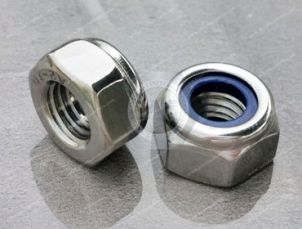
Lock nuts
Screws and bolts
Threaded inserts for plastic
Plastic and nylon fasteners
Drawing-based custom components
Final product selection should follow the customer's drawing, parent material, installation conditions and performance requirements.
Yes. Rivet nuts can create reusable internal threads in suitable aluminum sheet when the insert, grip range, hole and installation process are correctly specified.
There is no universal best material or body style. Selection depends on sheet thickness, alloy, thread requirement, pull-out, anti-rotation, corrosion, installation and service conditions.
Either may be appropriate depending on the joint. Engineers should compare mechanical requirements, parent-sheet strength, installation force, mass and corrosion compatibility.
Possible causes include oversized holes, unsuitable body geometry, incorrect installation setting, insufficient interaction with the parent sheet or excessive mating screw torque.
Possible causes include insufficient sheet strength or thickness, unsuitable hole or insert geometry, incorrect installation or axial load exceeding the installed joint capability.
Grip range is the parent-material thickness range over which the rivet nut is intended to install and form correctly.
No. Hole requirements depend on the specific rivet nut body geometry and design. Use the selected product specification rather than assuming thread size determines the hole.
Not universally. Hex bodies can provide geometric anti-rotation when used with a compatible shaped hole, while round designs can simplify hole manufacturing.
The correct choice depends on the production process and performance requirement.
Not automatically. A closed-end body can reduce one potential ingress path, but the complete installed interface must be validated where sealing is required.
Sometimes the assembly can be redesigned around a rivet nut, but the two technologies use different installation processes and have different joint behavior.
They should not be treated as direct universal substitutes.
Provide the drawing, application, parent material, sheet thickness, thread, hole, body style, head style, material, coating,
performance requirements, installation method and annual purchasing volume.
A good rivet nut project should not begin with:
“Please quote M6 rivet nuts.”
A more useful engineering path is:
Parent Material → Sheet Thickness → Thread → Grip Range → Hole → Body Geometry → Head Style → Material → Installation Setting
→ Spin-Out → Pull-Out → Mating Screw Torque → Environment → Validation
This sequence converts a generic insert request into an engineering specification that procurement and suppliers can actually use.
For EV battery equipment, railway equipment, electrical cabinets, electronic enclosures, industrial machinery or other thin-sheet assemblies,
send JUXIN FASTENERS your 2D drawing, parent material, sheet thickness, hole dimensions, required thread, application and annual purchasing volume.
Email: info@juxinfasteners.com
Website: www.juxinfasteners.com
Use the existing indexed JUXIN FASTENERS URL when implementing these internal links:
Blind Rivet Nut Selection Guide
Rivet Nuts for Electrical Cabinets, Switchgear & Control Panels
Aluminum Rail Vehicle Fastening Solutions
Rail Transit Fasteners: Engineering & OEM Sourcing Guide
EV Fasteners & Battery Pack Fastening Solutions
Rivets vs Screws vs Rivet Nuts: Industrial Fastening Method Selection
Types of Rivets: Engineering Selection Guide
Weld Nuts vs Rivet Nuts for Sheet Metal
Self-Clinching Nuts and Studs
Closed-End Rivet Nuts
Custom Fasteners and Drawing-Based Components
 MORE NEWS


Oct. 13, 2026
Contact Us
Tel.:
+86 020 8621 0320
+86 020 3121 6067
E-mail:
Technical Support:
Navigation
SEND INQUIREY