
Call Us
+86 136 6007 9809
Call Us
+86 136 6007 9809

Jan. 14, 2024
Riveting is widely used in sheet-metal assemblies, enclosures, vehicles, electrical equipment, machinery and other industrial products.
But riveting is not automatically stronger, more vibration resistant, less expensive or more reliable than welding or bolted fastening.
Each joining method solves a different manufacturing problem.
The more useful engineering question is:
When does a riveted joint provide a better combination of access, material compatibility, production efficiency, joint performance and installed cost than welding or threaded fastening?
JUXIN FASTENERS supplies blind rivets, closed-end blind rivets, rivet nuts, screws, bolts, lock nuts, weld nuts, self-clinching fasteners,
plastic and nylon fasteners and drawing-based custom components for industrial OEM applications.
This guide compares riveting with welding and threaded fastening from both an engineering and procurement perspective.
Riveting is a mechanical joining process in which a rivet is installed through prepared holes to create a permanent joint between two or more components.
Depending on the rivet design and assembly, installation can create a formed blind side or another mechanical retention geometry that holds the materials together.
Industrial riveting is commonly used for:
Sheet metal
Equipment enclosures
Electrical cabinets
Automotive assemblies
Rail equipment
HVAC equipment
Industrial machinery
Electronic equipment
Lightweight metal structures
Blind riveting is especially useful where installation access is available from only one side.
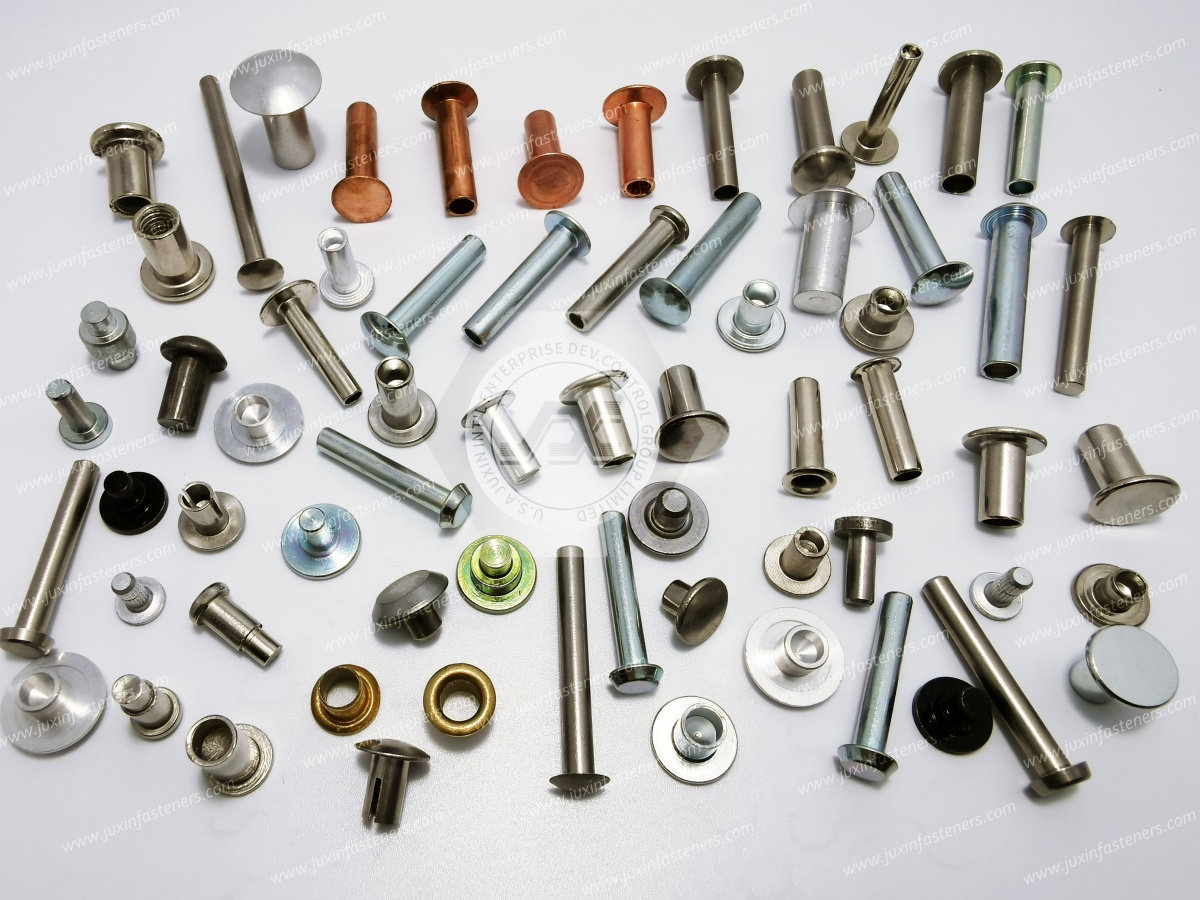
| Engineering Factor | Riveting | Welding | Bolted/Screwed Joint |
|---|---|---|---|
| Permanent joint | Yes | Yes | Normally removable |
| One-side access possible | Yes, with suitable blind rivet | Process dependent | Requires suitable captive thread or blind threaded solution if backside inaccessible |
| Local welding heat | No | Yes | No |
| Hole preparation | Usually required | Not necessarily | Usually required |
| Removable for service | Generally no | Generally no | Yes |
| Dissimilar materials | Possible with engineering review | Process/material dependent | Possible with engineering review |
| Thin sheet | Often suitable | Process dependent | Thread strategy must be considered |
| Automation potential | Yes | Yes | Yes |
| Sealing | Requires appropriate joint design | Process dependent | Requires separate sealing strategy where needed |
| Galvanic corrosion risk | Depends on materials | Depends on materials | Depends on materials |
| Tooling/process control | Required | Required | Required |
| Inspection requirement | Installed rivet/joint | Weld/joint | Threaded joint/preload |
No column is universally superior.
The correct joining method depends on the application.
Riveting becomes particularly attractive when several of the following conditions exist:
The joint is intended to be permanent
Only one side is accessible
Welding heat at the joint is undesirable
Thin sheet is being joined
Production requires repeatable mechanical installation
A blind installation process simplifies assembly
Materials are difficult or undesirable to weld together
The product architecture is designed around mechanical joining
However, these advantages must be evaluated against:
Hole preparation
Fastener cost
Installation tooling
Inspection
Parent-material strength
Corrosion
Joint fatigue
Lack of routine disassembly
The best process is the one that satisfies the complete manufacturing and service requirement.
One important difference between riveting and welding is that mechanical riveting does not rely on melting or locally fusing the parent materials.
This can be valuable where welding heat could influence:
Thin-sheet distortion
Surface appearance
Heat-sensitive coatings
Local material properties
Manufacturing sequence
Nearby components
This does not mean riveting produces zero deformation.
Rivet installation still introduces mechanical forces into the parent material.
The engineering advantage is more accurately described as:
Mechanical joining without a welding heat cycle at the fastener location.
One of the strongest reasons to select a blind rivet is access.
If the assembly becomes closed during production, a conventional bolt-and-nut joint may require access that no longer exists.
A blind rivet can be installed from the accessible side.
Potential applications include:
Closed sheet-metal sections
Enclosures
Equipment housings
Cabinets
Vehicle panels
Internal structures with restricted backside access
This can simplify product architecture and assembly sequencing.
Thin sheet creates a fastening problem because there may not be sufficient material thickness to create a useful directly tapped thread.
Blind rivets can create permanent joints without relying on threads in the parent sheet.
Where a removable threaded connection is required instead, engineers may consider:
Rivet nuts
Self-clinching nuts
Cage nuts
Other suitable captive threaded systems
The correct choice therefore depends first on whether the joint should be permanent or serviceable.
Mechanical fastening can allow materials to be joined without requiring them to be metallurgically weld-compatible.
Examples can include selected combinations of:
Aluminum
Carbon steel
Stainless steel
Coated sheet
Composite or polymer components where appropriately engineered
However, mechanical compatibility does not automatically mean environmental compatibility.
Dissimilar-metal joints may create galvanic corrosion risks.
Engineers must therefore evaluate both:
Can these materials be mechanically joined?
and:
Can this material combination survive the service environment?
Blind riveting can fit well into manual, semi-automated or automated assembly processes.
Potential manufacturing benefits can include:
One-side installation
Repeatable tool operation
Reduced dependence on backside nut handling
Compatibility with preassembled structures
Simplified access in certain production sequences
But production efficiency should be measured rather than assumed.
The actual cycle time includes:
Part Handling + Hole Preparation + Rivet Feeding + Installation + Inspection + Rework
A fast installation stroke does not automatically mean the lowest total assembly cost.
Riveting and welding should be compared at the joint and manufacturing-process level.
Riveting may be considered when:
Blind access is required
Welding heat is undesirable
Materials are difficult to weld together
Production sequence favors mechanical installation
Thin-sheet distortion from welding is a concern
The joint has been specifically designed for riveting
Welding may remain appropriate when:
A continuous metallic joint is required
The parent materials and geometry are suitable
Welding is already integrated into production
Hole preparation and individual mechanical fasteners are undesirable
The structural design has been validated around welded load transfer
The key point is that a welded joint cannot normally be converted to a riveted joint by simply replacing each weld location with a rivet.
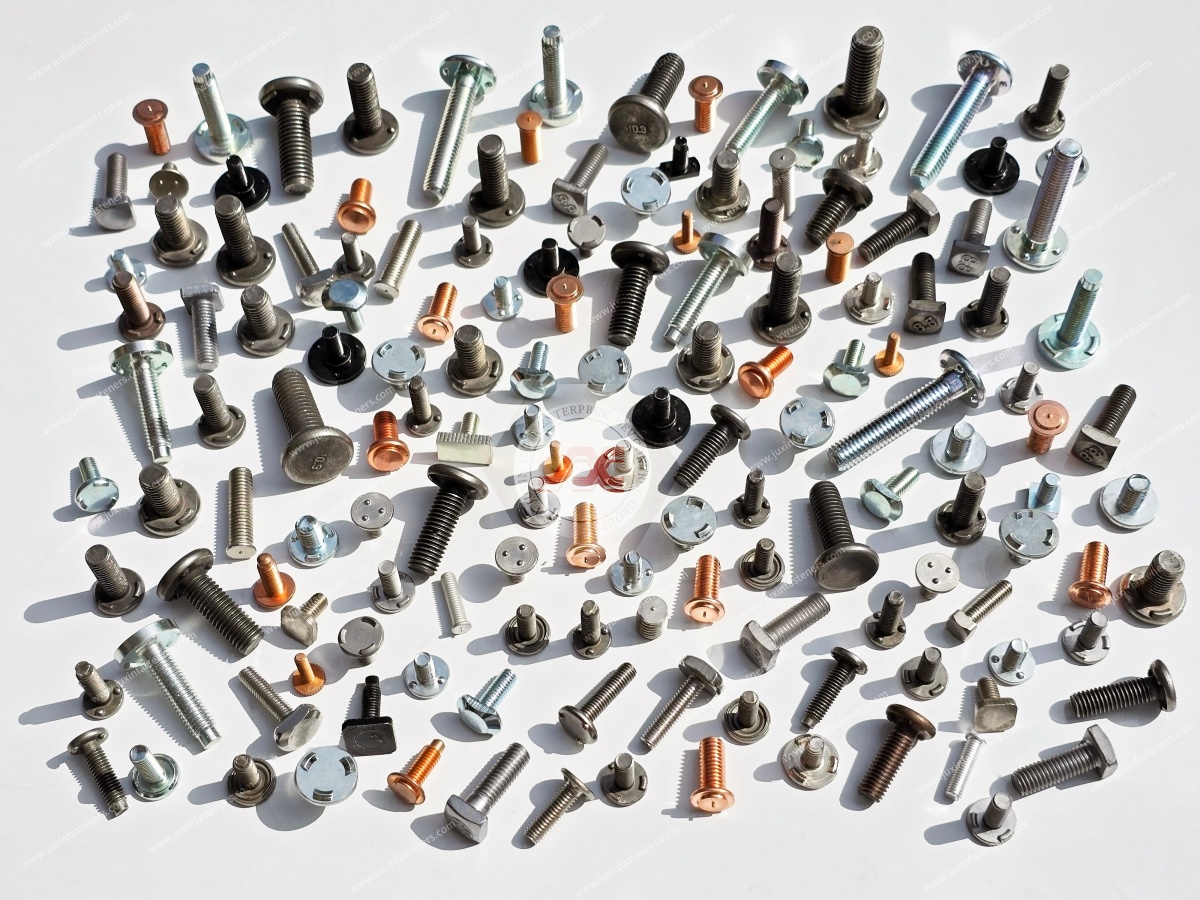
Welding and riveting transfer load differently.
Converting from welding to riveting may require reconsideration of:
Overlap length
Fastener diameter
Number of rivets
Fastener spacing
Edge distance
Hole diameter
Parent-material thickness
Load direction
Joint stiffness
Fatigue behavior
Corrosion protection
Therefore:
Weld → Rivet is a joint redesign problem, not merely a fastener substitution problem.
This is especially important in lightweight automotive, rail and equipment structures.
Bolts and screws are generally selected when a threaded joint and serviceability are required.
Blind rivets are generally selected when a permanent joint and efficient one-side installation are more important.
The joint is permanent
One-side access is important
A threaded connection is unnecessary
Fast assembly is achievable with the production process
The component must be removed
Clamp load needs to be established through a threaded joint
Maintenance access is required
Components will be replaced or adjusted
Serviceability is often the decisive difference.
Blind rivets and rivet nuts are frequently confused because both can be installed into thin sheet from one accessible side.
But their functions are fundamentally different.
Creates a permanent mechanical joint.
Creates a reusable internal thread.
A rivet nut should therefore not be selected merely because the application involves thin sheet.
The first question should be:
Does the component need to be removed later?
If yes, a reusable threaded fastening method may be more appropriate.
A request such as:
“We need a 4.8 mm stainless steel blind rivet.”
does not fully define the joint.
Engineers should also specify:
Grip range
Body material
Mandrel material
Head style
Parent materials
Individual material thicknesses
Total joint thickness
Hole diameter
Blind-side clearance
Mechanical requirements
Environmental conditions
Installation tooling
This information is especially important when qualifying an alternative supplier.
Grip range defines the material-thickness range over which a blind rivet is intended to form correctly.
The relevant dimension is the total joint stack.
For example:
Outer Sheet + Inner Bracket + Reinforcement = Total Grip Thickness
An unsuitable grip condition can contribute to:
Poor blind-side formation
Inconsistent clamping
Parent-sheet deformation
Installation problems
Thread size may dominate a screw RFQ.
For a blind rivet, grip range is one of the first parameters engineers should check.
The hole is part of the riveted joint.
Important characteristics include:
Diameter
Roundness
Alignment
Burr condition
Edge quality
Position
Poor hole preparation can affect:
Rivet insertion
Blind-side formation
Joint consistency
Local stress
Parent-material deformation
A premium rivet cannot fully compensate for an uncontrolled production hole.
Different hole-making processes can create different edge and surface conditions.
Potential differences include:
Burrs
Local deformation
Dimensional tolerance
Heat-affected edge conditions
Surface finish
If prototypes use carefully drilled holes while production uses punched or laser-cut holes, the installed joint should be validated using production-representative conditions.
One of the most important concepts in rivet engineering is:
The strongest rivet does not necessarily create the strongest joint.
In thin sheet, the parent material may govern failure.
Potential failure modes include:
Rivet fracture
Rivet shear
Parent-sheet pull-through
Hole enlargement
Edge tear-out
Local deformation
If the sheet is the limiting component, increasing rivet strength alone may provide little benefit.
Pull-through occurs when the rivet head or formed blind side deforms or passes through the surrounding parent material.
Factors can include:
Sheet material
Sheet thickness
Rivet diameter
Head diameter
Hole diameter
Edge distance
Load direction
Potential engineering responses may include changes to:
Rivet geometry
Head geometry
Joint geometry
Sheet thickness
Local reinforcement
Fastener quantity or layout
The correct response depends on the failure mechanism.
Different head styles solve different packaging and load-distribution requirements.
Potential options can include:
Standard protruding head
Larger bearing head
Low-profile head
Countersunk head
A larger head can increase the bearing area on the parent material.
A countersunk head can reduce protrusion but requires material removal.
In thin sheet, countersinking must be evaluated carefully because the process can reduce the remaining parent-material thickness around the hole.
Fastener placement affects the load path through the parent material.
Important variables include:
Rivet diameter
Parent material
Sheet thickness
Load direction
Edge distance
Fastener pitch
Joint overlap
A rivet located too close to a sheet edge may create a different failure mode from the same rivet installed farther from the edge.
There is no single universal edge-distance value suitable for every industrial riveted joint.
Material selection should follow the complete joint.
May be considered where:
Low fastener mass is beneficial
Mechanical requirements are compatible
Material compatibility supports their use
May be considered where:
Different mechanical characteristics are required
Corrosion resistance of the fastener itself is important
The complete material combination is acceptable
Stainless steel is not automatically the “better” rivet.
In aluminum parent material, galvanic corrosion and parent-sheet strength may become important design factors.
When dissimilar metals are electrically connected and exposed to an electrolyte, galvanic corrosion can become a concern.
Engineers should consider:
Fastener material
Parent material
Relative exposed areas
Moisture
Chlorides
Coatings
Sealants
Joint geometry
Drainage
A corrosion-resistant fastener can still participate in an unfavorable material combination.
Corrosion should therefore be evaluated at the joint level, not only the fastener level.
This question needs a more precise answer than “yes.”
A riveted joint does not rely on a conventional threaded nut rotating loose, which removes one common threaded-joint failure mechanism.
However, riveted joints can still experience problems under dynamic loading.
Potential issues include:
Fastener fatigue
Parent-material fatigue
Hole enlargement
Local deformation
Joint movement
Pull-through
Therefore, “no threaded loosening” does not mean “immune to vibration.”
The complete joint must still be designed for the actual dynamic environment.
There is no universal answer.
Fatigue performance depends on:
Joint geometry
Material
Load direction
Stress concentration
Hole quality
Weld geometry where welding is used
Fastener spacing
Surface condition
Manufacturing quality
It is technically unsafe to claim that riveting always provides better fatigue performance than welding.
The joint must be evaluated for its actual loading and geometry.
Closed-end blind rivets can reduce an open path through the rivet body compared with some open-end designs.
They may be useful in certain:
Enclosures
Exterior equipment
Contamination-sensitive assemblies
However:
Closed-end does not automatically mean waterproof or IP-rated.
Sealing performance also depends on:
Head-to-panel interface
Hole condition
Surface finish
Sealant or sealing feature where applicable
Installation quality
Ingress performance should be validated at the completed assembly level where required.
Automotive and electric vehicle manufacturing can use riveting alongside:
Resistance welding
Weld nuts
Weld studs
Screws and bolts
Rivet nuts
Self-clinching fasteners
Adhesive systems
Potential riveted applications include suitable:
Sheet-metal assemblies
Enclosures
Covers
Lightweight brackets
Battery-related equipment
Interior equipment
The correct joining technology depends on the vehicle architecture and OEM requirements.
Railway equipment can use blind riveting for suitable:
Interior panels
Equipment housings
Electrical cabinets
Covers
Secondary brackets
Equipment modules
Primary structural or safety-critical railway joints require project-specific engineering approval and validation.
A general industrial rivet should not be assumed suitable merely because the application is described as railway equipment.
Blind rivets can be useful in:
Electrical enclosures
Control cabinets
Electronic housings
Mounting structures
Sheet-metal equipment
However, not every connection should be riveted.
Where the component requires future removal, engineers may instead consider:
Rivet nuts
Self-clinching nuts
Cage nuts
Screws and bolts
Captive threaded solutions
This is why enclosure fastening should be designed around both manufacturing and maintenance.
HVAC systems and industrial machinery can contain:
Sheet-metal enclosures
Panels
Brackets
Duct-related assemblies
Equipment housings
Covers
Blind riveting may provide an efficient permanent joining method where the joint geometry and service requirements support it.
For removable service panels, a threaded solution may be more appropriate.
Riveting is widely associated with aerospace manufacturing, but aerospace fasteners are governed by highly controlled materials,
specifications, traceability, qualification and application requirements.
A generic industrial rivet should not be presented as an aerospace structural fastener.
JUXIN FASTENERS evaluates aviation-related drawing-based requirements according to the customer's technical documentation and required qualification scope.
No suitability for safety-critical aircraft structures should be inferred from a general industrial rivet product.
These technologies perform different functions.
A blind rivet permanently joins materials.
A self-clinching nut or stud creates a captive threaded attachment in suitable sheet.
Self-clinching performance depends on:
Parent material
Sheet thickness
Parent hardness
Hole geometry
Installation force
If a component requires a reusable threaded connection, self-clinching hardware may be more appropriate than a permanent rivet when the manufacturing process and sheet material support it.
A weld nut creates a reusable thread through a welding process.
A blind rivet creates a permanent mechanical joint.
The comparison therefore begins with function.
If the design needs a production-installed threaded attachment point in weldable sheet, a weld nut may be appropriate.
If the design needs a permanent blind-side joint, a blind rivet may be more appropriate.
These technologies should not be treated as substitutes merely because both are used in sheet metal.
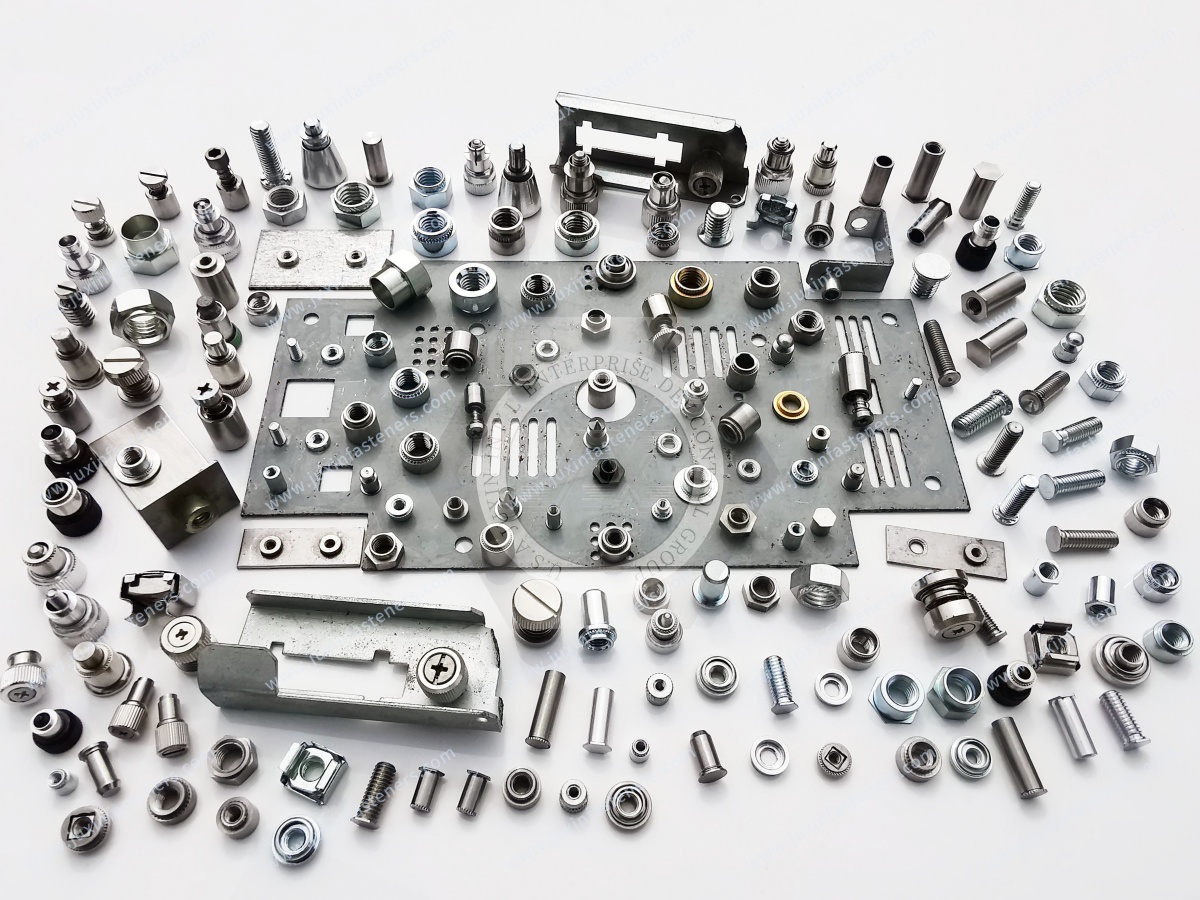
Adhesive bonding and riveting solve different joint-design problems and may sometimes be used independently or as part of a combined joining strategy.
Adhesive performance can depend on:
Surface preparation
Cure process
Temperature
Environment
Joint geometry
Riveting provides mechanical retention but introduces holes and localized load transfer.
The correct process depends on product design and manufacturing requirements.
A rivet may have a low piece price and fast installation cycle.
But procurement should evaluate the total installed joint cost.
A useful commercial framework is:
Fastener Cost + Hole Preparation + Tooling + Installation Labor + Inspection + Rework + Maintenance Impact + Supply Risk
This can produce very different conclusions from comparing fastener unit prices alone.
For example, a slightly more expensive rivet may create lower installed cost if it improves assembly consistency.
Conversely, a cheap rivet may become expensive if it causes frequent installation problems.
A joining method that is efficient for 100 assemblies may not be optimal for 1,000,000 assemblies.
Production volume affects:
Tooling investment
Automation
Fastener feeding
Cycle time
Inspection strategy
Operator requirements
Supply-chain planning
OEM sourcing teams should therefore include expected annual volume when discussing alternative fastening methods.
The rivet and tool should not be evaluated independently.
Installation can depend on:
Tool type
Pulling capability
Nosepiece
Access
Cycle rate
Tool maintenance
Operator setup
Automated feeding where applicable
If an alternative rivet changes geometry or installation characteristics, tooling compatibility should be reviewed before production release.
A practical inspection plan can consider:
Correct fastener
Correct hole
Proper seating
Head condition
Blind-side formation where accessible
Parent-material deformation
Installation consistency
For production qualification, destructive testing may also be appropriate depending on the joint requirements.
Inspection should focus on characteristics that affect joint function rather than only cosmetic appearance.
Grip range, materials, head style and hole condition also matter.
Thin sheet can fail before the rivet.
The parent material or joint geometry may govern.
Stainless steel and aluminum can create a dissimilar-metal interface.
Countersinking removes parent material.
Ingress protection is a system-level requirement.
Dynamic performance depends on the complete joint.
Mechanical fastening requires a joint redesign.
A permanent rivet may be inappropriate for a frequently serviced component.
Installed joint cost can matter more than fastener price.
A practical selection sequence is:
What components are being connected?
If routine disassembly is required, reconsider a permanent rivet.
Is one-side installation required?
What materials and grades are being joined?
What is the complete material stack?
Consider shear, tensile, dynamic and fatigue requirements where relevant.
Consider corrosion, temperature, moisture and chemical exposure.
How are holes produced and how will rivets be installed?
What failure modes must be tested?
Compare riveting against welding and threaded alternatives at the process level.
Depending on application risk, validation can include:
Confirm parent materials.
Confirm material thicknesses.
Confirm total grip range.
Confirm production hole dimensions.
Confirm rivet body and mandrel materials.
Confirm head geometry.
Install using production-representative tooling.
Inspect rivet formation.
Evaluate parent-material deformation.
Test shear or tensile performance where required.
Evaluate pull-through where relevant.
Evaluate fatigue or vibration where required.
Evaluate corrosion and dissimilar-metal compatibility.
Evaluate sealing separately where required.
Confirm production repeatability.
The test plan should reflect the consequence of joint failure.
A useful industrial rivet RFQ should include:
2D drawing
Application
Parent materials
Individual material thicknesses
Total grip thickness
Hole diameter
Rivet diameter
Head style
Body material
Mandrel material
Mechanical requirements
Corrosion requirement
Environmental conditions
Surface treatment where applicable
Installation tooling
Applicable ISO, DIN, EN, ASTM, SAE or customer specification where required
Annual volume
Sample quantity
Packaging requirements
If the project involves supplier replacement, also describe the current problem.
Examples include:
Pull-through
Rivet fracture
Installation inconsistency
Corrosion
Hole damage
Tooling problem
Excessive cycle time
Lead-time risk
Cost pressure
This allows the supplier to evaluate the problem rather than merely copy the existing part.
JUXIN FASTENERS supports OEM manufacturers, procurement teams and supplier-development engineers with industrial fastening components.
Relevant product capabilities include:
Blind rivets
Closed-end blind rivets
Stainless steel blind rivets
Aluminum blind rivets
Rivet nuts
Round knurled rivet nuts
Hex rivet nuts
Closed-end rivet nuts
Weld nuts
Weld studs
Lock nuts
Self-clinching nuts and studs
Screws and bolts
Plastic and nylon fasteners
Threaded inserts for plastic
Drawing-based custom fasteners
CNC machined components
Material, dimensional and surface requirements are reviewed according to the customer's drawing and application.
Potential advantages include permanent mechanical joining, blind-side installation with suitable rivets, no welding heat at the joint and suitability for many thin-sheet assemblies.
Whether these advantages matter depends on the actual product and manufacturing process.
There is no universal answer. Strength depends on materials, joint geometry, load direction, manufacturing quality and the specific joining process.
Consider rivets where a permanent joint is appropriate and threaded serviceability is unnecessary.
Bolts or screws are generally more suitable where routine removal or controlled threaded clamping is required.
Use a blind rivet for a permanent joint. Consider a rivet nut when the assembly requires a reusable internal thread.
Such combinations can be mechanically possible, but galvanic corrosion and parent-material behavior should be evaluated for the actual environment.
No fastener should be described as universally vibration proof. Riveted joints avoid conventional threaded self-loosening but can still experience fatigue,
hole enlargement, parent-material damage or other dynamic failure modes.
Not automatically. Complete sealing depends on the installed joint and should be validated where ingress protection is required.
Grip range determines whether the rivet is suitable for the total material thickness being joined and can form correctly during installation.
JUXIN FASTENERS supports standard and drawing-based industrial rivet projects according to customer dimensions, materials, joint requirements and purchasing volumes.
Provide the drawing, parent materials, material thicknesses, hole size, rivet geometry, mechanical requirements, environment, installation method and expected annual volume.
The best industrial riveting project does not begin with:
“Please quote your strongest rivet.”
It begins with the joint.
A more useful engineering path is:
Joint Function → Permanent or Serviceable → Access → Parent Material → Thickness → Hole → Load → Environment
→ Fastening Method → Installation → Validation → Installed Cost
Only after these variables are understood should engineers decide whether the correct solution is a blind rivet, rivet nut, weld nut,
self-clinching fastener, screw-and-nut system or another joining method.
For automotive, EV, railway equipment, electrical cabinets, electronics, HVAC, industrial machinery or other OEM assemblies,
send JUXIN FASTENERS your 2D drawing, application, parent materials, thicknesses, mechanical requirements and annual purchasing volume.
Email: info@juxinfasteners.com
Website: www.juxinfasteners.com
Use the existing indexed JUXIN FASTENERS URL when implementing these internal links:
Types of Rivets: Engineering Selection Guide for Industrial Applications
Rivets vs Screws vs Rivet Nuts: Industrial Fastening Method Selection
Electronic Equipment Rivets & PCB Fastening Solutions
Aluminum Rail Vehicle Fastening Solutions
Rail Transit Fasteners: Engineering & OEM Sourcing Guide
EV Fasteners & Battery Pack Fastening Solutions
Blind Rivet Nut Selection Guide
Closed-End Blind Rivets
Rivet Nuts for Electrical Cabinets, Switchgear & Control Panels
Automotive Weld Nuts
Self-Clinching Nuts and Studs
Custom Fasteners and Drawing-Based Components
 MORE NEWS


Oct. 13, 2026
Contact Us
Tel.:
+86 020 8621 0320
+86 020 3121 6067
E-mail:
Technical Support:
Navigation
SEND INQUIREY