
Call Us
+86 136 6007 9809
Call Us
+86 136 6007 9809

Oct. 23, 2023
Selecting the correct rubber or elastomer material is one of the most important decisions in an industrial sealing system.
NBR, FKM, EPDM, HNBR, silicone, fluorosilicone and other elastomer families have different responses to oils, fuels, water, coolants, chemicals, temperature, ozone and environmental exposure.
However, selecting an elastomer by material name alone is not enough.
The actual performance of a seal depends on the interaction between:
Elastomer Compound + Fluid + Temperature + Pressure + Exposure Time + Seal Geometry + Compression + Mating Surface + Installation
This distinction is particularly important for bonded sealing washers, rubber sealing washers and OEM sealing components, where the elastomer forms only one part of the complete sealing system.
For engineers, the objective is to identify a material compatible with the real operating environment.
For procurement and supplier-development teams,
the objective is to make sure the supplier receives enough technical information to reproduce or qualify the correct material rather than supplying a visually similar rubber component.
Descriptions such as “oil-resistant rubber,” “high-temperature rubber” or “chemical-resistant elastomer” are not complete engineering specifications.
Two seals identified as NBR, for example, may differ in:
compound formulation
acrylonitrile content
hardness
curing system
fillers and additives
low-temperature behavior
heat-aging behavior
compression characteristics
fluid resistance
The same principle applies to FKM, EPDM, HNBR, silicone and other elastomer families.
This is why published material-family properties should be used as a screening tool—not as automatic proof that a specific seal is suitable for an application.
Before comparing rubber materials, engineers should identify the actual operating conditions.
Identify what contacts the seal.
Examples may include:
hydraulic oil
lubricating oil
fuel
coolant
water
air
refrigerant
cleaning fluid
process chemicals
Where chemical compatibility is critical, the actual fluid formulation or customer specification may be required.
Separate:
normal operating temperature
minimum temperature
maximum continuous temperature
short-duration peak temperature
A short thermal excursion and continuous exposure are not equivalent material requirements.
Pressure affects the complete seal system rather than the elastomer alone.
Seal geometry, clearances, compression and the mating interface must also be considered.
Consider:
ozone
sunlight
weather
humidity
salt-containing environments
cleaning chemicals
outdoor exposure
An elastomer used in an O-ring, bonded seal, flat rubber washer or custom molded component does not necessarily behave identically.
The sealing element must develop appropriate contact with the mating surfaces without being incorrectly compressed or extruded.
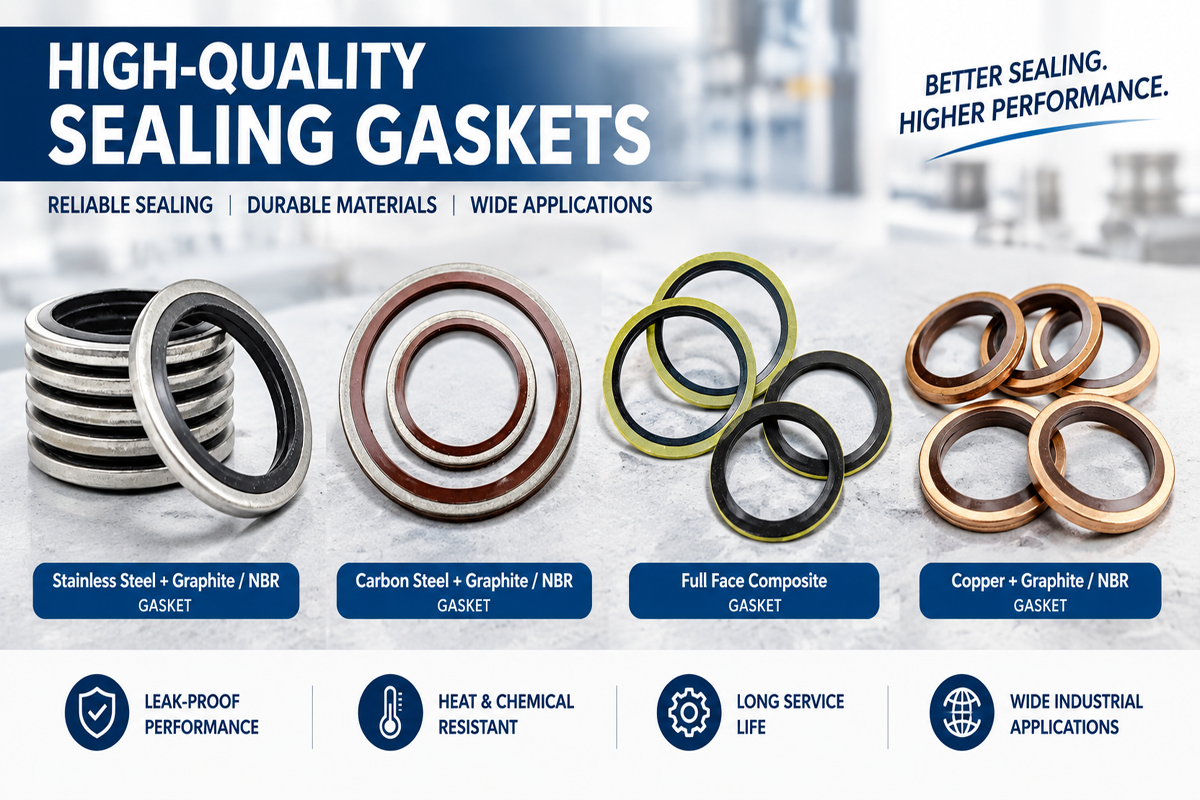
NBR, or nitrile rubber, is one of the most widely used elastomer families in industrial sealing.
It is commonly considered where resistance to many petroleum-based oils and lubricants is required.
Typical applications can include:
hydraulic equipment
lubrication systems
industrial machinery
pumps and valves
bonded sealing washers
oil-handling equipment
NBR provides a useful combination of oil resistance, mechanical properties and commercial availability for many industrial fluid applications.
This makes NBR a common elastomer option in metal-bonded sealing washers.
However, NBR should not automatically be specified simply because an application contains “oil.”
The actual fluid formulation, temperature and service conditions should be reviewed.
Depending on the compound and environment, limitations can include exposure to:
ozone
weathering
certain solvents
some aggressive chemicals
operating conditions outside the compound's validated range
NBR suitability should therefore be confirmed against the actual application.
FKM is a family of fluoroelastomers commonly considered where an application requires resistance to many oils, fuels, chemicals or elevated-temperature environments.
Potential applications can include:
industrial fluid systems
fuel-handling equipment
chemical-processing equipment
pumps and valves
engines and machinery
bonded sealing components
This is a common engineering and procurement comparison.
FKM may be considered when the operating environment exceeds the chemical or temperature capability of the selected NBR compound.
However:
FKM is not automatically “better” than NBR.
Material selection should also consider:
actual fluid
low-temperature requirements
mechanical behavior
seal geometry
compound availability
validation requirements
commercial requirements
Using a more expensive elastomer without a technical need does not necessarily improve the joint.
EPDM is commonly considered for applications involving water, weathering, ozone and selected water-based media.
Potential applications may include:
water-handling equipment
HVAC systems
thermal-management equipment
outdoor equipment
selected coolant systems
industrial water connections
The key difference is often the media environment.
NBR is commonly associated with many petroleum-based oils.
EPDM is commonly considered for water-related and weather-exposed applications.
This does not mean that either material is universally compatible with every oil, coolant or chemical within those categories.
Actual fluid compatibility should still be confirmed.
Do not approve an NBR-to-EPDM or EPDM-to-NBR substitution based only on hardness or dimensions.
Changing the elastomer family can fundamentally change fluid compatibility.
HNBR is hydrogenated nitrile rubber.
It is related to NBR but is engineered to provide a different balance of properties.
HNBR may be considered in selected applications requiring combinations of:
oil resistance
heat-aging resistance
ozone resistance
mechanical performance
demanding environmental exposure
Potential applications can include selected:
automotive equipment
industrial machinery
refrigeration systems
oil-handling systems
fluid-power components
This terminology is sometimes incorrectly used in translated technical content.
HNBR stands for hydrogenated nitrile butadiene rubber, not hydrogenated butyl rubber.
Correct material identification matters when communicating drawings, specifications and RFQs.
Silicone elastomers, often identified by the material family designation VMQ, are commonly considered where broad temperature flexibility or environmental resistance is important.
Potential applications may include:
electrical equipment
appliances
thermal-management systems
industrial equipment
selected food-contact equipment when the specific compound and regulatory requirements are satisfied
Silicone should not automatically be selected for oil or fuel service.
Compatibility depends on the specific media and compound.
No.
A silicone material is not automatically approved for food-contact applications.
Food-contact suitability depends on the specific compound, manufacturing controls and applicable regulatory or customer requirements.
The material specification and required compliance documentation should be defined in the RFQ.
Fluorosilicone, commonly designated FVMQ, combines characteristics of silicone-based elastomers with improved resistance to certain fuels and oils compared with conventional silicone.
It may be considered for specialized sealing applications where both low-temperature flexibility and fuel or oil exposure are important.
Potential applications may include selected:
transportation equipment
fuel-system components
instrumentation
specialized industrial equipment
Fluorosilicone is used in aerospace-related sealing technologies, but material family alone does not qualify a generic component for aircraft or spacecraft use.
Aerospace applications can require specific compound specifications, traceability, qualification, documentation and approved manufacturing controls.
Suitability must be determined from the applicable program or drawing requirements.
CR, commonly known as chloroprene rubber or neoprene, offers a useful combination of weathering resistance and mechanical properties.
It may be considered in selected:
outdoor equipment
industrial machinery
general-purpose sealing
equipment exposed to weathering
certain refrigerant-related applications
Chemical compatibility must still be checked for the actual media.
CR should not be treated as a universal chemical-resistant elastomer.
ACM, or acrylic rubber, is commonly associated with applications requiring resistance to hot oils and elevated-temperature environments.
Potential uses may include selected:
automotive equipment
transmission-related systems
industrial oil systems
machinery
However, water resistance, low-temperature requirements and mechanical behavior should be reviewed against the specific compound.
ACM should be selected from the complete service environment rather than from oil resistance alone.
Polyurethane elastomers are known for useful mechanical characteristics such as abrasion resistance and load-bearing capability.
They are commonly used in sealing technologies for:
hydraulic cylinders
pneumatic equipment
mobile machinery
industrial equipment
wear-intensive sealing systems
However, polyurethane represents a broad material family, and resistance to heat, water, hydrolysis and chemicals varies by formulation.
Polyurethane dynamic seals should also be distinguished from static bonded sealing washers. They are different product technologies with different design requirements.
Natural rubber offers useful elasticity and mechanical properties for selected applications.
However, it is generally not the first material considered for petroleum-oil sealing environments because fluid exposure can significantly affect the material.
Potential applications depend heavily on the actual compound and service conditions.
For industrial sourcing, “natural rubber” alone is rarely enough to define an application-specific seal.
IIR, or butyl rubber, is known for low gas permeability and resistance to selected environmental and chemical conditions.
It may be considered in applications where gas permeability or specific chemical resistance is important.
However, compatibility with petroleum-based oils, fuels, solvents and other media should be checked carefully.
IIR should not be confused with NBR.
They are different elastomer families with different molecular structures and application profiles.
Rather than asking “Which rubber is best?”, begin with the operating media.
NBR may be an initial candidate for many applications.
FKM or other materials may be considered when the operating environment requires different chemical or temperature characteristics.
EPDM may be an initial candidate for many applications.
The actual water chemistry, coolant additives, temperature and other media still need review.
FKM or another application-specific elastomer may require evaluation.
Silicone or other specialized elastomers may be considered depending on the fluid environment.
HNBR may be worth evaluating in selected applications.
The final material decision should be based on the complete application rather than this initial screening alone.
A common rubber-selection chart may show one minimum and maximum temperature for NBR, FKM, EPDM or silicone.
Such charts can be useful for preliminary screening, but they can also create false confidence.
Actual usable temperature depends on:
compound formulation
exposure duration
fluid
pressure
seal geometry
compression
thermal cycling
required service life
validation criteria
For example, a compound surviving a short-duration laboratory exposure does not automatically mean it is appropriate for continuous service at that temperature.
For OEM applications, use the specified compound data and customer validation requirements.
Chemical compatibility tables are useful tools, but they should not be treated as universal guarantees.
Compatibility can change with:
chemical concentration
temperature
pressure
exposure duration
fluid additives
compound formulation
mechanical stress
For critical applications, engineers should review material data for the actual compound and validate the seal under representative conditions.
Hardness influences how an elastomer responds to loading and compression.
However, the common assumption that:
“softer = better sealing”
or
“harder = longer life”
is too simplistic.
Changing hardness can affect:
conformity to mating surfaces
compression behavior
extrusion resistance
installation response
sealing contact
mechanical durability
The appropriate hardness depends on the seal geometry and complete application.
For an existing OEM component, follow the specified hardness rather than changing it without engineering approval.
Material selection also depends on whether the seal operates at a stationary or moving interface.
Examples can include:
bonded sealing washers
sealing washers
stationary O-rings
flange seals
threaded connection seals
Examples can include:
rod seals
piston seals
rotary shaft seals
other moving sealing interfaces
Dynamic sealing introduces additional considerations such as:
friction
wear
lubrication
surface finish
speed
motion cycle
A rubber material that works in a static bonded seal should not automatically be assumed suitable for a dynamic seal made from the same elastomer family.
For JUXIN FASTENERS bonded sealing washer projects, the elastomer must be considered together with the metal carrier.
A useful engineering relationship is:
Bonded Seal Suitability = Metal Carrier + Elastomer + Fluid + Temperature + Pressure + Geometry + Mating Surface + Compression + Installation
For example, changing from NBR to FKM while keeping the same metal washer does not automatically create an equivalent or improved part.
The elastomer change may affect:
compression response
hardness requirements
chemical compatibility
temperature behavior
cost
customer approval requirements
Material substitution should therefore be reviewed as an engineering change.
Rubber color does not reliably identify the elastomer family or compound.
Do not qualify a replacement seal by visual color alone.
Two elastomers with similar hardness can have completely different chemical compatibility.
Temperature capability without fluid compatibility is incomplete.
Different NBR compounds can behave differently.
The same principle applies to FKM, EPDM, silicone and other material families.
FKM is the generic fluoroelastomer material family. Viton is a well-known trademark associated with certain fluoroelastomer materials.
For OEM sourcing, use the required material or compound specification rather than assuming all FKM compounds are identical.
Regulatory compliance belongs to the specific compound and manufacturing requirements, not simply the polymer family.
A dimensionally identical replacement can still be technically different if the elastomer changes.
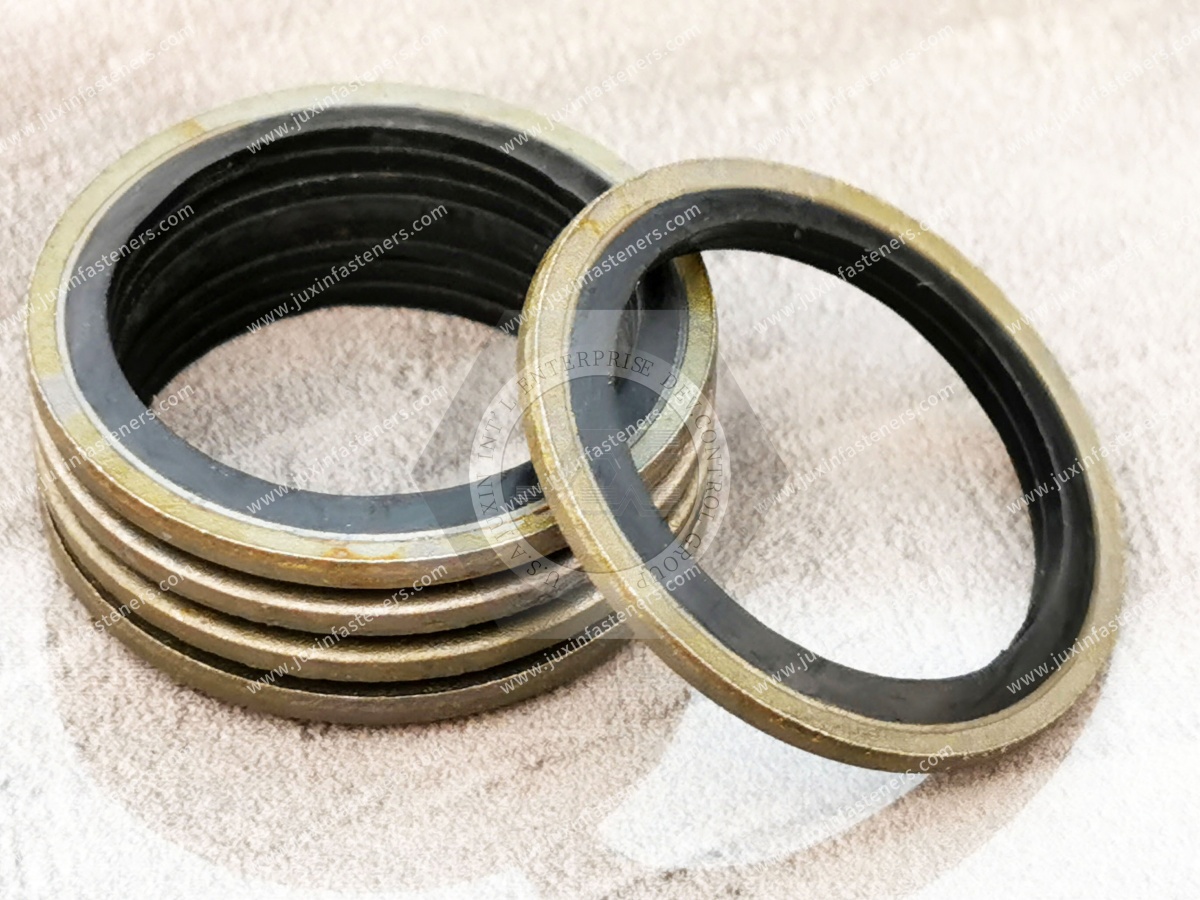
For an industrial rubber sealing component, provide the technical information relevant to the application.
customer part number
2D drawing
applicable specification
existing supplier part number
physical sample, if available
elastomer family
compound specification, if controlled
hardness
color, if controlled
regulatory requirements, where applicable
fluid or media
chemical concentration, where relevant
minimum operating temperature
normal operating temperature
maximum or peak temperature
pressure requirements
static or dynamic application
environmental exposure
inside diameter
outside diameter
thickness
sealing profile
tolerances
mating surface information
sample quantity
production quantity
estimated annual usage
inspection requirements
material documentation
packaging requirements
A detailed RFQ reduces the risk of receiving a seal that matches the dimensions but not the application.
Supplier qualification should look beyond part dimensions.
Depending on the project, review may include:
material specification
compound identification
hardness
dimensions
manufacturing consistency
material documentation
traceability requirements
sample inspection
application-specific validation
For bonded sealing washers, the bonding between the metal and elastomer and the complete component geometry should also be evaluated where relevant.
For application-specific sealing components, sample validation may include:
dimensional inspection
material verification
hardness verification
assembly fit
compression behavior
sealing contact
exposure to representative media
temperature conditioning
leakage testing
customer-specific functional testing
The appropriate validation plan depends on the risk and requirements of the application.
A practical material-selection process is:
Identify the Fluid / Media
↓
Define Temperature Conditions
↓
Define Pressure
↓
Identify Static or Dynamic Seal
↓
Review Chemical and Environmental Exposure
↓
Review Seal Geometry and Compression
↓
Shortlist Elastomer Families
↓
Select Compound and Hardness
↓
Prototype / Sample
↓
Validate in the Assembly
↓
Approve for Production
This decision path is more reliable than choosing a rubber material from a generic temperature chart.
JUXIN FASTENERS supports industrial OEMs, equipment manufacturers and sourcing teams with standard and custom fastening, washer and sealing-component requirements.
Our relevant capabilities include metal-bonded sealing washers and application-specific washer and fastening components manufactured to customer drawings and specifications.
For an existing sealing component, send:
Drawing / Specification / Existing Part Number / Physical Sample
For a new project, provide:
Seal Geometry → Elastomer → Hardness → Fluid → Temperature → Pressure → Mating Interface → Quantity → Validation Requirements
If the elastomer has not yet been finalized, provide the operating conditions so the material requirement can be reviewed during the sourcing process.
For OEM, custom and production-quantity sealing washer requirements, contact JUXIN FASTENERS for technical and RFQ review.
Email: info@juxinfasteners.com
Website: www.juxinfasteners.com
 MORE NEWS
Sep. 27, 2026
Sep. 27, 2026
Sep. 27, 2026
Contact Us
Tel.:
+86 020 8621 0320
+86 020 3121 6067
E-mail:
Technical Support:
Navigation
SEND INQUIREY