
Call Us
+86 136 6007 9809
Call Us
+86 136 6007 9809

Jul. 09, 2024
Screw Drive Types Explained: Slotted, Phillips, Hex, Square and Torx Selection Guide
Choosing the correct screw drive type is an important part of industrial product design and manufacturing.
The drive geometry determines how a screwdriver, bit, socket or wrench engages the fastener.
This affects torque transmission, tool alignment, installation consistency, assembly speed and maintenance access.
Common industrial screw drive systems include slotted, Phillips, internal hex, external hex, square recess and hexalobular socket designs commonly known as Torx-style drives.
Each has advantages and limitations.
For design engineers, selecting a drive requires evaluating the joint geometry, installation torque, tool clearance and service conditions.
For manufacturing engineers and production managers, the decision can affect automated feeding, tool wear, cycle time, assembly defects and total installed cost.
For purchasing managers and supplier development teams, a screw drive change may require dimensional verification, tooling changes, sample evaluation and engineering approval.
This guide compares major screw drive systems and explains how to select suitable industrial screws for OEM applications.
JUXIN FASTENERS supplies industrial fastening components and supports drawing-based inquiries for standard and custom screws.
What Is a Screw Drive Type?
A screw drive type is the geometry used to transmit installation or removal torque from a tool to a threaded fastener.
Depending on the design, the drive may be:
A recess in the head
A slot across the head
An internal socket
An external wrenching feature
The drive affects how the tool engages the screw.
However, it does not independently determine the screw's tensile strength, preload or vibration resistance.
Those properties depend on the complete fastener and joint design.
Screw Drive vs. Screw Head: An Important Distinction
Screw drive type and screw head shape are not the same thing.
Drive Type
Examples include:
Slotted
Phillips
Internal hex
Square recess
Hexalobular socket
Head Shape
Examples include:
Flat countersunk head
Pan head
Button head
Socket head
Hex head
Truss head
A Phillips drive may be used with different head shapes.
Similarly, an internal hex drive may be incorporated into different head geometries.
External Hex Head
An external hex head is both a head shape and an external wrenching feature.
It should not be confused with an internal hex socket.
Engineering Principle
Specify the complete screw configuration rather than describing a product only as a “hex screw” or “cross-head screw.”
Main Screw Drive Types Compared
| Drive system | Tool engagement | Typical consideration |
|---|---|---|
| Slotted | Straight blade in single slot | Alignment and blade slipping |
| Phillips | Cross-recessed driver | Cam-out and bit compatibility |
| Internal hex | Hex key or hex bit | Socket engagement and tool clearance |
| External hex | Wrench or socket on hex head | External access and wrench clearance |
| Square recess | Square driver bit | Recess fit and engagement |
| External square head | Wrench on square head | Head access and tool clearance |
| Hexalobular / Torx-style | Six-lobe driver | Bit fit and recess integrity |
No drive system is universally best for every application.
Slotted Screws: Straight-Slot Drive
Slotted screws use a single straight groove across the head.
The groove accepts a properly sized flat-blade screwdriver or driver bit.
Common Slotted Screw Types
Slotted flat head screws
Slotted pan head screws
Slotted oval head screws
Other drawing-based slotted designs
Advantages
Simple drive geometry
Compatibility with suitable manual tools
Continued relevance in legacy equipment
Appropriate for selected decorative and service applications
Limitations
Driver alignment is important
The blade may slip
The slot may deform
Automated engagement can be challenging
Engineering Considerations
Driver blade width and thickness should match the slot geometry.
A poorly fitted driver can concentrate load on the slot edges and damage the head.
Typical Applications
Instrumentation
Electrical equipment
Furniture hardware
Legacy machinery
Restoration projects
Slotted Flat Head Screws
Slotted flat head screws have a straight-slot drive and a countersunk head.
Relevant metric product references include DIN 963 and ISO 2009.
These designations should be reviewed against the applicable drawing and standard edition before substitution.
Stainless Steel Slotted Screws
Stainless steel may be selected where corrosion resistance is required.
Common material references include:
18-8 stainless steel
304 stainless steel
316 stainless steel
The term 18-8 describes a family of stainless steel compositions and should not automatically be treated as a complete fastener specification.
316 Stainless Steel
316 may provide improved resistance to certain chloride-containing environments compared with 304.
However, it can still experience pitting and crevice corrosion.
Carbon Steel Slotted Screws
Carbon steel screws may be suitable for general industrial applications.
Possible finishes include zinc plating, black oxide and nickel plating where appropriate.
Brass Slotted Screws
Brass may be considered for electrical equipment, decorative hardware and instrumentation.
Aluminum Slotted Screws
Aluminum may be suitable for selected lightweight assemblies, but its mechanical properties must be evaluated against the required joint loading.
Phillips Screws: Cross-Recessed Drive
Phillips screws feature a cross-shaped drive recess.
A compatible Phillips bit engages the recess to transmit torque.
Advantages
Convenient engagement in suitable manual assembly
Compatibility with powered screwdrivers
Potential efficiency benefits in repetitive assembly
Availability in different head styles
Limitations
Cam-out
Recess damage
Driver-bit wear
Sensitivity to bit compatibility
Installation variation under unsuitable conditions
What Is Cam-Out?
Cam-out occurs when the driver tends to disengage from the recess during torque transmission.
Possible contributing factors include:
Incorrect bit
Worn bit
Poor alignment
Insufficient axial force
Excessive torque
Recess damage
Important Engineering Principle
Cam-out should not be used as a substitute for controlled tightening.
Common Phillips Screw Types
Phillips flat head screws
Phillips pan head screws
Phillips truss head screws
Phillips fillister head screws
Relevant Standards
ISO 7046 covers applicable cross-recessed countersunk flat head screws.
DIN 965 is a commonly recognized legacy designation.
The actual recess geometry and product dimensions must be verified.
Typical Applications
Electronics
Electrical enclosures
Appliances
Automotive auxiliary assemblies
Industrial instruments
Production Recommendation
Phillips screws may be suitable for powered assembly, but the process should be validated for feeding, driver engagement, torque control and recess damage.
Internal Hex Socket Screws
Internal hex socket screws use a hexagonal recess inside the head.
They are installed with a suitable hex key or hex driver bit.
Common Designs
Hex socket head cap screws
Hex socket button head screws
Hex socket countersunk head screws
Hex socket set screws
Relevant Product Standards
Examples include:
ISO 4762 for hexagon socket head cap screws
ISO 7380 series for applicable hexagon socket button head screws
ISO 10642 for hexagon socket countersunk head screws
The relevant standard depends on the exact screw design.
Advantages
Internal drive without external wrench flats
Useful in selected compact assemblies
Compatibility with manual and powered hex drivers
Availability in different head geometries
Limitations
Socket rounding
Driver wear
Limited engagement in damaged recesses
Access constraints
Sensitivity to tool size
Typical Applications
Industrial machinery
Automation equipment
Mechanical assemblies
Precision fixtures
Equipment housings
Engineering Consideration
The drive recess dimensions and available engagement depth influence the installation process.
An internal hex socket does not automatically provide greater joint strength than every other drive type.
External Hex Head Screws and Bolts
External hex head fasteners have six wrenching flats on the outside of the head.
They are installed with suitable wrenches or sockets.
Important Distinction
An external hex head is not an internal hex socket.
Typical Applications
Industrial machinery
Construction equipment
Mechanical assemblies
Equipment frames
Automotive and transportation equipment
Advantages
External wrenching access
Compatibility with suitable torque tools
Availability in different strength classes
Practical servicing in accessible locations
Limitations
Requires clearance around the head
May protrude above the mounting surface
Tool access can be restricted in compact assemblies
Relevant Standards
Depending on the product, examples include:
ISO 4014 for hexagon head bolts
ISO 4017 for hexagon head screws
Applicable ASME specifications for inch-series hex head fasteners
Strength Classes
Metric fasteners may be specified using applicable ISO property classes.
Unified inch-series fasteners may use different mechanical grading systems, including applicable SAE specifications.
Important Compatibility Rule
Metric property classes and SAE grades are not direct numerical equivalents.
Material, mechanical properties, dimensions and application requirements must be reviewed before substitution.
Square Recess Screws
Square recess screws use an internal square-shaped drive.
They are often associated with Robertson-style square drive systems.
Advantages
Positive engagement with a compatible driver
Reduced slipping in suitable conditions
Practical use in selected repetitive assembly processes
Compatibility with suitable powered tools
Limitations
Requires the correct square bit
Recess damage remains possible
Tool availability varies by market and application
Typical Applications
Furniture manufacturing
Wood products
Construction hardware
Equipment assemblies
Engineering Consideration
Square recess dimensions and bit compatibility must be specified.
External Square Head Screws
External square head screws have a square-shaped head engaged by a wrench.
They are not the same as square recess screws.
Typical Applications
Selected industrial equipment
Machinery
Legacy assemblies
Specialized mechanical hardware
Important Procurement Principle
Do not substitute a square recess screw for a square head screw merely because both descriptions contain the word “square.”
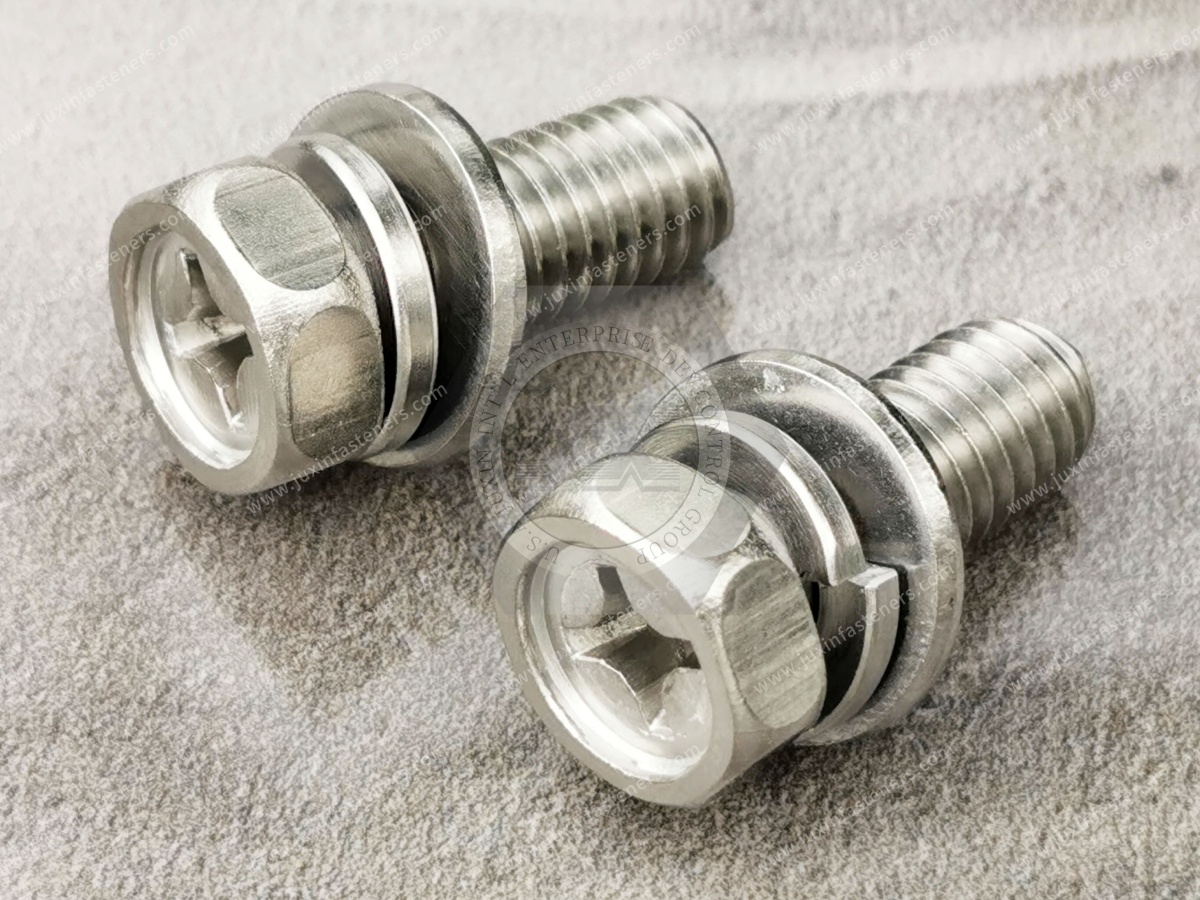
Ring-Slotted Screws and Integrated Locking Features
The term “ring-slotted screw” can refer to different proprietary or application-specific designs.
It should not automatically be treated as a standardized screw drive category.
Some fasteners incorporate:
Retaining rings
Captive features
Spring elements
Specialized locking components
These features may serve different functions.
Drive Function vs. Locking Function
A screw drive transmits installation torque.
A locking feature is intended to influence retention or resistance to loosening.
The two functions should be evaluated separately.
Important Engineering Limitation
A spring ring or integrated retaining feature does not automatically guarantee vibration resistance.
Performance depends on the joint design and the actual locking mechanism.
Drawing-Based Evaluation
For a ring-slotted or proprietary fastener, provide:
2D drawing
Head geometry
Drive geometry
Ring or spring configuration
Material
Installation method
Functional requirements
JUXIN FASTENERS can review drawing-based inquiries for specialized fastening components.
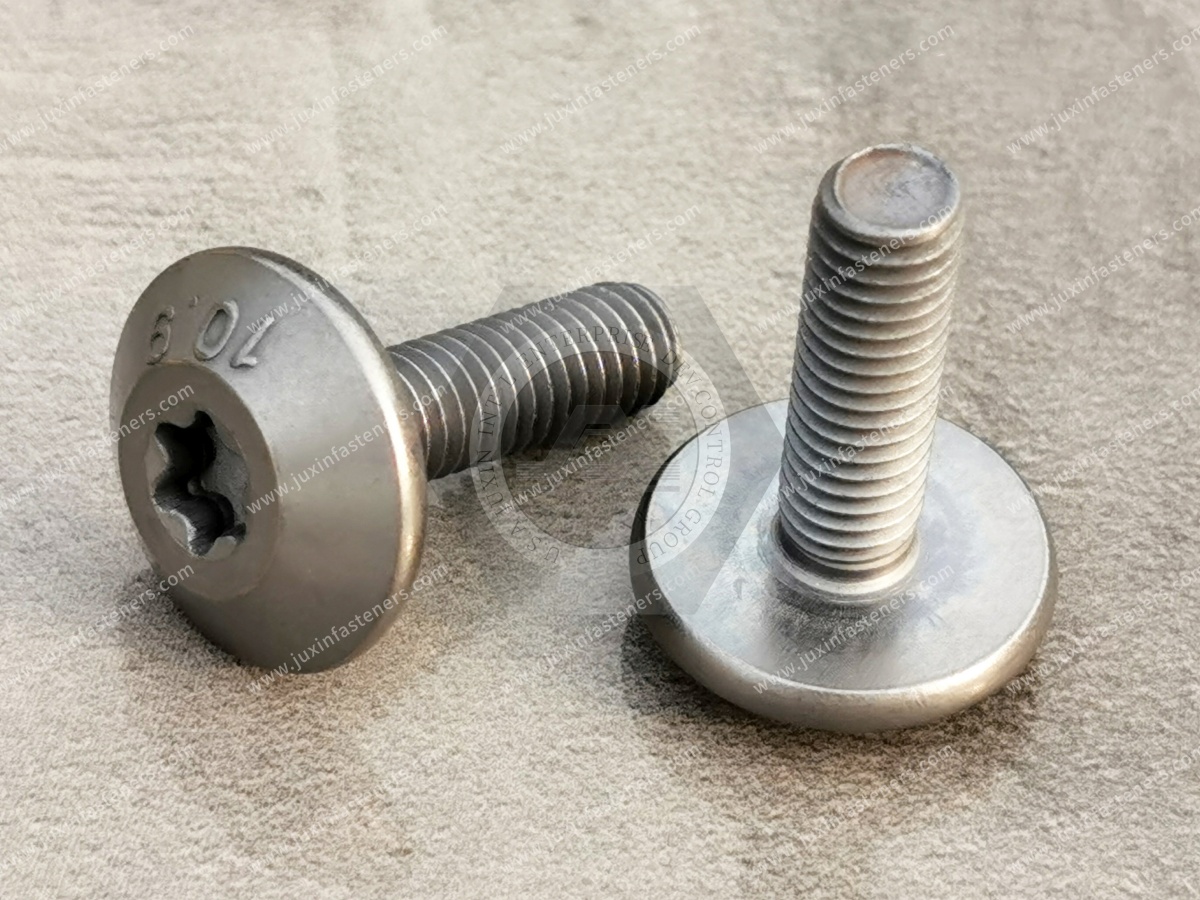
Torx-Style Screws: Hexalobular Socket Drives
Torx is a recognized trade name commonly associated with a six-lobe internal drive geometry.
The generic engineering term is hexalobular socket drive.
These screws are used in many industrial assemblies where the drive geometry provides suitable tool engagement.
Advantages
Efficient torque transmission in suitable designs
Reduced tendency toward certain slipping mechanisms
Compatibility with suitable powered tools
Potential benefits for repetitive assembly
Limitations
Requires the correct driver size
Recess damage remains possible
Tool wear must be controlled
Drive geometry must match the bit
Relevant Standard
ISO 10664 specifies hexalobular internal driving features.
The complete screw product may be governed by additional dimensional and mechanical specifications.
Important Engineering Principle
A hexalobular drive does not automatically provide the highest torque capacity in every screw size or material.
The allowable installation conditions depend on the complete fastener and joint.
Typical Applications
Automotive equipment
Industrial machinery
Electronics
Equipment housings
Automated assemblies
Material Options
Depending on the product and drawing, hexalobular screws may be specified in:
Carbon steel
Alloy steel
Stainless steel
Other suitable materials
Specialized materials such as A286 stainless steel require confirmation of the actual product specification and manufacturing feasibility.
Button Head Hexalobular Screws
Button head designs may be selected where a low-profile rounded head is required.
However, the head geometry and recess size may limit the available installation torque.
A button head screw should not be assumed equivalent to a socket head cap screw of the same nominal diameter.
Screw Drive Selection by Engineering Requirement
| Requirement | Drive systems to evaluate | Main consideration |
|---|---|---|
| Manual servicing | Slotted, Phillips, hex, square | Tool access and compatibility |
| Powered assembly | Phillips, hex socket, hexalobular | Bit engagement and process control |
| High installation torque | External hex, suitable socket drives | Drive capacity and screw strength |
| Compact external geometry | Internal recess or socket drives | Head dimensions and clearance |
| Automated assembly | Phillips, hexalobular, other approved drives | Feeding and engagement |
| Traditional appearance | Slotted | Product design requirements |
| Specialized locking | Separate locking feature | Joint vibration performance |
| Frequent maintenance | Service-compatible drive | Wear and tool availability |
How to Select the Right Screw Drive Type
The best selection begins with the joint requirements.
Required Installation Torque
Determine the required preload and tightening method.
Then evaluate whether the drive geometry can transmit the necessary installation torque without unacceptable damage.
Available Tool Clearance
Check whether the assembly provides access for:
Wrenches
Sockets
Hex keys
Powered screwdriver bits
Assembly Method
Manual and automated processes may favor different drive designs.
Maintenance Requirements
Consider tool availability, service frequency and recess durability.
Appearance
Flush mounting may require a countersunk head, but the drive type remains a separate decision.
Corrosion Environment
Material and surface treatment should be selected independently from the drive type.
Production Volume
Higher production volumes may justify additional evaluation of screw feeding, tooling and process consistency.
Drive Selection Does Not Replace Joint Design
A common engineering mistake is to select a drive based on the assumption that it will prevent loosening.
However, screw loosening depends on factors including:
Preload
Joint stiffness
Transverse vibration
Joint settlement
Thermal cycling
Material creep
Locking features
Important Principle
The drive transmits installation torque.
It does not independently provide a vibration-resistant joint.
Material Selection for Industrial Screws
Common material categories include:
Carbon Steel
Suitable for many general industrial applications when strength and corrosion protection requirements are met.
Alloy Steel
May be selected for specified mechanical properties and strength requirements.
Stainless Steel
May be suitable for corrosion-resistant applications, subject to the actual environment and material grade.
Brass
May be considered for electrical, decorative and instrumentation applications.
Aluminum
May be considered for selected lightweight assemblies.
Titanium
May be considered for specialized applications requiring particular material properties.
Important Engineering Limitation
Material selection should not be based on weight or corrosion resistance alone.
The actual joint loading, thread behavior, environmental exposure and qualification requirements must be evaluated.
Metric, UNC and UNF Thread Compatibility
The screw drive does not determine the thread system.
A Phillips screw, for example, may be specified with metric or inch-series threads depending on the product.
Metric Threads
Use the applicable ISO metric thread designation.
Unified Inch Threads
UNC and UNF are separate Unified thread series.
Other Thread Systems
BSW and BSF are different thread systems and must be identified correctly where applicable.
Compatibility Warning
Metric, UNC, UNF, BSW and BSF threads are not directly interchangeable.
Screw Drive Selection for Automated Assembly
Manufacturing engineers and production managers should evaluate the complete process.
Important Factors
Screw feeding
Orientation
Driver engagement
Tool alignment
Installation speed
Torque control
Bit wear
Fault detection
Inspection
Common Production Risks
| Production issue | Possible cause | Recommended response |
|---|---|---|
| Recess damage | Incorrect bit or excessive torque | Verify tool compatibility |
| Driver slipping | Poor engagement | Review alignment and bit fit |
| Inconsistent tightening | Friction or process variation | Validate tightening method |
| Excessive cycle time | Handling or orientation problems | Review feeding and engagement |
| Tool wear | Unsuitable drive or process conditions | Monitor bit condition |
| Assembly rework | Incorrect screw or hole geometry | Improve specification control |
Total Installed Cost
Fastener purchase price is only one component of total cost.
Other factors may include:
Assembly labor
Tooling
Bit replacement
Inspection
Rework
Scrap
Maintenance
A drive system that costs more per screw may still reduce total assembly cost in a suitable production process.
Industrial Applications
Automotive and EV Equipment
Potential applications include:
Interior fittings
Electronic modules
Equipment housings
Auxiliary mechanical assemblies
Battery-related equipment
Engineering Priorities
Assembly repeatability
Vibration
Corrosion
Tool access
Production efficiency
Safety-critical joints require specific engineering approval.
Electronics and Telecommunications
Potential applications include:
PCB-related mechanical assemblies
Equipment enclosures
Communication hardware
Instrument panels
Server-related equipment
Engineering Priorities
Compact geometry
Driver access
Assembly efficiency
Electrical clearance
Aerospace-Related Equipment
Potential applications include selected:
Ground support equipment
Noncritical equipment housings
Instrumentation
Auxiliary mechanical components
Engineering Priorities
Material requirements
Traceability
Mechanical properties
Qualification
General industrial screws should not be assumed approved for aircraft structures.
Industrial Machinery
Potential applications include:
CNC equipment
Automation systems
Manufacturing machinery
Equipment frames
Mechanical fixtures
Engineering Priorities
Mechanical loading
Maintenance
Tool access
Assembly consistency
Furniture and Construction Hardware
Potential applications include:
Furniture fittings
Cabinet assemblies
Decorative hardware
Selected construction components
Engineering Priorities
Appearance
Installation efficiency
Substrate compatibility
Tool availability
Renewable Energy and Electrical Equipment
Potential applications include:
Control cabinets
Battery energy storage equipment
Solar-related electrical assemblies
EV charging equipment
Engineering Priorities
Environmental exposure
Serviceability
Corrosion protection
Joint reliability
OEM Screw Drive Substitution Checklist
When changing a screw drive type, verify the complete product specification.
| Item | Required verification |
|---|---|
| Drive geometry | Correct recess or external wrenching feature |
| Head shape | Correct head style |
| Head dimensions | Diameter, height and angle where applicable |
| Thread | Correct system, diameter and pitch |
| Length | Correct nominal length |
| Material | Specified grade |
| Mechanical properties | Required strength |
| Surface finish | Coating and corrosion requirements |
| Tooling | Compatible driver or wrench |
| Installation | Approved tightening method |
| Inspection | Dimensional and functional criteria |
| Approval | Required engineering authorization |
Important Procurement Principle
A drive substitution should not be approved solely because the replacement screw has the same diameter and length.
OEM Procurement and Supplier Development
Purchasing and supply chain teams should distinguish between standard and custom products.
Standard Screw Sourcing
Confirm:
Applicable standard
Drive type
Head style
Thread designation
Length
Material
Surface finish
Quantity
Custom Screw Sourcing
Confirm:
2D drawing
Special drive geometry
Nonstandard dimensions
Material requirements
Surface treatment
Mechanical requirements
Inspection criteria
Supplier Evaluation
Consider:
Drawing interpretation
Material and dimensional requirements
Sample evaluation
Quality expectations
Packaging
MOQ
Delivery schedule
Specific capabilities and commercial terms should be confirmed for each project.
Frequently Asked Questions
What are the main types of screw drives?
Common types include slotted, Phillips, internal hex, external hex, square recess and hexalobular socket drives.
What is the difference between a screw drive and a screw head?
The drive is the tool engagement geometry. The head is the overall head shape.
Is a hex head screw the same as a hex socket screw?
No. A hex head screw uses external wrenching flats, while a hex socket screw uses an internal hexagonal recess.
Which screw drive is best for high torque?
The answer depends on screw size, material, drive geometry and joint requirements.
External hex and suitable internal socket drives may be evaluated for higher installation torque requirements.
Which screw drive is best for automated assembly?
Phillips, hexalobular and other compatible drive systems may be suitable.
The actual assembly equipment and process must be validated.
Do Torx-style screws prevent loosening?
No. Drive geometry does not independently prevent joint loosening.
Are square drive and square head screws the same?
No. Square drive refers to an internal square recess, while square head refers to an external square-shaped head.
What is a ring-slotted screw?
The term is not a universally defined drive category.
A drawing is required to identify the actual drive and any retaining or locking features.
Can metric and inch-series screws be substituted?
Not automatically. Thread compatibility, dimensions and mechanical requirements must be verified.
Can JUXIN FASTENERS supply custom screw drive designs?
JUXIN FASTENERS supports inquiries for standard and drawing-based industrial screws.
Specific designs, materials, finishes and production requirements are confirmed during project review.
JUXIN FASTENERS: Industrial Screws and OEM Fastening Solutions
JUXIN FASTENERS supplies industrial fasteners for international OEM customers.
Relevant product categories include:
Slotted screws
Phillips screws
Hex head screws
Hex socket screws
Square drive screws
Hexalobular / Torx-style screws
Custom industrial screws
High-strength bolts
Weld screws
Self-clinching fasteners
Threaded inserts
Custom CNC-machined components
Specific dimensions, materials, surface treatments, MOQ and delivery schedules are confirmed according to project requirements.
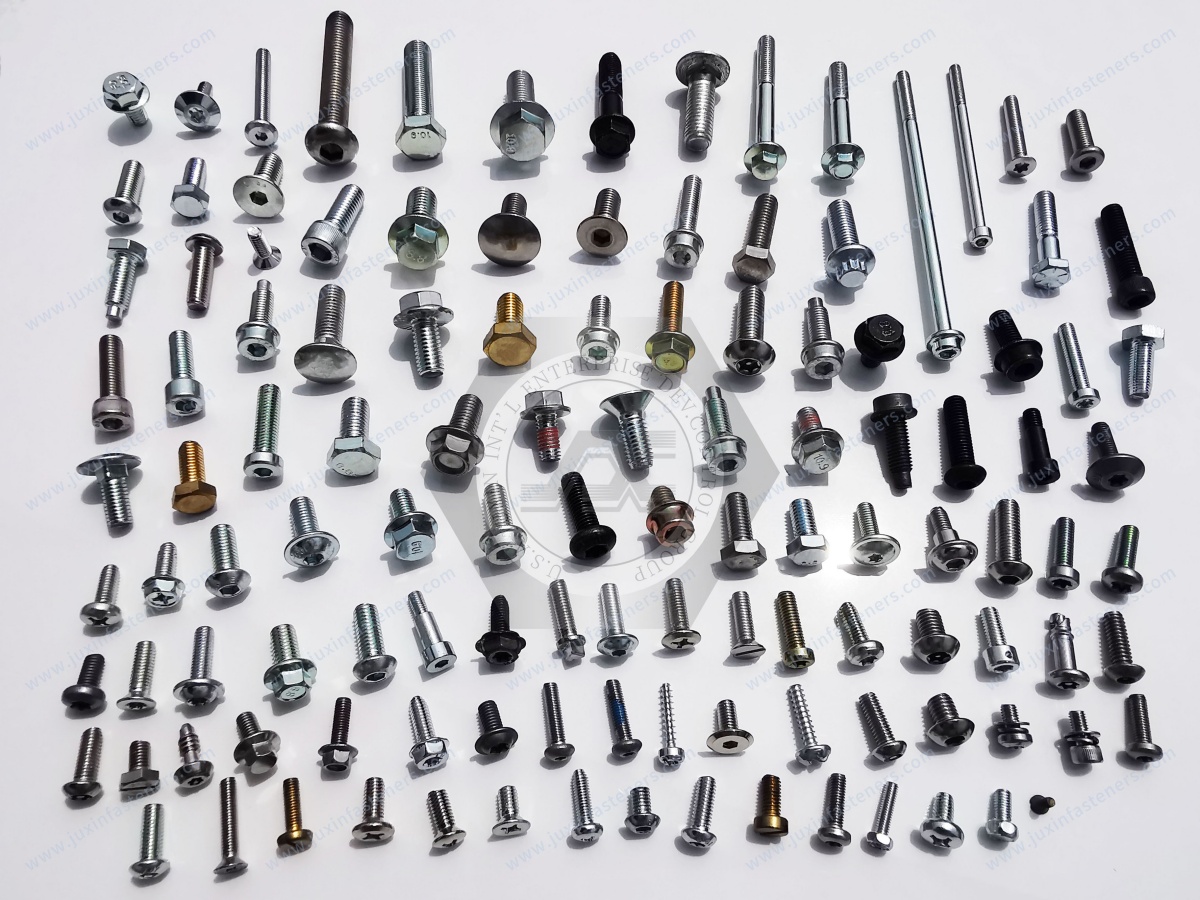
Request an OEM Screw Drive Selection Review and RFQ
Are you evaluating screw drive types for a new product design?
Do you need to improve assembly efficiency or replace an existing screw?
Or are you sourcing standard or custom industrial screws for OEM production?
JUXIN FASTENERS welcomes inquiries from design engineers, structural engineers, mechanical engineers, manufacturing engineers, production managers,
procurement specialists, purchasing managers, supplier development teams and supply chain managers.
For technical review and quotation, please provide:
2D drawing or applicable standard + drive type + head geometry + thread designation + screw length + material + surface finish
+ mechanical requirements + assembly method + inspection criteria + sample quantity + production volume + target delivery schedule.
For replacement projects, include the original screw specification and identify any proposed deviations.
Company: Juxin Fasteners
Website: https://www.juxinfasteners.com/
Email: info@juxinfasteners.com
Send your industrial screw drawings and OEM RFQ to JUXIN FASTENERS for technical review and quotation.
Contact Us
Tel.:
+86 020 8621 0320
+86 020 3121 6067
E-mail:
Technical Support:
Navigation
SEND INQUIREY



