
Call Us
+86 136 6007 9809
Call Us
+86 136 6007 9809

Oct. 23, 2023
Sealing washers, also called seal washers, are components designed to help control leakage at bolted joints, threaded connections,
fittings, plugs, covers and other interfaces where a conventional flat washer alone does not provide a sealing function.
Unlike an ordinary flat washer, a sealing washer must create or support a sealing interface.
Depending on the design, this may be achieved through compression of an elastomer, deformation of a softer metal, or a combination of a metal carrier and an elastomeric sealing element.
Selecting a sealing washer therefore requires more than choosing the correct inside and outside diameter.
Engineers should consider the sealing mechanism, fluid or media, operating temperature, pressure conditions, mating surfaces, joint geometry and installation method together.
For procurement teams, these same variables are important because two washers with similar dimensions may perform very differently in the actual assembly.
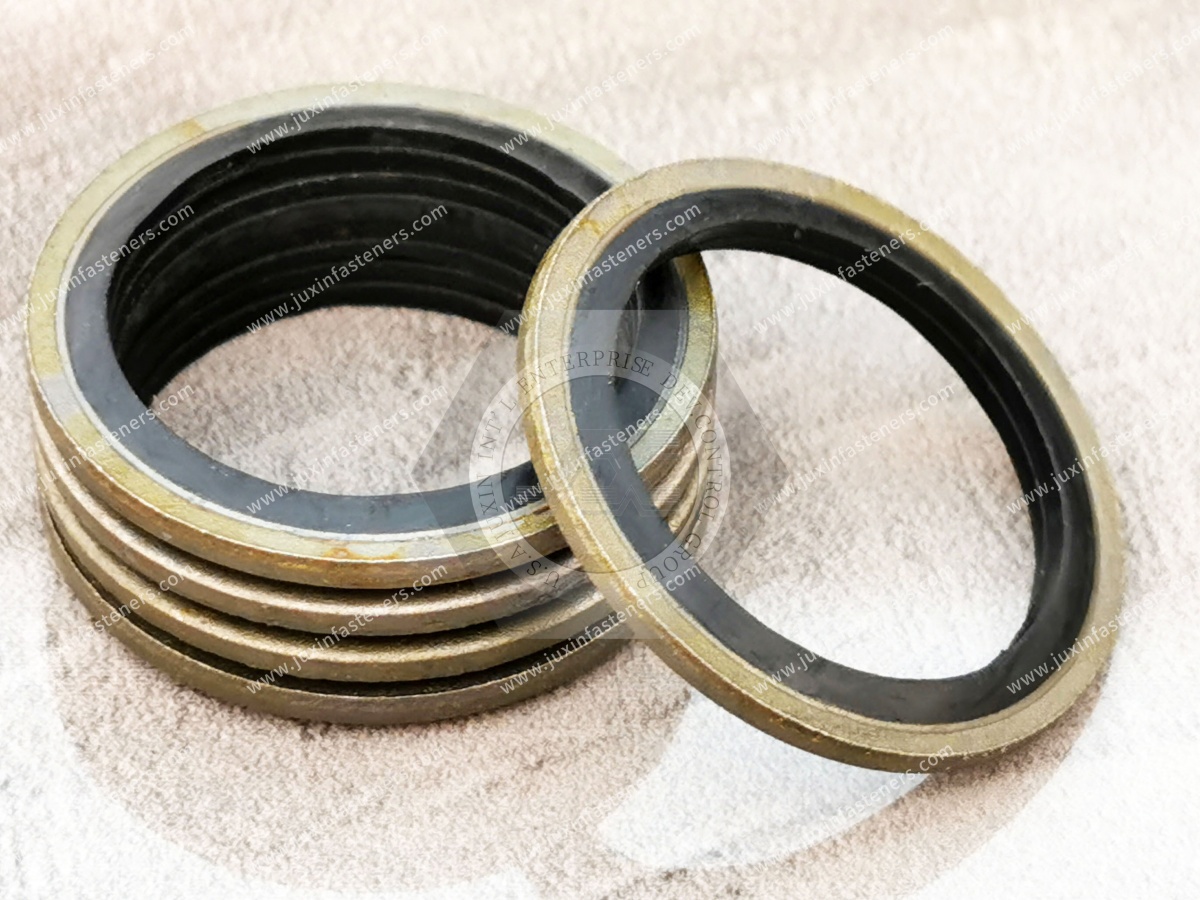
A sealing washer is a washer-shaped component used to create or assist a seal around a fastener, fitting or joint interface.
Depending on its construction, a sealing washer may help control the passage of:
oil
water
coolant
hydraulic fluid
air or other gases
moisture
dust or environmental contaminants
The exact sealing capability depends on the washer design and the complete joint system.
A sealing washer should therefore not automatically be described as leak-proof, waterproof or pressure-rated unless those requirements have been defined and validated for the specific assembly.
The working principle depends on the type of sealing washer.
Rubber or elastomeric washers seal primarily through controlled compression.
When the joint is tightened, the elastomer deforms against the mating surfaces and fills small surface irregularities. Effective sealing depends on maintaining suitable compression without excessive extrusion, cutting or permanent deformation.
Metal sealing washers typically rely on controlled deformation of the washer or localized contact at the sealing interface.
Materials such as copper or aluminum may be selected where their deformation characteristics and compatibility with the assembly are appropriate.
Metal sealing systems should not be treated as direct substitutes for elastomeric seals without considering surface finish, joint geometry, installation load and operating conditions.
Bonded sealing washers combine a metal washer or carrier with an elastomeric sealing element.
The metal portion supports the joint mechanically while the elastomer provides the primary sealing interface.
These components are commonly referred to as bonded seals or bonded sealing washers and are frequently used around threaded fittings, plugs and other fluid-system connections.
The actual pressure capability of a bonded seal depends on its geometry, elastomer, mating interface and application conditions rather than simply on the presence of the metal ring.
“Sealing washer” describes a function rather than one universal construction. Several different technologies fall within this broader category.
Elastomeric washers may be manufactured from materials such as:
NBR
EPDM
FKM
other application-specific elastomers
These washers are useful where conformability is needed to create a seal against the mating surfaces.
Material selection must be based on the actual operating environment rather than selecting a rubber solely by name.
Bonded seals integrate an elastomeric sealing element with a metal support washer.
They are often used in hydraulic, pneumatic and industrial fluid connections where the fastener or fitting passes through the center of the sealing component.
Bonded seals are a distinct sealing technology and should not be confused with ordinary rubber washers or flat metal washers.
Metal sealing washers may be produced from materials such as:
copper
aluminum
stainless steel
other specified metals or alloys
Their sealing behavior is strongly influenced by material condition, geometry, mating surfaces and installation.
Some metallic sealing washers are application-specific and may be controlled by an OEM drawing rather than a general fastener standard.
Standard catalog dimensions do not cover every assembly.
Custom sealing washers may be required when the application involves:
non-standard inside or outside diameters
controlled thickness
special profiles
unusual fastener geometry
specific mating interfaces
application-specific elastomers
special metal materials
unique environmental conditions
For OEM applications, the drawing and assembly requirements normally provide a better sourcing basis than a generic description such as “rubber washer” or “seal washer.”
Elastomer selection is one of the most important decisions in sealing washer specification.
The correct choice depends on the complete operating environment.
NBR is commonly considered for applications involving petroleum-based oils and many industrial fluid systems.
However, compatibility should be checked against the actual fluid formulation, temperature range and exposure conditions.
EPDM is often considered for water-related applications and environments where weathering resistance is important.
It is not a universal replacement for oil-resistant elastomers, so media compatibility must be confirmed.
FKM is often selected where higher-temperature capability or resistance to certain fuels, oils and chemicals is required.
Its suitability still depends on the specific chemical media and service conditions.
A useful engineering decision path is:
Elastomer + Fluid/Media + Temperature + Pressure + Exposure Time + Joint Geometry + Compression = Sealing System
For this reason, specifying only “rubber sealing washer” is usually insufficient for an industrial RFQ.
Metal selection should also follow the actual sealing mechanism.
Copper and aluminum are commonly associated with deformable metallic sealing applications because they can conform under controlled installation conditions.
Stainless steel offers different mechanical and corrosion characteristics but is not automatically interchangeable with softer metallic sealing materials.
When selecting a metal sealing washer, engineers should evaluate:
required deformation
mating component material
surface condition
installation load
corrosion environment
galvanic interaction
operating temperature
fluid or chemical exposure
reusability requirements, if applicable
The correct metal depends on how the joint is designed to create the seal.
A conventional flat washer primarily distributes load, protects a mating surface or provides a controlled bearing interface.
A sealing washer is designed to contribute to sealing.
These functions should not be confused.
Replacing a sealing washer with a dimensionally similar flat washer can eliminate the intended sealing mechanism even when the bolt and washer dimensions appear correct.
Likewise, adding a rubber washer underneath a standard fastener does not automatically create a validated sealing joint.
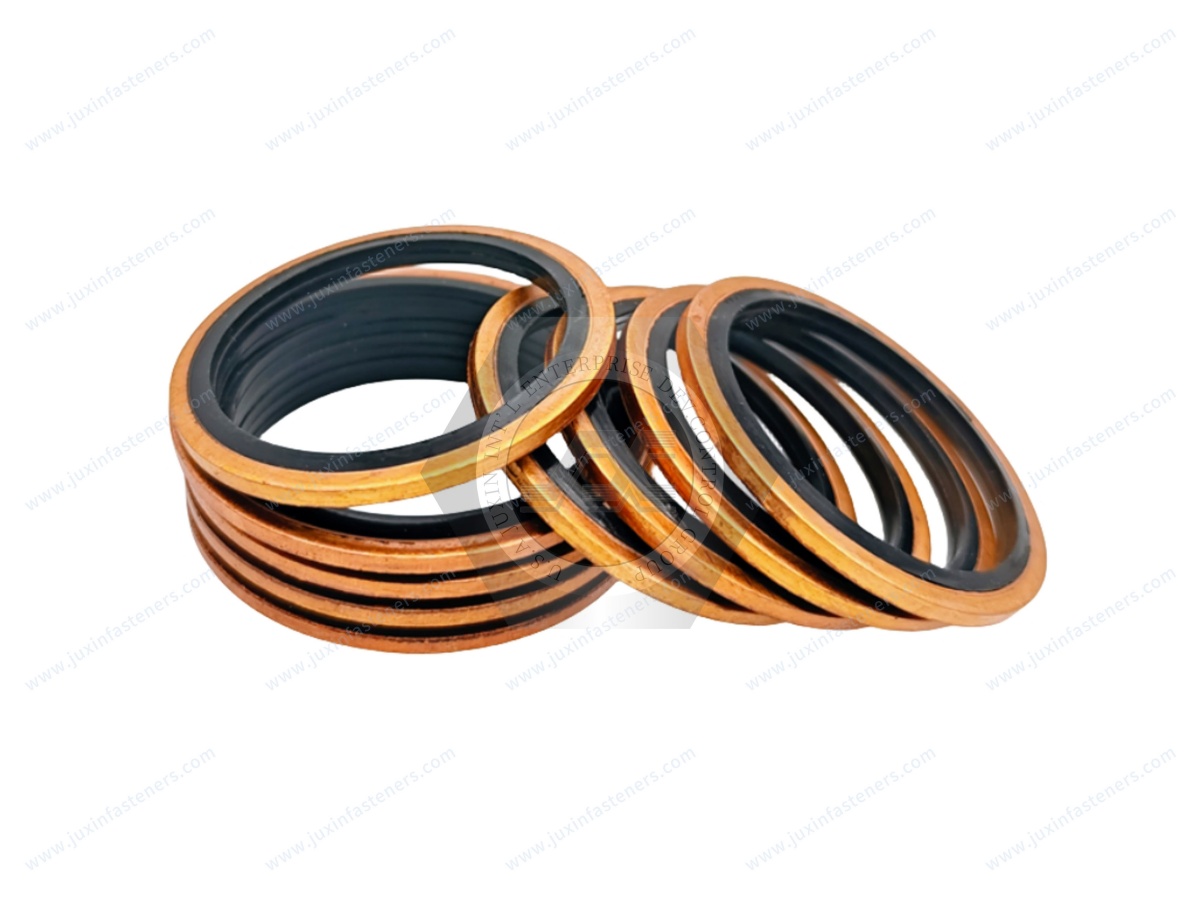
A bonded seal is one specific type of sealing washer.
The distinction matters when sourcing replacement components.
A generic elastomeric washer may seal by compression across most of its surface, while a bonded seal uses a defined elastomeric sealing region supported by a metal component.
For existing hydraulic or industrial equipment, replacing one construction with another should be based on the original joint design and validation requirements rather than dimensional similarity alone.
Sealing washers can be used in many industrial assemblies, but the appropriate design varies by application.
Potential applications include:
threaded hydraulic fittings
plugs
valves
pumps
manifolds
fluid connectors
For these applications, the fluid, pressure conditions, fitting geometry and sealing interface should be defined before selecting the washer.
Sealing washers may be used around:
lubrication connections
fluid ports
inspection covers
threaded plugs
equipment housings
fluid-control components
Selected sealing washer designs may be used in fluid-handling, thermal-management and other vehicle assemblies.
Automotive applications should be specified according to the actual drawing, material requirements, operating environment and OEM validation criteria.
A generic sealing washer should not automatically be assumed suitable for brake, fuel or other safety-critical systems.
Sealing components may be required in pumps, valves, coolant connections and other fluid-carrying assemblies.
Compatibility with the actual coolant, temperature cycle and mating materials should be reviewed.
Sealing washers may also be used in equipment containing lubrication systems, cooling circuits, fluid connections or environmental sealing interfaces.
The washer design should follow the function of the specific assembly rather than the industry name alone.
A practical selection process begins with the assembly rather than the washer catalog.
Determine whether the joint must control:
liquid
gas
moisture
dust
external contamination
Identify the actual media rather than specifying only “oil” or “chemical” when detailed compatibility matters.
Ask whether the assembly requires:
elastomer compression
metallic deformation
a bonded metal/elastomer seal
another application-specific sealing geometry
This prevents different sealing technologies from being treated as interchangeable.
Important conditions may include:
normal operating temperature
temperature cycling
pressure conditions
chemical exposure
outdoor exposure
vibration
maintenance cycle
Sealing performance is not determined by the washer alone.
Review:
surface condition
flatness
contact width
surface damage
coating
mating material
available sealing area
A high-performance sealing material cannot necessarily compensate for an unsuitable joint interface.
Installation affects the amount and distribution of sealing compression.
Important variables can include:
fastener size
tightening method
joint stiffness
available bearing area
alignment
compression of the sealing element
Installation torque should come from the validated joint specification rather than from a universal sealing-washer value.
Many sealing problems originate from the system rather than from a defective washer.
Typical causes can include:
A material may swell, harden, soften or otherwise degrade when exposed to an incompatible fluid or environment.
Over-compression can damage or extrude an elastomeric sealing element and may permanently change its geometry.
If the sealing element does not develop adequate contact with the mating surfaces, a continuous sealing interface may not form.
Scratches, burrs, contamination or surface irregularities can create leakage paths.
Incorrect inside diameter, outside diameter, thickness or sealing geometry can change how load and compression are distributed.
Replacing a bonded seal with a rubber washer—or a designed metal sealing washer with an ordinary flat washer—can change the entire sealing mechanism.
A washer that performs well with one fluid may not be appropriate for another.
This is why the actual operating media should be included in technical sourcing information.
Not automatically.
The presence of a rubber element, bonded seal or closed sealing geometry does not by itself establish a waterproof rating.
Water resistance depends on the complete assembly, including:
sealing material
geometry
compression
mating surfaces
fastener installation
environmental exposure
validation method
If an application requires a defined ingress-protection or leakage requirement, that requirement should be specified and validated at the assembly level.
Standard sealing washers are appropriate when an existing size, material and construction match the joint requirements.
Custom components become relevant when the application requires special:
dimensions
thickness
sealing profiles
elastomer materials
metal materials
fastener interfaces
mating geometry
OEM drawing requirements
For existing OEM parts, a 2D drawing, 3D model or physical sample can help identify the correct geometry before production quotation.
A detailed RFQ reduces the risk of quoting a dimensionally similar but functionally incorrect seal.
Where applicable, provide:
part number
2D drawing
applicable standard, if any
inside diameter
outside diameter
thickness
sealing profile
metal material
elastomer material
hardness requirement, if specified
fluid or media
operating temperature requirements
pressure requirements
mating component material
surface or coating requirements
installation method
inspection requirements
material documentation requirements
sample quantity
order quantity
estimated annual usage
For a replacement part without a complete drawing, providing a physical sample together with application information can help establish the correct geometry and material requirements.
For application-specific sealing components, dimensional approval alone may not be enough.
Depending on the application, sample evaluation may need to consider:
dimensional fit
sealing contact
assembly behavior
material compatibility
installation conditions
leakage criteria
environmental exposure
customer-specific validation requirements
The validation method should reflect the actual assembly rather than assuming that one washer test represents every operating condition.
JUXIN FASTENERS supports industrial customers sourcing standard and custom fastening and washer components for OEM and manufacturing applications.
For sealing washer projects, our engineering review can begin with an existing drawing, specification or physical sample.
The objective is to identify the required washer construction, dimensions, materials, mating conditions and production requirements before quotation.
For custom or made-to-drawing components, send your:
Drawing / Sample → Dimensions → Material → Fluid or Media → Operating Conditions → Quantity → Validation Requirements
This information allows the sealing component to be reviewed as part of the actual joint rather than simply as a washer with an inside and outside diameter.
Email: info@juxinfasteners.com
Website: www.juxinfasteners.com
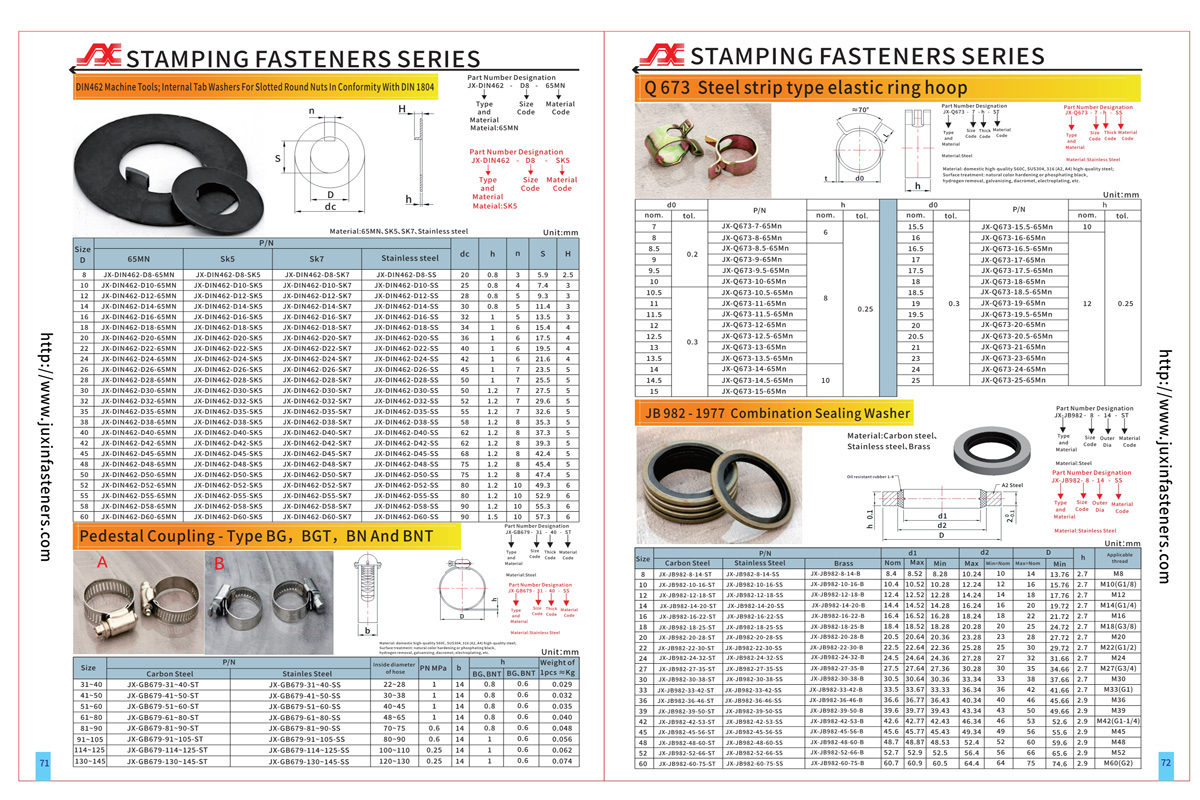
Previous: Metal-Bonded Seal Washers
Next: Bonded Sealing Washers
 MORE NEWS
Sep. 27, 2026
Sep. 27, 2026
Sep. 27, 2026
Contact Us
Tel.:
+86 020 8621 0320
+86 020 3121 6067
E-mail:
Technical Support:
Navigation
SEND INQUIREY