
Call Us
+86 136 6007 9809
Call Us
+86 136 6007 9809

Aug. 21, 2026
Self-Clinching Studs for Thin Sheet Metal
Permanent Threaded Fastening Solutions for Sheet Metal and OEM Assemblies
When a thin sheet metal component needs a reliable external thread, traditional welding, tapping, or loose hardware may not provide the most efficient fastening solution.
Self-clinching studs provide a practical alternative by creating a permanent threaded fastening point directly in sheet metal.
Designed for installation into pre-punched or pre-drilled holes, these self-clinching fasteners are pressed into the sheet using controlled installation force.
Once installed, the stud locks into the parent material, providing a secure external thread for subsequent component assembly.
Self-clinching studs are widely used in automotive, EV battery systems, electrical cabinets, electronics, telecommunications,
HVAC equipment, machinery, robotics, medical equipment, rail transit, aerospace, construction equipment, and sheet metal fabrication.
For OEM applications requiring repeatable installation, space-efficient fastening, and reliable resistance to rotation,
self-clinching studs for thin sheets can provide an efficient permanent fastening solution.
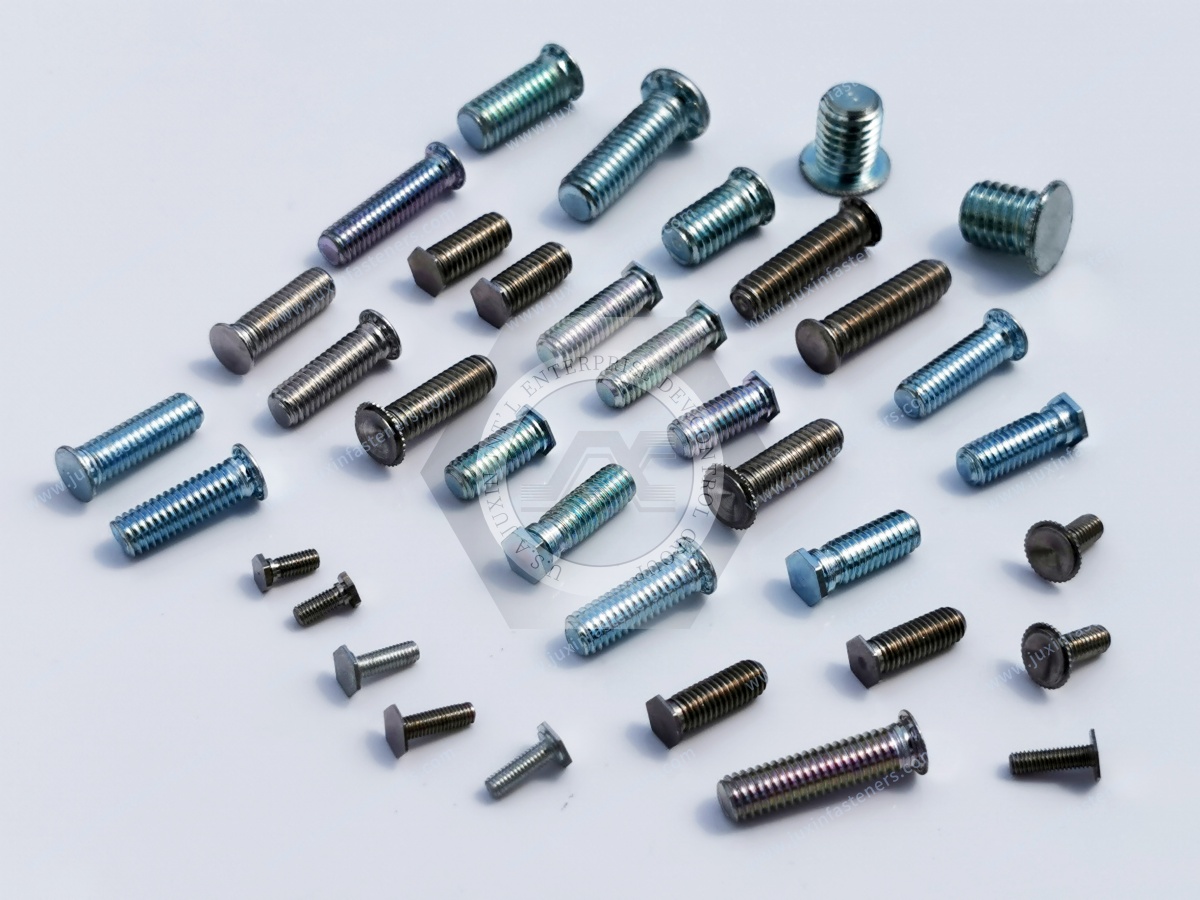
What Are Self-Clinching Studs?
Self-clinching studs are threaded fasteners designed for permanent installation into sheet metal.
Unlike conventional bolts or screws that require access to both sides of an assembly, self-clinching studs install directly into a prepared hole in the sheet.
During installation, a riveting or pressing machine presses the fastener into the sheet metal.
The specially designed section beneath the head deforms or displaces the surrounding sheet material.
This mechanical engagement locks the stud into position and prevents the fastener from rotating or pulling out under normal assembly conditions.
This makes self-clinching threaded studs particularly suitable for applications where:
The sheet material is too thin to support conventional threads
A permanent external thread is required
Welding is undesirable or impractical
Access to the rear side of the sheet is limited
High-volume assembly requires fast installation
Consistent fastening performance is important
A clean and integrated fastening point is preferred
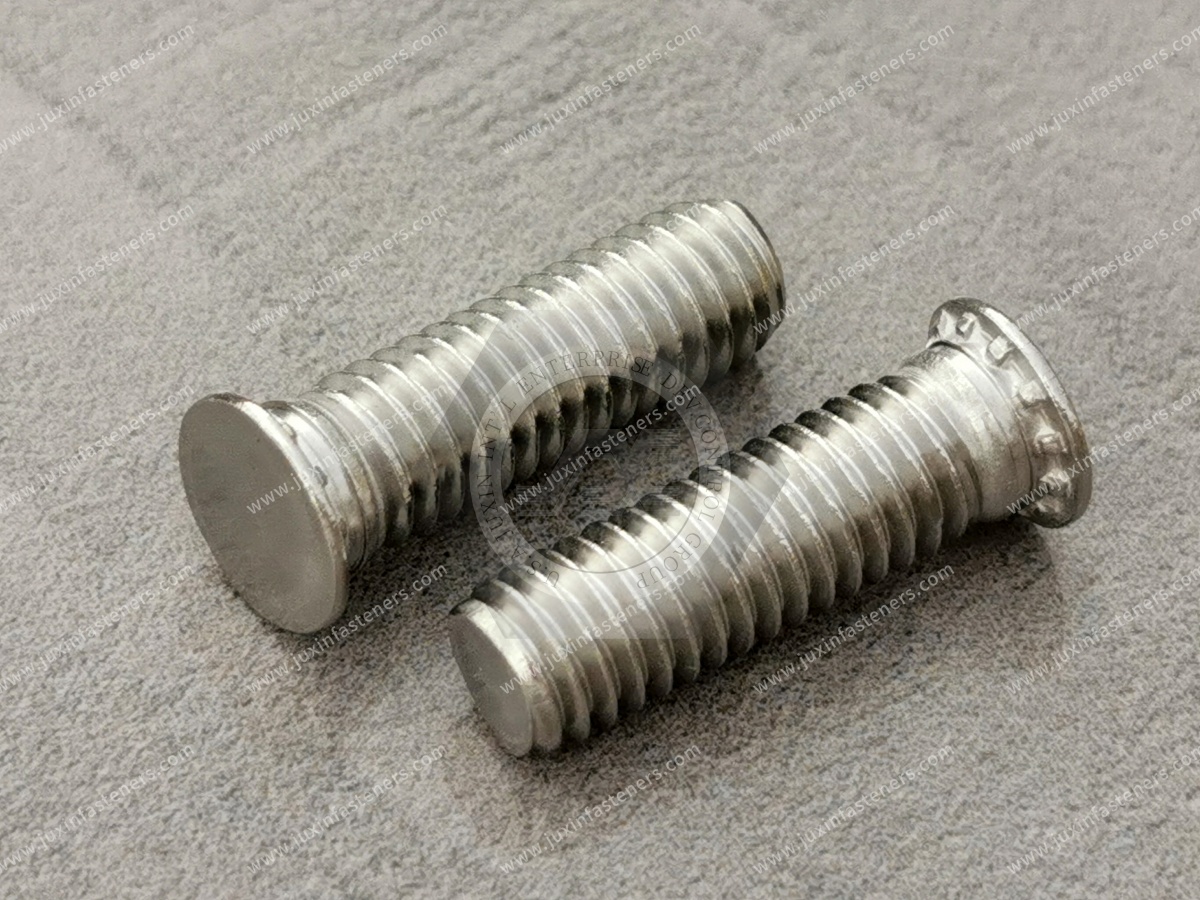
Self-Clinching Studs for Thin Sheet Metal
Thin sheet metal presents a common fastening challenge.
A conventional tapped hole may not provide sufficient thread engagement when the material thickness is limited.
Welding a stud onto the sheet can introduce heat, distortion, additional processing, and potential surface damage.
Self-clinching studs for thin sheet metal address this problem by mechanically integrating the fastener into the sheet.
The installation hole is prepared according to the required fastener specification and knurl diameter. The stud is then positioned in the hole and pressed into place.
For round-head designs, the serrated or knurled section beneath the head engages with the surrounding sheet material.
Under installation pressure, the sheet material flows into the knurled area, producing a strong mechanical interlock.
The result is a permanent external thread that can be used to mount brackets, covers, electrical components, panels, grounding components, PCB supports, and other assemblies.
Round-Head vs. Hex-Head Self-Clinching Studs
Self-clinching studs are available in different head and anti-rotation configurations. The two primary designs are round-head self-clinching studs and hex-head self-clinching studs.
Round-Head Self-Clinching Studs
Round-head self-clinching studs are the most commonly used configuration for general sheet metal applications.
The stud is typically manufactured using a cold-heading process, which allows efficient high-volume production and helps achieve competitive unit costs.
A serrated or knurled section is formed beneath the head. During installation, this section mechanically engages with the sheet metal.
Key advantages
Efficient high-volume production
Competitive manufacturing cost
Simple press-in installation
Reliable resistance to rotation
Suitable for automated assembly
Available in multiple thread sizes and lengths
Suitable for many thin-sheet applications
For OEM manufacturers looking for a cost-effective press-in stud for sheet metal, the round-head design is often the preferred solution.
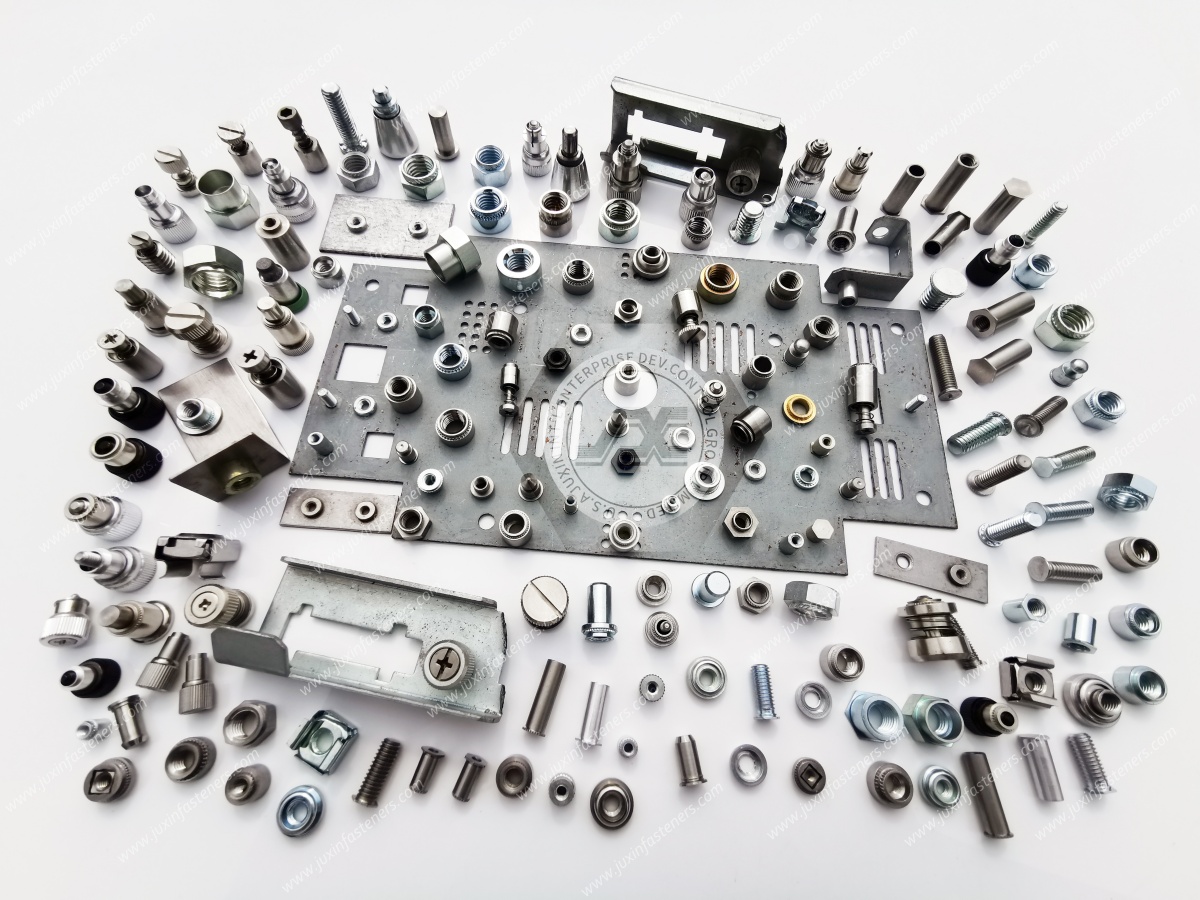
Hex-Head Self-Clinching Studs
Hex-head self-clinching studs use the geometry of a six-sided head or body section to provide mechanical resistance against rotation.
Compared with round-head designs, hex-head studs generally require more machining and may be manufactured from hexagonal bar stock through turning or other machining operations.
As a result, production costs can be higher, particularly for high-volume applications.
However, the hexagonal configuration can be advantageous when a specific anti-rotation or mechanical locking requirement is present.
Typical advantages
Strong anti-rotation characteristics
Suitable for applications requiring additional mechanical locking
Available in customized configurations
Suitable for specialized OEM assemblies
The appropriate design should be selected according to the sheet material, installation method, load requirements, available space, and assembly process.
How Self-Clinching Studs Are Installed
The performance of a self-clinching stud depends heavily on the correct hole size, sheet material, sheet thickness, and installation force.
A typical installation process includes the following steps.
1. Prepare the Sheet Metal
A hole is created in the sheet according to the manufacturer's specified installation-hole diameter.
The hole should be manufactured within the recommended tolerance range. Excessive clearance can reduce the mechanical engagement between the fastener and sheet.
2. Position the Stud
The self-clinching stud is inserted into the prepared hole from the appropriate side of the sheet.
For round-head designs, the knurled section should be correctly positioned within the sheet.
3. Apply Pressing Force
A riveting machine, press, or suitable installation equipment applies axial force to the stud head.
The installation force causes the surrounding sheet material to flow into the designed retention feature.
4. Form the Mechanical Interlock
The sheet material fills around the serrated or knurled section beneath the head.
This creates a permanent mechanical connection between the stud and the sheet.
5. Inspect the Installation
The finished assembly can be checked for:
Correct seating
Stud perpendicularity
Thread condition
Rotation resistance
Pull-out resistance
Installation-hole quality
Overall dimensional compliance
Correct installation is essential. A self-clinching fastener should not simply be hammered into the sheet.
Controlled installation equipment should be used to achieve consistent fastening performance.
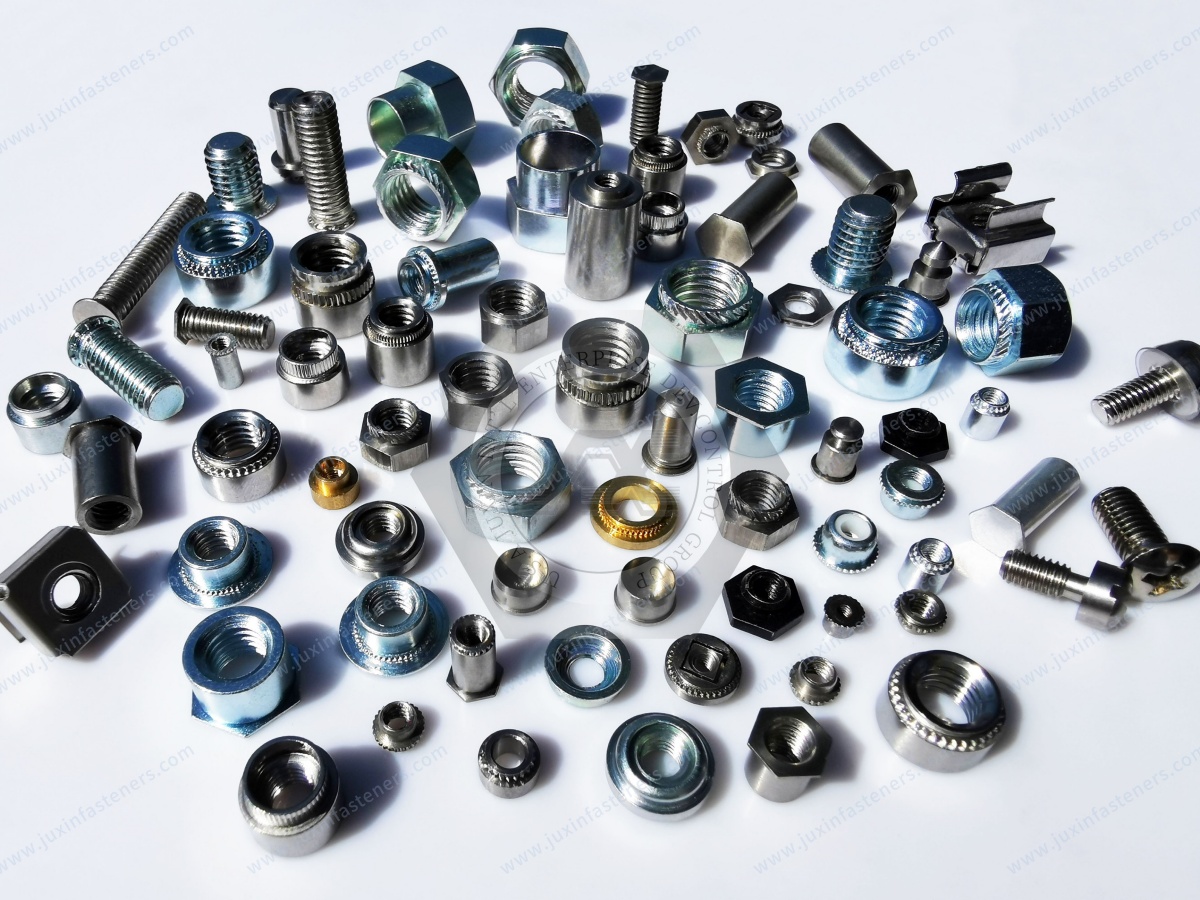
Materials for Self-Clinching Studs
Juxin manufactures self-clinching studs using materials selected according to application requirements, strength requirements, corrosion environment, and customer specifications.
Carbon Steel
Carbon steel is widely used for standard self-clinching studs because of its combination of mechanical strength, manufacturability, and cost efficiency.
For carbon steel self-clinching studs, heat treatment is applied after production according to the required mechanical performance.
Typical surface finishes may include zinc plating or other specified protective coatings.
Carbon steel self-clinching studs are commonly used in:
Automotive components
Electrical cabinets
Machinery
Sheet metal assemblies
HVAC equipment
Industrial equipment
General OEM applications
SUS304 Stainless Steel
SUS304 stainless steel self-clinching studs provide improved corrosion resistance compared with standard carbon steel versions.
They are suitable for applications where environmental exposure, moisture, corrosion resistance, or appearance requirements make stainless steel preferable.
Typical applications include:
Medical equipment
Food-related equipment
HVAC systems
Electrical equipment
Outdoor assemblies
Industrial equipment
Corrosion-sensitive sheet metal components
RoHS-Compliant Materials
For customers supplying regulated markets, environmentally compliant material and surface-treatment requirements can be incorporated into the product specification.
Juxin can supply self-clinching studs manufactured with RoHS-compliant materials and finishes according to customer requirements.
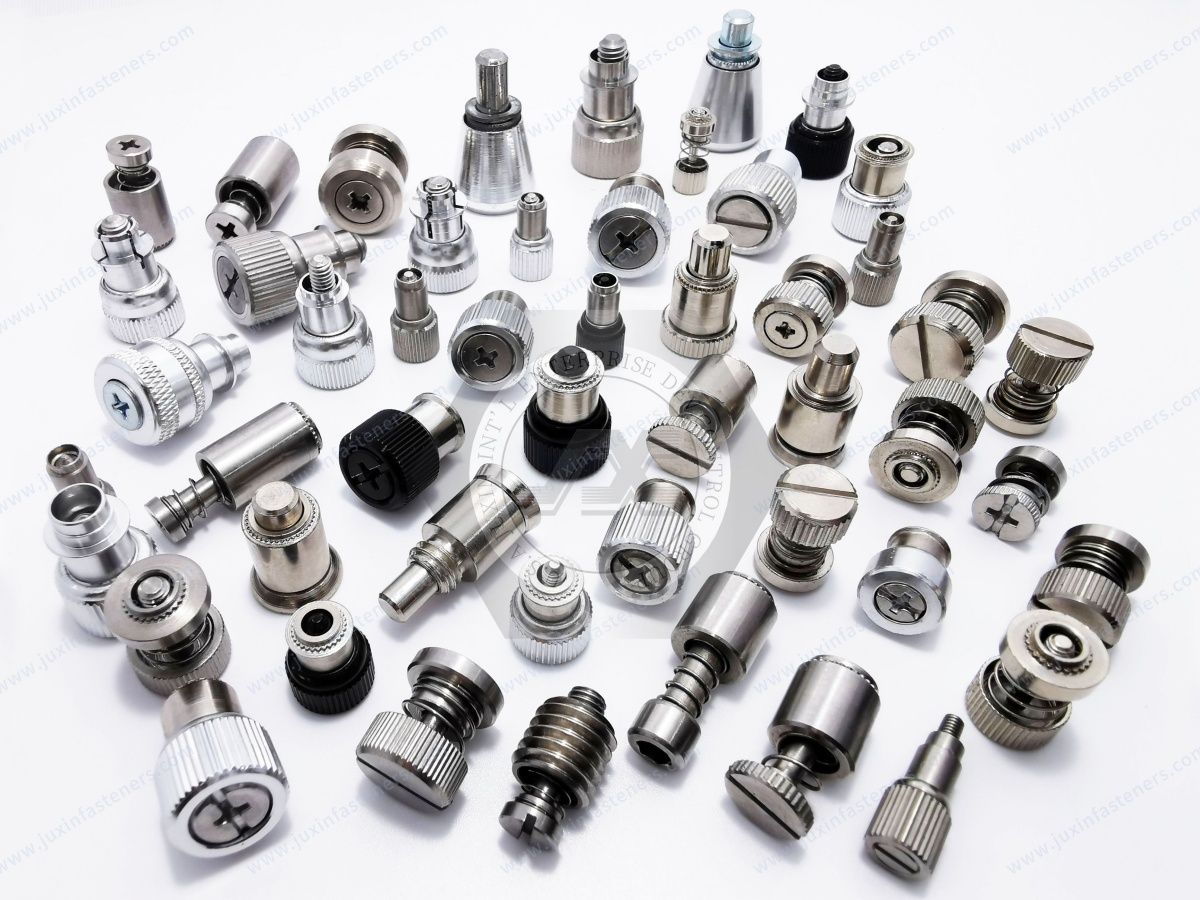
Surface Finishes and Corrosion Protection
The appropriate surface finish depends on the application environment and required corrosion resistance.
Common options may include:
Zinc plating
Stainless steel
Other specified protective coatings
Customer-specified surface treatments
For carbon steel products, zinc plating provides corrosion protection while maintaining an economical solution for many industrial applications.
For demanding environments, customers should specify the required corrosion-resistance level and applicable testing requirements during the RFQ and engineering review process.
Metric, UNC, UNF and Imperial Thread Options
Different global OEM markets require different thread systems.
Juxin can supply self-clinching studs in metric and Unified thread systems, including commonly used configurations such as:
Metric threads
UNC threads
UNF threads
Imperial thread specifications
Common metric thread sizes can be supplied according to customer drawings and application requirements.
For North American OEM applications, UNC and UNF self-clinching studs can be specified according to the required thread standard.
Thread diameter, pitch, stud length, head dimensions, material, plating, and installation-hole requirements can be reviewed against the customer's engineering drawing.
Self-Clinching Stud Applications by Industry
The versatility of self-clinching studs makes them suitable for a wide range of industrial assemblies.
Automotive
Automotive manufacturers use self-clinching studs to create permanent fastening points in sheet metal components.
Typical applications include:
Body panels
Brackets
Interior components
Electrical assemblies
Mounting panels
Underbody components
Automotive electronic systems
For automotive production, the ability to install a threaded stud quickly and consistently can help simplify assembly operations.

EV and Battery Pack
Electric vehicle battery systems require fastening solutions compatible with lightweight aluminum and sheet metal structures.
Self-clinching studs for EV battery enclosures and battery pack assemblies can be used for mounting brackets, electrical components, covers, sensors,
busbar-related components, and other auxiliary assemblies.
Potential applications include:
EV battery enclosures
Battery trays
Battery pack housings
Aluminum sheet assemblies
Electrical mounting brackets
Thermal management components
Battery service components
The fastening design should be evaluated together with the sheet material, thickness, installation force, electrical requirements, and environmental conditions.
Rail Transit
Rail vehicles require durable fastening solutions capable of supporting repeated vibration and demanding service conditions.
Self-clinching studs can be used in:
Interior panels
Electrical cabinets
Equipment brackets
Control systems
Sheet metal housings
HVAC assemblies
Aerospace
Aerospace assemblies place strict requirements on weight, reliability, dimensional control, and material selection.
Depending on the application and specification, self-clinching fastening solutions can be considered for:
Equipment panels
Interior structures
Electrical assemblies
Instrument panels
Lightweight sheet metal components
Material, strength, corrosion resistance, and applicable aerospace specifications should be confirmed during engineering review.
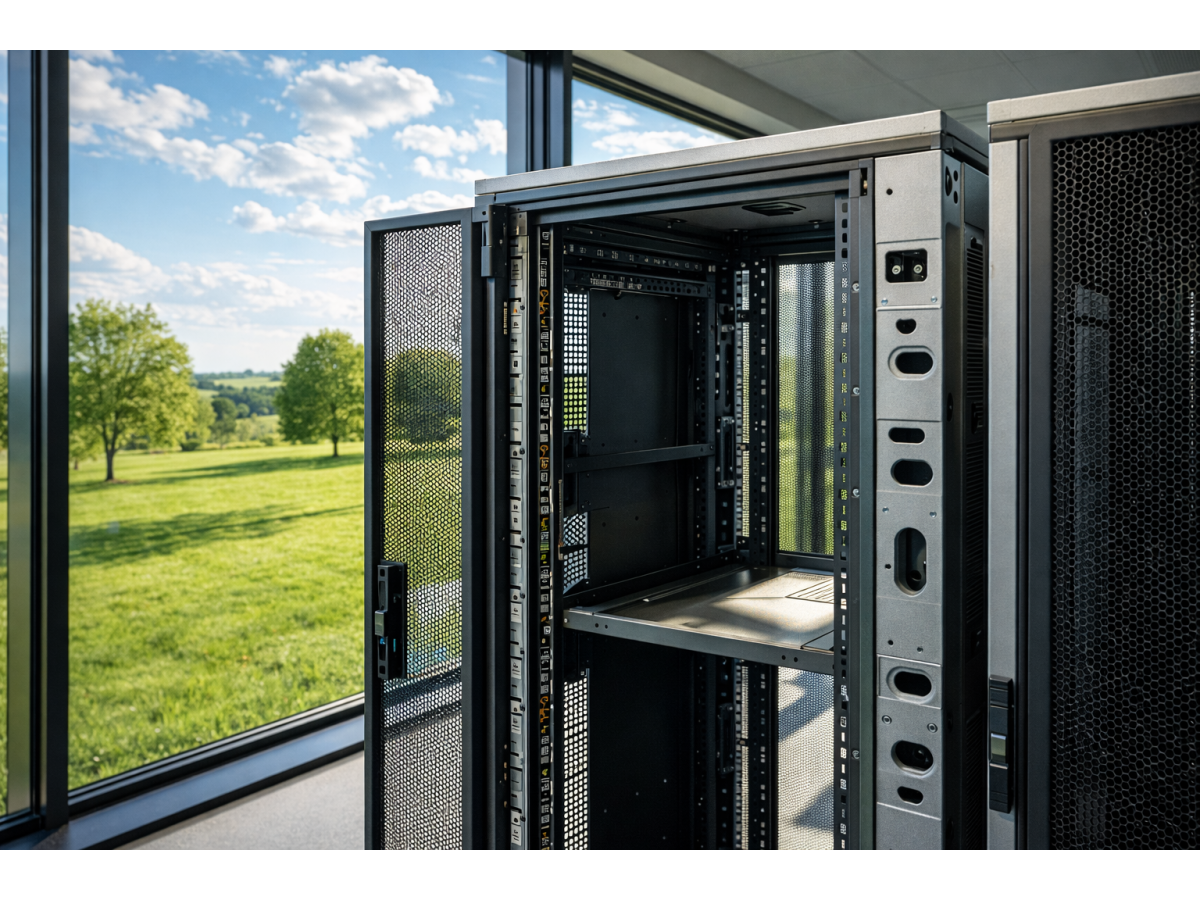
Electrical Cabinets
Electrical cabinets and control panels frequently use thin sheet metal and require multiple mounting points.
Self-clinching studs provide permanent threaded fastening points for:
Circuit protection components
Control modules
Mounting brackets
Cable management components
Grounding-related assemblies
Internal panels
Electrical hardware
This can eliminate the need for loose nuts during assembly and improve production efficiency.
HVAC
HVAC equipment often combines galvanized steel, stainless steel, aluminum, and other sheet materials.
Self-clinching studs can provide mounting points for:
Fans and motors
Electrical components
Control systems
Access panels
Brackets
Internal equipment

Medical Equipment
Medical equipment manufacturers often require clean, reliable, and repeatable fastening solutions for sheet metal housings and internal assemblies.
Applications can include:
Medical equipment housings
Instrument panels
Control cabinets
Mounting brackets
Internal sheet metal components
Stainless steel options can be considered where corrosion resistance is required.
Construction Equipment
Self-clinching studs can be used in sheet metal assemblies for construction and industrial equipment, including:
Equipment panels
Electrical enclosures
Control systems
Machinery housings
Mounting brackets
Machinery
Industrial machinery frequently requires multiple threaded mounting points within fabricated sheet metal housings.
Self-clinching studs can be used for:
Machine guards
Equipment covers
Control panels
Mounting brackets
Internal components
Sheet metal frames
Robotics and Automation
Robotic systems and automated equipment often use lightweight sheet metal panels and compact mechanical assemblies.
Self-clinching studs can provide fixed mounting points for:
Sensors
Cable brackets
Control modules
Protective covers
Electrical components
Mechanical brackets
Sheet Metal Fabrication
For sheet metal fabrication, self-clinching studs provide an efficient alternative to welded studs and tapped holes.
They can be incorporated into laser-cut, punched, CNC-bent, and fabricated sheet metal components.
This makes them suitable for both prototype development and production manufacturing.
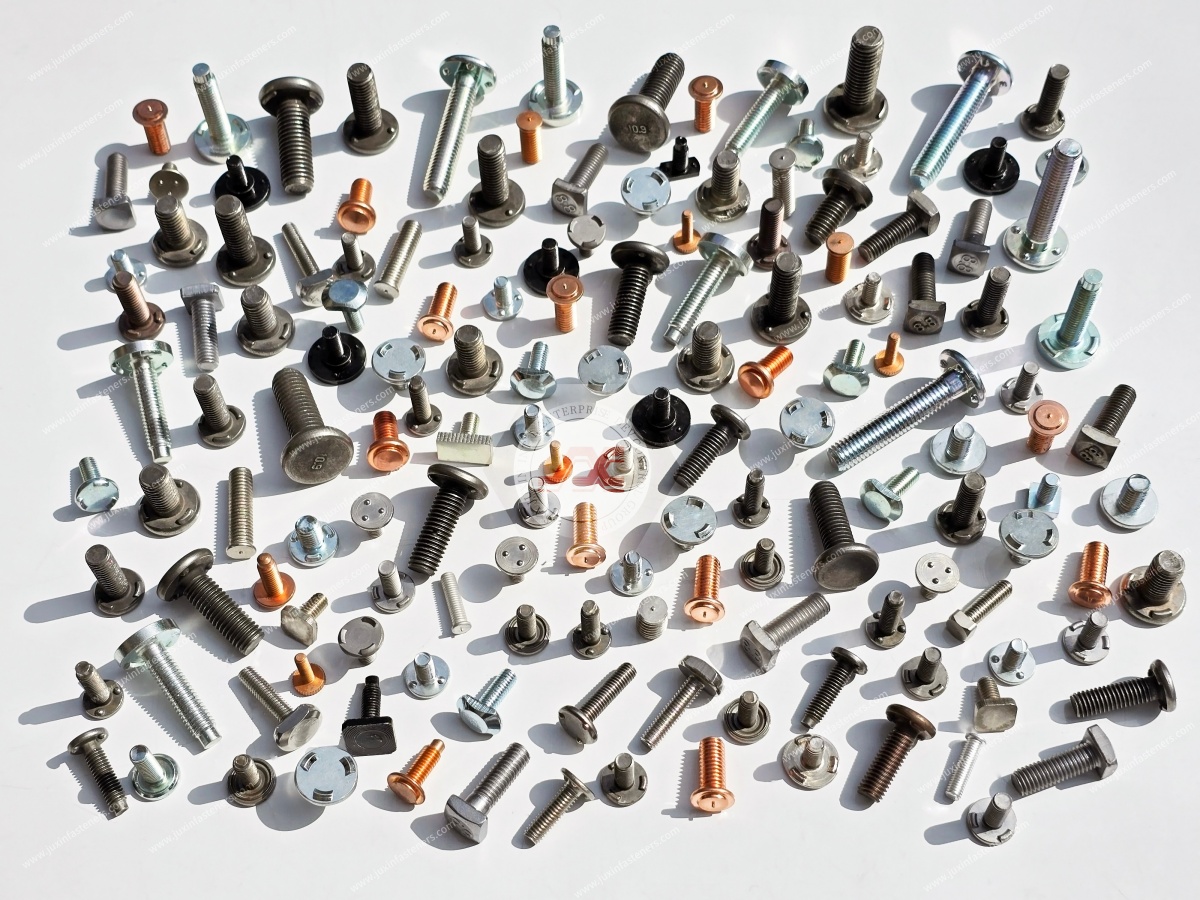
Self-Clinching Studs vs. Welded Studs
The choice between self-clinching studs and welded studs depends on the application and manufacturing process.
Self-clinching studs can offer several production advantages:
Requirement | Self-Clinching Stud | Welded Stud |
Installation method | Mechanical pressing | Welding |
Heat input | No welding heat | Requires heat |
Sheet distortion | Generally minimized | Possible |
Surface damage | Low when properly installed | Welding may affect surface |
Installation speed | Suitable for high-volume assembly | Depends on welding process |
Automation | Highly suitable | Suitable with welding equipment |
Threaded fastening point | Yes | Yes |
For finished or coated sheet metal components where welding heat is undesirable, self-clinching technology can be an effective alternative.
Why Choose Self-Clinching Studs for OEM Production?
For engineers and procurement teams, selecting a fastening solution involves more than simply choosing a thread size.
Important considerations include:
Consistent Installation
Controlled pressing provides repeatable installation compared with manual fastening methods.
Reduced Assembly Steps
The stud becomes a permanent part of the sheet metal component, eliminating the need to handle a separate nut during subsequent assembly.
Space Efficiency
The fastening point is integrated directly into the sheet, making the solution suitable for compact assemblies.
High-Volume Manufacturing
Cold-heading production of round-head designs supports efficient manufacturing for large OEM quantities.
Custom Engineering
Dimensions, thread specifications, material, surface treatment, and packaging can be reviewed according to customer drawings and production requirements.
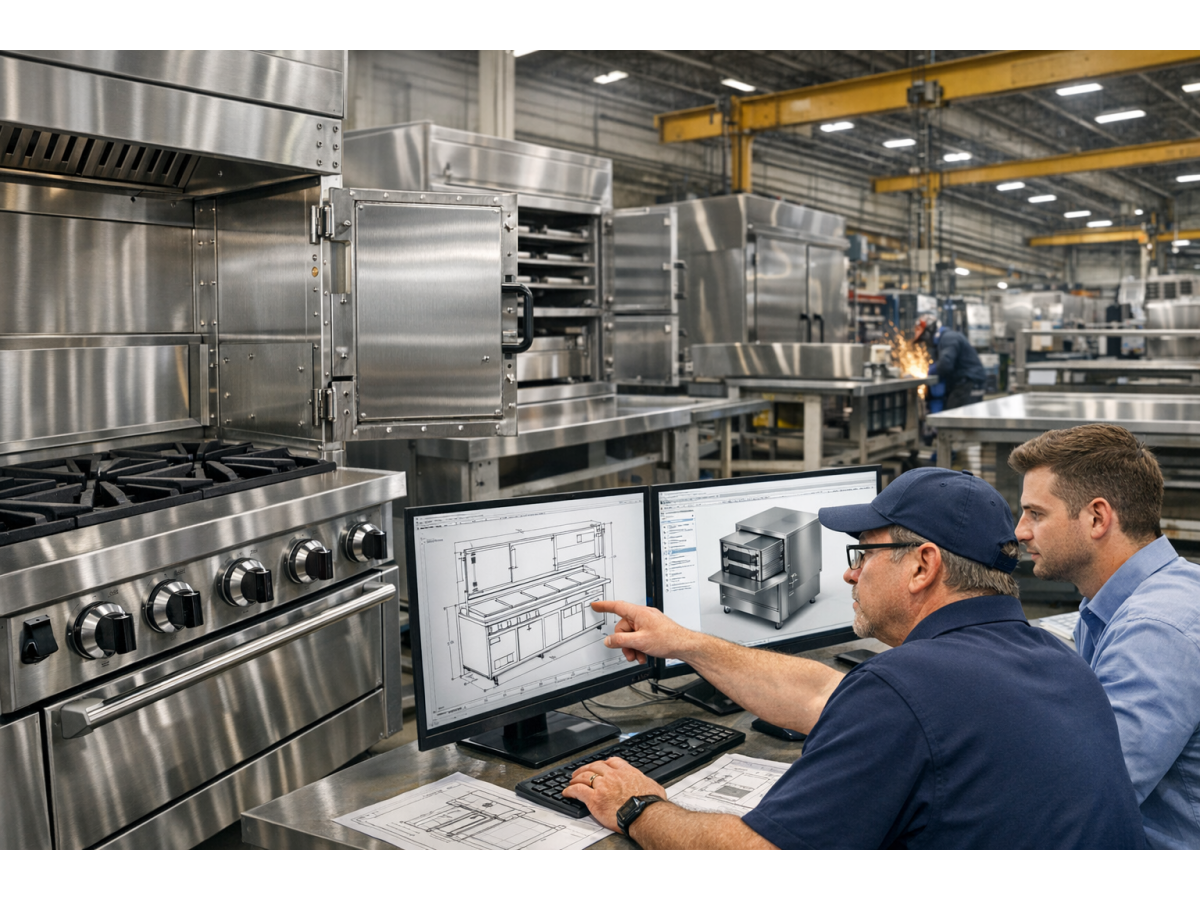
Engineering Considerations Before Ordering
Before specifying a self-clinching stud, engineers should consider the following parameters:
Sheet material
Sheet thickness
Installation-hole diameter
Knurl diameter
Thread size
Thread type
Stud length
Head diameter
Head thickness
Required strength
Anti-rotation requirements
Pull-out requirements
Surface finish
Corrosion resistance
Installation equipment
Production volume
Applicable standards
Environmental requirements
Providing a technical drawing or sample can help the supplier confirm the appropriate fastener geometry and installation requirements.
OEM Custom Self-Clinching Studs
Juxin supports OEM and industrial fastening applications where standard catalog dimensions may not meet the customer's requirements.
Depending on the project, customization may include:
Metric or Unified threads
Custom stud lengths
Custom head dimensions
Round-head or hex-head designs
Carbon steel
SUS304 stainless steel
Heat-treated carbon steel
Zinc-plated finishes
RoHS-compliant material and finishes
Customer-specific packaging
Drawing-based production
Production inspection requirements
For volume production, we can review engineering drawings and detailed specifications before quotation and sample approval.
Quality Control for Self-Clinching Fasteners
Reliable self-clinching performance depends on both fastener dimensional accuracy and proper material control.
Our quality-control process can include inspection of:
Thread dimensions
Stud length
Head dimensions
Knurl dimensions
Material
Hardness
Surface treatment
Plating condition
Dimensional tolerances
Appearance
Installation performance
For OEM projects, inspection requirements can be aligned with customer drawings and agreed quality specifications.
Choosing the Right Self-Clinching Stud
There is no single self-clinching stud configuration suitable for every sheet metal application.
A practical selection process should begin with the application conditions.
For general high-volume sheet metal applications:
Round-head self-clinching studs are typically an economical and efficient choice.
For applications requiring enhanced anti-rotation characteristics:
Hex-head configurations may be considered.
For corrosion-sensitive environments:
SUS304 stainless steel can provide improved corrosion resistance.
For standard industrial applications:
Heat-treated carbon steel with zinc plating can balance strength, corrosion protection, and cost.
For North American OEM applications:
We can supply UNC and UNF thread specifications to meet the required engineering standard.
For European and international applications:
Metric thread configurations are widely available.
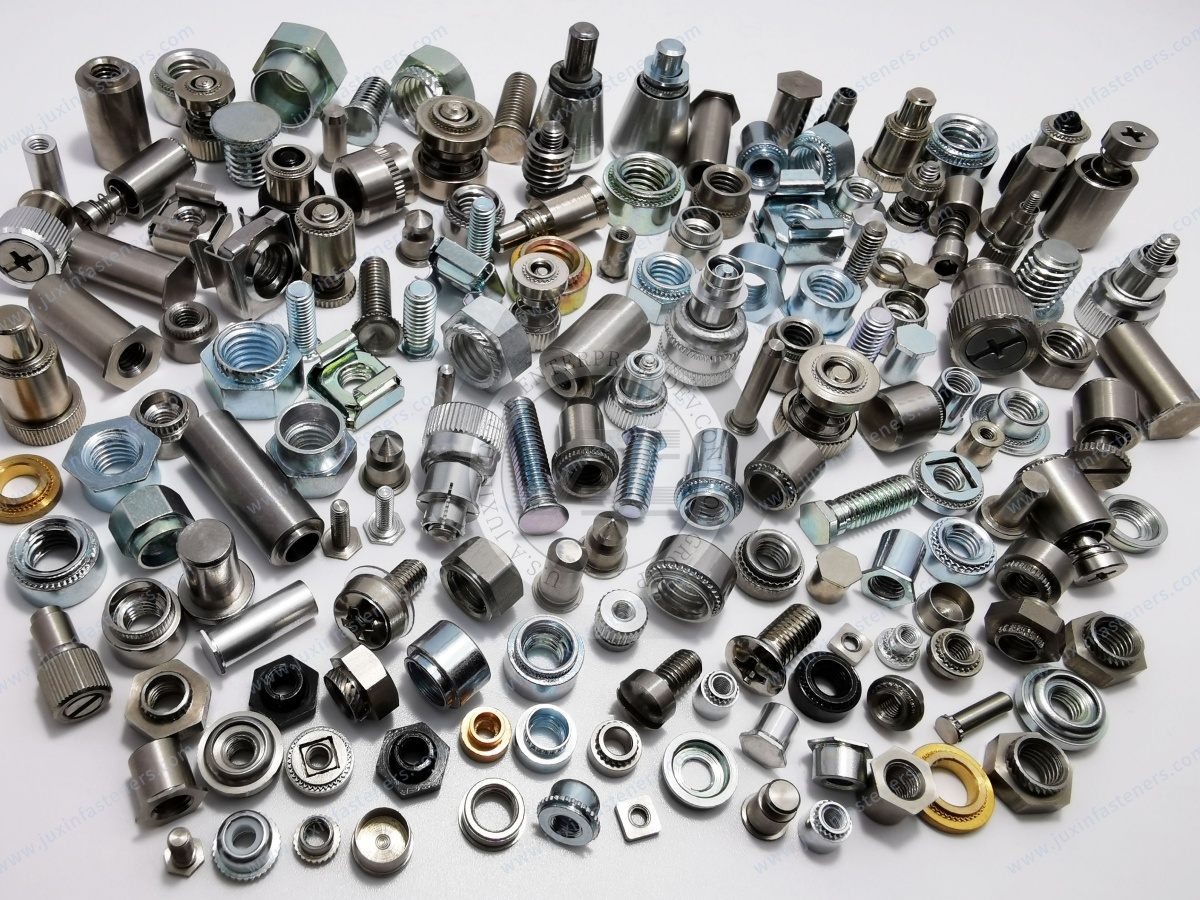
Self-Clinching Studs for Global OEM Applications
From automotive and EV battery systems to electrical cabinets, rail transit, aerospace, HVAC, medical equipment, machinery, robotics, construction equipment,
and sheet metal fabrication, self-clinching studs provide a practical way to create permanent external threads in thin sheet metal.
The right combination of fastener geometry, sheet material, installation-hole size, material, surface finish, thread specification, and installation force is essential for reliable performance.
Juxin Fasteners works with OEM manufacturers, engineers, distributors, and procurement teams to develop and supply
self-clinching studs and sheet metal fastening solutions according to application and drawing requirements.
If you need self-clinching studs for thin sheet metal, press-in studs, or customized self-clinching threaded fasteners, send us your drawing, specification, or application requirements.
Email: info@juxinfasteners.com
Request an OEM Quote
Please provide the following information whenever available:
Product drawing or specification
Thread size and standard
Sheet material and thickness
Required stud length
Material requirement
Surface treatment
Estimated annual or order quantity
Application industry
Inspection or certification requirements
Our engineering and sales team can review the requirements and recommend a suitable self-clinching stud configuration for your application.
 MORE NEWS
Oct. 13, 2026
Contact Us
Tel.:
+86 020 8621 0320
+86 020 3121 6067
E-mail:
Technical Support:
Navigation
SEND INQUIREY