
Call Us
+86 136 6007 9809
Call Us
+86 136 6007 9809

Oct. 22, 2024
In industrial manufacturing, selecting the correct solid rivet size, material, and installation method is essential to achieving a strong, reliable, and long-lasting mechanical connection.
Although rivets are simple fastening components, proper engineering selection directly affects:
Joint strength
Structural reliability
Vibration resistance
Sealing performance
Product service life
Juxin Fasteners provides professional solid rivets, metal rivets, aluminum rivets, steel rivets, stainless steel rivets, brass rivets, and custom riveting solutions for global OEM manufacturers and engineering industries.
Our solid rivet solutions are widely used in:
Automotive
EV Battery Pack
Rail Transit
Aerospace
Shipbuilding
Electrical Cabinets
HVAC Equipment
Medical Equipment
Construction
Machinery
Robotics
Sheet Metal Fabrication
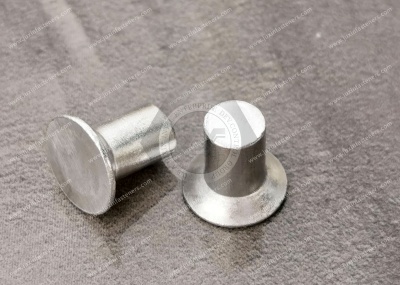
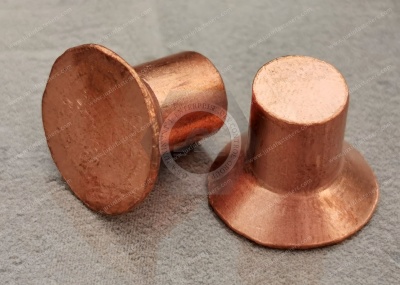
Solid rivets are permanent mechanical fasteners used to join two or more components by deforming the rivet tail during installation.
Unlike screws and bolts, solid rivets create a permanent connection without requiring threads or additional locking components.
A properly installed solid rivet provides:
✔ High shear strength
✔ Excellent vibration resistance
✔ Stable permanent connection
✔ Good sealing performance
✔ Long service life
Solid riveting is widely used in applications where reliability and structural integrity are critical.
Choosing the correct solid rivet diameter is one of the most important factors in engineering design.
The suitable thickness range depends on:
Rivet diameter
Material strength
Plate thickness
Joint design
Application requirements
General recommendations are shown below:
| Rivet Diameter | Recommended Material Thickness |
|---|---|
| 1.6 mm Solid Rivets | 0.5 mm – 3 mm |
| 3.2 mm Solid Rivets | 1 mm – 10 mm |
| 4.8 mm Solid Rivets | 3 mm – 15 mm |
| 6.4 mm Solid Rivets | 4 mm – 20 mm |
| 7.9 mm Solid Rivets | 5 mm – 25 mm |
| 9.5 mm Solid Rivets | 6 mm – 50 mm |
The actual application range should also consider:
Material hardness
Tensile strength requirements
Environmental conditions
Required joint performance
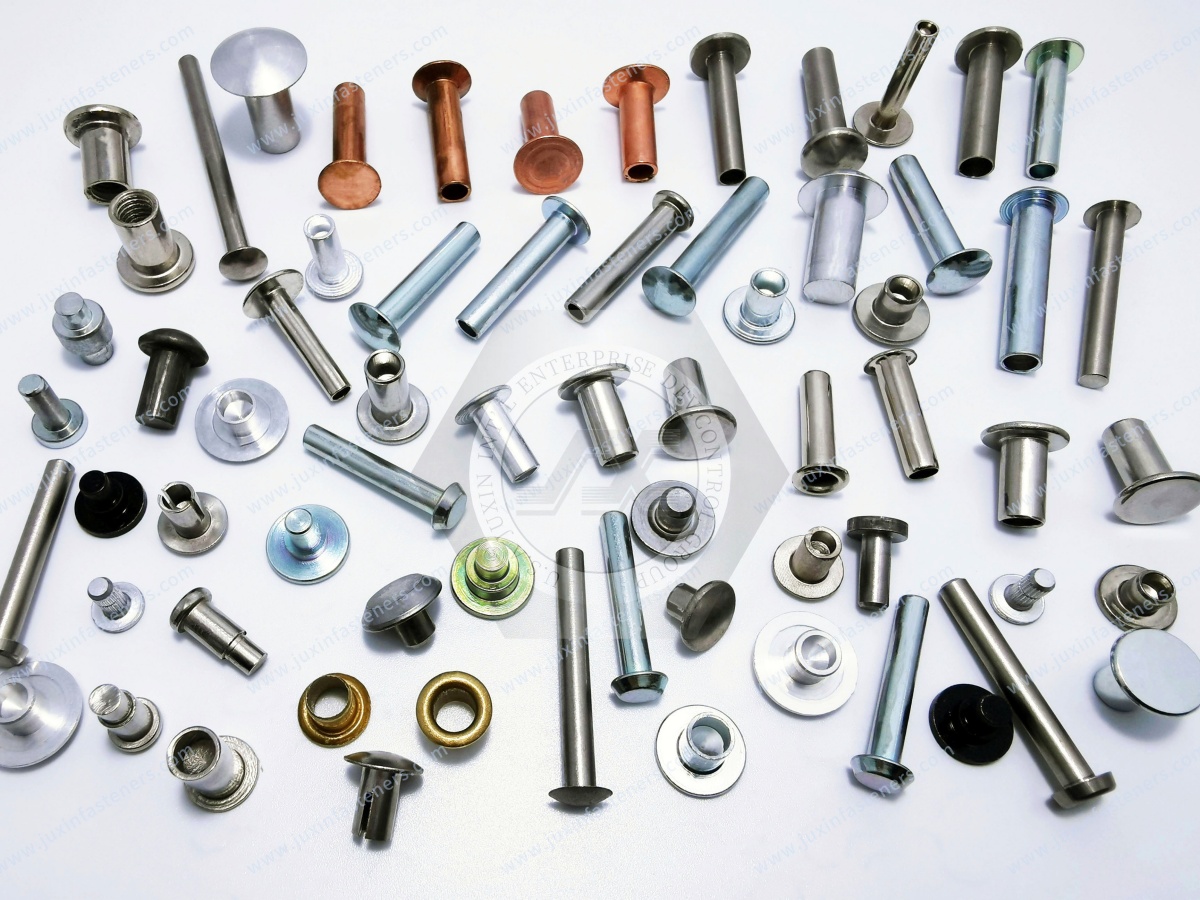
Smaller diameter rivets are suitable for thin sheet materials.
Examples:
Electronic enclosures
Sheet metal panels
Lightweight structures
Larger diameter rivets are recommended for thicker materials requiring higher strength.
Examples:
Construction equipment
Machinery structures
Heavy industrial assemblies
Correct rivet length ensures proper deformation and head formation.
The selected length should allow enough material to form a secure closing head after installation.
Incorrect length may cause:
Weak joint formation
Insufficient locking force
Reduced strength
Excessive deformation
Poor appearance
Installation difficulties
Different materials provide different mechanical and environmental performance.
Common solid rivet materials include:
Aluminum
Stainless Steel
Steel
Brass
Copper
Alloy Materials
Material selection should consider:
Strength requirements
Corrosion environment
Electrical properties
Weight requirements
Solid riveting is the traditional and most widely used method.
Suitable for:
Same thickness materials
Structural connections
High-strength joints
Applications requiring sealing performance
Advantages:
✔ Strong mechanical connection
✔ Excellent durability
✔ Reliable under vibration
Applications:
Automotive structures
Aerospace assemblies
Machinery components
Hollow rivets are suitable for joining materials with different thicknesses.
Advantages:
Elastic deformation capability
Suitable for vibration environments
Lightweight fastening solution
Applications:
Electronics
Consumer equipment
Lightweight assemblies
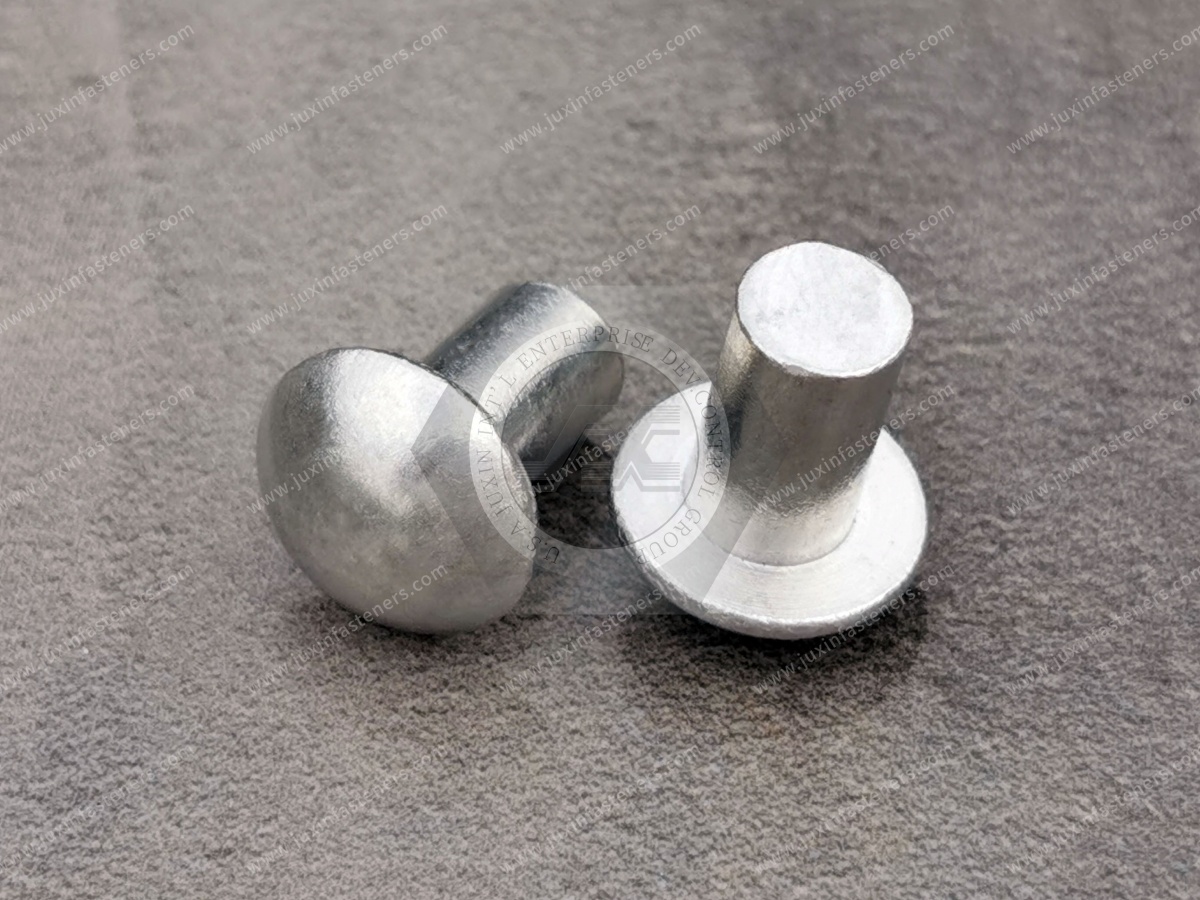
Designed for applications requiring lightweight and reliable fastening.
Features:
✔ Aluminum construction
✔ Low-profile domed head
✔ Lightweight design
✔ Excellent corrosion resistance
Applications:
Aerospace components
Automotive lightweight structures
Electronic equipment
Advantages:
Reduced assembly weight
Good corrosion resistance
Suitable for thin materials
Applications:
EV components
Sheet metal fabrication
Transportation equipment
Steel solid rivets provide excellent mechanical strength.
Features:
✔ High load capacity
✔ Strong shear resistance
✔ Durable construction
Applications:
Machinery
Construction equipment
Industrial structures
Brass rivets provide excellent corrosion resistance and electrical conductivity.
Applications:
Electrical components
Decorative assemblies
Precision equipment
Advantages:
✔ Good conductivity
✔ Stable performance
✔ Attractive appearance
Flat head aluminum rivets provide a smooth surface after installation.
Applications:
Aircraft structures
Automotive panels
Lightweight assemblies
Benefits:
✔ Flush installation
✔ Reduced surface interference
✔ Lightweight solution
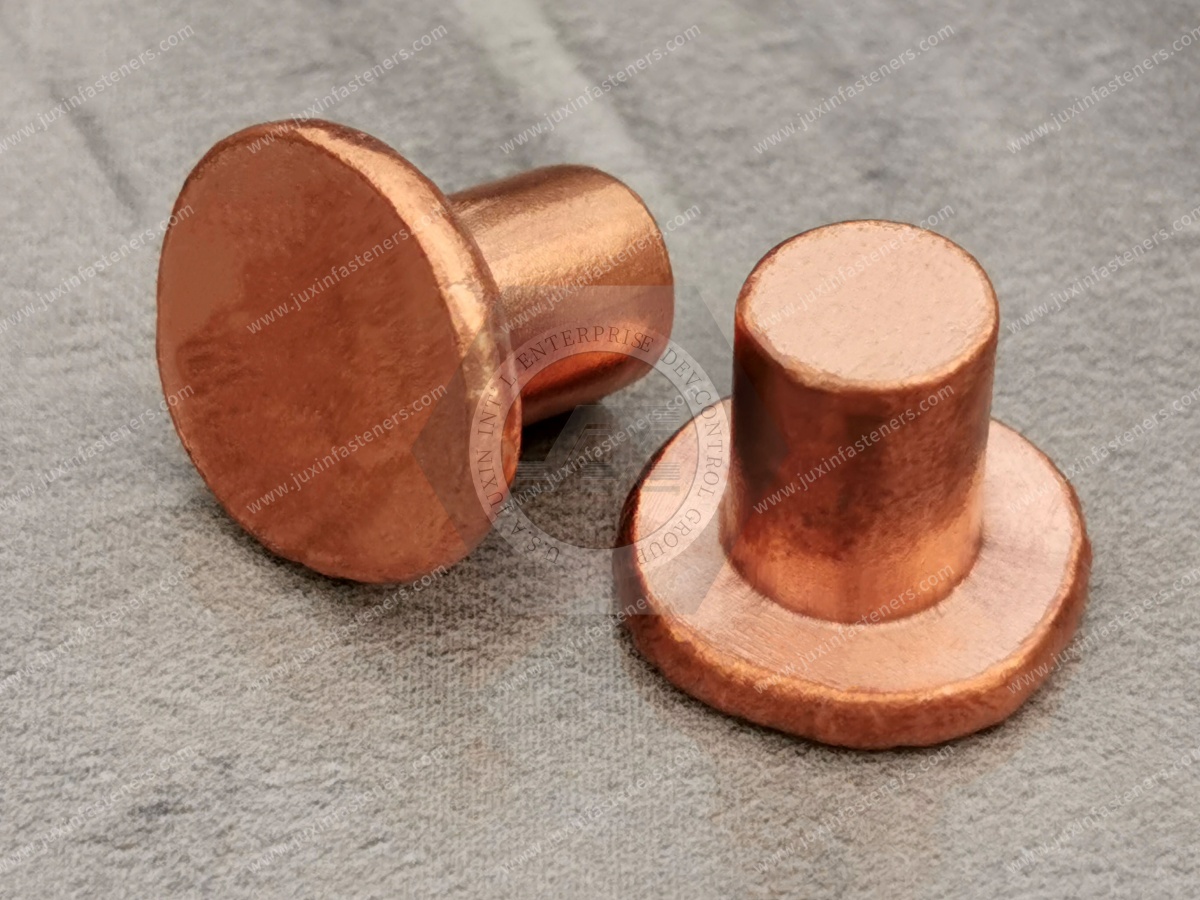
Copper solid rivets are selected for applications requiring conductivity and corrosion resistance.
Applications:
Electrical equipment
Specialized industrial assemblies
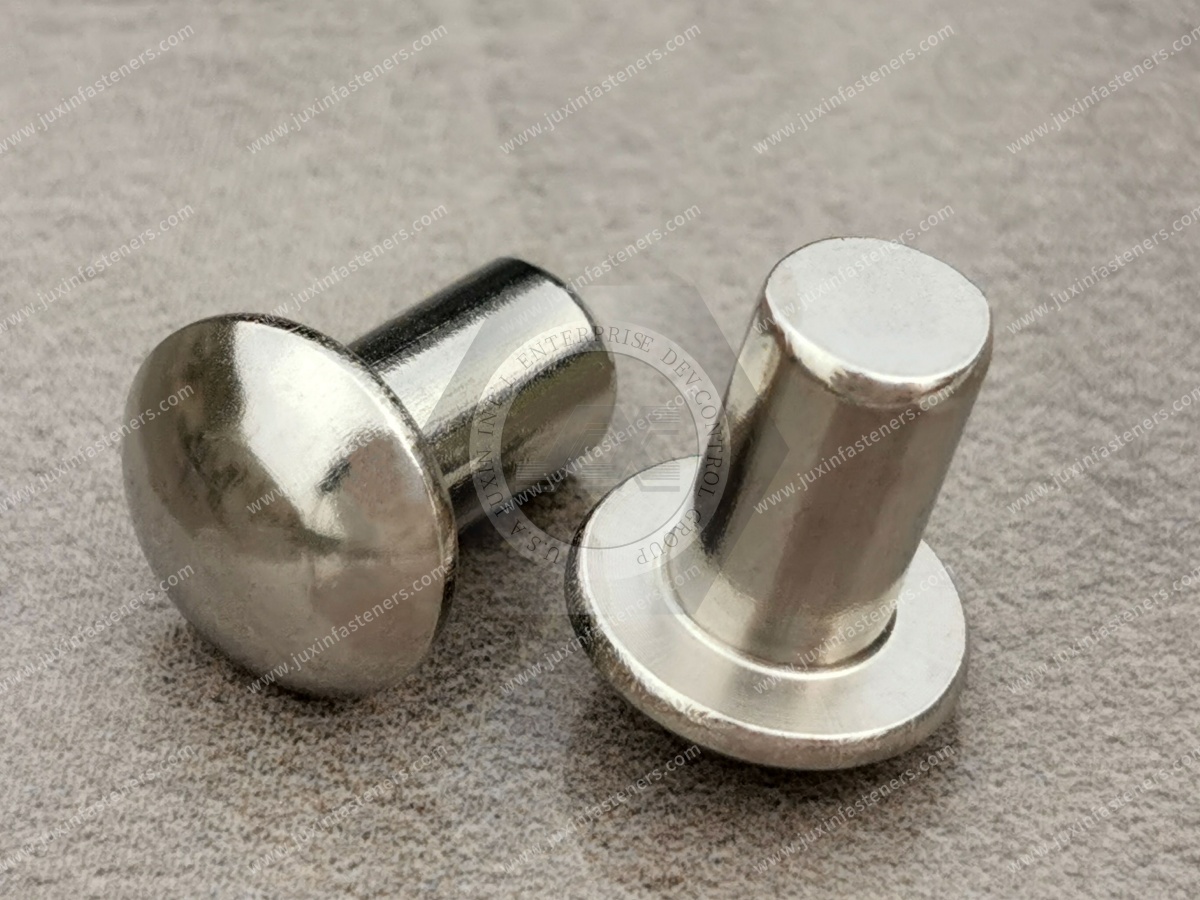
Stainless steel solid rivets provide excellent corrosion resistance.
Features:
✔ 18-8 stainless steel material
✔ Good chemical resistance
✔ Long service life
Applications:
Medical equipment
Food processing machinery
Marine applications
Domed head solid rivets provide increased bearing area and reliable structural performance.
Applications:
Machinery
Automotive assemblies
Industrial equipment
Advantages:
✔ Better load distribution
✔ Strong joint performance
✔ Reliable permanent connection
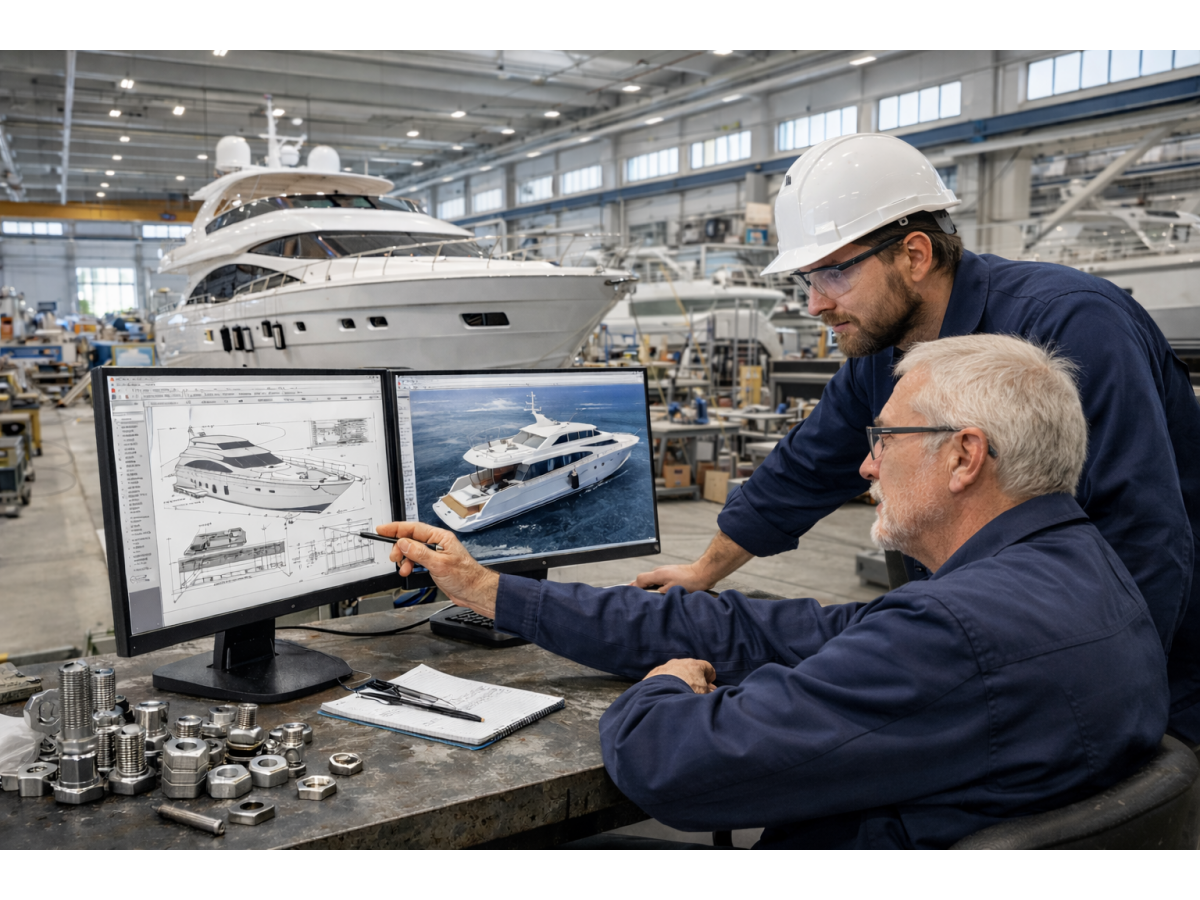
Automotive manufacturers use solid rivets for lightweight and reliable assemblies.
Applications:
Body structures
Interior components
Chassis assemblies
Electronic modules
Recommended:
Aluminum solid rivets
Steel solid rivets
Stainless steel rivets
EV battery systems require lightweight and corrosion-resistant fastening solutions.
Applications:
Battery housings
Aluminum frames
Protection covers
Advantages:
✔ Lightweight connection
✔ High reliability
✔ Excellent vibration resistance
Rail transportation requires durable fastening systems for long-term operation.
Applications:
Interior panels
Equipment structures
Electrical systems
Benefits:
Fatigue resistance
Stable performance
Long service life
Solid riveting remains an important joining technology in aerospace manufacturing.
Applications:
Aircraft panels
Lightweight structures
Precision components
Recommended:
Aluminum solid rivets
Stainless steel rivets
Solid rivets are widely used in metal enclosure manufacturing.
Applications:
Electrical cabinets
Control panels
HVAC sheet metal structures
Benefits:
✔ Fast assembly
✔ Reliable connection
✔ Clean appearance
Medical equipment requires reliable and corrosion-resistant fastening.
Applications:
Equipment housings
Laboratory instruments
Precision devices
Recommended:
Stainless steel rivets
Aluminum rivets
Industrial automation requires permanent and vibration-resistant connections.
Applications:
Robot structures
Machine frames
Automation equipment
Benefits:
✔ Stable connection
✔ High durability
✔ Maintenance-free fastening
Solid rivets provide an efficient alternative joining method for sheet metal manufacturers.
Applications:
Metal cabinets
Enclosures
Fabricated assemblies
Advantages:
No welding required
Faster assembly
Consistent quality
Juxin Fasteners specializes in manufacturing reliable industrial fastening solutions for global customers.
Our capabilities include:
✔ Solid rivet manufacturing
✔ Aluminum rivet production
✔ Stainless steel rivets
✔ Steel and brass rivets
✔ Custom rivet sizes
✔ OEM production support
✔ Engineering application assistance
We help engineers select the correct rivet type, diameter, material, and installation method to achieve optimal connection performance.
Looking for a reliable solid rivet manufacturer, industrial rivet supplier, or custom fastening solution provider?
Contact Juxin Fasteners for technical support and OEM cooperation.
Email: info@juxinfasteners.com
Website: https://www.juxinfasteners.com
 MORE NEWS
Sep. 27, 2026
Sep. 27, 2026
Sep. 27, 2026
Contact Us
Tel.:
+86 020 8621 0320
+86 020 3121 6067
E-mail:
Technical Support:
Navigation
SEND INQUIREY