
Call Us
+86 136 6007 9809
Call Us
+86 136 6007 9809

Oct. 22, 2024
Solid Rivets for Industrial OEMs: Materials, Joint Design, Installation and Custom Supply
Solid rivets are permanent mechanical fasteners used to join metal components by plastically deforming the rivet shank during installation.
A conventional solid rivet consists of a solid shank and a factory-formed head.
During installation, the protruding tail is upset to create a second head that retains the assembled components.
Unlike threaded screws and bolts, solid rivets do not depend on a threaded connection for retention.
Their suitability depends on joint geometry, material properties, installation access and the ability to produce a consistent formed head.
Solid riveting is used in selected automotive assemblies, industrial machinery, sheet metal fabrication, electrical equipment, transportation systems and precision mechanical products.
For design and structural engineers, important considerations include rivet diameter, grip length, shear loading, bearing stress and edge distance.
For production managers and manufacturing engineers, the installation process, tooling access, forming force,
cycle time and inspection requirements determine whether the joint can be manufactured consistently.
For procurement and supplier development teams, material traceability, drawing conformity,
batch consistency and sourcing terms are essential when qualifying a solid rivet supplier.
Juxin Fasteners supplies industrial solid rivets and drawing-specific fastening components for OEM manufacturing.
What Is a Solid Rivet?
A solid rivet is a non-threaded mechanical fastener with a solid cylindrical shank and a preformed head.
During installation, the rivet passes through aligned holes in the components being joined.
The exposed tail is then plastically deformed to create a closing head.
This deformation produces a mechanically retained connection.
Why Solid Rivets Are Used
Potential advantages include:
Permanent mechanical retention
No threaded loosening mechanism
Compact joint geometry
Suitability for selected shear-loaded connections
Compatibility with controlled production riveting
Availability in different head styles and materials
Important Limitation
A solid rivet does not automatically provide superior fatigue performance or greater strength than every alternative fastening method.
The completed joint must be evaluated according to its actual geometry, materials, installation quality and loading conditions.
Solid Rivets Versus Other Rivet Types
Different rivet families are designed for different installation conditions.
| Rivet type | Basic construction | Typical installation consideration |
|---|---|---|
| Solid rivet | Solid shank with preformed head | Usually requires access to both sides |
| Blind rivet | Rivet body with mandrel-based installation | Can be installed from one accessible side |
| Semi-tubular rivet | Partially hollow tail | Tail generally requires less forming force than a comparable solid shank |
| Tubular rivet | Hollow shank | Used in suitable lower-load or specialized assemblies |
| Plastic rivet | Polymer fastening component | Material and retention mechanism vary by design |
Engineering Recommendation
Select the rivet family according to assembly access, joint loading, material thickness and required installation process.
Flush-Mount and Countersunk Solid Rivets
Flush-mount solid rivets are designed for applications requiring a reduced head projection or a surface that is approximately flush after installation.
They generally require an appropriate countersunk or otherwise prepared seating geometry.
Potential Applications
Precision metal panels
Selected transportation equipment
Machinery covers
Electronic housings
Surface-sensitive assemblies
Engineering Considerations
Countersinking removes material from the joined component.
In thin sheet metal, an unsuitable countersink can reduce local bearing area or weaken the surrounding material.
Important Distinction
A flush-head rivet does not automatically produce a perfectly flush finished surface.
The result depends on head geometry, hole preparation, installation and permitted tolerances.
Domed and Round Head Solid Rivets
Domed or round head rivets have a raised preformed head.
They may provide useful bearing geometry for selected metal assemblies.
Potential Applications
Machinery components
Industrial equipment
Fabricated metal structures
Transportation equipment
Mechanical brackets
Engineering Recommendation
Head diameter and bearing performance must be evaluated together with the connected material.
A larger head does not automatically increase the rivet's shear capacity.
Flat Head Solid Rivets
Flat head rivets use a comparatively low-profile or broad head configuration, depending on the applicable product definition.
They may be suitable where the assembly requires a particular bearing surface or head height.
Engineering Recommendation
Use the drawing or applicable dimensional standard to define the exact head style.
Commercial names such as flat head and countersunk head should not be assumed to describe the same geometry.
Solid Rivet Material Selection
The appropriate material depends on the mechanical loads, installation process, corrosion environment and joined components.
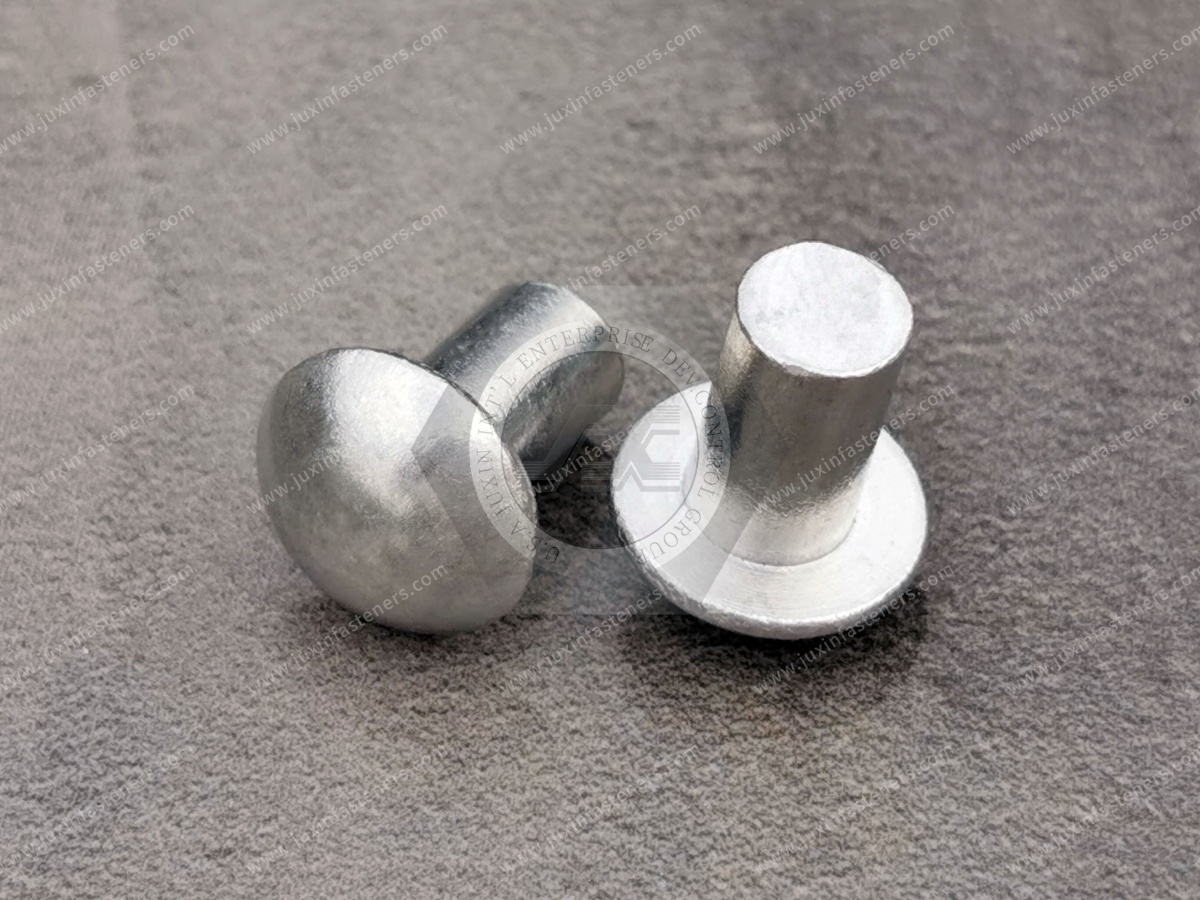
Aluminum Solid Rivets
Aluminum solid rivets are often considered where low weight and suitable forming behavior are important.
Potential Applications
Lightweight equipment panels
Selected automotive components
Electronic housings
Precision sheet metal assemblies
Suitable aerospace-related equipment
Engineering Considerations
Aluminum alloy and temper affect strength and formability.
A stronger aluminum alloy is not automatically easier to rivet.
Important Limitation
Aerospace structural rivets require approved material specifications and qualification.
Generic industrial aluminum rivets should not be presented as approved aircraft structural fasteners.
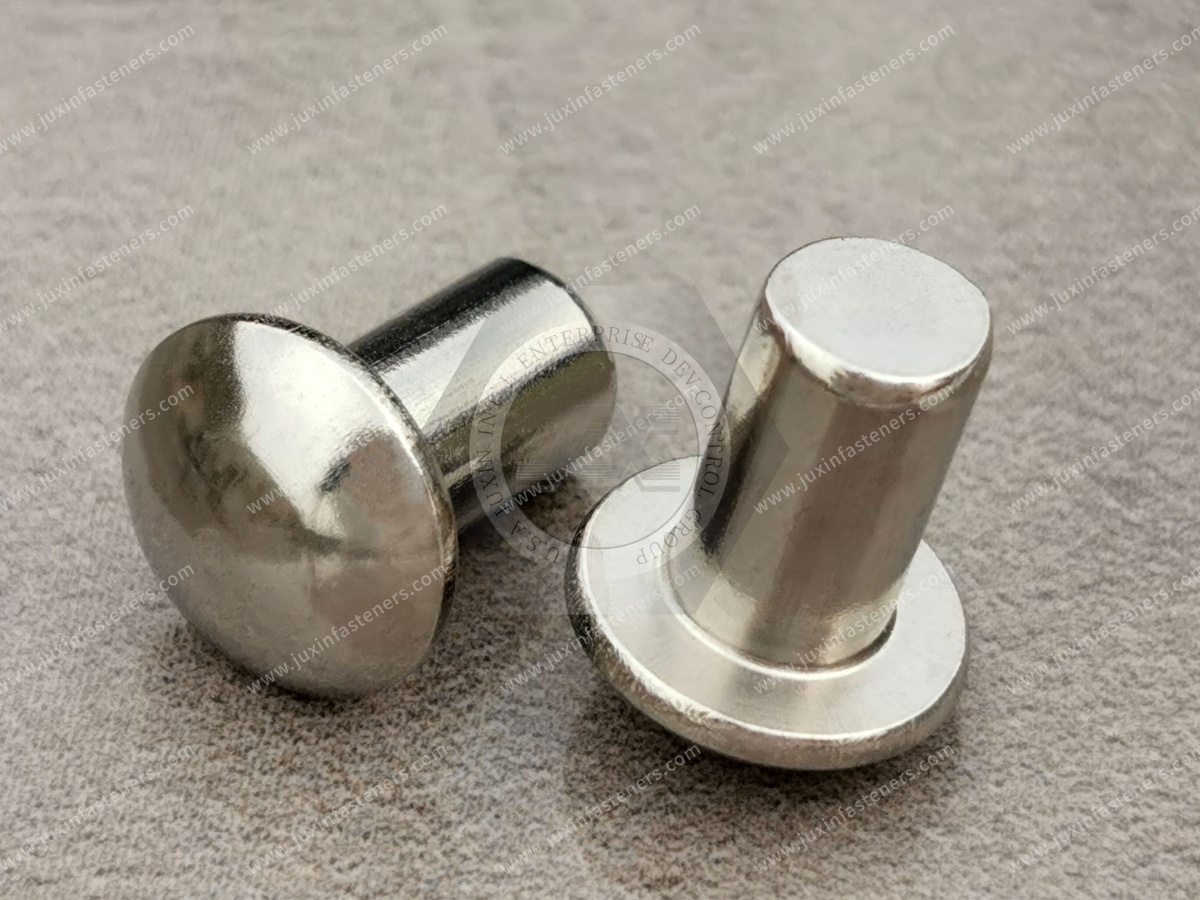
Stainless Steel Solid Rivets
Stainless steel solid rivets may be selected for corrosion-sensitive environments.
Common austenitic stainless steel families include 18-8 compositions, subject to exact material-grade confirmation.
Potential Applications
Food-processing equipment
Medical equipment housings
Industrial machinery
Outdoor equipment
Selected marine-related assemblies
Engineering Considerations
Stainless steel rivets can require greater forming force than softer materials.
The actual alloy, hardness and shank dimensions influence installation behavior.
Corrosion Considerations
Stainless steel is not immune to corrosion.
Crevice conditions, chloride exposure and dissimilar-metal contact must be considered.
Steel Solid Rivets
Carbon steel rivets may provide a suitable balance of strength and cost for industrial applications.
Potential Applications
Heavy machinery
Construction equipment
Industrial structures
Mechanical assemblies
Transportation equipment
Engineering Considerations
The steel grade and condition must be compatible with the required forming process.
Excessive hardness can increase the risk of cracking or incomplete upset formation.
Corrosion Protection
Steel rivets may require an appropriate coating or other protection depending on the environment.
Alloy Steel and Special-Material Rivets
Special alloy rivets may be considered where specific mechanical or environmental properties are required.
The selected material must be compatible with installation deformation.
Engineering Recommendation
Do not specify high-strength alloy material without checking whether the required forming operation can be performed safely and consistently.
Brass Solid Rivets
Brass rivets can be suitable for selected electrical, mechanical and decorative assemblies.
Potential Advantages
Good machinability
Useful corrosion resistance in many environments
Electrical conductivity
Suitable appearance for visible components
Potential Applications
Electrical hardware
Precision instruments
Decorative metal assemblies
Selected electronic equipment
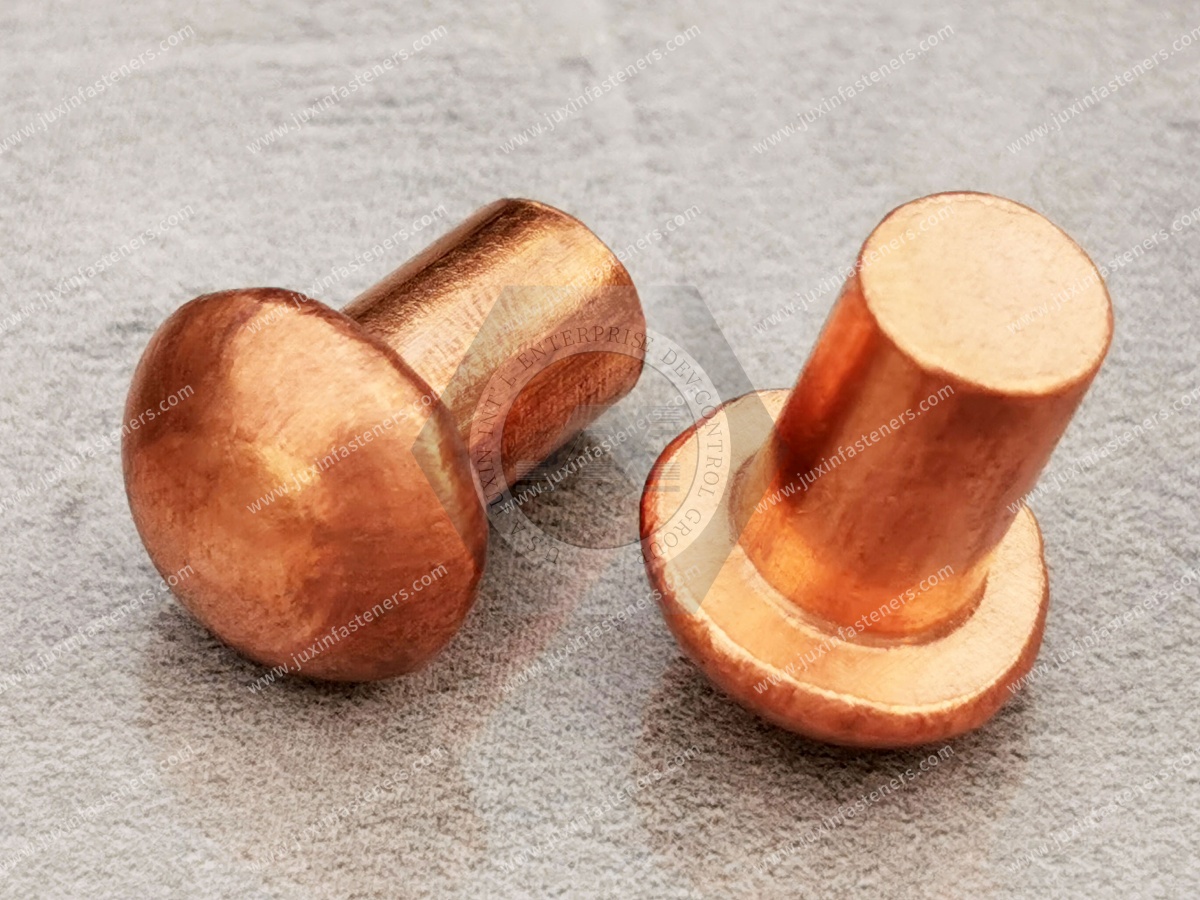
Copper Solid Rivets
Copper rivets may be considered where electrical conductivity or particular forming characteristics are required.
Material specifications should use appropriate international designations, such as applicable ASTM or EN material grades.
Engineering Recommendation
Where electrical performance is important, evaluate contact resistance and the complete connection rather than relying solely on the base-metal conductivity.
Plastic Rivets: A Different Fastening Category
Plastic rivets are used in some electronic, automotive interior and lightweight assemblies.
They are not mechanically equivalent to metal solid rivets.
Their retention may depend on deformation, snap-fit geometry, heat staking or another installation method.
Potential Applications
Automotive interior trim
Electronic housings
Lightweight equipment
Electrically insulating assemblies
Important Limitation
Plastic rivets should not be substituted for load-bearing metal solid rivets without application-specific engineering verification.
How to Select Solid Rivet Diameter
Rivet diameter is a critical joint design parameter.
It influences:
Rivet shear area
Bearing pressure
Hole size
Installation force
Edge distance
Joint weight
Available space
Shear Area
For a circular solid shank, the nominal cross-sectional area is:
A = πd² / 4
Where:
A = nominal shank cross-sectional area
d = nominal shank diameter
This geometric area can be used as one input in joint calculations.
However, allowable joint load requires suitable material properties, design factors and consideration of the actual shear plane.
Single-Shear and Double-Shear Joints
A rivet in a single-shear joint has one principal shear plane.
A double-shear joint may have two shear planes, depending on the assembly configuration.
The actual load distribution and joint geometry must be considered.
Engineering Recommendation
Do not choose rivet diameter from a generic industry range alone.
Use the applicable product standard, design requirements and validated joint calculations.
Rivet Head Diameter and Bearing Performance
The factory head and formed closing head help retain the connected components.
Head geometry affects local contact pressure and pull-through resistance.
Important Correction
Rivet head diameter is not determined by multiplying the rivet shank length by a universal factor.
Head dimensions are related to the specified rivet diameter, head style and applicable product standard or drawing.
Engineering Recommendation
Specify the exact head geometry required for the joint.
Solid Rivet Length and Grip Selection
Rivet length must accommodate the total thickness of the joined components and provide sufficient material for forming the closing head.
The total thickness of the assembled components is commonly called the grip.
A simplified selection relationship is:
Required Rivet Length = Grip + Forming Allowance
The required forming allowance depends on:
Rivet diameter
Head style
Material
Installation method
Required closing-head geometry
Why Incorrect Length Causes Problems
Too Short
The tail may not contain sufficient material to form an acceptable closing head.
Too Long
Excessive protrusion may contribute to buckling, bending or an improperly formed closing head.
Engineering Recommendation
Use the approved rivet specification and validated forming process to establish the required length.
Do not apply a universal length allowance to every material and rivet type.
Hole Diameter and Installation Clearance
Rivet-hole dimensions affect alignment, shank deformation and joint performance.
Oversized Holes
Excessive clearance may reduce the effectiveness of load transfer and contribute to joint movement or poor forming behavior.
Undersized Holes
Insufficient clearance can make insertion difficult and may damage the rivet or connected components.
Hole Quality
Important considerations include:
Hole diameter
Roundness
Alignment
Burr condition
Surface damage
Hole preparation method
Engineering Recommendation
Specify the hole dimensions and tolerances for the actual rivet and joint design.
Edge Distance and Rivet Pitch
Edge distance is the distance between the rivet-hole center and the relevant component edge.
Rivet pitch is the spacing between adjacent rivets.
Both influence load distribution and the amount of surrounding material available to resist failure.
Insufficient Edge Distance
Potential consequences include:
Edge tearing
Local deformation
Reduced bearing capacity
Cracking in susceptible materials
Incorrect Rivet Pitch
Poor spacing may create unfavorable load distribution or manufacturing difficulties.
Engineering Recommendation
Evaluate edge distance and pitch according to the joint loading, sheet material and applicable engineering requirements.
Solid Rivet Joint Failure Modes
A riveted joint can fail in several ways.
Rivet Shear
The rivet shank fails under transverse loading.
Bearing Failure
The joined material deforms excessively around the rivet hole.
Edge Tear-Out
The material between the hole and the panel edge fails.
Net-Section Failure
The remaining material across a line of holes is insufficient to carry the applied load.
Head Pull-Through
The rivet head or closing head pulls through the connected material.
Fatigue Failure
Repeated loading causes progressive damage in the rivet or surrounding structure.
Engineering Recommendation
Design the complete joint rather than evaluating rivet tensile strength alone.
Installation Methods for Solid Rivets
Solid rivets can be installed using different forming processes.
Press Riveting
A controlled press applies force to form the rivet tail.
This process may be suitable for repeatable industrial assembly where tooling access is available.
Pneumatic Riveting
Pneumatic equipment can be used for selected riveting operations.
Process suitability depends on rivet size, material and assembly requirements.
Orbital Riveting
Orbital riveting uses a controlled forming motion to deform the rivet tail.
It may be useful for selected precision assemblies.
Impact Riveting
Impact-based processes may be used where appropriate, but installation energy and tooling must be controlled.
Important Production Consideration
The best installation method depends on:
Rivet material
Rivet diameter
Assembly thickness
Tool access
Required head geometry
Production volume
Cosmetic requirements
Joint performance
Engineering Recommendation
Validate the installation method using representative production components.
Controlled Riveting Force and Head Formation
A properly formed closing head is essential to a reliable riveted connection.
Insufficient Forming Force
Possible results include:
Incomplete closing head
Loose joint
Poor seating
Inadequate material deformation
Excessive Forming Force
Possible results include:
Rivet cracking
Panel distortion
Surface damage
Excessive local deformation
Tool Misalignment
Misaligned tooling can produce an uneven closing head or bend the rivet shank.
Production Recommendation
Control the relevant forming parameters and verify the resulting head geometry and joint condition.
Riveting Process Quality Control
Quality control should address both the supplied rivet and the installed joint.
Incoming Rivet Inspection
Potential checks include:
Material identification
Shank diameter
Rivet length
Factory head dimensions
Surface condition
Burrs
Coating requirements
Installed Joint Inspection
Potential checks include:
Closing-head geometry
Rivet seating
Panel distortion
Alignment
Cracks
Joint movement
Surface damage
Mechanical Testing
Depending on the application, testing may include:
Shear testing
Tensile or pull testing
Joint fatigue evaluation
Corrosion testing
Application-specific functional testing
Testing methods and acceptance criteria must be agreed upon for the actual product and application.
Production Recommendation
Where inspection is critical, define measurable acceptance criteria rather than relying solely on a visual statement that the rivet looks acceptable.
Solid Rivets for Automotive Manufacturing
Solid rivets may be suitable for selected automotive metal assemblies.
Potential applications include:
Mechanical brackets
Interior components
Equipment housings
Selected body-related assemblies
Electronic equipment mounting
Important Limitation
Safety-critical automotive connections require approved engineering specifications and qualification.
A generic industrial rivet should not be substituted into a safety-critical vehicle structure without authorization.
EV Battery Enclosures and Electronics
Selected riveting solutions may be considered for:
Battery management system housings
Electrical module enclosures
Aluminum equipment covers
Auxiliary brackets
Suitable sheet metal assemblies
Engineering Considerations
Battery-related assemblies may require additional evaluation of:
Electrical isolation
Corrosion compatibility
Thermal expansion
Vibration
Sealing
Service requirements
Important Limitation
A solid rivet does not automatically provide electrical insulation or a sealed joint.
Rail Equipment and Transportation
Solid rivets may be considered for selected rail equipment assemblies.
Potential applications include:
Interior equipment
Electrical cabinets
Mechanical brackets
Equipment housings
Qualification requirements depend on the component and its safety function.
Aerospace-Related Applications
Solid riveting is widely associated with aircraft manufacturing, but aerospace structural rivets are governed by dedicated specifications and qualification requirements.
Generic industrial solid rivets should not be represented as approved aircraft structural fasteners.
Engineering Recommendation
For aerospace-related inquiries, confirm the exact material, drawing, specification and approval requirements before evaluating supply feasibility.
Shipbuilding and Marine Equipment
Riveted joints have historical and specialized applications in marine structures and equipment.
Potential uses include:
Marine equipment assemblies
Mechanical brackets
Selected lap joints
Industrial shipboard components
Marine Design Considerations
Corrosion exposure
Dissimilar-metal contact
Joint sealing
Fatigue loading
Inspection access
Important Limitation
Marine structural applications may require specific class rules and approved joining procedures.
Electrical Cabinets and HVAC Equipment
Solid rivets may be used in suitable:
Electrical enclosures
Control cabinets
Ventilation equipment
HVAC housings
Sheet metal brackets
Production Considerations
Solid riveting generally requires access to both sides of the joint.
If rear access is unavailable, another fastening method may be more suitable.
Medical Equipment and Precision Instruments
Solid rivets may be considered for selected equipment housings and mechanical assemblies.
Material cleanliness, corrosion resistance and applicable regulatory requirements must be evaluated.
Machinery and Robotics
Potential applications include:
Machine guards
Equipment brackets
Automation assemblies
Precision mechanisms
Industrial housings
Engineering Considerations
Where maintenance or component replacement is expected, a removable threaded fastener may be more suitable than a permanent rivet.
Sheet Metal Fabrication
Solid rivets can provide permanent mechanical connections without welding in suitable sheet metal assemblies.
However, the process still requires appropriate hole preparation, tooling access and forming control.
Engineering Recommendation
Compare the total manufacturing process rather than assuming that riveting always reduces assembly cost.
Solid Rivets Versus Welding and Threaded Fasteners
Each joining method has different advantages.
Solid Rivets
Suitable where permanent mechanical retention and controlled forming are desired.
Welding
May be suitable where the materials and structure permit a welded connection.
Threaded Fasteners
Suitable where removable connections, maintenance access or adjustable clamping are required.
Blind Rivets
May be preferable where only one side of the assembly is accessible.
Selection Recommendation
Consider:
Joint loading
Access
Materials
Production volume
Maintenance
Corrosion
Inspection
Total assembly cost
OEM Custom Solid Rivet Manufacturing
Drawing-specific rivets may require custom geometry or materials.
Potential requirements include:
Shank diameter
Rivet length
Head style
Head diameter
Head height
Material grade
Hardness or temper
Surface finish
Dimensional tolerances
Packaging
Manufacturing feasibility and production method must be confirmed for the actual drawing.
Cold Forming Versus Machining
Depending on geometry, material and quantity, solid rivets may be produced using forming or machining processes.
The appropriate process depends on dimensional requirements, production volume and economics.
Engineering Recommendation
For OEM projects, provide both the technical drawing and estimated annual volume to support manufacturing-method evaluation.
Supplier Development and Bulk Procurement
Purchasing managers and supply chain teams should evaluate more than nominal rivet size.
A complete supplier qualification may include:
Drawing conformity
Material specification
Head geometry
Dimensional inspection
Surface treatment
Production process consistency
Inspection documentation
Sample approval
Packaging
MOQ
Lead time
Annual demand
Change control
Alternative Supplier Qualification
When replacing an existing rivet supplier, verify that the proposed product meets the complete specification and can be installed using the approved process.
Matching nominal diameter and length alone may not establish interchangeability.
Frequently Asked Questions
What is a solid rivet?
A solid rivet is a permanent mechanical fastener with a solid shank and factory-formed head. Its tail is deformed during installation to create a closing head.
Do solid rivets require access to both sides?
Conventional solid riveting generally requires access to both sides for supporting and forming the joint.
How is solid rivet length selected?
Length depends on the total grip thickness and the material required to form the closing head.
Are solid rivets stronger than blind rivets?
Not universally. Strength depends on rivet design, material, size, installation and joint configuration.
Can solid rivets be used in aluminum sheet metal?
Yes, where the rivet material, geometry and installation process are compatible with the sheet and joint requirements.
Are stainless steel solid rivets corrosion-proof?
No. Stainless steel can corrode under certain environmental conditions.
Can solid rivets be used in EV battery enclosures?
They may be suitable for selected assemblies, subject to electrical, mechanical, corrosion and safety validation.
What is the difference between a flush rivet and a round head rivet?
A flush rivet is designed for a low-profile or countersunk installation, while a round head rivet has a raised head geometry.
Do solid rivets prevent vibration loosening?
They do not have a threaded loosening mechanism, but the joint can still experience movement, deformation or fatigue under unsuitable loading.
Can Juxin Fasteners supply custom solid rivets?
Juxin Fasteners welcomes drawing-specific solid rivet inquiries. Material, dimensions, process, inspection and supply feasibility require confirmation.
Juxin Fasteners: Solid Rivets and Industrial Riveting Components
Juxin Fasteners supplies industrial rivets and fastening components for OEM manufacturing.
Relevant product categories include:
Stainless steel solid rivets
Aluminum solid rivets
Carbon steel solid rivets
Brass solid rivets
Copper solid rivets
Flush-mount and countersunk rivets
Round and domed head rivets
Flat head rivets
Drawing-specific custom rivets
Material grades, dimensions, coatings, testing, MOQ and lead times are subject to technical and commercial confirmation.
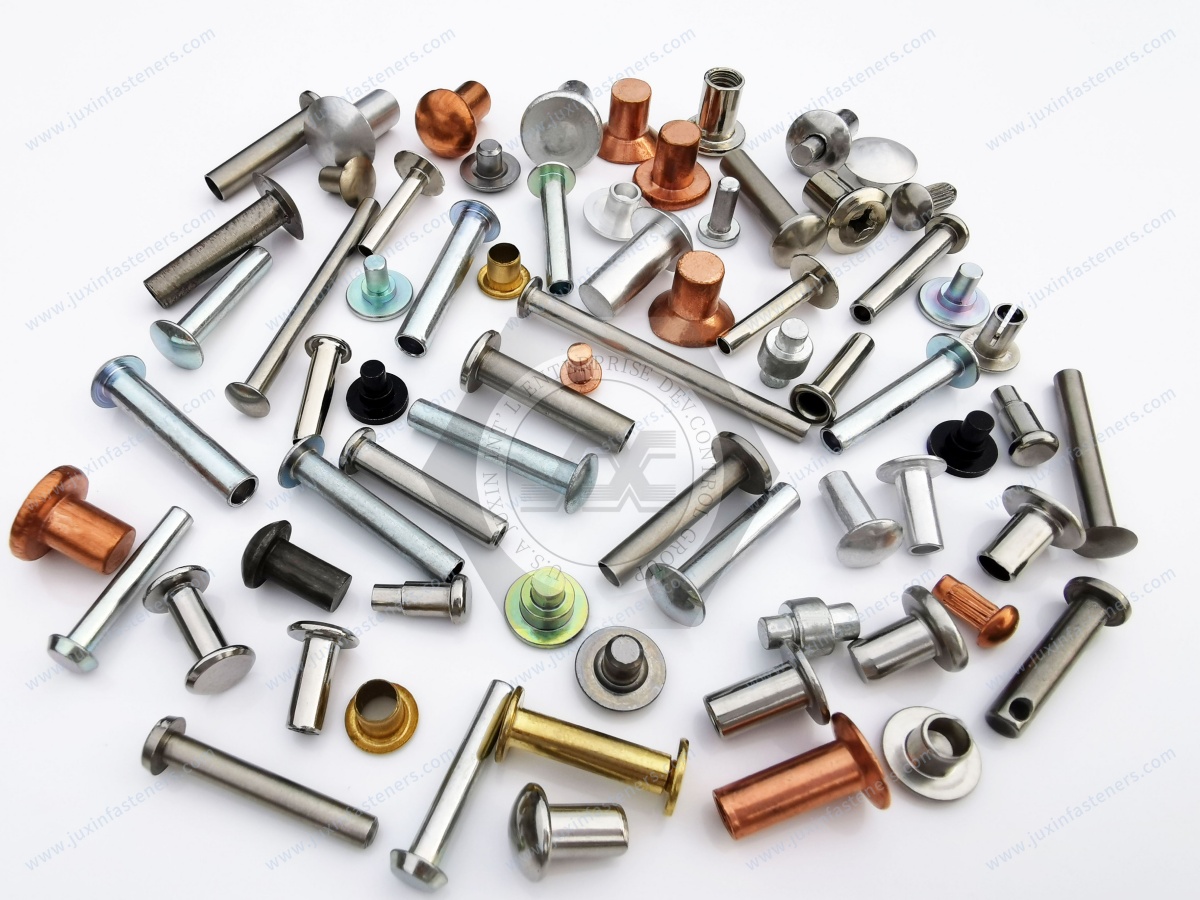
Request a Quote for Solid Rivets and Custom OEM Riveting Solutions
Are you developing a permanent metal joint, sourcing custom solid rivets or qualifying a new industrial rivet supplier?
Juxin Fasteners welcomes inquiries from OEM manufacturers, structural engineers, mechanical engineers, manufacturing engineers,
production managers, purchasing specialists and supplier development teams.
For technical review and quotation, please provide:
Rivet drawing and revision + head style + shank diameter + length + material grade + hardness or temper + coating + joint material and total grip thickness
+ hole dimensions + installation method + mechanical performance requirements + inspection documentation + prototype quantity + annual demand + packaging + target delivery schedule.
Company: Juxin Fasteners
Website: https://www.juxinfasteners.com/
Email: info@juxinfasteners.com
Send your solid rivet drawings and OEM RFQ to Juxin Fasteners for technical confirmation, product selection and quotation.
Contact Us
Tel.:
+86 020 8621 0320
+86 020 3121 6067
E-mail:
Technical Support:
Navigation
SEND INQUIREY



