
Call Us
+86 136 6007 9809
Call Us
+86 136 6007 9809

Oct. 22, 2023
Bearing nut lock washers are mechanical locking components used with compatible slotted bearing nuts, shaft locknuts and threaded shaft assemblies to help prevent unintended rotation of the locknut after installation.
Unlike general-purpose spring washers, these components typically rely on positive mechanical locking.
A common locking architecture uses:
shaft keyway → internal washer tongue → washer body → external locking tab → slotted locknut
The internal tongue restrains the washer relative to the shaft, while one external tab is bent into a compatible slot or locking feature of the nut.
This creates a direct mechanical anti-rotation path between the shaft and the locknut.
JUXIN FASTENERS supplies standard and custom bearing lock washers, shaft locking washers, tab washers, retaining components and drawing-based stamped fasteners for industrial OEM applications.
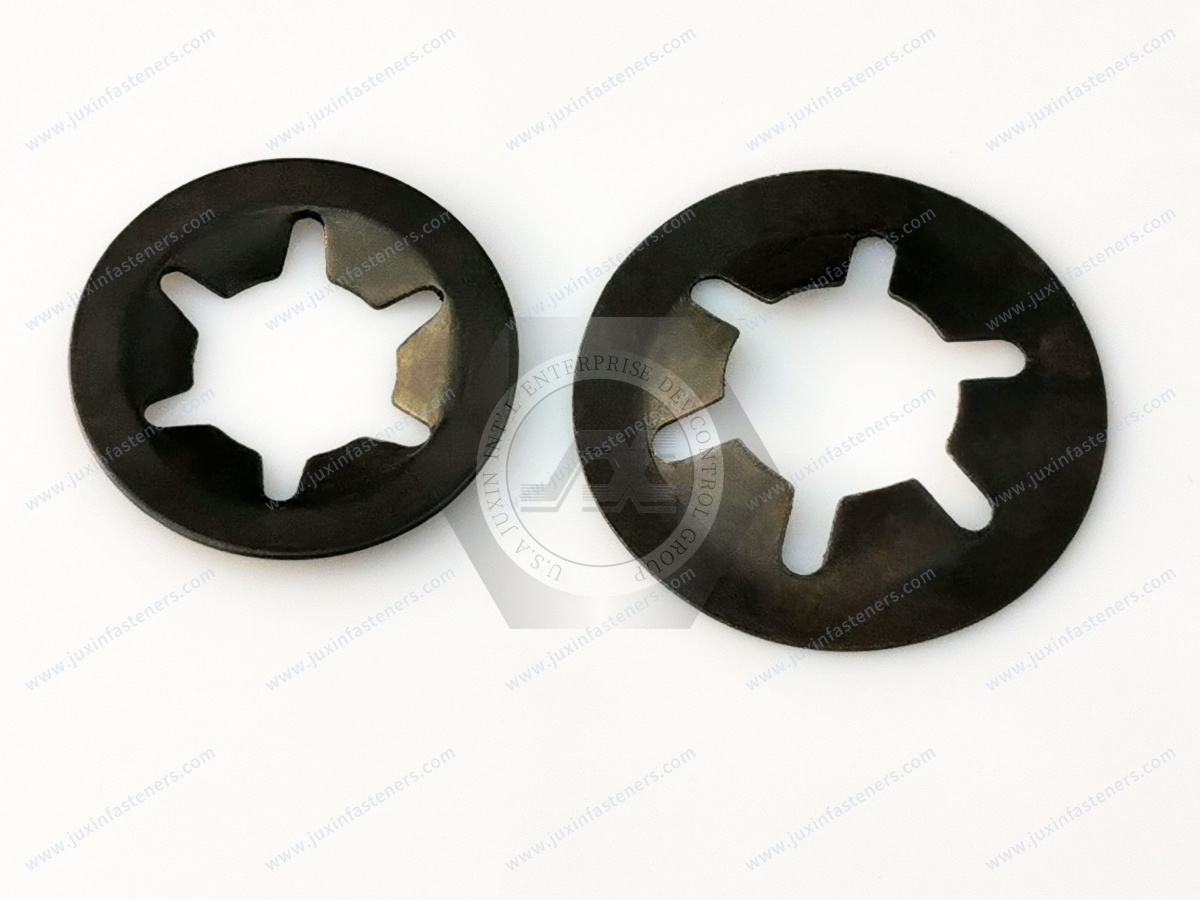
A bearing nut lock washer is a thin stamped locking component designed to work as part of a compatible shaft-and-locknut assembly.
Depending on the system, the washer can incorporate:
an internal tongue;
multiple external locking tabs;
a shaft-compatible bore;
stamped locating features;
application-specific locking geometry.
The washer is installed on the threaded shaft before or together with the compatible locknut.
After the locknut reaches its required installed position, one suitable external tab is bent into the corresponding nut slot or locking feature.
The resulting mechanical connection helps prevent unwanted locknut rotation.
A bearing lock washer should not be selected as an isolated washer.
Its function depends on three interfaces:
The washer must fit the shaft correctly.
The internal tongue or locating feature must engage the corresponding shaft keyway or other stationary feature.
The external tab must align with a compatible slot or locking feature on the nut.
Therefore:
Correct bore size alone does not establish compatibility.
For procurement and replacement projects, the shaft, washer and locknut should be evaluated together.
The locking principle can be understood by tracing the mechanical path.
An internal tongue engages a shaft keyway or compatible locating feature.
This prevents the washer from rotating freely.
The bearing locknut is brought to the required installed condition according to the equipment or bearing-system specification.
One external tab is identified that aligns appropriately with a slot or locking feature in the nut.
The selected external tab is formed into the nut slot.
The resulting locking path becomes:
shaft → keyway → internal tongue → washer → external tab → locknut
This is the fundamental operating principle.
The term "spring lock washer" can cause confusion because it is also used for other washer families.
For this type of bearing locknut assembly, the defining function is not simply spring force.
The important feature is mechanical anti-rotation.
The washer physically connects the stationary shaft interface to the locknut.
This is different from:
split lock washers;
conical spring washers;
serrated washers;
prevailing-torque nuts;
threadlocking compounds.
Each uses a different locking mechanism.
The internal tongue is one of the most important features of the washer.
Its purpose is to engage a compatible shaft feature—commonly a keyway or slot—so the washer cannot freely rotate with the nut.
Without this reaction feature, the external tab alone may not establish the intended positive locking path.
This is why procurement teams should not compare bearing lock washers solely by:
nominal diameter;
outside diameter;
thickness.
The internal profile is function-critical.
The external tabs provide possible locking positions around the washer circumference.
After the locknut reaches its required installed position, an appropriately positioned tab can be bent into the corresponding nut slot.
Multiple tabs provide alternative angular locking positions.
They should not automatically be interpreted as multiple tabs that all need to be bent.
The exact installation method should follow the relevant assembly specification.
Both products belong to the broader mechanical-locking washer family, but their interfaces can differ significantly.
May lock against:
a housing;
bracket;
nut flat;
bolt head;
adjacent structural feature.
Typically forms part of a defined:
shaft + keyway + washer + slotted locknut
architecture.
This makes bearing lock washers a more specialized shaft-locking solution.
These products should not be confused.
A retaining ring generally provides axial retention by engaging a groove or other retaining geometry.
A bearing lock washer helps prevent a threaded locknut from rotating.
Their mechanical functions are different.
For shaft design, engineers should first determine whether the assembly requires:
threaded nut locking;
axial retaining-ring retention;
or another shaft-retention method.
A conventional spring washer uses elastic geometry and contact behavior.
A bearing lock washer with tabs relies primarily on physical anti-rotation.
They are therefore not direct substitutes.
Serrated washers interact with mating surfaces through serrations.
A bearing lock washer mechanically links a shaft feature to a locknut feature.
For shaft-bearing assemblies, the mating geometry determines which system is appropriate.
Threadlocking adhesive works inside the threaded interface.
A tab-type bearing lock washer works externally through mechanical geometry.
A mechanical washer can offer a visually inspectable locking condition, while adhesive systems have different requirements involving:
surface preparation;
material compatibility;
temperature;
curing;
chemical exposure.
Selection should follow the equipment design and validation requirements.
The lock washer helps restrict unwanted locknut rotation.
It should not be described as independently controlling the complete axial position of the bearing system.
Axial positioning depends on the entire assembly, which can include:
shaft shoulders;
bearings;
spacers;
locknuts;
housings;
preload or clearance requirements.
The washer supports the locking function of the threaded nut.
Bearing nut lock washers should not be described as generic brake components whose function is to control brake-pad, drum or rotor movement.
Their engineering function is associated with the threaded shaft and locknut interface.
If a particular vehicle assembly uses a bearing lock washer, that does not make the washer itself a braking-control component.
For engineering content, the component's actual mechanical function should remain separate from the larger machine in which it may be installed.
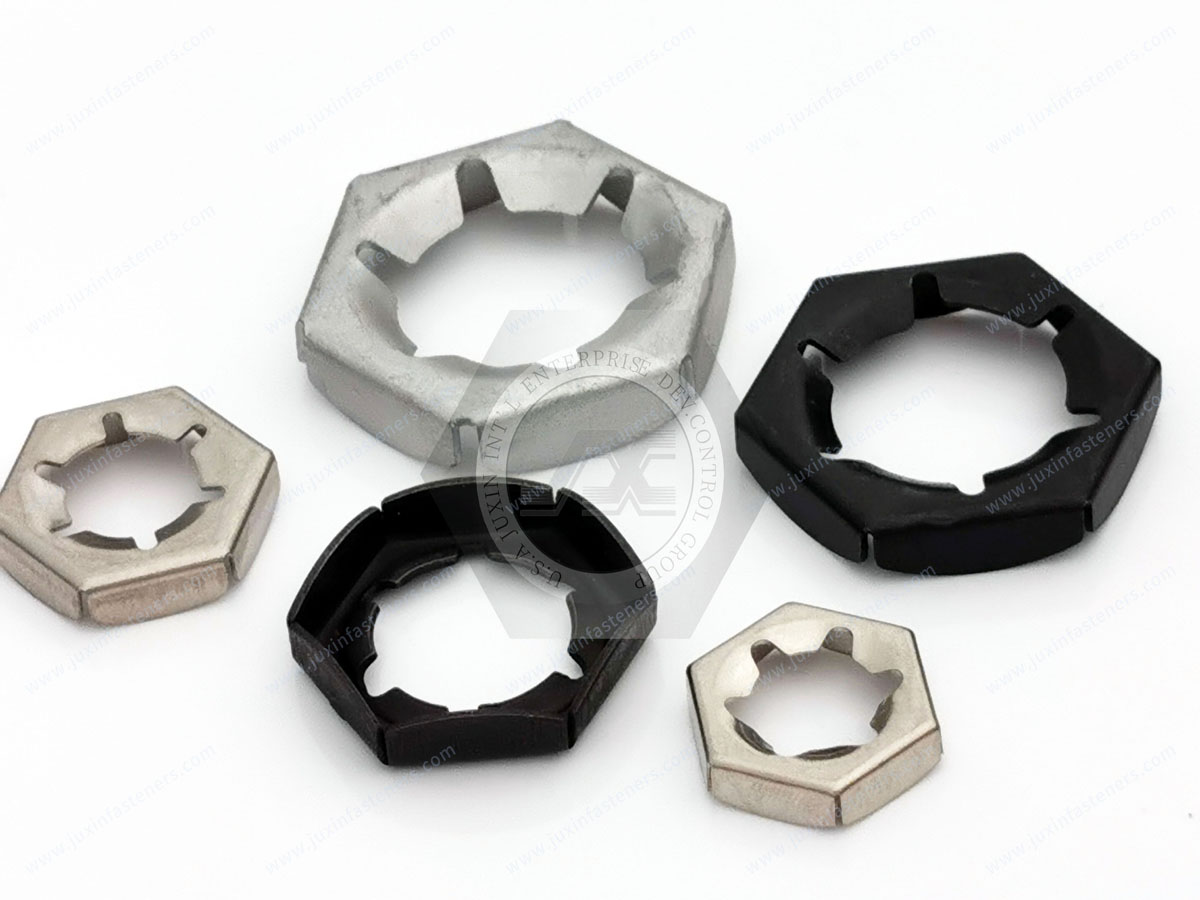
Selection should begin with the complete mating assembly.
Determine:
shaft diameter;
threaded portion;
thread specification;
keyway or locating feature;
available axial space.
Confirm:
nut type;
thread;
outside geometry;
locking slots;
applicable standard or drawing.
The washer must be compatible with the nut.
The tongue must properly engage the shaft feature.
Important dimensions can include:
tongue width;
tongue depth;
radial position;
material thickness.
The tabs must be positioned so that a usable locking relationship can be established with the locknut.
Important factors include:
number of tabs;
tab width;
tab length;
angular spacing;
nut-slot geometry.
Material selection should consider:
forming requirements;
strength;
corrosion;
operating temperature;
service environment.
If the locknut will be removed during maintenance, determine whether the washer should be replaced.
This is important because the locking tab undergoes plastic deformation during installation.
A typical installation process can be described as follows.
Confirm the correct:
shaft;
washer;
locknut;
mating geometry.
Check the washer for damage or deformation before installation.
Position the washer so its internal tongue correctly engages the shaft keyway or designated locating feature.
The washer should not be forced into an incompatible shaft geometry.
Thread the compatible locknut onto the shaft.
Bring the nut to the required installed condition according to the equipment design, bearing requirement or approved assembly procedure.
Locate the washer tab that aligns with an available nut slot.
Bend the selected tab into the corresponding locking feature.
The tab should create clear mechanical engagement without unnecessary cracking or deformation.
Verify:
internal tongue engagement;
washer seating;
tab engagement;
locknut position;
absence of obvious tab cracking.
Do not assume that backing off the nut is acceptable.
Bearing and shaft systems can have specific requirements for:
preload;
clearance;
axial position;
bearing adjustment.
Changing nut position solely to align a tab may alter the intended assembly condition.
The approved assembly procedure or equipment specification should determine acceptable adjustment.
A washer with several external tabs provides multiple possible angular locking positions.
This can improve the probability that a usable tab aligns with a locknut slot after the nut reaches its required position.
This is an important design feature.
It does not mean that every external tab must be bent.
Reuse should not automatically be assumed.
When a locking tab is bent during installation and later straightened during removal, the material undergoes additional plastic deformation.
Repeated forming can cause:
work hardening;
cracking;
permanent distortion;
coating damage;
reduced reliability of the tab.
For controlled maintenance, replacement with a new washer can provide a more predictable locking condition.
Follow the equipment manufacturer's maintenance requirements where applicable.
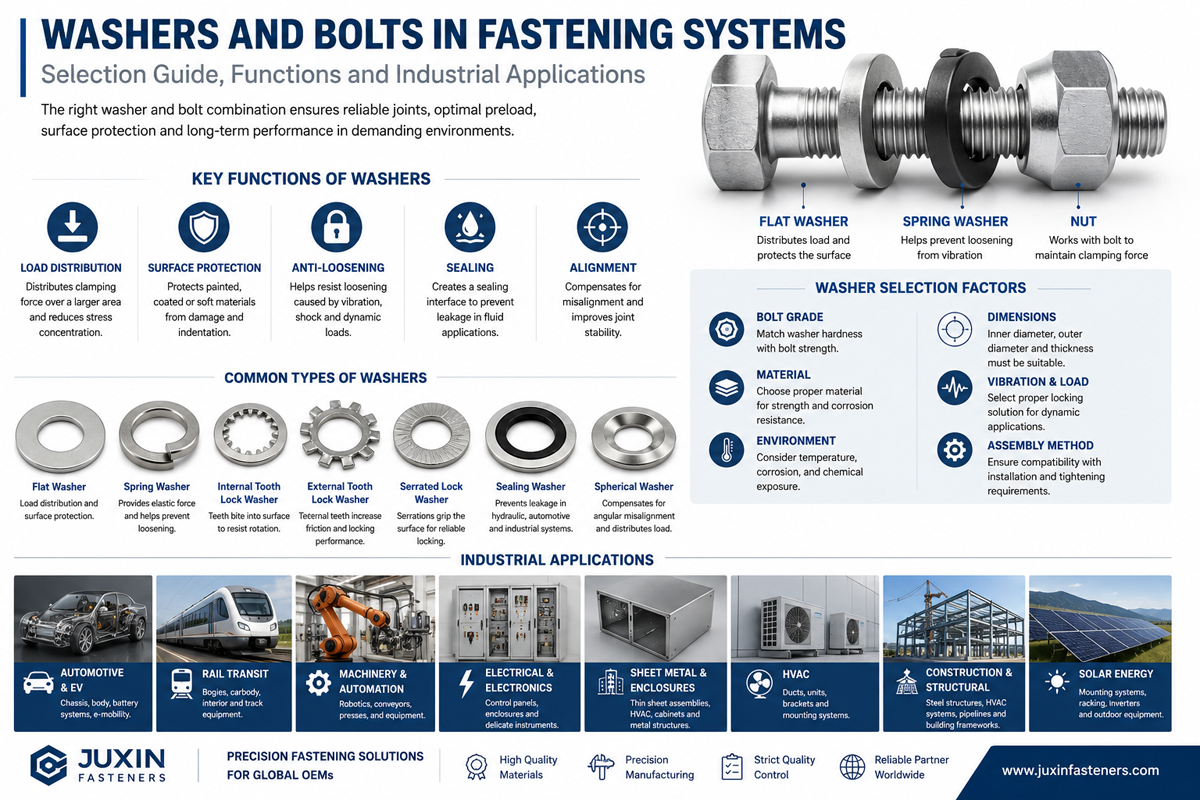
Bearing lock washers can be manufactured from suitable steels or stainless steels depending on design and environmental requirements.
Material selection should balance:
strength + formability + corrosion resistance + service conditions
rather than focusing on corrosion resistance alone.
Carbon steel can provide an economical solution for many industrial shaft assemblies.
Depending on the application, surface protection may be specified.
The washer material and processing should retain adequate formability for final tab bending.
Stainless steel can be selected for applications requiring increased corrosion resistance.
However, stainless grades differ in:
mechanical strength;
ductility;
work-hardening behavior;
corrosion resistance.
The selected grade should support both service requirements and the intended locking-tab deformation.
Where coated carbon steel is used, the finish should be evaluated for:
corrosion requirement;
coating thickness;
mating-component compatibility;
tab-forming behavior.
Because the external tab may be bent after coating, local coating damage at the bend can be an important engineering consideration.
Bearing lock washers are commonly produced from sheet material using precision stamping processes.
Manufacturing can include:
blanking;
piercing;
internal tongue formation;
external tab formation;
deburring;
heat treatment where applicable;
surface treatment;
dimensional inspection.
For high-volume OEM applications, progressive tooling can support consistent geometry and efficient production.
A bearing lock washer is not just a flat ring.
Important dimensions may include:
inside diameter;
outside diameter;
thickness;
internal tongue width;
internal tongue depth;
external tab width;
external tab length;
tab angular spacing.
The functional importance of each dimension depends on the mating assembly.
Washer thickness influences:
stiffness;
forming force;
tab durability;
axial stack-up;
compatibility with the locknut system.
A washer with the correct diameter but incorrect thickness may not be functionally interchangeable.
The external tabs must interact with the locknut slots.
Their angular spacing therefore influences the available locking positions.
For custom components, tab location should be controlled according to the assembly requirements.
Slotted locknut washers are particularly relevant to assemblies involving:
rolling-element bearings;
gear shafts;
drive shafts;
machine spindles;
industrial motors;
pumps;
compressors;
gearboxes;
material-handling equipment;
rotating industrial machinery.
Actual suitability depends on the shaft, nut, load and equipment specification.
Gearboxes can use threaded shaft arrangements to locate bearings, gears or related components.
Where a slotted locknut system is specified, the washer helps mechanically secure the final nut position.
Procurement should treat the locknut and washer as compatible components rather than sourcing each independently by approximate dimensions.
Rotating equipment can expose shaft assemblies to:
vibration;
temperature changes;
service disassembly;
corrosion.
Where a bearing locknut washer is specified, material and finish should be selected for the actual operating environment.
Motor and rotating-equipment assemblies may use shaft locking components for appropriate bearing arrangements.
Engineers should verify:
available space;
shaft thread;
bearing position;
nut configuration;
locking method.
Heavy industrial equipment can expose shaft components to shock, contamination and repeated maintenance.
Positive mechanical locking can provide a straightforward and inspectable method where the equipment architecture supports it.
Bearing locknut systems may appear in suitable transportation-related assemblies.
However, the washer should not be broadly described as automatically suitable for every automotive, rail or aerospace application.
Drawing requirements, standards, materials, traceability and validation determine actual suitability.
A standard washer is normally preferable where the shaft and locknut follow an established system.
Custom washers can be appropriate when:
shaft geometry is proprietary;
the keyway is non-standard;
locknut slots differ from standard geometry;
restricted axial space exists;
special tab positions are required;
an obsolete component must be reproduced.
For custom components, the assembly geometry should be reviewed together with the washer drawing.
A replacement bearing lock washer should not be approved based solely on nominal shaft size.
Compare:
shaft thread;
shaft keyway;
washer ID;
washer thickness;
internal tongue;
external tabs;
locknut geometry;
material;
surface finish.
A part can look nearly identical while differing at a function-critical interface.
When the original drawing is unavailable, a physical sample can be evaluated.
An unused sample is preferable because previously installed washers may have:
bent tabs;
distorted tongues;
wear;
coating damage.
Useful supporting information includes:
mating locknut;
shaft dimensions;
shaft keyway dimensions;
assembly photographs;
material requirements;
estimated annual demand.
Nominal diameter does not define tongue and tab compatibility.
The washer and slotted nut must mechanically interface.
The primary locking mechanism is positive mechanical engagement.
Its function should be described at the shaft-locking level, not generalized to an entire braking system.
The complete bearing arrangement and locknut installation determine the bearing condition.
Repeated plastic bending can reduce tab integrity.
Visually similar washers can have different internal tongue or tab geometry.
For a new or replacement bearing lock washer, follow this sequence:
1. Identify the shaft thread.
↓
2. Identify the shaft keyway or anti-rotation feature.
↓
3. Identify the compatible slotted locknut.
↓
4. Confirm washer ID, thickness and internal tongue geometry.
↓
5. Confirm external tab compatibility with the nut.
↓
6. Select material and surface finish.
↓
7. Verify installation and tab-forming access.
↓
8. Define inspection and replacement requirements.
This approach is more reliable than selecting from nominal dimensions alone.
For faster engineering review and quotation, provide:
applicable standard or drawing;
shaft diameter;
shaft thread;
keyway dimensions;
locknut type;
locknut drawing or part number;
washer inside diameter;
washer outside diameter;
thickness;
internal tongue dimensions;
external tab dimensions;
material;
surface finish;
application;
operating environment;
required quantity;
annual demand;
inspection requirements;
packaging requirements.
For replacement projects, provide the original washer and mating locknut where possible.
It is a mechanical locking washer used with a compatible shaft and locknut system to restrict unintended locknut rotation.
An internal feature restrains the washer relative to the shaft, while an external tab engages the locknut, creating a positive mechanical locking path.
Not in the conventional split-lock-washer sense. Its primary locking function is mechanical tab engagement.
It engages a compatible shaft keyway or locating feature and prevents the washer from rotating freely.
Multiple tabs provide alternative angular positions for engaging the slotted locknut.
Not necessarily. The installation method depends on the specific washer and locknut system.
The washer itself does not establish bearing preload. The complete shaft, bearing and locknut assembly determines the bearing condition.
Reuse should not automatically be assumed because installed tabs undergo plastic deformation.
Yes. JUXIN FASTENERS supports standard and drawing-based stamped locking washers for suitable OEM applications.
Provide the original drawing where available. Otherwise, send an unused sample, mating locknut, shaft dimensions, keyway information, material requirement and expected quantity.
For engineers, a bearing nut lock washer should be selected as part of a complete:
shaft + keyway + washer + locknut
system.
For maintenance teams, correct replacement means restoring the original mechanical locking path—not simply finding a washer with a similar diameter.
For procurement and supplier-development teams, drawings and mating-component information help prevent false cross-references and reduce qualification risk.
JUXIN FASTENERS supports standard and custom bearing nut lock washers, shaft locking washers, tab washers, retaining components and precision stamped fasteners for global industrial OEM applications.
For standard parts, send the applicable standard, size, material and finish.
For custom parts, send the 2D drawing or 3D model together with shaft and locknut information.
For obsolete or replacement components, send an unused sample where possible, together with the mating locknut and shaft/keyway dimensions.
We can support technical review, sample evaluation, cross-reference analysis, manufacturing feasibility, custom development, quotation and volume production.
Email: info@juxinfasteners.com
Website: www.juxinfasteners.com
 MORE NEWS
Sep. 27, 2026
Sep. 27, 2026
Sep. 27, 2026
Contact Us
Tel.:
+86 020 8621 0320
+86 020 3121 6067
E-mail:
Technical Support:
Navigation
SEND INQUIREY