
Call Us
+86 136 6007 9809
Call Us
+86 136 6007 9809

Jul. 02, 2024
Stainless Steel Bolting Systems: Joint Design, Corrosion Resistance and OEM Selection
Stainless steel bolts are widely used in industrial equipment, machinery, electrical enclosures, automation systems,
food-processing machinery, chemical equipment and marine-related assemblies.
Their primary function is to create and maintain a mechanical connection between components.
Depending on the design, a bolted joint may transmit loads through friction, direct bearing, bolt tension or a combination of these mechanisms.
Stainless steel is often selected because of its corrosion resistance and appearance.
However, a reliable bolting system requires more than a corrosion-resistant bolt.
The complete assembly may include:
Stainless steel bolts or screws
Matching nuts or internally threaded components
Washers or other bearing components
Structural plates, brackets or housings
Locking features where required
Gaskets or seals where required
Each component influences the performance of the finished joint.
A stainless steel bolt with an appropriate material grade can still fail to deliver reliable service if the thread engagement is insufficient,
the preload is incorrect, the mating material is unsuitable or the operating environment is more aggressive than anticipated.
For design engineers, the objective is to select a fastening system that satisfies mechanical and environmental requirements.
For manufacturing engineers and production managers, the objective is repeatable assembly with controlled tightening, acceptable cycle time and minimal rework.
For purchasing managers and supplier development teams, the objective is to source technically conforming fasteners with predictable quality, approved alternatives and commercially viable supply arrangements.
JUXIN FASTENERS supplies stainless steel bolts, screws, nuts and drawing-based OEM fastening components for international industrial customers.
This guide explains how to evaluate stainless steel bolting systems from engineering design through production assembly and supplier qualification.
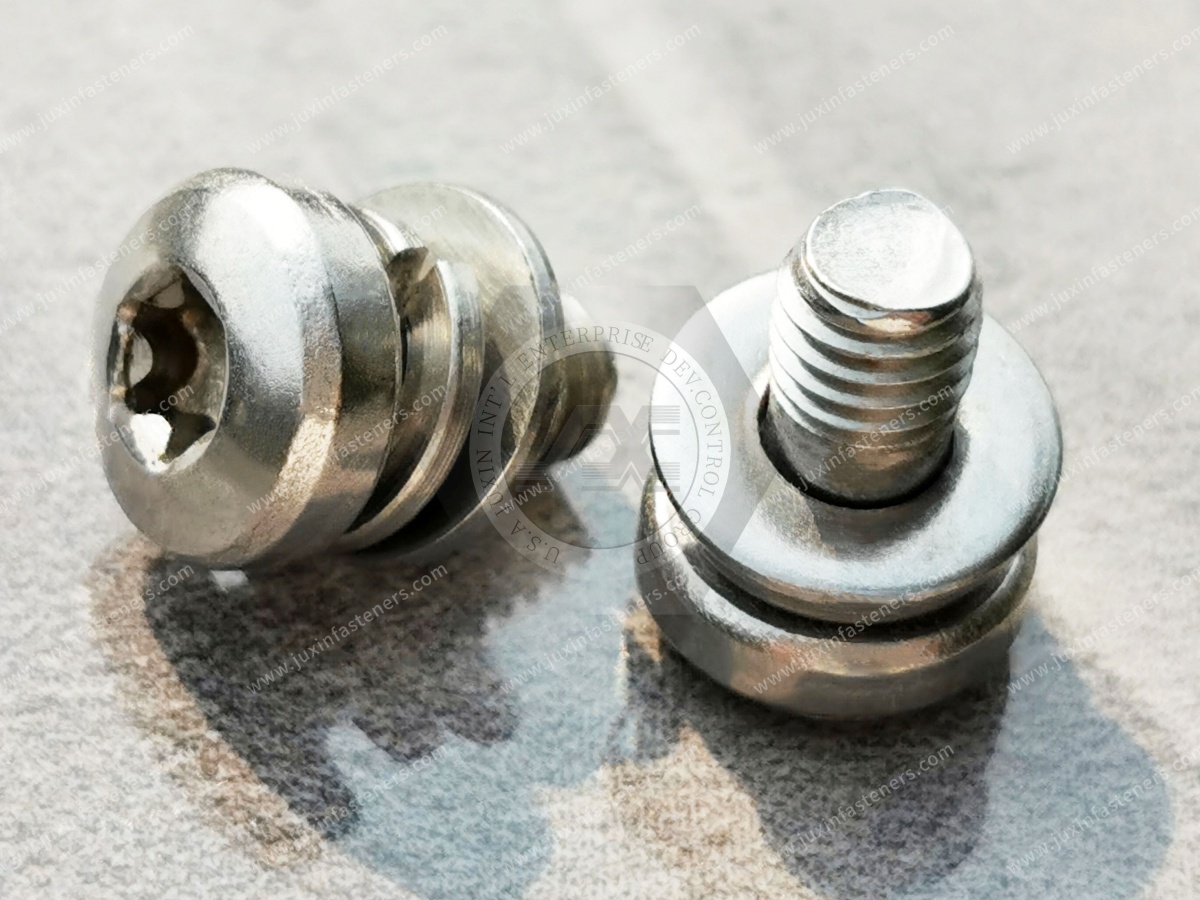
The Role of Stainless Steel Bolts in Mechanical Connections
A bolted joint performs several important mechanical functions.
Clamping Components Together
When a bolt is tightened, the fastener is placed in tension while the connected components are compressed.
The resulting clamping force helps maintain contact between the joint members.
The actual preload depends on the tightening method, friction and joint characteristics.
Transmitting Mechanical Loads
Depending on the joint design, applied loads may be transmitted through:
Friction between clamped surfaces
Direct bearing between components
Bolt shear
Bolt tension
Combined loading
The intended load path must be established during engineering design.
Maintaining Joint Integrity
A correctly designed joint should maintain the required connection under expected operating conditions.
These may include:
Static loading
Cyclic loading
Vibration
Temperature variation
Moisture exposure
Maintenance operations
However, stainless steel alone does not guarantee resistance to loosening or fatigue.
Supporting Sealing Systems
Stainless steel bolts are frequently used to compress gaskets or other sealing elements in equipment covers, enclosures and process machinery.
The bolt itself does not normally provide the seal.
Sealing performance depends on the complete assembly, including:
Gasket material
Gasket compression
Flange or cover stiffness
Surface condition
Bolt arrangement
Tightening sequence
Operating pressure and temperature
For pressure-containing equipment, the complete joint must be engineered and qualified to the applicable equipment requirements.
Providing Corrosion-Resistant Mechanical Connections
Stainless steel fasteners may help reduce corrosion-related maintenance in suitable environments.
The benefit depends on the stainless steel grade, surface condition, mating materials and exposure.
Why Stainless Steel Is Used in Industrial Bolting
Stainless steel contains chromium, which supports formation of a chromium-rich passive surface film.
This film contributes to corrosion resistance in suitable environments.
Potential advantages include:
Resistance to corrosion in many industrial environments
Suitable mechanical properties when correctly specified
Attractive metallic appearance
Potential reduction in coating-related maintenance
Availability of several material families
Suitability for selected hygienic or washdown equipment
These advantages must be evaluated against the specific application.
Important Engineering Limitations
Stainless steel is not automatically:
Stronger than alloy steel
Resistant to all chemicals
Suitable for continuous seawater exposure
Immune to fatigue
Resistant to vibration loosening
Free from thread galling
Compatible with every mating metal
The correct selection requires a complete joint assessment.
304 vs. 316 Stainless Steel Bolts
304 and 316 are widely encountered in industrial fastener specifications.
Both are austenitic stainless steels, but their corrosion behavior differs.
304 Stainless Steel and A2 Fasteners
304 stainless steel is commonly selected for general industrial applications.
A2 is a stainless steel fastener material designation associated with suitable 304-type compositions under the applicable fastener standard.
Typical applications include:
Industrial machinery
Electrical cabinets
Automation equipment
General equipment housings
HVAC equipment
Selected food-processing machinery
304 may provide a practical balance of corrosion resistance and cost where the operating environment is not excessively aggressive.
316 Stainless Steel and A4 Fasteners
316 stainless steel contains molybdenum, which generally improves resistance to certain localized corrosion mechanisms compared with 304.
A4 fastener designations are commonly associated with suitable 316-type compositions.
Potential applications include:
Coastal industrial equipment
Selected marine-related machinery
Chemical-processing equipment
Pharmaceutical equipment
Outdoor industrial installations
Equipment exposed to certain cleaning chemicals
Important Limitation
316 stainless steel is not immune to chloride pitting, crevice corrosion or all chemical environments.
Its suitability depends on the actual service conditions.
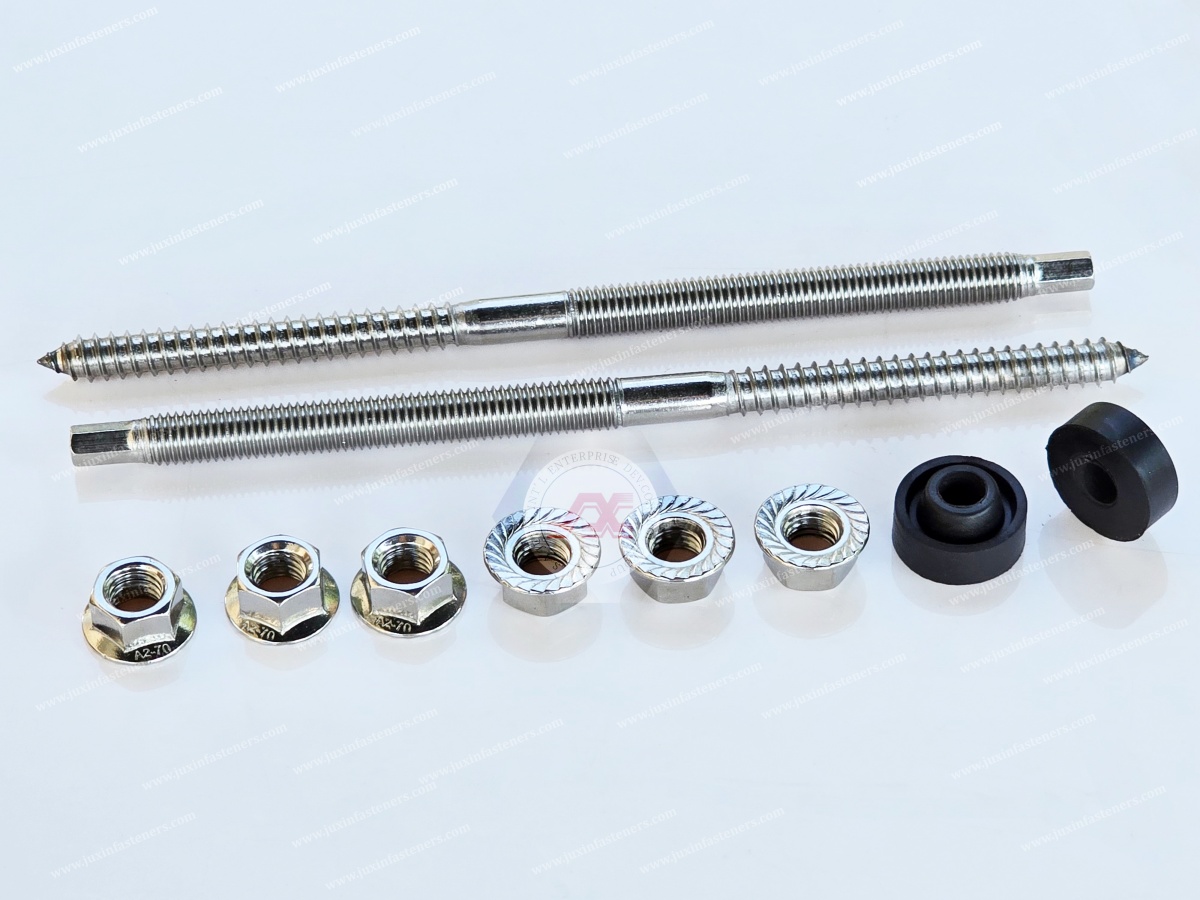
304 vs. 316 Selection Matrix
| Engineering requirement | 304 / A2 family | 316 / A4 family |
|---|---|---|
| General indoor machinery | Often suitable | May be suitable |
| Electrical equipment housings | Often suitable | May be suitable |
| Outdoor moisture exposure | Environment dependent | Environment dependent |
| Coastal chloride exposure | Requires careful evaluation | Generally improved resistance, but not immune |
| Chemical-processing equipment | Chemical dependent | Chemical dependent |
| Mechanical strength | Finished-fastener class dependent | Finished-fastener class dependent |
| Material cost | Generally lower | Generally higher |
Selection Recommendation
Specify the material according to actual corrosion exposure and mechanical requirements.
Do not substitute 316 for 304, or vice versa, without considering the drawing, operating conditions and customer approval requirements.
Understanding 18-8 Stainless Steel
The term 18-8 stainless steel is common in North American fastener purchasing.
It broadly describes certain stainless steel compositions containing approximately 18% chromium and 8% nickel.
However, 18-8 is not a complete dimensional or mechanical specification.
For an OEM purchase order, the required material, mechanical properties, product dimensions and inspection criteria should be identified separately.
High-Temperature Stainless Steel Fasteners
Certain industrial equipment operates at elevated temperatures.
Potential applications include:
Industrial furnaces
Heat-processing machinery
Heat exchangers
Energy equipment
Chemical-processing systems
Specialized stainless steel or heat-resistant alloys may be considered, including selected 310, 321 or A-286 materials where technically appropriate.
These materials do not share identical mechanical properties or heat-treatment behavior.
Important Engineering Considerations
Operating temperature
Duration of exposure
Creep resistance
Oxidation behavior
Thermal expansion
Preload relaxation
Mating component compatibility
A stainless steel grade that performs well at room temperature may not be suitable for a continuously loaded high-temperature joint.
Engineering Recommendation
High-temperature fasteners require application-specific material and joint evaluation.
Standard room-temperature mechanical property designations should not be assumed to establish elevated-temperature performance.
Mechanical Strength of Stainless Steel Bolts
Stainless steel fasteners must be specified using the appropriate mechanical property system.
For applicable metric corrosion-resistant stainless steel bolts, ISO 3506-1 defines relevant material groups and mechanical property classes.
Examples include:
A2-70
A4-70
A2-80
A4-80
These designations are not directly equivalent to carbon steel property classes such as 8.8, 10.9 or 12.9.
Why This Matters
A purchasing substitution based only on nominal diameter and material description may change:
Tensile capacity
Proof or yield-related performance
Joint preload capability
Fatigue behavior
Temperature suitability
Engineering Recommendation
Specify the required mechanical properties and confirm that the complete joint remains suitable before approving a replacement.
Stainless Steel Bolts, Nuts and Washers as a Complete System
The selection of the bolt alone is insufficient.
The mating nut, washer and connected materials can determine whether the joint performs reliably.
Matching Bolt and Nut Threads
The bolt and nut must have compatible:
Thread systems
Nominal diameters
Thread pitches
Tolerance requirements
Metric, UNC, UNF, BSW and BSF threads are not directly interchangeable.
Matching Mechanical Properties
The nut must be suitable for the bolt and the intended joint loading.
A high-strength bolt installed with an unsuitable nut can result in thread failure.
Washer Selection
Washers may be used to:
Provide an appropriate bearing interface
Protect selected surfaces
Accommodate specified joint geometry
Support particular assembly requirements
However, adding a washer does not automatically improve every bolted joint.
Its dimensions, hardness, material and effect on joint behavior must be considered.
Stainless Steel Washers and Galvanic Compatibility
When bolts, washers and connected parts are made from different metals, corrosion compatibility should be evaluated.
Joint System Selection Matrix
| Joint condition | Engineering concern | Selection action |
|---|---|---|
| Stainless bolt with stainless nut | Galling | Review mating materials and lubrication |
| Stainless bolt in aluminum | Galvanic corrosion and thread strength | Evaluate corrosion protection and engagement |
| Stainless bolt with soft sheet metal | Local bearing deformation | Review washer or bearing geometry |
| Stainless bolt in a blind tapped hole | Bottoming and thread engagement | Verify hole depth and screw length |
| Stainless bolt with gasket | Compression and relaxation | Validate gasket and tightening procedure |
| Stainless bolt under vibration | Loss of preload | Evaluate joint design and locking method |
| Stainless bolt at elevated temperature | Relaxation and material performance | Review temperature-dependent properties |
Preload: The Foundation of Reliable Bolted Joints
Preload is the tensile force introduced into a bolt during tightening.
In many bolted joints, the intended preload helps keep connected components clamped together.
Why Preload Matters
Insufficient preload may allow:
Joint separation
Relative movement
Loosening
Fretting
Fatigue damage
Excessive preload may cause:
Bolt yielding or fracture
Thread stripping
Damage to connected components
Gasket overcompression
Torque Is Not the Same as Preload
A simplified relationship is:
T ≈ K × F × d
Where:
T = applied tightening torque
K = simplified torque coefficient
F = bolt preload
d = nominal thread diameter
This relationship is approximate and should not be used as a universal tightening specification.
The actual preload depends strongly on friction and assembly conditions.
Factors Influencing Stainless Steel Bolt Preload
Thread condition
Lubrication
Underhead friction
Washer condition
Mating material
Surface treatment
Tightening method
Joint stiffness
Production Recommendation
Validate tightening conditions using the actual bolt, nut or tapped hole, washer arrangement and surface condition.
Stainless Steel Thread Galling
Galling is a significant assembly concern for certain stainless steel bolting systems.
It is a form of adhesive wear that can damage or seize contacting threads.
Potential Contributing Factors
Similar stainless steel mating materials
High contact pressure
Rapid tightening
Poor thread alignment
Surface condition
Inappropriate lubrication
Typical Symptoms
Sudden tightening resistance
Thread seizure
Damaged threads
Incomplete assembly
Increased production rework
Potential Prevention Measures
Depending on the application:
Use approved anti-seize compounds
Specify suitable lubrication
Control installation speed
Maintain correct thread alignment
Review mating material combinations
Inspect thread condition
Important Caution
Lubrication changes the torque-to-preload relationship.
A tightening torque validated for a dry assembly should not automatically be reused after adding lubricant.
Vibration Resistance and Fatigue
Stainless steel bolts are not inherently vibration-proof.
Loosening may occur when a joint experiences transverse movement or loss of preload.
Potential contributing factors include:
Insufficient initial preload
Joint settlement
Embedment
Thermal cycling
Relaxation
Repeated transverse loading
Depending on the application, suitable measures may include:
Controlled preload
Approved locking nuts
Suitable threadlocking compounds
Mechanical locking features
Improved joint stiffness
Fatigue Considerations
Fatigue performance depends on:
Cyclic load magnitude
Joint stiffness
Bolt preload
Thread geometry
Material condition
Manufacturing quality
Selecting stainless steel does not automatically provide superior fatigue resistance.
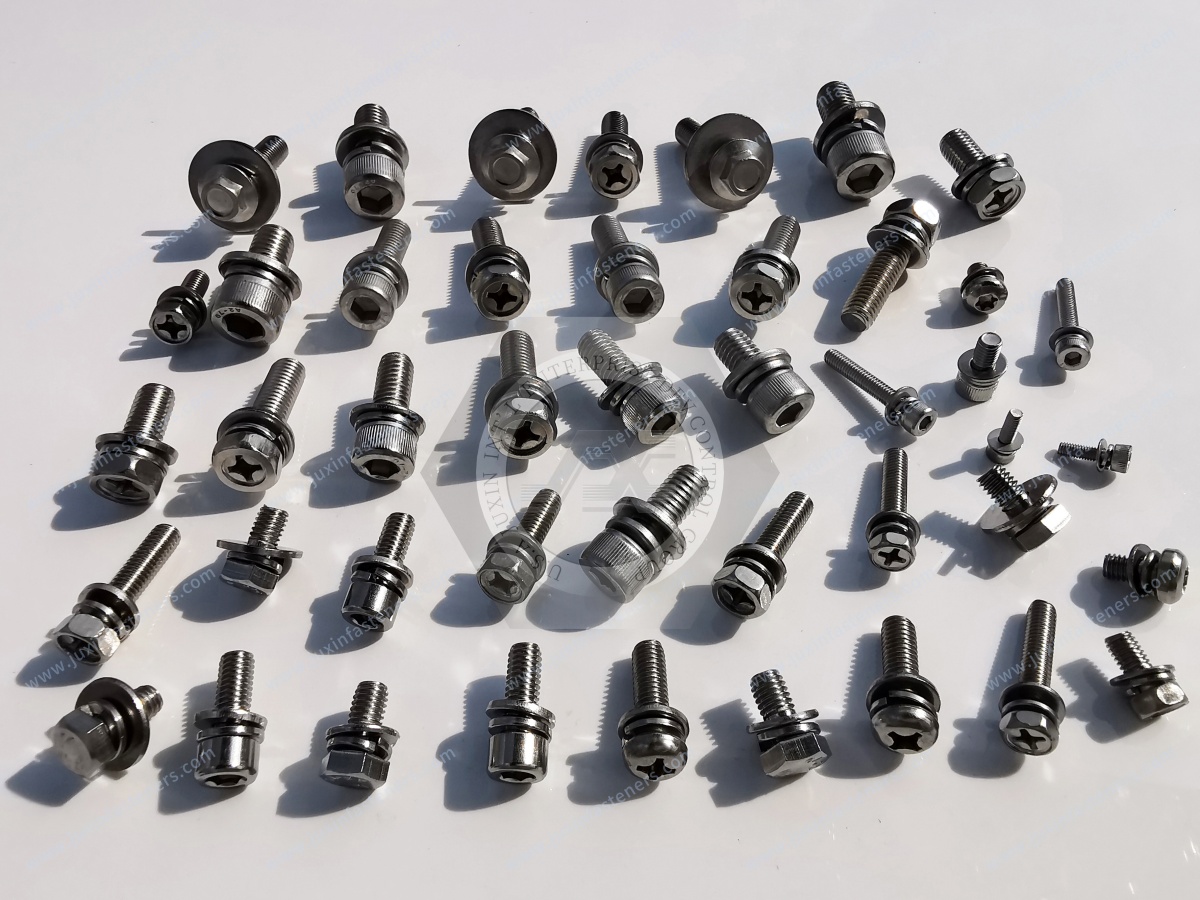
Corrosion Risks in Stainless Steel Bolting Systems
Corrosion resistance should be evaluated at the complete joint level.
Pitting Corrosion
Pitting may occur under aggressive localized conditions, especially involving certain chloride environments.
Crevice Corrosion
Crevice corrosion may occur in restricted spaces such as:
Under bolt heads
Beneath washers
Between overlapping plates
Around threaded interfaces
Galvanic Corrosion
Galvanic corrosion may occur when dissimilar metals are electrically connected in the presence of a suitable electrolyte.
For example, stainless steel fasteners installed in aluminum components may require evaluation of the complete material combination.
Stress Corrosion Cracking
Certain stainless steel grades may be susceptible to stress corrosion cracking under specific combinations of tensile stress, environment and temperature.
Engineering Recommendation
Consider the complete exposure conditions, not merely whether the equipment is described as indoor, outdoor, marine or chemical.
Corrosion Decision Matrix
| Environment | Main concern | Recommended evaluation |
|---|---|---|
| General indoor equipment | Humidity and cleaning exposure | Suitable material and finish |
| Outdoor equipment | Moisture and contaminants | Corrosion conditions and maintenance |
| Coastal installation | Chlorides | Pitting and crevice corrosion |
| Stainless bolt in aluminum | Galvanic interaction | Material compatibility and isolation |
| Chemical equipment | Chemical attack | Actual chemical concentration and temperature |
| Hot equipment | Oxidation and relaxation | Temperature-dependent properties |
| Washdown machinery | Cleaning chemicals and crevices | Material, surface and joint geometry |
Sealing Performance: What Bolts Can and Cannot Do
Bolts may provide the clamping force needed for a sealing system.
They do not normally create a reliable fluid-tight or gas-tight seal by themselves.
Sealing System Components
A typical sealed joint may involve:
Bolts or screws
Gasket
Cover or flange
Mating surfaces
Controlled tightening procedure
Common Sealing Failures
Insufficient gasket compression
Uneven tightening
Joint distortion
Relaxation
Incompatible gasket material
Surface damage
Engineering Recommendation
For pressure-containing or safety-critical sealing systems, use the applicable equipment design and qualification requirements.
A generic stainless steel bolt recommendation is not a substitute for pressure-joint engineering.
Choosing the Right Stainless Steel Bolt Type
Different head styles serve different installation requirements.
Stainless Steel Hex Bolts
Hexagonal-head bolts are commonly used where external wrench or socket access is available.
Potential applications include:
Machinery frames
Equipment brackets
Mechanical housings
General industrial assemblies
Stainless Steel Socket Head Cap Screws
Socket head cap screws feature an internal hexagon drive and a cylindrical head.
They may be useful where axial tool access is available and the design benefits from the head geometry.
Relevant metric dimensional specifications include ISO 4762.
Stainless Steel Hex Flange Bolts
Hex flange bolts incorporate a flange-shaped bearing surface beneath the head.
Potential benefits include:
Integrated bearing geometry
Reduced need for a separate washer in suitable designs
Simplified component handling
However, the flange does not automatically prevent vibration loosening.
Stainless Steel Countersunk Screws
Countersunk screws may be selected when a flush or recessed head is required.
Important considerations include:
Countersink angle
Head geometry
Bearing contact
Material thickness
Installation alignment
Countersunk angles and dimensions must be specified according to the applicable product standard or drawing.
Fastener Type Selection Matrix
| Fastener type | Primary design reason | Key limitation |
|---|---|---|
| Hex head bolt | External tool engagement | Requires suitable wrench clearance |
| Socket head cap screw | Cylindrical head and internal drive | Requires suitable socket and axial access |
| Hex flange bolt | Integrated bearing surface | Bearing pressure and flange geometry still matter |
| Countersunk screw | Flush or recessed head | Requires suitable countersink design |
| Custom CNC fastener | Special geometry or interface | Manufacturing feasibility and cost |
Engineering Recommendation
Select the fastener geometry based on the actual joint design, not simply the product name.
International Standards for Stainless Steel Bolting Systems
Standards should be selected according to the specific technical requirement.
ISO 3506-1
Mechanical properties of specified corrosion-resistant stainless steel bolts, screws and studs.
ISO 3506-2
Mechanical properties of specified corrosion-resistant stainless steel nuts.
ISO 4014
Metric hexagon head bolts.
ISO 4017
Metric hexagon head screws.
ISO 4762
Metric hexagon socket head cap screws.
DIN 912
Legacy designation commonly encountered for metric socket head cap screws.
ASME B18.2.1
Specified inch-series square and hex bolts and screws.
ASME B18.3
Specified socket screw products under its applicable scope.
ASME B1.1
Unified inch-series screw threads.
ASTM F593
Specified stainless steel bolts, hex cap screws and studs within its scope.
ASTM F594
Specified stainless steel nuts within its scope.
Important Compatibility Principle
Dimensional, mechanical and material standards address different requirements.
They should not be treated as interchangeable or combined without verifying applicability.
Industrial Applications and Engineering Considerations
Industrial Machinery and Automation
Stainless steel bolts may be used in:
Equipment housings
Mechanical brackets
Production fixtures
Automation systems
Packaging machinery
Engineering Priorities
Joint stiffness
Tool access
Thread engagement
Assembly repeatability
Maintenance requirements
Electrical and Communication Equipment
Potential applications include:
Electrical cabinets
Control panels
Telecom enclosures
Power conversion equipment
Mechanical supports
Engineering Priorities
Corrosion exposure
Sheet metal thickness
Galvanic compatibility
Mechanical stability
Electrical clearance requirements
Food and Beverage Processing Equipment
Potential applications include:
Processing machinery
Equipment frames
Packaging systems
Washdown equipment
Engineering Priorities
Cleaning chemicals
Surface condition
Crevice formation
Corrosion exposure
Equipment hygiene requirements
A material described as food-grade should not be assumed to satisfy every equipment or regulatory requirement.
Chemical and Pharmaceutical Equipment
Potential applications include:
Equipment housings
Pumps
Valves
Processing machinery
Mechanical supports
Engineering Priorities
Chemical compatibility
Temperature
Corrosion mechanisms
Cleaning procedures
Sealing requirements
316 stainless steel is not suitable for every chemical environment.
Marine and Coastal Equipment
Potential applications include suitable:
Mechanical supports
Equipment housings
Marine-related machinery
Coastal industrial installations
Engineering Priorities
Chloride exposure
Crevice corrosion
Galvanic interaction
Inspection and maintenance
316 stainless steel is not automatically qualified for continuous seawater immersion.
Automotive and Electric Vehicle Equipment
Potential applications include:
Production fixtures
Electronic equipment housings
Battery equipment supports
Auxiliary mechanical assemblies
Engineering Priorities
Vibration
Corrosion
Temperature
Preload
Mating material compatibility
General industrial stainless steel bolts are not automatically qualified for safety-critical automotive connections.
Medical and Laboratory Equipment
Potential applications include approved:
Equipment housings
Laboratory instruments
Diagnostic equipment structures
Mechanical supports
Engineering Priorities
Surface condition
Cleaning chemicals
Corrosion
Material specification
Application-specific regulatory requirements
General industrial stainless steel bolts are not automatically qualified for implantable medical devices.
Aerospace-Related Equipment
Specialized stainless steel fasteners may be considered for approved ground-support equipment and suitable mechanical assemblies.
Flight-critical applications require their own approved material, product and quality specifications.
Construction and Structural Equipment
Stainless steel bolts may be used in suitable architectural, mechanical and equipment connections.
Structural bolting requires the applicable project specification and engineering approval.
Production-Line Assembly and Quality Control
For production managers, a suitable fastener must perform consistently during volume assembly.
Incoming Inspection
Depending on the project, incoming checks may include:
Product identification
Material specification
Thread dimensions
Head dimensions
Surface condition
Mechanical property documentation
Required inspection records
Assembly Validation
Before releasing a fastener for volume production, verify:
Correct thread system
Compatible mating nut or tapped hole
Adequate thread engagement
Suitable washer arrangement
Tool compatibility
Lubrication specification
Tightening procedure
Required joint preload
Rework and Replacement
Define criteria for damaged or unsuitable fasteners.
Potential reasons for replacement include:
Damaged threads
Rounded drive features
Visible deformation
Corrosion damage
Thread seizure
Production Failure Matrix
| Problem | Possible cause | Recommended review |
|---|---|---|
| Thread seizure | Galling | Lubrication and mating materials |
| Variable tightening | Friction variation | Assembly process validation |
| Thread stripping | Insufficient engagement | Joint design and material strength |
| Repeated loosening | Loss of preload | Joint stiffness and locking method |
| Corrosion complaints | Unsuitable material or exposure | Environmental assessment |
| Local sheet deformation | Excessive bearing pressure | Washer or bearing geometry |
| Sealing leakage | Inadequate gasket compression | Complete sealing system |
| High rework rate | Installation variation | Tooling and process controls |
OEM Custom Stainless Steel Bolting Solutions
Standard fasteners may not satisfy every industrial design.
Drawing-based requirements may include:
Custom head geometry
Special shank dimensions
Nonstandard lengths
Special thread lengths
Custom underhead features
Material specifications
Mechanical property requirements
Surface finishing
Tight dimensional tolerances
Manufacturing Feasibility
Depending on the design and purchasing volume, suitable manufacturing processes may include:
Cold heading
Thread rolling
CNC machining
Other appropriate operations
The manufacturing route should be determined after reviewing the actual drawing, material, quantity and technical requirements.
Supplier Qualification for OEM Stainless Steel Fasteners
Procurement and supplier development teams should evaluate fasteners using complete technical and commercial specifications.
Recommended RFQ Information
| Requirement | Information to provide |
|---|---|
| Product | Bolt, screw, nut or complete fastening set |
| Standard | Applicable ISO, DIN, ASME, ASTM or drawing |
| Thread | Metric, UNC, UNF or other specified system |
| Dimensions | Diameter, pitch, length and head geometry |
| Material | Approved stainless steel grade |
| Mechanical properties | Required class or test criteria |
| Mating components | Nut, washer or tapped material |
| Surface condition | Natural, passivated or other specified finish |
| Environment | Temperature, moisture, chemicals and exposure |
| Joint design | Load, preload and locking requirements |
| Inspection | Acceptance criteria and documentation |
| Samples | Prototype or approval quantity |
| Volume | Batch quantity and annual forecast |
| Delivery | Required lead time and destination |
Supplier Substitution Checklist
Before approving an alternative fastener, verify:
Material specification
Mechanical properties
Thread compatibility
Head dimensions
Length and engagement
Mating components
Surface condition
Corrosion suitability
Tightening behavior
Inspection requirements
A visually similar stainless steel bolt is not necessarily an equivalent replacement.
Total Installed Cost
For volume OEM production, fastener purchasing decisions should consider:
Unit price
Material selection
Assembly cycle time
Tooling
Lubrication
Inspection
Rework
Inventory
Supplier qualification
Delivery reliability
The lowest unit price does not necessarily provide the lowest installed cost.
Frequently Asked Questions
What is the main advantage of stainless steel bolts?
Their principal advantage is suitable corrosion resistance in environments compatible with the selected grade. Mechanical performance must be evaluated separately.
Are stainless steel bolts stronger than carbon steel bolts?
Not necessarily. Strength depends on the material, finished-fastener mechanical property class and product specification.
What is the difference between 304 and 316 stainless steel bolts?
316 generally offers improved resistance to certain localized corrosion mechanisms compared with 304, but neither is universally corrosion-proof.
Do stainless steel bolts prevent vibration loosening?
No. A standard stainless steel bolt is not inherently self-locking. Joint design, preload and locking measures determine resistance to loosening.
Can stainless steel bolts provide waterproof sealing?
Bolts can provide clamping force for a gasketed joint, but sealing performance depends on the complete sealing system.
Can stainless steel bolts be used with aluminum components?
They may be suitable, but galvanic corrosion, thread strength and joint design must be evaluated.
Why do stainless steel nuts and bolts seize?
Thread galling may occur due to adhesive wear, friction, material combinations and installation conditions.
Can fine-thread stainless steel bolts prevent loosening?
Fine threads are not inherently self-locking. Their suitability depends on the joint design and operating conditions.
Can stainless steel bolts replace class 10.9 alloy steel bolts?
Not automatically. Mechanical properties, preload requirements and joint performance must be reviewed.
Can JUXIN FASTENERS review custom stainless steel bolt drawings?
Yes. Drawing-based OEM inquiries can be reviewed for geometry, material, mechanical properties, surface finish, manufacturing feasibility and quotation requirements.
JUXIN FASTENERS: Industrial Stainless Steel Bolts and OEM Fastening Solutions
JUXIN FASTENERS supplies industrial fastening components and supports drawing-based OEM inquiries for international manufacturers.
Relevant product categories include:
Stainless steel hex bolts
Stainless steel hex head screws
Stainless steel socket head cap screws
Stainless steel hex flange bolts
Stainless steel countersunk screws
Stainless steel nuts
Stainless steel washers and mating components subject to specification
Lock nuts
Weld nuts
Blind rivet nuts
Threaded inserts
Custom CNC-machined fasteners
Specific dimensions, materials, mechanical properties, finishes, inspection requirements, MOQ and lead times are confirmed during project review.
Request a Stainless Steel Bolting System Engineering Review and OEM RFQ
Are you sourcing stainless steel bolts, matching nuts, washers, hex head screws, socket head cap screws, flange bolts or custom fastening components for industrial equipment?
JUXIN FASTENERS welcomes inquiries from structural engineers, design engineers, mechanical engineers, manufacturing engineers, production managers,
procurement specialists, purchasing managers, supplier development teams and supply chain managers.
For an efficient technical and commercial review, please provide:
2D drawing or applicable standard + thread designation + dimensions + material grade + mechanical property requirements + mating components
+ application environment + joint loading + tightening requirements + inspection criteria + sample quantity + annual purchasing volume + target delivery schedule
Our team can review the requirements, discuss suitable standard or drawing-based options, confirm sample arrangements and prepare quotation information.
Company: Juxin Fasteners
Website: https://www.juxinfasteners.com/
Email: info@juxinfasteners.com
Send your stainless steel bolt drawings, fastening assembly requirements and RFQ to JUXIN FASTENERS for technical evaluation and quotation.
Contact Us
Tel.:
+86 020 8621 0320
+86 020 3121 6067
E-mail:
Technical Support:
Navigation
SEND INQUIREY



