
Call Us
+86 136 6007 9809
Call Us
+86 136 6007 9809

Jul. 09, 2024
Stainless Steel Screw Passivation: ASTM A967, Corrosion Resistance and OEM Quality Guide
Stainless steel screws are widely used in industrial equipment because they offer a useful combination of corrosion resistance, mechanical performance and serviceability.
However, selecting stainless steel does not automatically eliminate the risk of surface rust, staining or localized corrosion.
During cold heading, thread rolling, machining, grinding, handling and packaging,
stainless steel fasteners may be exposed to free iron particles, tooling residues and other surface contaminants.
These contaminants can compromise the cleanliness of the surface and contribute to corrosion-related problems.
Passivation treatment is one method used to address these risks.
For design engineers, the main concern is whether the selected stainless steel grade and surface condition are appropriate for the operating environment.
For manufacturing engineers and production managers, the priority is a controlled and repeatable surface-treatment process that does not damage threads,
drive recesses or critical dimensions.
For purchasing managers and supplier development teams, passivation must be specified through meaningful standards,
inspection requirements and acceptance criteria rather than a vague statement such as “anti-rust treatment.”
This guide explains stainless steel screw passivation, applicable standards, corrosion mechanisms, material selection,
processing methods, quality verification and OEM procurement considerations.
JUXIN FASTENERS supplies stainless steel industrial fasteners and supports drawing-based inquiries for standard and custom fastening components.
What Is Passivation Treatment for Stainless Steel Screws?
Passivation is a chemical surface treatment intended to remove free iron and certain other contaminants from stainless steel surfaces.
Stainless steel naturally forms a very thin, chromium-rich passive oxide film when exposed to a suitable oxidizing environment.
This film contributes to the material's corrosion resistance.
Chemical passivation helps establish a cleaner surface condition that supports the natural passive state.
Important Distinction
Passivation is not equivalent to zinc plating, nickel plating, chrome plating or a thick protective coating.
It does not normally create a measurable deposited layer that can compensate for an unsuitable base material.
What Passivation Can Do
When properly specified and performed, passivation can:
Remove free iron contamination
Improve surface cleanliness
Reduce contamination-related rust staining
Support the natural passive surface condition
Improve consistency of surface treatment
What Passivation Cannot Guarantee
Passivation does not automatically:
Make stainless steel completely rustproof
Prevent all chloride-induced corrosion
Increase the screw's tensile strength
Eliminate thread galling
Prevent vibration loosening
Replace proper material selection
Qualify a fastener for medical, aerospace or safety-critical use
The performance of a passivated screw depends on the base alloy, surface condition, environment and complete joint design.
Why Can Stainless Steel Screws Rust?
Stainless steel is corrosion-resistant, not corrosion-proof.
Rust staining or corrosion may arise from several different mechanisms.
Free Iron Contamination
Contact with carbon steel tooling, fixtures, abrasive media or contaminated handling equipment can transfer iron particles onto the stainless steel surface.
These particles may corrode and produce visible rust staining.
Chloride Exposure
Saltwater, deicing salts, cleaning chemicals and other chloride-containing environments can promote localized corrosion.
Crevice Conditions
Moisture and chemicals trapped beneath screw heads, washers or mating surfaces may create aggressive localized conditions.
Unsuitable Material Grade
A stainless steel grade suitable for indoor equipment may not be appropriate for continuous exposure to marine or chemical environments.
Surface Damage
Scratches, embedded particles and manufacturing residues may affect local corrosion behavior.
Galvanic Interaction
When dissimilar metals are electrically connected in the presence of an electrolyte, galvanic corrosion may affect the assembly.
Engineering Principle
The appearance of rust on a stainless steel screw does not automatically prove that the base material is incorrect.
Likewise, removing visible contamination does not prove that the selected grade is suitable for the environment.
The root cause must be identified before choosing a corrective action.
How Passivation Works
Stainless steel corrosion resistance depends largely on the formation and stability of a chromium-rich passive surface film.
When the surface is clean and exposed to suitable conditions, the passive film can form naturally.
Passivation treatments commonly use controlled chemical solutions to remove free iron and support a suitable surface condition.
Typical Process Objectives
Remove surface contamination
Avoid excessive attack on the base metal
Preserve dimensional integrity
Achieve specified cleanliness
Meet agreed acceptance requirements
Passivation Is Not a Substitute for Cleaning
Oil, grease, polishing compounds and other residues can interfere with chemical treatment.
Effective cleaning is therefore an important prerequisite.
Relevant International Standards for Stainless Steel Passivation
ASTM A967/A967M
ASTM A967/A967M covers chemical passivation treatments for stainless steel parts.
It includes different treatment approaches and associated verification requirements.
The applicable treatment and testing provisions should be specified according to the project and current standard edition.
ASTM A380/A380M
ASTM A380/A380M provides practices for cleaning, descaling, pickling and passivation of stainless steel parts, equipment and systems.
It is useful when defining surface preparation and contamination control.
ASTM F837
ASTM F837/F837M addresses mechanical properties of certain stainless steel socket head cap screws.
It is a mechanical-property specification, not a general passivation-process standard.
ISO 3506
The ISO 3506 series addresses mechanical properties of corrosion-resistant stainless steel fasteners.
It does not replace a separate passivation specification.
Important Procurement Principle
A drawing note stating only “ASTM compliant” is insufficient.
The buyer should identify the applicable standard, edition where required, treatment requirements and acceptance criteria.
Nitric Acid vs. Citric Acid Passivation
Two common chemical approaches are nitric-acid and citric-acid passivation.
Neither should be selected solely on the assumption that one is universally superior.
Nitric Acid Passivation
Nitric-acid-based processes have long been used for stainless steel passivation.
Their suitability depends on the stainless steel grade, surface condition and specified treatment.
Citric Acid Passivation
Citric-acid-based processes are also used for stainless steel passivation.
They may offer process and handling advantages in suitable facilities, but effectiveness must be demonstrated for the actual material and contamination condition.
Comparison
| Consideration | Nitric acid process | Citric acid process |
|---|---|---|
| Main purpose | Removal of free iron and surface conditioning | Removal of free iron and surface conditioning |
| Suitability | Depends on grade and process | Depends on grade and process |
| Process control | Required | Required |
| Cleaning before treatment | Required as appropriate | Required as appropriate |
| Rinsing and drying | Important | Important |
| Verification | According to specification | According to specification |
| Universal superiority | Not established | Not established |
Engineering Recommendation
Specify the required outcome and approved process requirements rather than assuming that a particular acid guarantees corrosion performance.
Typical Passivation Process for Stainless Steel Screws
The exact sequence depends on material, contamination level, product geometry and the approved process.
Incoming Material and Surface Review
Confirm the fastener material and assess the surface condition.
Potential concerns include:
Embedded iron
Oil residues
Machining contamination
Abrasive particles
Surface defects
Cleaning and Degreasing
Cleaning removes oils, dirt and manufacturing residues.
Possible methods include suitable chemical or ultrasonic cleaning processes.
Chemical Passivation
The screws undergo a controlled treatment according to the applicable specification.
Process variables may include:
Solution chemistry
Concentration
Temperature
Exposure time
Material compatibility
Bath condition
The required values must come from the approved process specification, not a generic assumption.
Rinsing
Adequate rinsing is important to remove process residues.
Drying
Controlled drying helps prevent water marks and residual moisture problems.
Inspection and Verification
Inspection should be based on the agreed acceptance criteria.
Packaging and Handling
Clean parts should be protected from recontamination during storage and shipment.
Critical Production Insight
A properly passivated screw can become contaminated again if it is handled with unsuitable tooling or packaged alongside contaminating materials.
Surface treatment and post-treatment handling should therefore be treated as one quality-control system.
304 vs. 316 Stainless Steel Screws: Which Should Be Passivated?
Both 304 and 316 stainless steel may be suitable for passivation.
The material grade should be selected according to the operating environment before choosing the surface treatment.
304 Stainless Steel Screws
304 is commonly used for:
Indoor industrial equipment
Electrical enclosures
Instrumentation
General machinery
Selected food equipment
It provides useful corrosion resistance in many environments.
However, it may be vulnerable to localized corrosion under aggressive chloride exposure.
316 Stainless Steel Screws
316 contains molybdenum, which generally improves resistance to certain forms of localized corrosion compared with 304.
Potential applications include:
Marine-related equipment
Chemical-processing equipment
Outdoor machinery
Selected washdown environments
Important Limitation
316 is not immune to seawater corrosion.
Pitting, crevice corrosion and other forms of attack remain possible.
18-8, A2 and A4: Terminology Matters
18-8 is a broad commercial designation for stainless steels with approximately 18% chromium and 8% nickel.
A2 and A4 are stainless steel fastener material groups used in relevant ISO fastener specifications.
These terms should not be treated as automatically interchangeable with every commercial 304 or 316 product specification.
The actual alloy, mechanical property class and standard must be confirmed.
Material Selection Matrix
| Environment | Material to evaluate | Main engineering concern |
|---|---|---|
| Indoor machinery | 304 / suitable A2 fastener | Contamination and service conditions |
| Electrical equipment | 304 or 316 | Moisture and material compatibility |
| Outdoor equipment | 304 or 316 | Chlorides and exposure |
| Marine-related equipment | 316 / suitable A4 fastener | Pitting and crevice corrosion |
| Chemical equipment | Application-specific stainless grade | Chemical compatibility |
| Food-processing equipment | 304 or 316 | Cleaning chemistry and hygienic design |
| Medical equipment | Application-specific approved material | Cleaning, sterilization and qualification |
Important Rule
Passivation improves surface condition; it does not transform 304 into 316 or make an unsuitable grade suitable for an aggressive environment.
Stainless Steel Socket Head Screws with Passivation
Stainless steel socket head screws are used in many industrial mechanical assemblies.
Common Product References
Depending on the configuration:
ISO 4762 — hexagon socket head cap screws
DIN 912 — commonly recognized legacy designation
ASME B18.3 — applicable inch-series socket screw specifications
These are product dimensional references and should not be confused with passivation standards.
Potential Applications
Industrial machinery
Automation systems
Robotics
Mechanical fixtures
Precision equipment
Passivation Considerations
The internal hexagonal recess can retain process liquids or residues if cleaning and rinsing are inadequate.
Quality planning should therefore consider recess cleanliness and drying.
Mechanical Properties
A passivated stainless steel socket head screw does not automatically have higher tensile strength than an untreated screw of the same material and condition.
Mechanical properties must be specified separately.
316 Stainless Steel Low-Profile Socket Head Screws
Low-profile socket head screws are used where available head clearance is limited.
Engineering Considerations
Reduced head height
Internal socket geometry
Tool engagement depth
Allowable installation torque
Material strength
Corrosion exposure
Important Limitation
A low-profile screw should not automatically be substituted for a conventional socket head cap screw solely because the thread diameter is identical.
Head geometry and allowable loading may differ.
Stainless Steel Pan Head Phillips Screws
Stainless steel pan head Phillips screws are common in equipment requiring convenient assembly and corrosion resistance.
Potential Applications
Electronics
Electrical enclosures
Appliances
Communication equipment
Instrument housings
Passivation Considerations
The cross recess must remain clean and dimensionally suitable for the intended driver.
Assembly Considerations
Passivation does not eliminate cam-out or guarantee consistent tightening torque.
Driver compatibility and process control remain necessary.
Stainless Steel Hex Head Screws
External hex head screws are commonly used where wrench or socket access is available.
Potential Applications
Industrial machinery
Equipment frames
Outdoor assemblies
Mechanical support hardware
Engineering Considerations
The bearing surface, thread geometry and wrenching flats should remain suitable after treatment.
Custom Stainless Steel Fasteners
Drawing-based stainless steel fasteners may include:
Special head geometry
Nonstandard lengths
Custom threaded components
Precision-machined parts
Specialized fastening features
For these products, passivation requirements should be included in the approved drawing or purchase specification.
Passivation vs. Other Stainless Steel Surface Treatments
Passivation is only one surface-treatment option.
Different treatments perform different functions.
Passivation
Main purpose:
Remove free iron contamination
Support the natural passive surface condition
It does not provide a conventional deposited coating.
Black Oxide
Black oxide treatments may be used for appearance and certain functional requirements.
The exact process must be suitable for stainless steel.
Black appearance alone does not establish a corrosion-resistance rating.
Chrome Plating
Chrome plating deposits a coating for specified appearance or functional requirements.
Its performance depends on the coating system, thickness and substrate preparation.
PTFE Coating
PTFE-containing coatings may be specified to modify friction, release or chemical-exposure characteristics.
However, coating performance depends on the actual formulation and application process.
Important Assembly Consideration
A coating that changes friction can also change the relationship between tightening torque and achieved preload.
Electropolishing
Electropolishing is an electrochemical surface-removal process.
It may improve surface finish and remove certain surface imperfections under suitable conditions.
It is not the same process as chemical passivation.
Comparison
| Treatment | Main purpose | Key consideration |
|---|---|---|
| Passivation | Surface contamination removal | No conventional deposited layer |
| Black oxide | Appearance and specified surface function | Limited protection unless qualified |
| Chrome plating | Deposited functional or decorative coating | Thickness and coating quality |
| PTFE coating | Friction or surface performance | Torque-preload effects |
| Electropolishing | Controlled surface removal and finishing | Dimensional and surface changes |
Engineering Principle
These treatments should not be treated as interchangeable alternatives.
Select according to the required surface function and validate the actual finished product.
Passivation Quality Control and Acceptance Testing
A meaningful passivation specification should define what constitutes an acceptable result.
Visual Inspection
Check for:
Rust staining
Surface contamination
Process residues
Unexpected discoloration
Handling damage
Visual inspection alone cannot establish full corrosion resistance.
Free Iron Detection
Depending on the applicable standard and material, appropriate tests may be used to detect surface contamination.
Possible methods include:
Water immersion testing
High-humidity testing
Copper sulfate testing where applicable
Other specified free-iron detection methods
Test selection must account for the stainless steel grade and the applicable specification.
Copper Sulfate Testing
Copper sulfate testing can be used in specified circumstances to detect free iron contamination.
However, it is not suitable for every stainless steel grade or application.
Corrosion Testing
Salt spray or other corrosion tests may be specified for certain projects.
However, salt spray testing is not a universal requirement for every passivated stainless steel screw.
Important Limitation
A salt spray result should not be interpreted as a direct prediction of years of service life.
Dimensional Inspection
Verify that the process has not compromised:
Threads
Head dimensions
Drive recesses
Screw length
Critical tolerances
Material Verification
Where required, material documentation should establish the specified stainless steel grade.
Process Documentation
Depending on the project, buyers may request:
Treatment specification
Inspection results
Material records
Lot identification
Relevant test reports
The documentation package should be agreed before production.
Passivation Inspection Matrix
| Quality concern | Verification approach | Procurement relevance |
|---|---|---|
| Free iron contamination | Applicable contamination test | Confirms surface condition |
| Visible rust staining | Visual inspection | Identifies obvious defects |
| Material grade | Material documentation | Prevents wrong-grade substitution |
| Thread damage | Thread inspection | Protects assembly fit |
| Recess contamination | Visual or process inspection | Supports tool engagement |
| Corrosion performance | Agreed testing where required | Supports application qualification |
| Lot consistency | Identification and records | Supports supplier quality management |
Passivation Does Not Prevent Thread Galling
Stainless steel threaded fasteners may experience galling during assembly.
Galling is a form of adhesive wear that can occur when contacting surfaces slide under load.
Possible Contributing Factors
Material pairing
Surface condition
Thread fit
Installation speed
Friction
Contact pressure
Important Distinction
Passivation and anti-galling treatment are not the same.
A passivated stainless steel screw may still seize during installation.
Potential Engineering Measures
Depending on the application:
Review mating material selection
Control installation speed
Verify thread fit
Evaluate compatible lubricants or coatings
Validate tightening procedures
Critical Production Insight
If a new surface treatment changes friction, the existing torque specification may require revalidation.
The goal is not simply to prevent thread damage but to achieve consistent joint preload.
Industrial Applications of Passivated Stainless Steel Screws
Automotive and EV Equipment
Potential applications include:
Electronic module housings
Auxiliary brackets
Interior components
Equipment enclosures
Selected battery-related equipment
Engineering Priorities
Humidity
Road salts
Vibration
Material compatibility
Assembly consistency
Passivation may address contamination-related corrosion but does not replace joint vibration analysis.
Marine and Offshore Equipment
Potential applications include:
Marine electronics
Equipment housings
Auxiliary mechanical assemblies
Outdoor instrumentation
Engineering Priorities
Chloride exposure
Crevice corrosion
Galvanic interaction
Material grade
Maintenance access
Important Limitation
Passivated 316 screws are not automatically suitable for every submerged or offshore environment.
Medical and Laboratory Equipment
Potential applications include:
Laboratory instruments
Diagnostic equipment housings
Nonimplantable mechanical assemblies
Selected medical equipment components
Engineering Priorities
Surface cleanliness
Chemical exposure
Cleaning and sterilization requirements
Material documentation
Product-specific qualification
Important Limitation
General industrial passivation does not establish medical-device approval or biocompatibility.
Electronics and Telecommunications
Potential applications include:
Control cabinets
Communication equipment
Server-related assemblies
Industrial electronics
Equipment enclosures
Engineering Priorities
Surface cleanliness
Moisture exposure
Compact geometry
Thread reliability
Assembly efficiency
Food Processing Equipment
Potential applications include:
Equipment covers
Machine guards
Nonproduct-contact mechanical assemblies
Selected washdown equipment
Engineering Priorities
Cleaning chemistry
Hygienic design
Corrosion resistance
Crevice avoidance
Maintenance
Important Limitation
The use of 304 or 316 stainless steel alone does not establish food-contact compliance.
Renewable Energy and Power Equipment
Potential applications include:
Solar equipment enclosures
Energy storage cabinets
Wind energy control systems
EV charging equipment
Electrical distribution hardware
Engineering Priorities
Outdoor exposure
Moisture
Temperature cycling
Material compatibility
Long-term maintenance
Industrial Machinery and Semiconductor Equipment
Potential applications include:
Precision machinery
Automation equipment
Semiconductor-related equipment housings
Instrument assemblies
Clean manufacturing environments
Engineering Priorities
Surface contamination
Particle generation
Cleanliness requirements
Assembly consistency
Process compatibility
Important Limitation
Passivation does not automatically qualify a fastener for cleanroom or semiconductor process environments.
Additional cleanliness specifications may be required.
How to Select Passivated Stainless Steel Screws
The correct selection begins with the complete application.
Material Grade
Choose the stainless steel grade based on:
Chloride exposure
Chemical environment
Temperature
Mechanical loading
Mating materials
Screw Geometry
Confirm:
Head type
Drive type
Thread
Length
Mechanical requirements
Passivation Specification
Identify the required standard and treatment requirements.
Inspection Requirements
Determine which tests and records are necessary.
Assembly Method
Evaluate:
Driver engagement
Thread fit
Galling risk
Lubrication
Tightening method
Service Environment
Consider:
Moisture
Chemicals
Salt exposure
Crevice conditions
Maintenance frequency
Selection Matrix
| Project condition | Main engineering priority |
|---|---|
| Indoor equipment | Material grade and cleanliness |
| Outdoor machinery | Corrosion environment |
| Marine-related equipment | Chlorides and crevice corrosion |
| Medical equipment | Product-specific cleanliness and qualification |
| Automated assembly | Thread behavior and process consistency |
| Precision machinery | Surface condition and dimensions |
| Custom OEM fasteners | Drawing and acceptance criteria |
| Recurring bulk procurement | Lot consistency and documentation |
OEM Procurement: How to Specify Stainless Steel Passivation
A purchase order should not rely solely on the description “passivated stainless steel screw.”
A more complete specification should identify:
Base Material
Example: 304 stainless steel or 316 stainless steel, with the required material specification.
Product Standard or Drawing
Example: ISO 4762 for an applicable metric hexagon socket head cap screw.
Thread Specification
Specify metric or Unified inch-series threads correctly.
Passivation Requirement
Identify the applicable ASTM standard and required treatment provisions.
Inspection and Acceptance
Specify the required tests and acceptance criteria.
Documentation
Define whether material records, treatment records or test reports are required.
Packaging
Specify packaging requirements that minimize contamination and damage.
Important Procurement Principle
A supplier's statement that a screw is “rustproof” is not an adequate technical specification.
Supplier Development and OEM Quality Review
When qualifying a new stainless steel fastener supplier, purchasing and engineering teams should evaluate:
Drawing interpretation
Material identification
Passivation specification
Surface-treatment process control
Dimensional inspection
Sample evaluation
Packaging
Documentation
MOQ and commercial terms
Delivery requirements
Alternative Supplier Evaluation
When replacing an existing supplier, verify that the proposed fastener matches the approved requirements.
The same stainless steel grade and screw dimensions do not necessarily mean the surface condition, treatment specification and acceptance criteria are equivalent.
Cost Considerations
Total procurement cost may include:
Base fastener price
Surface treatment
Inspection
Documentation
Packaging
Sampling
Assembly rework
Corrosion-related maintenance
The correct objective is to meet the required engineering performance at an appropriate total cost.
Frequently Asked Questions
What is passivation of stainless steel screws?
Passivation is a chemical treatment used to remove free iron and certain surface contaminants from stainless steel, supporting its natural passive surface condition.
Does passivation prevent stainless steel screws from rusting?
It can reduce contamination-related corrosion risk, but it cannot guarantee complete protection against rust, pitting or crevice corrosion.
Is passivation a coating?
No. Conventional chemical passivation does not deposit a thick protective coating.
What is ASTM A967/A967M?
It is a specification covering chemical passivation treatments for stainless steel parts.
What is ASTM A380/A380M?
It provides practices for cleaning, descaling, pickling and passivation of stainless steel parts, equipment and systems.
Is citric acid passivation better than nitric acid passivation?
Neither is universally better. Suitability depends on the material, surface condition, approved process and acceptance requirements.
Should 304 stainless steel screws be passivated?
Passivation may be appropriate when contamination control or the purchase specification requires it.
Should 316 stainless steel screws be passivated?
Passivation may also be appropriate for 316 screws, but it does not eliminate the risk of chloride-induced corrosion.
Is 18-8 stainless steel the same as A2?
Not as a complete technical specification. The actual material and mechanical-property requirements must be verified.
Does passivation improve tensile strength?
No. Passivation is not a mechanical strengthening process.
Does passivation prevent galling?
No. Galling depends on material pairing, thread condition, friction and assembly conditions.
Is salt spray testing mandatory for passivated screws?
Not universally. Testing depends on the applicable specification and customer requirements.
Can passivation affect screw dimensions?
A properly controlled process is intended to preserve dimensional integrity, but critical dimensions should be verified where required.
Can passivated stainless steel screws be used in medical equipment?
They may be suitable for selected applications, subject to product-specific material, cleanliness and qualification requirements.
Can JUXIN FASTENERS supply custom passivated stainless steel screws?
JUXIN FASTENERS supports inquiries for standard and drawing-based stainless steel fasteners.
Specific materials, treatments, inspection requirements and production conditions are confirmed during project review.
JUXIN FASTENERS: Stainless Steel Screws and OEM Fastening Solutions
JUXIN FASTENERS supplies industrial fastening components for international OEM customers.
Relevant product categories include:
Stainless steel socket head screws
Stainless steel low-profile socket head screws
Stainless steel Phillips screws
Stainless steel hex head screws
Stainless steel machine screws
Custom stainless steel fasteners
Stainless steel threaded components
Custom CNC-machined parts
Passivation and other surface-treatment requirements are evaluated according to the applicable product and project specification.
Specific sizes, material grades, surface treatments, inspection requirements, MOQ and delivery schedules are confirmed during quotation and technical review.
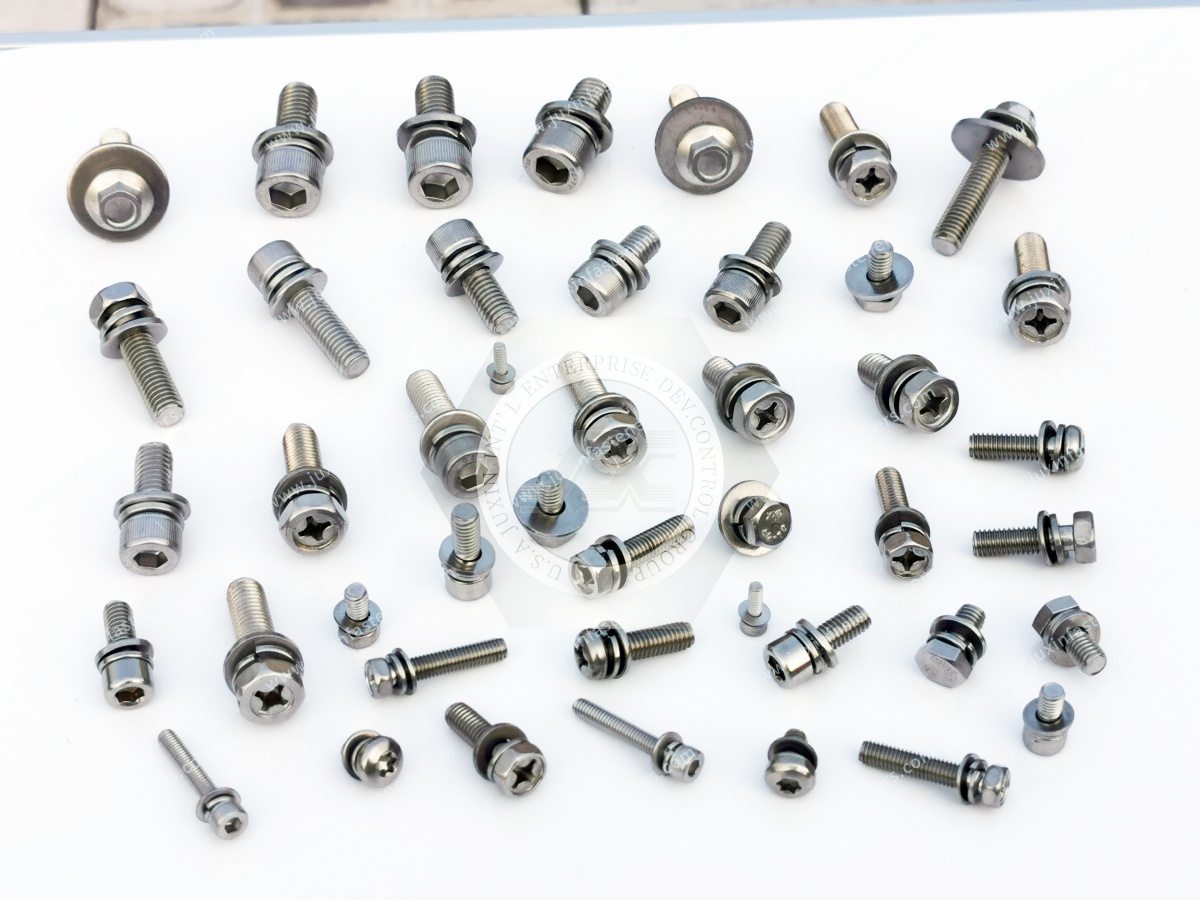
Request a Passivated Stainless Steel Screw RFQ
Are you sourcing passivated stainless steel screws for industrial production?
Do you need to review ASTM A967 requirements, compare 304 and 316 materials, or evaluate a new OEM fastener supplier?
JUXIN FASTENERS welcomes inquiries from design engineers, structural engineers, mechanical engineers, manufacturing engineers,
production managers, procurement specialists, purchasing managers, supplier development teams and supply chain managers.
For technical review and quotation, please provide:
2D drawing or applicable standard + screw type + head and drive geometry + thread designation + length + stainless steel grade
+ mechanical requirements + passivation specification + inspection criteria + sample quantity + production volume + packaging requirements + target delivery schedule.
For supplier replacement projects, include the existing approved specification and any proposed deviations.
Company: Juxin Fasteners
Website: https://www.juxinfasteners.com/
Email: info@juxinfasteners.com
Send your stainless steel screw drawings and OEM RFQ to JUXIN FASTENERS for technical review and quotation.
Contact Us
Tel.:
+86 020 8621 0320
+86 020 3121 6067
E-mail:
Technical Support:
Navigation
SEND INQUIREY



