
Call Us
+86 136 6007 9809
Call Us
+86 136 6007 9809

Jul. 12, 2024
Stainless Steel Thread-Locking Screws: Nylon Patch, Adhesive Coatings and OEM Assembly Solutions
Stainless steel screws are widely used in industrial equipment, electronics, automation systems, electrical enclosures and selected automotive assemblies.
In applications exposed to vibration, thermal cycling, repeated handling or fluctuating mechanical loads,
maintaining a reliable threaded connection may require more than selecting the correct stainless steel material and screw dimensions.
One option is to use a screw with a pre-applied thread-locking feature.
Stainless steel thread-locking screws may incorporate a nylon locking patch, a pre-applied adhesive coating or another specified locking system.
These features are designed to influence the behavior of the threaded connection, but they do not all work in the same way.
A nylon patch generally creates prevailing torque through interference with the mating thread.
A pre-applied adhesive system relies on its particular activation and curing mechanism to develop locking performance.
Selecting between these solutions requires attention to joint design, thread engagement, installation torque, environmental exposure and production requirements.
For mechanical and design engineers, the primary question is whether the locking method meets the joint's functional requirements.
For manufacturing engineers and production managers, the concern is whether the screw can be installed consistently using the intended equipment.
For purchasing and supplier development teams, the challenge is obtaining a correctly specified locking feature that performs consistently across production lots.
This guide focuses on the engineering selection and OEM sourcing of stainless steel screws with pre-applied thread-locking features.
Juxin Fasteners supplies industrial fastening components and welcomes inquiries for stainless steel thread-locking screw configurations and drawing-based OEM fasteners.
Why Do Stainless Steel Screws Need Thread-Locking Features?
A properly designed bolted joint relies on suitable clamp load, joint stiffness and controlled installation.
However, certain service conditions can cause the joint to lose preload or experience relative movement.
Potential contributing factors include transverse vibration, embedding of contacting surfaces, thermal cycling and changing service loads.
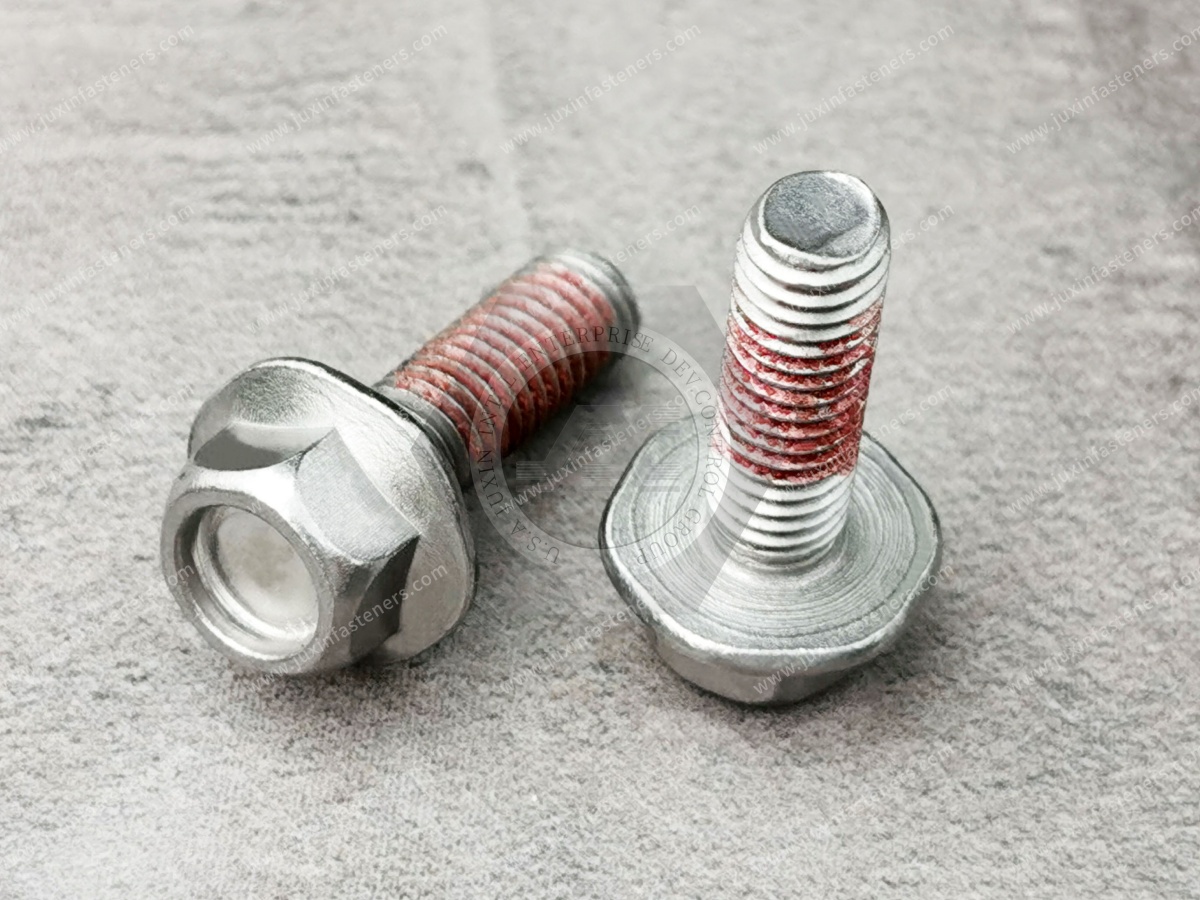
Thread-locking features are intended to address particular loosening mechanisms, but they are not substitutes for correct joint design.
For example, a locking patch may resist screw rotation while the joint still experiences a reduction in clamp load due to settling or material relaxation.
This distinction matters in machinery, electronics and equipment that must remain assembled during repeated operating cycles.
Before specifying a locking screw, engineers should establish whether the problem is:
Unintended thread rotation
Loss of clamp load
Joint movement
Thread damage or galling
Incorrect installation
A locking feature may help with some of these issues, but not all.
Nylon Patch Stainless Steel Screws: How They Work
A nylon patch is a polymer-based locking feature applied to a defined area of the screw thread.
When the screw engages a compatible mating thread, the patch is compressed or displaced and generates additional resistance to rotation.
This resistance is commonly described as prevailing torque.
Unlike clamp-load-generating tightening torque, prevailing torque exists because of the locking feature's interaction with the mating thread.
Potential Advantages
Nylon patch screws may offer:
A pre-applied locking feature
No separate liquid threadlocker dispensing step
Potential compatibility with automated assembly
Defined locking-feature placement
Possible reuse within qualified limits
Important Limitations
A nylon patch does not automatically guarantee resistance to all vibration conditions.
Performance depends on:
Screw and mating-thread geometry
Patch dimensions and position
Polymer formulation
Temperature
Chemical exposure
Installation and removal cycles
Reuse Is Not Unlimited
Some nylon patch systems may be designed for multiple installation cycles.
However, reuse performance must be confirmed for the specified coating and acceptance requirements.
A screw should not be advertised as reusable for a fixed number of cycles without supporting qualification data.
Pre-Applied Adhesive Thread-Locking Screws
Pre-applied adhesive systems use a coating placed on the screw threads before final assembly.
Depending on the product, the coating may contain encapsulated adhesive components or use another specified activation mechanism.
During installation, the system is activated according to its formulation and develops locking performance under defined conditions.
Potential Advantages
No separate liquid adhesive application during assembly
Controlled coating location
Reduced handling steps
Potential suitability for repetitive production
Defined locking performance when properly qualified
Engineering Considerations
The correct adhesive system must be selected for:
Mating materials
Thread dimensions
Surface condition
Assembly process
Operating temperature
Chemical exposure
Required curing or activation conditions
Important Limitation
Not every pre-applied adhesive system is suitable for stainless steel.
Some anaerobic threadlockers can cure more slowly on passive metal surfaces such as stainless steel, depending on the formulation and use of activators.
The coating supplier's technical requirements must be followed.
Nylon Patch vs. Pre-Applied Adhesive: Key Differences
| Selection factor | Nylon patch | Pre-applied adhesive |
|---|---|---|
| Primary mechanism | Mechanical interference and prevailing torque | Adhesive locking after specified activation or curing |
| Installation behavior | Additional prevailing torque during engagement | Depends on coating formulation |
| Cure requirement | Typically no chemical curing step | Product-dependent |
| Reuse | Possible within qualified limits | Product-dependent; often requires reassessment or renewal |
| Temperature capability | Limited by polymer formulation | Limited by adhesive formulation |
| Chemical compatibility | Must be verified | Must be verified |
| Automated assembly | Potentially suitable | Potentially suitable |
| Inspection focus | Patch geometry, position and locking performance | Coating coverage, position and functional performance |
Engineering Recommendation
Select the locking mechanism according to the required joint behavior rather than assuming one solution is universally stronger or more reliable.
Prevailing Torque Is Not the Same as Clamp Load
This is one of the most important distinctions in locking screw selection.
A nylon patch creates resistance to rotation during thread engagement.
However, the total torque applied by the installation tool includes multiple contributions.
A simplified representation is:
Applied installation torque = prevailing torque + torque associated with thread friction, bearing friction and preload generation.
The actual relationship is more complex and depends on the joint and fastening system.
Why This Matters
If a production line uses a fixed torque setting without accounting for prevailing torque,
the resulting clamp load may differ from that of an otherwise similar screw without a locking patch.
Consequently, a locking screw should not automatically inherit the tightening specification of the original uncoated screw.
Engineering Recommendation
Validate the installation process using the actual screw, mating thread, surface condition and production tooling.
Where joint preload is important, torque alone may not be sufficient to demonstrate the required clamp load.
How to Select a Stainless Steel Nylon Patch Screw
The locking feature must be specified together with the base fastener.
Base Screw Geometry
Confirm the head style, drive configuration, thread diameter, pitch, length and applicable dimensional standard.
Material and Mechanical Properties
Specify the stainless steel grade and any applicable mechanical-property class.
304/18-8 and 316 are common commercial material considerations, but they should not be treated as interchangeable without checking the approved specification.
Thread Engagement
The locking patch must engage the intended mating thread over an appropriate length.
Patch Position
Patch placement matters.
A patch positioned outside the engaged thread region may not provide the intended locking effect.
A patch extending into an unsuitable area may interfere with assembly.
Patch Coverage
Coverage length and circumferential extent should be defined by the approved specification or supplier's qualified product design.
Mating Thread
The internal thread material, dimensional tolerance and surface condition affect prevailing torque.
Operating Environment
Temperature, moisture, oils, solvents and cleaning chemicals may affect the locking feature.
Assembly Requirements
Specify the intended installation tooling, tightening method and acceptance criteria.
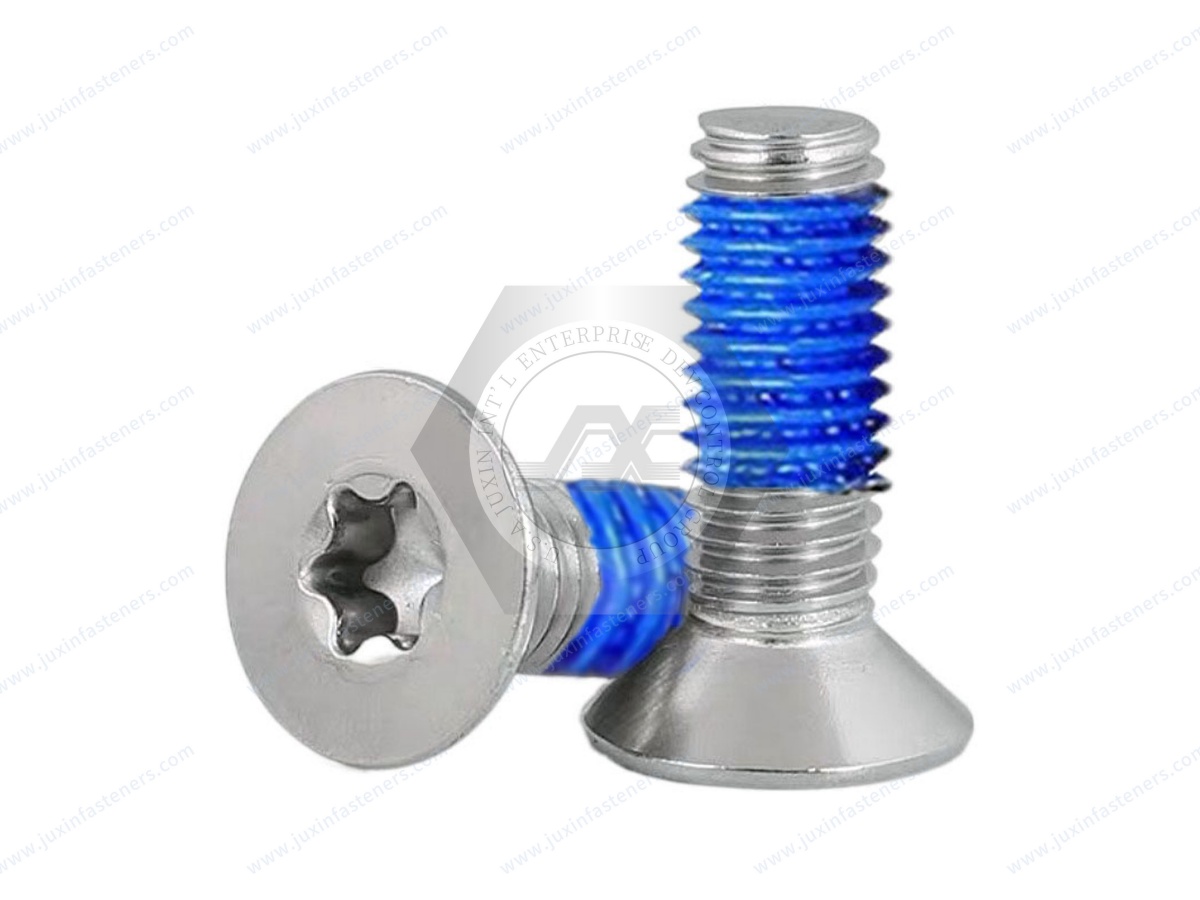
Nylon Patch Placement: A Small Detail With Major Assembly Consequences
Two screws can have the same material, dimensions and head style but perform differently if their locking patches are positioned differently.
Consider a screw installed into a blind threaded hole.
If the patch is positioned too close to the screw tip, it may engage earlier than intended.
If the patch is too close to the head, insufficient patch length may engage the internal thread.
In assemblies with limited thread engagement, incorrect patch placement can reduce locking effectiveness or interfere with seating.
A complete locking screw drawing should identify the functional patch location relative to the screw's reference dimensions.
For custom OEM screws, the following should be agreed:
Coating location
Coating length
Coverage configuration
Required thread engagement
Installation and removal torque criteria
Inspection method
This is particularly important when transferring an existing locking screw to a new supplier.
Stainless Steel Thread Galling and Locking Coatings
Stainless steel threaded connections, particularly certain austenitic stainless steel pairings, may be susceptible to galling.
Galling involves adhesive surface damage that can cause threads to seize during installation or removal.
A locking feature and an anti-galling treatment are not necessarily the same thing.
Some coatings may influence friction or provide lubricating effects, but these properties must be verified for the specific product.
A nylon patch should not automatically be assumed to prevent galling elsewhere along the threaded connection.
Likewise, an adhesive locking coating should not be assumed to solve an existing galling problem.
Engineering Considerations
Mating material
Thread fit
Surface condition
Installation speed
Lubrication compatibility
Tool alignment
If galling has already occurred in production, the root cause should be investigated before adding a locking patch.
Thread-Locking Screws for Vibration-Sensitive Assemblies
Vibration resistance is a joint-level performance requirement.
The locking feature is only one element of the fastening system.
Other relevant factors include:
Clamp load
Joint stiffness
Friction between clamped components
Thread engagement
Transverse loading
Thermal cycling
Surface embedding
Testing and Validation
For applications where resistance to self-loosening is critical, engineering teams may consider appropriate vibration testing.
DIN 65151 and related transverse-vibration testing approaches are commonly referenced in the study of bolted-joint self-loosening.
However, the test method, specimen configuration and acceptance criteria must be appropriate to the actual joint.
Important Limitation
Passing a locking-feature torque test does not automatically prove that an assembled joint will retain its required preload under vibration.
Applications in Industrial Machinery and Automation
Stainless steel locking screws may be considered for:
Equipment housings
Mechanical accessories
Automation assemblies
Instrument mounts
Selected machinery components
Engineering Priorities
Joint security
Tool accessibility
Thread engagement
Installation repeatability
Maintenance requirements
Production Consideration
Pre-applied locking features may reduce the need for separate adhesive dispensing or washer handling where the assembly design permits.
However, any claimed reduction in cycle time should be verified against the actual production process.
Electrical and Electronic Equipment
Potential applications include:
Control cabinets
Communication equipment
Electronic module housings
Instrument enclosures
Industrial power equipment
Compact assemblies may have limited screw engagement or restricted tool access.
A locking patch must therefore be positioned so that it functions within the available mating thread length.
Important Consideration
Polymer or adhesive coatings may have application-specific electrical, temperature or cleanliness requirements.
These should be reviewed where relevant.
Automotive and EV Equipment
Selected automotive and EV auxiliary assemblies may require fastening solutions that resist unintended loosening.
Potential applications include:
Electronic housings
Auxiliary brackets
Interior equipment
Manufacturing fixtures
Engineering Priorities
Approved joint design
Vibration loading
Material compatibility
Assembly process control
Functional testing
Important Limitation
A stainless steel nylon patch screw should not automatically replace a specified high-strength or safety-critical automotive fastener.
Any substitution requires engineering approval.
Material Selection: 304, 316 and Mechanical Properties
The locking feature does not replace the need to select the correct base screw material.
304 Stainless Steel
May be considered for general industrial environments where its corrosion and mechanical properties are suitable.
316 Stainless Steel
May be considered where improved resistance to certain localized corrosion conditions is required.
18-8 Stainless Steel
A broad commercial designation that should not automatically be treated as a complete material specification.
A2 and A4 Fastener Groups
A2 and A4 are material groups used in relevant ISO stainless steel fastener specifications.
The required mechanical-property class must also be specified where applicable.
Important Principle
A locking patch does not increase the base screw's certified tensile strength or change its material grade.
The complete fastener must meet the intended joint requirements.
International Standards and Performance Requirements
The correct specification depends on both the base screw and the locking feature.
Base Screw Standards
Examples include:
ISO 4762 for metric hexagon socket head cap screws
ISO 7380-1 for certain metric button head screws
ISO 3506-1 for relevant stainless steel bolt, screw and stud mechanical-property requirements
Prevailing Torque Testing
ISO 2320 addresses prevailing torque type steel nuts and should not automatically be applied as a universal product specification for nylon patch screws.
For pre-applied locking screws, performance criteria should be established using a suitable agreed test method or the relevant qualified coating system specification.
Thread Compatibility
Metric threads, UNC/UNF threads and legacy BSW/BSF threads are different systems.
They must not be treated as directly interchangeable.
Engineering Recommendation
A complete drawing or purchase specification should define:
Base fastener standard
Material and property class
Locking feature
Coating location
Functional torque requirements
Test method
Acceptance criteria
Automated Assembly and Production-Line Reliability
For high-volume OEM production, a locking screw must work consistently with the intended assembly equipment.
Screw Feeding
Pre-applied patches or coatings may affect handling, orientation or feeding.
Driver Engagement
The head and drive must match the installation tooling.
Installation Torque
Prevailing torque must be accounted for when developing the tightening process.
Thread Engagement
The locking feature must engage the mating thread as intended.
Process Monitoring
Depending on the application, production teams may monitor torque, angle, seating behavior or other relevant process indicators.
Rework and Maintenance
A reused locking screw may not provide the same performance as a new screw.
Production Manager's Perspective
The value of a pre-applied locking screw depends on the complete assembly process.
A slightly higher component price may be commercially reasonable if the qualified solution reduces separate dispensing steps or improves assembly consistency.
However, the actual savings must be established from production data.
Common Problems With Thread-Locking Screws
| Problem | Possible cause | Engineering response |
|---|---|---|
| Excessive installation torque | Patch interference, thread fit or misalignment | Review coating and thread geometry |
| Inadequate locking torque | Incorrect patch coverage or engagement | Verify placement and performance |
| Screw does not fully seat | Locking feature or geometry interference | Review engagement and installation |
| Thread seizure | Galling or other thread damage | Investigate material pairing and process |
| Locking performance declines after reuse | Coating wear or adhesive behavior | Validate reuse limits |
| Inconsistent production results | Coating variation, thread variation or tooling | Review process capability and inspection |
| Joint loosens in service | Inadequate joint design or locking performance | Evaluate the complete assembly |
Engineering Insight
A locking screw should be evaluated as a functional component, not simply as a standard screw with an additional colored patch.
OEM Custom Nylon Patch and Pre-Applied Locking Screw Specifications
Drawing-based locking screw projects may require special coating placement or functional performance criteria.
Potential requirements include:
Custom patch length
Specific coating location
Defined prevailing torque
Special head geometry
Nonstandard screw length
Application-specific material
Defined installation and removal performance
Important Commercial Principle
Not every coating system is suitable for every screw geometry, temperature range or application.
Specific product configurations, coating options, samples, MOQ and production requirements should be confirmed during technical review.
Supplier Qualification for Stainless Steel Thread-Locking Screws
Supplier qualification should include more than dimensional inspection.
Base Screw Conformity
Verify material, dimensions, thread designation and applicable mechanical properties.
Locking Feature Conformity
Confirm coating type, location, coverage and agreed performance requirements.
Functional Testing
Where specified, evaluate installation and removal torque or other appropriate locking performance criteria.
Assembly Validation
Test representative screws in the intended mating components.
Production Consistency
Define inspection and acceptance requirements for recurring orders.
Commercial Evaluation
Consider:
MOQ
Sample approval
Production quantity
Packaging
Delivery schedule
Supply continuity
Total assembly cost
Supplier Development Insight
When changing suppliers, a nylon patch screw should not be approved solely because the replacement has the same diameter, length and patch color.
The coating system and functional performance must also be evaluated.
What to Include in a Thread-Locking Screw RFQ
For an accurate quotation, provide:
Base Fastener Specification
Product drawing or standard
Head and drive type
Thread diameter and pitch
Length
Material and mechanical-property class
Locking Feature Requirements
Nylon patch or adhesive system
Coating location
Coverage requirements
Functional torque requirements
Reuse requirements, if applicable
Assembly Information
Mating material
Internal thread specification
Engagement length
Installation method
Operating temperature
Environmental exposure
Vibration conditions
Quality and Commercial Requirements
Test method
Acceptance criteria
Sample quantity
Production quantity
Packaging
Target delivery schedule
Frequently Asked Questions
What is a nylon patch screw?
A nylon patch screw has a polymer-based locking feature on its threads that creates resistance to rotation through interaction with the mating thread.
Are nylon patch screws reusable?
Some systems may be reused within qualified limits, but performance depends on the coating and assembly conditions.
Are nylon patch screws suitable for stainless steel?
They may be suitable when the base screw, mating thread and locking system are properly specified and validated.
Does a nylon patch prevent vibration loosening?
It may improve resistance to unintended rotation, but complete joint performance must be validated.
What is the difference between a nylon patch and an adhesive threadlocker?
A nylon patch primarily provides mechanical interference, while an adhesive system develops locking behavior through its specified activation or curing mechanism.
Can a nylon patch prevent stainless steel thread galling?
Not automatically. Galling must be addressed through suitable material, thread and installation design.
Do locking screws require different tightening torque?
They may. Prevailing torque and coating friction can affect the installation process.
Can a standard screw be replaced with a locking screw?
Potentially, but the joint design, installation process and functional requirements must be reviewed.
Can pre-applied locking screws be used in automated assembly?
They may be suitable, subject to feeding, tooling, coating and process validation.
What should buyers specify for custom nylon patch screws?
The base screw specification, patch location, performance requirements, mating thread, test method, quantity and acceptance criteria.
Juxin Fasteners: Stainless Steel Thread-Locking Screws for OEM Applications
Juxin Fasteners supplies industrial fastening components and supports inquiries for drawing-based OEM fastening requirements.
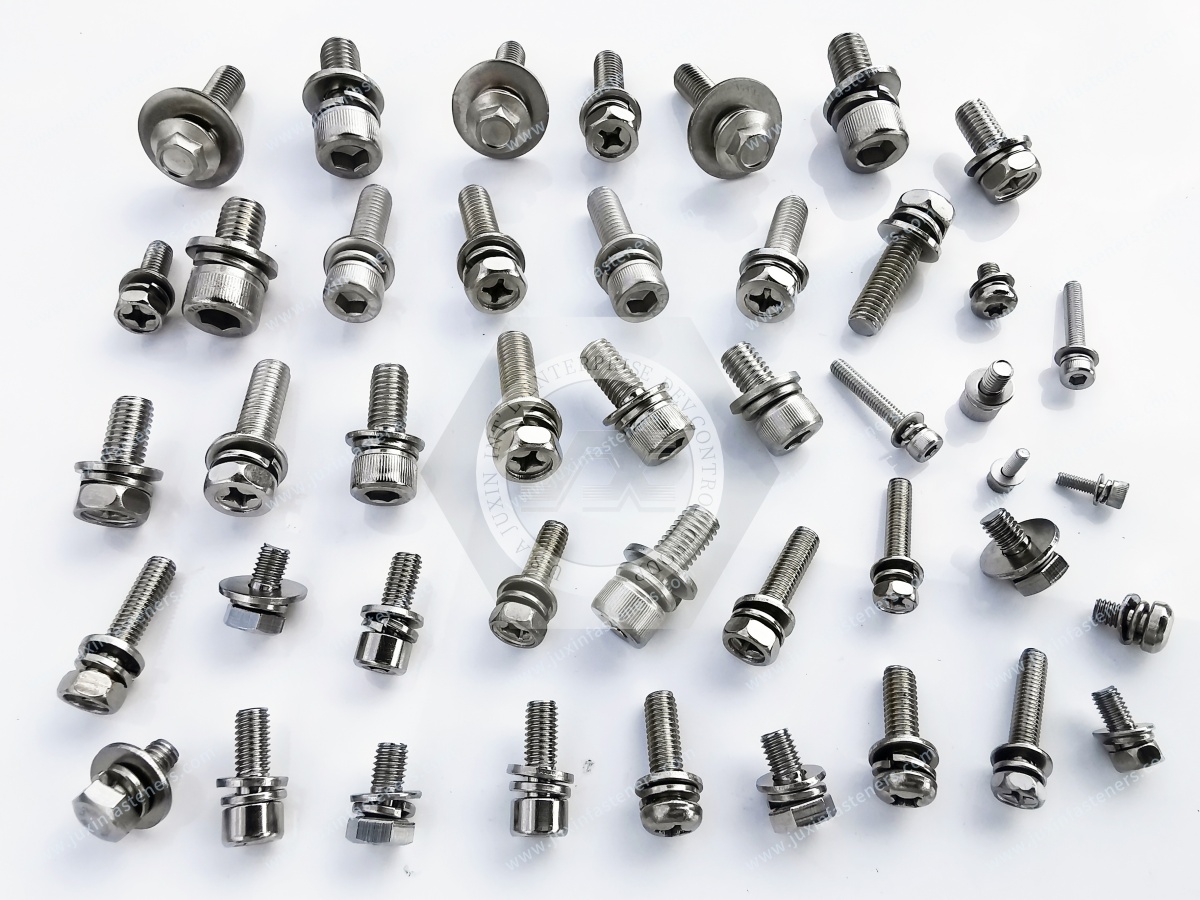
Relevant screw configurations may include:
Stainless steel socket head screws with specified locking features
Stainless steel button head screws with specified locking features
Stainless steel pan head screws
Stainless steel flange head screws
Nylon patch screw configurations
Pre-applied adhesive locking screw configurations
Custom threaded fasteners
Specific locking systems, coating options, material grades, dimensions, performance requirements, samples,
MOQ and delivery schedules are subject to technical and commercial confirmation.
Request a Stainless Steel Nylon Patch or Thread-Locking Screw RFQ
Are you sourcing stainless steel nylon patch screws, pre-applied adhesive locking screws or custom vibration-resistant fastening components for OEM production?
Do you need to qualify an alternative supplier, specify coating placement or validate installation performance in a production assembly?
Juxin Fasteners welcomes technical inquiries from design engineers, mechanical engineers, structural engineers, manufacturing engineers,
production managers, purchasing specialists, procurement managers, supplier development teams and supply chain managers.
For technical review and quotation, please provide:
2D drawing or product standard + screw head and drive type + thread designation + length + stainless steel grade
+ locking feature type + coating position + functional torque requirements + mating thread + operating conditions
+ test criteria + sample quantity + production quantity + packaging requirements + target delivery schedule.
For replacement projects, include the existing approved screw specification and any available locking-performance requirements.
Company: Juxin Fasteners
Website: https://www.juxinfasteners.com/
Email: info@juxinfasteners.com
Send your stainless steel thread-locking screw drawings and OEM RFQ to Juxin Fasteners for technical review and quotation.
Contact Us
Tel.:
+86 020 8621 0320
+86 020 3121 6067
E-mail:
Technical Support:
Navigation
SEND INQUIREY



