
Call Us
+86 136 6007 9809
Call Us
+86 136 6007 9809

Jul. 16, 2024
Automotive Stainless Steel Screws and Bolts: OEM Fastening Solutions for Vehicle and EV Components
Automotive manufacturing requires fastening systems that perform reliably under vibration, changing temperatures, moisture exposure and demanding production conditions.
Stainless steel screws and bolts are used in selected vehicle components where corrosion resistance, dimensional consistency, appearance or serviceability makes them an appropriate choice.
Potential applications include automotive electronics, sensor housings, auxiliary brackets, interior and exterior trim, selected EV enclosure components and production equipment.
However, stainless steel is not a universal replacement for high-strength automotive fasteners.
The suitability of a stainless steel screw depends on the joint's mechanical requirements, operating environment, mating materials, installation process and approved engineering specification.
For automotive OEMs and Tier-1/Tier-2 suppliers, choosing the correct fastener is only one part of the process.
The fastener must also support consistent production assembly, supplier qualification, traceability requirements and controlled engineering changes.
This guide explains where stainless steel screws and bolts may be appropriate in automotive and electric vehicle applications,
how to select their configurations and what information purchasing teams should provide when developing a new supplier.
Juxin Fasteners supplies industrial fastening components and welcomes drawing-based inquiries for stainless steel screws, bolts and related OEM fasteners.
Where Are Stainless Steel Screws Used in Automotive Manufacturing?
Stainless steel fasteners may be considered where the required mechanical properties and environmental conditions are compatible with the selected alloy and fastener design.
Common application categories include:
Automotive electronic housings
Sensor and camera mounting components
Interior trim assemblies
Selected exterior trim components
Auxiliary equipment brackets
Electrical enclosure accessories
EV battery-system peripheral components
Automotive manufacturing fixtures
The exact application must be evaluated against the approved vehicle or component specification.
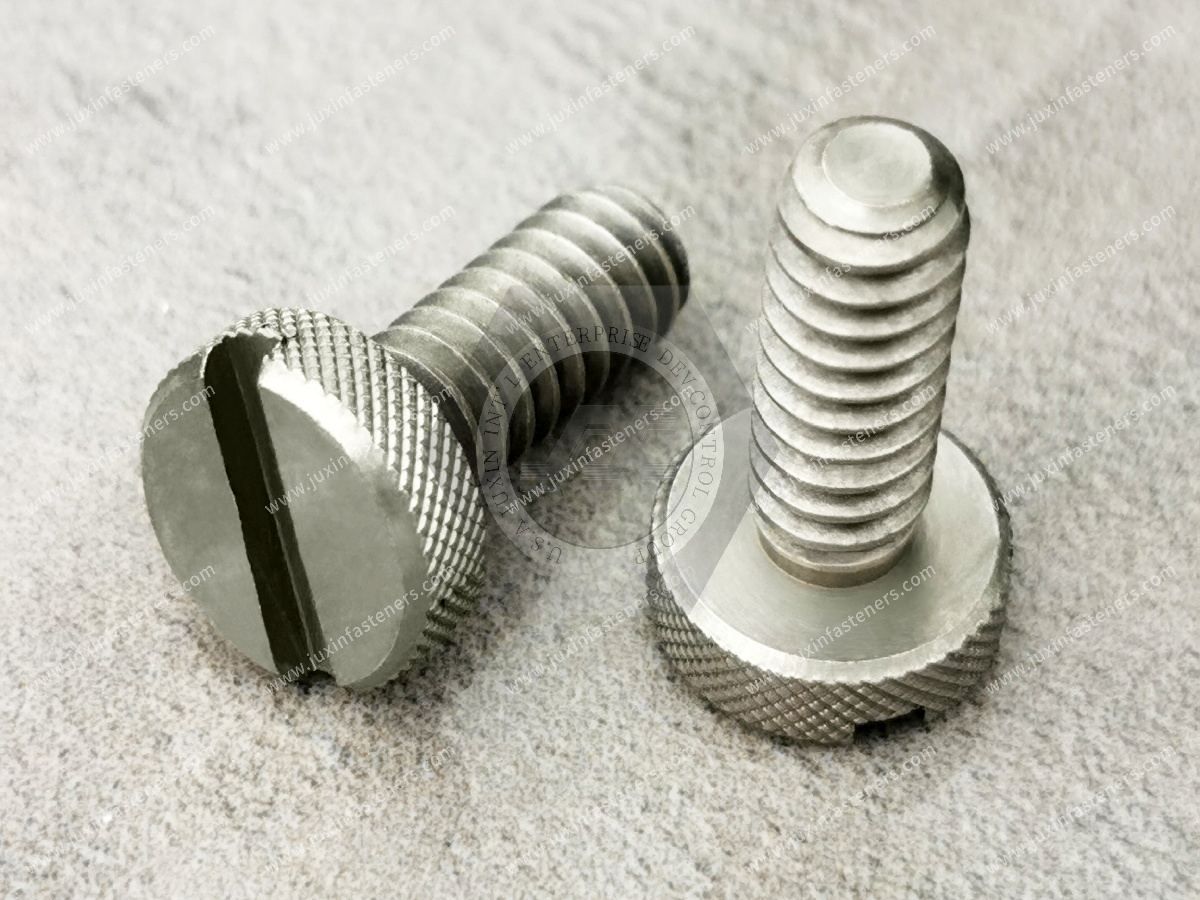
Safety-Critical Applications Require Separate Qualification
Brake systems, steering systems, suspension joints, primary chassis connections and structural battery retention systems can impose demanding mechanical and safety requirements.
Conventional A2 or A4 stainless steel screws must not be assumed suitable for these connections.
A stainless steel substitution may change tensile capacity, proof-load behavior, fatigue performance, friction characteristics and joint preload.
Engineering Principle
Automotive fastener selection must begin with the functional requirements of the joint, not the corrosion resistance of the material alone.
Automotive Electronics and ECU Housing Fasteners
Electronic control units, sensors and communication modules often use compact mechanical assemblies.
Potential fastening locations include:
ECU housing covers
Sensor mounting brackets
Camera module housings
Communication equipment
Auxiliary electronic enclosures
Instrument housings
Suitable Screw Configurations to Evaluate
Depending on the approved design:
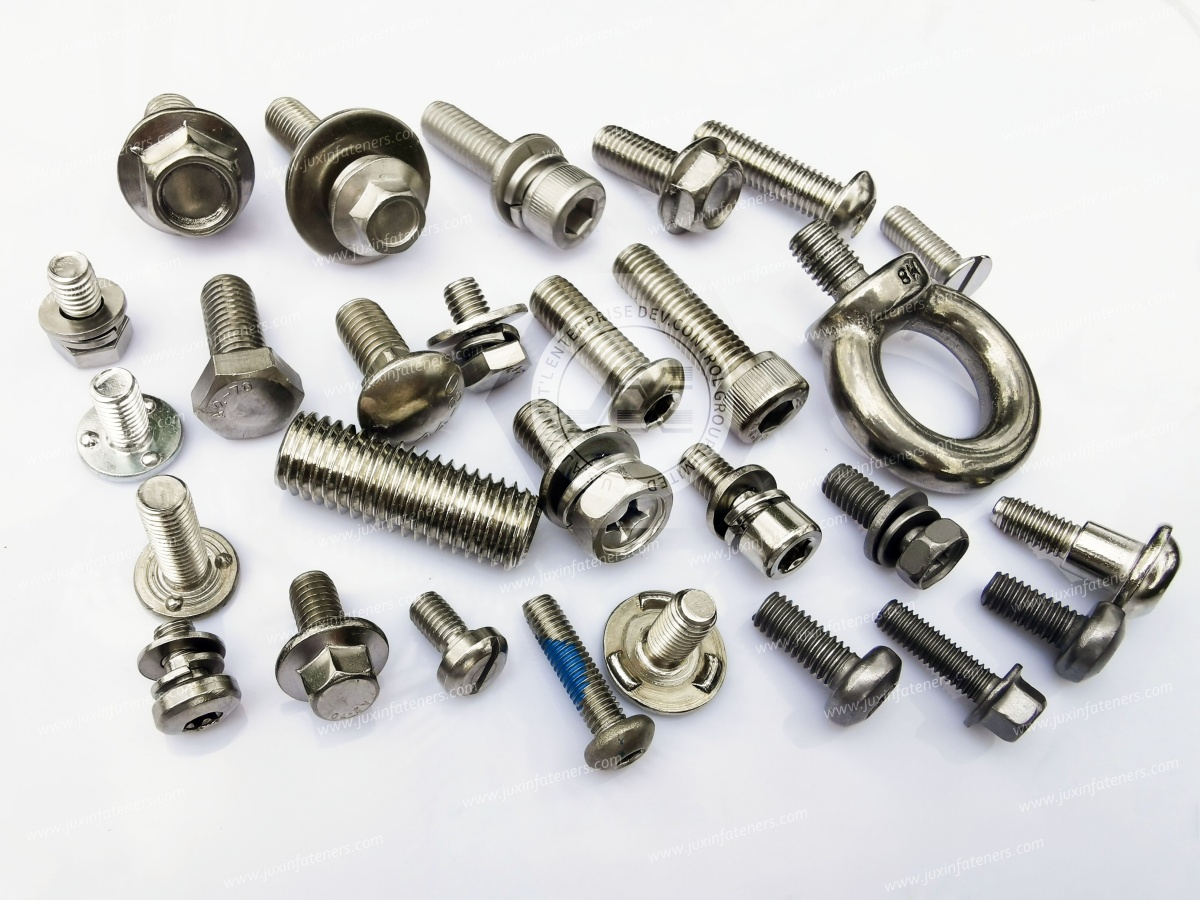
Stainless steel pan head machine screws
Stainless steel button head screws
Stainless steel socket head screws
Stainless steel screws with internal hexalobular drives
Stainless steel SEMS screws
Specified thread-locking screws
Engineering Considerations
Electronic housings may require controlled screw head height, tool access, consistent seating and limited assembly space.
A screw must also be compatible with the housing material, which may be aluminum, steel or an engineered polymer.
Important Limitation
Electrical conductivity, grounding, shielding, insulation and electromagnetic compatibility requirements cannot be established from the stainless steel screw designation alone.
The complete electronic assembly must be evaluated.
Production Consideration
Where multiple screws are installed into small electronic housings, driver engagement and consistent tightening are important to reducing damage and rework.
Stainless Steel Screws for Automotive Interior and Exterior Trim
Vehicle trim assemblies may require fasteners with suitable appearance, corrosion resistance and assembly characteristics.
Potential applications include:
Interior equipment covers
Decorative trim components
Selected exterior accessories
Nonstructural mounting brackets
Service-access panels
Pan Head Screws
May be considered for general panel and cover fastening.
Button Head Screws
May be considered where a rounded, relatively low-profile head is required.
Countersunk Screws
May be used where the approved component design requires a flush surface.
Self-Tapping Screws
May be considered for suitable sheet metal or polymer assemblies, provided the thread geometry and mating material are compatible.
Engineering Considerations
Panel thickness
Hole geometry
Screw head clearance
Surface appearance
Thread engagement
Repeated service access
Local material deformation
Design Insight
A screw selected for appearance may still cause production problems if the drive recess is difficult to access or the mating material strips during tightening.
Head geometry and assembly tooling should be reviewed together.
EV Battery Enclosure and Peripheral Component Fastening
Electric vehicles introduce additional fastening requirements involving electrical systems, thermal management and battery enclosure design.
Stainless steel screws may be considered for selected auxiliary and non-safety-critical components, subject to engineering approval.
Potential applications include:
Battery management system housings
Sensor mounting brackets
Auxiliary electrical covers
Cable-management accessories
Nonstructural enclosure hardware
Selected thermal-management equipment accessories
Engineering Priorities
Electrical clearance
Material compatibility
Vibration exposure
Corrosion environment
Assembly access
Maintenance requirements
Thermal expansion
Important Electrical Consideration
Stainless steel screws are electrically conductive.
They should not be assumed to provide electrical isolation.
Where insulation is required, the complete fastening system—including washers, bushings, coatings and mating components—must meet the relevant electrical design requirements.
Battery Safety Consideration
Battery pack structural retention, crash-load connections, electrical busbar joints and other safety-critical interfaces require application-specific validation.
A standard stainless steel screw should not be substituted into these joints without formal engineering approval.
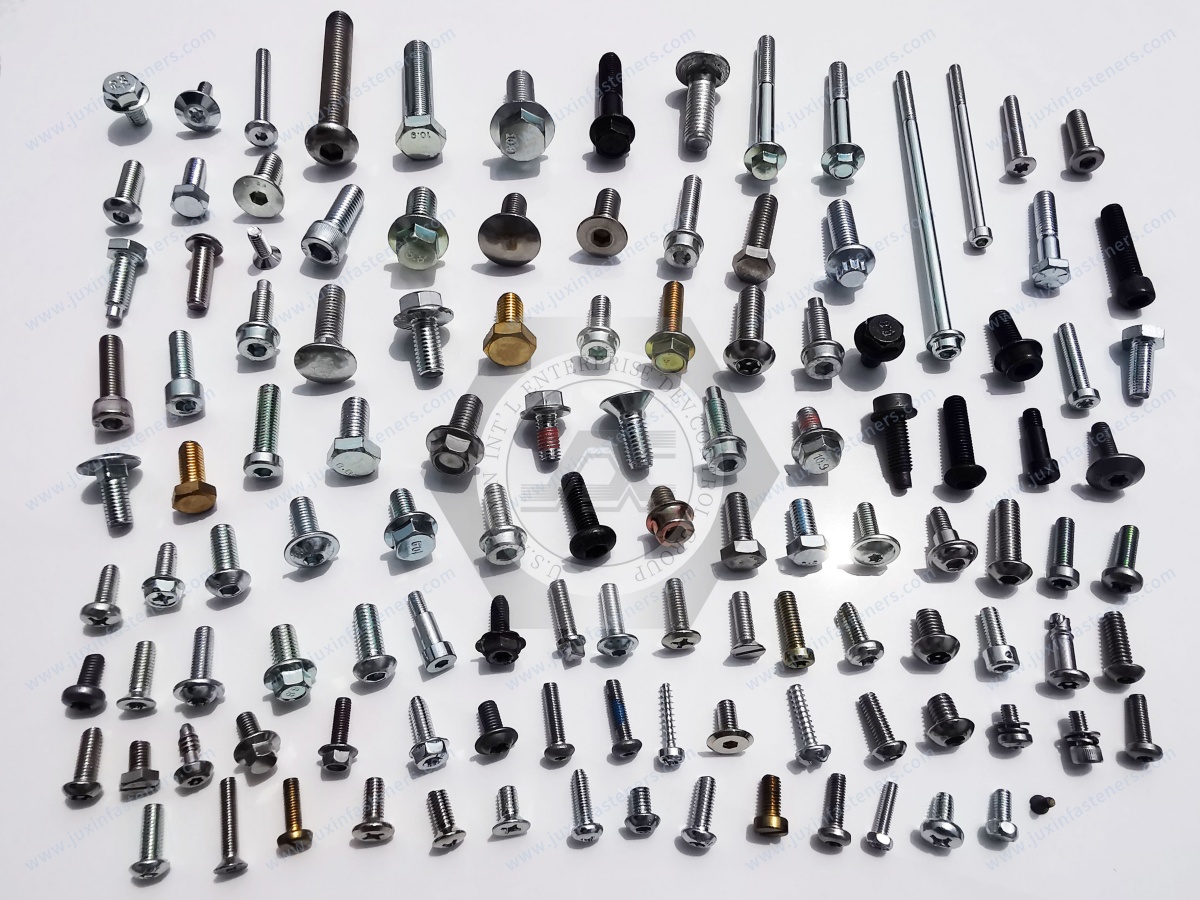
Selecting Automotive Stainless Steel Screw Types
Different screw configurations support different assembly requirements.
| Fastener type | Potential automotive application | Main engineering consideration |
|---|---|---|
| Socket head screw | Mechanical equipment and auxiliary assemblies | Tool clearance and mechanical properties |
| Button head screw | Electronic covers and selected trim | Head profile and tightening limitations |
| Pan head screw | Housings and equipment panels | Bearing area and drive access |
| Hexagon head screw | Approved mechanical brackets | Wrench clearance and joint loading |
| Flange screw or bolt | Suitable auxiliary mounting connections | Bearing area and clamp-load behavior |
| SEMS screw | Electronic housings and repetitive assembly | Washer retention and installation consistency |
| Self-tapping screw | Suitable sheet metal or polymer components | Pilot hole, thread formation and stripping |
| Thread-locking screw | Approved vibration-sensitive assemblies | Locking performance and installation torque |
| Shoulder screw | Specific locating or pivoting assemblies | Shoulder dimensions, fit and loading |
Important Specification Rule
The product name alone does not establish mechanical strength or suitability.
A complete drawing and material specification are required.
304, 316 and Other Stainless Steel Materials for Automotive Components
Material selection should reflect the actual environment and joint requirements.
304 Stainless Steel
304 may be considered for selected automotive equipment and components requiring general corrosion resistance.
Potential applications include:
Interior equipment
Electronic housings
Auxiliary brackets
Selected exposed hardware
316 Stainless Steel
316 generally provides improved resistance to certain localized corrosion mechanisms compared with 304.
It may be considered for selected components exposed to more demanding moisture or chloride conditions.
However, 316 is not automatically the preferred choice for every automotive application.
A2 and A4 Fastener Material Groups
A2 and A4 are stainless steel material groups used in relevant ISO fastener specifications.
They are commonly associated with 304-type and 316-type stainless steels.
Mechanical-property classes must be considered separately.
410 Stainless Steel
410 is a martensitic stainless steel that can be heat treated.
Its mechanical properties and corrosion behavior differ from those of austenitic stainless steels.
Its suitability depends on the specified product and application.
Critical Mechanical Distinction
A stainless steel fastener with a particular corrosion-resistance grade should not be assumed to have the same
mechanical performance as a carbon or alloy steel fastener of a specified high-strength property class.
Example
An A2-70 stainless steel screw is not automatically equivalent to a property class 10.9 alloy steel screw.
The material, mechanical properties, joint design and approval requirements are different.
Automotive Engineering Recommendation
Do not replace an approved fastener based solely on nominal diameter, thread pitch and head geometry.
Road Salt, Moisture and Automotive Corrosion Exposure
Automotive components may encounter moisture, road salts, cleaning agents and other environmental contaminants.
Stainless steel can provide useful corrosion resistance, but performance depends on the alloy and local conditions.
Potential Corrosion Mechanisms
Pitting corrosion
Crevice corrosion
Galvanic corrosion
Surface contamination
Corrosion-assisted cracking under susceptible conditions
Galvanic Compatibility With Aluminum
Aluminum components are common in modern vehicles and EV equipment.
When stainless steel and aluminum are electrically connected in the presence of a suitable electrolyte, galvanic corrosion may occur.
The risk depends on factors such as exposed area ratio, electrolyte conditions and joint design.
Possible Design Measures
Depending on the application, engineers may evaluate:
Suitable material combinations
Protective coatings
Electrical isolation where permitted
Moisture control
Joint sealing
Drainage
Important Limitation
A more corrosion-resistant stainless steel grade does not automatically eliminate galvanic corrosion risk when connected to aluminum.
Vibration and Thread-Loosening Control in Automotive Assemblies
Automotive components may experience vibration and changing mechanical loads.
However, stainless steel screws do not inherently resist loosening simply because of their material.
The joint's resistance to loosening depends on its design and installation.
Relevant Factors
Clamp load
Joint stiffness
Thread engagement
Transverse movement
Surface conditions
Thermal cycling
Locking features
Potential Locking Solutions
Where specified and validated:
Nylon patch locking screws
Pre-applied adhesive locking screws
Appropriate mechanical locking systems
Joint-specific fastening designs
Important Distinction
A nylon patch may generate prevailing torque, while an adhesive locking system uses a different mechanism.
These should not be treated as automatically interchangeable.
SEMS Screws
SEMS screws combine a screw with a retained washer.
They may reduce separate washer handling in suitable production assemblies.
However, a retained washer does not automatically provide a locking function.
Engineering Recommendation
For vibration-sensitive automotive assemblies, evaluate the complete joint rather than relying solely on a locking feature.
Automotive Screw Installation Torque and Assembly Reliability
Installation is a critical part of fastener performance.
A correctly specified screw may still fail if the installation process is unsuitable.
Torque and Preload
Applied tightening torque is influenced by thread friction and bearing-surface friction.
The resulting clamp load depends on the actual fastening system.
Potential Assembly Problems
Over-tightening
Insufficient clamp load
Thread stripping
Drive recess damage
Misalignment
Stainless steel thread galling
Incomplete seating
Manufacturing Engineering Considerations
Review:
Driver compatibility
Tool alignment
Installation speed
Torque or torque-angle requirements
Mating thread quality
Screw feeding
Process monitoring
Production Manager's Perspective
A screw's unit price is only one part of its manufacturing cost.
Production teams should also consider installation cycle time, tool wear, scrap, rework and assembly consistency.
A fastener that causes repeated installation problems may increase the total cost of the finished automotive component.
Automotive Fasteners for Thermal-Management Equipment
Thermal-management equipment may involve temperature changes, moisture and different mating materials.
Potential auxiliary fastening applications include:
Cooling equipment covers
Sensor brackets
Pump accessory housings
Thermal-management equipment enclosures
Nonstructural mounting hardware
Engineering Considerations
Temperature range
Differential thermal expansion
Corrosion environment
Mechanical loading
Sealing requirements
Service access
Important Limitation
304 and 316 stainless steel should not automatically be assumed suitable for every engine, exhaust, turbocharger or high-temperature application.
Elevated-temperature properties and environmental compatibility require separate evaluation.
Automotive Fastener Standards and Specifications
Automotive fasteners may be governed by international standards, OEM drawings and project-specific requirements.
The applicable documents depend on the actual product and its function.
ISO 3506-1
Relevant to mechanical properties of specified corrosion-resistant stainless steel bolts, screws and studs.
ISO 4762
Relevant to metric hexagon socket head cap screws.
ISO 4017
Relevant to fully threaded metric hexagon head screws.
ISO 7380-1
Relevant to certain metric hexagon socket button head screws.
ASTM F593
May apply to certain stainless steel bolts, hex cap screws and studs within its specified scope.
ASME B18 Standards
Relevant ASME B18 specifications may define dimensional requirements for certain inch-series fasteners.
Important Distinction
ISO 898-1 concerns specified carbon and alloy steel fasteners and should not automatically be used as the mechanical-property specification for stainless steel screws.
Metric and Inch-Series Threads
Automotive components may use ISO metric threads or other thread systems depending on the approved design.
Metric threads are not directly interchangeable with UNC or UNF threads.
Legacy BSW and BSF threads are also distinct.
Engineering Recommendation
The approved drawing and applicable OEM specification take precedence when selecting replacement fasteners.
Automotive OEM and Tier-1/Tier-2 Fastener Qualification
Automotive supplier development involves more than identifying a screw with matching dimensions.
A replacement fastener must satisfy the approved technical and quality requirements.
Drawing Review
Confirm:
Product geometry
Thread designation
Material grade
Mechanical properties
Surface requirements
Critical dimensions
Special characteristics
Sample Evaluation
Where required, representative samples should be evaluated against the approved specification and actual assembly.
Dimensional Inspection
Inspection requirements may include:
Head dimensions
Thread dimensions
Length
Drive geometry
Critical tolerances
Material Verification
Confirm the specified material and required documentation.
Functional Validation
Depending on the application, validation may include:
Installation performance
Torque-related requirements
Joint function
Corrosion-related requirements
Assembly compatibility
Production Approval Requirements
Some automotive projects require formal production part approval documentation, such as PPAP, according to customer-specific requirements.
Important Supplier Qualification Note
PPAP, IATF 16949, material traceability systems and specific testing capabilities must be confirmed with the supplier for the actual project.
They should not be assumed from a general product description.
Change Control
Material, geometry, manufacturing-process or surface-treatment changes should be reviewed according to the approved customer requirements.
Supplier Development Insight
Two screws with identical nominal dimensions may differ in mechanical properties, surface condition, thread fit or installation performance.
Replacement approval must be based on the complete specification.
Cost Optimization for Automotive Fastener Procurement
Automotive procurement teams often need to balance technical requirements with recurring production costs.
Potential cost drivers include:
Material grade
Screw geometry
Manufacturing complexity
Surface treatment
Inspection requirements
Packaging
Order quantity
Delivery schedule
Standard vs. Custom Fasteners
A standard fastener may reduce tooling or development requirements when it satisfies the approved design.
A custom screw may be justified when the assembly requires a special head, shoulder, washer configuration or other functional feature.
Assembly Cost
A screw that supports reliable automated feeding and installation may reduce production disruption.
Supplier Qualification Cost
Changing suppliers can involve sample evaluation, testing, documentation and engineering approval.
Commercial Insight
The lowest quoted unit price does not necessarily provide the lowest total cost for an automotive OEM or Tier-1 supplier.
The complete qualification and assembly cost should be considered.
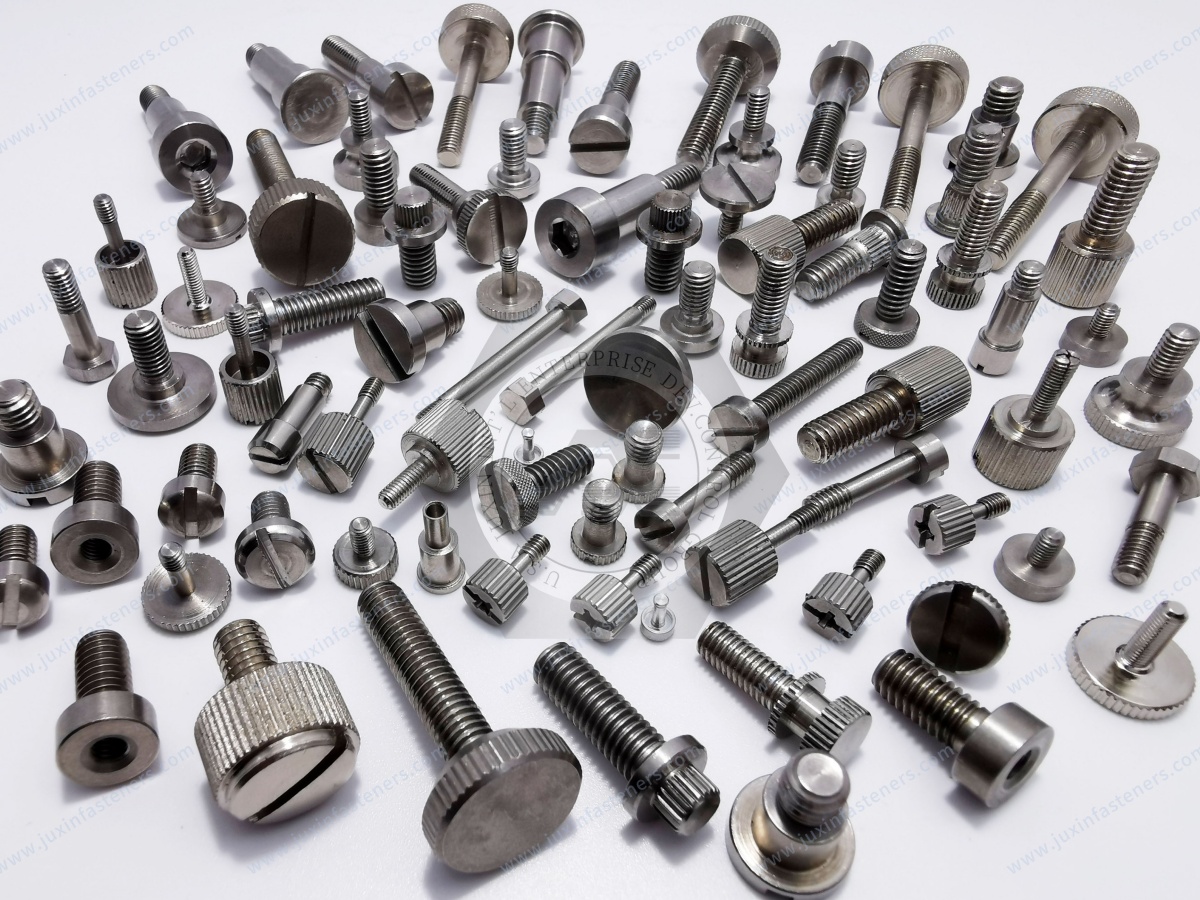
Custom Automotive Stainless Steel Fasteners
Some automotive component designs require fasteners that differ from standard catalog products.
Drawing-based customization may be considered for:
Special head geometries
Nonstandard lengths
Shoulder features
Flange configurations
Captive washer assemblies
Specified locking features
Application-specific thread configurations
Special dimensional tolerances
Engineering Review
Custom fastener development should consider:
Joint function
Material
Mechanical properties
Manufacturing feasibility
Installation method
Inspection requirements
Production quantity
Commercial Review
MOQ, sample requirements, tooling considerations and delivery schedules should be confirmed during quotation.
Important Limitation
A custom fastener should not be represented as automotive-qualified solely because it is manufactured according to an OEM drawing.
Any required customer approval and validation must be completed separately.
Preparing an Automotive Stainless Steel Fastener RFQ
A complete RFQ helps avoid quotation errors and unsuitable substitutions.
Product Definition
Provide:
2D drawing or applicable standard
3D model, where available
Head and drive type
Thread designation
Length
Critical dimensions
Material and Performance
Specify:
Stainless steel grade
Mechanical-property requirements
Surface treatment
Corrosion requirements
Functional requirements
Application Information
Include:
Vehicle component or subsystem
Mating materials
Joint loading
Operating temperature
Environmental exposure
Installation process
Quality Requirements
Identify:
Inspection criteria
Material documentation
Sample approval requirements
Customer-specific approval requirements
Change-control expectations
Commercial Requirements
Provide:
Sample quantity
Annual estimated demand
Production order quantity
Packaging requirements
Target delivery schedule
Important Procurement Recommendation
If a project requires PPAP or other automotive customer-specific documentation, state that requirement at the initial RFQ stage.
Frequently Asked Questions
Are stainless steel screws suitable for automotive applications?
Yes, for appropriately designed and approved applications. Suitability depends on mechanical, environmental and assembly requirements.
Can 304 stainless steel screws replace class 10.9 automotive bolts?
Not automatically. Their mechanical properties and application requirements are different.
Are 316 stainless steel bolts suitable for road salt exposure?
316 may offer improved resistance to certain localized corrosion conditions, but the complete environment and joint design must be evaluated.
Can stainless steel screws be used in EV battery systems?
They may be used in selected approved components. Structural, electrical and safety-critical connections require separate qualification.
Are stainless steel screws vibration-resistant?
Not inherently. Vibration resistance depends on the complete joint design and any specified locking system.
What are SEMS screws used for in automotive manufacturing?
They may simplify washer handling and support consistent assembly in suitable component designs.
Can stainless steel screws be used with aluminum components?
Yes, in suitable applications, but galvanic corrosion, thread engagement and mechanical compatibility must be evaluated.
Do automotive fasteners always require PPAP?
Requirements depend on the OEM, Tier-1 customer, component and purchasing specification.
Can an industrial stainless steel screw be substituted for an automotive fastener?
Only after engineering review and any required customer approval.
What information is needed for a custom automotive fastener quotation?
A drawing, material and mechanical requirements, application conditions, inspection criteria, production quantities and delivery expectations.
Juxin Fasteners: Automotive Stainless Steel Screws and OEM Fastening Components
Juxin Fasteners supplies industrial fastening components and supports drawing-based inquiries for automotive component applications.
Relevant product families include:
Stainless steel socket head screws
Stainless steel button head screws
Stainless steel pan head screws
Stainless steel hexagon head screws
Stainless steel flange screws and bolts
Stainless steel SEMS screws
Stainless steel self-tapping screws
Stainless steel shoulder screws
Stainless steel screws with specified locking features
Custom threaded components
For automotive projects, material options, product dimensions, manufacturing requirements, sample availability, inspection documentation,
MOQ and delivery schedules are subject to technical and commercial confirmation.
Customer-specific automotive approval requirements should be identified before quotation and supplier qualification.
Request an Automotive Stainless Steel Fastener RFQ
Are you developing a new automotive electronic module, EV equipment enclosure, sensor assembly or auxiliary vehicle component?
Do you need to qualify an alternative supplier for stainless steel screws, bolts, SEMS screws or custom drawing-based fasteners?
Juxin Fasteners welcomes inquiries from automotive OEMs, Tier-1 and Tier-2 suppliers, design engineers, mechanical engineers,
structural engineers, manufacturing engineers, production managers, purchasing specialists, procurement managers, supplier development teams and supply chain managers.
For technical review and quotation, please provide:
2D drawing or product standard + head and drive configuration + thread designation + dimensions + stainless steel grade
+ mechanical-property requirements + mating material + application conditions + installation requirements + surface treatment
+ inspection and approval requirements + sample quantity + annual demand + production quantity + packaging requirements + target delivery schedule.
For replacement projects, include the existing approved fastener specification and any customer-specific qualification requirements.
Company: Juxin Fasteners
Website: https://www.juxinfasteners.com/
Email: info@juxinfasteners.com
Send your automotive stainless steel fastener drawings and OEM RFQ to Juxin Fasteners for technical review and quotation.
Contact Us
Tel.:
+86 020 8621 0320
+86 020 3121 6067
E-mail:
Technical Support:
Navigation
SEND INQUIREY



