
Call Us
+86 136 6007 9809
Call Us
+86 136 6007 9809

Nov. 04, 2023
Precision metal stamping is a scalable manufacturing process for producing repeatable metal components from sheet or strip material using engineered dies and presses.
For OEM programs, however, successful metal stamping is not simply a matter of placing sheet metal into a press. Part geometry, material properties, thickness,
grain direction, bend requirements, hole-to-edge distance, tolerance, burr direction, tooling strategy, surface treatment and annual production volume can all influence manufacturability and total project cost.
JUXIN FASTENERS supplies custom precision metal stamping parts, stamped brackets, metal clips, retaining components, washers,
mounting plates and made-to-drawing metal components for automotive, electrical equipment, industrial automation, HVAC, commercial equipment and other OEM applications.
We support projects from drawing review and manufacturing evaluation through tooling, samples, production and secondary processing.
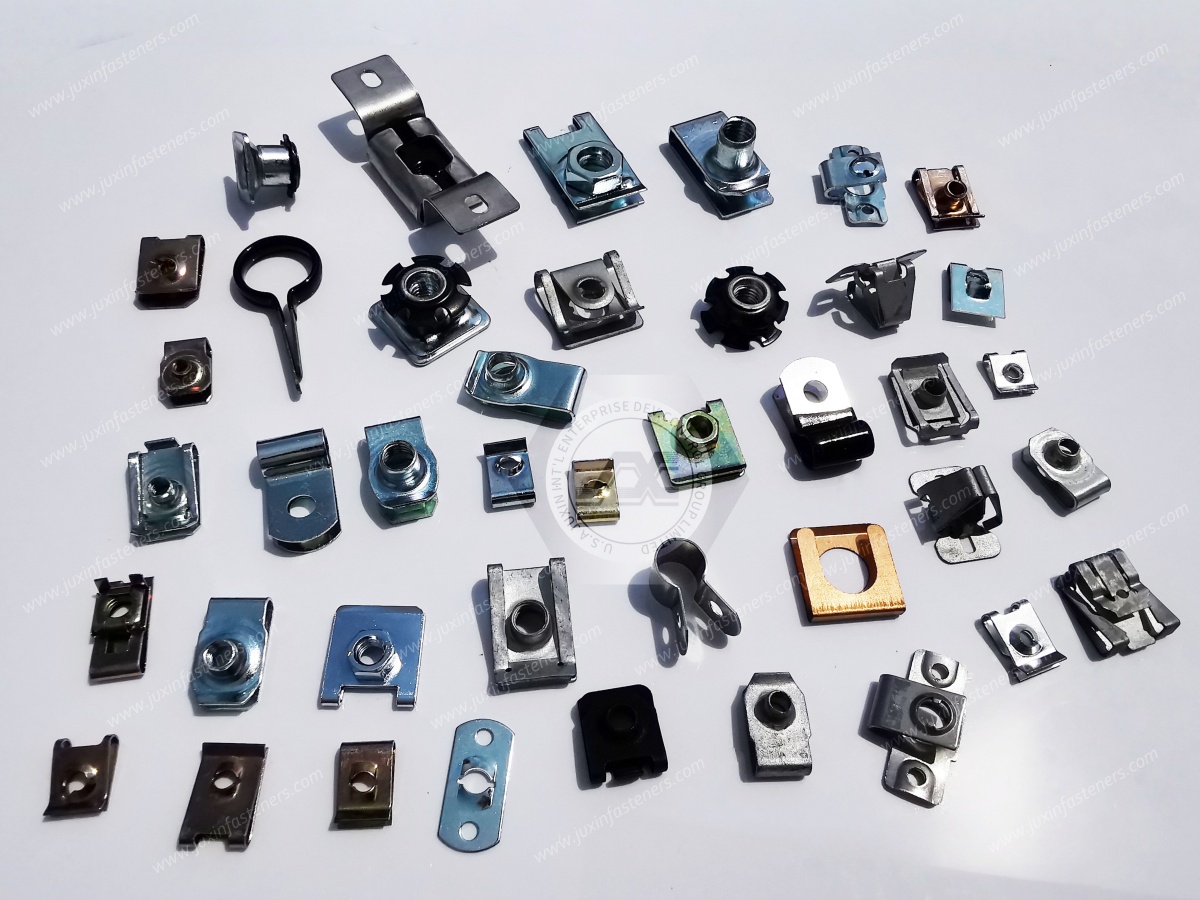
Precision metal stamping converts sheet or coil material into a specified component using one or more forming operations.
Depending on part geometry, these operations may include:
Blanking
Piercing
Punching
Bending
Coining
Embossing
Forming
Drawing
Flanging
Lancing
Trimming
Multiple operations can sometimes be integrated into progressive tooling for repeat production.
Typical custom stamped metal parts include:
Mounting brackets
Retaining clips
Spring clips
Flat washers
Special washers
Electrical contacts
Grounding components
Mounting plates
Equipment hardware
Sheet-metal retainers
Automotive fastening components
HVAC hardware
Appliance components
Custom formed parts
For sourcing teams, the important question is therefore not simply whether a component “can be stamped.”
The better question is:
Can the component be stamped consistently at the required quality, production volume and total manufacturing cost?
Metal stamping becomes particularly attractive when a project combines repeatable geometry with sufficient production demand to justify dedicated tooling.
Potential advantages include:
High production repeatability
Short cycle times after tooling is established
Integration of multiple forming operations
Efficient production from strip or coil
Consistent part geometry
Reduced secondary machining for suitable designs
Scalable medium- and high-volume manufacturing
However, stamping is not automatically the lowest-cost manufacturing process.
A low-volume component with complex geometry may be more economical to produce using:
Laser cutting
CNC machining
CNC bending
Wire forming
Fabrication
As annual volume increases, dedicated stamping tooling can become commercially attractive because tooling investment is distributed across a larger number of parts.
This relationship between tooling investment and recurring piece cost should be evaluated during sourcing.
OEM buyers frequently compare stamping with CNC machining.
The two processes solve different manufacturing problems.
| Decision Factor | Metal Stamping | CNC Machining |
|---|---|---|
| Initial Tooling | Usually required for production tooling | Often lower dedicated tooling requirement |
| Production Volume | Particularly suited to repeat production | Suitable for prototypes and many low-to-medium-volume requirements |
| Sheet/Strip Components | Strong process fit | Possible but often not the most efficient route |
| Complex 3D Machined Geometry | Limited by forming feasibility | Strong capability |
| Design Changes | Tool modification may be required | Often easier before production |
| Production Cycle | Can be very fast after tooling validation | Machining time remains part-specific |
| Material Removal | Usually limited | Fundamental to the process |
| Repeatability | High with controlled tooling/process | High with controlled machining/process |
For many OEM projects, the development path can involve more than one process.
For example, prototypes may initially be laser cut or CNC manufactured before dedicated stamping tooling is released for production.
Progressive die stamping uses a strip of material that advances through multiple stations within a die.
Each station performs part of the manufacturing sequence, such as:
Piercing
Blanking
Forming
Bending
Coining
Final separation
This process can be effective for repeat production of components requiring several operations.
Typical applications include:
Electrical contacts
Retaining clips
Spring clips
Automotive components
Small brackets
Washers
Equipment hardware
Precision formed components
The decision to use progressive tooling depends on more than quantity alone.
Engineers should also evaluate:
Part geometry
Material
Thickness
Number of forming operations
Required tolerances
Strip layout
Material utilization
Press requirements
Secondary operations
Expected program life
Not every stamped component requires a progressive die.
Different tooling strategies may be appropriate.
A dedicated operation is performed during each press cycle.
It can be useful for simpler geometries or projects where full progressive tooling is not commercially justified.
Multiple cutting operations may be completed during one press stroke.
This can be useful for flat components requiring controlled relationships between features.
Multiple operations occur sequentially as material moves through the die.
This can improve production efficiency for suitable medium- and high-volume parts.
Tool selection should therefore be based on the complete manufacturing case rather than assuming that progressive tooling is automatically the preferred solution.
Material selection affects both component performance and manufacturing behavior.
JUXIN FASTENERS can evaluate stamped components in materials including, depending on drawing and application requirements:
Carbon steel
Stainless steel
Spring steel
Aluminum
Copper
Brass
Suitable alloy materials
Material should be specified according to the engineering function rather than simply choosing the strongest available grade.
Important considerations include:
Tensile strength
Yield strength
Elongation
Formability
Springback
Hardness
Corrosion resistance
Electrical conductivity
Temperature exposure
Fatigue requirements
Surface-treatment compatibility
Carbon steel is widely used for brackets, clips, retainers, washers and general industrial stamped components.
Potential advantages include:
Broad material availability
Good forming capability depending on grade
Suitable mechanical performance
Compatibility with many protective finishes
Where corrosion protection is required, the finished component may use an appropriate coating system according to the application specification.
Stainless steel is frequently selected when corrosion resistance or material appearance is important.
Common families considered for suitable applications include 304- and 316-series stainless steels.
Potential applications include:
Food-service equipment
HVAC systems
Outdoor equipment
Commercial kitchen equipment
Electrical equipment
Industrial machinery
Stainless steel forming requires attention to material strength, work hardening, springback and tooling behavior.
The correct tooling strategy should therefore be developed around the specified material rather than assuming carbon steel and stainless steel will form identically.
Spring clips and retaining components often require a controlled relationship between:
Material grade
Material thickness
Forming geometry
Heat-treatment condition
Deflection
Required retaining force
Fatigue life
A component that visually resembles a simple stamped clip can actually be an engineered spring.
For these parts, dimensional inspection alone may not be sufficient.
The RFQ should identify relevant functional requirements such as:
Working deflection
Retention requirement
Installation method
Number of operating cycles
Environmental conditions
Copper and copper alloys are commonly considered where electrical or thermal performance matters.
Applications can include:
Electrical contacts
Grounding components
Conductive hardware
Power equipment
Electrical assemblies
For electrical components, material specification can affect:
Conductivity
Contact performance
Formability
Plating compatibility
Spring characteristics
Procurement teams should therefore avoid sourcing electrical stamped components solely by geometry.
Aluminum can provide advantages where low mass and corrosion performance are important.
Potential applications include:
Equipment housings
Mounting components
Electrical assemblies
Transportation equipment
Lightweight brackets
Alloy and temper selection can significantly influence formability.
The correct grade should be evaluated against both final component requirements and stamping behavior.
Material thickness affects much more than part weight.
It can influence:
Forming force
Tooling design
Bend behavior
Hole geometry
Structural stiffness
Spring characteristics
Edge condition
Minimum feature size
Changing sheet thickness after tooling development may require tooling modification or complete manufacturing reevaluation.
For this reason, material thickness should be treated as a controlled engineering characteristic.
A bend that appears simple on a CAD model may not be equally manufacturable in every material.
Minimum practical bend conditions depend on variables including:
Material grade
Material condition
Thickness
Bend direction
Grain direction
Required angle
Tooling method
An excessively aggressive bend can increase the risk of:
Cracking
Surface damage
Dimensional variation
Excessive springback
Early DFM review can identify these risks before tooling is manufactured.
After forming force is removed, metal can elastically recover toward its original shape.
This behavior is called springback.
Springback varies with:
Material
Yield strength
Thickness
Bend radius
Forming method
Tool geometry
For precision stamped components, tooling may need to compensate for expected springback to achieve the final drawing requirement.
This is one reason why successful production tooling requires manufacturing engineering rather than simply reproducing CAD geometry.
Pierced features close to an edge, bend or another hole can affect manufacturability and component integrity.
Engineering review should consider:
Hole diameter
Material thickness
Hole-to-edge distance
Hole-to-bend distance
Feature spacing
Deformation around pierced areas
Required positional tolerance
If a feature is functionally critical, identify it clearly on the drawing so tooling and inspection strategies can be developed accordingly.
Blanking and piercing naturally create different edge characteristics on the entry and exit sides of the material.
For many components, burr direction matters.
Examples include:
Electrical contacts
Sliding components
Assembly interfaces
Safety-sensitive exposed edges
Components installed against seals
Cosmetic surfaces
If burr orientation affects the assembly, specify it on the drawing.
Do not leave it to supplier interpretation.
Flat stamped components are not automatically perfectly flat.
Residual stress, blanking, forming and subsequent surface treatment can influence flatness.
This can matter for:
Mounting plates
Electrical contacts
Grounding plates
Sealing interfaces
Precision brackets
Assembly surfaces
Where flatness is functionally critical, the requirement should be specified and discussed during DFM.
One of the most common cost drivers in custom manufacturing is applying unnecessarily tight tolerances to non-critical dimensions.
A better approach is to identify:
Critical-to-function dimensions
Features that control assembly, location or performance.
Critical-to-quality dimensions
Features that directly affect acceptance or downstream processes.
Reference or non-critical dimensions
Features that do not require the same manufacturing control.
This allows tooling and inspection resources to focus on what actually matters.
For purchasing teams, this can improve both manufacturability and quotation accuracy.
Depending on the material and application, stamped components may require surface finishing.
Possible processes include:
Zinc plating
Zinc-nickel coating
Nickel plating
Black oxide
Phosphate-based finishes
Passivation for suitable stainless steel
Powder coating
Other customer-specified finishes
Surface treatment selection should consider:
Corrosion environment
Required appearance
Electrical conductivity
Contact surfaces
Dimensional impact
Assembly requirements
Customer specifications
A finish is not merely cosmetic.
For stamped parts containing:
Precision holes
Tabs
Slots
Snap-fit features
Electrical contacts
Threaded features
coating buildup can influence final dimensions and function.
Engineering drawings should clearly identify whether critical dimensions apply before or after finishing when this distinction affects assembly.
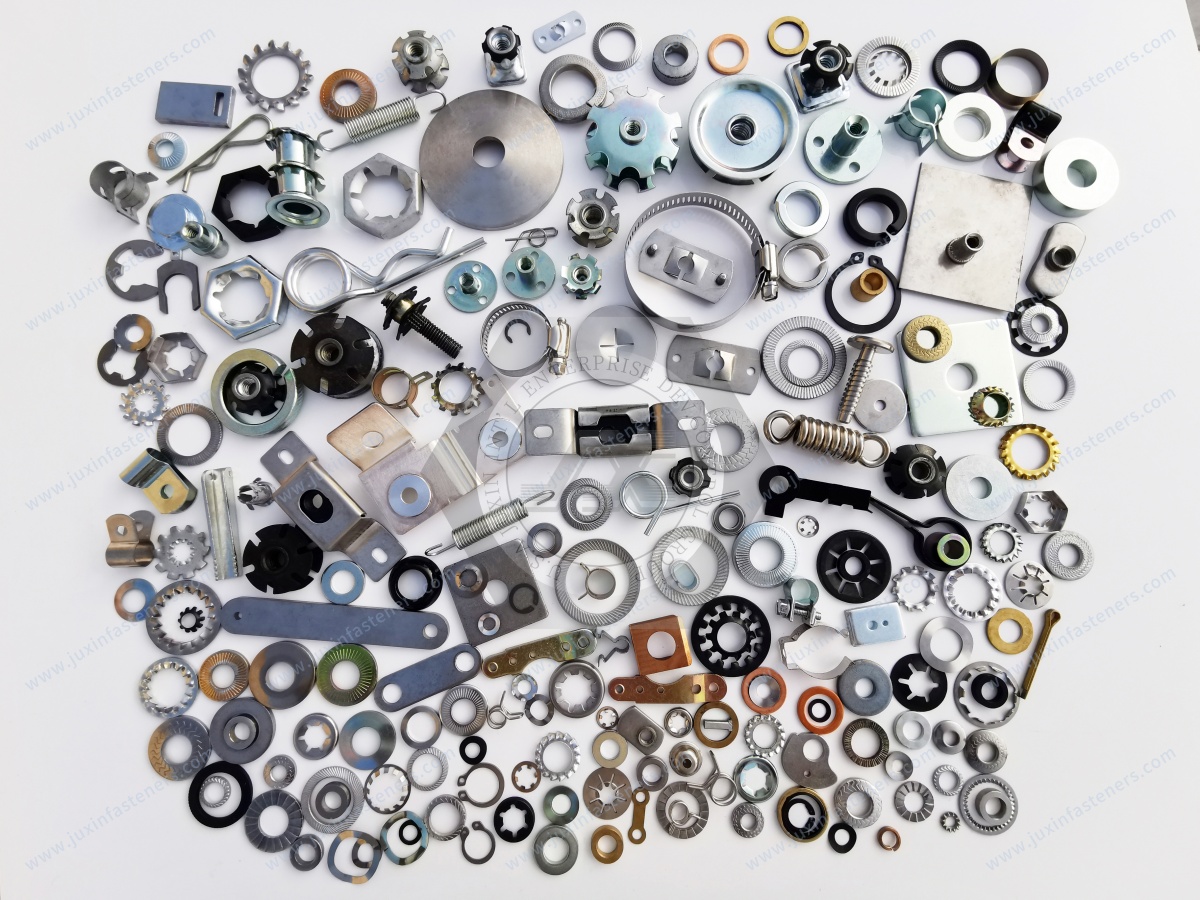
High-strength steel components that undergo certain electroplating processes can require special consideration of hydrogen embrittlement risk.
This is particularly relevant when stamped parts combine:
High-strength material
Significant residual stress
Plating processes
Safety-critical loading
The required material, coating and post-treatment process should be defined according to the applicable engineering specification.
A finish should never be selected based only on appearance or salt-spray expectations.
Automotive and transportation systems use stamped components in many different functions.
Potential products include:
Retaining clips
Mounting brackets
Interior fastening components
Electrical hardware
EV battery-related hardware
Equipment brackets
Production tooling components
Automotive sourcing may require additional project-specific controls involving:
Material traceability
Dimensional capability
Surface treatment
Packaging
Production consistency
Customer-specific documentation
Requirements should be defined during RFQ rather than assumed from the industry name alone.
Stamped metal components are widely used in:
Switchgear
Electrical cabinets
Power distribution equipment
Control systems
Power electronics
Industrial automation
Energy-storage equipment
Products may include:
Grounding components
Conductive contacts
Mounting plates
Retaining clips
Brackets
Shielding components
Electrical applications can introduce requirements beyond mechanical geometry, including conductivity, plating and contact resistance.
Modern data-center and power infrastructure equipment can require high volumes of precision metal hardware for:
Server and equipment enclosures
Power distribution units
UPS equipment
Cooling equipment
Electrical cabinets
Busbar support assemblies
Control hardware
Stamped brackets, clips, grounding parts and mounting components can be engineered for efficient repeat assembly.
For these projects, supplier evaluation may involve both component manufacturing capability and the ability to manage multiple related part numbers.
HVAC and thermal-management systems use stamped components for:
Equipment brackets
Retaining clips
Mounting hardware
Cabinet assemblies
Fan systems
Heat-exchanger assemblies
Thermal-management equipment
Material and finish selection should account for condensation, temperature cycling and the actual operating environment.
Commercial food-service equipment can use custom stamped parts for:
Equipment housings
Insulation systems
Mounting brackets
Retainers
Hinges
Internal support components
JUXIN FASTENERS has long-term experience supplying fastening and custom hardware solutions for commercial equipment projects.
Material and surface requirements should be specified according to the customer's equipment design and operating environment.
Automation equipment often requires custom metal parts in relatively complex assemblies.
Typical products include:
Sensor brackets
Cable-retaining clips
Mounting plates
Guard components
Electrical hardware
Equipment retainers
For automation OEMs, stamping may become particularly attractive when a design progresses from prototype machinery into repeat production.
A custom stamped part does not necessarily begin with production tooling.
A practical development path can be:
Stage 1 — Drawing and DFM Review
Confirm geometry, material, thickness, tolerance and functional requirements.
Stage 2 — Prototype Strategy
Depending on the component, prototypes may use temporary tooling, laser cutting, bending, CNC machining or another suitable process.
Stage 3 — Design Validation
Verify fit, assembly and function.
Stage 4 — Production Tooling
Develop the selected stamping die after design requirements are sufficiently stable.
Stage 5 — Sample Approval
Inspect samples against the approved drawing and agreed requirements.
Stage 6 — Production
Release repeat manufacturing under the agreed quality-control plan.
This approach can reduce the risk of investing in production tooling before the component design is mature.
For effective engineering review, send:
2D drawing
3D model where available
Material specification
Material thickness
Critical dimensions
Tolerances
Surface finish
Burr requirements
Functional requirements
Assembly interface
Environmental conditions
The more clearly the functional requirements are defined, the more effectively the manufacturing process can be evaluated.
For accurate quotation and supplier comparison, include:
Part drawing
Revision level
Material and thickness
Surface treatment
Prototype quantity
Production lot size
Estimated annual usage
Expected program life
Tooling ownership requirements
Inspection requirements
Material documentation requirements
Packaging requirements
Delivery location
PPAP or customer-specific documentation requirements, if applicable
Annual volume is especially important because it can influence tooling strategy and piece-price economics.
Procurement teams should evaluate a stamping quotation as two related cost structures:
Non-recurring cost
This can include tooling, development and validation-related costs.
Recurring production cost
This includes the cost associated with manufacturing each production unit.
A quotation with the lowest tooling cost does not necessarily provide the lowest lifecycle cost.
Likewise, expensive high-output tooling may not be commercially appropriate for a short production program.
The correct decision depends on:
tooling investment + annual volume + expected program life + production rate + maintenance + quality risk.
Before supplier nomination, sourcing teams should understand:
Can the supplier manufacture the required geometry?
Which stamping process is proposed?
What tooling strategy will be used?
Who owns the tooling?
How will tooling maintenance be managed?
Which dimensions are considered critical?
How will those characteristics be inspected?
Are secondary operations required?
How will plating or finishing affect dimensions?
Can the supplier support prototypes before production tooling?
Can production scale with forecast demand?
What documentation is required for approval?
These questions provide more sourcing value than comparing piece price alone.
Some stamped components require additional manufacturing after press operations.
Depending on the drawing, JUXIN FASTENERS can support or coordinate processes such as:
CNC machining
Threading
Welding
Assembly
Surface treatment
Heat treatment
Precision inspection
Combining compatible processes can simplify the supply chain for OEM programs containing stamped components and related fastening hardware.
Inspection should be based on the drawing and functional requirements.
Depending on the component, controls may include:
Material verification
Thickness inspection
Dimensional inspection
Hole position
Bend angle
Flatness
Profile
Surface condition
Burr inspection
Coating inspection
Functional testing
Customer-specific inspection requirements
For complex OEM projects, critical characteristics should be identified before production tooling is finalized.
Not every assembly requires a custom part.
Where a standard washer, clip, bracket or fastener meets the functional requirement, a standard component may reduce:
Tooling cost
Development time
Supply-chain complexity
Custom stamping becomes more valuable when the component requires:
Unique geometry
Integrated functions
Reduced assembly count
Special retention features
Application-specific material
Special mounting interfaces
OEM-specific packaging or assembly requirements
JUXIN FASTENERS can support both standard fastening components and custom made-to-drawing metal parts, allowing engineering teams to evaluate the most appropriate sourcing route.
JUXIN FASTENERS supplies custom precision metal stamping parts and fastening components for global OEM and industrial customers.
Our manufacturing capabilities include, depending on project requirements:
Precision metal stamping
Progressive die stamping
Blanking and piercing
Bending and forming
Deep drawing
Custom tooling development
CNC machining
Welding and assembly
Surface finishing
Precision inspection
We support components manufactured from:
Carbon steel
Stainless steel
Spring steel
Aluminum
Copper
Brass
Other specified materials subject to engineering review
Our focus is not simply producing a stamped shape.
We work from the customer drawing and application requirements to evaluate material, geometry, tooling, tolerances, finishing and production volume as one manufacturing system.
Engineers and procurement teams evaluating stamped components may also explore related JUXIN FASTENERS capabilities:
Custom Fasteners
CNC Machined Parts
Precision Pins and Shafts
Retaining Clips and Spring Clips
Special Washers
Automotive Custom Fasteners
Electrical Equipment Fastening Solutions
Made-to-Drawing Components
These internal links help users move from an individual manufacturing process to the most appropriate component solution.
If you are sourcing precision metal stamping parts, progressive die stamped components, custom brackets, retaining clips, spring clips,
washers, electrical contacts or other made-to-drawing metal parts, send JUXIN FASTENERS your technical requirements for review.
For faster evaluation, include:
2D drawing
3D model where available
Material
Thickness
Surface treatment
Critical tolerances
Functional requirements
Prototype quantity
Production quantity
Estimated annual volume
Required documentation
Our team can review your project from both the engineering and production perspectives and determine an appropriate manufacturing route from prototype development through repeat OEM production.
JUXIN FASTENERS
FASTENING SOLUTIONS FOR GLOBAL OEMS
Website: www.juxinfasteners.com
Email: info@juxinfasteners.com
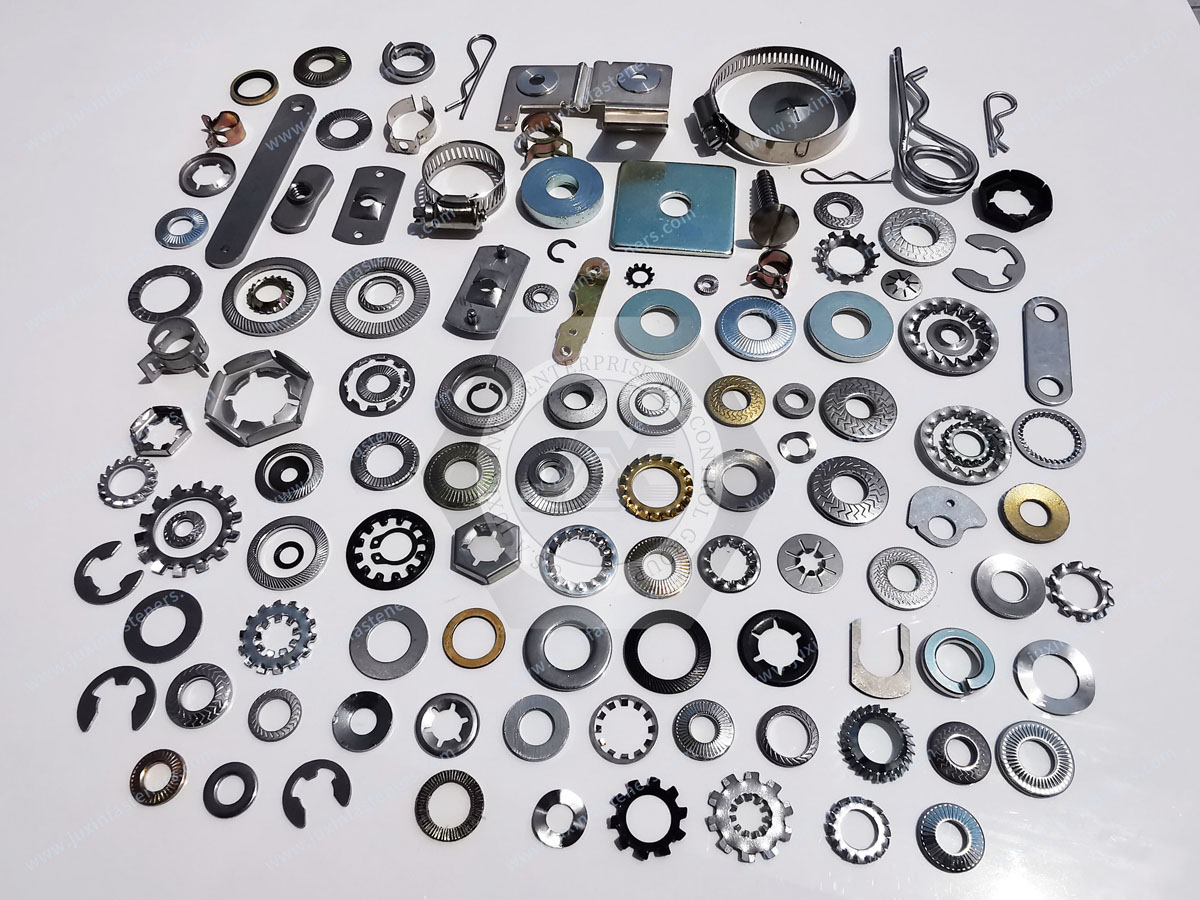
 MORE NEWS
Sep. 27, 2026
Sep. 27, 2026
Sep. 27, 2026
Contact Us
Tel.:
+86 020 8621 0320
+86 020 3121 6067
E-mail:
Technical Support:
Navigation
SEND INQUIREY