
Call Us
+86 136 6007 9809
Call Us
+86 136 6007 9809

Nov. 04, 2023
Choosing between hardened steel dowel pins and stainless steel dowel pins is not simply a choice between strength and corrosion resistance.
For precision assemblies, dowel pin material can influence:
Positioning accuracy
Wear resistance
Shear-load capability
Surface durability
Interference-fit behavior
Corrosion performance
Removal and maintenance
Compatibility with mating materials
Long-term dimensional stability
A material that performs well in a dry machine-tool fixture may not be appropriate for food-processing equipment, outdoor machinery,
chemical-processing equipment or an assembly exposed to repeated washdown.
Likewise, selecting stainless steel only because the environment is humid may overlook hardness, wear and fit requirements.
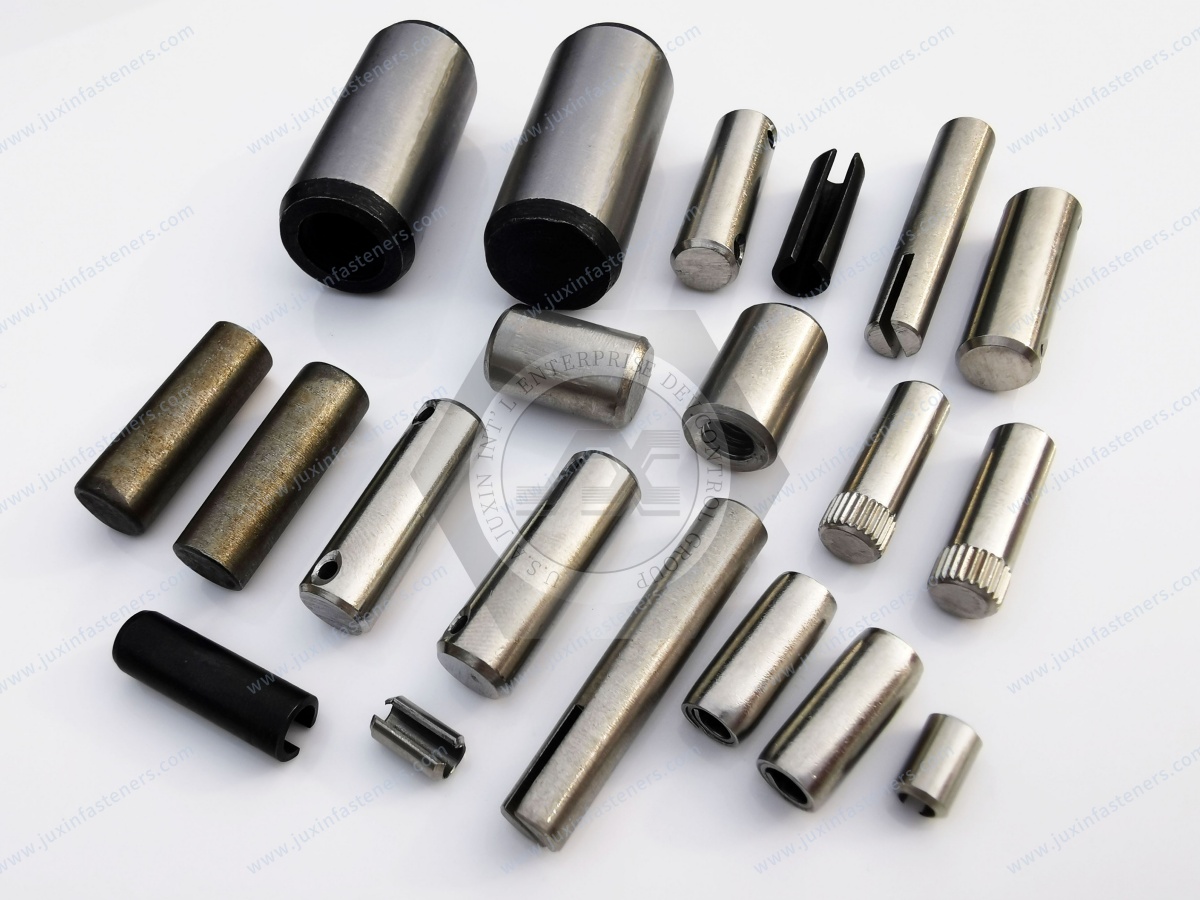
JUXIN FASTENERS supplies hardened steel dowel pins, stainless steel dowel pins, ISO 8734 cylindrical pins, precision locating pins,
internally threaded dowel pins and custom machined pins for OEM machinery, automotive equipment, industrial automation, tooling, molds, electrical equipment and precision mechanical assemblies.
This guide provides an engineering decision framework for selecting the appropriate dowel pin material.
A dowel pin, also called a cylindrical pin, parallel pin or precision locating pin depending on the applicable design and standard,
is used to establish accurate relative positioning between mating components.
Unlike a bolt or screw, which primarily creates clamping force, a dowel pin is commonly used to control:
Component alignment
Relative position
Repeatable assembly
Shear-load transfer
Fixture location
Housing alignment
Tooling position
Common applications include:
Gearboxes
Machine tools
CNC fixtures
Injection molds
Stamping dies
Industrial robots
Automation equipment
Automotive production equipment
Pumps and valves
Medical equipment
Food-processing machinery
Precision mechanical assemblies
Because locating accuracy depends on the interaction between the pin, hole, material, fit and operating environment, material selection should be made as part of the complete assembly design.
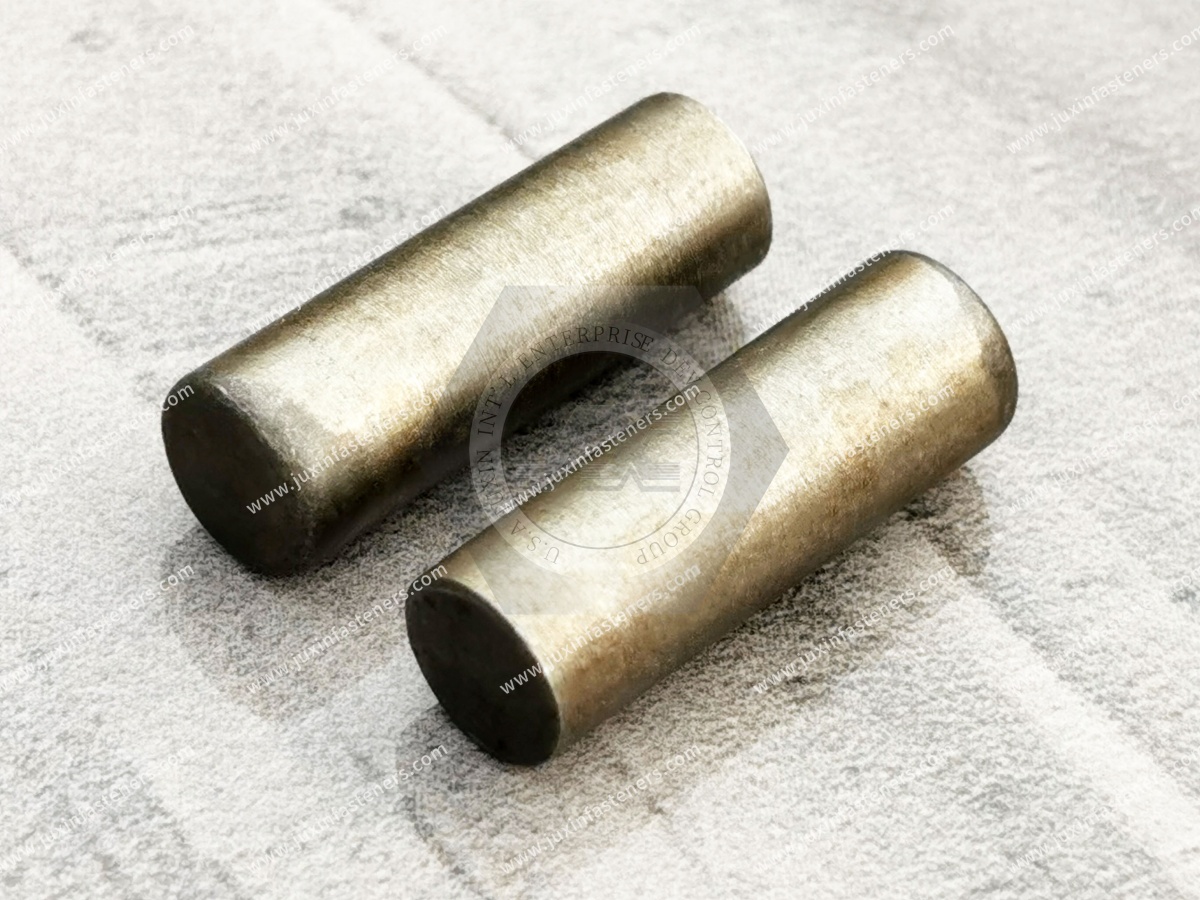
Hardened steel dowel pins are commonly selected for precision assemblies requiring high surface hardness, wear resistance and stable positioning.
Depending on the applicable standard, drawing and application, hardened pins may be produced from suitable carbon or alloy steels followed by controlled heat treatment and precision grinding.
Their primary engineering advantages are typically associated with:
High surface hardness
Good wear resistance
High mechanical strength
Resistance to repeated contact
Precision-ground diameter control
Suitability for demanding mechanical assemblies
They are widely used in machinery, tooling, fixtures, molds and other applications where mechanical performance is the dominant design requirement.
Dowel pins frequently operate at the interface between two accurately machined components.
During assembly, maintenance and operation, the pin surface may experience:
Press-fit contact stress
Repeated insertion and removal
Shear loading
Vibration
Micro-movement
Surface abrasion
Contact with harder or softer mating materials
Higher surface hardness can improve resistance to wear and deformation, but hardness should not be specified independently from toughness, material condition and the actual load case.
The correct requirement should therefore come from the applicable standard, engineering drawing or validated application specification rather than from a universal hardness number.
For hardened steel dowel pins, manufacturing control is important because heat treatment can affect dimensions.
A typical production route may include:
Material preparation
Forming or machining
Heat treatment
Controlled tempering where applicable
Precision grinding
Surface finishing
Dimensional inspection
Hardness verification where specified
Precision grinding after heat treatment helps achieve the diameter tolerance and surface condition required for locating applications.
For procurement teams, specifying only the nominal diameter and length may therefore be insufficient for a precision application.
The drawing should also define the required tolerance, material condition and any applicable standard.
Stainless steel dowel pins are selected when the assembly requires a combination of precision positioning and corrosion resistance.
However, stainless steel is not a single engineering material.
Different stainless families can provide significantly different combinations of:
Corrosion resistance
Hardness
Strength
Machinability
Magnetic behavior
Heat-treatment response
Wear resistance
This distinction is important when sourcing precision pins.
An austenitic stainless pin and a hardened martensitic stainless pin may both be described commercially as “stainless steel dowel pins,” but their mechanical behavior can be very different.
Austenitic stainless steels such as 304-family and 316-family materials are widely considered when corrosion resistance is an important design requirement.
Potential applications include:
Food-processing machinery
Packaging equipment
Outdoor equipment
Medical-related equipment
Chemical-processing machinery
Electrical equipment
General industrial assemblies exposed to moisture
Their suitability should still be evaluated against the actual operating environment.
304-family stainless steel provides a useful combination of:
General corrosion resistance
Formability
Toughness
Broad industrial availability
It can be suitable for many general industrial environments where corrosion resistance is required but exposure is not exceptionally aggressive.
Applications may include:
Industrial equipment
Electrical equipment
Packaging machinery
Automation systems
General-purpose precision assemblies
However, 304 stainless should not automatically be selected for every wet or outdoor environment.
Chemical exposure, chloride concentration, temperature and cleaning conditions should also be considered.
316-family stainless steel is often evaluated for environments involving greater corrosion exposure, including applications where chloride-containing conditions may be present.
Potential applications include:
Marine-related equipment
Coastal installations
Chemical-processing machinery
Food-processing equipment
Washdown environments
Outdoor industrial systems
But “316 stainless” does not by itself guarantee suitability for every marine or chemical application.
The engineer should evaluate:
Chemical composition of the environment
Chloride concentration
Temperature
Wet/dry cycling
Crevice conditions
Cleaning chemicals
Contact with dissimilar metals
Material selection should be based on the actual service environment rather than a generic “marine grade” label.
When both hardness and corrosion resistance are required, martensitic stainless steels may be considered.
Depending on the grade and heat-treatment condition, this material family can provide:
Higher achievable hardness than common austenitic stainless steels
Good wear resistance
Good mechanical strength
Moderate corrosion resistance
Heat-treatment capability
Examples of grades that may be considered for suitable custom applications include:
410 stainless steel
416 stainless steel
420 stainless steel
440-series stainless steels
The correct grade depends on the required combination of hardness, corrosion resistance, machinability and dimensional stability.
For specialized applications requiring higher strength together with corrosion resistance, precipitation-hardening stainless steels such as 17-4 PH may be considered.
Potential applications can include:
High-performance industrial equipment
Aerospace-related tooling
Precision mechanical systems
Specialized automation equipment
Custom OEM assemblies
However, a higher-performance alloy should not be specified simply because it appears technically superior.
Cost, heat treatment, availability, machining, dimensional requirements and actual application loads should all be considered.
The correct comparison is not simply “which material is better?”
The better question is:
Which material provides the required combination of positioning accuracy, wear behavior, corrosion resistance and lifecycle performance for this assembly?
| Engineering Factor | Hardened Steel | Austenitic Stainless Steel | Hardenable Stainless Steel |
|---|---|---|---|
| Wear Resistance | Often high | Application dependent | Can be high depending on grade and condition |
| Corrosion Resistance | Requires environmental evaluation/protection | Generally strong advantage | Grade dependent |
| Achievable Hardness | Typically high | Generally lower than hardened tool/engineering steels | Can be significantly increased by heat treatment |
| Precision Grinding | Well suited | Available | Well suited depending on grade |
| Repeated Mechanical Contact | Often advantageous | Requires application evaluation | Can provide a useful balance |
| Wet Environments | Finish and corrosion strategy required | Often considered | Depends on grade |
| Chemical Exposure | Requires compatibility evaluation | Grade dependent | Grade dependent |
| Cost | Often economical for mechanical applications | Usually higher | Material/process dependent |
This table is a selection framework—not a substitute for application validation.
Start by identifying the dominant failure mechanism.
If the dowel pin operates in:
Precision tooling
Dry machinery
Mold assemblies
Machine fixtures
High-cycle positioning systems
and experiences repeated contact or wear, a hardened steel solution may deserve priority evaluation.
If the dominant concern is:
Moisture
Washdown
Chemicals
Outdoor exposure
Corrosive process environments
a stainless steel solution may deserve priority evaluation.
Many real applications require both properties, which is why the material family and heat-treatment condition must be considered together.
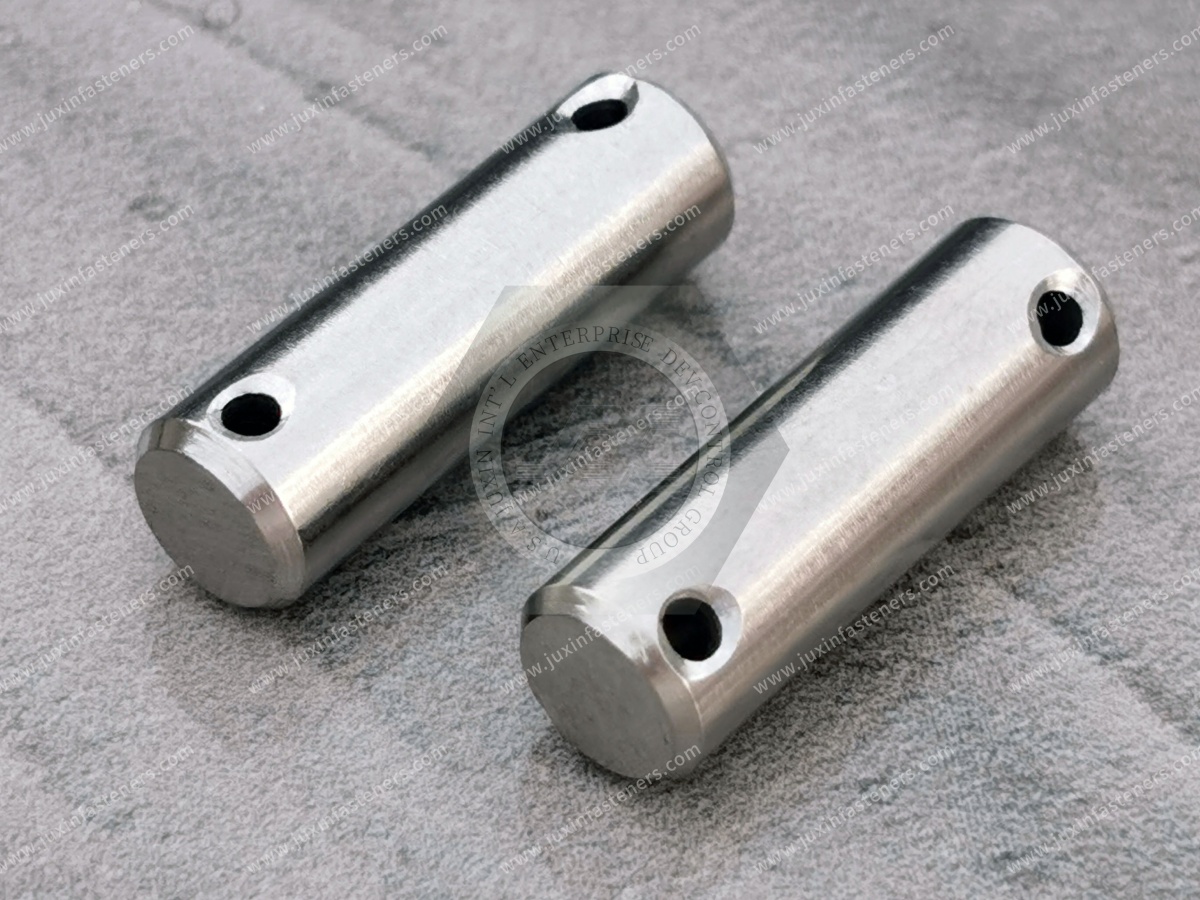
Retention strategy changes material requirements.
A permanently installed dowel pin may remain pressed into one component throughout the equipment lifecycle.
A removable locating pin may be extracted repeatedly for:
Maintenance
Mold changes
Fixture changes
Equipment rebuilding
Component replacement
Repeated removal increases the importance of:
Surface wear
Galling resistance
Hole condition
Extraction design
Surface finish
Dimensional stability
Where frequent removal from a blind hole is required, an internally threaded or pull-out dowel pin may be preferable to a standard solid cylindrical pin.
Dowel pins should not be selected independently from the mating components.
Common mating materials may include:
Carbon steel
Alloy steel
Stainless steel
Aluminum
Cast iron
Tool steel
Engineered metal housings
The hardness relationship between the pin and hole can influence:
Hole wear
Installation force
Removal behavior
Fretting
Surface damage
Long-term fit stability
For example, installing a very hard pin into a significantly softer housing requires careful consideration of fit and contact stress.
The pin may survive while the mating hole wears or deforms.
Material selection and tolerance selection are connected.
Dowel pins may be used with:
Interference fits
Transition fits
Clearance/slip arrangements in the removable side of an assembly
The correct fit depends on the assembly architecture.
A common design approach is to retain the dowel in one component while allowing the mating component to be removed, but the exact tolerances must be defined by the applicable engineering design.
Do not assume one universal hole tolerance for every dowel pin.
Factors affecting fit include:
Pin tolerance
Hole tolerance
Material hardness
Wall thickness
Operating temperature
Surface finish
Assembly method
Stainless steel assemblies require consideration of galling and adhesive wear, particularly when similar stainless materials are placed under high contact pressure or sliding conditions.
Potential contributing factors include:
Material pairing
Surface finish
Interference level
Installation speed
Repeated movement
Lubrication
Contact pressure
This does not mean stainless dowel pins should be avoided.
It means that material selection should consider the pin-hole interface, not corrosion resistance alone.
For difficult assemblies, engineers may evaluate alternative stainless grades, surface conditions, fit strategy or approved assembly lubrication.
Precision locating systems can be sensitive to temperature.
The effective fit between a dowel pin and mating hole can change when:
The pin and housing use different materials
Equipment experiences large temperature swings
Assembly occurs at a different temperature from operation
Aluminum housings are paired with steel pins
Process equipment experiences heating and cooling cycles
Engineers should consider differential thermal expansion where it can materially affect the fit or positional accuracy.
This is particularly important in precision automation, thermal equipment and assemblies combining steel pins with aluminum structures.
Hardened steel can still be used in many environments when the appropriate corrosion strategy is designed into the assembly.
Depending on the application and dimensional requirements, possible surface conditions may include:
Plain/oiled finish
Black oxide
Zinc-based coatings
Nickel-based finishes
Phosphate systems
Application-specific protective treatments
However, coatings can affect dimensions.
For a precision dowel pin, coating thickness cannot be treated as an afterthought.
If the pin diameter is tightly controlled, the engineering drawing should define whether dimensional requirements apply:
Before coating
After coating
To a specified finished condition
This is especially important for press-fit and locating applications.
For stainless steel components, passivation may be specified depending on the material, manufacturing route and application requirements.
Passivation is not a substitute for selecting the correct stainless grade.
It is a surface-treatment process used to support the corrosion performance of suitable stainless material.
The exact process and acceptance requirements should follow the customer specification or applicable standard.
Two dowel pins with the same nominal diameter can behave differently during installation if their surface conditions differ significantly.
Surface finish can influence:
Pressing force
Friction
Contact behavior
Galling tendency
Removal
Hole damage
For precision locating applications, engineers should therefore specify more than nominal diameter where the interface is critical.
Drawing requirements may include:
Diameter tolerance
Surface roughness
Hardness
Edge/chamfer geometry
Material condition
Surface treatment
Molds and dies frequently require accurate repeatable alignment.
Applications include:
Injection molds
Stamping dies
Progressive tooling
Die sets
Tooling plates
Potential selection priorities include:
Wear resistance
Positioning repeatability
Hardness
Fit stability
Maintenance strategy
Where frequent removal is expected, extraction features may also be required.
Machine tools and fixtures rely on controlled component location.
Dowel pins may be used for:
Fixture plates
Machine housings
Guide structures
Tooling assemblies
Replaceable modules
Inspection fixtures
For these applications, dimensional consistency and the pin/hole tolerance relationship may be more important than choosing a material based solely on corrosion resistance.
Automotive-related assemblies and production equipment may use precision pins in:
Engine-related components
Transmission-related assemblies
Manufacturing fixtures
Welding fixtures
Inspection tooling
Production equipment
EV component manufacturing equipment
Material selection depends on the specific component, loading, environment and OEM specification.
Safety-critical or performance-critical applications should follow the customer-approved drawing, material specification and validation requirements.
Automation systems can require repeatable component positioning over many production cycles.
Dowel pins may be used in:
Robot fixtures
End-of-arm tooling
Assembly stations
Pallet systems
Modular tooling
Inspection equipment
Important engineering factors include:
Repeatability
Wear
Maintenance frequency
Changeover requirements
Environmental exposure
A removable precision locating system may require a different pin architecture from a permanently installed locating pin.
Stainless steel dowel pins may be considered for equipment exposed to:
Moisture
Cleaning
Washdown
Food-processing environments
Packaging operations
However, selecting “stainless steel” alone is not sufficient.
Engineers and procurement teams should confirm:
Required stainless grade
Cleaning chemicals
Surface requirements
Applicable hygiene requirements
Material documentation
Customer specifications
JUXIN FASTENERS manufactures components according to customer-defined technical requirements; application-specific regulatory or hygienic compliance should be specified in the RFQ.
Precision pins may be used in medical-equipment assemblies, laboratory automation and related manufacturing equipment.
Selection factors can include:
Corrosion resistance
Cleanability
Dimensional accuracy
Material traceability
Surface condition
Application-specific documentation
Material suitability must be determined from the actual device or equipment requirements.
A stainless steel grade should not automatically be described as “medical grade” without an applicable material and product specification.
For aggressive environments, corrosion compatibility becomes a major selection factor.
Engineers should provide information about:
Chemical media
Concentration
Temperature
Salt/chloride exposure
Wet/dry cycling
Cleaning processes
Adjacent materials
This allows a more technically meaningful material selection than simply requesting a “corrosion-resistant dowel pin.”
Hardened steel may be a logical starting point when the application prioritizes:
Wear resistance
High hardness
Precision positioning
Heavy mechanical duty
Repeated contact
Tooling applications
Dry or controlled environments
The final material and heat-treatment condition should still be verified against the applicable drawing and service conditions.
Stainless steel may be a logical starting point when the application prioritizes:
Corrosion resistance
Moisture exposure
Outdoor service
Washdown
Chemical exposure
Food or packaging equipment
Marine-related equipment
The correct stainless family should then be selected according to the required balance of corrosion resistance, hardness and strength.
A hardenable stainless grade may deserve evaluation when the application requires both:
Higher hardness or wear resistance
Better corrosion performance than conventional hardened carbon/alloy steel
This may occur in:
Specialized machinery
Precision instruments
Corrosion-exposed tooling
High-performance OEM assemblies
The correct grade should be selected from actual performance requirements rather than from a generic stainless designation.
A practical engineering decision path is:
High wear + controlled environment
→ Evaluate hardened carbon/alloy steel.
Corrosion exposure + moderate wear requirement
→ Evaluate an appropriate austenitic stainless steel.
Corrosion exposure + higher hardness requirement
→ Evaluate suitable hardenable stainless grades.
High strength + corrosion resistance + specialized application
→ Evaluate precipitation-hardening stainless or another engineered alloy where technically justified.
Uncertain environment or load condition
→ Define the operating conditions before final material selection.
For precision dowel pins, a useful engineering drawing should define applicable requirements such as:
Pin diameter
Length
Diameter tolerance
Length tolerance
Material
Material condition
Hardness where required
Applicable ISO/DIN/ASME standard
Chamfer or end geometry
Surface finish
Surface treatment
Thread specification for pull-out pins
Special inspection requirements
Do not rely only on a description such as:
“10 mm stainless dowel pin.”
That leaves too many engineering variables undefined.
For accurate sourcing, provide:
2D drawing
3D model where relevant
Applicable standard
Pin diameter and length
Material grade
Heat-treatment condition
Hardness requirement
Diameter tolerance
Surface finish
Coating or passivation requirement
Application
Mating-component material
Operating environment
Prototype quantity
Production quantity
Estimated annual volume
Inspection requirements
Material documentation requirements
Packaging requirements
If the existing part is being replaced, a physical sample can also help confirm geometry and manufacturing details.
Standard cylindrical pins are appropriate when an international standard satisfies the engineering requirements.
Common related product families include:
ISO 8734 cylindrical pins
ISO 2338 parallel pins
ISO 8735 internally threaded cylindrical pins
Custom pins may be required when the application needs:
Non-standard diameter
Special length
Special tolerance
Unique end geometry
Extraction threads
Special material
Special heat treatment
Custom surface finish
Integrated locating features
JUXIN FASTENERS supports both standard and made-to-drawing precision pin projects.
Depending on geometry, material and production volume, JUXIN FASTENERS can support manufacturing processes including:
Cold forming
CNC turning
Precision machining
Centerless grinding
Heat treatment
Precision finishing
Surface treatment
Dimensional inspection
Manufacturing route selection depends on the product design and customer requirements.
For precision pins, the critical issue is not simply producing the cylindrical shape—it is maintaining the required relationship between:
material + heat treatment + diameter tolerance + surface condition + final fit.
Inspection requirements should be defined according to the drawing and application.
Typical controls may include:
Diameter measurement
Length measurement
Roundness
Straightness
Surface inspection
Thread inspection where applicable
Hardness verification
Material verification
Coating or surface-treatment inspection
Customer-specified documentation
For OEM sourcing, critical characteristics should be identified on the drawing or quality documentation rather than assumed.
There is no universally superior dowel pin material.
The correct decision follows this sequence:
1. Define the locating function.
2. Identify shear, contact and wear conditions.
3. Define corrosion exposure.
4. Determine whether the pin is permanent or removable.
5. Evaluate the mating-component material.
6. Establish the required pin/hole fit.
7. Evaluate hardness and surface condition.
8. Consider temperature and differential expansion.
9. Define the applicable standard or custom drawing.
10. Validate the assembly under actual service conditions.
This approach produces a more reliable result than selecting a dowel pin from material name alone.
JUXIN FASTENERS supplies precision locating components for global OEM and industrial manufacturing projects, including:
Hardened Steel Dowel Pins
Stainless Steel Dowel Pins
ISO 8734 Cylindrical Pins
Parallel Pins
Internally Threaded Dowel Pins
Pull-Out Dowel Pins
Precision Locating Pins
CNC Machined Pins
Custom Made-to-Drawing Pins
Our engineering and production teams support projects based on customer drawings, samples, material requirements, tolerance specifications and application conditions.
For related engineering information, explore our guides covering Precision Dowel Pins, ISO 8734 Cylindrical Pins, Dowel Pin Installation,
Internally Threaded Dowel Pins, Spring Pins vs Cylindrical Pins, and Custom Precision Pins.
If you are sourcing hardened steel dowel pins, stainless steel dowel pins, ISO cylindrical pins or custom precision locating pins, send us your technical requirements for engineering review and quotation.
For the fastest evaluation, include:
2D drawing
Material
Diameter and length
Tolerance
Heat treatment
Surface treatment
Application
Mating material
Operating environment
Prototype quantity
Annual production volume
JUXIN FASTENERS supports prototype development and OEM production for automotive-related equipment, industrial machinery, automation, tooling, electrical equipment and precision mechanical assemblies.
JUXIN FASTENERS
FASTENING SOLUTIONS FOR GLOBAL OEMS
Website: www.juxinfasteners.com
Email: info@juxinfasteners.com
 MORE NEWS
Sep. 27, 2026
Sep. 27, 2026
Sep. 27, 2026
Contact Us
Tel.:
+86 020 8621 0320
+86 020 3121 6067
E-mail:
Technical Support:
Navigation
SEND INQUIREY