
Call Us
+86 136 6007 9809
Call Us
+86 136 6007 9809

Mar. 29, 2026
Thread Insert Nuts for Plastic Components: Design and Installation Guide
Introduction
Thread insert nuts provide reusable threads in plastic components, ensuring strong, reliable threaded joints. They are widely used in electrical housings, automotive interior panels, and industrial equipment enclosures.
Key benefits include:
Preserving the integrity of threaded joints
High load-carrying capacity
Resistance to stress relaxation in plastics
Reusability for maintenance or repair
This guide explores how to select, install, and optimize insert nuts for plastic components.
Preserving the Threaded Joint
A key advantage of thread inserts is preserving the joint over the product's lifetime. Unlike conventional screws that can strip threads in plastics, inserts allow unlimited reassembly without damaging the base material.
Proper torque application is critical. Tightening the mating screw introduces axial tension, ensuring the insert and screw maintain the required clamping force.
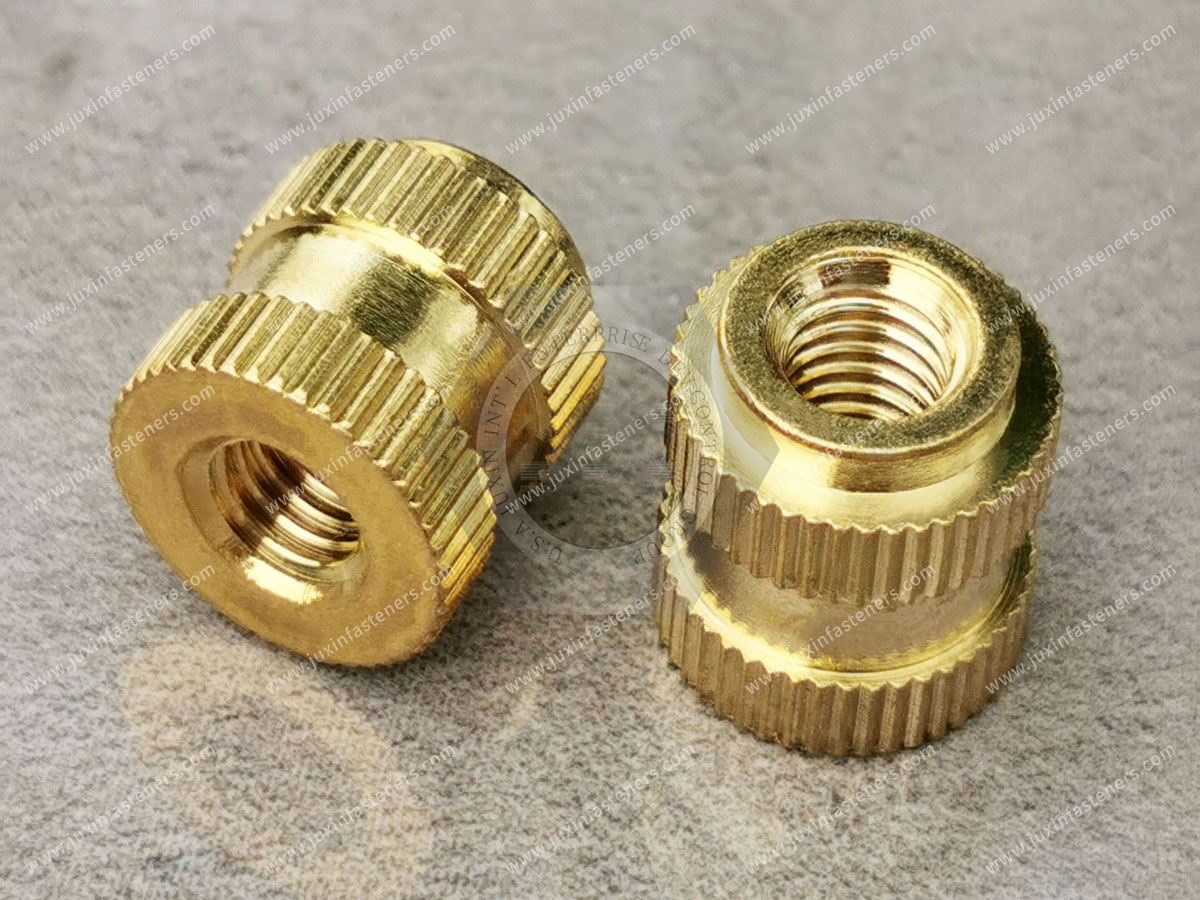
Insert Types
Self-Tapping Inserts
Self-tapping inserts are ideal for post-mold installation.
Thin thread profile reduces stress on plastic
Coarse pitch maximizes plastic shear surface
Pull-out resistance is excellent due to large external thread diameter
Installation requires a good pilot hole and accurate alignment to ensure optimal torque and pull-out performance.
Press-In Inserts
Press-in inserts are designed to reduce installation cost, sacrificing minimal torque and pull-out performance.
Helical knurls provide torque resistance
Rotates slightly during installation for optimal plastic flow
Pilot hole slightly smaller than the insert ensures straight installation
Molded-In Inserts
Molded-in inserts are placed during the plastic injection process.
Offers the highest pull-out and torque performance
Design includes helical knurls to maximize resistance
Plastic flows into undercuts to secure the insert
Molded-in inserts require careful design of the mold core pin to maintain alignment and proper embedment.
Design Guidelines
Hole depth: Minimum 1.2× insert length for self-tapping; insert length + 2 thread pitches for others
Counterbores: Recommended for self-tapping and headed inserts
Flush installation: Maximum protrusion 0.13mm (.005”)
Plastic boss diameter: Typically 2–3× insert diameter
Wall thickness: Must prevent bulging during installation
Proper hole size is critical; oversized holes reduce performance, undersized holes may crack plastic or create flash.
Applications in Industry
Thread insert nuts are widely used in:
Electrical enclosures: Secure mounting of components in ABS or polycarbonate housings
Automotive interior panels: Mounting switches, modules, or covers
Industrial machinery: Attaching covers or panels that require repeated maintenance
For high-load applications, self-tapping or molded-in inserts are preferred. Press-in inserts are suitable for low-to-moderate load requirements.
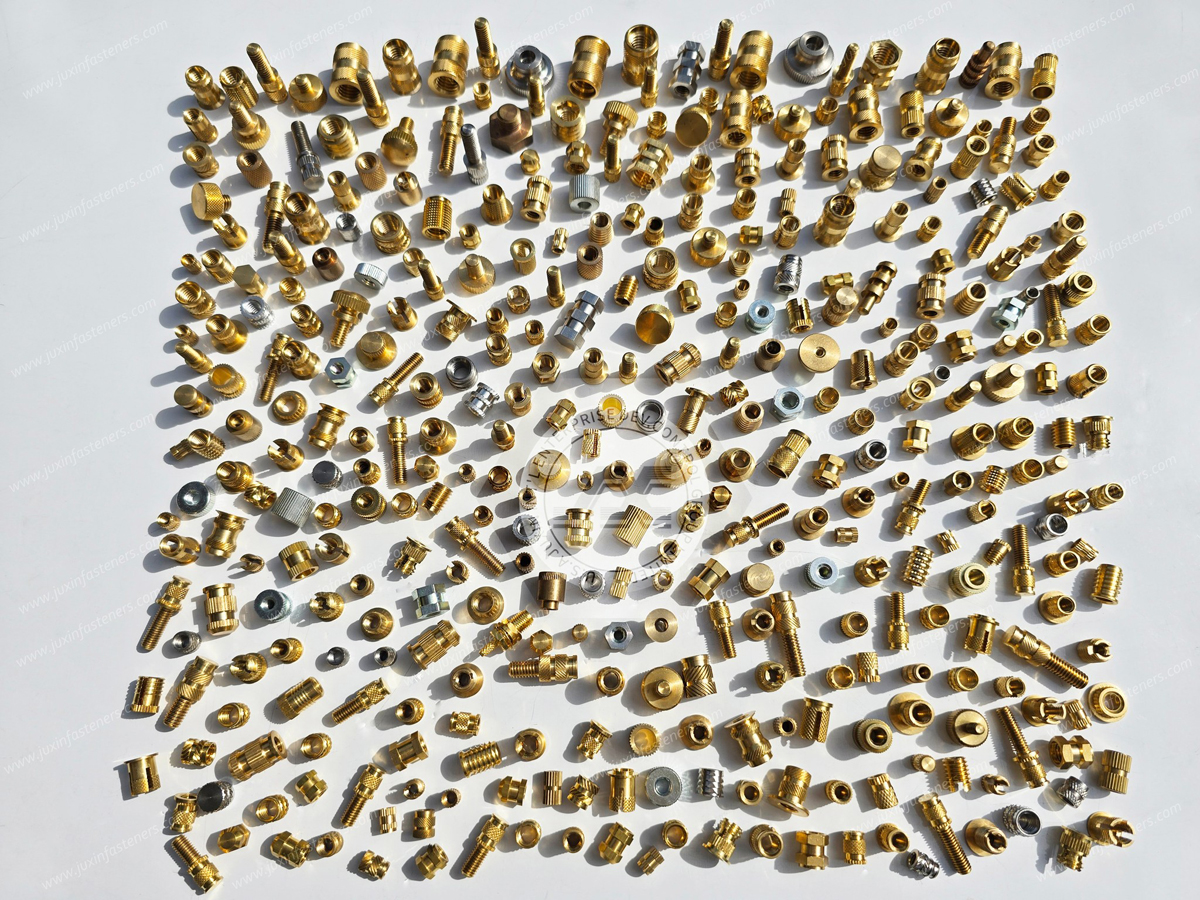
Technical Support
Juxin Fasteners engineers provide technical guidance to:
Select the optimal insert type
Determine pilot hole and plastic boss dimensions
Optimize torque and pull-out performance
With ISO 9001-certified manufacturing and quality control, our insert nuts deliver consistent performance across small and large production runs.
 MORE NEWS
Contact Us
Tel.:
+86 020 8621 0320
+86 020 3121 6067
E-mail:
Technical Support:
Navigation
SEND INQUIREY