
Call Us
+86 136 6007 9809
Call Us
+86 136 6007 9809

Mar. 29, 2026
In modern manufacturing, plastic components are widely used because of their lightweight design, corrosion resistance, electrical insulation, and cost advantages.
However, creating reliable threaded connections in plastic materials can be challenging.
Directly tapping threads into plastic may result in:
Thread stripping
Reduced clamping force
Material wear
Limited assembly cycles
Failure under vibration or repeated loading
Thread insert nuts for plastic components provide an effective solution by creating durable internal metal threads inside plastic parts.
Among the most commonly used installation methods are:
Heat Set Thread Inserts
Press-In Thread Inserts
Molded-In Thread Inserts
Each method offers different advantages in terms of:
Torque resistance
Pull-out strength
Installation efficiency
Production requirements
Application environment
This guide explains the differences between heat set vs press-in vs molded-in thread inserts to help engineers select the best fastening solution for plastic components.
As an experienced OEM thread insert manufacturer, Juxin Fasteners provides customized plastic threaded inserts, insert nuts, and fastening solutions for automotive, electronics, machinery, and industrial applications.
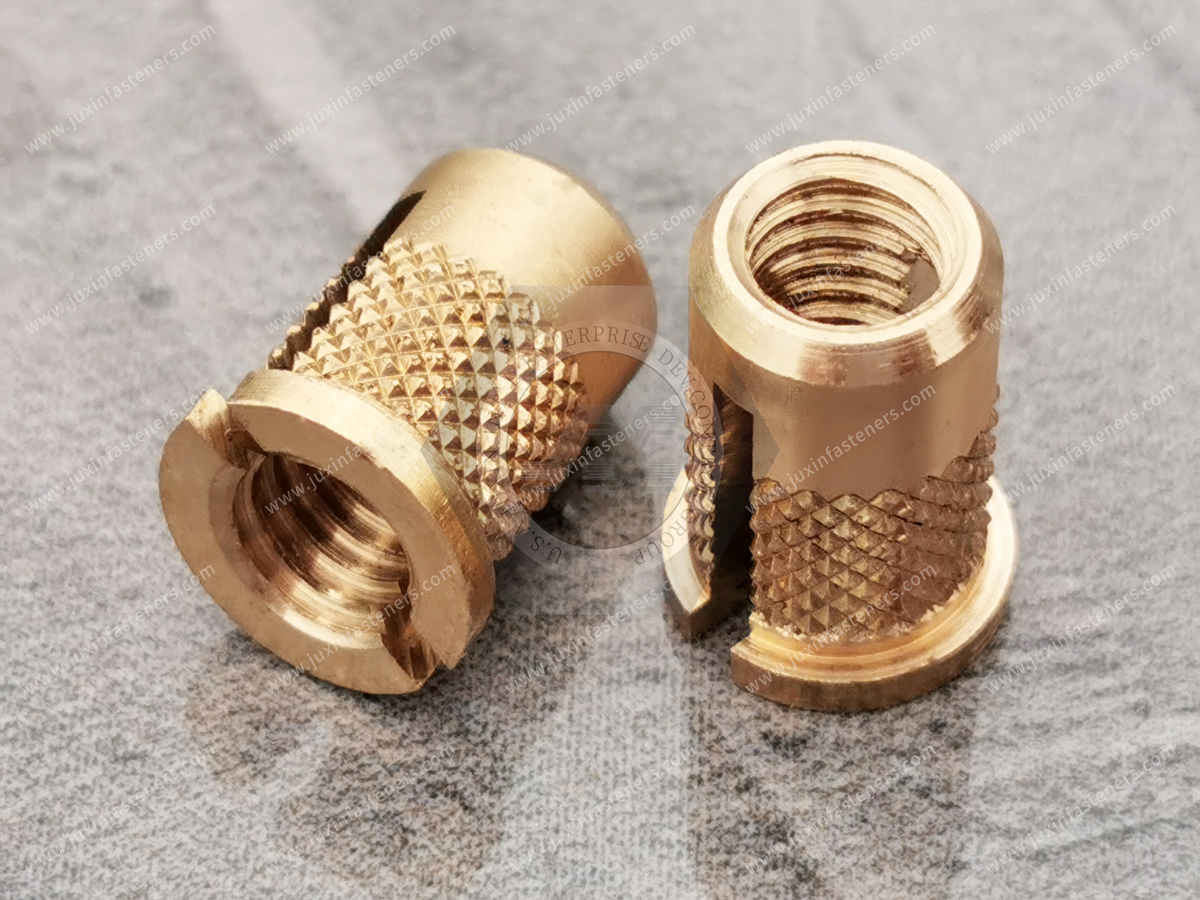
Plastic materials generally have lower mechanical strength than metals.
When screws are repeatedly installed and removed, standard plastic threads may experience:
Wear
Cracking
Thread deformation
Loss of tightening torque
Thread inserts solve this problem by transferring the load from the screw into a reinforced metal insert structure.
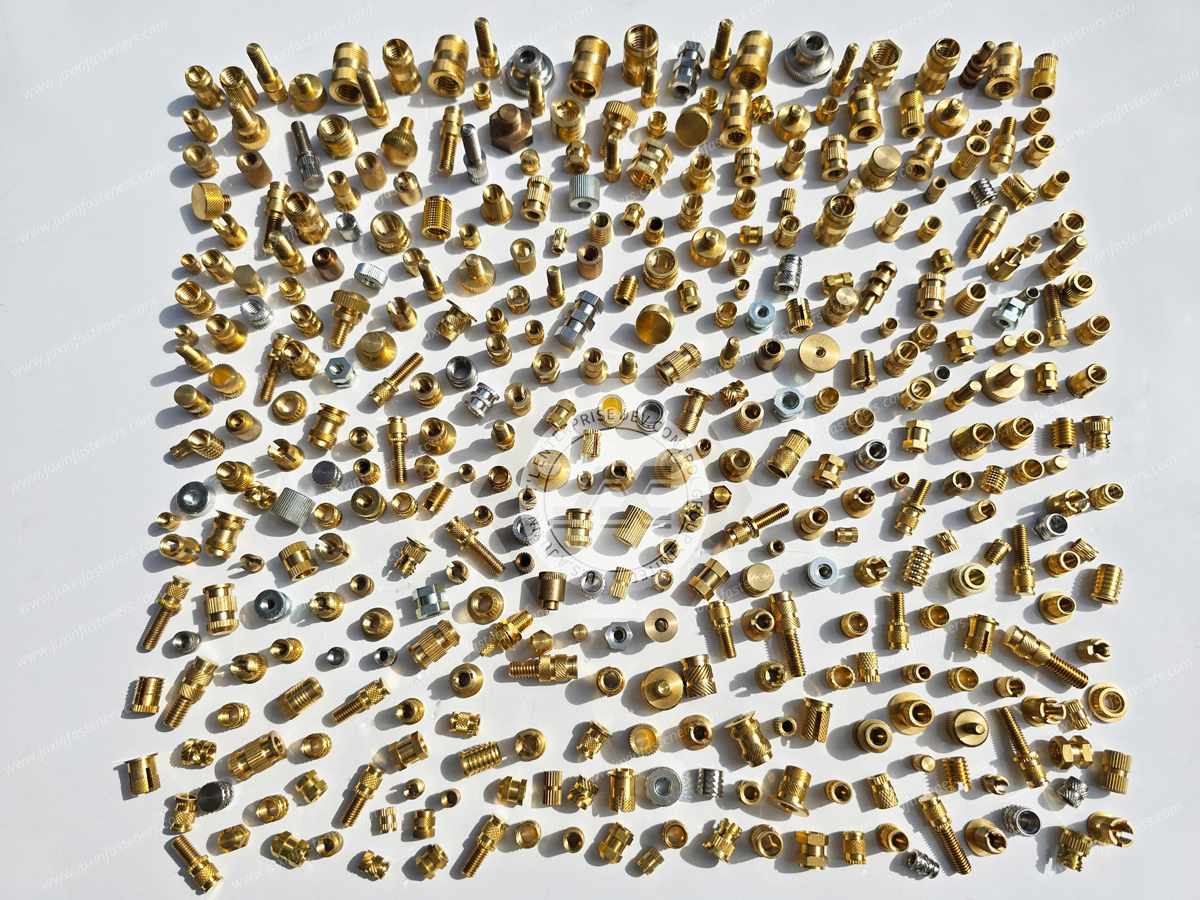
Thread inserts provide durable metal threads that improve:
Torque performance
Pull-out resistance
Joint reliability
Unlike direct plastic threads, inserts allow:
Maintenance operations
Component replacement
Repeated disassembly
without damaging the plastic housing.
Thread inserts help maintain consistent fastening performance throughout the product lifecycle.
Heat set inserts are installed by heating the metal insert and pressing it into a pre-designed hole in the plastic component.
The heat softens the surrounding plastic, allowing the material to flow around the external features of the insert.
After cooling, the plastic solidifies and securely locks the insert in place.
The melted plastic creates strong contact with the insert surface, providing reliable resistance against rotation.
The embedded structure improves:
Axial load performance
Fastening reliability
Long-term durability
Heat set inserts are commonly used with:
ABS
PC (Polycarbonate)
Nylon (PA)
POM
Engineering plastics
Common applications include:
Plastic housings
Control panels
Electronic enclosures
Circuit board mounting systems
Interior components
Switch assemblies
Sensor housings
Plastic brackets
Device housings
Laboratory equipment
Precision plastic assemblies
Press-in inserts are installed using mechanical force.
The insert is pressed into a prepared hole, and external features such as:
Helical knurls
Barbs
Serrations
grip the surrounding plastic material.
Benefits include:
No heating equipment required
Fast assembly
Easy automation
Press-in inserts are suitable for applications where:
Assembly speed is important
Moderate strength is sufficient
Production volumes are high
Common applications include:
Electrical housings
Plastic covers
Consumer equipment
Industrial enclosures
Compared with heat set and molded-in inserts, press-in inserts generally provide:
Lower torque resistance
Lower pull-out performance
Therefore, they are usually selected for low-to-medium load applications.
Molded-in inserts are installed during the plastic injection molding process.
Before molding, the insert is positioned inside the mold.
During injection, molten plastic flows around the insert and fully encapsulates the external structure.
After cooling, the insert becomes permanently integrated into the plastic component.
Because the insert is mechanically locked during molding, it provides excellent axial strength.
The surrounding plastic completely engages with the insert structure, creating high resistance against rotation.
Molded-in inserts are ideal for demanding applications requiring:
High reliability
Long service life
Repeated assembly
Common industries include:
Applications:
Interior panels
Structural plastic components
Electronic modules
Applications:
Battery management system housings
Electrical control units
Plastic mounting components
Applications:
Machine covers
Automation equipment
Robot housings
| Feature | Heat Set Inserts | Press-In Inserts | Molded-In Inserts |
|---|---|---|---|
| Installation Method | Heat + insertion | Mechanical press | Insert during molding |
| Torque Resistance | High | Medium | Highest |
| Pull-Out Strength | High | Medium | Highest |
| Production Cost | Medium | Low | Higher tooling investment |
| Assembly Speed | Fast | Very Fast | Integrated into molding |
| Best Material | Thermoplastics | Plastic components | Injection molded parts |
| Best Application | Electronics, automotive | High-volume assemblies | High-strength plastic parts |
Engineers should consider several key factors.
For applications requiring maximum strength:
→ Molded-in inserts
For high torque requirements:
→ Heat set inserts
For moderate loads:
→ Press-in inserts
Low to medium volume:
→ Heat set inserts
High-volume assembly:
→ Press-in inserts
Injection molding production:
→ Molded-in inserts
Different plastics require different installation methods.
Consider:
Material hardness
Glass fiber reinforcement
Temperature resistance
Wall thickness
If frequent maintenance is required:
→ Choose reinforced metal thread inserts.
If permanent installation is required:
→ Molded-in inserts may be preferred.
Proper component design is essential for achieving maximum performance.
Engineers should consider:
Incorrect hole dimensions may cause:
Reduced holding strength
Plastic cracking
Poor installation quality
Recommended considerations:
Sufficient surrounding plastic thickness
Proper support structure
Avoid excessive installation stress
Longer inserts generally provide:
Higher pull-out strength
Better load distribution
However, insert length must match component geometry.
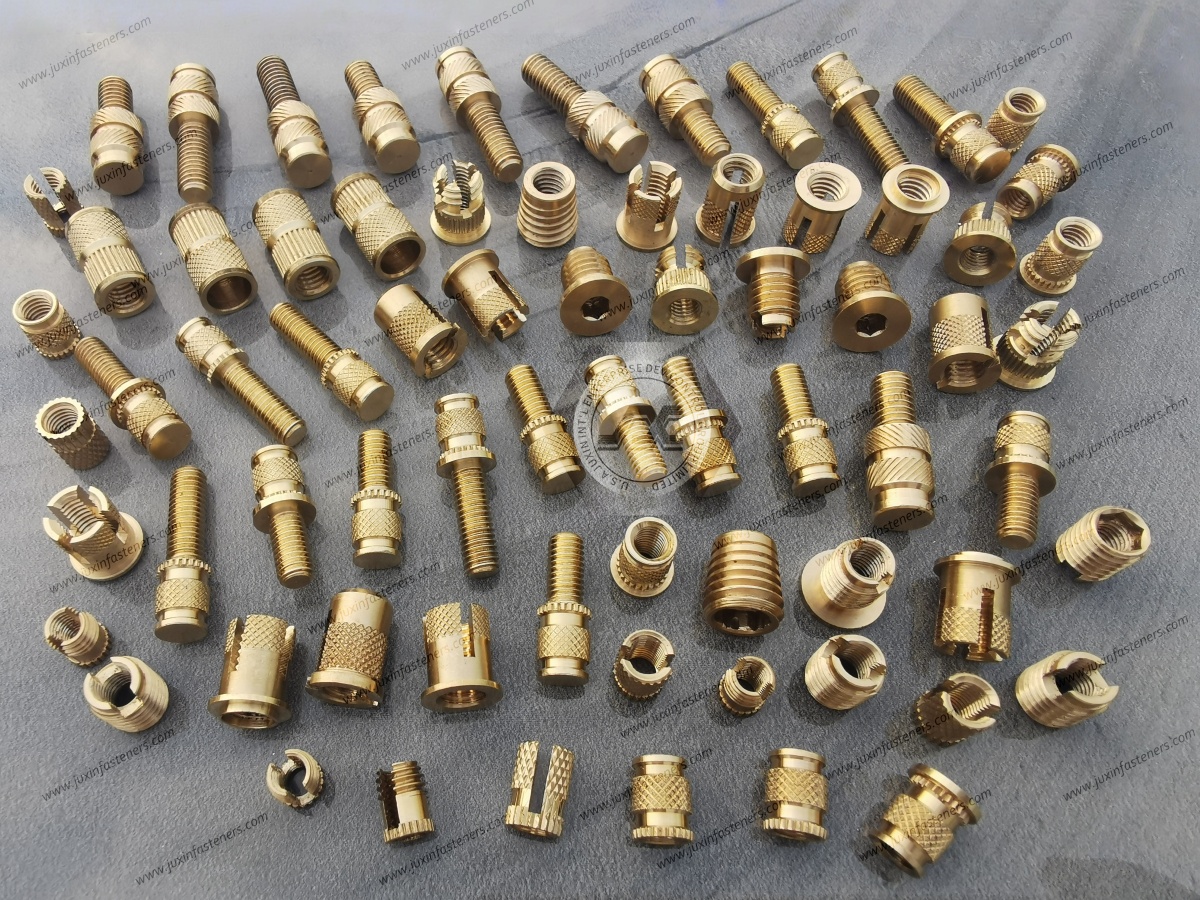
Thread inserts are widely used across:
Interior trim panels
Electronic modules
Plastic brackets
Battery housings
Control systems
Lightweight structural components
Plastic enclosures
Control boxes
Mounting panels
Plastic covers
Control components
Equipment housings
Precision plastic housings
Laboratory devices
Robot covers
Sensor assemblies
Mechanical modules
Lightweight composite components
Interior structures
Juxin Fasteners specializes in providing reliable thread insert solutions for plastic components and lightweight assemblies.
Our product range includes:
Heat set inserts
Press-in inserts
Molded-in inserts
Self-tapping inserts
Thread insert nuts
Custom fastening components
Our manufacturing capabilities include:
Precision machining
Cold forming
Thread processing
Surface treatment
OEM customization
Quality inspection
We support industries including:
Automotive / EV / Battery Pack / Rail Transit / Aerospace / Electrical Cabinets / HVAC / Medical Equipment / Construction / Machinery / Robotics / Sheet Metal Fabrication
Our engineering team provides support for:
Insert selection
Plastic boss design
Installation method optimization
Torque and pull-out performance analysis
With professional manufacturing capability and strict quality control, Juxin Fasteners delivers dependable fastening solutions for global OEM customers.
For technical consultation, drawings review, OEM quotation, or customized thread insert solutions:
Email: info@juxinfasteners.com
Juxin Fasteners — Your Reliable OEM Partner for Industrial Fastening Solutions Worldwide
 MORE NEWS
Sep. 27, 2026
Sep. 27, 2026
Sep. 27, 2026
Contact Us
Tel.:
+86 020 8621 0320
+86 020 3121 6067
E-mail:
Technical Support:
Navigation
SEND INQUIREY