Call Us
+86 136 6007 9809
Call Us
+86 136 6007 9809

Nov. 14, 2023
The operating temperature of a stainless steel nut cannot be defined by one universal number.
For an industrial bolted joint, temperature can affect:
nut and bolt mechanical properties;
joint preload;
material strength;
thermal expansion;
oxidation and corrosion;
thread friction;
galling behavior;
locking performance;
polymer inserts;
lubricants and anti-seize compounds;
the clamped components themselves.
This means that selecting a high-temperature stainless steel nut requires more than choosing “304” or “316” stainless steel.
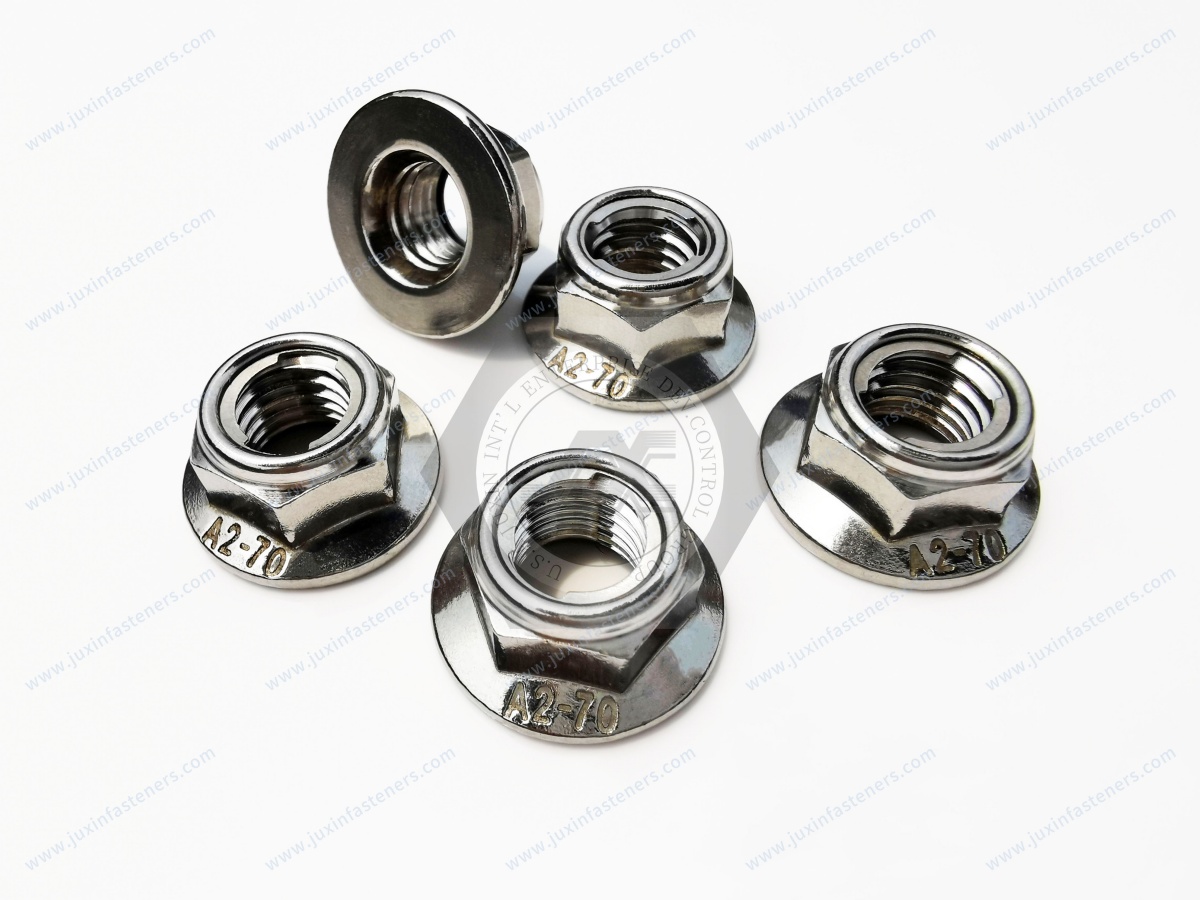
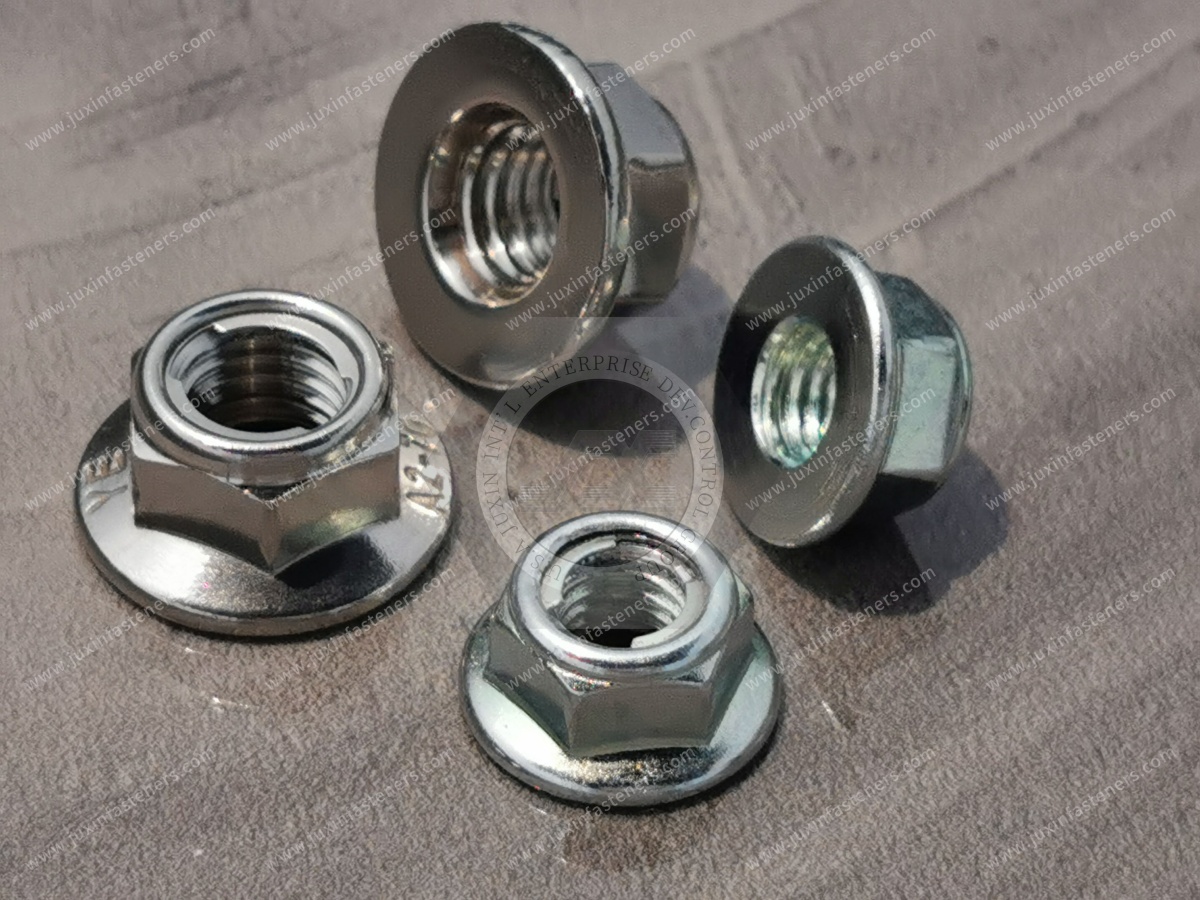
JUXIN FASTENERS supplies A2 and A4 stainless steel nuts, stainless steel hex nuts, flange nuts, nylon insert lock nuts,
all-metal prevailing-torque nuts and custom stainless steel fastening components for industrial OEM applications.
For applications involving unusual low temperatures, elevated temperatures or repeated thermal cycling,
the complete bolted joint should be reviewed rather than selecting the nut by material grade alone.
This is one of the most common engineering questions about stainless steel fasteners.
The technically correct answer is:
It depends on the stainless steel grade, property class, joint load, exposure duration, mating fastener, corrosion environment and applicable fastener standard.
For stainless steel nuts covered by ISO 3506-2, the specified mechanical and physical properties are evaluated at an ambient test temperature of approximately 10°C to 35°C.
Standard stainless steel fasteners conforming to the ISO 3506 system are commonly used without special restriction in applications approximately between:
−20°C and +150°C
Outside this range, engineering evaluation becomes increasingly important.
Certain stainless steel fastener applications can extend to substantially lower or higher temperatures, but this does not mean that a standard A2 or A4 nut has a universal rated service range from cryogenic temperatures to extreme heat.
The key engineering principle is:
Material capability ≠ Fastener property-class guarantee ≠ Complete joint capability.
Stainless steel material charts sometimes show extremely broad temperature capabilities.
This can lead to statements such as:
“304 and 316 stainless steel nuts can operate from −200°C to 800°C.”
For engineering procurement, this is too simplistic.
A stainless steel alloy may retain useful metallurgical characteristics at a certain temperature while the standard mechanical properties
assigned to the finished fastener are no longer guaranteed under the same conditions.
Temperature can affect:
proof-load capability;
tensile behavior;
creep;
stress relaxation;
preload retention;
oxidation;
corrosion;
friction;
mating-component performance.
Therefore, engineers should never convert a material temperature chart directly into a universal fastener operating-temperature specification.
For corrosion-resistant stainless steel nuts, ISO 3506-2 is an important reference for mechanical properties and property classes.
The standard covers stainless steel nuts including austenitic, martensitic, ferritic and duplex stainless steel grades under its defined scope.
A critical point for engineers is that the specified properties are established through testing at normal ambient temperatures.
Outside the conventional service range, factors such as the following must be considered:
stainless steel composition;
exposure temperature;
exposure duration;
mechanical loading;
fastener property changes;
clamped-part behavior;
corrosion environment.
Therefore, a specification such as:
M10 A4-70 stainless steel nut
does not automatically mean that the A4-70 property-class performance remains unchanged at every elevated or cryogenic temperature.
A practical engineering approach is to divide the application into temperature zones.
| Service Condition | Engineering Approach |
|---|---|
| Approximately −20°C to +150°C | Standard ISO 3506 stainless fastener selection is generally straightforward |
| Below approximately −20°C | Review low-temperature material behavior and complete joint requirements |
| Above approximately +150°C | Review mechanical-property reduction, preload retention and material suitability |
| Severe thermal cycling | Evaluate expansion mismatch, preload change and locking system |
| Cryogenic service | Application-specific material and fastener validation required |
| Several hundred °C | Specialized high-temperature fastener selection may be required |
| Up to approximately 800°C | Evaluate special stainless/nickel-alloy fasteners under appropriate high-temperature standards |
This matrix is a screening tool, not a universal temperature rating.
Austenitic stainless steels are widely considered for low-temperature and cryogenic applications because suitable grades can maintain useful toughness at very low temperatures.
Common austenitic stainless steel families include:
304-type stainless steel;
316-type stainless steel;
related austenitic alloys.
Potential applications include:
LNG equipment;
refrigeration systems;
cryogenic processing equipment;
scientific equipment;
cold-storage systems;
low-temperature process machinery.
However, specifying a cryogenic fastening system requires more than stating:
“Use stainless steel because it does not become brittle.”
The complete fastening system still requires engineering validation.
At extremely low temperatures, engineers should consider:
nut material;
bolt or stud material;
fastener property class;
clamped material;
differential thermal contraction;
preload changes;
fracture toughness;
thread condition;
service loading;
applicable pressure-equipment or project standards.
Austenitic stainless steels have an established history in cryogenic engineering, including applications approaching LNG temperatures and below,
but the specific grade and finished fastener system must still be selected for the application.
The Nickel Institute notes that several austenitic stainless steels, particularly 304-type material,
have extensive use in cryogenic equipment because strength increases as temperature decreases while useful ductility and toughness can be maintained.
This material behavior is one reason austenitic stainless steels are important in cryogenic engineering.
Elevated temperature introduces a different engineering problem.
As temperature rises, engineers must consider potential changes in:
yield/proof strength;
tensile strength;
preload;
creep;
stress relaxation;
oxidation;
corrosion behavior;
thread friction;
lubricant performance.
Therefore, a nut that performs correctly at room temperature may not provide identical joint behavior after long-term exposure to elevated temperature.
This is especially important in continuously loaded industrial equipment.
A bolted joint works by generating clamp load.
When the assembly heats up, different components may expand at different rates.
If the:
bolt;
nut;
washer;
housing;
flange;
bracket;
do not have similar thermal expansion behavior, joint preload can increase or decrease.
Repeated heating and cooling can therefore create a preload cycle.
This may contribute to:
joint relaxation;
loosening;
fatigue;
leakage;
thread damage;
reduced clamp reliability.
For temperature-critical joints, the fastener cannot be evaluated independently from the materials being clamped.
Consider a stainless steel bolt-and-nut system clamping another material.
If the fastener expands more than the clamped component during heating, the preload response may differ from an assembly where the clamped component expands more than the fastener.
The actual result depends on:
coefficients of thermal expansion;
effective grip length;
stiffness of the fastener;
stiffness of the joint;
temperature distribution;
initial preload.
This is why copying a room-temperature tightening specification into a thermal-cycling application can create reliability problems.
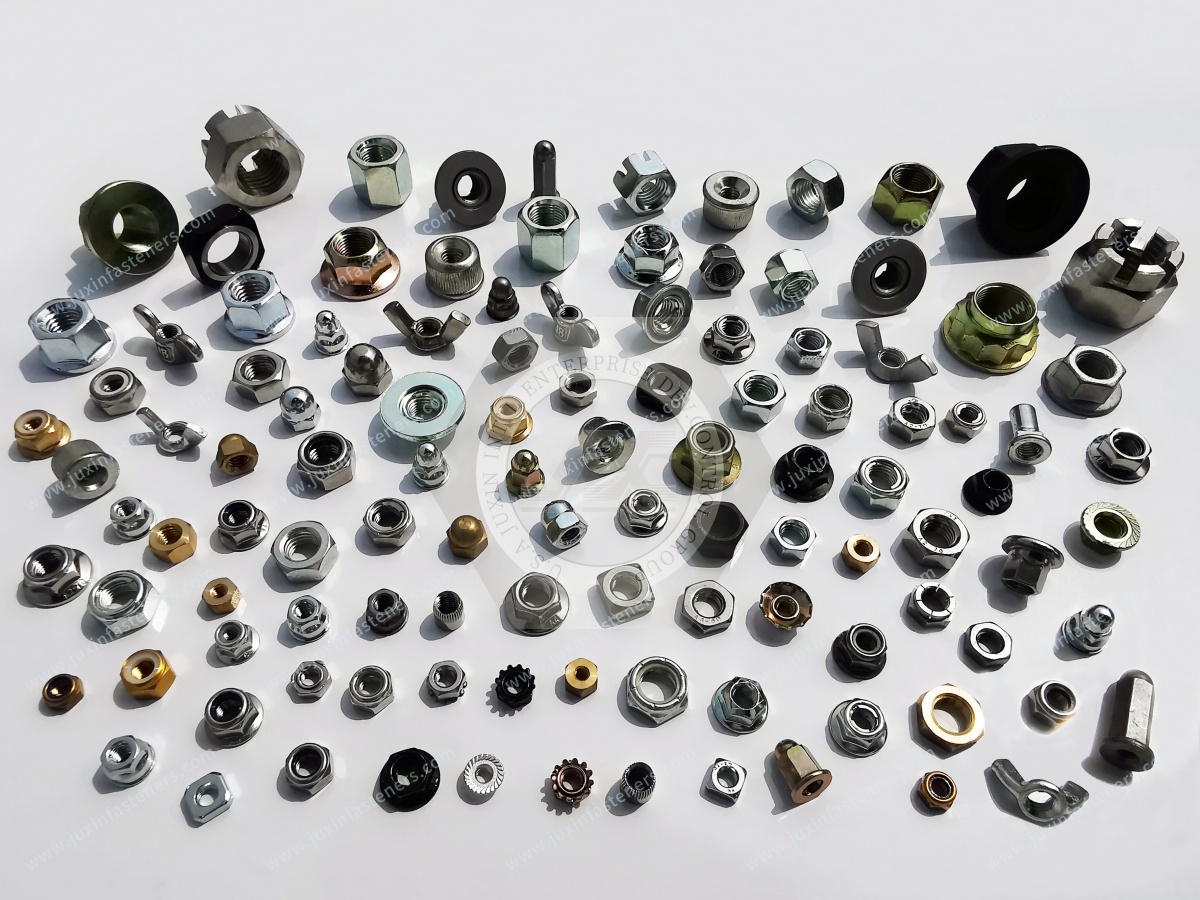
A2 stainless steel nuts are commonly associated with 304-type austenitic stainless steel.
They are widely used for general corrosion-resistant industrial fastening.
Typical applications include:
machinery;
electrical equipment;
HVAC systems;
food-processing machinery;
automation equipment;
indoor and outdoor equipment.
However, A2 should not automatically be described as a “high-temperature nut.”
When the application moves beyond normal industrial temperatures, engineers should evaluate:
required mechanical properties;
exposure duration;
oxidation;
preload retention;
mating bolt properties;
corrosion environment.
A4 stainless steel is commonly associated with 316-type stainless steel and is often selected where improved resistance to chloride-containing environments is required.
Applications can include:
marine-related equipment;
coastal installations;
chemical-processing equipment;
food-processing systems;
selected pharmaceutical equipment;
outdoor industrial systems.
But A4 should not automatically be selected over A2 simply because the temperature is higher.
The primary reason for choosing A4 is generally related to corrosion environment, especially where improved resistance to chloride exposure is needed.
High-temperature mechanical suitability is a separate engineering question.
This distinction is frequently missed in purchasing specifications.
The logic:
Higher temperature → use 316/A4
is not universally correct.
A2 versus A4 selection and high-temperature material selection answer different engineering questions.
A2/A4 selection is strongly influenced by corrosion exposure.
High-temperature selection requires evaluation of:
strength retention;
oxidation;
creep;
stress relaxation;
exposure duration;
joint preload;
alloy suitability.
Therefore:
Corrosion requirement and temperature requirement should be evaluated separately, then combined into the final material specification.
When service temperature becomes much higher than the conventional range of standard stainless steel fastening systems, specialized materials and standards may be required.
ISO 3506-5 addresses special fasteners made from specified corrosion-resistant stainless steels and nickel alloys intended for high-temperature applications up to approximately 800°C within its defined scope.
This is fundamentally different from claiming that an ordinary 304 or 316 standard nut is universally rated to 800°C.
High-temperature applications may require:
special stainless steel grades;
precipitation-hardening materials;
martensitic stainless steels;
nickel alloys;
application-specific mechanical-property requirements.
For these projects, the fastener specification should be established from the actual operating condition rather than substituting a standard A2/A4 nut without engineering review.
Temperature alone does not define high-temperature performance.
Compare:
200°C for five minutes
with
200°C continuously for five years
These are not equivalent material-service conditions.
Exposure duration can influence:
stress relaxation;
creep;
oxidation;
microstructural changes;
preload retention;
corrosion mechanisms.
For procurement, this means an RFQ should specify both:
Operating Temperature + Exposure Duration / Duty Cycle
when temperature is a critical design condition.
Industrial equipment may experience:
The assembly remains near a defined elevated temperature during normal operation.
The assembly reaches high temperature only during part of the operating cycle.
The assembly repeatedly transitions between lower and higher temperatures.
Temperature changes rapidly over a short period.
Each condition can affect the joint differently.
Therefore, the maximum temperature alone is not enough information for fastener selection.
Locking systems deserve special attention because different locking technologies have different temperature limitations.
Common stainless steel locking systems include:
nylon insert lock nuts;
all-metal prevailing-torque nuts;
serrated flange nuts;
mechanical locking systems;
thread-locking compounds.
These should not be treated as equivalent in elevated-temperature applications.
A stainless steel nylon insert lock nut contains two different material systems:
Stainless Steel Nut Body + Polymer Locking Insert
The stainless steel body may tolerate a temperature that the polymer insert cannot.
Therefore, the maximum operating temperature of the complete lock nut may be controlled by the nylon or other polymer insert rather than by the stainless steel body.
Temperature can affect:
polymer strength;
prevailing torque;
dimensional stability;
long-term locking performance.
For elevated-temperature applications, engineers should verify the actual insert material and its approved service-temperature range.
Do not use the stainless steel body's temperature capability as the temperature rating of the complete nylon insert lock nut.
Where polymer locking elements are unsuitable, an all-metal prevailing-torque lock nut may be considered.
Potential advantages include:
no nylon locking insert;
metallic locking mechanism;
suitability for higher-temperature applications when the selected material and design are validated.
However:
All-metal does not mean unlimited temperature.
The stainless steel grade, locking geometry, prevailing-torque performance and complete joint still require evaluation.
A lock nut may pass prevailing-torque requirements at room temperature but operate differently after exposure to:
elevated temperature;
repeated thermal cycles;
lubricant;
chemical contamination;
thread wear.
For temperature-critical equipment, engineers should consider whether functional testing is required under representative conditions rather than relying only on room-temperature installation data.
Stainless steel threaded fasteners can be susceptible to galling, particularly in stainless-on-stainless assemblies.
Galling risk can be influenced by:
thread friction;
tightening speed;
contact pressure;
surface condition;
lubrication;
temperature.
High friction can cause localized heating during installation even before the equipment reaches its operating temperature.
For demanding assemblies, galling control may involve:
clean threads;
controlled installation speed;
suitable lubrication;
anti-seize compounds;
surface treatments;
compatible mating materials.
A common engineering mistake is to select a lubricant to prevent stainless steel galling without checking whether that lubricant is suitable for the operating temperature.
The lubricant may:
degrade;
evaporate;
oxidize;
change friction behavior;
at elevated temperature.
Therefore, a high-temperature stainless steel fastening system requires compatibility between:
Nut + Bolt + Joint + Lubricant + Temperature
rather than selecting each component independently.
Assembly torque is influenced strongly by friction.
If temperature changes the friction condition of:
threads;
bearing surfaces;
lubricant;
coating;
the relationship between tightening torque and resulting preload may also change.
This is particularly important where:
preload is safety-critical;
thermal cycling is severe;
stainless-on-stainless threads are used;
lubricants or anti-seize products are applied.
For critical joints, tightening parameters should be validated for the actual fastener and assembly condition.
Applications exposed to repeated heating and cooling require additional consideration.
Examples include:
ovens;
industrial heaters;
exhaust-related equipment;
process machinery;
heat exchangers;
energy equipment;
refrigeration systems.
Engineers should evaluate:
Maximum temperature
Minimum temperature
Temperature-change rate
Number of thermal cycles
Fastener material
Clamped-material expansion
Initial preload
Locking method
Corrosion environment
Inspection interval
This provides a much more useful specification than simply stating “heat-resistant stainless steel nut.”
| Application Condition | Initial Engineering Direction |
|---|---|
| Standard industrial temperature | A2/A4 nut according to corrosion and mechanical requirements |
| Mild elevated temperature | Review ISO 3506 property applicability and joint preload |
| Above approximately +150°C | Conduct application-specific temperature evaluation |
| Cryogenic service | Evaluate suitable austenitic stainless system and project requirements |
| Chloride + elevated temperature | Evaluate corrosion and temperature independently |
| High temperature + vibration | Evaluate all-metal locking system |
| High temperature + nylon lock nut | Verify polymer insert temperature capability |
| Severe thermal cycling | Evaluate expansion mismatch and preload stability |
| Several hundred °C continuous service | Consider specialized high-temperature fastener materials |
| Extreme high-temperature service | Evaluate ISO 3506-5 or applicable project-specific materials |
Temperature-resistant fastening systems may be required in:
valves;
pumps;
heat exchangers;
process equipment;
piping-related equipment;
refinery systems.
Selection can depend on:
temperature;
pressure;
process media;
corrosion;
load;
applicable equipment codes.
A standard stainless steel nut should not automatically be specified for pressure-containing or safety-critical equipment without reviewing the governing engineering requirements.
Applications can include:
thermal equipment;
heat exchangers;
energy systems;
equipment enclosures;
industrial piping support;
renewable-energy equipment.
Temperature cycles and long-term preload retention can be more important than short-term material strength alone.
High-temperature equipment may require fastening systems for:
access panels;
equipment frames;
heating assemblies;
insulation systems;
guards;
non-pressure structural components.
Where temperatures reach several hundred degrees Celsius, material selection should be based on actual exposure and mechanical requirements.
Ordinary A2/A4 stainless steel nuts should not automatically be treated as high-temperature-specialty fasteners.
Potential applications include:
refrigeration machinery;
cold-storage equipment;
LNG-related equipment;
laboratory systems;
cryogenic processing systems.
At low temperatures, engineers should consider not only material toughness but also differential thermal contraction between the fastener and the surrounding structure.
Food-processing equipment may experience:
hot washdown;
steam cleaning;
refrigeration;
repeated temperature cycling;
chemical cleaning agents.
This creates a combined requirement involving:
Temperature + Corrosion + Cleaning Chemistry + Hygienic Design
A4 stainless steel may be selected for certain aggressive environments, but the actual grade should be determined from the complete exposure condition.
Stainless steel nuts may be used in:
passenger interiors;
lighting systems;
electrical cabinets;
equipment mounting;
HVAC assemblies;
exterior equipment.
Temperature requirements can vary significantly between interior and exterior locations.
For rail applications, engineers may also need to consider:
vibration;
fire requirements;
corrosion;
maintenance;
project-specific rail standards;
traceability.
Automotive assemblies experience:
ambient temperature variation;
vibration;
thermal cycling;
humidity;
road contaminants;
localized heat sources.
Potential applications include:
brackets;
battery enclosures;
electrical equipment;
interior assemblies;
equipment mounting.
EV fastener selection should consider the actual local temperature at the fastening point rather than applying one vehicle-wide temperature assumption.
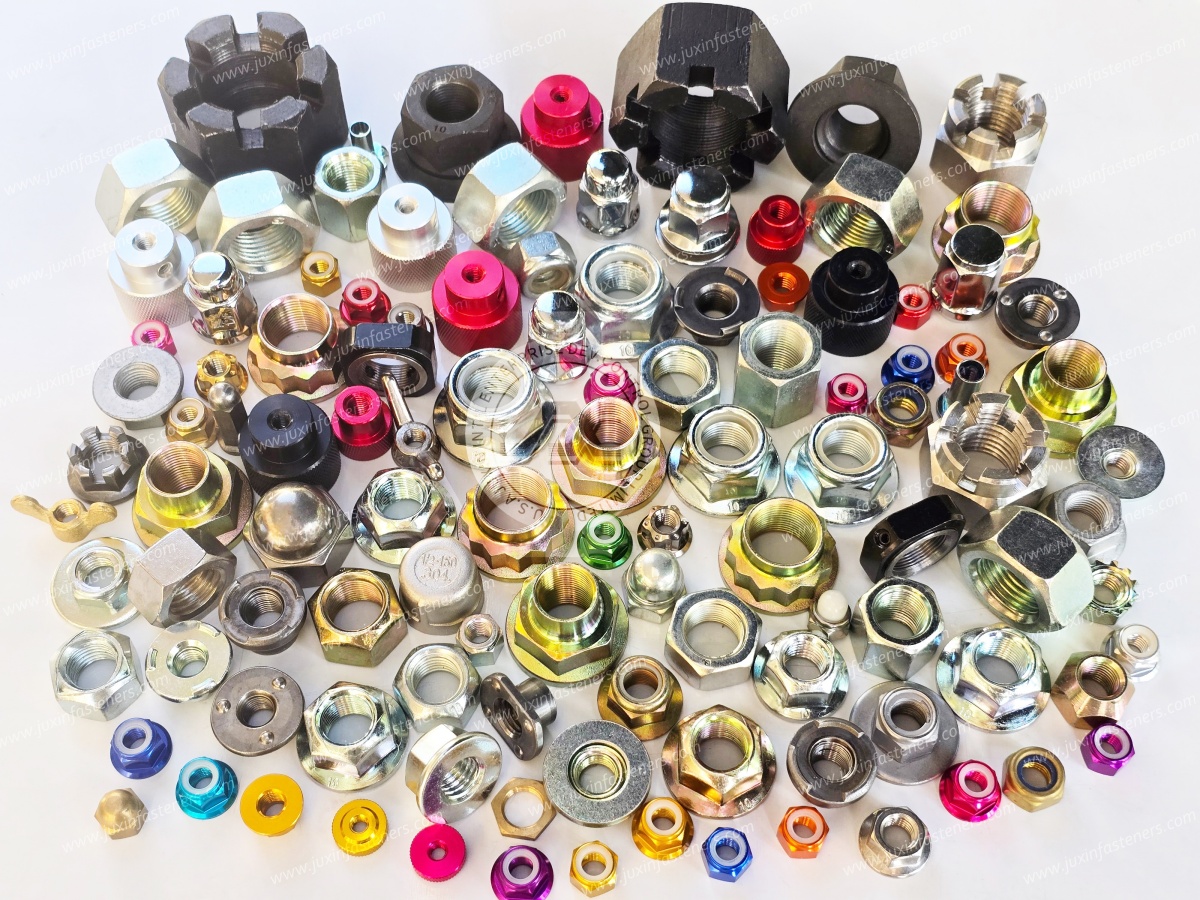
Instead of writing:
M8 stainless steel nut — high temperature
a professional specification should provide:
nut type;
thread size and pitch;
applicable dimensional standard;
material / stainless steel grade;
property class;
mating bolt or stud;
minimum operating temperature;
maximum operating temperature;
continuous or intermittent exposure;
thermal-cycle requirement;
corrosion environment;
locking requirement;
lubrication requirement;
preload or tightening requirement;
applicable inspection and documentation.
This allows the fastener supplier to evaluate the actual application.
M10 316 stainless steel nuts for high temperature.
This leaves major engineering questions unanswered.
M10 × 1.5 stainless steel hex nut, maximum continuous service temperature 220°C, minimum service temperature −20°C,
mating stainless steel stud specified, outdoor industrial environment, continuous mechanical load, material certification required.
Please review suitable stainless grade/property class and advise whether a standard ISO 3506 fastener is appropriate.
The second RFQ gives engineering and procurement teams enough information to begin meaningful technical evaluation.
Depending on the application, inspection may include:
material grade;
chemical composition documentation;
material certification.
thread;
across flats;
nut height;
flange dimensions;
customer drawing requirements.
Depending on the applicable standard:
proof load;
hardness;
prevailing torque;
functional testing.
For critical temperature applications, the customer may require additional testing or qualification under representative service conditions.
Depending on the project, applicable standards may include:
ISO 3506-2 — mechanical properties of corrosion-resistant stainless steel nuts;
ISO 3506-5 — special corrosion-resistant stainless steel and nickel-alloy fasteners for high-temperature applications;
applicable ISO 3506 guidance for stainless steel fastener selection;
ISO 4032 — hexagon regular nuts;
applicable ISO prevailing-torque nut standards;
applicable ASME/ANSI dimensional and thread standards for inch fasteners;
applicable ASTM material or project requirements;
customer drawings and industry-specific specifications.
The applicable standard must be selected according to the actual product, material and operating environment.
Before requesting a quotation, procurement and supplier-development teams should confirm:
What is the maximum operating temperature?
What is the minimum operating temperature?
Is the exposure continuous or intermittent?
Is thermal cycling present?
What is the mating bolt or stud material?
What property class is required?
What corrosion environment exists?
Are chlorides present?
Is a locking feature required?
Is a polymer insert acceptable?
Is lubrication required?
Are special material certificates required?
Is application-specific testing required?
What is the annual volume?
These questions reduce specification ambiguity and help prevent the wrong fastener from reaching production validation.
JUXIN FASTENERS supports industrial OEM projects requiring:
A2 stainless steel nuts;
A4 stainless steel nuts;
stainless steel hex nuts;
stainless steel flange nuts;
nylon insert lock nuts;
all-metal prevailing-torque nuts;
cap nuts;
custom stainless steel nuts;
metric threads;
inch threads;
drawing-based special fasteners.
For temperature-sensitive applications, provide the actual operating conditions together with your drawing or fastener specification.
Our engineering review can then focus on the required geometry, material, property class, locking method, surface condition and manufacturing requirements.
This article should sit underneath the main Stainless Steel Nuts Selection Hub and target temperature-specific engineering searches.
Recommended internal links:
Stainless Steel Nuts: A2/A4 Grades, Locking Types & OEM Selection Guide
→ Main stainless steel nut hub and material-selection guide.
Stainless Steel Hex Nuts
→ Standard hex nut product selection.
Stainless Steel Flange Nuts
→ Applications requiring integrated bearing surfaces.
All-Metal Lock Nuts
→ Elevated-temperature applications where polymer locking elements may be unsuitable.
Nylon Insert Lock Nuts
→ Moderate-temperature vibration-resistant assemblies, subject to insert temperature limitations.
Stainless Steel Bolts and Studs
→ Mating-fastener selection for complete bolted joints.
Custom Stainless Steel Fasteners
→ Drawing-based projects involving unusual temperature, geometry or material requirements.
The intended conversion path is:
Temperature Search
→ Service Temperature
→ Continuous / Intermittent / Cycling
→ Corrosion Environment
→ A2/A4 or Special Material
→ Locking Method
→ Mating Fastener
→ Engineering Review
→ RFQ
If you are sourcing stainless steel nuts for elevated temperature, low-temperature equipment,
thermal-cycling machinery or demanding industrial environments, send JUXIN FASTENERS your technical requirements.
For faster review, provide:
Nut Type + Thread + Standard + Material Requirement + Property Class + Mating Fastener + Minimum Temperature + Maximum Temperature
+ Exposure Duration + Thermal Cycling + Corrosion Environment + Locking Requirement + Quantity
For custom components, include your 2D drawing.
JUXIN FASTENERS supports procurement teams, supplier-development engineers, structural engineers and design engineers requiring standard and drawing-based industrial fastening solutions.
JUXIN FASTENERS
Website: www.juxinfasteners.com
Email: info@juxinfasteners.com
Contact Us
Tel.:
+86 020 8621 0320
+86 020 3121 6067
E-mail:
Technical Support:
Navigation
SEND INQUIREY