
Call Us
+86 136 6007 9809
Call Us
+86 136 6007 9809

Oct. 18, 2023
A wave washer, also called a wave spring washer or wavy washer, is a thin elastic component formed with one or more waves around its circumference.
When compressed axially, the waves deflect and generate spring force.
Unlike a flat washer, whose primary purpose is generally to distribute bearing pressure beneath a bolt head or nut, a wave washer is designed to act as a compact spring element.
Depending on the assembly, wave washers may be used to:
Apply axial preload
Reduce end play
Take up assembly clearance
Compensate for dimensional tolerances
Maintain contact between components
Apply bearing preload
Accommodate limited thermal movement
Reduce rattle caused by axial clearance
This combination of low axial height and elastic deflection makes wave washers useful in electric motors, bearings, gear assemblies,
pumps, actuators, automotive mechanisms, industrial automation equipment, electronics and other compact mechanical systems.
However, selecting a wave washer requires more than matching its inside diameter to a shaft or bolt.
For functional applications, engineers should consider the relationship between free height, working height, deflection, spring load, material, wave geometry and operating environment.
The operating principle is based on elastic deformation.
Before installation, the washer has a defined free height created by its wave profile.
When the assembly compresses the washer, the waves partially flatten. The washer resists this deformation and generates an opposing axial force.
The basic relationship can be understood as:
Free Height → Compression → Elastic Deflection → Axial Spring Force
When properly designed, this spring force can keep adjacent components in contact while allowing limited dimensional movement.
This is why wave washers are often used where a rigid spacer would not provide sufficient tolerance compensation.
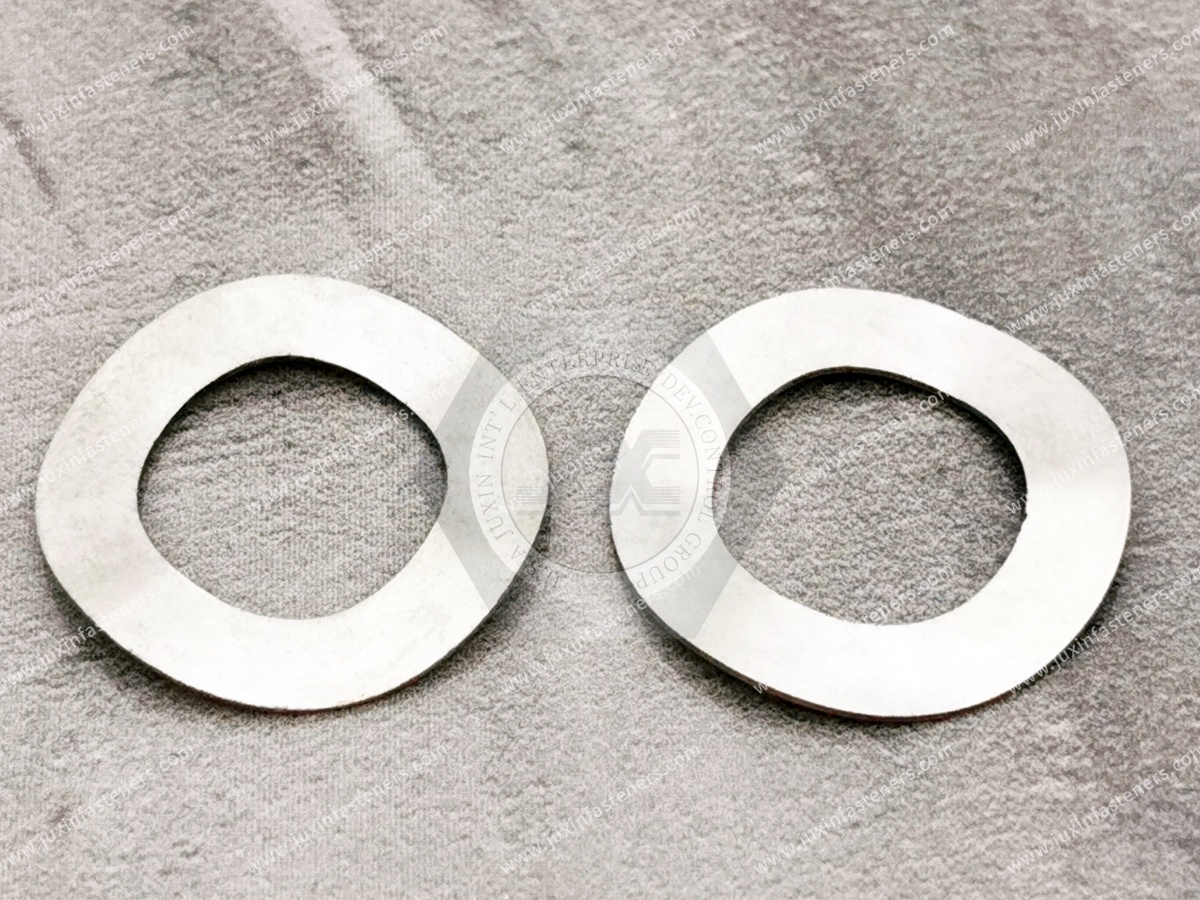
A three-wave washer, sometimes described as a three-wave or three-crest wave spring washer, has three principal wave regions distributed around its circumference.
The geometry allows the washer to provide axial spring action while occupying relatively little space.
Important characteristics can include:
Inside diameter
Outside diameter
Material thickness
Free height
Number of waves
Wave amplitude
Working height
Deflection
Load at a specified compressed height
The term "three-wave washer" describes its geometry, but it does not by itself define its spring performance.
Two three-wave washers with similar outside dimensions can generate different loads because of differences in material thickness, hardness, heat treatment, wave height or forming geometry.
Wave washers and flat washers should not be treated as interchangeable components.
A flat washer is generally used to:
Distribute bearing pressure
Protect the mating surface
Increase the effective bearing area
Provide a controlled interface beneath a nut or bolt head
Its function normally depends on dimensional stability rather than intentional spring deflection.
A wave washer is intentionally elastic.
Its principal functions can include:
Axial preload
Clearance take-up
End-play control
Bearing preload
Tolerance compensation
Component positioning
If the engineering requirement is simply to distribute bolt load, a flat washer may be more appropriate.
If the assembly requires controlled axial movement and spring force, a wave washer may be considered.
Wave washers and curved spring washers are both elastic washer types, but their geometries and typical applications differ.
A curved spring washer generally has a simpler curved or arched profile.
A wave washer uses multiple wave regions around its circumference and can provide controlled axial deflection over a compact installation height.
A useful engineering distinction is:
General Elastic Compensation → Curved Spring Washer
Controlled Axial Take-Up or Bearing Preload → Wave Washer
The final selection should be based on the required load-deflection behavior rather than product name alone.
A Belleville washer, also known as a disc spring, uses a conical geometry.
Disc springs are commonly evaluated where relatively high axial spring forces are required within a compact space.
Wave washers generally serve a different design requirement.
They may be preferred when the application requires:
More compliant axial movement
Tolerance take-up
Moderate spring force
Compact installation
Bearing preload
End-play compensation
A simple preliminary comparison is:
Load Distribution → Flat Washer
Axial Take-Up → Wave Washer
Higher Spring Force in Limited Space → Evaluate Disc Spring
Actual selection should be based on the complete mechanical system.
Compression coil springs can provide substantial travel and can be designed for a broad range of spring rates.
Their disadvantage in some assemblies is axial space.
A wave washer provides spring action in a much thinner package.
This can make it useful in compact:
Motors
Gear mechanisms
Bearing housings
Actuators
Instruments
Electrical equipment
Mechanical controls
A wave washer should not automatically replace a coil spring, however. Available deflection, required force, fatigue life and installation geometry must all be evaluated.
Bearing assemblies are one of the most important applications for wave washers.
A simplified arrangement might be:
Housing Shoulder → Bearing → Wave Washer → End Cover
When the cover is assembled, the wave washer compresses and applies an axial force to the bearing.
Depending on the bearing system, this may help:
Reduce unwanted axial clearance
Maintain contact between components
Compensate for housing tolerances
Control end play
Provide a designed axial preload
Reduce mechanical rattle
Bearing preload must nevertheless be engineered carefully.
Excessive preload can increase friction, heat, torque and bearing stress.
Insufficient preload may fail to control axial movement.
The correct wave washer is therefore selected as part of the bearing system, not simply according to shaft diameter.
End play is the amount of axial movement available to a shaft, bearing or mechanical component.
Some mechanisms require controlled clearance. Others require axial movement to be minimized.
Manufacturing tolerances can create variations in this clearance.
A wave washer can occupy part of the available axial space while maintaining an elastic force.
This is particularly useful when designers need to control axial movement without using a completely rigid stack.
Consider an assembly containing:
Housing + Bearing + Spacer + Cover
Each component has dimensional tolerances.
Even when every component is within specification, the total available axial space can vary from assembly to assembly.
This is known as tolerance stack-up.
A wave washer can help accommodate some of this variation because it changes height elastically.
The engineering question is therefore not simply:
"What is the nominal gap?"
The more useful questions are:
What is the minimum possible gap?
What is the maximum possible gap?
What force is required at minimum compression?
What force occurs at maximum compression?
Will the washer remain within its intended elastic working range?
This approach is especially important for high-volume OEM assemblies.
Three dimensions are particularly important when evaluating a wave washer.
The height of the washer before installation.
The compressed height of the washer in the assembled mechanism.
The difference between the relevant free and working positions.
The washer's spring force depends on this deformation.
For functional wave washers, a specification containing only:
ID × OD × Thickness
may therefore be incomplete.
A drawing may also need to define:
Free height
Working height
Wave geometry
Deflection range
Load at specified height
For engineering applications, one of the most useful functional specifications is:
Axial Load at Specified Height
This tells both the engineer and the supplier what the washer must actually do.
For example, two washers may have the same:
ID
OD
Thickness
Number of waves
but produce different spring forces because of differences in:
Material
Hardness
Heat treatment
Wave height
Forming process
Residual stresses
This is why dimensional similarity alone does not guarantee functional interchangeability.
Mechanical assemblies can contain materials with different coefficients of thermal expansion.
Examples include combinations of:
Steel
Aluminum
Stainless steel
Engineering polymers
Bearing steels
As temperature changes, the dimensions of these components may change at different rates.
A wave washer can provide limited elastic movement to accommodate some of these changes while maintaining axial contact.
The required load and deflection should be evaluated across the actual operating-temperature range.
Wave washers are sometimes marketed as locking washers, but this description can be misleading.
Their primary engineering function is elastic axial compensation.
They may help maintain contact or preload in certain assemblies, but they should not automatically be considered a dedicated solution for severe vibration-induced rotational self-loosening.
Fastener loosening depends on factors including:
Joint preload
Joint stiffness
Transverse movement
Vibration
Friction
Fastener geometry
Surface condition
Temperature
Mating materials
Where rotational loosening is the primary failure mode, engineers should evaluate an appropriate locking method specifically designed for that requirement.
Not inherently.
A conventional metallic wave spring washer should not be described as providing fluid or gas sealing merely because it maintains contact pressure.
Sealing normally requires a dedicated sealing interface such as:
Elastomeric seal
Bonded sealing washer
O-ring
Gasket
Formed sealing feature
Application-specific sealing system
A wave washer may provide spring force within a sealing assembly, but the sealing function should be evaluated independently.
This distinction is important when specifying components for pumps, HVAC equipment, liquid-cooling systems or automotive fluid systems.
Wave washer material should be selected according to the required spring characteristics, fatigue performance, temperature and environmental exposure.
Spring steels can provide:
Elastic performance
Fatigue resistance
Mechanical strength
Cost-effective high-volume production
They are commonly considered for general industrial equipment, motors, gearboxes, pumps and mechanical assemblies.
The exact grade, hardness and heat treatment should be defined according to the application.
Stainless steel wave washers may be selected where corrosion resistance is important.
Potential applications include:
Outdoor equipment
HVAC systems
Medical equipment
Food-service machinery
Electronics
Liquid-cooling equipment
Laboratory instruments
Different stainless grades provide different combinations of corrosion resistance, formability and spring performance.
The engineering specification should therefore identify the required material rather than simply state "stainless steel."
More demanding applications may require special materials for:
Elevated temperature
Aggressive chemicals
Higher fatigue requirements
Special corrosion conditions
Electrical or magnetic requirements
These projects should be evaluated against the customer's actual operating environment.
Carbon or alloy steel wave washers may require corrosion protection.
Depending on material, application and customer specification, finishes may include:
Black oxide
Phosphate-based finishes
Zinc-based coatings
Zinc-nickel systems
Zinc-flake coatings
Other engineered coatings
Coating selection should consider more than corrosion resistance.
Engineers and procurement teams should also evaluate:
Coating thickness
Dimensional impact
Material hardness
Hydrogen-embrittlement risk
Friction requirements
Operating temperature
Customer specifications
The coating system should be compatible with the spring component and its manufacturing process.
Electric motors frequently contain components that make wave washers useful:
Bearings
Shafts
End covers
Housings
Tight axial packaging
A wave washer may be used between a bearing and an end cover to provide controlled axial force.
Potential objectives include:
Bearing preload
End-play reduction
Tolerance compensation
Rattle reduction
This is particularly relevant to compact motors used in industrial automation, automotive systems, pumps, HVAC equipment and electrical devices.
Modern vehicles contain many compact electromechanical systems where axial control is important.
Potential wave washer applications include:
Electric motors
Pumps
Actuators
Small gear mechanisms
Seat mechanisms
Steering-related mechanisms
Thermal-management equipment
Auxiliary drive systems
In EV platforms, electric motors, cooling equipment, actuators and auxiliary mechanisms can create additional applications for compact preload components.
Application suitability must be established from the OEM design and validation requirements.
Safety-critical applications should never be qualified solely from a generic washer specification.
Automation equipment often requires compact mechanisms with repeatable movement.
Wave washers may be considered in:
Robotic mechanisms
Servo-related assemblies
Actuators
Packaging equipment
Small gear systems
Conveyor mechanisms
Precision fixtures
Their role is typically associated with axial preload, clearance compensation or component positioning rather than structural fastening alone.
Rotating equipment may use wave washers in bearing systems or auxiliary mechanisms requiring axial compensation.
Potential applications include:
Pumps
Compressors
Valve actuators
Mechanical control systems
Cooling equipment
Where the system handles liquids or gases, remember that the wave washer itself should not automatically be treated as a sealing element.
Corrosion exposure, operating temperature and fluid compatibility should also be evaluated.
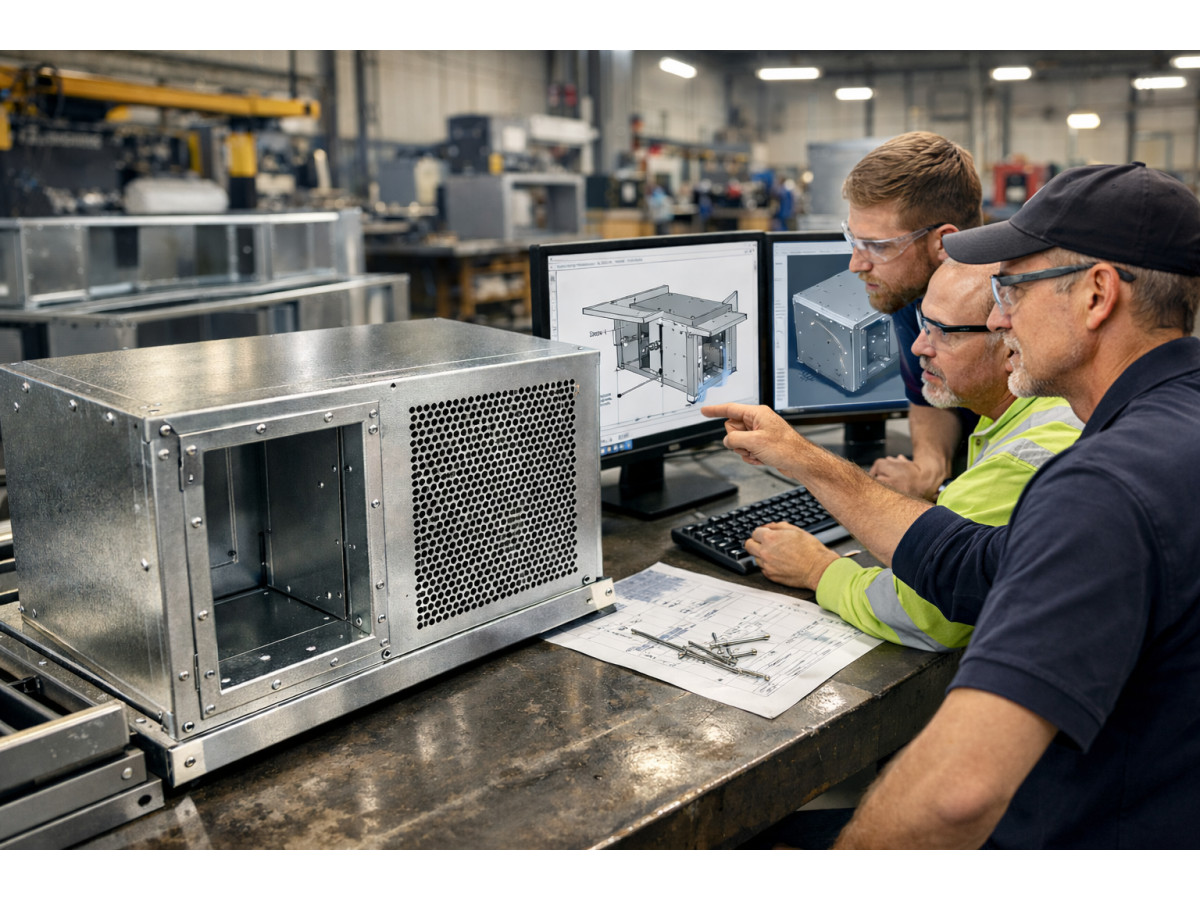
HVAC and thermal-management systems contain:
Motors
Fans
Pumps
Compressors
Actuators
Valves
Wave washers may be used within suitable mechanical subassemblies requiring compact spring force.
This is also relevant to liquid-cooling equipment supporting high-density computing and AI data-center infrastructure.
In these applications, wave washers may be found inside the mechanical equipment supporting the cooling system rather than acting as a direct fluid-sealing component.
Wave washers are useful where electrical or electronic assemblies require a compact elastic element.
Potential applications include:
Small motors
Electrical connectors
Adjustment mechanisms
Instruments
Enclosures
Electromechanical devices
Material, conductivity, corrosion and contact requirements should be evaluated according to the specific application.
Medical and laboratory equipment can contain compact:
Motors
Pumps
Actuators
Instruments
Adjustment mechanisms
Wave washers may be used where axial preload or tolerance compensation is required.
For regulated applications, customer-specific requirements concerning traceability, cleanliness, material documentation and qualification must be considered separately.
A practical engineering selection process begins with function rather than size.
Determine whether the washer is intended for:
Bearing preload
End-play control
Clearance take-up
Tolerance compensation
Rattle reduction
Thermal compensation
General axial preload
Determine:
Minimum inside diameter
Maximum outside diameter
Free axial space
Minimum operating height
Maximum operating height
Identify the force required at the installed position.
If the assembly operates across a tolerance range, evaluate the force at both extremes.
Determine how much axial movement the washer must accommodate without leaving its intended working range.
Consider:
Temperature
Corrosion
Fatigue
Mechanical properties
Environmental exposure
Select the coating or finish according to material and environmental requirements.
Prototype testing should confirm that the selected washer provides the required performance in the complete mechanism.
A standard wave washer may be appropriate when an existing size and spring characteristic match the design.
A custom wave washer may be necessary when the application requires:
Non-standard inside diameter
Non-standard outside diameter
Special material thickness
Specific free height
Different wave geometry
Defined working height
Specific load at compression
Special material
Special coating
Restricted axial packaging
For these applications, drawing-controlled sourcing is preferable.
For a functional wave washer, useful drawing information may include:
Inside diameter
Outside diameter
Material thickness
Free height
Number of waves
Wave orientation or profile where relevant
Material
Heat treatment
Hardness where required
Surface finish
Load at specified height
Relevant dimensional tolerances
Not every application requires every parameter, but the drawing should control the characteristics that determine functional performance.
Reverse-engineering a wave washer from a physical sample can identify dimensions such as:
ID
OD
Thickness
Free height
Wave count
However, a sample alone may not reveal:
Original material specification
Heat treatment
Hardness
Required spring force
Fatigue requirement
Original free height before service
Permanent set accumulated during use
This is especially important when the sample has already operated under load.
For replacement or second-source projects, the best sourcing package combines the sample with available drawings and functional requirements.
When sourcing from a new wave washer supplier, procurement teams should evaluate more than unit price.
Depending on the application, qualification may include:
Drawing review
Material verification
Dimensional inspection
Hardness verification
Surface-treatment review
Load-deflection testing
Sample evaluation
Assembly testing
Pilot production
Production approval
For a bearing preload washer, load at working height may be more important than visual similarity to the incumbent component.
For an efficient quotation, provide as much of the following information as available:
Drawing or existing sample
Inside diameter
Outside diameter
Thickness
Free height
Number of waves
Working height
Required spring load
Material
Heat treatment
Surface treatment
Application
Operating temperature
Environmental conditions
Prototype quantity
Production quantity
Estimated annual volume
Documentation requirements
Packaging requirements
If the required spring load is not known, providing information about the assembly and intended function can help the technical review.
Engineers researching wave washers often search for:
what is a wave washer
how does a wave washer work
wave washer for bearing preload
wave washer load deflection
wave washer for end play
wave washer vs Belleville washer
wave washer vs curved washer
wave washer working height
axial preload washer
Procurement and supply-chain teams are more likely to search for:
wave washer manufacturer
wave spring washer supplier
three wave washer supplier
custom wave washer manufacturer
stainless steel wave washer supplier
bearing preload washer supplier
OEM wave washer supplier
custom spring washer manufacturer
The engineering requirement and procurement requirement eventually converge at the same point:
Can the supplier consistently manufacture the required geometry and spring performance at production scale?
For a deeper engineering discussion of bearing preload, tolerance stack-up and load-deflection requirements, review our Wave Spring Washers for Axial Preload and Tolerance Compensation guide.
For simple curved elastic washers, review our Curved Spring Washer Solutions.
For standardized curved spring washers, review our DIN 128A Curved Spring Washer Solutions.
For higher-force conical spring applications, review our Disc Spring and Belleville Washer Solutions.
For conical washers used in highly loaded bolted connections, review our DIN 6796 Conical Spring Washer Solutions.
For standard bearing-area and load-distribution requirements, review our Flat Washer Solutions.
For angular misalignment compensation, review our Spherical Washer Solutions.
These pages should be internally linked according to the engineering problem they solve rather than simply because they all belong to the washer category.
JUXIN FASTENERS supports OEM and industrial sourcing projects involving:
Wave washers
Wave spring washers
Three-wave washers
Bearing preload washers
Spring steel wave washers
Stainless steel wave washers
Custom wave washers
Drawing-based spring components
Projects can be reviewed from customer drawings, samples or application requirements.
Depending on the project, technical review can include:
Geometry
Material
Heat treatment
Hardness
Free height
Working height
Load-deflection requirements
Surface treatment
Application environment
Prototype and production quantities
The objective is not simply to supply a washer with the correct diameter.
For functional wave washers, the objective is to supply a component whose dimensions and spring characteristics match the mechanical requirements of the assembly.
For a new design, the sourcing path should ideally follow:
Application → Required Axial Force → Available Space → Deflection → Wave Geometry → Material → Finish → Prototype → Functional Validation → Production
For an existing component or second-source program:
Drawing / Sample → Dimensional Review → Material Review → Spring Performance → Finish → Samples → Assembly Validation → Production Approval
This process helps engineering and procurement teams reduce the risk of qualifying a component that looks correct but performs differently.
If you are sourcing wave washers, wave spring washers, three-wave washers, bearing preload washers, stainless steel wave washers or custom wave spring components,
send your drawing, sample or technical requirements to JUXIN FASTENERS.
Useful RFQ information includes:
Drawing or sample
Dimensions
Material
Free and working height
Required spring load, if available
Surface treatment
Application
Prototype quantity
Production quantity
Estimated annual demand
Quality and documentation requirements
Email: info@juxinfasteners.com
JUXIN FASTENERS can review your technical and commercial requirements and evaluate a standard, modified-standard or custom wave washer solution for OEM and industrial production.
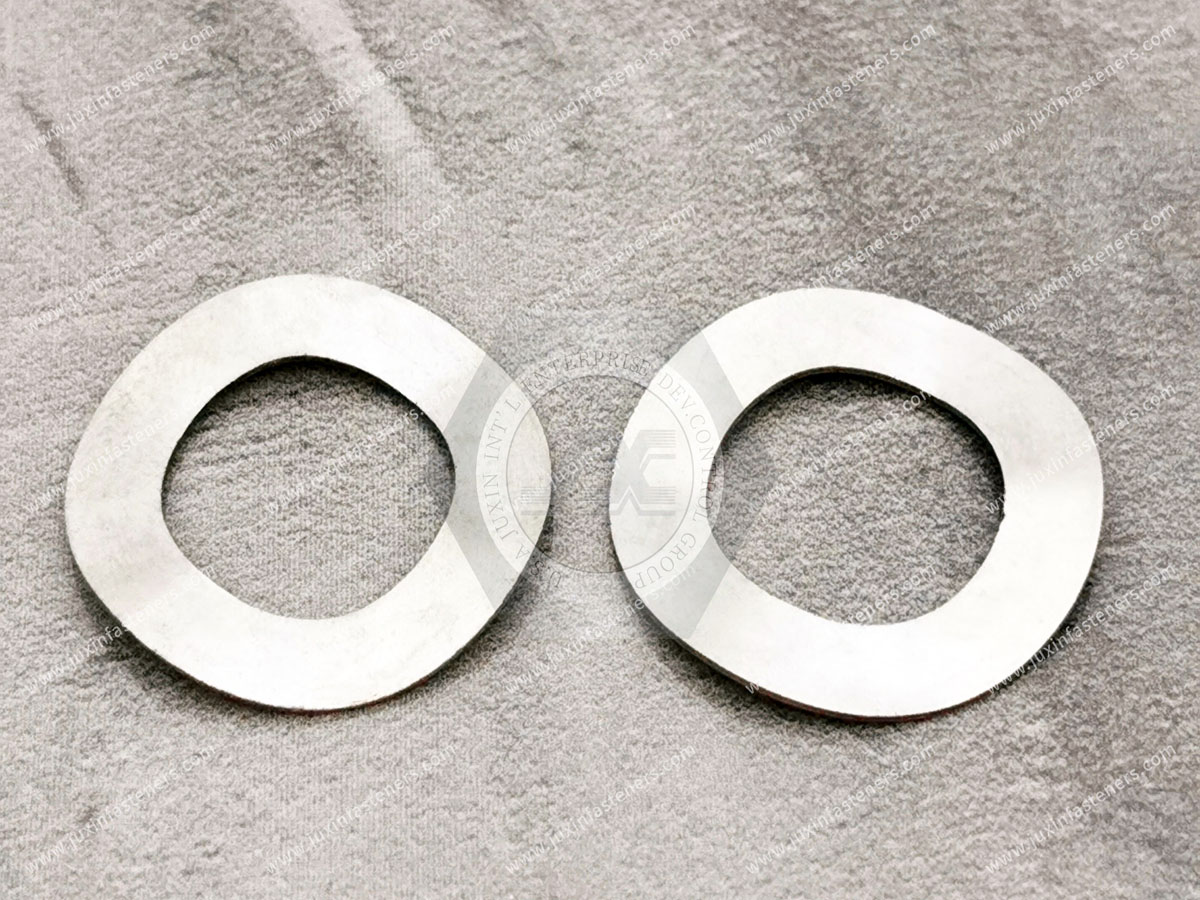
 MORE NEWS
Sep. 27, 2026
Sep. 27, 2026
Sep. 27, 2026
Contact Us
Tel.:
+86 020 8621 0320
+86 020 3121 6067
E-mail:
Technical Support:
Navigation
SEND INQUIREY