
Call Us
+86 136 6007 9809
Call Us
+86 136 6007 9809

Oct. 23, 2024
Industrial Wood Screws for Furniture, Cabinets and OEM Manufacturing: Selection and Assembly Guide
Wood screws are essential fastening components in furniture manufacturing, cabinet production, woodworking,
interior construction and industrial assemblies incorporating wood-based materials.


Selecting the correct wood screw involves more than choosing a nominal diameter and length.
The substrate, thread geometry, head style, drive system, screw material and installation process all influence joint reliability and manufacturing efficiency.
A screw suitable for solid hardwood may not perform equally well in particleboard, MDF, plywood or wood-plastic composite materials.
Similarly, a screw designed for fastening wood to wood should not automatically be substituted for a self-drilling screw intended to connect wood components to a steel frame.
For design and mechanical engineers, the important questions concern thread engagement, pull-out resistance, edge distance, material compatibility and joint geometry.
For manufacturing engineers and production managers, the same screw must support repeatable installation torque, reliable driver engagement, acceptable cycle times and consistent assembly quality.
For purchasing managers and supplier development teams, dimensional conformity, material specifications, coating consistency, packaging,
annual demand and supply reliability are important when qualifying a wood screw manufacturer.
Juxin Fasteners supplies industrial wood screws and drawing-specific fastening components for furniture, woodworking and OEM manufacturing applications.
What Is a Wood Screw?
A wood screw is a threaded fastener designed to engage wood or a compatible wood-based substrate.
Its thread geometry allows the screw to develop mechanical retention within the material.
Depending on the screw design and substrate, the threads may cut, displace or form a mating path in the material during installation.
Typical Wood Screw Features
Pointed or application-specific tip
Thread profile suited to the substrate
Head geometry suited to the joint
Drive recess or external driving feature
Material and surface finish selected for service conditions
Important Distinction
Wood screws, chipboard screws, structural wood screws, machine screws and self-drilling screws are different product categories.
They should not be assumed interchangeable merely because they have similar diameters or head styles.
Phillips Flat Head Wood Screws
Phillips flat head wood screws are widely used in furniture and cabinet manufacturing.
The countersunk head is designed to seat into an appropriately prepared surface.
When the screw and countersink are compatible, the installed head can be approximately flush with the surrounding material.
Typical Applications
Furniture frames
Cabinet panels
Wooden fixtures
Interior fittings
Woodworking assemblies
Selected wood-to-metal connections using appropriate screw designs
Engineering Considerations
The countersunk head applies force to the surrounding material.
In brittle substrates or near panel edges, excessive installation torque or an unsuitable countersink may cause splitting, crushing or surface damage.
Design Recommendation
Specify the head diameter, countersink angle, drive type and installation depth rather than relying only on the commercial name “flat head wood screw.”
How Wood Screws Develop Holding Strength
A wood screw develops retention through engagement between its threads and the surrounding substrate.
The resulting performance depends on:
Wood species and density
Moisture content
Screw diameter
Thread profile
Effective thread engagement length
Pilot-hole geometry
Screw orientation relative to the grain
Edge and end distances
Installation quality
Pull-Out Resistance
Pull-out resistance describes the force required to withdraw a screw along its axis.
It is strongly affected by substrate properties and effective thread engagement.
Lateral Loading
When a joint experiences transverse loading, screw bending, wood bearing and connection geometry become important.
Important Limitation
A screw with high material tensile strength does not automatically provide a high-capacity wood joint.
The substrate or surrounding connection may govern failure.
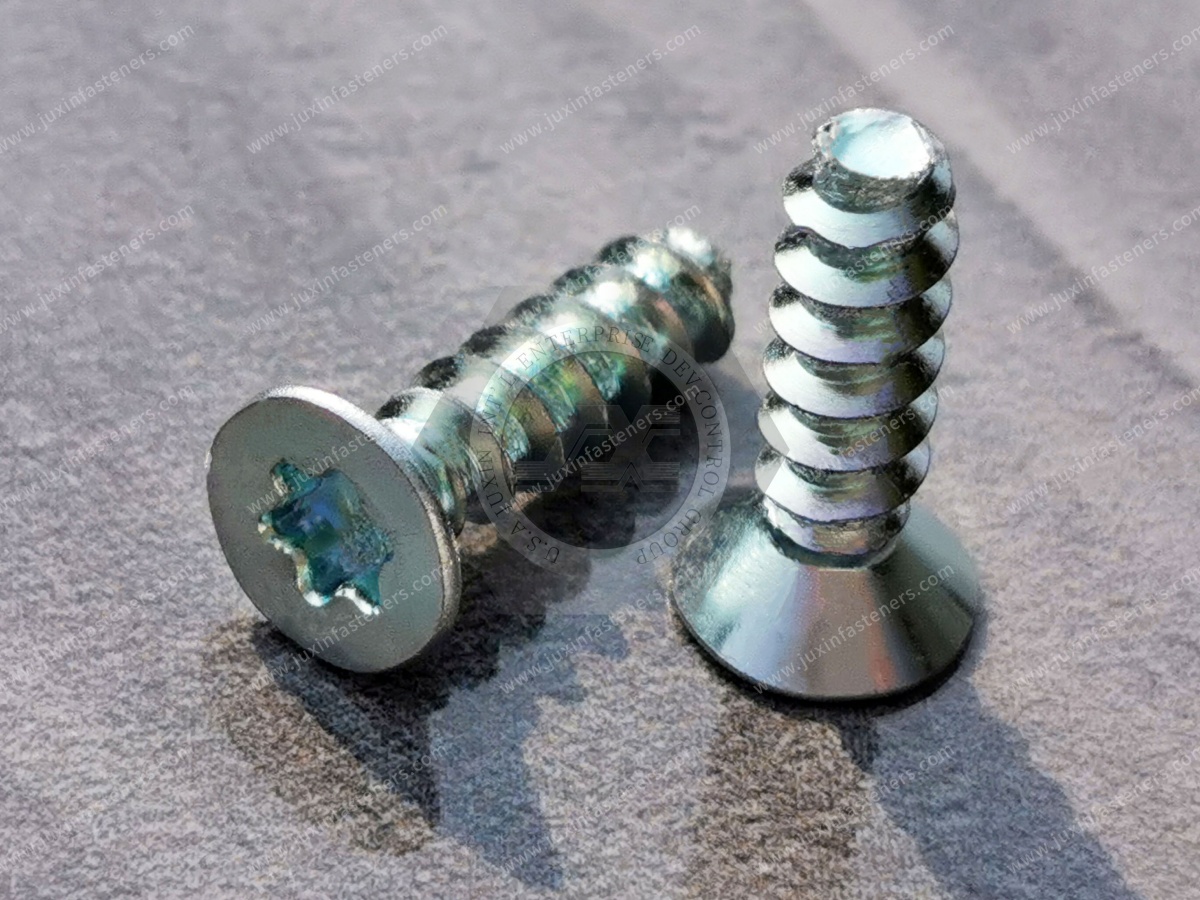
Wood Screw Diameter and Length Selection
Screw diameter affects the thread geometry, installation torque and available mechanical capacity.
Screw length affects the amount of material available for thread engagement.
Diameter Selection
Consider:
Required connection load
Substrate density
Minimum edge distance
Splitting risk
Screw head dimensions
Available installation equipment
Length Selection
Consider:
Thickness of the component being attached
Required thread penetration
Thickness of the receiving material
Risk of the screw penetrating through the opposite surface
Presence of coatings or intermediate layers
Engineering Recommendation
Do not select screw length solely from the total thickness of the assembled components.
The effective thread engagement in the receiving substrate must be evaluated.
Pilot Holes for Hardwood and Dense Materials
Pilot holes can reduce installation torque and help control splitting.
They are particularly important for certain hardwoods, dense engineered wood products and applications near edges or ends.
Why Pilot-Hole Diameter Matters
A pilot hole that is too small may increase driving torque and splitting risk.
A pilot hole that is too large may reduce thread engagement and withdrawal resistance.
Important Distinction
Pilot-hole size should not be determined by a universal percentage of the outside screw diameter.
The appropriate diameter depends on screw core diameter, thread geometry, substrate and installation requirements.
Engineering Recommendation
Use the screw manufacturer's validated recommendations or conduct application-specific installation trials.
Countersinking and Head Seating
Countersinking provides space for a countersunk screw head.
An incorrect countersink can create several problems.
Insufficient Countersinking
The screw head may protrude above the finished surface.
Excessive Countersinking
The screw head may sit too deeply, damaging the substrate or reducing local support.
Production Recommendation
For furniture production, validate countersink depth and driver shutoff settings using representative panels.
Wood Screw Thread Designs
Different wood substrates may require different thread profiles.
Coarse Threads
Coarse-thread designs are commonly considered for suitable softwoods and certain engineered wood products.
Fine or Specialized Threads
Finer or application-specific thread designs may be used for particular hardwoods, engineered panels or precision assemblies.
Partial Thread Versus Full Thread
Partially threaded screws may allow the unthreaded shank to pass through the upper component while the threaded portion engages the receiving material.
This can help draw components together in suitable joints.
Fully threaded screws engage along more of their length and may be preferred for other connection designs.
Important Limitation
Neither partial threading nor full threading is universally superior.
The correct choice depends on the intended load path and joint geometry.
Wood Screw Drive Types
The drive system affects tool engagement, installation efficiency and the risk of recess damage.
Phillips Drive Wood Screws
Phillips drive screws are widely used in furniture and general woodworking.
They are compatible with common driving tools but may experience cam-out under certain installation conditions.
Square Drive Wood Screws
Square drive, often called Robertson drive, can provide positive tool engagement when the driver and recess are properly matched.
Potential advantages include:
Controlled tool engagement
Reduced driver slipping in suitable conditions
Compatibility with production assembly tools
Torx / Star Drive Wood Screws
Torx or star drive screws use a multi-lobed recess.
Potential advantages include:
Effective torque transmission
Reduced cam-out compared with some traditional recesses
Suitability for controlled powered installation
Slotted Wood Screws
Slotted screws may be selected for traditional furniture, decorative applications or restoration work.
They generally require more attention to driver alignment during powered installation.
Hex Head Wood Screws
Hex head wood screws and related wood fastening products can be driven using sockets or suitable wrenches.
They may be appropriate for selected heavier mechanical connections.
Production Recommendation
Drive selection should consider tool accessibility, driver-bit life, installation torque, operator ergonomics and assembly cycle time.
Carbon Steel Wood Screws
Carbon steel wood screws are widely used in furniture and general industrial woodworking.
Potential advantages include:
Mechanical strength
Cost efficiency
Compatibility with various forming and threading processes
Availability of different surface finishes
Corrosion Protection
Carbon steel screws may require zinc plating or another suitable coating depending on the environment.
Engineering Consideration
The coating should be selected according to exposure conditions and applicable performance requirements.
18-8 Stainless Steel Wood Screws
18-8 stainless steel is commonly associated with austenitic stainless steel compositions such as 304-type materials.
Potential applications include:
Kitchen furniture
Indoor humid environments
Selected outdoor furniture
Equipment exposed to intermittent moisture
Engineering Considerations
Stainless steel wood screws may have different strength and torsional behavior from hardened carbon steel screws.
They should not be substituted solely on the assumption that stainless steel is stronger.
316 Stainless Steel Wood Screws
316 stainless steel generally offers improved resistance to certain chloride-containing environments compared with 304-type stainless steel.
Potential applications include:
Coastal outdoor furniture
Marine-related woodworking
Selected outdoor equipment
Corrosion-sensitive architectural fittings
Important Limitation
316 stainless steel is not immune to crevice corrosion or all marine environments.
Engineering Recommendation
Confirm the actual material grade and service environment before specifying 316 stainless steel.
Brass Wood Screws
Brass wood screws are often selected for decorative or specialized applications.
Potential advantages include:
Attractive appearance
Useful corrosion resistance in suitable environments
Compatibility with traditional furniture hardware
Typical Applications
Decorative furniture
Architectural woodwork
Traditional cabinetry
Precision fittings
Engineering Consideration
Brass screws generally require careful installation because their mechanical and torsional properties differ from hardened steel screws.
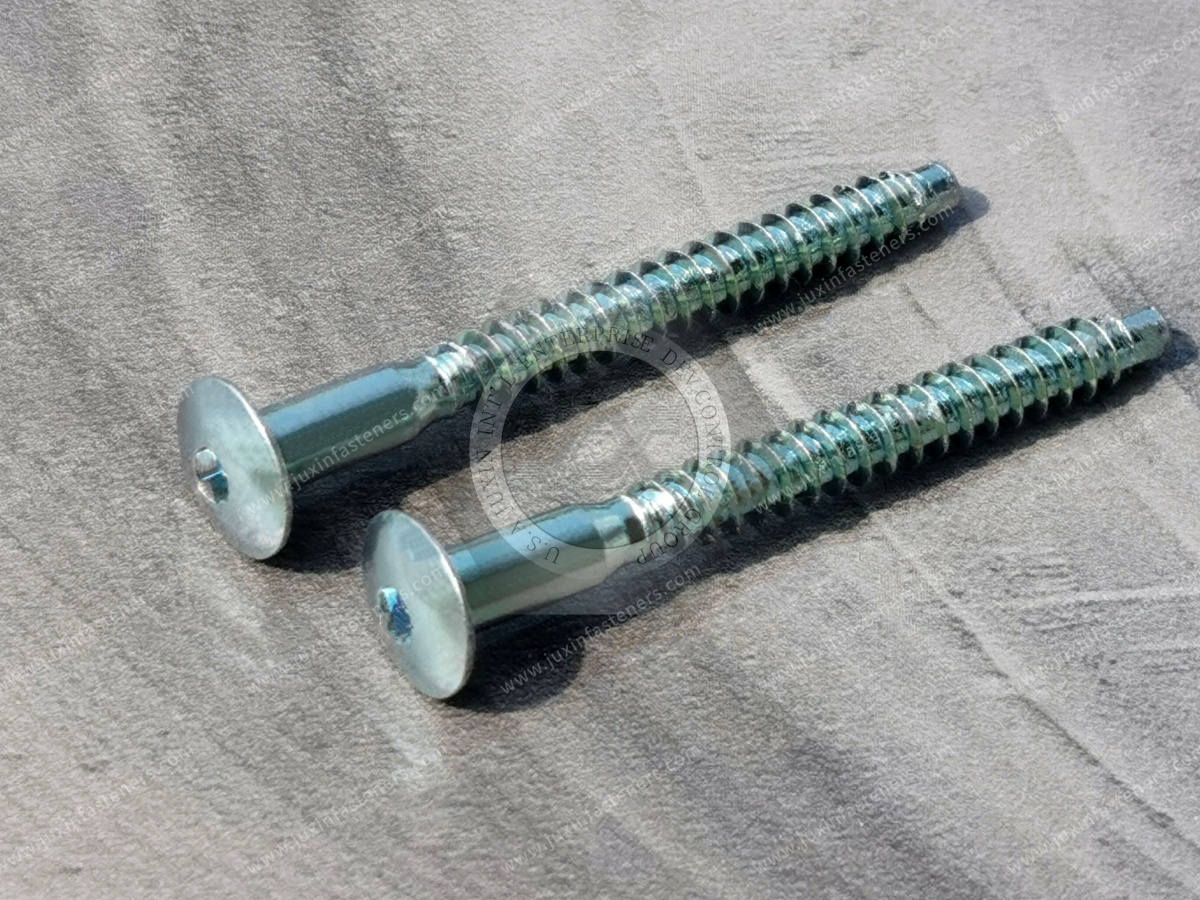
Material Selection Summary
| Screw material | Typical selection reason | Main engineering consideration |
|---|---|---|
| Carbon steel | Strength and cost efficiency | Coating and corrosion exposure |
| 18-8 stainless steel | General corrosion resistance | Torsional strength and environment |
| 316 stainless steel | Improved resistance in some chloride environments | Cost and localized corrosion |
| Brass | Appearance and specialized applications | Installation torque and mechanical strength |
Steel Phillips Flat Head Screws for Wood
Steel Phillips flat head screws are suitable for many furniture and cabinet applications.
They may be selected where:
A countersunk head is required
Conventional Phillips driving equipment is available
The substrate supports the selected thread design
The coating is suitable for the service environment
18-8 Stainless Steel Phillips Flat Head Screws for Wood
These screws may be considered where a countersunk appearance and corrosion resistance are both important.
The actual material grade, screw geometry and installation requirements should be confirmed.
316 Stainless Steel Phillips Flat Head Screws for Wood
316 stainless steel versions may be appropriate for selected outdoor and coastal woodworking applications.
They require evaluation of installation torque, substrate compatibility and environmental exposure.
Brass Phillips Flat Head Screws for Wood
Brass Phillips flat head screws may be selected for decorative furniture and suitable precision woodworking applications.
Steel Square-Drive Flat Head Screws for Wood
Square-drive flat head screws may support controlled production assembly where compatible drivers and tooling are used.
Torx Flat Head Screws for Wood
Torx flat head screws may be suitable for furniture and industrial woodworking applications requiring effective powered driving.
Brass Slotted Flat Head Screws for Wood
Brass slotted screws are commonly associated with decorative and traditional woodworking applications.
Phillips Oval Head Screws for Wood
Oval head wood screws have a raised decorative head profile.
They may be selected for visible fittings, trim and furniture hardware.
Steel and Stainless Steel Hex Head Wood Screws
Hex head wood screws may be used in suitable larger wood connections.
Important Distinction
Not every hex head screw intended for wood is a structural wood screw.
Structural applications require the appropriate product specification and validated design values.
Wood-to-Metal Fastening Solutions
Joining wood components to metal frames requires careful fastener selection.
A conventional wood screw is not automatically suitable for drilling and forming threads in steel.
Self-Drilling Screws for Wood-to-Steel Connections
Certain self-drilling screws are designed to pass through wood or another upper component and drill into a specified steel substrate.
Engineering Considerations
Steel thickness
Drill-point capacity
Thread geometry
Screw length
Wood thickness
Installation speed
Driver engagement
Corrosion exposure
Important Limitation
Self-drilling capacity depends on the actual screw design and specified steel thickness.
Stainless Steel Self-Drilling Screws
Stainless steel self-drilling screw designs require careful review.
Some products use specialized drill-point constructions or other material combinations to provide drilling performance.
A generic stainless steel wood screw should not be described as capable of drilling steel.
Thread-Forming Screws for Metal Components
Thread-forming screws for metal use a different thread and installation mechanism from conventional wood screws.
They are appropriate only where the screw and receiving metal are compatible.
Engineering Recommendation
For wood-to-metal assemblies, specify the actual screw type and receiving material rather than treating wood screws, self-drilling screws and metal thread-forming screws as interchangeable.
Production Considerations for Wood-to-Metal Joints
Production managers should evaluate:
Drill-point performance
Installation time
Metal thickness variation
Driver wear
Screw breakage
Head seating
Rework requirements
Wood Screws for Hardwood
Hardwood applications may require pilot holes and careful torque control.
Important Considerations
Wood density
Grain direction
Moisture content
Screw core diameter
Thread geometry
Edge distance
Common Problems
Splitting
Excessive driving torque
Screw torsional failure
Head damage
Engineering Recommendation
Validate screw selection using the actual wood species and moisture condition.
Wood Screws for Softwood
Softwoods generally differ from hardwoods in density and local crushing behavior.
Important Considerations
Thread engagement
Withdrawal resistance
Local bearing
Screw length
Repeated loading
Engineering Recommendation
Avoid assuming that a screw tested in one softwood species will perform identically in another.
Screws for Plywood
Plywood consists of bonded wood veneers.
Its fastening behavior depends on thickness, veneer construction and screw location.
Engineering Considerations
Face versus edge fastening
Panel thickness
Edge distance
Thread engagement
Risk of veneer damage
Screws for Oriented Strand Board (OSB)
OSB is an engineered wood panel with properties that depend on its grade and construction.
Engineering Considerations
Panel thickness
Screw withdrawal resistance
Moisture exposure
Edge fastening
Applicable structural requirements
Important Limitation
For structural sheathing or load-bearing applications, screw selection must follow the approved structural design and applicable building requirements.
Screws for Particleboard and Chipboard
Particleboard and chipboard may require thread geometries designed for their relatively low-density or heterogeneous structure.
Potential Problems
Thread stripping
Local material crushing
Edge breakout
Reduced retention after repeated removal
Engineering Recommendation
For high-volume furniture manufacturing, evaluate screw performance in the actual board grade.
Screws for Medium-Density Fiberboard (MDF)
MDF fastening performance depends on board density, screw geometry and installation position.
Important Considerations
Face versus edge fastening
Pilot-hole requirements
Thread engagement
Countersink depth
Risk of local material damage
Production Recommendation
Use controlled driving parameters to reduce stripped holes and panel damage.
Screws for Wood-Plastic Composites
Wood-plastic composite materials vary considerably in composition and mechanical behavior.
A screw suitable for natural wood may not be suitable for every composite.
Engineering Considerations
Thermal expansion
Material hardness
Thread geometry
Pilot-hole requirements
Environmental exposure
Installation temperature
Engineering Recommendation
Follow the composite manufacturer's fastening recommendations or validate the selected screw.
Screws for Composite Decking
Composite decking screws may require specialized heads, threads or installation features.
These products should be selected for the specific decking material and support structure.
Important Limitation
A general-purpose stainless steel wood screw should not automatically be presented as a qualified composite decking screw.
Common Wood Screw Installation Failures
Wood Splitting
Possible causes include:
Insufficient edge distance
Missing or undersized pilot hole
Excessive screw diameter
Installation near the end grain
Thread Stripping
Possible causes include:
Excessive installation torque
Unsuitable thread design
Oversized pilot hole
Low-density substrate
Screw Head Damage
Possible causes include:
Incorrect driver bit
Poor alignment
Excessive torque
Incompatible recess geometry
Screw Breakage
Possible causes include:
Excessive torsional loading
Dense substrate
Incorrect pilot hole
Material or manufacturing defects
Corrosion
Possible causes include:
Unsuitable screw material
Inadequate coating
Moisture exposure
Contact with incompatible materials
Engineering Recommendation
Investigate the actual failure mechanism before changing screw diameter, material or drive type.
Installation Torque and Production-Line Reliability
A screw that performs well in a manual trial may behave differently during high-volume powered installation.
Key Production Variables
Driver speed
Torque setting
Screw alignment
Driver-bit condition
Substrate variation
Pilot-hole consistency
Screw feeding
Head seating depth
Why Torque Control Matters
Excessive torque can strip threads or damage the substrate.
Insufficient torque can leave the joint incompletely seated.
Production Recommendation
Define an installation process window based on representative materials and actual assembly equipment.
Automated Screw Feeding and Assembly
For automated furniture production, screw geometry and packaging can influence feeding performance.
Important considerations include:
Head geometry
Screw straightness
Dimensional consistency
Drive recess quality
Thread damage
Packaging cleanliness
Production Recommendation
Evaluate the complete screw feeding and driving process when qualifying a new supplier.
Dimensional Inspection of Wood Screws
Dimensional conformity supports consistent installation and assembly.
Potential inspection characteristics include:
Nominal diameter
Major diameter
Core diameter
Length
Thread pitch or thread spacing
Head diameter
Head height
Drive recess geometry
Point geometry
Straightness
The applicable inspection methods should be selected according to the product specification.
Material and Mechanical Inspection
Depending on the screw design and customer requirements, inspection may include:
Material verification
Hardness
Torsional performance
Surface treatment
Coating condition
Dimensional conformity
Functional Testing
Application-specific testing may include:
Driving tests
Withdrawal tests
Head pull-through evaluation
Joint loading tests
Corrosion testing
Important Limitation
The required tests and acceptance criteria depend on the actual screw category and application.
Relevant International Standards
Applicable standards depend on the screw design and intended use.
Examples include:
DIN 95, DIN 96 and DIN 97
Traditional dimensional references for selected slotted wood screw head styles.
DIN 7995, DIN 7996 and DIN 7997
Traditional dimensional references for selected cross-recessed wood screw head styles.
ASME B18.6.1
A dimensional standard relevant to inch-series wood screws and related screw products.
EN 14592
A standard relevant to certain dowel-type fasteners used in timber structures, including applicable screws for structural applications.
Important Distinction
A general-purpose wood screw should not automatically be described as compliant with structural timber fastening requirements.
The exact product standard, current edition and applicable requirements must be verified.
Metric and Inch-Series Wood Screws
Wood screws may be specified using metric or inch-series dimensions.
For example:
3.5 mm nominal diameter is approximately 0.138 in.
4.0 mm nominal diameter is approximately 0.157 in.
4.5 mm nominal diameter is approximately 0.177 in.
5.0 mm nominal diameter is approximately 0.197 in.
6.0 mm nominal diameter is approximately 0.236 in.
These are approximate dimensional conversions only.
Engineering Recommendation
Metric and inch-series wood screws should not be assumed interchangeable without checking their actual diameter, thread geometry, length, head and installation requirements.
Furniture Manufacturing Applications
Wood screws are used in:
Tables
Chairs
Beds
Cabinets
Storage systems
Wooden frames
Typical Selection Considerations
Assembly appearance
Holding strength
Rework requirements
Production cycle time
Substrate consistency
Cabinet Manufacturing Applications
Cabinet production often involves MDF, particleboard, plywood and other engineered panels.
Engineering Considerations
Edge fastening
Countersink depth
Thread stripping
Panel damage
Repeated assembly
Automated installation
Interior Construction Applications
Wood screws may be used in suitable interior fixtures, partitions and nonstructural assemblies.
Structural or code-regulated connections require approved fasteners and installation requirements.
Electrical Equipment and HVAC Applications
Wood screws may be used to attach equipment to suitable wooden supports or panels.
For metal frames, dedicated wood-to-metal fasteners may be required.
Automotive and EV Interior Applications
Selected wood-based or composite interior components may use specialized fastening systems.
However, conventional wood screws should not be assumed suitable for automotive structural or safety-critical applications.
Engineering Recommendation
Use the actual OEM drawing and approved fastening specification.
Industrial Machinery Applications
Wood screws may be used in equipment incorporating wooden panels, guards, fixtures or packaging-related assemblies.
Their suitability depends on the substrate and operating environment.
Custom Wood Screws for OEM Manufacturing
Drawing-specific wood screws may require customized:
Diameter
Length
Thread profile
Threaded length
Head geometry
Drive recess
Point geometry
Material grade
Coating
Dimensional tolerances
Packaging
Manufacturing feasibility depends on the actual design, material and production quantity.
Supplier Qualification for Industrial Wood Screws
Purchasing and supplier development teams should evaluate:
Drawing conformity
Material specification
Dimensional consistency
Surface treatment
Functional performance
Inspection documentation
Sample approval
Packaging
MOQ
Lead time
Annual demand
Change control
Alternative Supplier Evaluation
When replacing an existing wood screw supplier, matching nominal diameter and length alone may not establish functional equivalence.
Thread profile, point geometry, head dimensions, drive recess and installation behavior must also be checked.
Cost Considerations for Bulk Wood Screw Purchasing
Unit price is only one component of the total assembly cost.
Other factors may include:
Installation time
Driver-bit consumption
Scrap and rework
Panel damage
Coating requirements
Packaging efficiency
Inventory consistency
Delivery reliability
Procurement Recommendation
Evaluate total installed cost and production performance when comparing suppliers.
Frequently Asked Questions
What is the difference between a wood screw and a machine screw?
A wood screw is designed to engage wood or compatible wood-based materials. A machine screw generally engages a mating internal thread or nut.
Are Phillips flat head screws suitable for furniture manufacturing?
Yes, where the head geometry, thread design, substrate and installation process are appropriate.
Should hardwood be predrilled before installing wood screws?
Pilot holes are often beneficial in dense hardwoods and near edges, but the required hole size depends on the screw and substrate.
Are Torx wood screws better than Phillips wood screws?
Torx drives may provide improved tool engagement in certain powered installations, but the best choice depends on tooling, torque and production requirements.
Can stainless steel wood screws be used outdoors?
Yes, in suitable environments. The actual stainless steel grade and exposure conditions must be evaluated.
Is 316 stainless steel completely resistant to marine corrosion?
No. It generally offers improved resistance to some chloride environments but can still experience localized corrosion.
Can conventional wood screws fasten wood to steel?
Not necessarily. Wood-to-steel connections may require purpose-designed self-drilling or other suitable fastening systems.
Are chipboard screws the same as conventional wood screws?
Not always. Chipboard screws may use thread and point geometries optimized for engineered wood panels.
Can wood screws be used in load-bearing timber structures?
Only when the screw and connection meet the applicable structural design and product requirements.
Can Juxin Fasteners supply custom wood screws?
Juxin Fasteners welcomes drawing-based OEM inquiries. Materials, dimensions, manufacturing feasibility, inspection requirements and commercial terms are subject to confirmation.
Juxin Fasteners: Industrial Wood Screws and OEM Fastening Solutions
Juxin Fasteners supplies wood screws and drawing-specific fastening components for industrial manufacturing.
Relevant product categories include:
Steel Phillips flat head wood screws
18-8 stainless steel Phillips flat head wood screws
316 stainless steel Phillips flat head wood screws
Brass Phillips flat head wood screws
Steel square-drive flat head wood screws
Torx flat head wood screws
Brass slotted flat head wood screws
Phillips oval head wood screws
Steel and stainless steel hex head wood screws
Suitable self-drilling screws for wood-to-metal assemblies
Custom industrial wood screws
Exact materials, dimensions, finishes, inspection requirements, MOQ and lead times require technical and commercial confirmation.
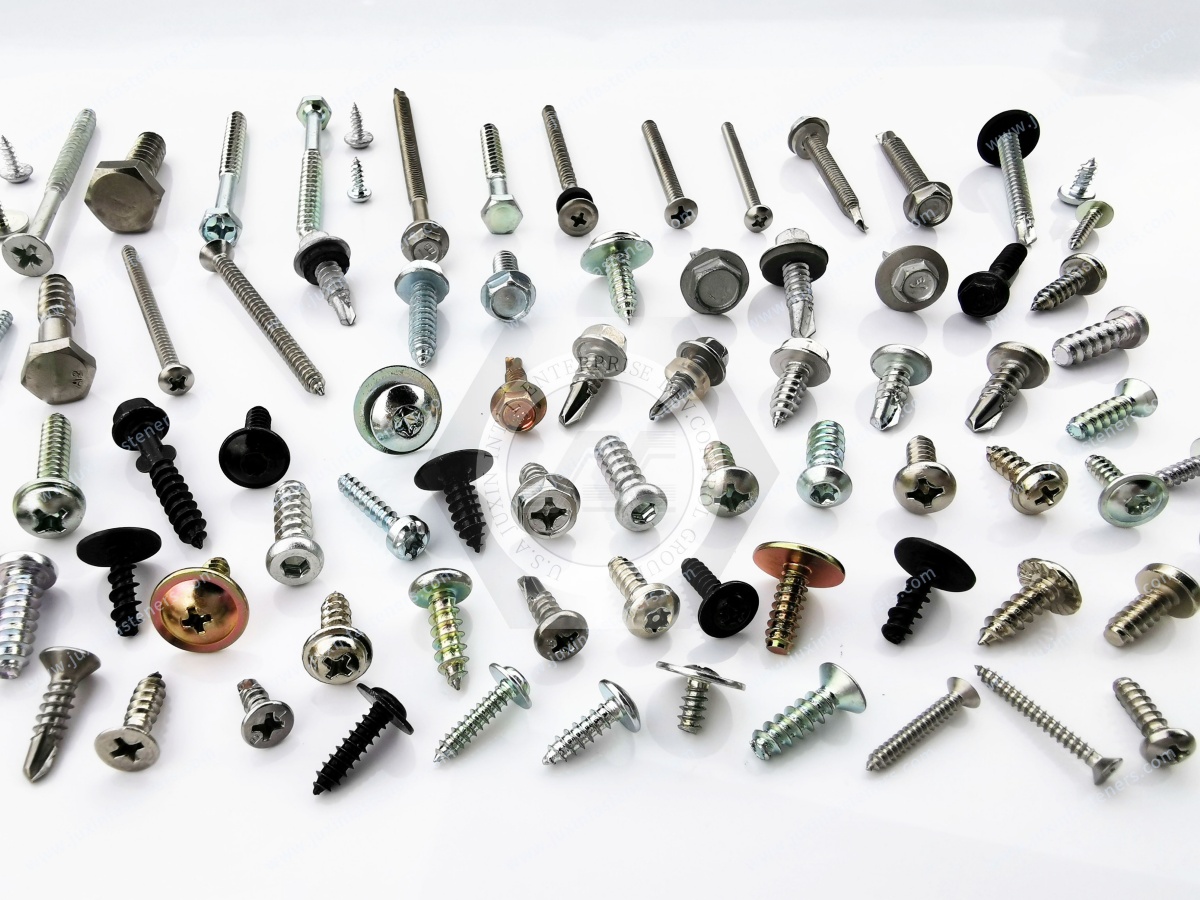
Request a Quote for Wood Screws and Custom OEM Fastening Solutions
Are you sourcing wood screws for furniture production, cabinet manufacturing, industrial woodworking or a drawing-specific OEM project?
Juxin Fasteners welcomes inquiries from furniture manufacturers, mechanical engineers, design engineers, production managers,
manufacturing engineers, purchasing specialists and supplier development teams.
For technical review and quotation, please provide:
Screw drawing and revision + nominal diameter + length + head style + drive type + thread geometry + material grade
+ surface finish + substrate type and thickness + installation method + mechanical or corrosion requirements
+ inspection documentation + prototype quantity + annual demand + packaging + target delivery schedule.
Company: Juxin Fasteners
Website: https://www.juxinfasteners.com/
Email: info@juxinfasteners.com
Send your wood screw drawings and OEM RFQ to Juxin Fasteners for technical confirmation, product selection and quotation.
Contact Us
Tel.:
+86 020 8621 0320
+86 020 3121 6067
E-mail:
Technical Support:
Navigation
SEND INQUIREY



